
Vertical Form Fill Seal (VFFS) Machines
How a vertical form fill seal (VFFS) machine forms bags from roll film, doses and seals each pack, and how to choose the filler, bag format and line.
| Input or item | Typical value or source | Why it matters |
|---|---|---|
| Product and dosing | Representative sample and fill target | Assess the dose through transfer into the finished bag |
| Package route | Roll film and dimensioned bag drawing | Identify forming, film and sealing requirements |
| Output and interfaces | Accepted-shift plan, height and handoff drawing | Define the complete line scope |
Choose the route before specifying the equipment
Choose VFFS when the project calls for a bag made from roll film and a dosing arrangement assessed for the actual material. The six rows below retain each configuration’s published conditions; a higher catalog rate is not a ranking.
Scroll horizontally to read all columns, conditions and sources.
| Configuration | Key features | Published speed | Bag size support | Power |
|---|---|---|---|---|
| Candy multihead weighing and packaging | Multihead combination weighing; anti-stick contact-surface options | 30 - 70 bags/min (Subject to weight and bag size) | Length: 80-300mm, Width: 60-200mm (Customizable) | 3.5KW, 220V/380V, 50Hz/60Hz (Customized for country standard) |
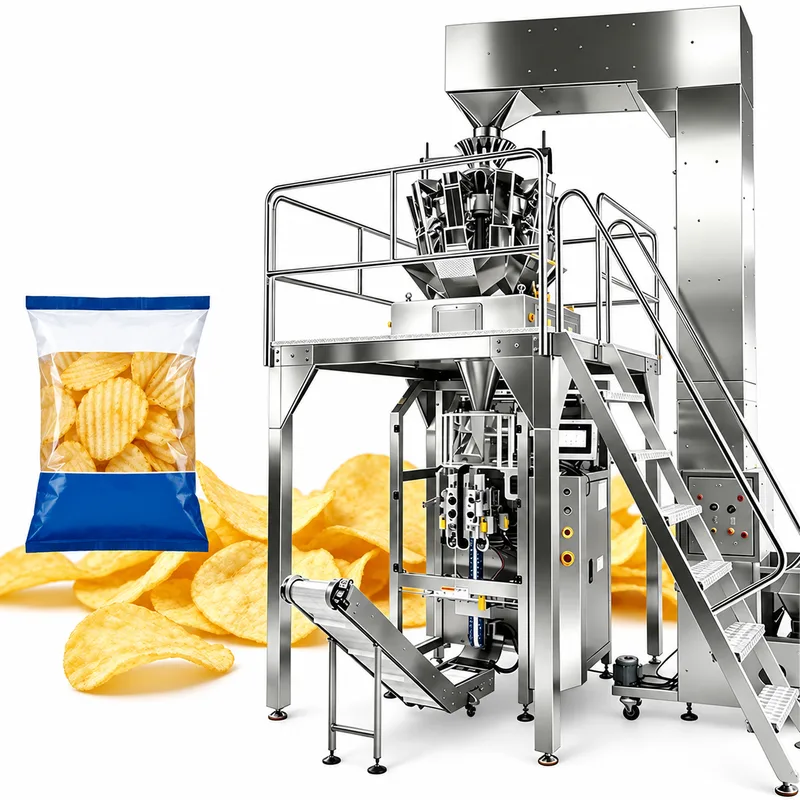
| Chips packaging with nitrogen flushing | Multihead weighing; nitrogen flushing before sealing; low-drop product handling | 20 - 45 bags/min (Subject to bag volume and gas flushing volume) | Length: 150-400mm, Width: 100-280mm (Customizable Formers) | Not listed |
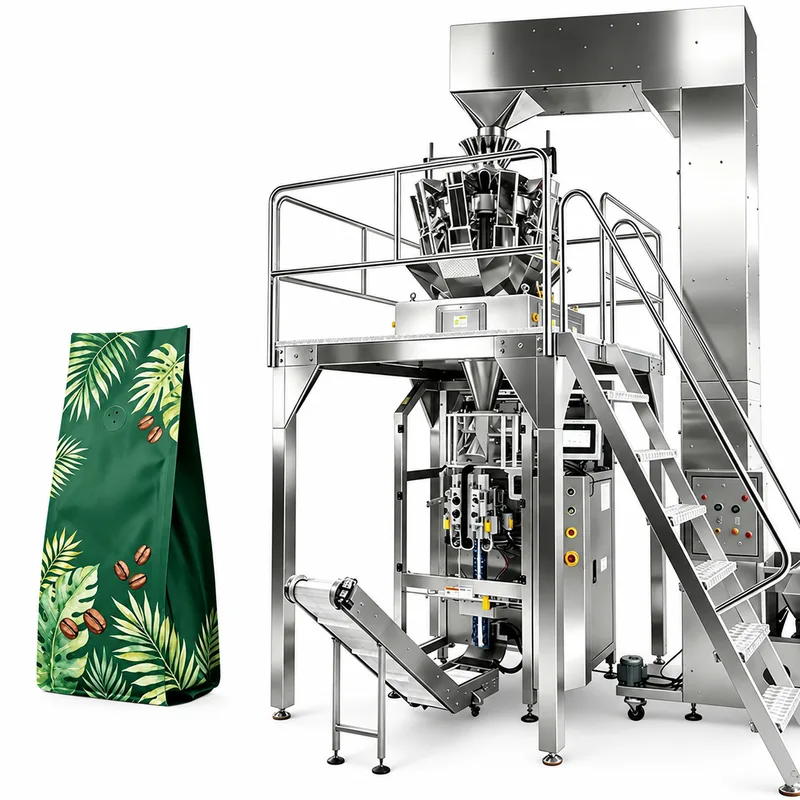
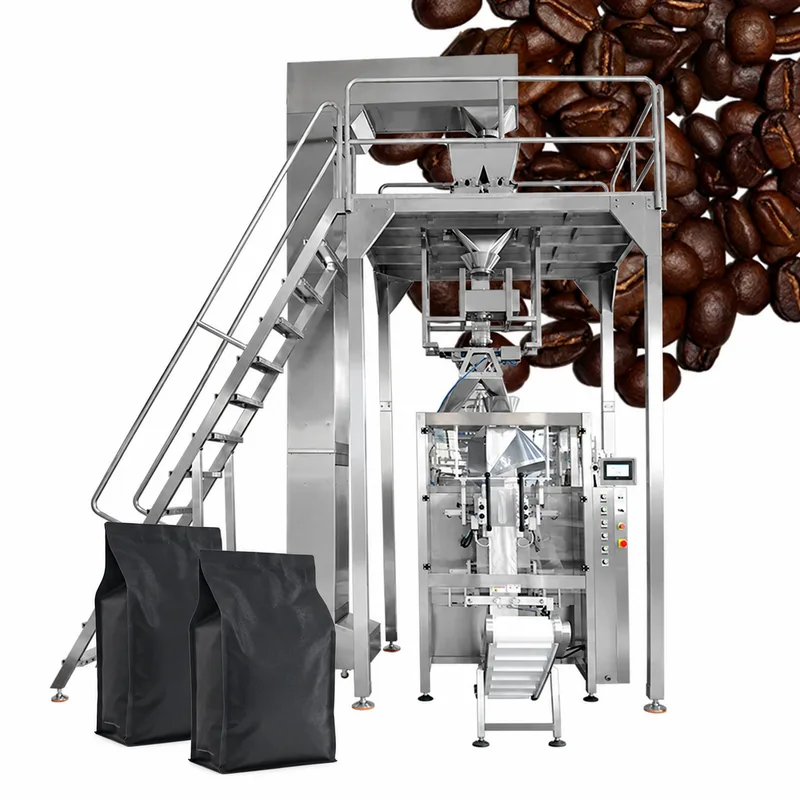
| Coffee bean valve-pouch packaging | Multihead coffee-bean dosing; one-way valve application | 25 - 50 bags/min (Subject to weight and valve application speed) | Not listed | 4.5KW, 220V/380V, 50Hz/60Hz (Configured to regional factory standard) |
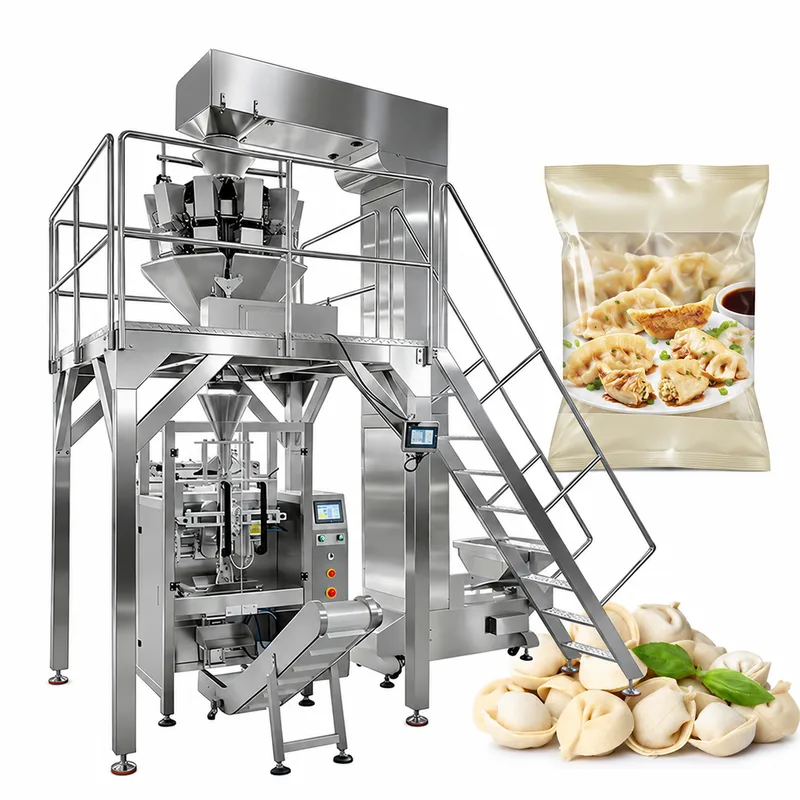
| Frozen food weighing and packaging | 10 / 14 / 20 head combination multihead weigher (Dimpled Surface Option) | 25 - 70 bags/min (Depending on product characteristics and weight) | Length: 100-350mm, Width: 100-250mm (Customizable) | 4.5KW, 220V/380V, 50Hz/60Hz |
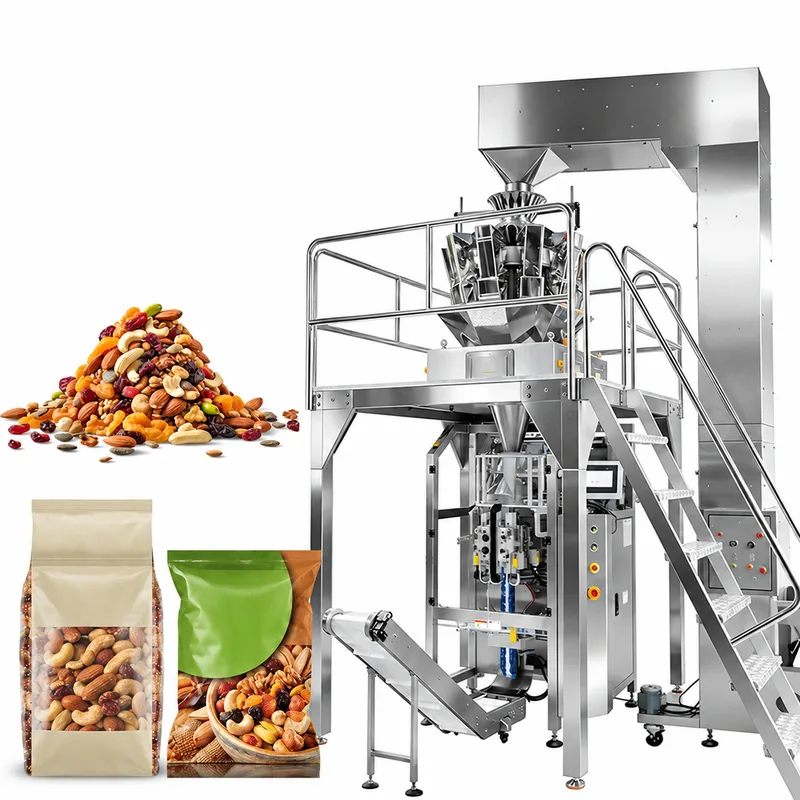
| Nuts and dried fruit multihead VFFS | Combination weighing; product-specific feeding surfaces | 30 - 70 bags/min (Subject to bag volume, target weight, and material flow) | Length: 80-350mm, Width: 60-240mm (Customizable Formers) | Not listed |
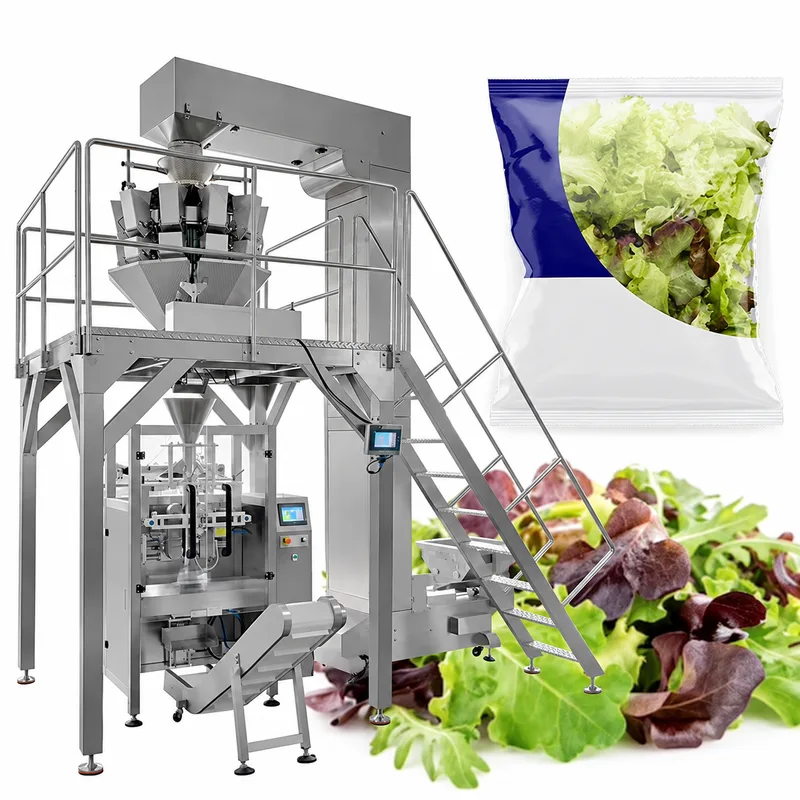
| Vegetable and salad weighing packaging | Dimpled hopper-surface options; feeder selection for bulky products | 20 - 55 bags/min (Subject to bag volume, target weight, and leaf density) | Length: 100-450mm, Width: 80-300mm (Customizable Formers) | 4.5KW, 220V/380V, 50Hz/60Hz (Configured to regional factory standard) |
On This Page
How a VFFS machine works: from film roll to sealed bag
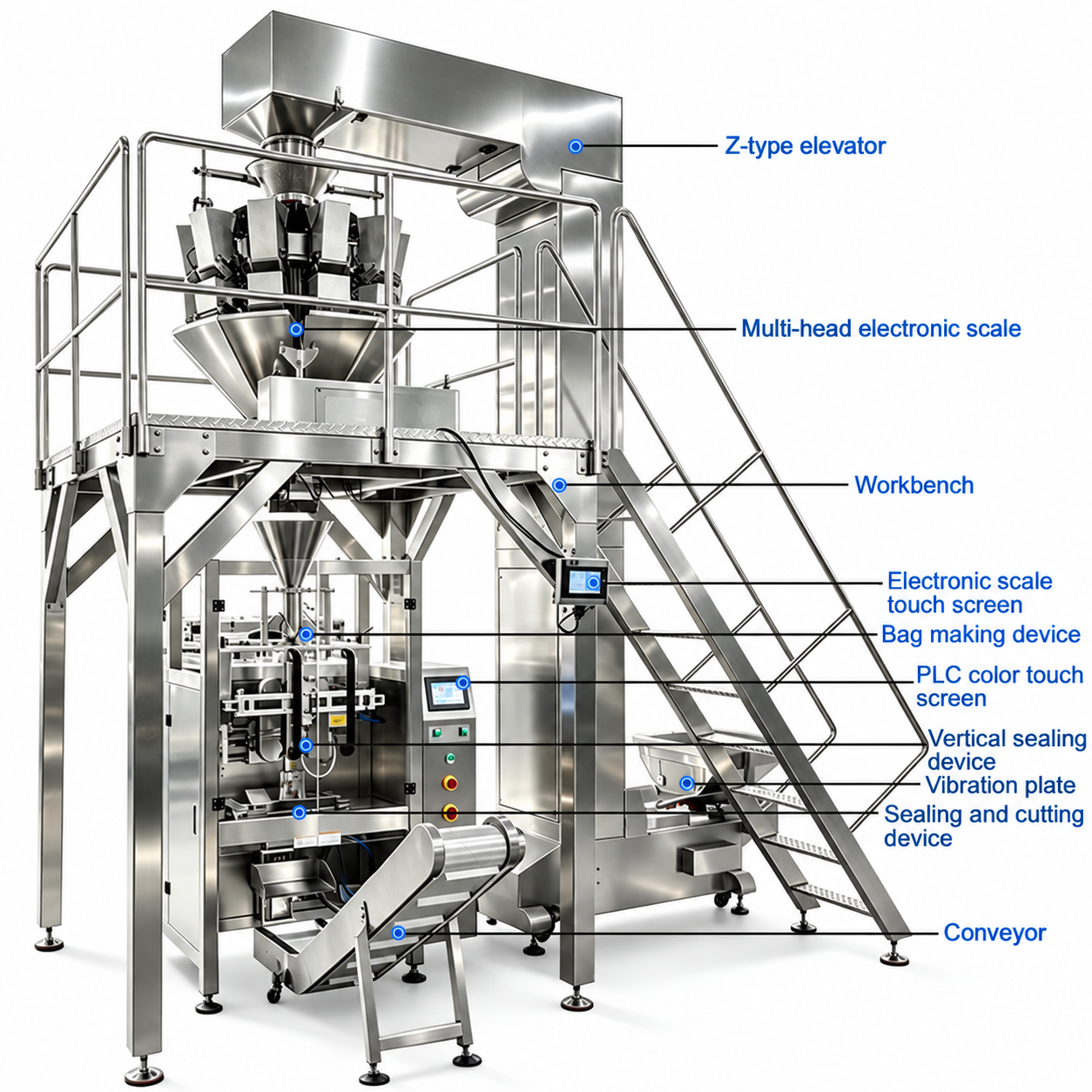
A VFFS machine starts with a flat roll of film. The film is pulled over a forming collar and tube, folded around the tube and sealed along its length with a vertical seal. A horizontal seal bar then closes the bottom of the bag, the dose falls through the tube into the bag, and the next horizontal seal closes the top of that bag, forms the bottom of the following one and cuts the finished bag free. Bag length is set by a feed distance or by a printed registration mark on the film, and a gas flush or vacuum step can be added before the top seal.
Two sealing motions are common. On an intermittent-motion machine the film stops while the horizontal jaws seal, and on a continuous-motion machine the jaws travel with the film. Which one suits a project depends on the product, bag size and the output you need, so ask each supplier to state in writing which motion the quoted configuration uses. The catalog profiles on this site do not state it, and a speed figure cannot be compared until you know.
Key parts of a VFFS machine and what to ask about each
Film unwind and tension. The roll sits on a spindle and drive belts pull the film through the machine, while tension control and film tracking keep it straight. Ask for the roll width, core size and roll diameter the machine accepts, and whether a sensor reads a printed registration mark.
Forming collar and tube. These shape the film and set the bag width, so a different bag width usually means a different former. Ask which formers are included in the quotation and how long a change takes.
Sealing jaws and knife. The vertical seal bar, horizontal jaws and cutting knife shape how the seal looks and how strong it is, together with the film, sealing temperature and pressure. Ask which seal type the quoted jaws make, which film structures they were trialled with and how the jaws are replaced.
Dosing device and outfeed. The weigher, auger or liquid filler above the tube sets the dose. The weight that ends up in each bag also depends on product held up in the chute and tube and on the timing between the filler and the bagger. Ask for weight results measured on finished bags of your own product, and for what takes the finished bags away.
VFFS machine, FFS machine and bagger: what the names cover
Suppliers and buyers use several names for this one equipment family. VFFS machine, vertical form fill and seal machine, vertical bagger and VFFS bagger all describe the arrangement above: a vertical packaging machine that forms the bag from roll film, fills it from above and seals it. Vertical filling machine, vertical sealing machine, VFFS bagging machine and vertical f/f/s are common shorthand, while FFS machine and form fill seal machine are broader labels that also cover horizontal machines. If a quotation says only FFS, ask the supplier to confirm that the machine is vertical.
This page covers the vertical machine and the decisions around it. Multihead weigher, nitrogen-flushing and vacuum configurations have their own system pages, and stick-pack, sachet and premade-pouch equipment are covered separately. Use the related topics at the end of this page when your product fits one of those routes.
Match the dosing system to the product
Multihead weighing suits many discrete products such as nuts, chips and candy. Feeding surfaces, hopper size and drop height should be selected around product shape, stickiness and fragility. Coffee configurations may include valve application; snack lines may include nitrogen flushing.
Define the full vertical packaging line
Discuss the feed elevator, weighing platform, VFFS machine and discharge conveyor together. Bag format, film construction, required output and available factory height determine the final layout.
Which catalog VFFS configuration fits your product
The table above covers six configurations, and each one asks for different information before a proposal. For candy, describe the coating, stickiness and dimensions of each piece, because soft products need a handling trial. For chips, confirm bulk density, acceptable breakage, bag volume and the gas supply at your factory. For nuts and dried-fruit mixes, give the ingredient ratio as well as the total bag weight. For coffee beans, provide the valve specification, film sample and target weight, since valve placement and seal quality are confirmed together.
Frozen foods and vegetables use configurations with dimpled surface or hopper options. Fresh salad and frozen vegetables have different temperature and handling needs, so confirm the product condition before selecting one. The vacuum profile for dried fruit and coffee needs product moisture, bag shape and the required vacuum level checked with a sample trial, and the quad-seal coffee profile needs a finished-bag sample or dimensioned drawing.
Read VFFS machine data before comparing baggers
The table above lists the ranges published for each VFFS machine configuration in the catalog. Read every speed as a conditional range. Each entry names what it depends on, such as bag size, target weight, bag volume or gas flushing volume, so a larger number on one row does not mean that another bagger is slower: the products and bag volumes differ. Ask any supplier to state the speed for your product, target weight and bag size.
Bag size support is given as a length range and a width range, and the entries describe formers or sizes as customizable. Treat those limits as a starting point and confirm the former and film width for your own bag. The dried fruit vacuum and quad-seal coffee profiles do not publish speed, bag size or power figures, the coffee valve profile does not list a bag size range, and the chips and nuts profiles do not list power, so request those items in writing instead of borrowing a value from a neighboring row. The catalog also does not publish a maximum film width or jaw width for these configurations, so ask for both in writing when your bag is close to the limits of its range.
Bag styles on a vertical machine
Bag style is set by the former, the seals and the film, so name the style you sell before asking for a quotation. The catalog describes a pillow and gusset bag configuration for nuts and dried fruit, a four-edge sealing configuration for structured quad-seal coffee bags, a vacuum configuration for high-barrier laminate film, and a one-way valve option for coffee. Each has its own page for the details that change the proposal.
Stand-up, zipper and spout pouches are usually bought as finished pouches and filled on a premade-pouch machine instead of being formed from film, so check that route if your pack must stand on a shelf or reseal.
When a VFFS machine fits and when to look at another route
A VFFS machine suits loose or portionable products that fall by gravity into a bag formed from roll film, such as the nuts, snacks, candy, frozen pieces, vegetables and coffee in this catalog. Single solid items laid flat, such as bars or baked goods, are usually wrapped on a horizontal form fill seal machine, which this catalog does not cover. Packs that must stand up, reclose or carry a spout normally use premade pouches. Compare the routes on the same product and pack before choosing.
Start with the material that reaches the filler
A vertical form fill seal system turns a roll of packaging film into individual filled bags. That description leaves several important purchasing decisions unresolved. The product must first reach a dosing device in a condition that the device can handle consistently. A weigher suitable for dry nuts may need different feeding surfaces for sticky dried fruit. A sauce requires a liquid dosing arrangement rather than a solid-product weighing chute. Buying the bagger before defining these conditions can leave the most difficult part of the application outside the quotation.
Prepare a short product record covering the actual production temperature, particle dimensions, surface condition and expected variation between batches. Include samples near the difficult end of that range. For mixed snacks, describe the desired ingredient distribution as well as the total pack weight. These observations help distinguish a forming-and-sealing requirement from a complete handling-and-packaging requirement.
Follow one dose through the complete line
Draw the journey from the incoming product container to the finished bag collection point. On a multihead configuration, that journey may include an elevator, distribution equipment, weighing hoppers, a discharge chute, the forming tube and an outfeed conveyor. Each transfer creates a question about product retention, drop height, access or synchronization. A complete system proposal should say who supplies every transfer and how adjacent machines communicate readiness or a fault.
Use this drawing to discuss a realistic stoppage. If the bagger pauses while the weighing system holds a dose, determine where the product waits and how the restart is managed. For fragile chips, examine both the initial transfer and the final fall into the bag. A gentle feeder cannot compensate for an unsuitable discharge path farther downstream. The intended line arrangement should therefore accompany the product sample during the technical review.
Select the bag before committing to forming tooling
Pillow bags, gusseted packs and structured coffee formats can require different forming or sealing arrangements. A photograph of a finished pack is useful, but a dimensioned sample is better. Identify the filled dimensions, longitudinal seam position, top and bottom seal areas, print orientation and opening feature. Give the packaging supplier and equipment supplier the same sample so that discussions about usable filling space refer to the same geometry.
The film roll also needs a defined winding direction, width, core arrangement and registration marks where applicable. Review these details before ordering a large printed-film batch. A proposed bag width alone does not establish the suitability of the film construction or sealing layer. Trial rolls should represent the intended production material, including printing and lamination when those features could influence handling or sealing.
Compare VFFS packaging machine configurations by saleable output
The catalog includes configurations for candy, chips, coffee, frozen foods, vegetables and nuts. Their published speed descriptions are conditional on factors such as product characteristics, bag volume and dosing weight. Use that qualification when comparing proposals. The useful purchasing measure is acceptable finished packs from a defined product-and-film combination, with rejects and interruptions recorded separately.
For example, a bulky snack can occupy substantial bag volume at a modest weight, while a dense product may reach its target weight with a smaller volume. Both can use vertical packaging, but the filling path and cycle requirements differ. Ask the supplier to state the tested product, target weight, bag dimensions, optional operations and collection method behind any proposed output. Keep the test conditions alongside the result rather than turning a catalog range into an unconditional factory commitment.
Make changeovers visible in the purchasing decision
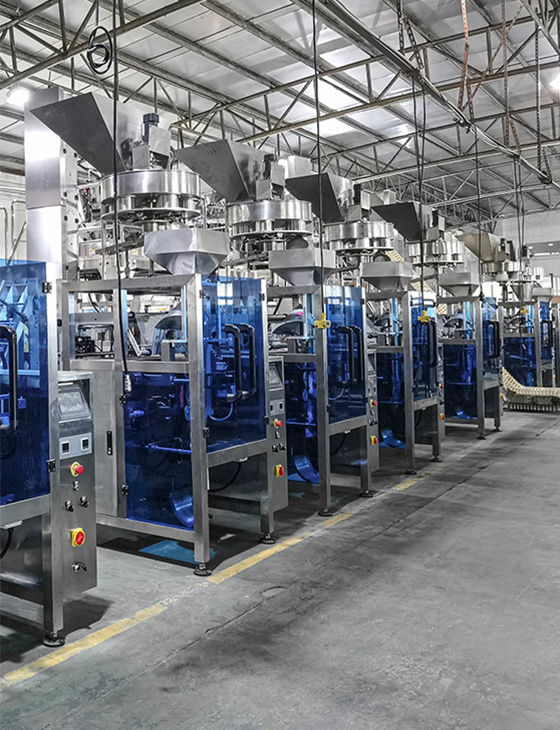
List the formats you actually plan to run during a normal week. A change between two weights in one bag family may be different from replacing a former, changing a weighing recipe and installing another film width. Ask for a demonstration of the specific transition that matters to your schedule. Include the time used to remove remaining product, clean accessible contact parts, install tooling, thread film and produce the first acceptable pack.
Storage and identification of removed tooling deserve attention too. A forming set without a clear label or protected storage location can slow future changeovers and complicate troubleshooting. Request a list of format parts and the adjustments associated with each approved bag. A machine described as flexible still needs a practical procedure that an operator can repeat without relying on an undocumented setup remembered by one technician.
Check cleaning access and build before you compare baggers
Buyers of food and frozen products ask early how the machine is cleaned. The catalog profiles do not publish the frame material, ingress protection, washdown rating or sanitary design of any VFFS configuration, so treat each of these as a question to be answered in the quotation rather than assumed. For frozen foods, the profile asks for the product temperature, frost level and cleaning procedure so that handling and electrical protection can be specified.
Describe your own cleaning method, such as dry brushing, wipe-down or washdown, and the access you need to product-contact parts. Then ask the supplier to show on the proposed machine how those parts are reached and removed. The cleaning access guide lists the points to review.
Plan maintenance, wear parts and troubleshooting before you buy
A VFFS machine wears mainly where it touches film and product: the seal jaws and heating elements, the cutting knife, the drive belts and the forming set. Ask for a list of recommended wear parts with part identification, which replacements the operator can do and which need a technician, and how spare-part requests are handled. The catalog does not state a maintenance interval or part life for any configuration, so treat those as items to receive in writing.
Common faults on any bagger include film that drifts off track, seals that vary with temperature, pressure or product caught in the seal area, and product that bridges in the funnel above the tube. Ask how each is detected, what the machine does when it happens, and what training and remote support the quotation includes.
Plan the installation around access and utilities
A vertical line can place weighing or feeding equipment above the bagger. Check the proposed overall height, access platform, maintenance clearance and route for moving components into the factory. Floor dimensions alone are insufficient when overhead services, doors or lifting arrangements limit installation. Review access to the film roll, sealing assemblies, product-contact surfaces and electrical cabinet in the intended room layout.
For utilities, obtain the requirements for the quoted configuration rather than borrowing figures from a similar model. Optional nitrogen flushing, vacuum equipment, conveying or coding can introduce additional interfaces. Assign responsibility for supply connections, isolation points and commissioning checks. These practical details should be resolved while the line drawing is still easy to revise, especially when the new system must fit between existing upstream production and downstream packing operations.
Turn the demonstration into an acceptance record
Before a trial, agree which observations answer the buying decision: dose consistency, seal appearance, bag dimensions, product damage, print registration, changeover steps and restart behavior. Retain labeled samples from the beginning, middle and end of the run. Record adjustments made during the demonstration so that a successful result can be associated with a repeatable setup rather than an unexplained final setting.
A useful final question is whether the supplied configuration can reproduce the demonstrated package under your intended conditions. Answer it with the agreed product specification, film specification, tooling list and recorded operating observations. If a trial uses substitute material, document that limitation and arrange the missing check before treating the application as confirmed. This creates a clear route from an initial packaging idea to a defined line scope and a reviewable purchasing decision.
- Product flow, fragility and the selected dosing method
- Filled bag dimensions, film structure and seal requirements
- Line height, material supply and downstream access
Compare the quoted line scope
Use the same product, package and line brief for each quotation, and request separate scope lines for the weigher, infeed, bagger, discharge, coder and any gas equipment. Mark installation and training as included or excluded according to the actual offer. The catalog does not publish prices. Compare the required functions and open confirmations before treating two quoted totals as equivalent.
When should a buyer compare premade pouches?
Compare the two approaches when the finished package requires a feature or presentation that has not yet been assigned to a specific manufacturing route. Bring the same product, quantity and consumer-use requirements to both discussions. Ask which features are supplied by the packaging converter and which are created on the line. Then compare material procurement, format changes and demonstrated output under the same assumptions. This keeps the choice tied to a complete operating scenario. It also prevents an early preference for a machine category from excluding a package that may better fit the actual product and production schedule.
Method and limits of this comparison
This October 2026 revision organizes the published configuration descriptions and the buyer checks discussed on this page. The configuration source links near the opening identify the records behind the comparison. This is a selection aid compiled from published information, not a report of our own trials.
Use the stated parameters only for the named configuration and its original conditions. Missing values remain open; photographs and edited catalog illustrations do not qualify an untested material or establish a storage-life, cleaning or performance result. Keep project-specific evidence with the final quotation.
Frequently asked questions
When is VFFS not the right starting point?
Compare another route if your package arrives as a finished pouch, needs a feature outside the proposed forming scope, or your product cannot use the proposed gravity-fed path. Define the same product and pack for each alternative.
Can I retain an existing dosing unit?
Ask for a review of its discharge, height, dose-release timing and fault or readiness interface with the bagger. A matching target weight alone does not confirm integration.
How should I compare the six speed ranges?
Keep each row’s product, bag and output conditions attached. Request accepted output with your own fill quantity, package and options; retain Not listed where the corresponding source gives no value.
Explore the Equipment
Vertical Form Fill Seal
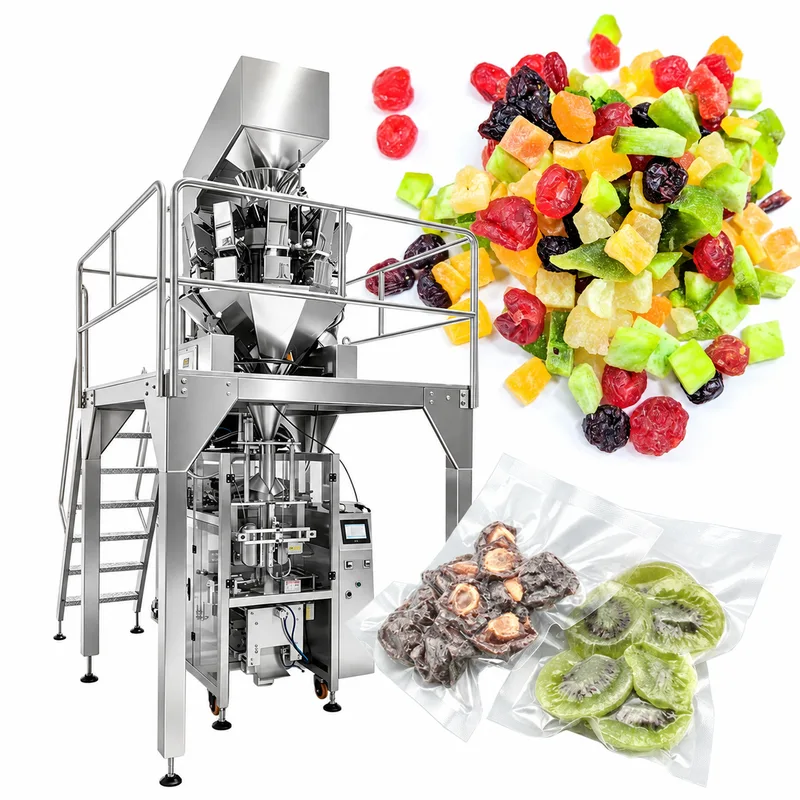
Dried Fruit Vacuum VFFS Packaging
Too deep an extraction can break fragile fruit or press soft pieces into a mass that is hard to portion. Size this vacuum VFFS line from your fruit samples, pack shape, film and gas route.
Vertical Form Fill Seal
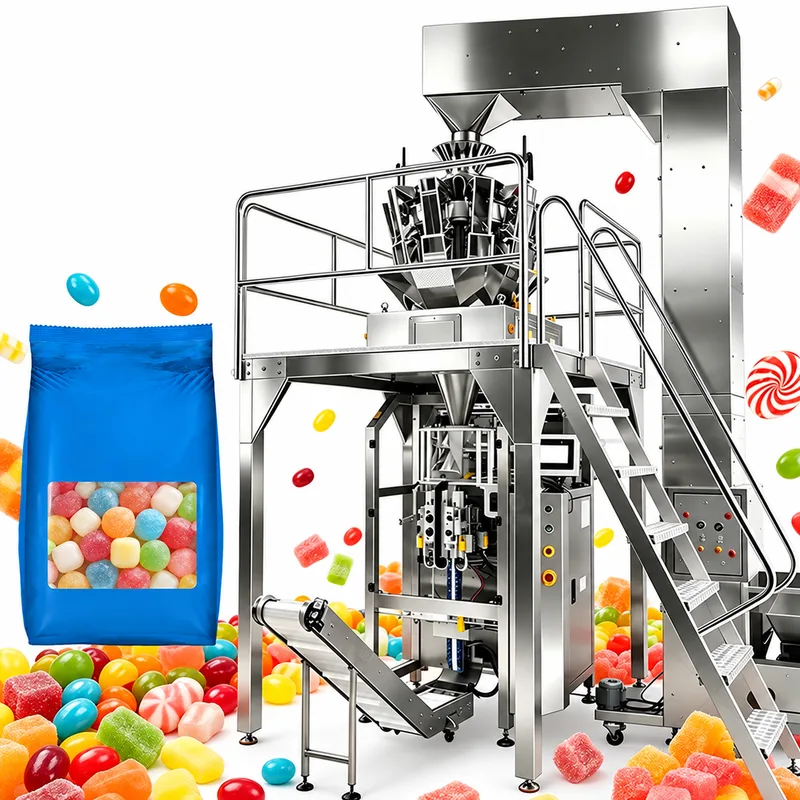
Candy Multihead Weighing & Packaging
A correct bag weight can still hide broken, stuck or wrongly mixed sweets. This multihead weigher and VFFS line is set up around your candy's coating, size and pack.
Vertical Form Fill Seal
Chips Packaging with Nitrogen Flushing
An inflated bag can hide broken chips, a short fill or a weak seal. Size this weigher, VFFS and nitrogen-flush line from your chip volume, breakage limit and gas supply.
Vertical Form Fill Seal
Coffee Bean Valve-Pouch Packaging
A misplaced or poorly attached degassing valve can spoil a run of coffee bags. Specify this weigher and VFFS valve line from your valve drawing, film, roast and weight.
Vertical Form Fill Seal
Frozen Food Weighing & Packaging
Frosted pieces retained in a hopper can leave a bag underweight and turn up in later fills. Specify this frozen-food weigher and VFFS line from product temperature, frost, piece size and cleaning method.
Vertical Form Fill Seal
Nuts & Dried Fruit Multihead VFFS
A nut-mix bag can be on weight and still hold the wrong ratio of ingredients. Configure this multihead VFFS line from your blend, coatings, target weight and bag size.
Vertical Form Fill Seal
Vegetable & Salad Weighing Packaging
Fresh leaves and frozen vegetables need separate checks of hoppers, surfaces and cleaning; sharing an unproven setup can damage salad or hold up frosted pieces. Specify this weigher and VFFS line per product condition.
Vertical Form Fill Seal
Quad-Seal Coffee Packaging
A quad-seal coffee bag that will not stand, or skews at the corners, wastes film and coffee. Specify the corners, gussets, base, valve and dosing method from your bag drawing.
What to send us
| Item | Why we need it | Example format |
|---|---|---|
| Product and sample identity | Relate feeding, fragility and dose to the actual material | Labeled sample list and product photographs |
| Fill weight, bag and film | Define dose, forming and sealing requirements | Fill-weight sheet and dimensioned film drawing |
| Accepted shift output | Compare the requested result under a production schedule | Shift plan listing stops and changeovers |
| Height and line interfaces | Identify existing equipment and responsibility boundaries | Layout with heights and handoff annotations |
We reply within 24 hours.