
Gusseted Bag Packaging
Review side-fold dimensions, filled shape and forming requirements when a simple pillow pack does not provide the presentation you need.
On This Page
Make the fold dimensions explicit
Gussets are folds that let a pack expand as it fills. Your drawing should separate the front-panel width, the side-fold depth and the finished overall dimensions. Suppliers describe an empty folded bag in different ways, so label the dimensions on a sketch or a physical sample. Send the intended fill weight too, plus a photo of the pack standing or lying where it will sit at retail.
Separate appearance from forming capability
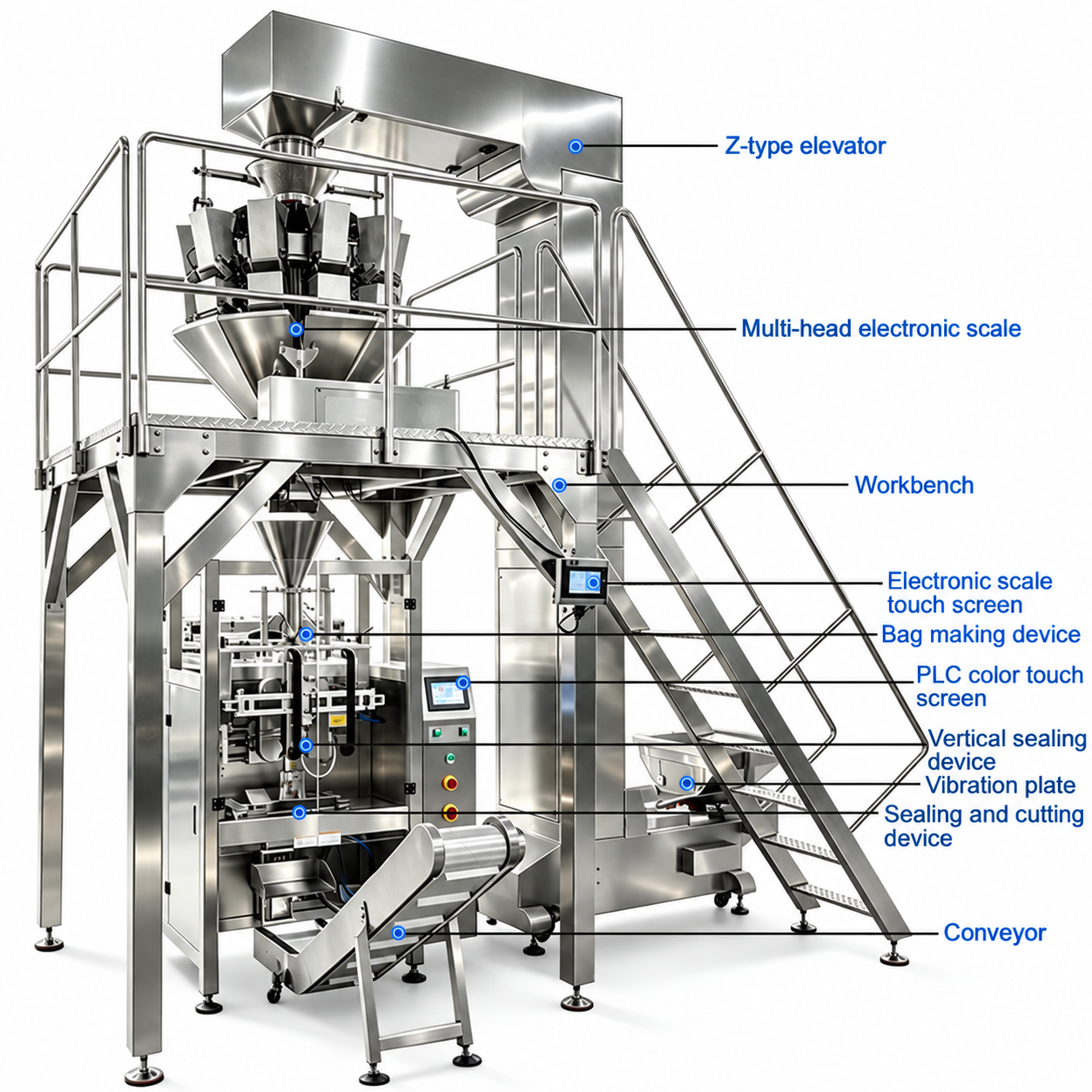
Find out whether the proposed configuration forms the gusset from roll film or handles a premade pouch. The two are different packaging processes. They use different tooling and consumables. A side fold alone does not make a stable standing pack. Product distribution, fill level and bottom arrangement have to be judged together before you accept any claim about presentation.
Plan a format change
A change in fold depth affects more than a recipe setting. You need a list of the forming parts, guides and adjustments for each size you plan to run, and a clear line between what the first quotation includes and what is supplied separately. If you plan several sizes, send them together. The supplier can then evaluate the whole family of formats instead of one sample in isolation.
Inspect the filled result
In a sample trial, check fold alignment, artwork position and the seal areas where folded film passes through the closing process. Compare several consecutive filled bags, not one display sample. Confirm that the pack fits its shipping carton and keeps its intended orientation after handling. Write down any remaining issues before the bag dimensions are frozen.
Describe every dimension of the fold
A gusset adds folded material, and that changes the volume and the filled shape of the bag. The word "gusseted" alone is not enough to select tooling. Say whether the folds are at the sides or somewhere else, and show their dimensions on an unfolded or clearly annotated sample. The front-panel width cannot describe the full geometry the forming equipment has to produce.
Use a drawing that separates flat measurements from filled measurements. Include the longitudinal seam, the end seals and any bottom presentation you want. If your reference pack comes from another product, say which features you want to keep and which can change. Otherwise the equipment supplier may read a visual reference as a complete dimensional specification. A clear drawing also helps the packaging converter calculate the right web layout for the construction.
Match expansion space to the actual contents
The folded panels create space, and that space is used once product fills and expands the package. How it works out depends on particle shape, bulk volume and settling. Nuts, dried fruit and coffee beans give different filled profiles even at similar nominal pack weights. The catalog's nuts-and-dried-fruit configuration includes a gusset option. Its suitability still has to be checked with your product and bag dimensions.
Make filled samples at the planned quantity. An empty bag tells you little. Watch whether the folds open consistently and whether the product fills the space as intended. Too little product, or product unevenly spread, changes the presentation. Overfilling can push pressure toward the closing area. Record these observations with the bag dimensions so any proposed revision responds to the real filled condition.
Review forming and fold control with the supplier
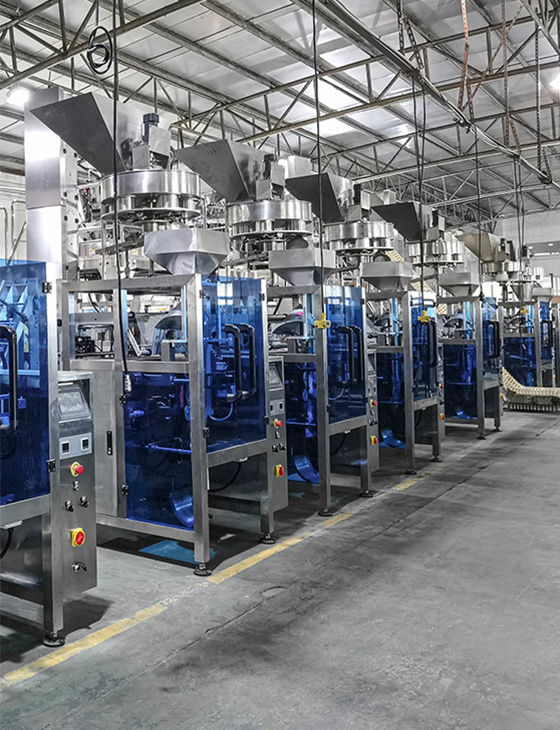
The equipment supplier should name the components that set and hold the folds through forming and sealing. A machine that makes ordinary pillow bags will not necessarily make the gusseted construction you want. It may need specific tooling or configuration. The quotation should name the bag format and list the relevant format parts.
During a trial, compare samples across the run for fold position and symmetry. Look at how the gussets meet the end seals, where extra layers of material may be present. If the supplier adjusted something to get a stable result, you should hear what it was. Keep the film construction in the record, since a different stiffness or thickness can change how the fold behaves. A forming result that repeats is worth more than one carefully picked sample made after undocumented intervention.
Place artwork around the filled geometry
A graphic laid out on a flat web can slip into a fold, or become hard to read once the bag is filled. Review the front, side and rear panels with an actual mock-up. Decide which information must stay visible in the retail or shipping orientation, and keep critical text away from areas that may distort or fold inward.
Check the position of the seam, the registration mark and the coding zone at the same time. For a design that spans several panels, confirm alignment on production-representative film before approving a large print run. The converter should supply a dimensioned web drawing that matches the equipment tooling. Artwork and machine setup then work from one document, and nobody reads the gusset depth or panel width differently.
Test stacking and secondary packaging with filled bags
A gusset can change how a pack sits in a carton, but the result depends on the product and the closure shape. Build the intended carton arrangement from filled trial samples. See whether the packs settle, lean or need an orientation different from the original packing plan. A dimensional drawing cannot show how flexible material behaves around irregular contents.
Check for concentrated contact at folds, corners and seals during ordinary handling. If transport testing is needed, define it with the responsible packaging team and use the intended materials. A more structured appearance does not automatically mean a particular level of protection. The point of this review is to see how the package works as part of a complete shipping unit, and whether a dimension or material change is needed before you order production.
Distinguish a gusset option from a complete format range
A supplier may demonstrate one gusseted pack without having proven every width, depth and fill quantity in your range. List the required formats one by one and note the tooling or adjustment each needs. Find out which changes are settings and which need replacement components. Plan where those parts will be stored and labeled.
For acceptance, keep a dimensional record and filled samples for each demonstrated format. Include fold consistency, seal condition, artwork position and carton fit in the review. If the smallest or deepest gusset was never tested, leave it as an explicit follow-up. A neighboring size does not cover it. Handled this way, a broad bag-style request becomes a defined set of packages that purchasing and production can both assess and reproduce.
- Dimensioned front panel, fold depth and overall bag length
- Filled sample at the intended product weight
- Required size changes and expected changeover frequency
What should a fold-development sample show?
Get a sample that can be examined both filled and carefully opened out, with the important measurements marked. It should show where the gusset begins, how the panels meet and which layers enter the end seals. Compare it with the web drawing and the tooling description. This matters most when a reference package looks good but its construction is unclear. The opened sample turns a vague request for "the same shape" into something measurable: folds, panel widths and sealing geometry that both suppliers can review.
Explore the Equipment
Vertical Form Fill Seal
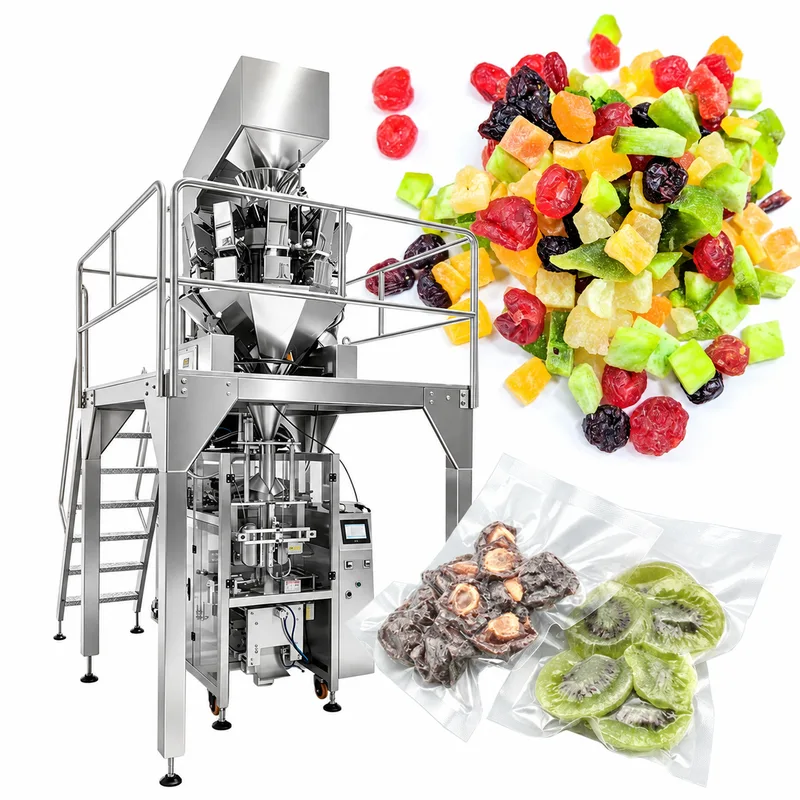
Dried Fruit Vacuum VFFS Packaging
Too deep an extraction can break fragile fruit or press soft pieces into a mass that is hard to portion. Size this vacuum VFFS line from your fruit samples, pack shape, film and gas route.
Vertical Form Fill Seal
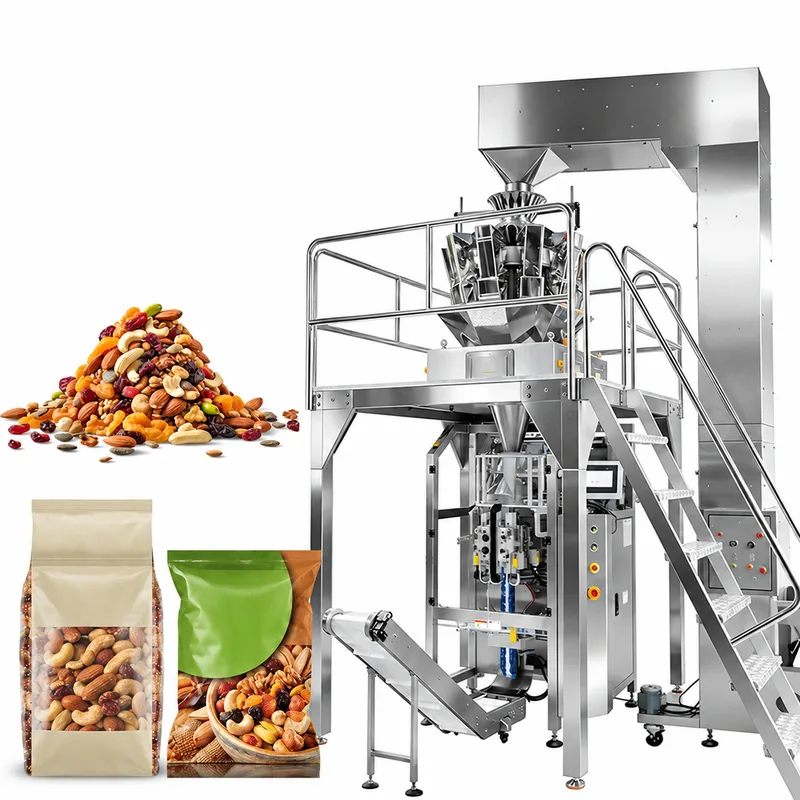
Nuts & Dried Fruit Multihead VFFS
A nut-mix bag can be on weight and still hold the wrong ratio of ingredients. Configure this multihead VFFS line from your blend, coatings, target weight and bag size.
What to send us
| Item | Why we need it | Example format |
|---|---|---|
| Dimensioned front panel, fold depth and overall bag length | Identify the evidence or open question for this review point. | Labeled brief entry + photo/drawing/record reference, or TBD. |
| Filled sample at the intended product weight | Identify the evidence or open question for this review point. | Labeled brief entry + photo/drawing/record reference, or TBD. |
| Required size changes and expected changeover frequency | Identify the evidence or open question for this review point. | Labeled brief entry + photo/drawing/record reference, or TBD. |
| Film sample and desired carton arrangement | Identify the evidence or open question for this review point. | Labeled brief entry + photo/drawing/record reference, or TBD. |
We reply within 24 hours.