
Pillow Bag Packaging
Plan a roll-film pillow pack around the product volume, back seam, end seals and the information needed to select a forming set.
On This Page
Define the pack before the machine
A pillow bag has a longitudinal seam and sealed ends. Decide first how the finished pack should look when filled. Choosing a machine from the empty bag width alone is a mistake. A low-density snack and a compact nut product can occupy very different volumes at the same fill weight. Send a filled sample when possible so the proposed pack can be reviewed in its real shape.
Specify the seam and artwork
Show where the back seam, date code and tear feature should sit relative to the printed front panel. Supply the film construction and a drawing from the film converter, including the repeat length. The machine proposal should identify the forming arrangement and the compatible seam construction. A handmade sample may look attractive, but it does not prove the same pack will run on an automatic line.
Review the filling path
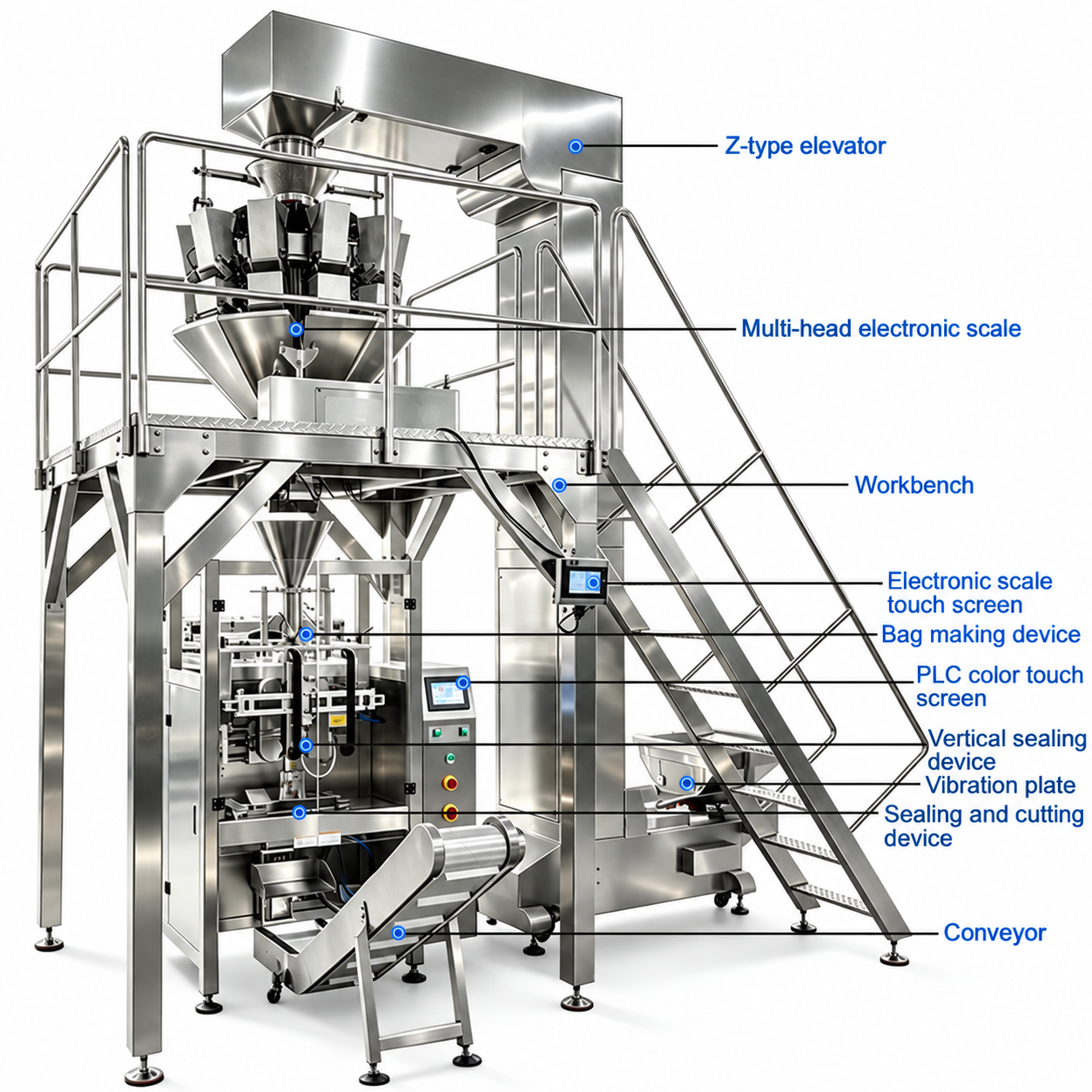
The forming tube and drop path must leave room for product to pass without undue restriction. With chips, think about damage in transfer and the space needed before the end seal closes. With candy or dried fruit, ask how pieces release from the feeding surfaces. Judge the weigher, feeder and bagger as one configuration. Bagger speed is only one part of the output of the whole line.
Agree what a useful trial shows
Run the trial with your own product and film. Check fill consistency, product in the seal area, pack appearance and sustained output. Keep samples from the start and from later in the trial. Note any gas-flushing option and the conditions used. A good result on one bag length or material is not approval of every format on the same machine.
Understand why a simple shape still needs a drawing
Most people recognize a pillow bag by its longitudinal seam and two end seals. That familiar outline can hide real differences. The seam may be positioned or built differently, the bag may have a particular opening feature, and the filled product may need more room than the flat dimensions suggest. A useful drawing covers the whole package, including the areas that cannot hold product because they form the closure.
Start with a physical filled sample where possible. Record the external width and length, the seal dimensions you want and the position of the graphics. If the new pack changes the serving quantity, do not assume a proportionally scaled drawing will work. Product volume, settling and the filling path have to be reviewed against the new dimensions. The result is a shared reference for the film converter and the equipment supplier.
Choose film on functional requirements
The packaging material has to suit both the product and the forming-and-sealing process. Get the laminate structure, sealing guidance and relevant barrier information from the converter, and pass it to the equipment supplier. The print finish you want is only part of the decision. Stiffness, friction and sealant behavior all influence how a film runs. A trial should therefore use representative production material.
Confirm reel winding, web width, print repeat and registration-mark placement before you order printed stock. A proof approved for appearance can still leave these machine-facing details open. If the pack has a tear notch or another opening feature, show where it sits relative to the seals and the printed instructions. Keep the film revision identifiable in the trial record, especially when several sample reels arrive during development.
Relate the forming tube to the largest pieces
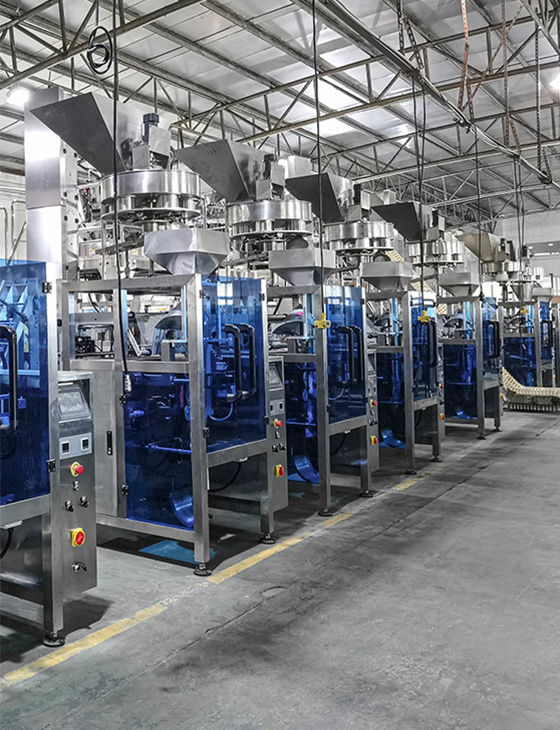
The catalog's solid-product vertical configurations, including candy and nuts, use pillow bags. The right forming arrangement depends on the bag you want and on the path the product takes into it. A narrow bag may look efficient on a shelf. The largest pieces still have to get through the filling route without repeated bridging or damage.
The supplier should demonstrate the proposed size with real product. Watch whether pieces arrive together, scatter into the sealing region or stay in the tube after discharge. For mixtures, check that the final package keeps an acceptable distribution of ingredients. Finished weight alone will not tell you that. If bag dimensions change during the trial, record the effect on product flow and appearance. Do not treat the change as cosmetic.
Use the longitudinal seam as an inspection point
The back or longitudinal seam needs its own review because it is formed differently from the end seals. Identify the agreed seam arrangement and inspect its position across several samples. Variations can point to film tracking or forming problems that the front panel does not show. Check how the seam relates to printed content and any coding area.
Give the end seals equal attention for product contamination, folds and consistency of appearance. The packaging team should define the integrity checks that suit the application, because visual neatness is a weak acceptance criterion on its own. Keep representative samples from the start, middle and end of the trial. If a setting is altered, mark the matching batch of samples. Any improvement can then be traced to a documented change.
Consider how bags are handled after discharge
A pillow bag leaves the machine as a flexible filled package. It still has to be collected, counted, packed into cartons or passed on for inspection. Talk about the downstream arrangement early. The headspace you want and the distribution of product affect how the bag lies on a conveyor and fits into secondary packaging.
With fragile contents, review the discharge drop and the next transfer, not just the sealing jaws. With bulky products, test the carton arrangement with real filled packs, because a compact flat drawing can mislead planning. Coding should stay readable after ordinary handling. Checks like these tie the package design to the factory's shipping unit. They also catch the case where an acceptable machine sample causes trouble at the next packing operation.
Make format changes a controlled procedure
If several products will share the pillow-bag line, work out which ones use the same former and film width and which need mechanical changes. Request a format sheet for each approved package covering tooling, film orientation and the adjustments needed to restart. Add the product-specific dosing setup where it differs. A format change then becomes a repeatable operation, not an informal series of adjustments.
A practical purchasing trial can include the smallest and largest planned packs, plus one changeover between them. Record the first acceptable samples after the change and the material used to get there. Base the final selection on clean filling, suitable seals, usable graphics and a workable downstream pack. The simple pillow shape can work well, but whether it does for you depends on those connected details for your actual product.
- Filled and empty bag samples with width and length
- Film construction, roll details and print repeat
- Back-seam position, tear feature and code area
Can two pack weights share one printed bag?
Two products can share a bag only if filling, appearance and labeling work for both quantities. Make filled samples at each planned weight and check headspace, product movement, seal clearance and carton fit. Confirm the printed quantity information and coding with the responsible packaging team. If one version looks oddly empty or puts product close to the seal, reconsider the dimensions. Adjusting the weight alone will not fix it. Document each accepted product-and-quantity combination. Then the common bag is a demonstrated choice, not an assumption made to simplify film purchasing.
Explore the Equipment
Vertical Form Fill Seal
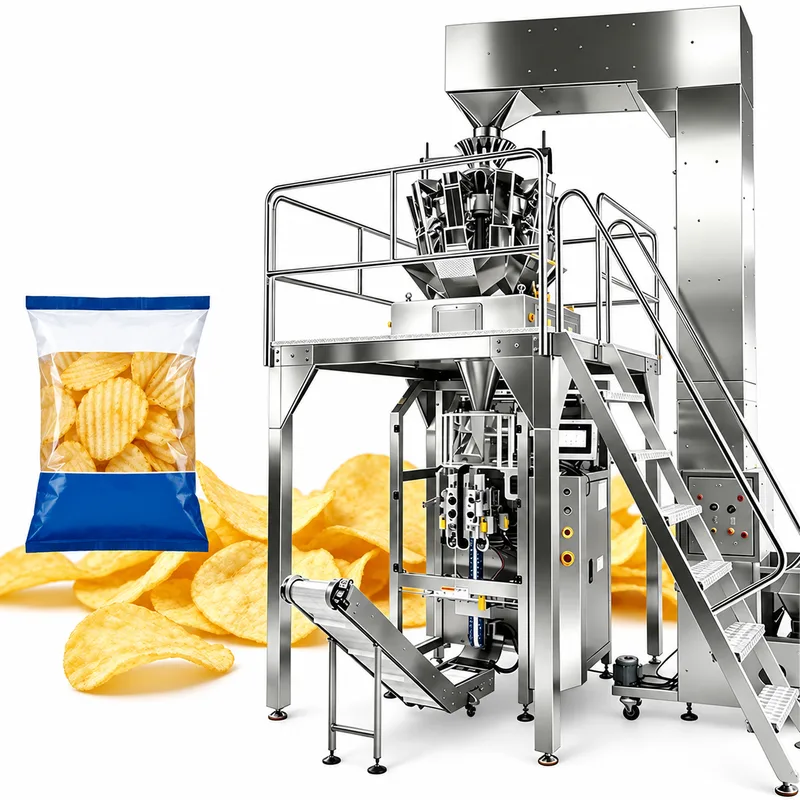
Chips Packaging with Nitrogen Flushing
An inflated bag can hide broken chips, a short fill or a weak seal. Size this weigher, VFFS and nitrogen-flush line from your chip volume, breakage limit and gas supply.
Vertical Form Fill Seal
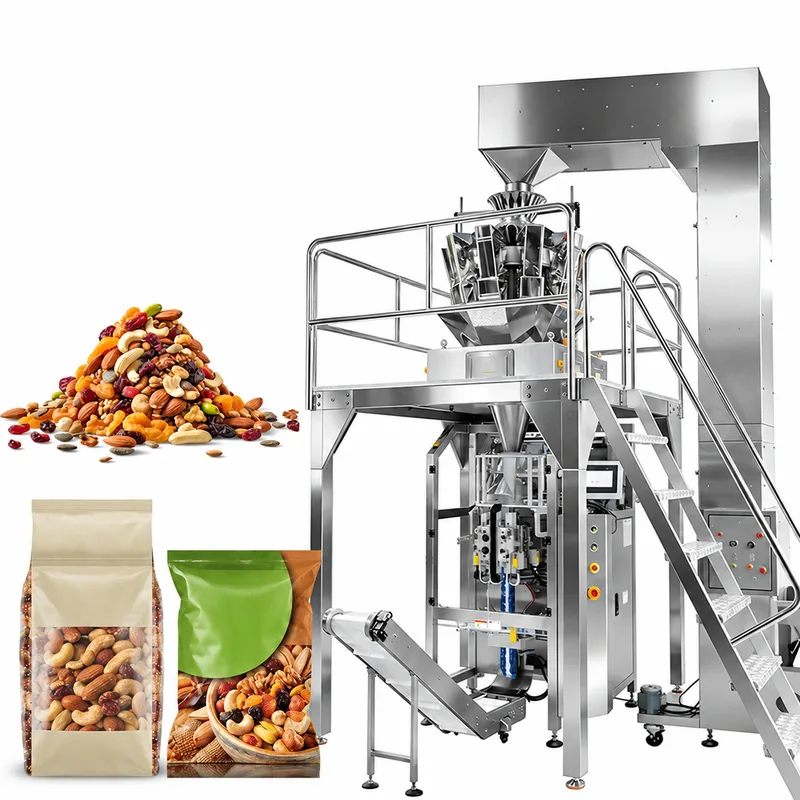
Nuts & Dried Fruit Multihead VFFS
A nut-mix bag can be on weight and still hold the wrong ratio of ingredients. Configure this multihead VFFS line from your blend, coatings, target weight and bag size.
What to send us
| Item | Why we need it | Example format |
|---|---|---|
| Filled and empty bag samples with width and length | Identify the evidence or open question for this review point. | Labeled brief entry + photo/drawing/record reference, or TBD. |
| Film construction, roll details and print repeat | Identify the evidence or open question for this review point. | Labeled brief entry + photo/drawing/record reference, or TBD. |
| Back-seam position, tear feature and code area | Identify the evidence or open question for this review point. | Labeled brief entry + photo/drawing/record reference, or TBD. |
| Target product weight, bag volume and output | Identify the evidence or open question for this review point. | Labeled brief entry + photo/drawing/record reference, or TBD. |
We reply within 24 hours.