
Packaging Machines / Vertical Form Fill Seal
Dried Fruit Vacuum VFFS Packaging
Too deep an extraction can break fragile fruit or press soft pieces into a mass that is hard to portion. Size this vacuum VFFS line from your fruit samples, pack shape, film and gas route.
- Sequence: film-roll bag forming, dosing, vacuum extraction, final seal
- Gas option: vacuum alone, or vacuum with a nitrogen step
- Speed, bag range and vacuum level: none published; confirm them in the proposal
- Check first: how much compression the fruit tolerates when opened, flexible or shaped pack, actual laminate, dosing for sticky or long pieces
We reply within 24 hours.
| Product and configuration | Dried Fruit Vacuum VFFS Packaging |
|---|---|
| Published scope | Sequence: film-roll bag forming, dosing, vacuum extraction, final seal; Gas option: vacuum alone, or vacuum with a nitrogen step; Speed, bag range and vacuum level: none published; confirm them in the proposal; Check first: how much compression the fruit tolerates when opened, flexible or shaped pack, actual laminate, dosing for sticky or long pieces |
| Inputs to provide | Supply normal dried-fruit clusters and fragile pieces for the extraction trial. Define the required filled shape and whether nitrogen is part of the vacuum sequence. Inspect seal contamination and opened-product condition on the same samples. |
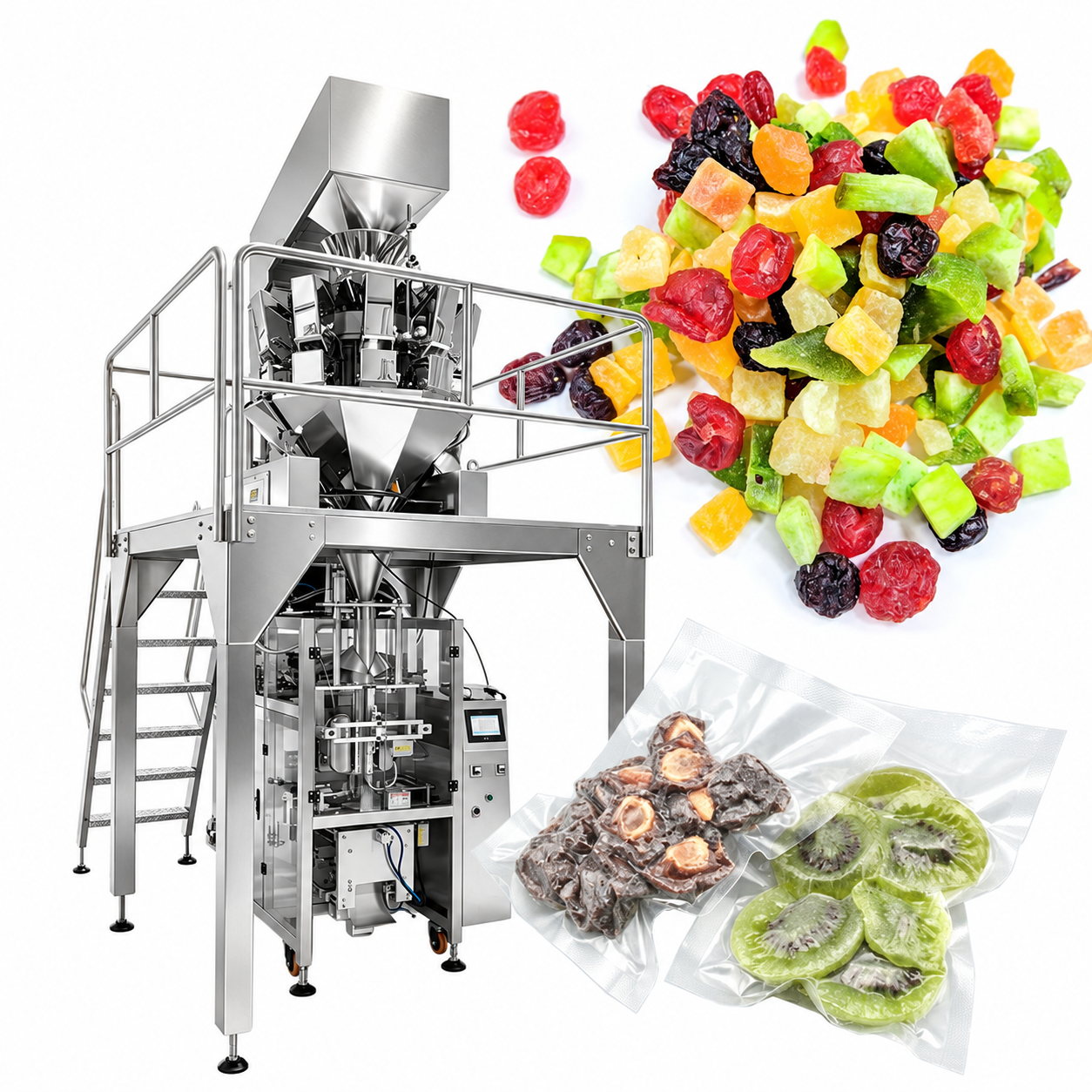
Configuration & Selection
Choose this route when your fruit tolerates the compression and the target pack shape can be reached by bag forming, extraction and any shaping step the proposal includes. Set too deep, extraction can damage porous pieces or compress soft fruit into a mass that is hard to portion. Confirm moisture, pack shape and the vacuum sequence with a sample trial. Send details of your normal and fragile fruit samples, target pack shape, film specification and whether a nitrogen step is needed through the enquiry form or WhatsApp; physical samples are arranged separately.
On This Page
What the vacuum VFFS configuration combines
This configuration starts with a reel of packaging film, forms a bag around a vertical filling tube, drops in a measured portion of dried fruit and pulls out the air before the final seal. The vacuum stage is the deciding purchase factor. The fruit has to tolerate the pressure difference. The filled pack has to keep a usable shape. The published configuration, explained in more detail on our Vacuum VFFS Systems page, pairs a vacuum arrangement with an optional nitrogen cycle and matching dosing equipment. Choose them together.
Raisins, dried mango slices and freeze-dried pieces handle very differently. A bag that looks compact with soft raisins may crush a delicate porous piece or fold sharply around an irregular slice. Begin with the finished package you want and the actual product. Specify whether you need a flexible vacuum pouch or a more structured pack. Then review how the proposed equipment produces that result.
Takeaway: Define the opened-pack condition you need before comparing vacuum equipment.
Following product and film through the line
At the product inlet, the chosen feeder must deliver material to the dosing system without making large clumps or an unstable head of product. Dried fruit can carry surface sugar, oil or loose particles. The feeder and discharge path need inspection as well as the scale. After dosing, the portion passes through the filling tube into the partly formed bag. The timing must leave the sealing area clear before the extraction and closing sequence starts.
On the film side, the roll unwinds through tension control and the forming shoulder. Longitudinal sealing makes the tube. The transverse seal sets the package boundary. The vacuum equipment then needs a defined connection to the open bag or extraction chamber. Request a sequence drawing showing where extraction happens, how the filled bag is supported and when the final seal is made. A general workshop photograph cannot settle those details.
Choosing extraction depth around the fruit
The right extraction setting follows the product and what you want from the package. Deeper is not automatically better. Soft fruit may turn into a compressed mass that is hard to portion once opened, while sharp edges may concentrate force against the laminate and fragile dried pieces may break during evacuation. Judge the product after opening as well as the look of the sealed bag. Include samples of the smallest and largest pieces normally present in the batch.
The source configuration also discusses vacuum with nitrogen introduction. If you want that route, the proposal should describe the order of the stages, the intended final package condition and how it will be checked. Agree which measurements to record during a trial, including the extraction cycle, pack condition and any required gas measurements. Storage claims should come from testing the complete food and packaging system.
Common mistake: Setting the deepest extraction available and judging only the sealed bag, then finding crushed or fused fruit when the pack is opened.
Takeaway: Pick the extraction setting from opened samples of your smallest and largest pieces.
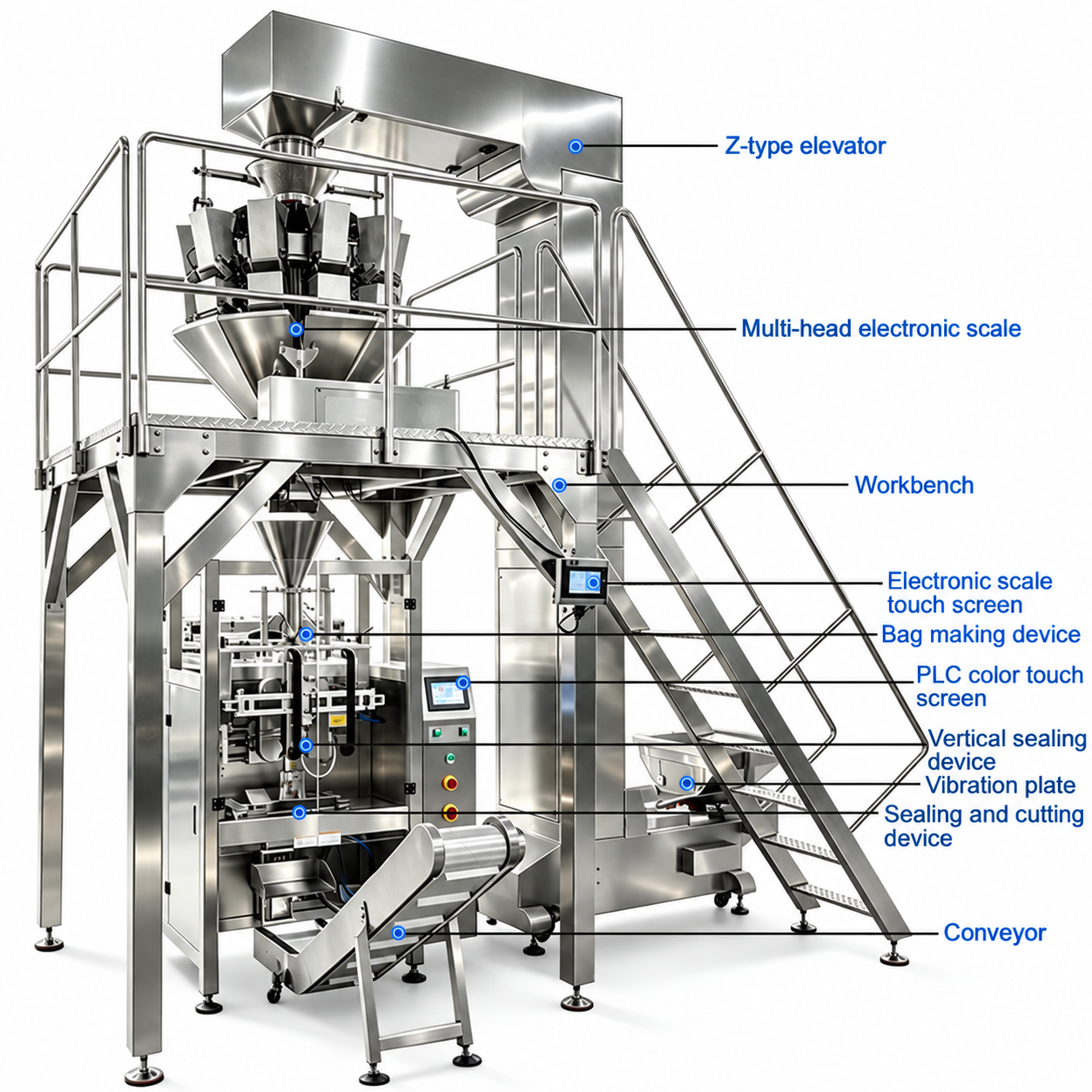
Matching the laminate and sealing surfaces
A vacuum package depends on the film barrier and on the film's ability to form a sound seal around the intended product. Submit the laminate specification, thickness, sealing layer information and, where available, a production roll. The catalog lists high-barrier laminate handling as part of this configuration, but a familiar material name does not prove a particular roll will work. The supplier needs to evaluate film stiffness, tracking, forming friction and sealing behavior on the actual construction.
Look closely at the product side of the seal. Sugar deposits and fruit fragments can stay near the bag mouth after filling. Extraction can stir up loose particles. Inspect the closing area during the sequence and assess the resulting seals with a method the packaging team agrees. Raising pressure or temperature without a diagnosis can distort the laminate. It leaves a contamination problem untouched. Check corners, folds and the longitudinal seam separately from the broad flat seal area.
Takeaway: Test your production laminate and inspect the product side of the seal, not only the flat seal area.
Dosing sticky pieces without trapping residues
Select the filler for the fruit's shape and flow, not from the target weight alone. Free-flowing small pieces may feed differently from long mango strips or clustered dates. Find out which hopper surfaces, feeder arrangement and chute geometry come with the equipment for the sample being tested. Surface treatment is worth evaluating. It cannot make up for a throat too narrow for the normal product size.
Watch several refill cycles during a trial. A line may look stable with a shallow quantity of freshly separated fruit and then turn inconsistent once the hopper is topped up from production containers. Look for bridging, delayed discharge and pieces held against the sidewalls. Does the next bag receive retained product from the previous dose? The cleaning assessment should cover these same locations, since residues you cannot reach can affect later batches. Confirm how operators remove and refit contact components without losing the settings that give predictable discharge.
Takeaway: Size the feeder and chute for the largest normal piece, then watch several refill cycles.
Pack shape, transport and downstream handling
Define the acceptable filled shape before you decide on the bag former and extraction arrangement. A compact pack may suit a carton layout. A less tightly drawn pouch may protect the fruit better. Finished width, filled thickness, corner folds and seal location all affect how the package travels onto the discharge conveyor. Ask to see filled samples transferred and accumulated, not just bags held upright for a photograph.
If a rigid or brick-like presentation matters, find out which shaping steps are actually included. A vacuum stage alone will not necessarily give a repeatable rectangular block. Check how variation in the dose changes the finished pack, and whether the proposed carton can accept it. Add downstream inspection, coding and packing interfaces to the line drawing. Their position should let operators see damaged or poorly formed packs and pull them out before they mix with accepted production.
Takeaway: If a brick-shaped pack matters, ask which shaping steps are included besides extraction.
- Supply normal dried-fruit clusters and fragile pieces for the extraction trial.
- Define the required filled shape and whether nitrogen is part of the vacuum sequence.
- Inspect seal contamination and opened-product condition on the same samples.
Changeover and routine operating checks
Changing from one dried fruit to another can take more than a new weight recipe. Residual oils, sugar coatings and long fragments may change how the next product moves through the feeder. A practical changeover plan lists the contact parts to clean, the film and former changes, the vacuum settings to review and the sample checks needed before release. The supplier should demonstrate that sequence with the two products that differ most.
At startup, verify the fitted former, loaded film, extraction connections and selected recipe against the job information. Watch a short sequence of filled packs before moving to routine production checks. During the run, tell a film-tracking problem from an extraction problem or inconsistent filling. A bag that fails to collapse could have several causes, including the extraction stage or a damaged seal. Record what you see and inspect the relevant stage. Not every malformed pack is a pump problem.
Takeaway: Plan changeovers around the two fruits that differ most, including vacuum settings and contact parts.
Preparing a useful trial and quotation request
Send representative dried fruit in its expected production condition, including typical clusters and broken pieces. Include the target weights, the bag appearance you want, laminate information and any retained pack used as a visual reference. State whether you want vacuum alone or a vacuum and nitrogen sequence. If that is still open, ask for samples from both proposed approaches and compare product condition, sealing consistency and handling after the pack has settled.
The quotation should name the dosing method, vacuum equipment, bag-forming parts, product-contact arrangement, utilities and downstream scope. Request a layout showing the space needed for film replacement, contact-part removal and routine service. Keep catalog descriptions apart from acceptance criteria. A useful trial record connects each sample to its product batch, film and settings. With that record you can compare the proposed configuration against your actual requirement, rather than relying on an impressive vacuum effect in a short video.
Takeaway: Keep a sample record that links each bag to its batch, film and settings.
Sample record for the extraction trial
Use one record line per sample bag, so vacuum-only and vacuum-with-nitrogen results can be compared after the packs settle. The headings follow the extraction and pack-shape checks above; fill them with your own observations rather than target values.
Sample state before packing: product batch, whether pieces are separated, clustered or fragile, and their condition as received.
Extraction step: the setting used and whether a nitrogen step was part of the sequence.
Sealed pack: corner and seam condition, any fruit or sugar in the closing area, and the filled shape on the discharge conveyor.
Opened pack: broken pieces, whether the fruit separates by hand, and how the shape compares with the retained reference pack.
Takeaway: Judge each sequence on opened packs from the same batch, not on how tight the sealed bag looks.
When this does not apply
This configuration has no published speed, bag-size range or vacuum level; ask the proposal to separate design ranges, proposed settings and any measured trial results. It covers packs formed from roll film; purchased premade pouches are handled by a different machine type. A gas connection or a tightly drawn pack is not evidence of shelf life. Very porous or freeze-dried pieces may not tolerate extraction at all, so test them before specifying the line.
Takeaway: Call a figure a trial result only when it was recorded on your fruit and film.
Frequently asked questions
Does vacuum packing always turn dried fruit into a brick-shaped pack?
No. Extraction draws the film around the pieces, but a vacuum stage alone will not necessarily give a repeatable rectangular block. If a rigid presentation matters, ask which shaping steps are included and check how dose variation changes the finished pack.
Can brittle or freeze-dried fruit take vacuum compression?
Only a trial on your own pieces answers this. Porous and fragile pieces can break during evacuation, while sharp edges press against the laminate. Send the smallest and largest pieces normally present and judge them after opening.
In what order are extraction and nitrogen introduced?
The proposal has to state it. This page does not fix an order; ask the supplier to describe the stages, the intended final pack condition and the gas measurements that will be recorded on trial packs.
What are the disadvantages of vacuum packing?
For dried fruit the main ones are product damage, packs that are hard to portion once opened, extra stress on the laminate at sharp edges and an added step in the cycle. A tight pack also says nothing about storage life on its own; that comes from testing the complete food and packaging system.
Will vacuum sealing fruit make it last longer?
This page cannot promise that. Storage life depends on the fruit, its moisture, the laminate, the seals and storage conditions, so a storage claim needs a test of the complete food and packaging system. Agree in advance whether trial samples will be kept and labeled for that work.
Bag Format Selection
Review the pack requirements for your enquiry. Compatibility is confirmed for the selected equipment and sample.
Planning Guides for This Configuration
These pages cover the system type, trial preparation and project checks that apply to this configuration.
Request a Packaging Configuration
We reply within 24 hours. Tell us what you need to pack. Leave quantity and output blank if you are still deciding. When you continue, WhatsApp opens with your enquiry written out so you can review it and send it to our team.
Explore the application · Configuration and project support
Related Packaging Configurations
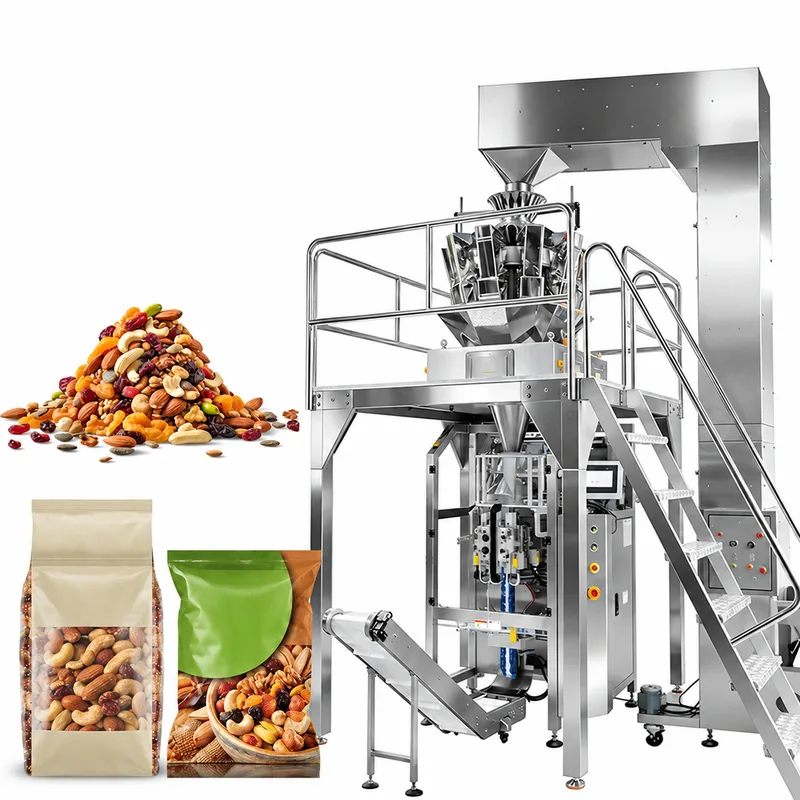
Vertical Form Fill Seal
Nuts & Dried Fruit Multihead VFFS
A nut-mix bag can be on weight and still hold the wrong ratio of ingredients. Configure this multihead VFFS line from your blend, coatings, target weight and bag size.
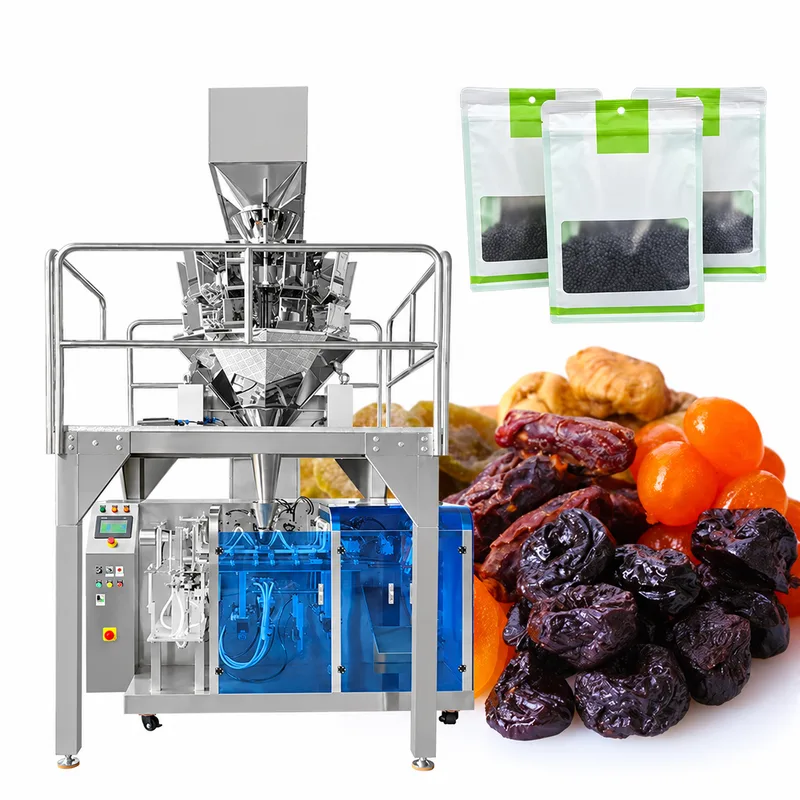
Premade Pouches
Fruit & Nuts Zipper-Pouch Packaging
A zipper pouch can be on weight while the fruit-to-nut ratio drifts. Specify this premade zipper-pouch line from your blend state, largest piece, net opening and fill weight.
Premade Pouches
Premade-Pouch Packaging with Desiccant
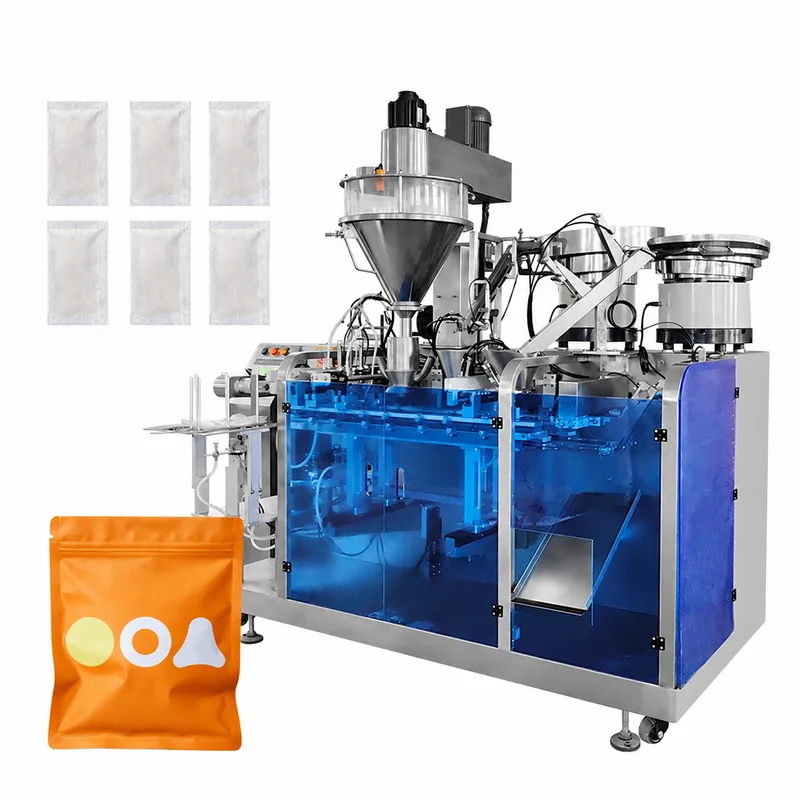
A pouch with the right food weight but a missing desiccant packet still fails. Specify this premade-pouch and desiccant-insertion line from your food, pouch and packet codes, insertion point and checks.
What to send us
| Item | Why we need it | Example format |
|---|---|---|
| Normal and fragile fruit samples | Shows clusters, surface sugar and the pieces most likely to break. | Sealed samples from a production batch, labeled with batch and packing date. |
| Target pack shape | Sets the former, extraction setting and any shaping steps. | Retained pack or photo with dimensions in mm. |
| Film specification | Barrier, stiffness and sealing layer decide forming and seal behavior. | Laminate structure and thickness; a production roll if available. |
| Gas route | Vacuum alone and vacuum with nitrogen are scoped differently. | One line: vacuum only, vacuum plus nitrogen, or undecided. |
| Target weights | Sets the dose volume and the bag space below the seal. | List of net weights in g per pack size. |
We reply within 24 hours.