
Packaging Machines / Premade Pouches
Fruit & Nuts Zipper-Pouch Packaging
A zipper pouch can be on weight while the fruit-to-nut ratio drifts. Specify this premade zipper-pouch line from your blend state, largest piece, net opening and fill weight.
- Route: premade stand-up zipper pouch; pick, open zipper, weigh, fill, seal
- Blend: premixed or separately dosed, decided by your ratio requirement
- Deciding inputs: largest piece, sticky ingredients, net zipper opening, fill weight
- Speed and pouch range: none published for this configuration
We reply within 24 hours.
| Product and configuration | Fruit & Nuts Zipper-Pouch Packaging |
|---|---|
| Published scope | Route: premade stand-up zipper pouch; pick, open zipper, weigh, fill, seal; Blend: premixed or separately dosed, decided by your ratio requirement; Deciding inputs: largest piece, sticky ingredients, net zipper opening, fill weight; Speed and pouch range: none published for this configuration |
| Inputs to provide | Identify adhesive ingredients, piece dimensions, and whether the recipe arrives premixed. Confirm filling clearance using the actual zipper pouch and largest food pieces. Inspect blend consistency and delayed pieces during replenishment and restart. |
Configuration & Selection
Settle two things first: how much clearance the zipper leaves for your largest pieces, and whether you buy total weight or a controlled ratio. A correct total weight does not show the recipe proportion, and sticky fruit or a narrow opening causes late pieces, jams and dirty zippers. Confirm product moisture, pouch dimensions and zipper design, and review flow and contact surfaces for sticky fruit. Send details of your blend state and ratio, largest and stickiest pieces, pouch with its net opening, and fill weights through the enquiry form or WhatsApp; physical samples are arranged separately.
On This Page
Weighing fruit and nuts into premade zipper bags
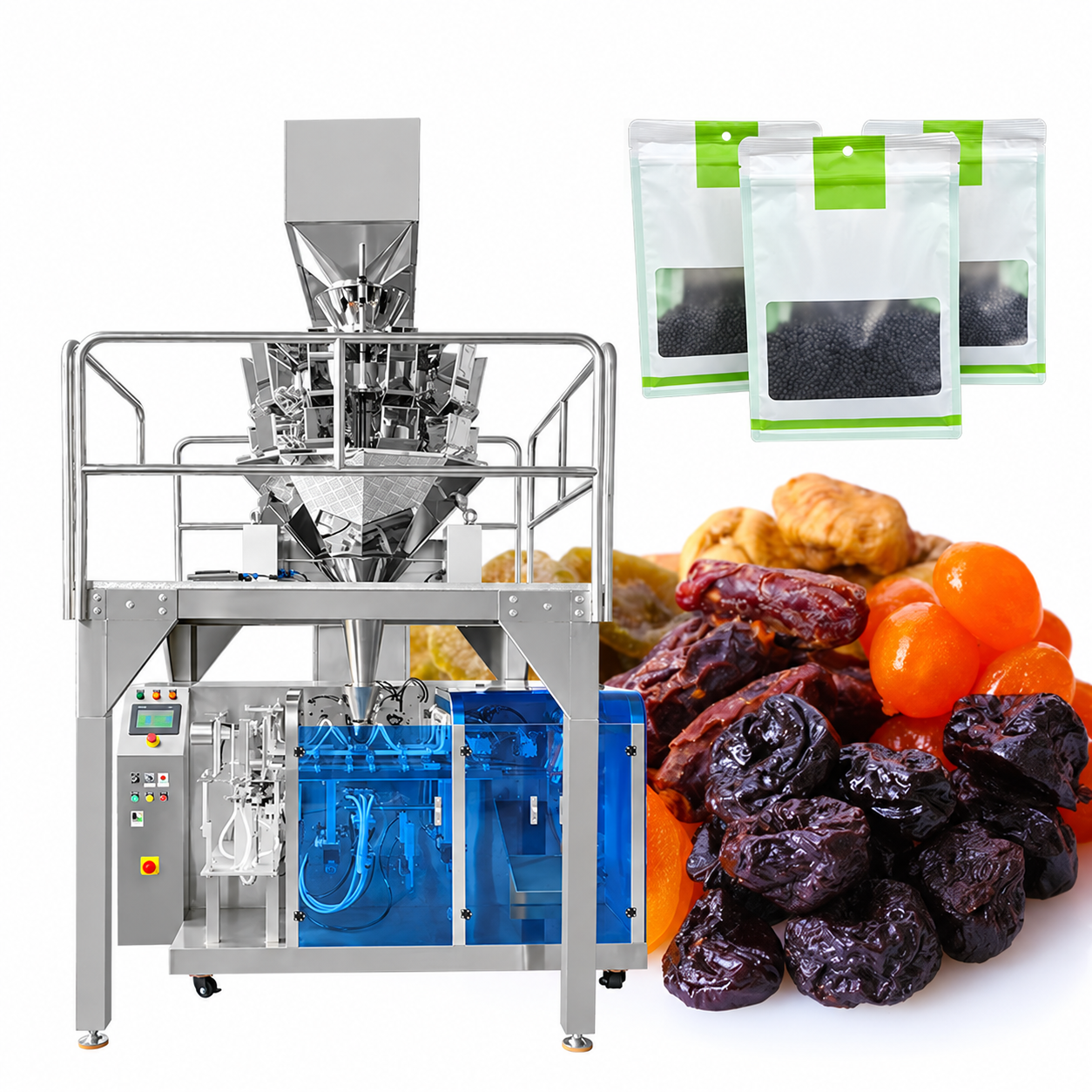
This configuration uses ready-made stand-up zipper pouches for solid foods such as dried fruit and nuts. In the published sequence, the machine picks up a pouch, opens the zipper, measures the product, fills, seals and discharges. That gives it two jobs: holding an open pouch steady, and dropping the intended quantity of product into it. Both have to work together. Whether they do depends on the bag construction and on how your particular food moves.
A dry nut mix and a sticky dried-fruit blend can sit in the same retail pouch and still behave very differently in the feed and weighing equipment. Treat the product description as an operating specification. A broad category label tells the supplier very little. Moisture condition, piece dimensions, coatings and the proportion of different ingredients all matter, so the final weigher, transfer surfaces and pouch tooling should be chosen from those details and from representative samples. Fruit products do not all flow alike.
Takeaway: Choose weigher, surfaces and tooling from the hardest-to-release ingredient and real samples.
Separate free-flowing and adhesive ingredients
Begin with the ingredient that is hardest to release. Sticky raisins, flexible fruit strips and oily nut pieces can each cling in different places: hopper walls, discharge gates, transfer chutes. Find out where product could build up in the proposed layout, and how operators will look into those areas. Run the trial on product at its expected production condition. A sample that dried out in transit flows more easily than the real thing and gives a false picture.
For blends, work out whether the ingredients arrive already mixed or need separate dosing before the pouch. A total weight target says nothing about recipe proportion. If your retail promise rests on the ratio of nuts to fruit, decide how that ratio will be prepared and checked. Talk openly about the limits of the quoted configuration too. Weighing a premixed product controls total weight; by itself it does not show the ingredient ratio. Whether separate feeding is needed follows from the ratio requirement you set, as described for premixed and separately fed products on our Nuts & Dried Fruit Packaging page.
Common mistake: Treating an on-weight pouch as proof that the fruit-to-nut ratio is right.
Takeaway: Decide whether ratio control is required before choosing the feeding arrangement.
Check zipper access and usable filling clearance
Send some unused zipper pouches and measure the distance from the top edge to the zipper, the opening width and the gusset shape. The usable filling opening is often smaller than the outside bag width suggests. Large fruit pieces or irregular nut clusters need clearance to enter without bridging across the mouth or hitting the zipper. The supplier should demonstrate opening with your actual pouch material before the transfer chute is settled.
After filling, look inside the zipper tracks. Fragments or coatings can collect near the opening even when the top seal looks clean. Decide in advance how you will judge zipper cleanliness and consumer reclosure on finished samples. Also check that the filled bag stands up and fits its carton without bulging too much. These checks tie the machine's handling geometry to the retail format. A pouch is more than a container of enough volume.
Takeaway: Measure the usable zipper opening on unused pouches and test it with the largest pieces.
Control the transfer of large and mixed pieces
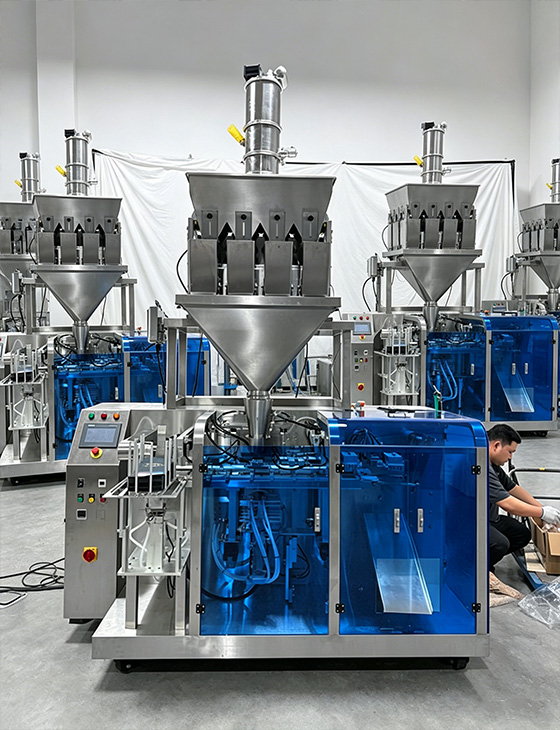
Have the supplier run a slow observation cycle and follow individual pieces through the discharge path. Look for ledges, narrow transitions or any surface where a flexible fruit slice can hang up. Then watch the same path at the intended running sequence. A piece released late can land in the next pouch or reach the seal area after the main dose, so retained product matters even if the average fill result looks fine.
Mixed products bring a second problem. The blend can separate because small particles travel differently from large pieces. Take samples from the beginning, middle and end of a trial batch and look for visible changes in composition. That is a diagnostic observation and does not replace an agreed recipe-control method. When ingredients move unevenly, look at the upstream mixing and feed as well as the machine. Adjusting only the final pouch timing may leave the real cause untouched.
Takeaway: Sample the start, middle and end of a batch to see segregation.
Plan residue removal and ingredient changes
Cleaning needs depend on the actual ingredients and coatings in your range. Ask the supplier to show how the feed parts, weighing components and discharge chute are removed or reached for inspection. Corners that hold sticky fruit and surfaces that gather fine nut fragments deserve the most attention. The proposal should also draw the cleaning boundary clearly, so operators know which upstream equipment is included and which stays the buyer's responsibility.
If recipes contain different allergens, your own changeover procedure has to define the cleaning and verification required. The catalog's broad list of compatible foods is no allergen-control procedure. A hands-on demonstration can show access and reassembly. Whether your verification requirements are met is something the plant decides. After reassembly, run a controlled first-off check for product release, pouch opening and seal cleanliness. It catches a displaced chute part or a setup change before a full batch is committed.
Takeaway: Run a first-off check for release, opening and seal cleanliness after reassembly.
Compare bag changes without hiding product changes
Pick trial formats that expose different challenges, for example a narrow zipper pouch with large fruit pieces and a wider pouch carrying a mixed nut portion. Write down the adjustments made to the bag magazine, opening arrangement, filling chute and supports. Then find out which of them can be recalled from a documented setup and which need a physical change part. A range given only as minimum and maximum bag width says little. Switching between those two products is the real test.
When you diagnose a changeover, keep product and packaging variables apart. Introduce a new fruit blend and a new pouch together, and an opening problem can look like poor product release. Where possible, get the pouch handling right first and then evaluate the new product through that stable format. Keep the setup record with the exact bag code and ingredient condition. Operators get a clearer starting point for later batches, and supplier support becomes more specific.
Takeaway: Change the pouch or the product in a trial, not both at once.
- Identify adhesive ingredients, piece dimensions, and whether the recipe arrives premixed.
- Confirm filling clearance using the actual zipper pouch and largest food pieces.
- Inspect blend consistency and delayed pieces during replenishment and restart.
Include interruptions in acceptance observations
Run enough material to see hopper replenishment, pouch replenishment, a pause and a restart. Sticky ingredients may behave differently after sitting on a contact surface, and blended products can change as the feed level drops. Note when a defect shows up relative to these events. Useful things to watch for are incomplete discharge, split or pinched pieces, poor zipper opening, contaminated seal areas and a finished pouch that has the wrong shape.
The supplier should show how the machine responds to a missing or unopened pouch, and you should confirm which of those checks come with the selected machine. Look at rejected samples one by one. Total output hides the reasons for rejects. A good trial record ties each result to the recipe, pouch lot, setup and product condition. If the supplier uses a substitute fruit or a different bag for an early demonstration, treat that run as exploratory. Final acceptance should still use the materials and operating situations you intend to run.
Takeaway: Tie each result to recipe, pouch lot, setup and product condition.
Build the quotation around a defined recipe range
Send an ingredient list, representative samples, intended portion sizes and the full pouch specification. Say whether the product arrives mixed, how it reaches the weighing unit and which recipes change most often. A floor sketch helps too, showing operator access for loading pouches, cleaning the product path and collecting finished packs. If you want a separate insertion or inspection operation, name it outright. A general packaging-line description will not cover it.
The proposal should list the included weighing arrangement, pouch-opening tools, contact surfaces, change parts and any optional detection functions. Unresolved flow issues belong on the list as trial questions, not quietly treated as solved. The aim is a configuration matched to a manageable recipe and package range. Extra sticky ingredients, larger pieces or new pouch constructions can then be qualified through focused trials with the same documented method, with no need to assume they are compatible.
When this does not apply
No speed, pouch range or fill range is published for this configuration. Total-weight weighing does not establish ingredient ratio. The broad list of compatible foods is not an allergen-control procedure; your changeover procedure sets the cleaning and verification. Detection functions for missing or unopened pouches are included only when quoted.
Takeaway: Qualify new ingredients, larger pieces or new pouches with focused trials.
Frequently asked questions
Why can the ratio vary when the total weight is correct?
Because total-weight weighing does not control the proportion of each ingredient. Small particles and large pieces travel differently, so a premixed blend can separate on its way to the pouch.
Can I test a new pouch and a new product in the same trial?
It is better not to. With both changed, an opening problem can look like poor product release. Get the pouch handling right first, then run the new product through that stable format.
How do I tell what caused a late-falling piece?
Run a slow observation cycle and follow pieces through the discharge path, then repeat at the intended speed. Look for ledges, narrow transitions and surfaces where flexible fruit hangs up, and note whether the problem follows a refill or a restart.
How should dehydrated fruit be packaged?
This page covers one route: premade zipper pouches filled by weight. Whether that suits your fruit depends on its moisture, stickiness and piece size, and on the pouch and barrier your product team selects.
Bag Format Selection
Review the pack requirements for your enquiry. Compatibility is confirmed for the selected equipment and sample.
Planning Guides for This Configuration
These pages cover the system type, trial preparation and project checks that apply to this configuration.
Request a Packaging Configuration
We reply within 24 hours. Tell us what you need to pack. Leave quantity and output blank if you are still deciding. When you continue, WhatsApp opens with your enquiry written out so you can review it and send it to our team.
Explore the application · Configuration and project support
Related Packaging Configurations
Vertical Form Fill Seal
Dried Fruit Vacuum VFFS Packaging
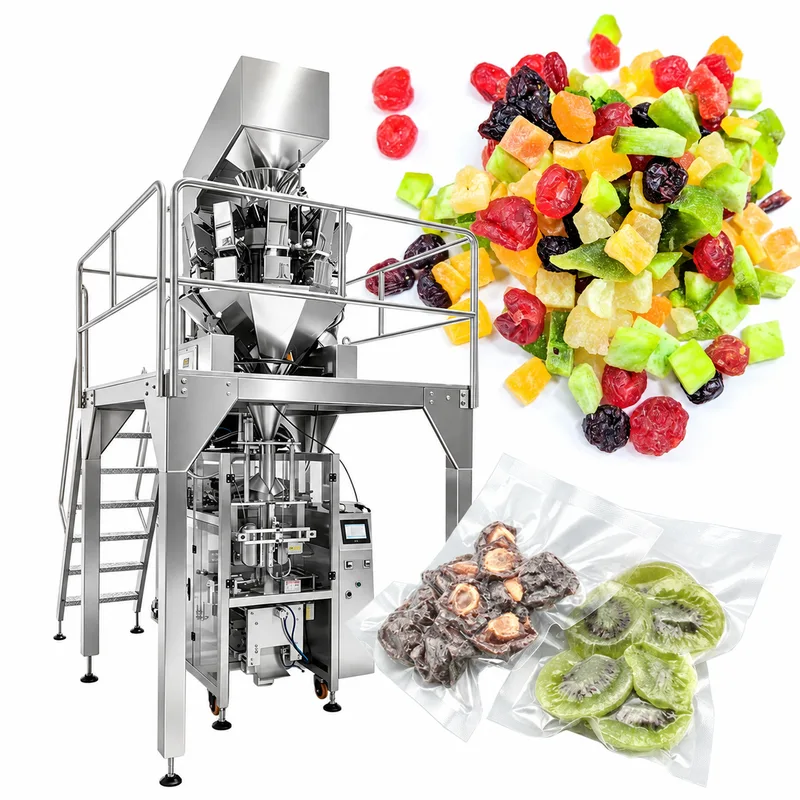
Too deep an extraction can break fragile fruit or press soft pieces into a mass that is hard to portion. Size this vacuum VFFS line from your fruit samples, pack shape, film and gas route.
Vertical Form Fill Seal
Nuts & Dried Fruit Multihead VFFS
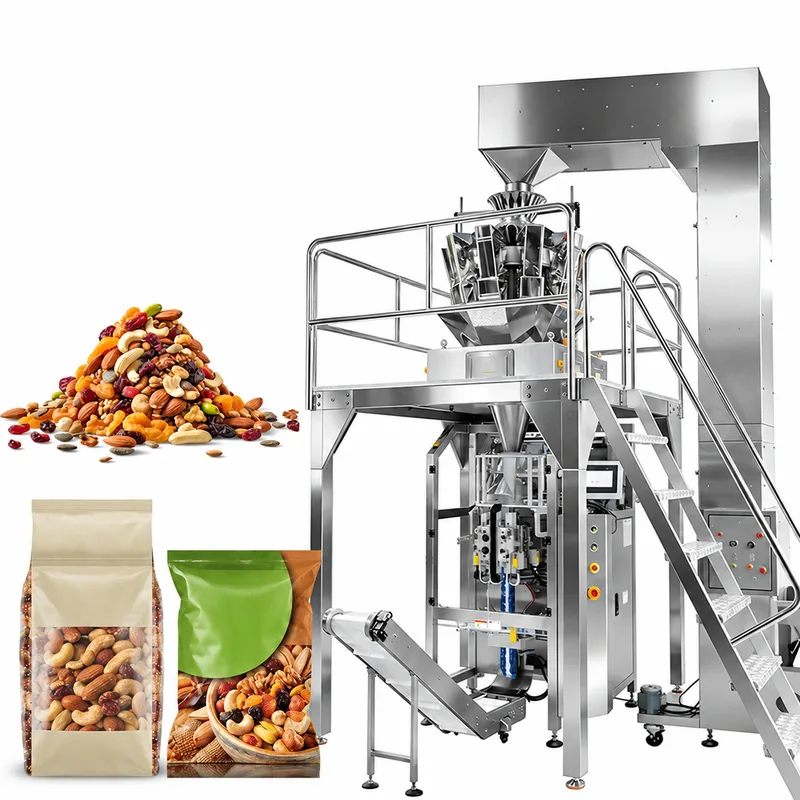
A nut-mix bag can be on weight and still hold the wrong ratio of ingredients. Configure this multihead VFFS line from your blend, coatings, target weight and bag size.
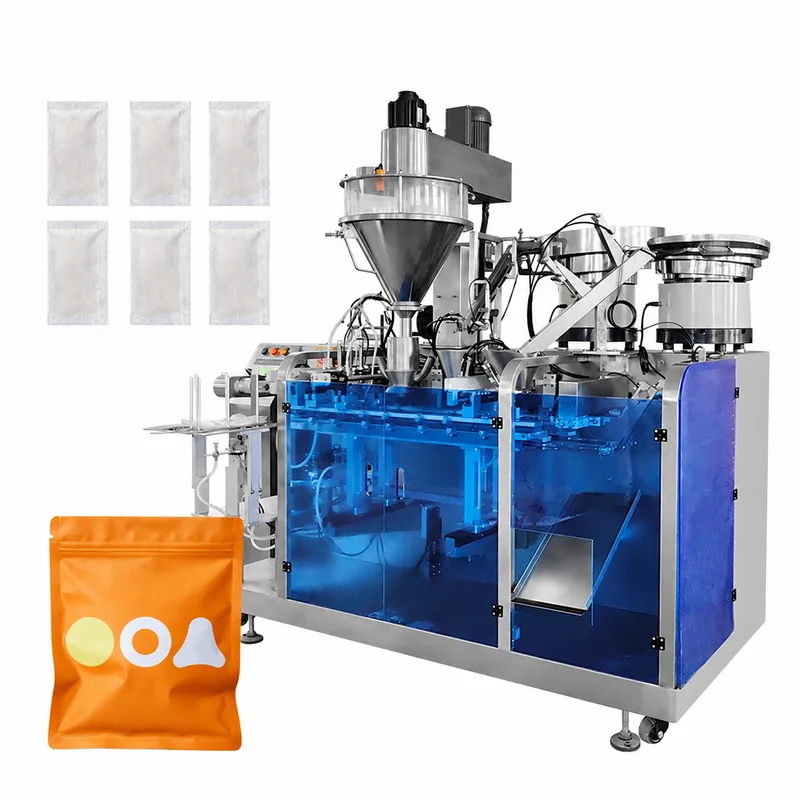
Premade Pouches
Premade-Pouch Packaging with Desiccant
A pouch with the right food weight but a missing desiccant packet still fails. Specify this premade-pouch and desiccant-insertion line from your food, pouch and packet codes, insertion point and checks.
What to send us
| Item | Why we need it | Example format |
|---|---|---|
| Blend state and ratio | Ratio control may need separate feeding. | Ingredient list with share by weight; premixed or separate. |
| Largest and stickiest pieces | Set chute size, contact surfaces and release checks. | Largest piece size in mm and samples in production condition. |
| Zipper pouches | Net opening and zipper position limit filling clearance. | Unused pouches with top-to-zipper distance and opening width in mm. |
| Fill weights | Set dosing range and filled pouch shape. | Net weights in g per pouch size. |
| Recipe change pattern | Drives cleaning and change parts. | Recipes changed most often and changes per day. |
We reply within 24 hours.