
Premade Pouch Filling and Packing Machines
How premade pouch filling and packing machines pick, open, fill and seal ready-made stand-up, zipper and spout pouches, and how to compare them with VFFS.
Scroll horizontally to read all columns, conditions and sources.
| Configuration | Product it fills | Handling and filling steps | Send before a trial |
|---|---|---|---|
| Milk and beverage premade-pouch filling | Liquid products, including milk, juice and beverage concentrates | Premade-pouch handling; liquid dosing and filling; sealing and finished-pouch discharge | Pouch construction, fill temperature and cleaning requirements; product treatment and cold-chain needs are specified separately |
| Coffee bean doypack packaging | Coffee beans in stand-up pouches | Automatic bag retrieval and opening; weighing and filling; premade-pouch sealing | The actual pouch, including zipper and valve details |
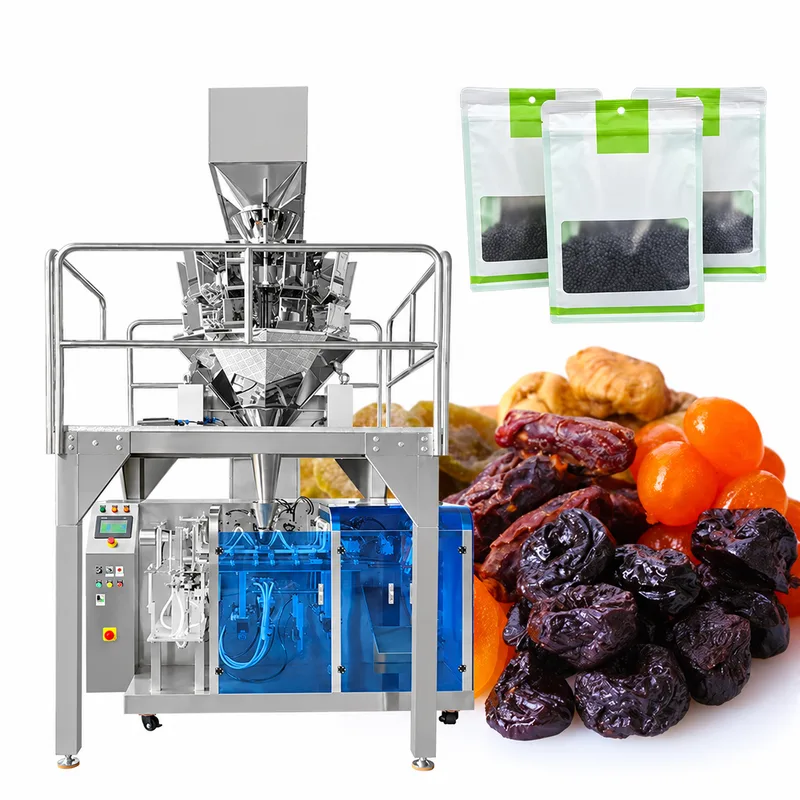
| Fruit and nuts zipper-pouch packaging | Dried fruit, nuts and other solid products | Zipper-pouch opening; product dosing and filling; finished-pouch sealing | Product moisture, pouch dimensions and zipper design; sticky dried fruit needs a flow and contact-surface review |
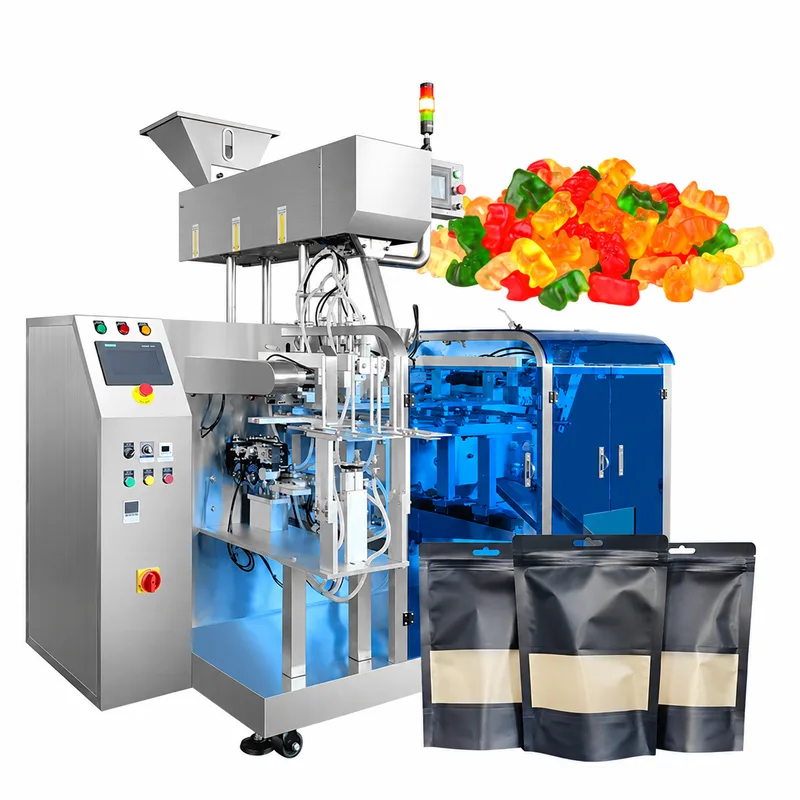
| Gummy candy zipper-pouch packaging | Gummies and soft confectionery | Automatic pouch and zipper opening; weigher integration; top sealing and discharge | Candy samples, surface-coating information and the finished pouch |
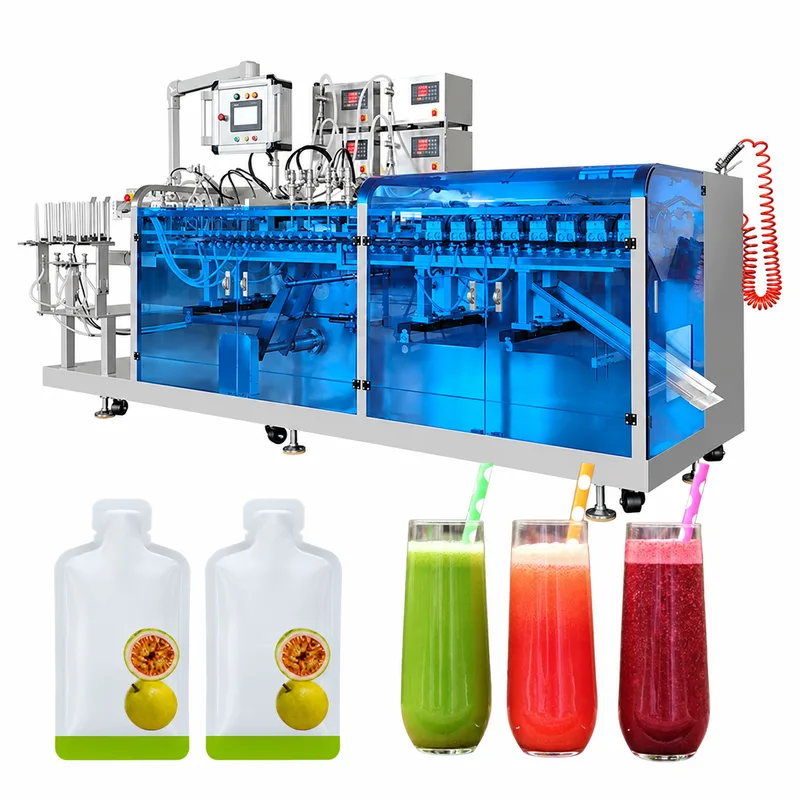
| Juice and beverage pouch packaging | Juice, concentrates and jelly drinks | Automatic pouch handling; liquid filling; pouch sealing and discharge | Fill volume, viscosity, product temperature and pouch material |
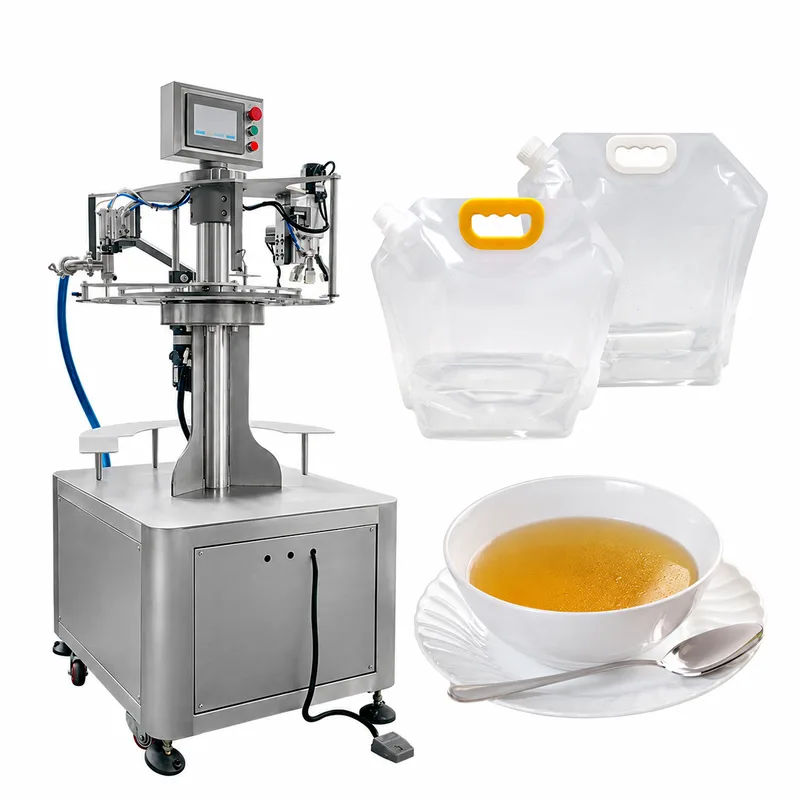
| Spout-pouch filling machine | Spouted pouches filled through the neck (liquid-product configuration) | Loads the spouted bag, fills through the neck, then feeds and screws the cap | Pouch neck dimensions, closure details and product characteristics |
| Premade-pouch packaging with desiccant | Solid products that need a separate moisture-control packet | Premade-pouch packaging; weighing and filling; desiccant insertion | Desiccant packet dimensions, insertion position and detection requirements |
On This Page
Pouch filling machine, pouch packing machine or doypack machine: what the names cover
Buyers describe this equipment with several names. A premade pouch filling machine, a pouch packing machine, a stand-up pouch machine and a doypack machine all refer to a machine that takes pouches manufactured elsewhere, opens them, fills them and seals the top. Pouch filler, pouch filling and sealing machine and pouching machine are shorthand for the same job. A pouch making machine is different: it makes the pouch from film and does not fill it, while a VFFS machine forms the bag from roll film as part of the same pass that fills it.
When a quotation says only pouch machine, ask whether the pouches arrive ready-made or are formed from roll film, and whether the quotation includes the weigher or liquid filler. The catalog groups its premade-pouch configurations by what they fill: solids such as coffee beans, nuts, dried fruit and gummies, liquids such as milk, juice and beverage concentrates, spouted pouches, and pouches that also receive a desiccant packet.
How a premade pouch machine works, step by step
A premade pouch machine repeats one sequence on pouches that arrive finished. The pouches are loaded into a magazine or onto an infeed, and the machine picks one and grips it. If the pouch has a zipper, the opening step must separate the zipper as well as the pouch mouth. The pouch is then filled with a measured dose of solid product or liquid, any settling or gas step takes place, the top is sealed, and the finished pouch is discharged. The catalog profiles describe the sequence in their own words: the coffee doypack configuration picks and opens each stand-up pouch, weighs and fills the beans and seals the top, the gummy configuration opens the pouch and zipper, fills, top seals and discharges in one sequence, and the spout configuration loads the spouted bag, fills through the neck and feeds and screws the cap.
Ask each supplier to walk through the same sequence for your pouch and to say what the machine does when a step fails. A pouch that is missing or not opened should not receive product, and the quotation should say whether that check is included, which sensors are used and how the operator clears the fault.
Start with the finished stand-up or zipper pouch
Premade-pouch equipment retrieves and opens bags before filling and sealing. Zippers, gussets, spouts and valve positions affect gripping, opening and sealing. Send actual pouch samples early in the selection process.
Configure the pouch filling machine around the material
Coffee beans, nuts and candies can use weighing systems; beverages and sauces require a liquid filling configuration. Product-contact surfaces, filling nozzles, cleaning needs and pouch stability should be reviewed together.
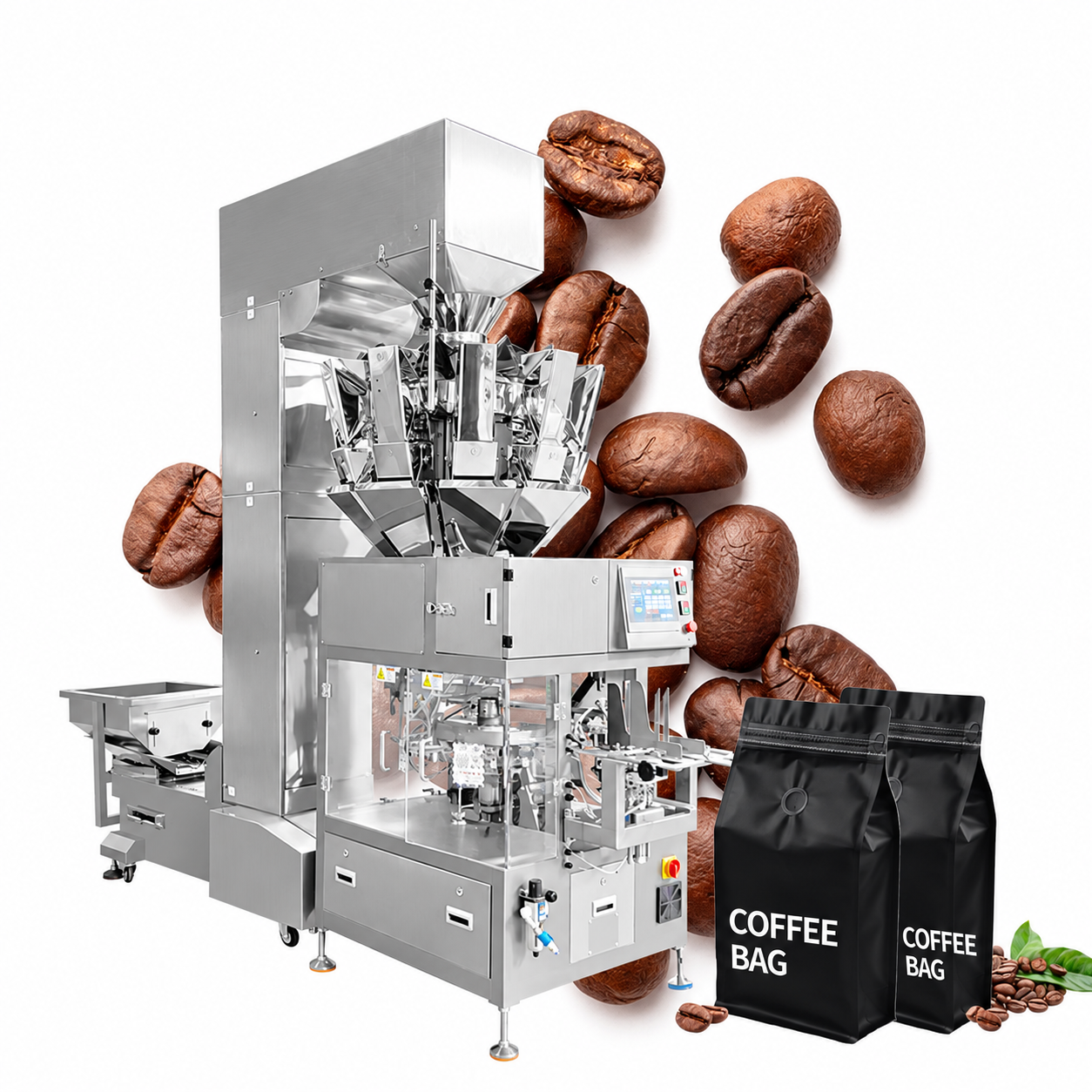
Compare premade pouch machine types by product and pouch
The table above sets the seven premade-pouch configurations in the catalog side by side. Use it to find the closest starting point. Solid products such as coffee beans, dried fruit and gummies follow a weighing and filling route. Milk, juice and other liquids use a liquid filling route, spouted pouches add neck filling and cap feeding, and the desiccant line adds an insertion step for a separate moisture-control packet.
None of the premade-pouch profiles publishes a speed, pouch size range or power figure, so those items must come from a written proposal for your pouch and product. Ask the supplier to state the pouch dimensions, fill weight or volume and pouch construction that each figure applies to, and send the same pouch sample to every supplier you compare.
The catalog describes two filling routes: weighing for solid products and liquid dosing for liquids. No catalog profile describes powders or pastes, so if your product is one of those, ask which dosing device the supplier proposes, such as an auger for powder or a pump or piston for paste, and ask for a trial with your own product.
Rotary, inline or semi-automatic: which layout to ask about
Premade pouch machines are usually described as rotary, inline or semi-automatic. A rotary machine carries each pouch around a turret of stations, an inline machine moves pouches along a straight track, and a semi-automatic machine needs an operator to place each pouch. The right choice depends on the output you need, the floor space you can give it and how often the pouch format changes. The catalog profiles on this site do not say which layout each configuration uses, so ask for it in writing.
Measure the floor area, ceiling height and maintenance access first. Then mark where the weigher or liquid filler will sit above the machine and where finished pouches leave it. A producer starting with hand-fed pouches should also ask what can be added later, such as an automatic pouch feeder.
Pouch styles and what each asks of the machine
Stand-up pouches, also called doypacks, have a bottom gusset so that they stand on a shelf, and the machine must open the mouth wide enough for the product to enter without disturbing that base. Flat and three-side-seal pouches have no base and are usually simpler to open, but they need different support. A zipper adds a step that opens it and keeps it clear of the top seal. A spouted pouch needs its neck held for filling and a cap fed and screwed on, as the catalog's spout-pouch profile describes.
For every style, send physical pouches instead of drawings alone, and state which features the pouch supplier adds and which the machine must handle. The bag style pages for stand-up, zipper and spout pouches list what to check for each.
Begin with the pouch that will arrive at the factory
A premade-pouch system handles a package that has already been manufactured by a pouch supplier. Its suitability therefore depends on the actual supplied pouch, including dimensional variation, stiffness, zipper construction and top-edge condition. A sales photograph does not reveal all of those details. Send physical empty pouches from the intended source, and identify the material construction and nominal dimensions before asking for a final machine configuration.
The catalog includes configurations for coffee beans, nuts, dried fruit, gummies, milk and beverages. These illustrate different filling requirements within the same broad packaging approach. They do not establish that one filler can handle every product. Treat pouch handling, product dosing and final closure as connected decisions, each requiring a defined sample and a clear description of the planned operating conditions.
Observe pickup, opening and support separately
Follow an empty pouch through the proposed handling sequence. The machine must take a pouch from the supply, position it, open the filling area and support it while product enters. A zipper adds another opening requirement. A bottom gusset may need to unfold sufficiently for the intended fill. Ask the supplier to show how the quoted configuration handles your exact pouch rather than demonstrating a visually similar sample.
Watch for repeated small adjustments during the demonstration. A machine that opens the first few pouches successfully still needs evaluation across a representative stack and after replenishment. Record any missed pickups, incomplete openings or positioning changes. Clarify the machine response when opening is unsuccessful, including whether product filling is prevented. An agreed sequence for abnormal conditions helps define the expected scope of the control system.
Match the filling system to solids or liquids
For coffee, nuts and confectionery, the catalog describes weighing and filling arrangements. Product release, drop path and the opening width of the pouch influence how a weighed dose reaches the package. Sticky gummies or dried fruit may require a different handling review from free-flowing beans. A large dose also needs enough temporary space while the product settles, not merely enough volume in the final standing pack.
For liquids, specify viscosity, filling temperature, particles and foaming tendency. The liquid delivery arrangement must suit those conditions and the available pouch opening. A nozzle or dosing change may affect cleanliness around the final sealing area. Product treatment, preservation and cold-chain decisions remain separate process responsibilities; selecting a pouch filler does not by itself establish that a beverage will be shelf stable or suitable for a particular distribution method.
Define the top seal independently of the zipper
A reclosable zipper and the production seal serve different purposes. The final closure needs an agreed location and suitable clear material above the zipper where that construction requires it. Product trapped in this region can affect the sealing result. Review the filling nozzle or chute position, the amount of headspace and how the pouch is presented to the sealing station.
Ask the pouch supplier to provide the relevant sealing guidance for the chosen laminate, then confirm the result on the proposed machine. Visual appearance is useful but should not be the only agreed check. Define the inspection or package tests appropriate to the application with the responsible packaging team. Retain filled samples with their material lot and trial settings so that later comparisons refer to an identifiable package rather than an unrecorded demonstration.
Sealing method is a separate question from seal position. Thick multi-layer laminates and thin films may need different sealing methods, such as heat, impulse or ultrasonic, so give the pouch supplier's sealing guidance to the machine supplier and ask which method and jaw type the quoted machine uses.
Make optional operations explicit
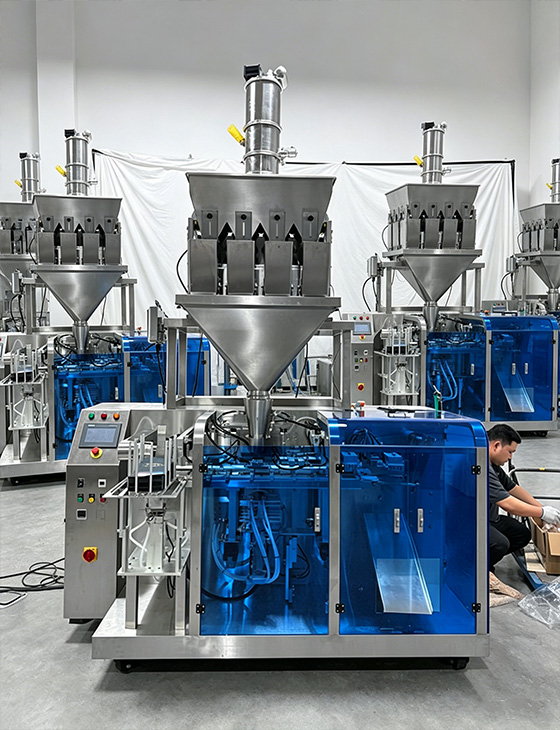
Some applications add a valve, a zipper, a desiccant packet or a spout to the package specification. Determine whether each item is already present in the supplied pouch or must be handled during filling. The catalog includes a premade-pouch configuration with desiccant insertion, but that option still needs packet dimensions, insertion position and detection requirements. The presence of an accessory in one configuration does not make it standard on every machine.
Use a responsibility table covering the pouch converter, equipment supplier and factory. For every added component, record who supplies it, how it is oriented, how compatibility is checked and what happens when it is missing or misplaced. This is particularly valuable when multiple suppliers are involved. It prevents a gap between a pouch drawing that assumes an operation and a machine quotation that excludes it.
Other options that suppliers often list include date or lot coding, embossing in the seal, gas flushing before filling, a dust hood for powders and a station that shakes the pouch so the contents settle before sealing. The catalog profiles describe the desiccant insertion option only, so treat each of the others as an item to confirm as included or excluded.
Premade pouch machine or VFFS bagger: what to compare
Both routes can produce a filled, sealed pack, so compare them by what each one starts from. A VFFS bagger starts with a roll of film and forms the bag around a forming tube, so the bag width follows the former and film width. A premade-pouch machine starts with a finished pouch, so the pouch supplier decides the shape, zipper, spout or valve, and the machine has to pick up, open and fill whatever arrives. Put the same product and pack on both quotations and ask each supplier what is bought, stored and changed when the pouch size or the product changes.
If the pack is still undecided, read the guide that compares the two routes and the VFFS system page for the roll-film side. Keep the decision tied to the pack your customers will see rather than to the machine name.
Compare the routes on four points. For pouch shape and features, premade pouches leave the decision with the pouch supplier, while a VFFS bagger leaves it with the former and the film. For purchasing, one route stores finished pouches and the other stores rolls of film. For a size change, one route adjusts handling and opening settings and the other changes the former. For seal problems, premade pouches need the pouch material and the machine seal reviewed together, which is why the pouch sample matters.
Pouch size changeovers and recipes
If you run more than one pouch size or product, list the changes you expect in a normal month. Moving to a different pouch width may involve adjusting the grippers and the opening mechanism, changing a filling nozzle or funnel, and loading a different dose recipe. Ask which of these are adjustments and which are replacement parts, and have the supplier show one real size change during a trial, including the time to the first acceptable pouch. The catalog does not publish changeover times, so do not carry a figure over from another supplier's page. The changeover planning guide gives a checklist for the transition.
Check cleaning access, build and wear parts
The catalog profiles do not publish the frame material, protection rating, washdown rating or sanitary design of any premade-pouch configuration, so ask for them in the quotation. For liquids such as milk and juice, the profiles ask you to confirm cleaning requirements together with the pouch and the fill temperature. Ask the supplier to show how the filling nozzle, funnel and other product-contact parts are reached and removed.
Also request a list of wear parts, such as grippers, suction cups and seal bars, with part identification, and ask which can be changed by the operator. No maintenance interval or part life is published, so ask for them in writing, together with the training, installation and spare-part support included in the quotation. The spare parts guide explains what to prepare when you order.
Compare operating work as well as automatic cycles
Premade pouches still need to be delivered, stored and loaded. Consider how an operator replenishes the pouch supply, removes packaging debris and changes to another format. Review access for cleaning the product-contact parts and for clearing a pouch-handling fault. The proposed floor plan should allow these tasks without requiring awkward movement around adjacent machines or obstruction of the finished-pouch discharge.
When comparing rollstock and premade-pouch approaches, use your actual mix of formats and production quantities. Include pouch purchasing, material storage, changeover work and the desired finished presentation in the discussion. A visually elaborate pouch may support a particular retail objective, while a simpler pack may suit another product. The correct comparison is between complete operating scenarios with defined packaging materials, rather than between two machine names alone.
Set acceptance criteria for the complete finished pouch
A useful trial combines the intended product and pouch rather than proving each separately. Record pickup success, opening, dose delivery, seal cleanliness, finished appearance and discharge handling over the agreed run. Inspect samples after ordinary movement and standing, because a pouch that looks balanced at the sealing station may behave differently once its contents settle.
Include the smallest and largest planned formats if both are part of the purchase. Demonstrate the actual adjustments and identify any replacement parts. For each successful sample, keep the pouch specification, product condition and configuration details together. Where a particular component or formulation was unavailable, mark the remaining verification clearly. This gives the purchasing team a practical account of what was demonstrated and what must still be confirmed before routine production begins.
- Production pouch samples and opening reliability
- Fill opening, zipper clearance and product transfer
- Closing seal, package inspection and format changes
What to send for a premade pouch machine quotation
A premade pouch quotation depends on two samples: the pouch and the product. Send physical pouches from your intended supplier with a drawing that shows the dimensions, the zipper, spout or valve, and the clear area above the zipper. Add the product sample, the fill weight or volume and, for liquids, the viscosity, temperature and any particles. State the output you need in accepted pouches per shift, the space and utilities available, and the options you want, such as gas flushing, coding or desiccant insertion.
Ask what the quoted price excludes, for example the weigher or liquid filler, an infeed, a discharge conveyor, a checkweigher, installation and training. The catalog does not publish prices, so compare quotations only when pouch, product, output and options match. The packaging brief guide and the sample testing page explain how to prepare both.
How should alternate pouch suppliers be qualified?
Treat an alternate pouch as a component change even when its nominal dimensions match an approved design. Compare the drawing, material construction, top-edge condition, zipper if present and bottom-gusset behavior. Run the alternate sample through pickup, opening, filling and sealing, keeping its results separate from the original pouch. Ask the machine supplier which adjustments are acceptable within the approved setup. This creates a practical qualification record for purchasing staff and avoids an informal substitution based only on price or appearance. It is particularly useful when continuity of supply requires more than one converter to make the same branded package.
Explore the Equipment
Premade Pouches
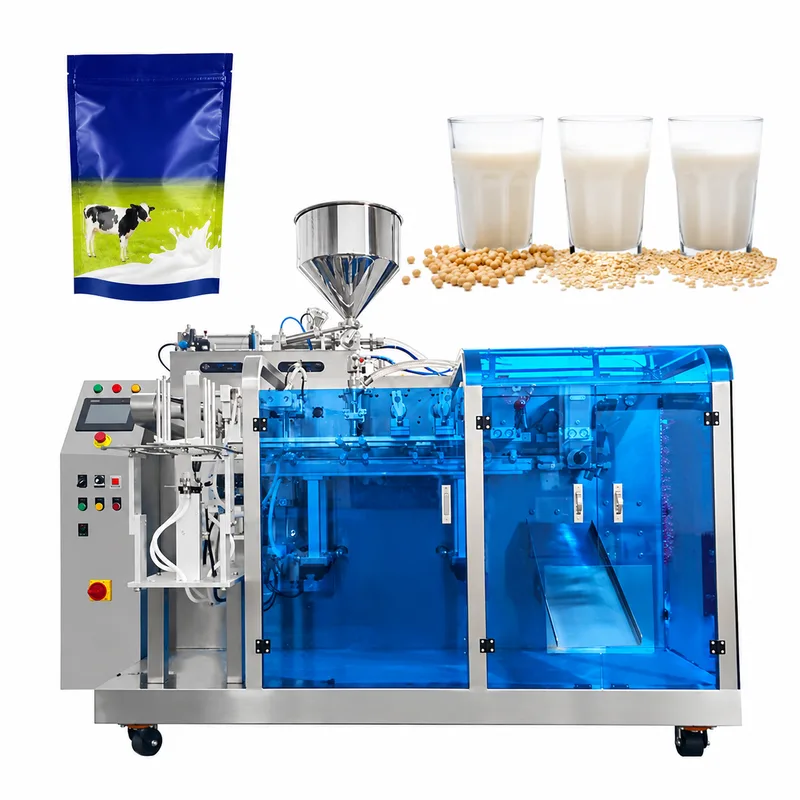
Milk & Beverage Premade-Pouch Filling
Treating a beverage pouch filler as a ready dairy system leaves treatment, cleaning and cold chain unspecified. Use this premade-pouch configuration as the starting point for a milk or beverage review.
Premade Pouches
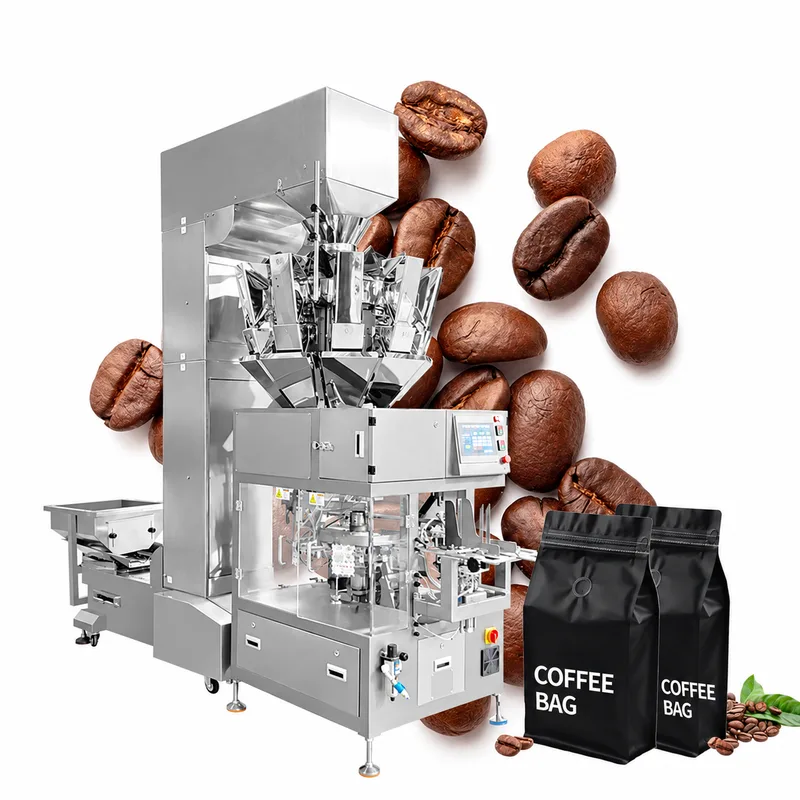
Coffee Bean Doypack Packaging
A valve or zipper too close to the pouch mouth catches beans and spoils the seal. Size this premade doypack line for coffee from your actual pouch, bean condition and fill weights.
Premade Pouches
Fruit & Nuts Zipper-Pouch Packaging
A zipper pouch can be on weight while the fruit-to-nut ratio drifts. Specify this premade zipper-pouch line from your blend state, largest piece, net opening and fill weight.
Premade Pouches
Gummy Candy Zipper-Pouch Packaging
Gummies that stick, fold or leave coating on the zipper make on-weight pouches unsellable. Specify this weigher and zipper-pouch line from your coating, piece size, net opening and changeover order.
Premade Pouches
Juice & Beverage Pouch Packaging
Foam or a trailing drop at the pouch mouth contaminates the top seal and the pouch leaks. Specify this premade-pouch juice filler from your beverage condition, fill quantity and actual pouches.
Premade Pouches
Spout-Pouch Filling Machine
A cap that looks seated but is not engaged leaks after shipping. Specify this spout-pouch filler and capper from your pouch, neck drawing, matching cap and liquid, as a stand-alone or integrated station.
Premade Pouches
Premade-Pouch Packaging with Desiccant
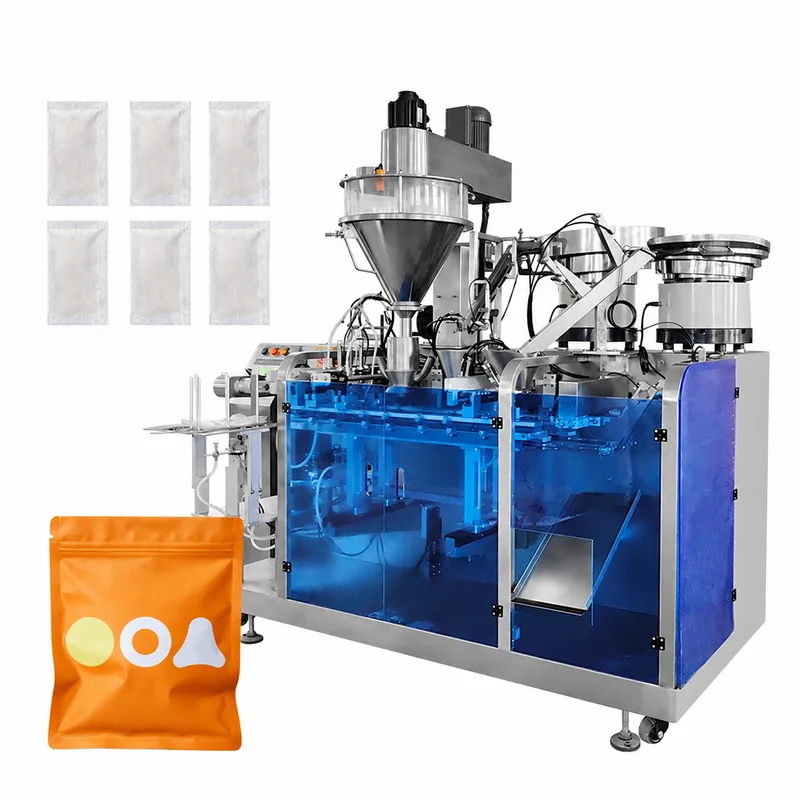
A pouch with the right food weight but a missing desiccant packet still fails. Specify this premade-pouch and desiccant-insertion line from your food, pouch and packet codes, insertion point and checks.
What to send us
| Item | Why we need it | Example format |
|---|---|---|
| Production pouch samples and opening reliability | Identify the evidence or open question for this review point. | Labeled brief entry + photo/drawing/record reference, or TBD. |
| Fill opening, zipper clearance and product transfer | Identify the evidence or open question for this review point. | Labeled brief entry + photo/drawing/record reference, or TBD. |
| Closing seal, package inspection and format changes | Identify the evidence or open question for this review point. | Labeled brief entry + photo/drawing/record reference, or TBD. |
We reply within 24 hours.