
Packaging Machines / Premade Pouches
Milk & Beverage Premade-Pouch Filling
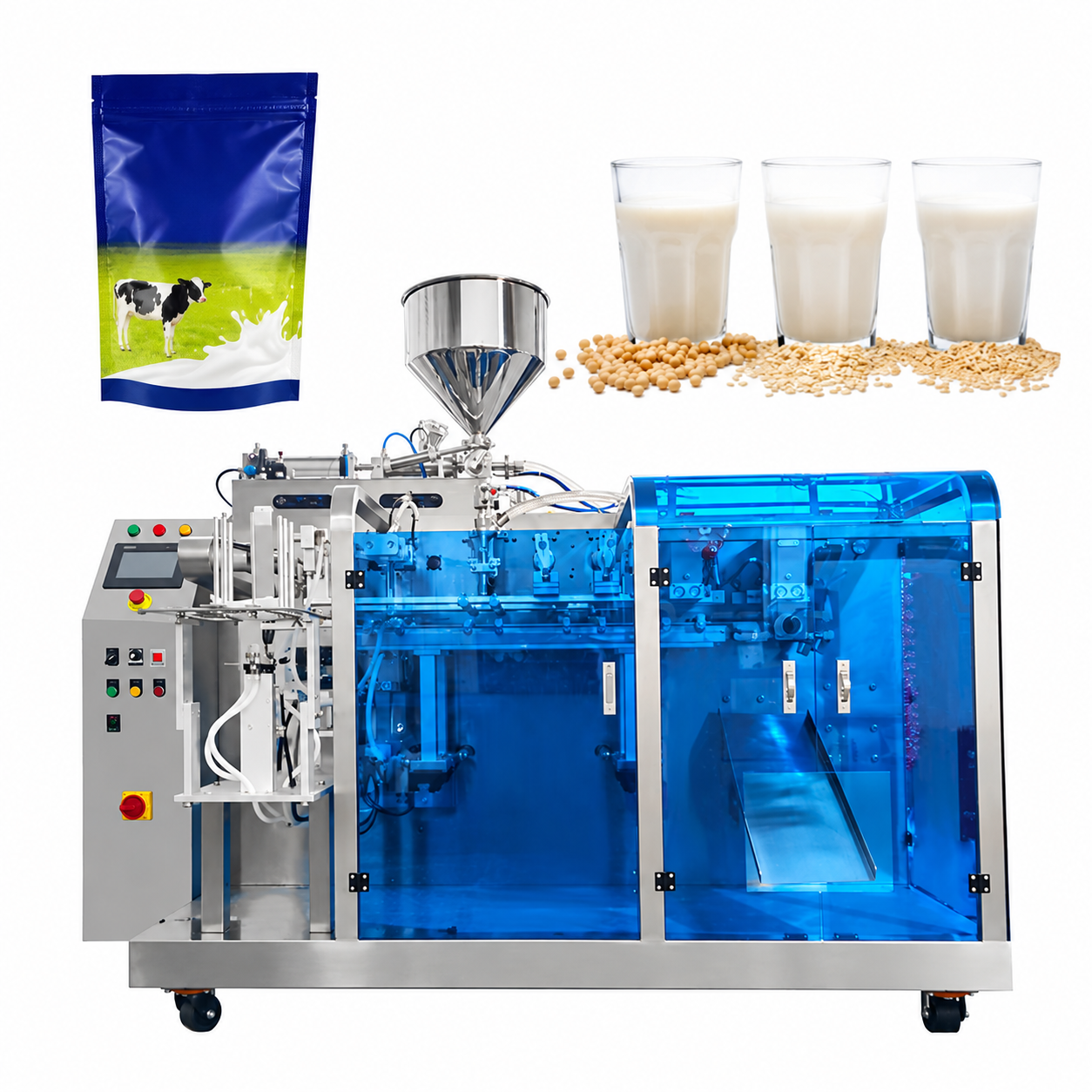
Treating a beverage pouch filler as a ready dairy system leaves treatment, cleaning and cold chain unspecified. Use this premade-pouch configuration as the starting point for a milk or beverage review.
- Pouch: premade; retrieval, opening, filling, sealing and discharge
- Liquid: defined at the filling point (temperature, viscosity, inclusions, foam)
- Fill route: through the open pouch mouth; filling through a spout is a different arrangement
- Buyer's process: milk treatment, refrigeration and preservation are specified separately
- Speed: none published for this configuration
We reply within 24 hours.
| Product and configuration | Milk & Beverage Premade-Pouch Filling |
|---|---|
| Published scope | Pouch: premade; retrieval, opening, filling, sealing and discharge; Liquid: defined at the filling point (temperature, viscosity, inclusions, foam); Fill route: through the open pouch mouth; filling through a spout is a different arrangement; Buyer's process: milk treatment, refrigeration and preservation are specified separately; Speed: none published for this configuration |
| Inputs to provide | Supply the milk formulation, filling temperature range, and defined treatment and storage process. Send the actual pouch and identify its mouth, gusset, and seal area. Agree cleaning access and restart checks for the selected liquid path. |
Configuration & Selection
Use this configuration as the entry point for a milk or beverage pouch project, not as a verified dairy system. Its published liquid examples are juice, concentrates and jelly drinks, so a milk project needs its own compatibility review; buying on the title alone leaves product treatment, cleaning and cold chain unassigned. Confirm pouch construction, fill temperature and cleaning requirements, and specify treatment and cold-chain requirements separately. Send details of your formulation, filling temperature and quantity, actual pouches, required cleaning method and the treatment and storage boundary through the enquiry form or WhatsApp; physical samples are arranged separately.
On This Page
Premade pouches for a defined liquid process
This configuration takes a finished pouch, puts a measured liquid dose into it and closes the package. This published configuration lists automatic pouch retrieval, opening, measurement, filling, sealing and discharge. A premade pouch arrives with its shape already made. So the machine has to hold it steady while the product goes in. That makes pouch stiffness, mouth geometry and the behavior of a filled bag real purchasing inputs, next to nominal fill quantity.
The milk and beverage title names the intended inquiry category. It does not describe a complete dairy processing system. Milk treatment, storage conditions and the condition of the product at the filling point belong in a separate process specification. The liquid examples in the published description are juice, concentrates and jelly drinks, the same beverage range shown on our Juice & Beverage Pouch Packaging page. A dairy project therefore needs its own compatibility review. A beverage catalog listing does not prove suitability for every milk formulation or preservation method.
Takeaway: Write a separate process specification for milk treatment and storage before reviewing the filler.
Prepare the pouch before selecting the filler
Submit unused pouches from the intended converter, with a drawing showing overall width, height, bottom gusset, mouth opening and seal area. Printed dimensions do not tell you how the pouch behaves when picked up or opened. A soft pouch collapses differently from a stiff laminate. A folded gusset changes how the bag sits after filling. The samples should have the actual print and material construction planned for production.
Point out any zipper, tear notch, handle or fitment near the top, since these can get in the way of the opening tools, filling nozzle or sealing jaws. With a spout, clarify whether filling goes through the open pouch mouth or through the spout. Those are different handling arrangements. Before output comes up at all, establish a stable sequence. The empty pouch should open fully, stay supported and leave a clear path for the liquid dose.
Takeaway: Establish a stable empty-pouch sequence with production pouches before discussing output.
Define the liquid at the filling point
Describe the product as it will reach the machine: temperature range, viscosity variation, suspended ingredients and its tendency to foam during transfer. A name like "milk beverage" leaves many practical questions open. Plain liquid, a thickened formulation and a drink with small inclusions can call for different dosing and nozzle decisions. Send representative samples. Choosing a filling mechanism from a photograph alone is a gamble.
The proposed feed arrangement needs review too. Does the liquid come from a nearby vessel or a longer transfer line, and what happens to product waiting upstream when production stops? Find out which product-contact parts are in the quotation and which belong to your own process equipment. Filling compatibility covers the complete path from the agreed inlet connection to the pouch. That includes any valves, hoses and nozzle components selected for the actual formulation.
Takeaway: Define the liquid at the machine inlet and the scope boundary of the product-contact path.
Coordinate filling with a clean sealing area
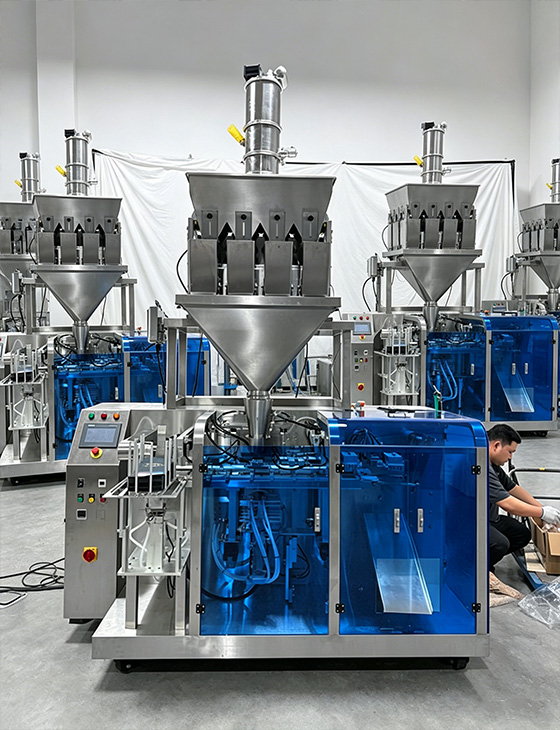
In a trial, watch the pouch mouth before, during and after dosing. The nozzle should enter and withdraw without dragging the pouch out of position. Liquid movement has to stay controlled enough that the designated top seal area remains free for closure. A pouch that looks correctly filled can still seal badly if foam or a trailing drop reaches the inner sealing surfaces.
A clean empty-pouch cycle is not a complete test, so the supplier should demonstrate the proposed timing. Watch the start of the dose, the end of the dose, any settling interval and the move into sealing. If a defect appears, note where the liquid first touches the seal zone and whether it follows a restart or a change in product level. That helps separate pouch support, dosing behavior and nozzle movement as distinct causes to investigate.
Takeaway: Note where liquid first reaches the seal zone and what preceded it.
Plan cleaning around the actual product path
Build the cleaning review from the selected components. The machine's outside appearance tells you little. How are product-contact hoses, valves, seals and the filling nozzle reached, removed where applicable, inspected and put back together? Look for pockets that may hold product and for places where a disconnection could drip onto electrical or mechanical equipment. The agreed cleaning procedure should follow your product requirements and the documented limits of the supplied parts.
A general stainless-steel description does not mean automatic cleaning is available. If you need an in-place cleaning arrangement, specify it outright and ask for a defined scope, connection diagram and verification method. Cleaning the filling circuit is also a separate job from cleaning the pouch-handling area. A spill inside a gripper or on a pouch support may need different access and inspection than the liquid line. Operators should know which checks are necessary before the first pouch after reassembly.
Common mistake: Reading stainless construction as proof that automatic cleaning is included.
Takeaway: Specify any in-place cleaning outright, with a scope and connection diagram.
Compare pouch sizes through practical changeovers
A useful changeover exercise runs between the smallest and largest proposed pouches with the intended liquid. Note the adjustments to pouch storage, pickup position, opening tools, supports, nozzle location and seal alignment. Which ones are repeatable settings, and which need interchangeable parts? When a quotation covers several pouch sizes, it should show the included format parts and any additional tooling.
The first acceptable pouch after a change tells you more than a machine running smoothly after long preparation. Check fill position, external cleanliness, package shape and the top seal before the batch continues. Keep the removed parts together. Label settings by pouch code, not by a vague product nickname. Two printed pouches may share the same nominal dimensions and still differ in stiffness or gusset construction. Keep separate setup records for them until trials show that one common recipe is reliable.
Takeaway: Keep separate setup records for pouches that share nominal dimensions.
- Supply the milk formulation, filling temperature range, and defined treatment and storage process.
- Send the actual pouch and identify its mouth, gusset, and seal area.
- Agree cleaning access and restart checks for the selected liquid path.
Run a trial that includes pauses and recovery
Provide enough product and pouches to see startup, steady running, replenishment, a planned stop and a restart. Agree beforehand how fill quantity, seal condition, pouch damage and external contamination will be recorded, and tie those records to the particular pouch lot and product condition used in the trial. A short video of good packages leaving the machine says nothing about what happened during interruptions.
What does the machine do when a pouch fails to open or does not arrive at the filling position? If the detection and recovery arrangement is part of the quotation, have it demonstrated. Not every catalog configuration includes the same sensors or rejection functions, so confirm what yours has. Count acceptable finished packages separately from total cycles, and record why pouches were rejected. That gives you a sound basis for judging the proposed setup. A catalog claim does not become a production guarantee.
Takeaway: Count acceptable pouches separately from total cycles and record reject reasons.
Send a complete dairy or beverage inquiry
An effective request includes the product description, filling temperature range, target quantity and tolerance, pouch samples, expected batch pattern and the cleaning method your process requires. Add a simple layout showing the product supply connection, operator access, finished-pouch collection and space for maintenance. Say whether the machine will run as an isolated station or exchange signals with upstream and downstream equipment.
The supplier should return a scope specific to the configuration, covering pouch handling, liquid dosing, closure, inspection options and supplied change parts. Product treatment, refrigeration, package material approval and any preservation process are separate responsibilities. List each as something still to resolve. Base the purchase on one defined liquid, one defined package and an observed filling sequence. That gives you a proposal you can review, and further formats can be qualified later with their own samples and acceptance criteria.
Who owns which part of a milk pouch project
Use this split when you compare proposals; it follows the scope boundaries described above.
Pouch structure: you specify the converter's pouch, mouth, gusset and seal area; the machine review covers opening, support and sealing of that pouch.
Liquid condition at the filling point: you define temperature range, viscosity, inclusions and foaming; the machine review covers dosing and nozzle choice for that liquid.
Filling: the quotation names the product-contact parts from the agreed inlet connection to the pouch; anything upstream stays with your process equipment.
Sealing: the machine review covers a clean seal area on your pouch; package material approval stays with you.
Treatment, refrigeration and preservation: these stay with your process specification and are not part of this configuration.
Takeaway: Every line of this split should be named in the quotation, either as supplied scope or as your responsibility.
When this does not apply
This page does not cover milk treatment, refrigeration, package material approval or any preservation process; those stay in your own process specification. No speed or fill range is published for this configuration. Sensors and rejection functions differ between configurations and are included only when quoted. Further pouch formats need their own samples and acceptance criteria.
Takeaway: Base the purchase on one defined liquid, one defined pouch and an observed filling sequence.
Frequently asked questions
Is a beverage pouch filler directly suitable for milk?
Not without its own review. The published liquid examples for this configuration are juice, concentrates and jelly drinks. A milk project needs a compatibility review against your formulation, filling temperature, cleaning method and treatment process.
What is the difference between filling through the pouch mouth and through a spout?
They are different handling arrangements. This configuration fills through the open pouch mouth; if your pouch has a spout and you want to fill through it, say so, because the Spout-Pouch Filling Machine page covers that route.
Is a cleaning circuit included in the quotation?
Only if you specify it. A stainless description does not mean automatic cleaning is available. Ask for a defined in-place cleaning scope, connection diagram and verification method, and treat cleaning of the pouch-handling area as a separate job.
What is the price of a milk pouch filling machine?
This page does not publish prices. A quotation depends on the pouch handling, liquid dosing, closure, inspection options, change parts and any cleaning circuit you specify.
Bag Format Selection
Review the pack requirements for your enquiry. Compatibility is confirmed for the selected equipment and sample.
Planning Guides for This Configuration
These pages cover the system type, trial preparation and project checks that apply to this configuration.
Request a Packaging Configuration
We reply within 24 hours. Tell us what you need to pack. Leave quantity and output blank if you are still deciding. When you continue, WhatsApp opens with your enquiry written out so you can review it and send it to our team.
Explore the application · Configuration and project support
Related Packaging Configurations
Sauce Sachets
Sauce Four-Side-Seal Sachet Machine
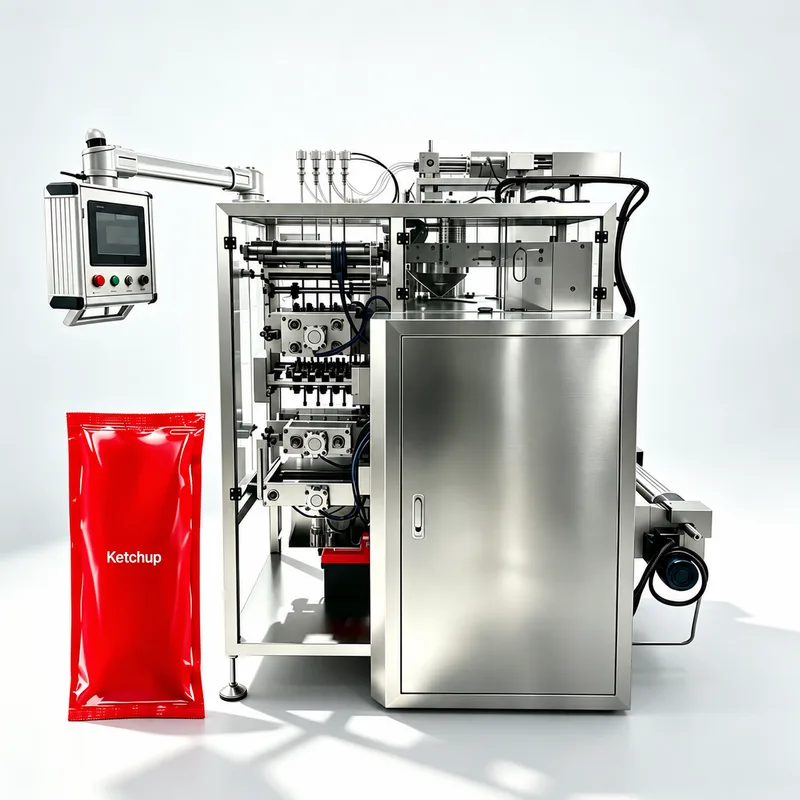
Sauce strings or drips can contaminate the seal area, leading to leaks and rejected sachets. Specify this piston-dosing four-side-seal machine from your sauce, portion, sachet drawing and film.
Premade Pouches
Juice & Beverage Pouch Packaging
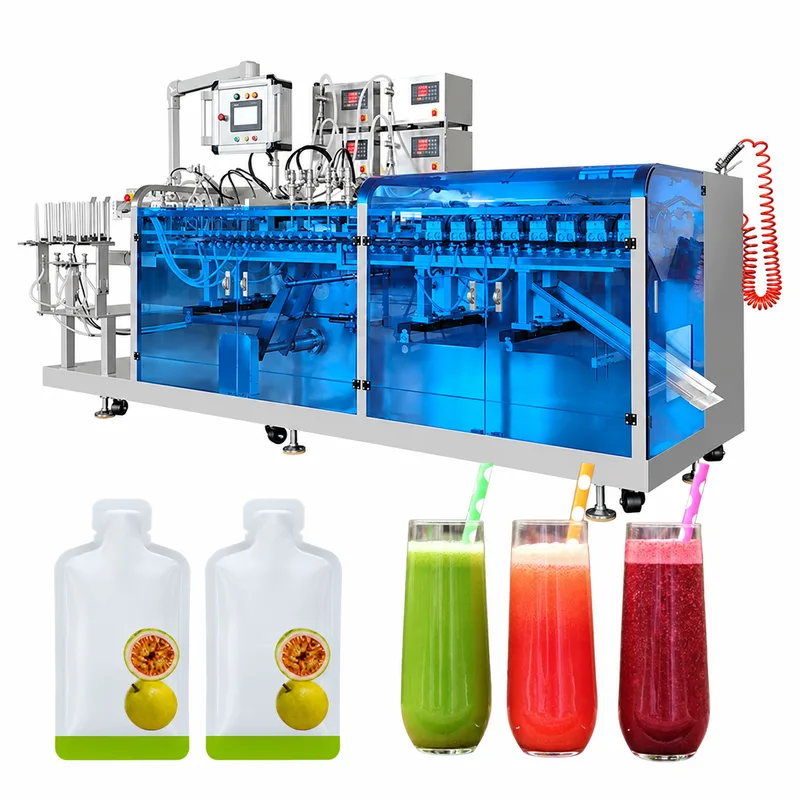
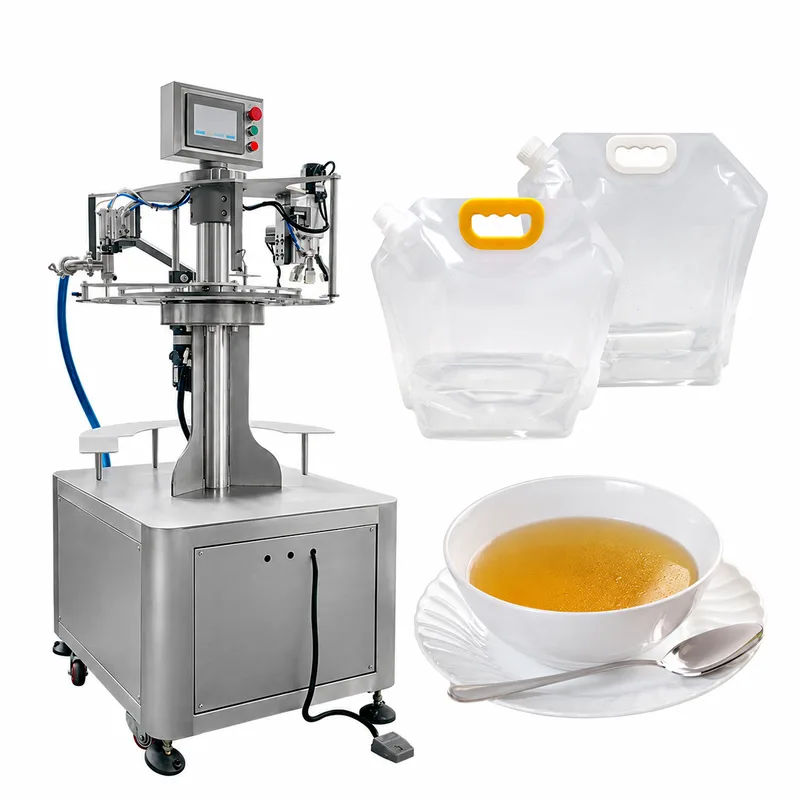
Foam or a trailing drop at the pouch mouth contaminates the top seal and the pouch leaks. Specify this premade-pouch juice filler from your beverage condition, fill quantity and actual pouches.
Premade Pouches
Spout-Pouch Filling Machine
A cap that looks seated but is not engaged leaks after shipping. Specify this spout-pouch filler and capper from your pouch, neck drawing, matching cap and liquid, as a stand-alone or integrated station.
What to send us
| Item | Why we need it | Example format |
|---|---|---|
| Formulation and liquid condition | Viscosity, inclusions and foaming decide dosing and nozzle choice. | Product description with viscosity notes and a representative sample. |
| Filling temperature and quantity | Sets the dosing range and how the seal area is kept clean. | Temperature range in °C, target quantity in ml or g with tolerance. |
| Actual pouches | Stiffness, mouth and gusset decide opening and support. | Unused production pouches plus a dimensioned drawing. |
| Cleaning requirement | Decides access and whether an in-place cleaning scope is needed. | Your written cleaning method for the liquid path. |
| Treatment and storage boundary | Shows which process steps stay outside the machine scope. | Short note naming your treatment, refrigeration and storage steps. |
We reply within 24 hours.