
Sauce & Beverage Packaging
A mismatched closure can leave sauce equipment incomplete. Compare sachet, premade and spout routes by filling condition; define product treatment separately.
| Input or route | Material / evidence to provide | Decision to review |
|---|---|---|
| Small sauce sachet | Roll film; piston fill into the formed pack; heat seals | Sauce sachet configuration; send viscosity, particles and film drawing |
| Premade liquid pouch | Manufactured open-top pouch; fill through the opening; top seal | Juice pouch configuration; send formula, filling temperature and pouch |
| Spout pouch | Spouted pouch; fill through the neck; cap feeding and screwing | Spout filling configuration; send matching neck, cap and pouch samples |
Choose the configuration from the product and package
Choose between film-formed portions, an open-top pouch and a neck-filled pouch first. Use the published routes below to identify filling entry and closure scope, then prepare viscosity, particle, temperature and packaging inputs for the review.
On This Page
Separate sauce sachets from beverage pouches
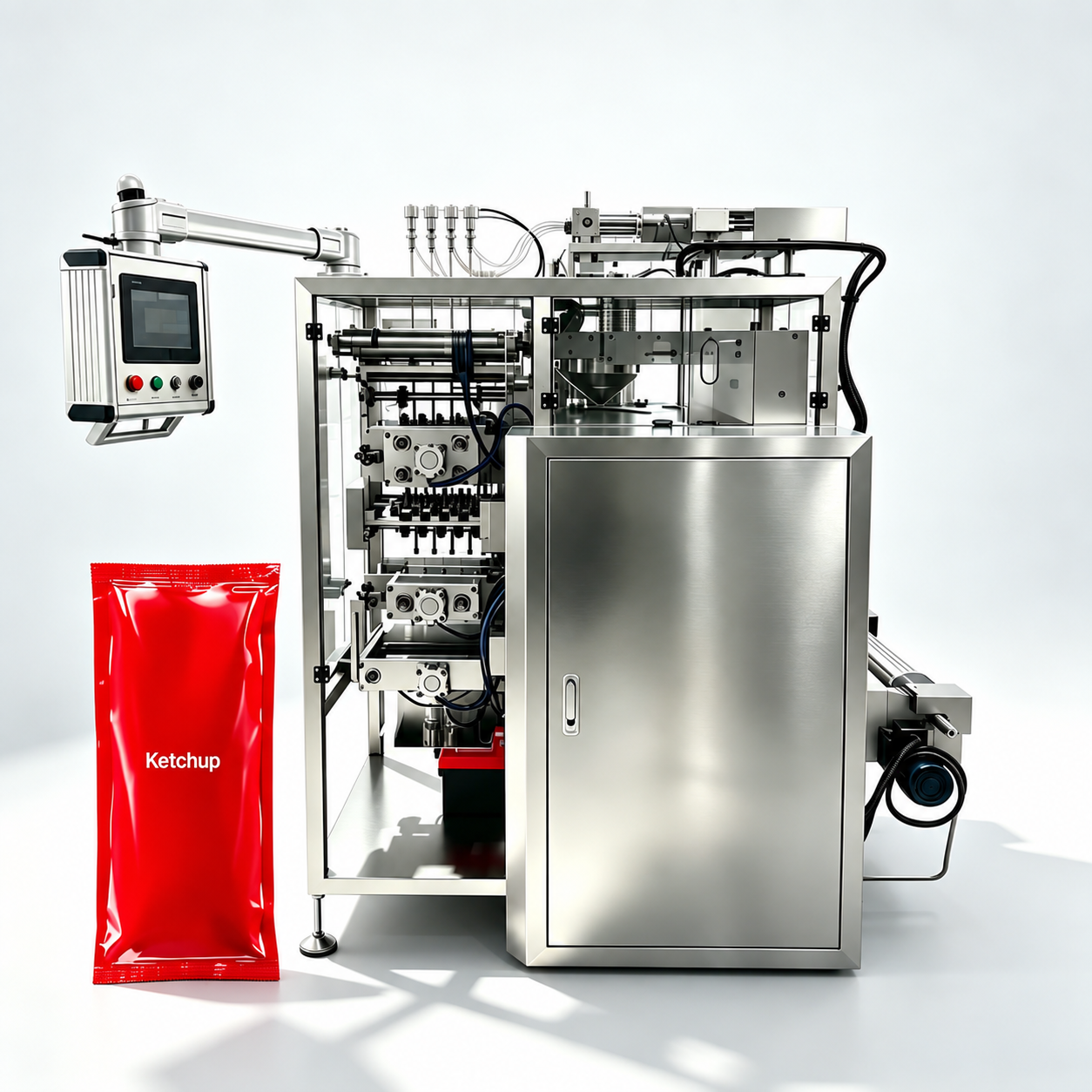
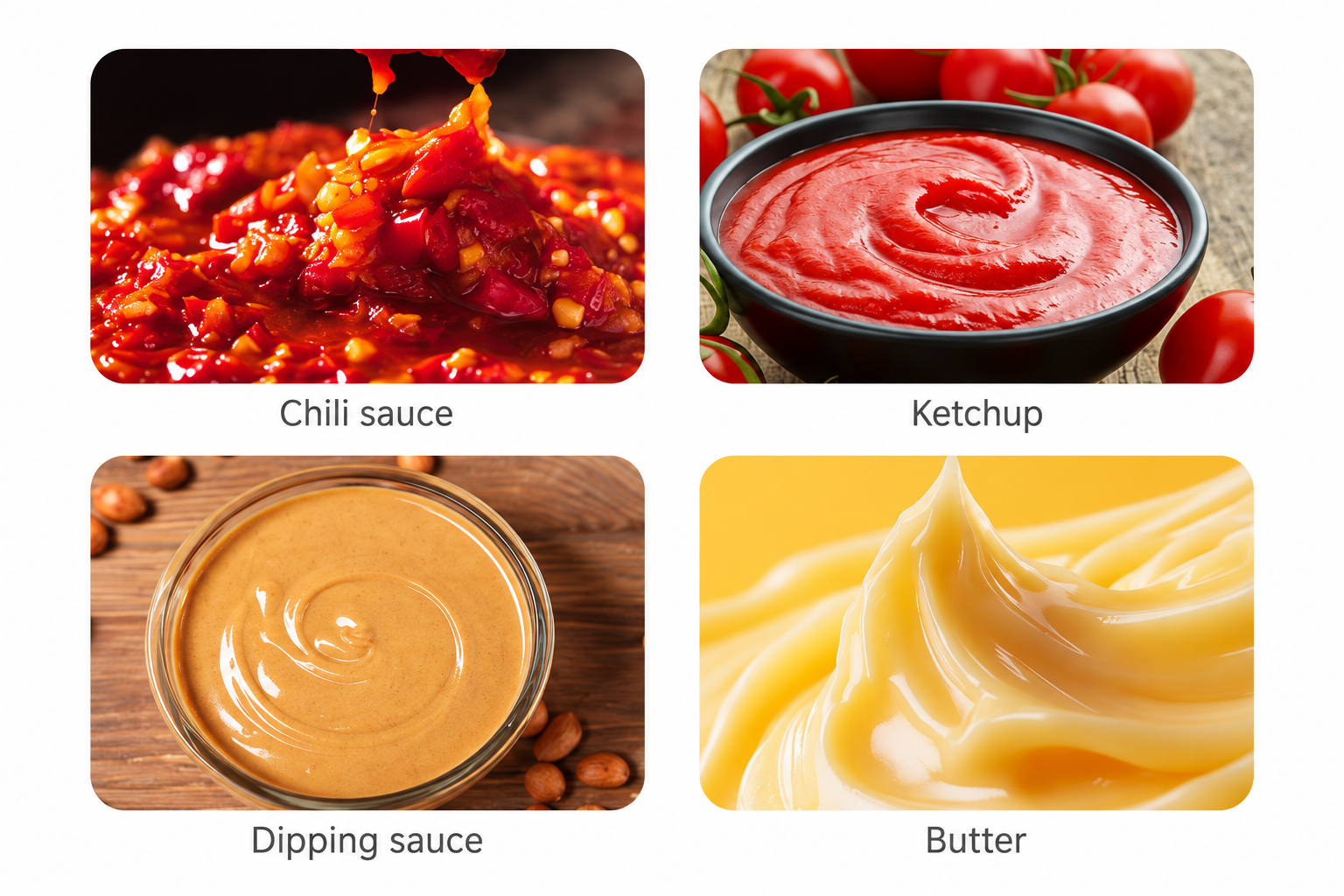
Sauces and beverages share liquid filling terminology, but they do not make one equipment requirement. A thick ketchup portion, a drink in a premade pouch and a liquid in a spouted pouch use different package structures and may need different product-contact arrangements. Start by identifying the actual product, its condition at filling and the consumer package you want. Include particles, visible foam and consistency variation where relevant.
The catalog provides a piston-dosed four-side-seal sachet configuration, premade-pouch options for liquids and a spout-pouch filling option. These are distinct routes. Settle the package concept and product-process requirements before asking which machine has the highest output. A quotation based only on the phrase liquid packing can leave out the details that decide whether the proposed system matches the product and the filling environment.
Describe product condition at the filling point
Supply the product at conditions agreed with the equipment team and explain how those compare with normal production. A sauce's consistency can differ between the preparation vessel and the point where it reaches the filling system. Record the intended temperature range and any relevant changes during a batch. If particles are present, describe their dimensions and nature instead of relying on a product name such as chili sauce.
For a beverage, explain whether foam, settling material or another behavior affects the filling discussion. A simple demonstration liquid may illustrate motion, but its output is not confirmed performance on the commercial formula. The actual product needs its own assessment. The quotation should separate what has been demonstrated from what is proposed pending representative material and process information.
Specify the closure-handling equipment with the liquid filler
The liquid catalog shows three different ways to finish a package. A sauce sachet unit meters product into a film-formed pack and closes it with heat seals. A premade liquid-pouch unit takes an existing pouch, opens it, fills it and seals the open edge. A spout-pouch arrangement adds a cap-handling sequence to the filling: the catalog workflow identifies cap feeding and cap screwing before discharge, so the closure changes the equipment scope, even when the same nominal liquid quantity is requested.
Send the supplier a complete packaging kit, not just a picture of the front. For a spout project, include the pouch, neck and matching cap. For an open-top pouch, include the usable opening and final sealing area. For a sachet, provide film and the finished format drawing. Each one is a different physical input to the packaging operation.
A sauce business considering both food-service portions and a larger reclosable pack should request two format reviews. The piston-dosed sachet route can be assessed for the portion, while the larger closure needs its own product and package compatibility review. Otherwise a common liquid-filling description can hide the machinery needed to handle the chosen closure.
Compare the three package handling sequences
A sachet configuration forms portion packs from film and includes the filling and sealing sequence. A premade-pouch configuration receives bags that are already manufactured, and it must open, fill and close them. A spout-pouch project also needs clear information about the neck and closure arrangement. The supplier should show the exact proposed sequence with your packaging sample.
The consumer experience differs between these formats too. A small tear-open sauce sachet, a stand-up drink pouch and a reclosable spout package are not interchangeable just because they hold the same volume. Send drawings showing useful internal space, opening features and seal margins. Establish which closures or other components arrive with the package and which must be supplied or handled on the line. That keeps the equipment scope in line with the chosen retail format.
Evaluate fill cutoff and the sealing area together
For viscous products, watch the end of each fill as well as the delivered quantity. Look for drips, strings of product or residues near the closure area. The supplier should explain how the nozzle or dosing arrangement handles your actual sauce under the agreed filling conditions. A nominal portion result does not show whether the next sealing operation starts with clean material in the right position.
Inspect consecutive packages during the trial, including samples after pauses and replenishment, and label the conditions behind any visible defect. If the supplier proposes a nozzle change or a different contact arrangement, record the modification and repeat the relevant checks. Not every seal problem is a temperature setting issue. Package presentation, product contamination and overall timing may each need separate investigation by the equipment and packaging teams.
Design the trial around different formula behaviors
If the range includes several sauces or drinks, pick trials that represent meaningful differences in flow, particles and package format. Record formula identity, fill quantity, packaging material and the relevant condition at the filling point. Watch supply stability, dosing, cutoff, package handling and completed-pack appearance. Keep samples from identified stages of the demonstration so later review does not depend on memory.
Report acceptable output over the observed period together with interruptions and adjustments. An empty-machine cycle rate, or a demonstration with water, does not answer every question about a thick sauce. Likewise, a result with one viscous product should not be generalized to all beverages. List the combinations that are confirmed and the ones still open, and explain the work remaining before the final equipment and package specification can be accepted.
Review the closure supply with the packaging vendor
For a spouted beverage package, document the pouch neck, the closure and the way those components reach the filling operation. For a tear-open sauce sachet, document the film repeat and opening position instead. These are different supply questions and do not belong on one generic pouch-material line of a purchase order.
The packaging vendor and the equipment supplier should review the same component samples. Record substitutions proposed during purchasing and identify which need another compatibility check. A different cap or pouch opening may affect the handling sequence even when the printed design looks familiar. Clear component ownership reduces the chance that the final project contains individually reasonable parts that were never assessed together.
| Package / supplied parts | Machine station to confirm | Sample and responsibility |
|---|---|---|
| Film sachet / converter roll | Forming, piston filling, heat sealing | Film drawing and roll revision; buyer names converter and equipment owner |
| Open-top liquid pouch / pouch vendor | Pickup, opening, filling, top seal | Production pouch and seal margin; vendor and filler supplier review together |
| Spout pouch / neck and matching cap | Neck filling, cap feeding, cap screwing | Matched component set; identify who supplies each part |
| Milk or process-sensitive liquid | Proposed pouch sequence; process compatibility pending | Product and process brief; buyer defines treatment, supplier confirms machine boundary |
Prepare a sauce or beverage enquiry that can be quoted
Send representative product information, packaging drawings, samples and the planned production pattern. Show upstream supply and downstream collection in the layout, with the space available for access and replenishment. Say whether heating, stirring or other hopper options are wanted, then ask which are actually included in the proposed configuration. Optional functions need an explicit scope and should not be assumed from a catalog photograph.
Keep product treatment outside unsupported equipment claims
State whether your process requires a particular filling condition, cleaning sequence or connection to upstream treatment equipment. The supplier should describe the proposed machine boundary and the information needed to review compatibility. A general pouch filler is not an aseptic system, and it is not proof of product stability without the specific evidence required.
The business responsible for the product must define and validate its treatment, storage and sanitation requirements with the appropriate specialists. The purchasing record should support that work by documenting equipment configuration, product-contact access, materials information where confirmed and the intended process interfaces. A preservation method cannot be read from a photograph or an application name. Keep these boundaries explicit, or you risk a costly mismatch between the filling equipment and your actual beverage or sauce production.
- Viscosity, particles and the condition at filling
- Dosing path, nozzle behaviour and cutoff
- Sachet construction, seal cleanliness and sample checks
Method, sources and applicability
This page reorganizes the published sauce & beverage packaging application and the linked equipment descriptions into a purchasing brief. The comparison is based on public configuration information, not our test of the alternatives. The observation tables are blank records to complete with the actual product; they contain no measured results. The questions below come from the purchasing issues already discussed on this application page, rather than a new search-question survey.
These routes compare published package-handling configurations, not product-treatment systems. Milk or another process-sensitive beverage remains subject to a separate filling, cleaning and upstream-process assessment. A heater, a pouch photograph or a run with water cannot establish the required treatment or storage outcome.
Technical Reading
- Sauce sachet configuration — Published configuration or planning guidance; reviewed 8 October 2026. review piston dosing and hopper options.
- Juice premade-pouch sequence — Published configuration or planning guidance; reviewed 8 October 2026. identify the opening and top seal.
- Spout filling sequence — Published configuration or planning guidance; reviewed 8 October 2026. check neck and cap handling.
- Milk pouch scope — Published configuration or planning guidance; reviewed 8 October 2026. keep process and hygiene requirements under assessment.
- Configuration review scope — Basis for the proposed-scope and missing-information response; reviewed 8 October 2026.
- Sample testing arrangements — Confirm availability, sample quantity, handling and costs before shipment; reviewed 8 October 2026.
Frequently asked questions
Can one liquid path handle both clear juice and a sauce with particles?
Do not assume common product-contact parts. Describe viscosity, particle dimensions and temperature for each formula, then request a compatibility assessment naming any changes. A demonstration with a smooth liquid does not establish cutoff or particle passage for the sauce.
Is changing a regular pouch to a spout pouch just a bag substitution?
No. The neck and cap introduce a different filling and closure interface. Supply matching pouch, neck and cap samples and confirm the cap-feeding and screwing scope against the published spout-pouch workflow.
Does a heated hopper replace product treatment?
No. The sauce-sachet profile lists heating or stirring as product-dependent hopper options. Their inclusion does not establish a treatment process, aseptic filling or product stability. Those requirements need a separately defined and supported process.
Explore the Equipment
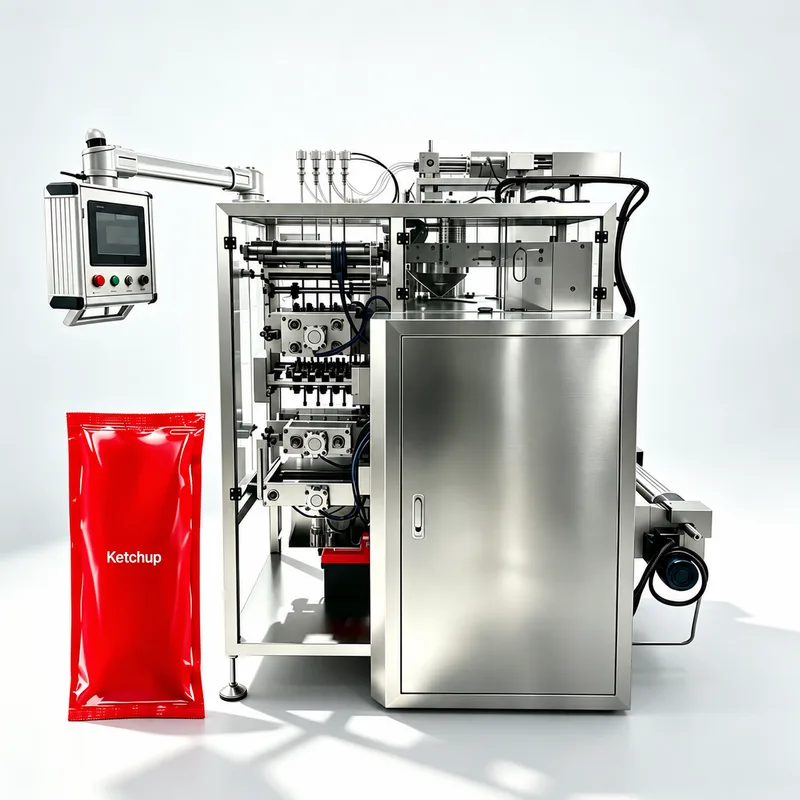
Sauce Sachets
Sauce Four-Side-Seal Sachet Machine
Sauce strings or drips can contaminate the seal area, leading to leaks and rejected sachets. Specify this piston-dosing four-side-seal machine from your sauce, portion, sachet drawing and film.
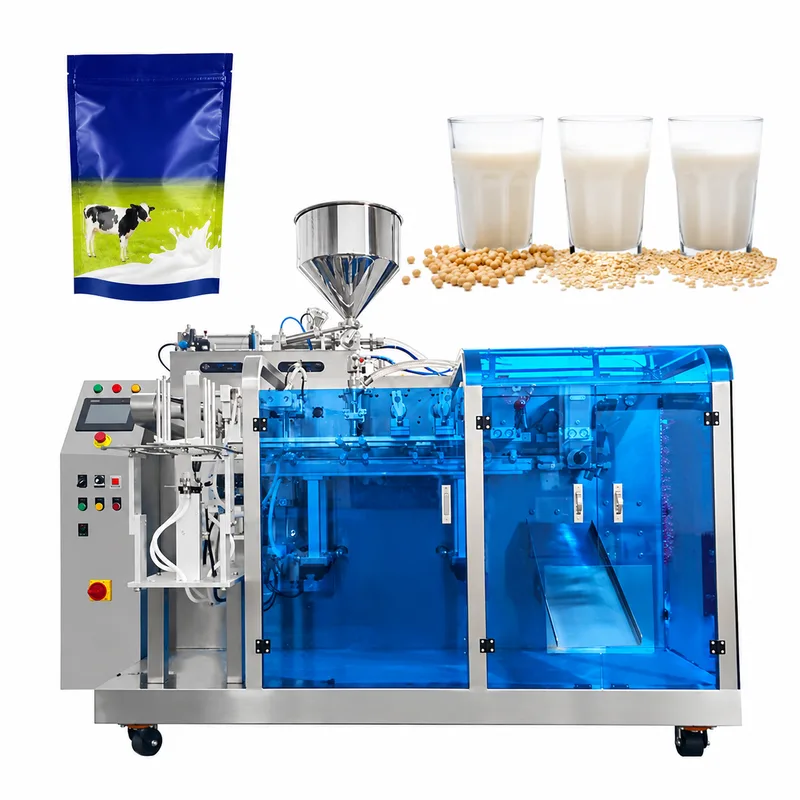
Premade Pouches
Milk & Beverage Premade-Pouch Filling
Treating a beverage pouch filler as a ready dairy system leaves treatment, cleaning and cold chain unspecified. Use this premade-pouch configuration as the starting point for a milk or beverage review.
Premade Pouches
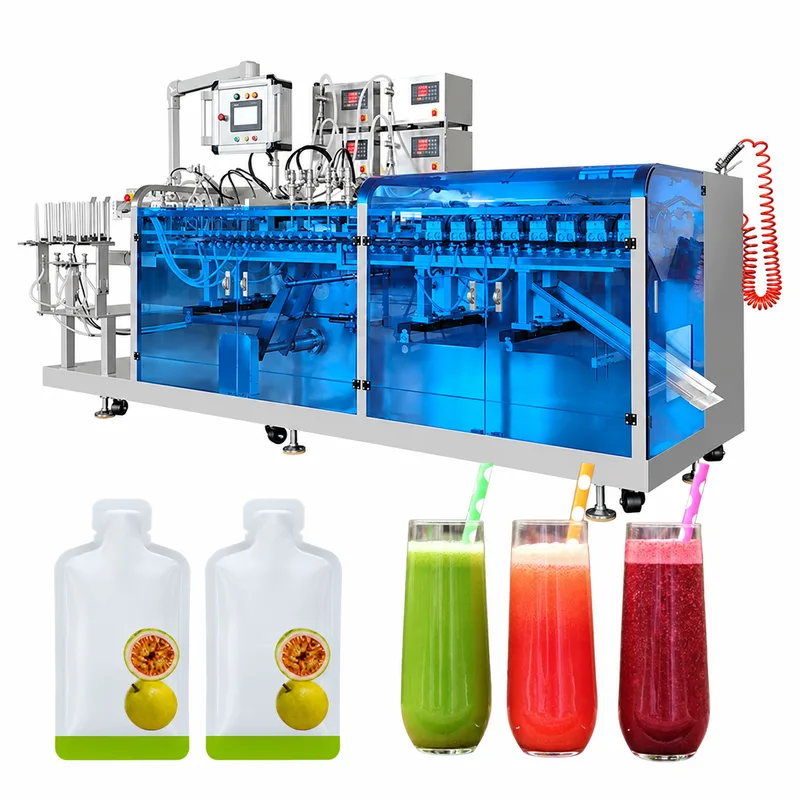
Juice & Beverage Pouch Packaging
Foam or a trailing drop at the pouch mouth contaminates the top seal and the pouch leaks. Specify this premade-pouch juice filler from your beverage condition, fill quantity and actual pouches.
Premade Pouches
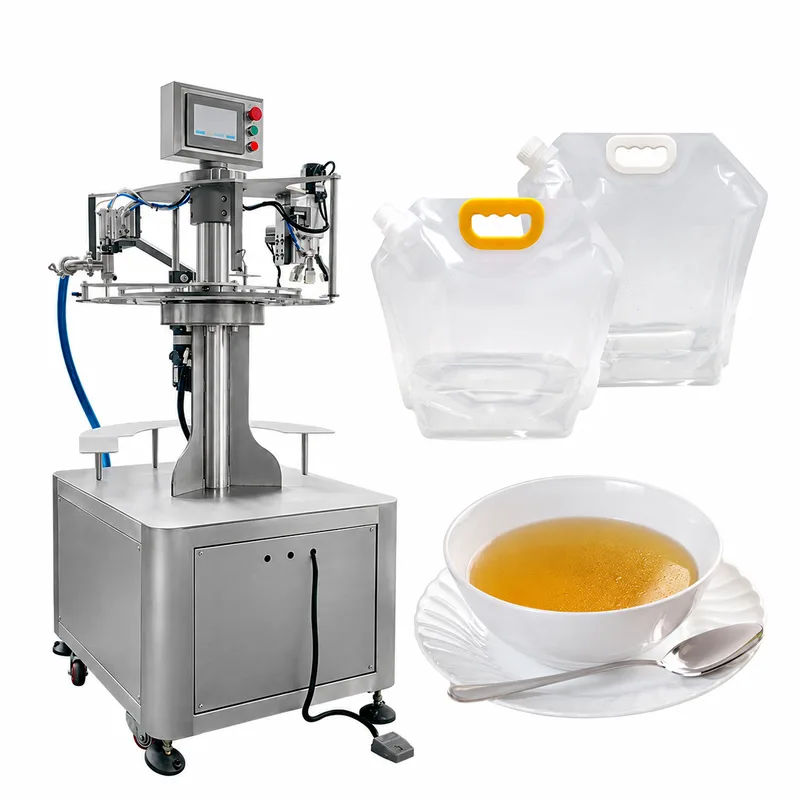
Spout-Pouch Filling Machine
A cap that looks seated but is not engaged leaks after shipping. Specify this spout-pouch filler and capper from your pouch, neck drawing, matching cap and liquid, as a stand-alone or integrated station.
What to send us
| Item | Why we need it | Example format |
|---|---|---|
| Viscosity, particles and filling temperature | Select the liquid path and identify product-contact questions | Formula revision + condition sheet + labeled particle photo |
| Fill quantity and production pattern | Review dosing and the observed output basis | SKU spreadsheet with quantity units and planned runs |
| Film, pouch or matching neck and cap | Define filling entry and closure responsibility | Dimensioned PDF + supplier revision + labeled component set |
We reply within 24 hours.