
Four-Side-Seal Sachet Packaging
Review the fill cavity, perimeter seals and product delivery for small sachets such as ketchup and sauce portions.
On This Page
Measure the usable cavity
A four-side-seal sachet has sealed edges all around its fill area, so overall width and length are not the space available for product. Mark the sealing margins on the drawing and provide an actual filled sample if you have one. State the target quantity and the pack appearance you want as well as the outside dimensions.
Define the product at filling conditions
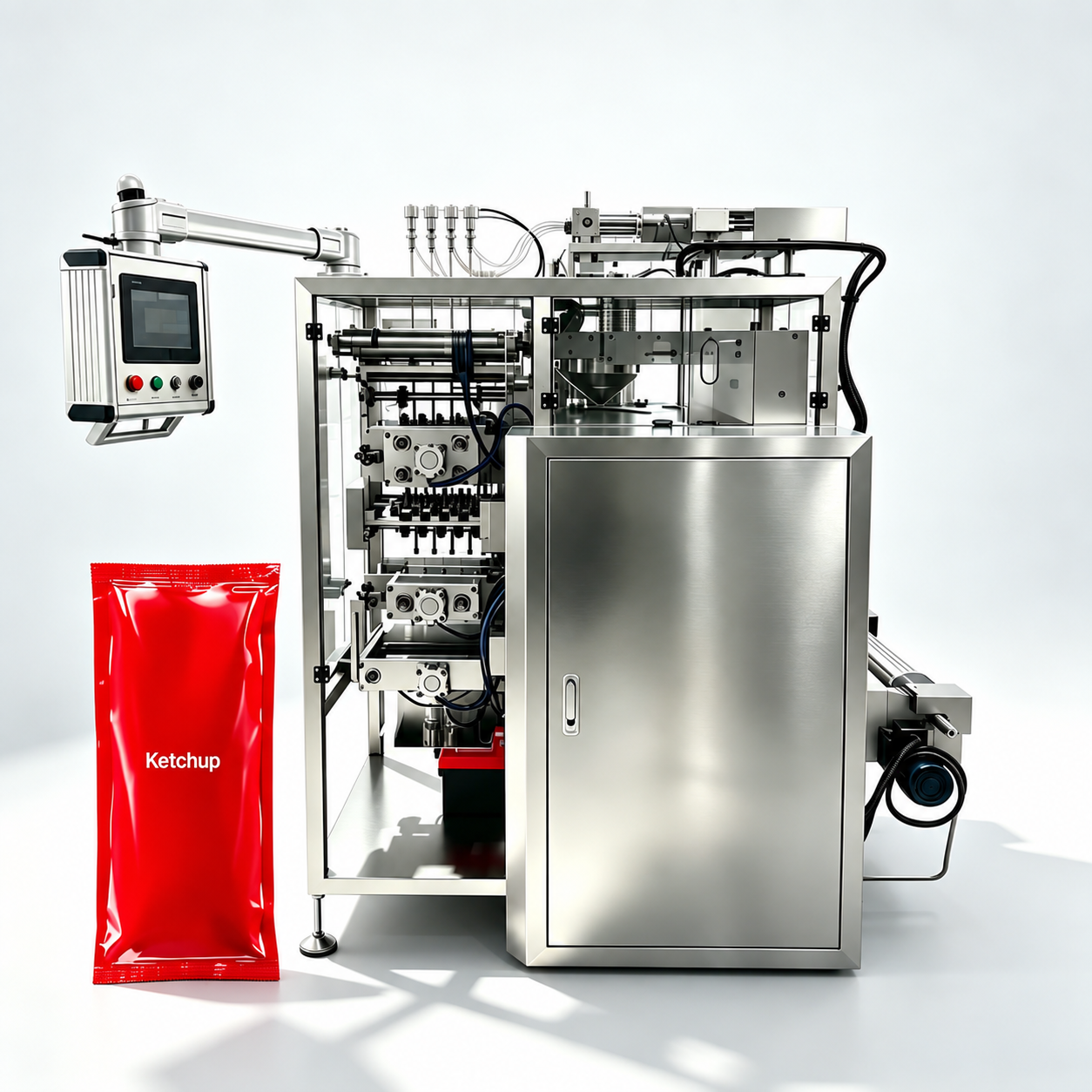
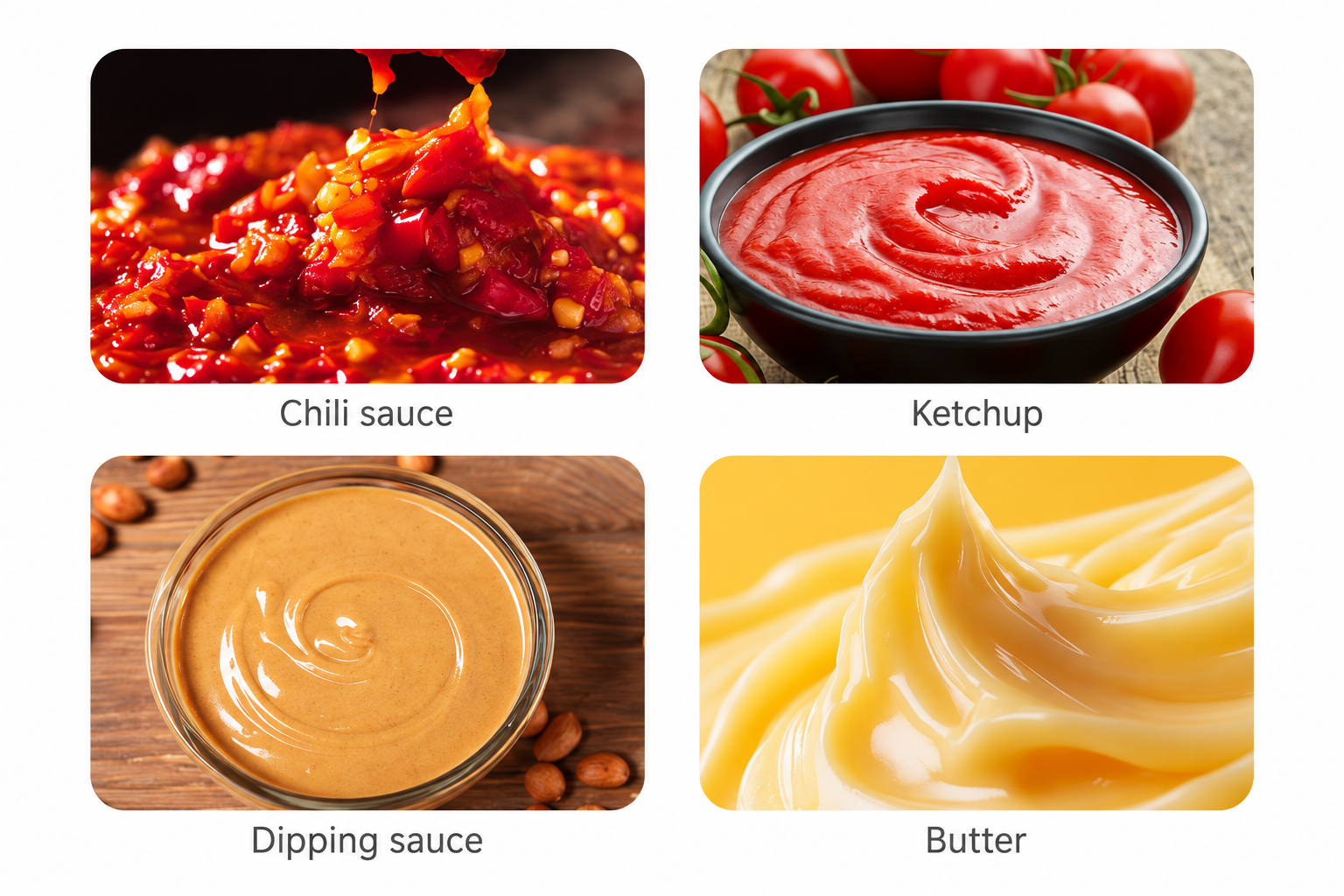
The catalog contains a four-side-seal sauce configuration with piston dosing. Describe the sauce at the temperature it will be packed, including particles and changes in consistency. Find out which hopper and nozzle arrangement is proposed, and whether heating or stirring is in the quoted scope. Write those options down explicitly. The product name will not tell you.
Coordinate fill placement and sealing
The filling sequence has to leave the planned seal area fit for closure. In a trial, look for drips, strings of product and splashes near the edges. Compare the actual film and printed layout with the machine proposal. Evaluate the filling system and the sealing equipment together, since a dosing test alone does not show that a finished sachet can be produced reliably.
Make the opening part of acceptance
Place the tear feature and any code area so they do not block the required seals or make the sachet hard to open. Inspect consecutive filled packs and record the quantity, material and conditions. Product treatment, storage and shelf-life requirements need their own validation. A neat-looking sachet proves none of them.
Calculate the cavity inside the printed outline
A four-side-seal sachet has sealed borders around its perimeter, so the usable cavity is smaller than the outer rectangle. Specify both sets of dimensions. Show the seal areas, cut position and opening feature on the same drawing as the artwork. Otherwise a package approved by eye may leave too little space for the dose, or put important text where it gets cut or distorted.
The catalog's sauce sachet configuration pairs this format with piston dosing and optional hopper features. Treat it as a starting point for a product-specific discussion. Provide the planned fill quantity, the product condition and a physical reference pack where possible. If the reference contains a different product, say so. The supplier should not infer cavity requirements from an example with another density, viscosity or filling behavior.
Coordinate the nozzle with the narrow filling space
A small sachet can demand careful control of where the product enters and how delivery stops. Check the nozzle position and product path against the actual cavity. Viscous sauces may leave a trailing strand or residue near the closing area. Thin liquids behave differently. The suitable arrangement has to be assessed with your product at its production temperature.
Watch the fill and the sealing operation together during the trial. If contamination appears, record where it is and what came before it. A nozzle adjustment, a product-condition change or a timing change may fix a different cause from a sealing-setting change, so keep those adjustments separate in the record. Supplier and buyer can then find a repeatable method. Without that, they accept a neat final sample and never learn how it was achieved.
Reserve the border for its actual functions
The sealed border does more than frame the graphics. It closes the pack, supports the cut and may carry the opening feature. The material and equipment suppliers should review the proposed width and construction together. If someone asks to narrow the border for looks, the available sealing and cutting space can change, and that needs a technical review before the artwork is final.
Check all four sides for consistency across multiple samples. Inspect corners and transitions as well as the straight sections. If the package uses a notch, confirm its placement and its effect on the opening action using filled samples. Keep coding clear of locations that become hard to read after sealing or tearing. A well-coordinated border supports consistent production. It also suits the way the end user holds and opens the portion pack.
Compare filling quantity with the final pack feel
The nominal dose should give a sachet that can be handled and opened as intended. Look at how the product spreads inside the cavity, and whether the pack feels too tight or leaves empty space nobody wants. The right look depends on the application, so agree the target with the product team. One person's visual preference is not a universal standard.
If the filler is adjusted by volume but the product is sold by mass, define the sampling and weighing method for the trial. Record the product temperature and condition with the measurements. Include the planned range of fill quantities if more than one portion size will use the same format. A good nominal sample does not establish performance at the minimum and maximum settings you requested. That is especially true when product behavior changes with temperature or mixing.
Test the opening with the intended use case
A portion sachet is usually opened during another task, such as preparing or serving food. Reproduce that action with the intended users and filled packs. Watch whether the opening feature is easy to find, whether the tear direction is predictable and whether the product comes out cleanly. A package that opens easily may still give an awkward opening size for a thick sauce.
Record the specific difficulty before changing the design. A notch position, cavity proportion or material revision can affect both user experience and machine setup, so recheck sealing and print registration after any significant change. Otherwise you may solve an opening problem in a handmade prototype and create a new production problem. The final approved sample should use the actual material, filling method and cutting arrangement intended for routine manufacture.
Define the operating range with representative trials
For purchasing, gather the sachet drawing, film specification, product sample and filling conditions into one trial brief. Include startup, steady running, a pause and restart, and normal product replenishment. Record fill quantity, seal observations, code readability and opening performance. Keep samples tied to their operating condition and any adjustment made during the run.
The supplier should identify the format parts and settings used, plus the work needed to change to another sachet size. Separate demonstrated combinations from requested but untested variants. The finished record should show which product, quantity and package construction worked together. Product preservation, sanitation validation and distribution suitability stay with the factory's own process review. A successfully filled four-side-seal sachet is not evidence for those separate outcomes.
- Outside dimensions and intended seal margins
- Fill quantity, product temperature and particles
- Film construction, print layout and opening feature
Can a sachet be made shorter without changing the dose?
Review the usable cavity and the filling event before approving that change. A shorter external length cuts the space left after the seal borders, and the product may reach the closing region differently. Make samples with the actual formulation and laminate, then inspect seal cleanliness, filled appearance and dispensing. Update the drawing and trial record even if the nozzle and nominal quantity stay the same. A small graphic or dimensional revision can become a real process change when the format has little internal space. It deserves a focused compatibility check.
Explore the Equipment
Sauce Sachets
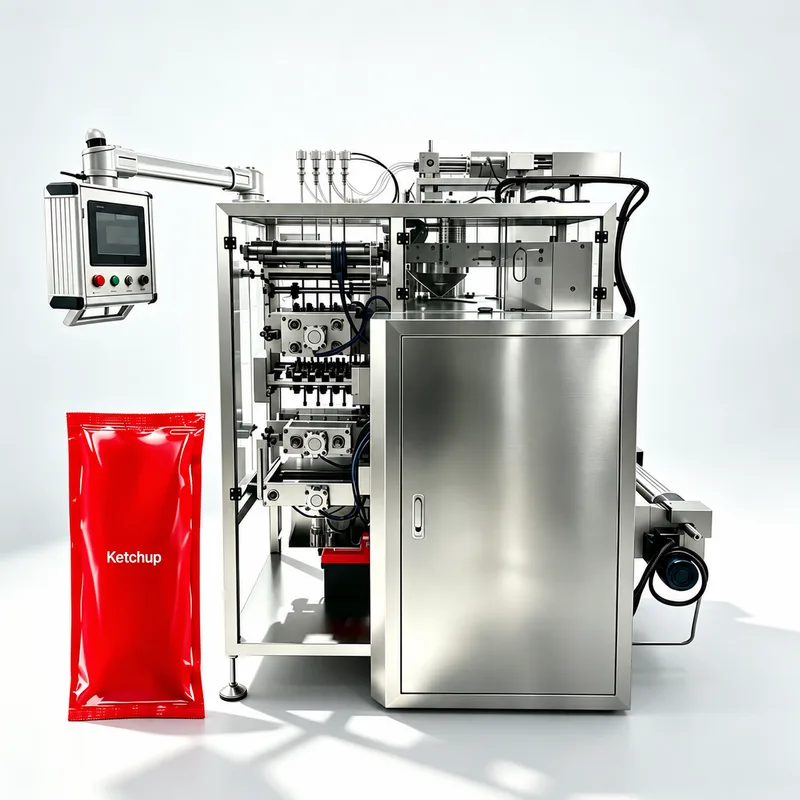
Sauce Four-Side-Seal Sachet Machine
Sauce strings or drips can contaminate the seal area, leading to leaks and rejected sachets. Specify this piston-dosing four-side-seal machine from your sauce, portion, sachet drawing and film.
What to send us
| Item | Why we need it | Example format |
|---|---|---|
| Outside dimensions and intended seal margins | Identify the evidence or open question for this review point. | Labeled brief entry + photo/drawing/record reference, or TBD. |
| Fill quantity, product temperature and particles | Identify the evidence or open question for this review point. | Labeled brief entry + photo/drawing/record reference, or TBD. |
| Film construction, print layout and opening feature | Identify the evidence or open question for this review point. | Labeled brief entry + photo/drawing/record reference, or TBD. |
| Trial checks for drips, filled shape and sealed edges | Identify the evidence or open question for this review point. | Labeled brief entry + photo/drawing/record reference, or TBD. |
We reply within 24 hours.