
Stick-Pack Packaging
Define a single-serve powder pack through dose volume, lane arrangement, film layout and the opening experience.
On This Page
Separate dose weight from stick dimensions
A stick pack is a narrow single-serve package. The dose weight you want is a starting point. Powder volume and handling behavior also affect the dimensions. Supply a powder sample and the intended dose range before fixing the film layout. A short, narrow pack in the artwork may leave too little room for filling and sealing at your chosen quantity.
Review the lanes as a coordinated system
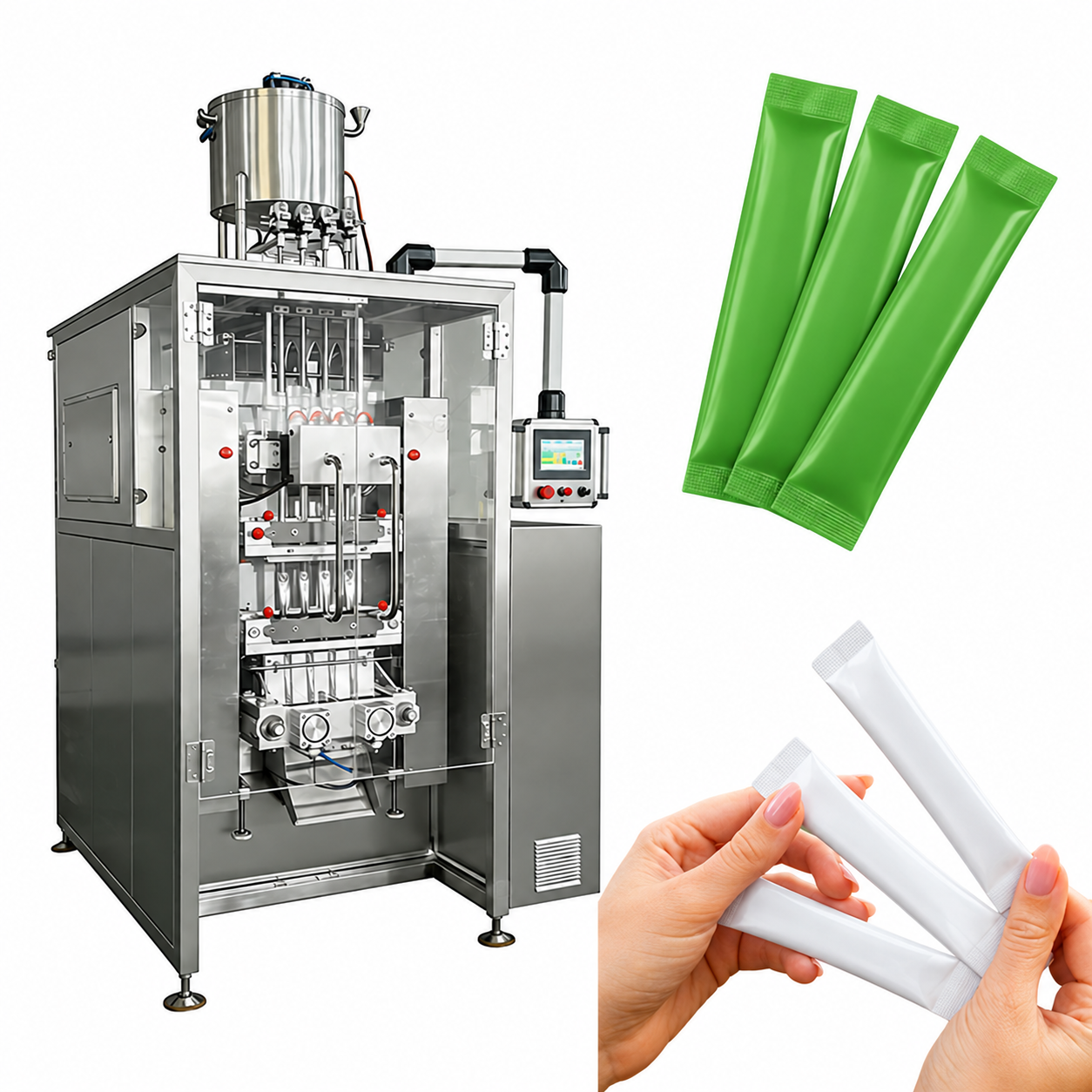
The catalog includes four-lane powder configurations for collagen, coffee and creamer. The proposal should identify the dosing equipment and format parts supplied for each formula. Confirm how output will be measured across the lanes and how lane-to-lane fill results will be recorded. A combined machine figure does not prove a particular result on every powder.
Specify the opening and print layout
Show the front and back artwork, the date-code position, the tear feature and the cut shape you want. Discuss the film layout with both the machine supplier and the film converter before you order production rolls. A change in finished stick width or print repeat can mean a new look at the forming and cutting arrangement. Keep the agreed drawing with the configuration record.
Inspect samples throughout a powder trial
Record powder condition, dose, settings and film used. Compare samples by lane and at different points in the run, including after replenishment. Inspect the sealing area for powder. Check that the opening works without damaging the rest of the pack. A trial should state the conditions under which the observed output and fill results were achieved.
Build the dimensions around the serving experience
A stick pack is a narrow single-serving format, but narrowness alone does not make a good design. Start with the product quantity and the way it will be dispensed. The catalog's collagen, coffee and creamer examples use powder dosing and heat sealing in a multi-lane arrangement. Each formulation still needs enough usable space for filling, and a package the user can open and empty.
Prepare a drawing showing the finished width, length, longitudinal seam, end seals, opening feature and coding area. Separate the external dimensions from the internal cavity. If the product will be poured into a cup or bottle opening, test that action with a filled prototype. A compact pack can look good on a presentation board and still be awkward to empty. It may also leave too little clearance for a stable production fill.
Understand how dose volume affects the narrow cavity
Powder mass does not tell you how much space a stick needs. Bulk density and the powder's condition during filling influence the temporary volume, and settling changes the final appearance. Provide the actual formulation and explain how it is transferred and stored before packaging. The equipment supplier can then check the proposed screw tooling and filling tube against the intended dimensions.
During the trial, inspect dose consistency and also where the powder sits relative to the end seal. A pack can look comfortably filled after settling even though the powder occupied the closing region during production. If you use a longer pack for the demonstration, mark that difference clearly. It is not confirmation of a shorter commercial design until that format has been tested with the same product and material.
Design the complete reel instead of one isolated stick
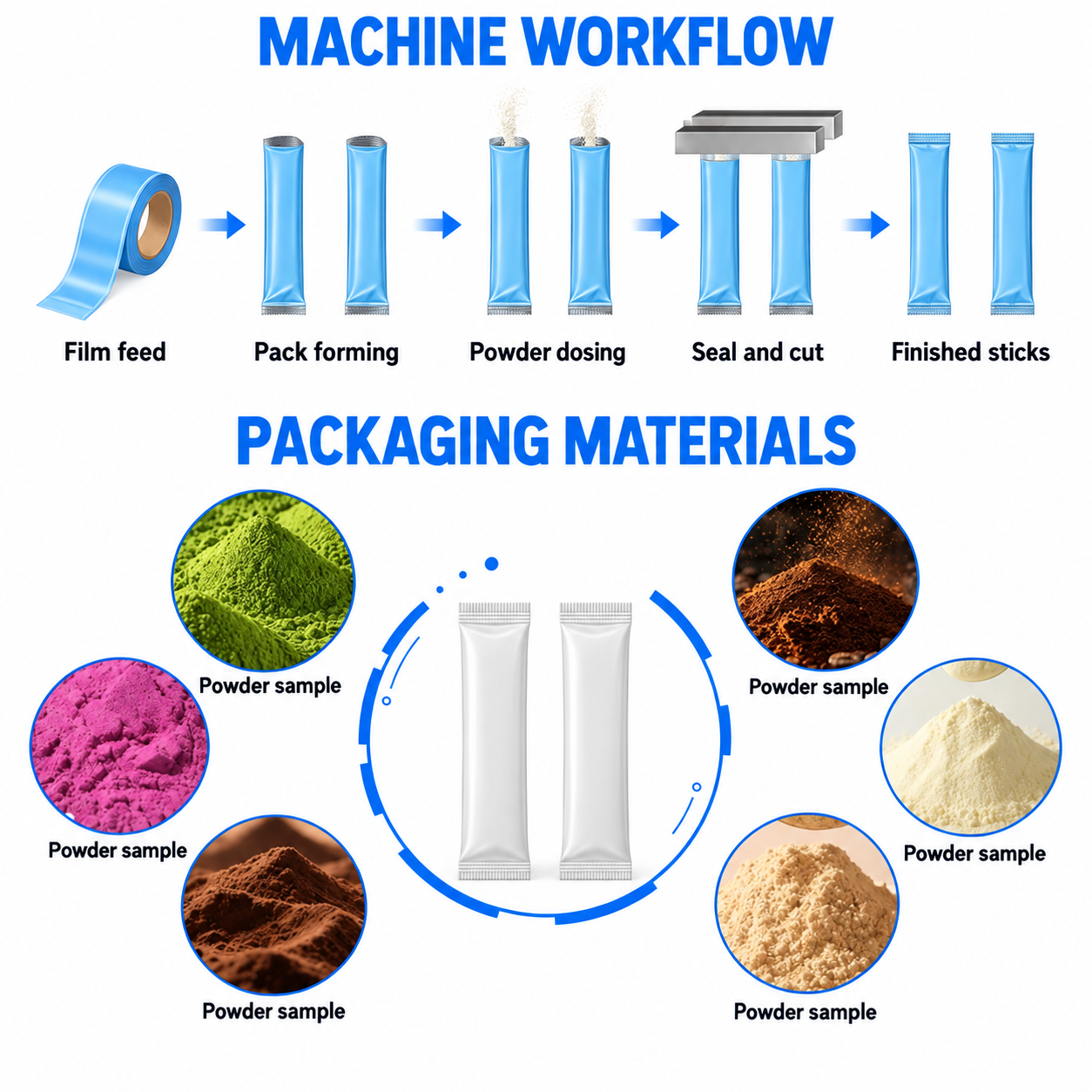
Multi-lane equipment forms several sticks from one coordinated film web. The converter therefore needs a layout that matches lane positions, slitting, print repeat and registration requirements. Review a complete web drawing with the equipment supplier before approving printed material. A graphic proof showing only one stick can hide a mismatch that appears when the reel is loaded.
Confirm where each stick gets its batch or date code and how the code stays clear after cutting. Check that the artwork direction matches how the pack will be collected and presented. If you want a tear notch or shaped cut, show how it relates to the seal and the printed instructions. These decisions belong in the package specification. They affect production setup and also the consumer's first contact with the serving.
Assess every lane without mixing the evidence
Samples from a multi-lane trial should keep their lane identity until weight, seal and appearance checks are done. A combined average can hide a problem in one channel. Plan a collection method before the run. The operator should not have to guess which lane made a suspect sample after the sticks have mixed together.
Compare the longitudinal seam, end-seal position, cut and code as well as delivered quantity. If one lane is adjusted, collect a separate group afterward and record the change. Where lane-specific settings apply, check how the machine stores or documents them. Production gets a practical handover record, and later troubleshooting gets easier. You want a result that repeats across the configured width, backed by observations from each finished stick stream.
Test opening, pouring and residual product
Consumer evaluation should use the intended laminate and real contents. Have users find the opening feature, tear the stick and pour the product into its destination. Watch whether the tear is predictable, whether product spills and whether powder stays trapped in a corner or along a seam. A photograph cannot answer any of these.
If changes are proposed, state the reason and retest the whole action. A different tear position may improve access but change headspace or artwork. A wider stick may empty more easily but need another forming setup. Keep the packaging and equipment suppliers involved so usability revisions stay compatible with the production arrangement. The best design fills and seals consistently and also works for the person using it in the expected setting.
Plan collection and secondary packaging at the same time
Finished sticks often go into another pack or an organized collection process. Define how output will be counted, handled and identified, and put that requirement into the line discussion. Several lanes may discharge in a pattern that needs a different arrangement from a single stream of larger bags. Confirm which downstream functions the quotation includes.
For acceptance, review the stick format, lane results, opening observations and collection process together. Include ordinary replenishment and a controlled restart during the trial. Keep the reel specification, dosing tooling and format settings with labeled samples. Where more formulations or pack lengths are planned but untested, list them explicitly. That gives the buyer a clear approved application range, and later single-serving products can be introduced without assuming all powders behave alike.
- Powder sample, dose range and bulk-density information
- Finished-stick drawing and film artwork repeat
- Tear feature, end cut and date-code position
How should a sample kit be prepared for a converter?
Include the intended filled stick, the dimensioned flat layout, the serving quantity and notes from the opening and pouring checks. Mark the seam, end seals, cut line, tear feature and code area. Add the proposed multi-lane web arrangement supplied or reviewed by the equipment manufacturer. With this information the converter can assess the whole production layout. It does not have to guess machine requirements from a single retail sample. When a revision is made, put its version on both the artwork and the technical drawing, so trial film and equipment setup refer to the same design.
Explore the Equipment
Multi-Lane Stick Packs
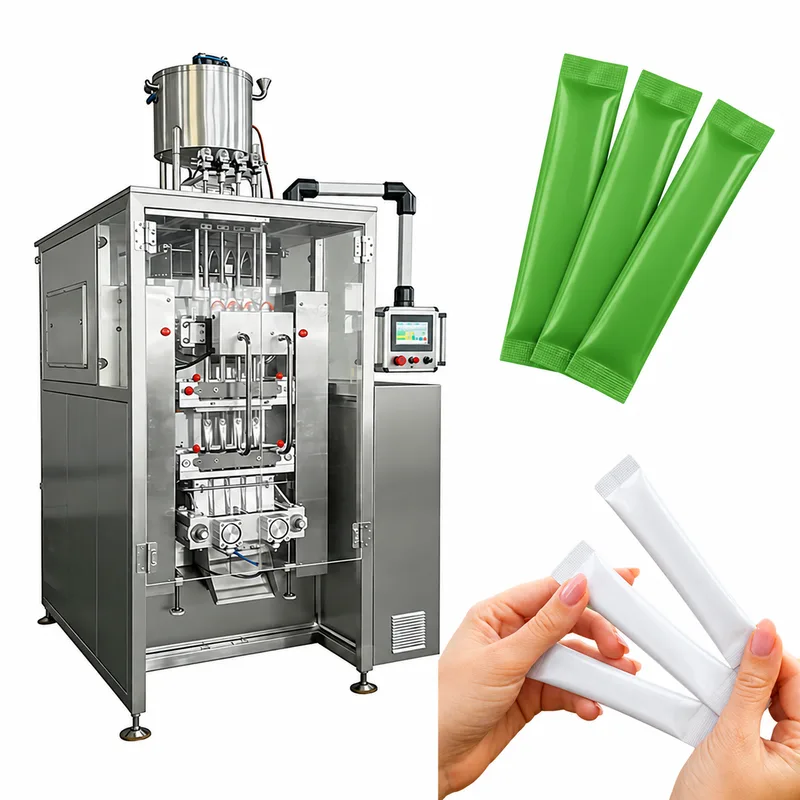
Four-Lane Collagen Stick-Pack Machine
Four lanes can hide one lane that under-doses. Specify this four-lane collagen stick-pack machine from your powder density, serving weight and stick size, and sample every lane.
Multi-Lane Stick Packs
Four-Lane Coffee Powder Stick Packs
Instant, agglomerated, blended and ground coffee do not dose alike on one screw. Specify this four-lane coffee stick-pack line from your exact formula, serving and stick, and check every lane.
Multi-Lane Stick Packs
Four-Lane Creamer Stick-Pack Machine
Creamer that cakes in the hopper or dusts the seal can cause runs of rejected sticks. Specify this four-lane creamer stick-pack line from your formula, serving, moisture sensitivity and changeover order.
What to send us
| Item | Why we need it | Example format |
|---|---|---|
| Powder sample, dose range and bulk-density information | Identify the evidence or open question for this review point. | Labeled brief entry + photo/drawing/record reference, or TBD. |
| Finished-stick drawing and film artwork repeat | Identify the evidence or open question for this review point. | Labeled brief entry + photo/drawing/record reference, or TBD. |
| Tear feature, end cut and date-code position | Identify the evidence or open question for this review point. | Labeled brief entry + photo/drawing/record reference, or TBD. |
| Per-lane fill checks and trial sampling plan | Identify the evidence or open question for this review point. | Labeled brief entry + photo/drawing/record reference, or TBD. |
We reply within 24 hours.