
Packaging Machines / Multi-Lane Stick Packs
Four-Lane Coffee Powder Stick Packs
Instant, agglomerated, blended and ground coffee do not dose alike on one screw. Specify this four-lane coffee stick-pack line from your exact formula, serving and stick, and check every lane.
- Lanes: 4, with film splitting and independent auger dosing
- Products: instant, agglomerated, blended or ground coffee, each assessed separately
- Options: date coding and powder feeder integration
- Speed: none published for this configuration; confirm it in the proposal for your formula
We reply within 24 hours.
| Product and configuration | Four-Lane Coffee Powder Stick Packs |
|---|---|
| Published scope | Lanes: 4, with film splitting and independent auger dosing; Products: instant, agglomerated, blended or ground coffee, each assessed separately; Options: date coding and powder feeder integration; Speed: none published for this configuration; confirm it in the proposal for your formula |
| Inputs to provide | Identify instant, agglomerated, blended or ground coffee before selecting dosing tooling. Retain lane-specific fill and print samples across refills and film-roll changes. Specify loose sticks, linked sticks or counted carton groups at the downstream handover. |
Configuration & Selection
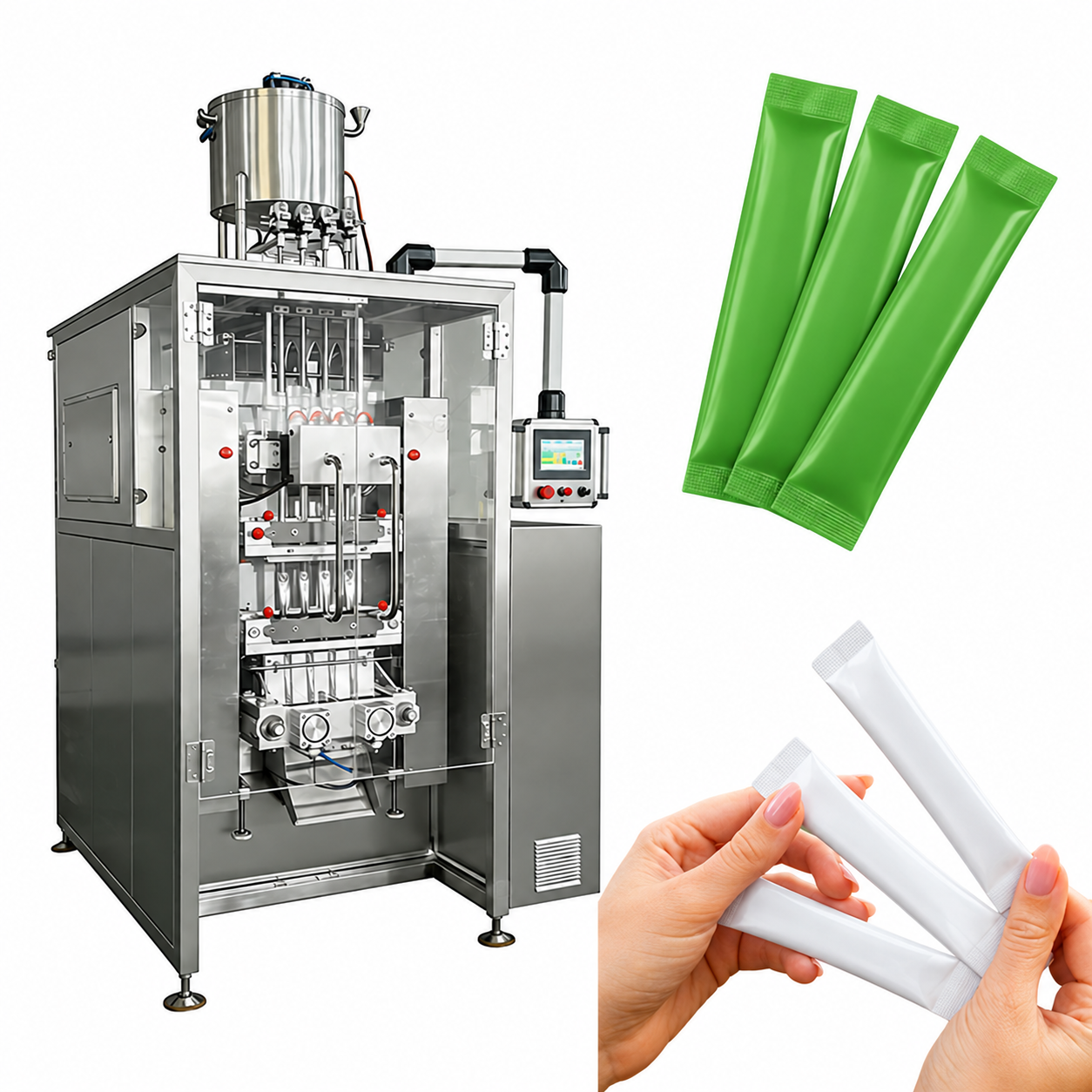
Name the exact coffee form before anything else. A fine soluble powder, an agglomerated instant, a blend with creamer and ground roasted coffee fill differently, so a screw and recipe chosen for one can give wrong weights or powder in the seal on another. Specify whether the product is instant coffee, a blend or ground coffee; the dosing setup depends on flow and density. Send details of your coffee type and formula, serving weights, stick drawing, film and whether you need loose, linked or counted sticks through the enquiry form or WhatsApp; physical samples are arranged separately.
On This Page
A stick-pack configuration for powdered coffee
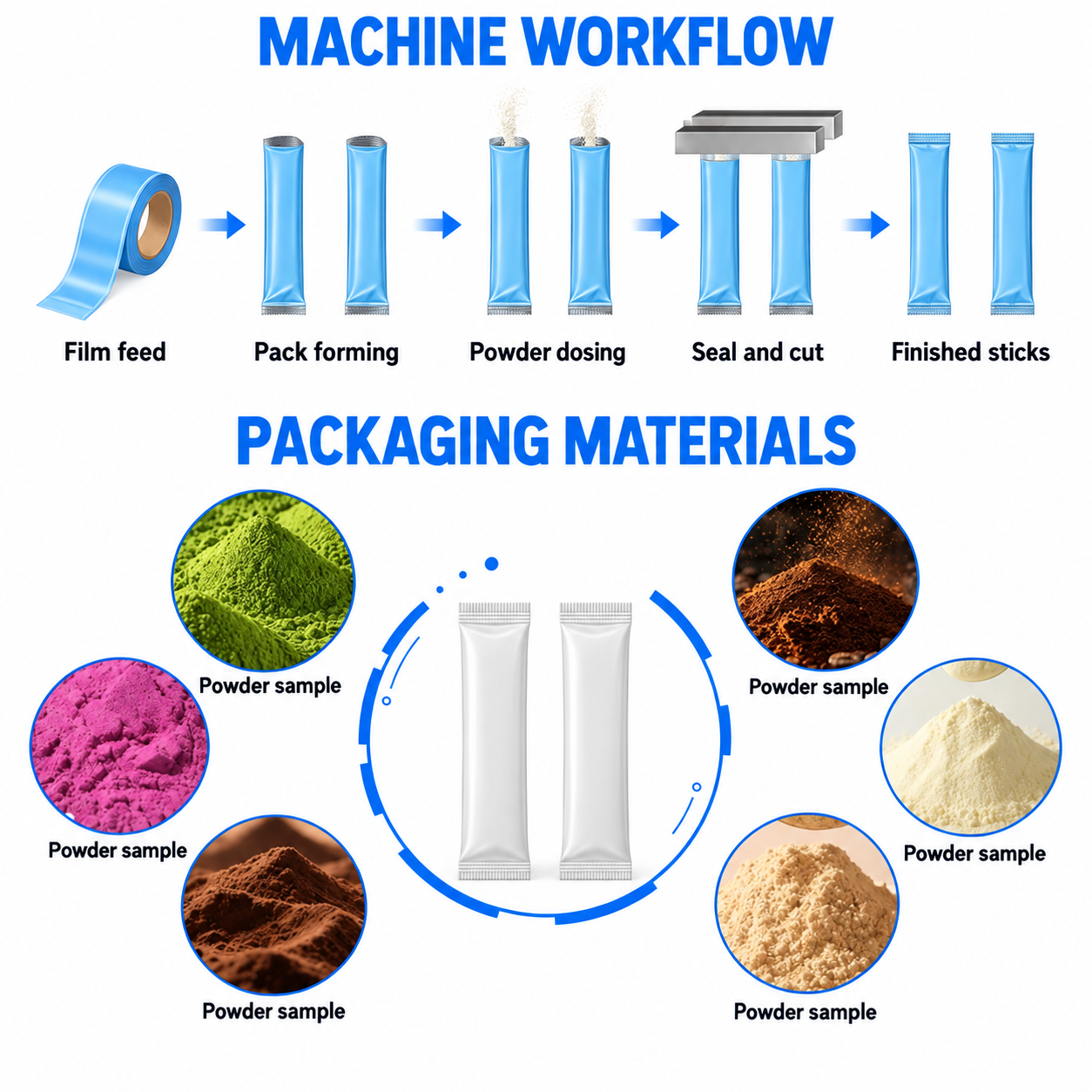
The four-lane coffee configuration splits roll film into parallel strips, forms each strip into a narrow package and meters powder with independently driven augers. Each lane doses on its own. It is a sensible starting point for single portions of instant coffee and powdered beverage blends. The behavior of the coffee itself decides the outcome of the filling. A fine soluble powder, an agglomerated instant product and a coffee blend with creamer do not fill the same way.
Define the product precisely first. Ground roasted coffee is also a powder. Its preparation, portion and package needs differ from a soluble drink. A catalog application list does not mean all these products run on one screw, one timing recipe or one stick width, and this profile therefore describes the packaging arrangement and the questions needed to specify it. The commercial configuration should name the actual formula, portion size and film used to evaluate the proposed dosing and sealing setup, otherwise nobody can say what was really tested.
Takeaway: Name the formula, portion and film that were actually tested.
From one printed web to four finished sticks
In the proposed process, the film web is guided and divided into four lanes. Each strip passes through a forming path, receives a measured dose and is sealed into an individual stick before separation. Product replenishment, date coding and takeaway handling are further interfaces to cover in the equipment discussion. Confirm which of these functions are supplied and which depend on other equipment in your factory.
Trace the process with a marked printed sample. Check where the back seam will fall, which face carries the batch code and how the consumer is expected to tear the pack, because these details shape film preparation and how the finished product looks. The supplier should be able to show the packaging cycle with your intended film, not a generic animation. Watch the outer lanes as well as the central ones. A good average can hide inconsistent graphic position, cutting or powder delivery in a single channel. One bad lane can spoil a batch.
Takeaway: Trace a marked printed sample through all four lanes.
Coffee formulation and auger selection
Coffee blends vary. Particle size, density and the amount of fine material all differ. A recipe with sugar and creamer may also change condition as it is conveyed, stored or replenished. Provide a representative production sample. Use your normal blend, not a simplified demonstration material. Explain how the product reaches the packaging hopper and how long it normally waits before packing.
Auger selection follows the serving mass and the behavior of that sample. During the review, collect output over time instead of weighing a few packs right after an adjustment. Compare each lane and note any change after a refill or a brief pause. If the formula contains visibly different ingredients, bring in the product team to decide whether mixture uniformity needs its own assessment. Consistent weight alone does not show the ingredients stay in proportion. The packaging evaluation should say what it measured, and leave any untested formulation property clearly outside its conclusions.
Common mistake: Accepting a few sticks weighed right after an adjustment as proof of steady dosing.
Takeaway: Collect lane samples over time, including after refills and pauses.
Choose the stick around the serving experience
A coffee stick has to hold its serving, open predictably and empty into the intended cup or preparation vessel. Begin with the product instructions and the target portion. Then review the filled volume and the space needed for clean closing. A small increase in serving mass may need more than a simple length adjustment. The blend might take up much more volume, or settle differently during dosing.
Supply the artwork repeat, pack width and finished length you want, along with an actual package if one exists. Find out which widths need different formers and which length changes can be made within the approved setup. Review the cut style and the notch on their own. A perforated chain of sticks, for example, is separated and handled differently from loose individual servings. Open several trial packs the way a consumer would. Does powder stay caught near the seam or opening? These checks tie the machine choice to practical use without promising a result before testing.
Takeaway: Open trial packs the way a consumer would before fixing the stick size.
Film, print and sealing checks
Talk to the film supplier about the intended laminate before the packaging settings are finalized. The material description should cover its construction, dimensions, sealing surface and printed layout. Barrier needs come from the coffee product and its storage plan. A seal does not set shelf life. Any shelf-life target needs its own product and package evaluation outside this general configuration description.
At the machine trial, check registration, pack length and the position of the printed code on all lanes. Inspect the end seals for trapped coffee powder and compare their appearance with the agreed integrity checks. Keep samples from the start and end of the run. Take more after replenishment and after a roll change. If you are considering a lighter or more sustainable laminate, evaluate that exact material. A good run on another film does not carry over automatically. A material change can affect forming, pulling, sealing and opening all at once.
Takeaway: Test the exact laminate you will buy, especially when switching to a lighter film.
Daily operation and blend changeovers
Operators need a clear routine. It covers supplying powder, monitoring the four outputs and spotting packs to set aside after an interruption. Agree where routine fill samples are taken and how lane identity is kept once sticks merge onto a common conveyor. If the line combines all output immediately, what looks like a general dosing problem may later be hard to trace to one lane.
Say you switch from plain instant coffee to a flavored blend. The hopper, augers, forming tubes and surrounding powder collection points all need review. Work out the cleaning process with the product quality team, especially where creamer or another ingredient changes the allergen profile. Picking a recipe on the control screen is only one part of a changeover. Tooling installation, film loading, code changes, cleaning verification and the first acceptable pack matter as well. Have the operator who will do the work follow the proposed sequence during the demonstration, and note the tools and access needed to finish it.
Takeaway: Have the operator who will do the changeover follow the proposed sequence.
- Identify instant, agglomerated, blended or ground coffee before selecting dosing tooling.
- Retain lane-specific fill and print samples across refills and film-roll changes.
- Specify loose sticks, linked sticks or counted carton groups at the downstream handover.
Output planning beyond the machine cycle
Four lanes give four parallel packaging positions. Usable output depends on more than the cycle setting. Powder availability, seal acceptance, coding, film handling and downstream collection can each limit how many saleable sticks reach the carton. Work out how many accepted portions you need in a stated production period, then include planned product changes and routine replenishment in the discussion.
If automatic cartoning is on the table, specify the number of sticks per carton and the handover arrangement you need. Loose sticks on a belt are not counted groups ready for insertion. Watch whether finished packs gather under the cutter or become hard to sample once several lanes merge. A trial should report the steady running result and the interruptions. The highest momentary rate is not enough. That makes configurations easier to compare, and it helps separate a dosing limit from a problem in collection, inspection or secondary packaging.
Takeaway: Plan output as accepted sticks per stated period, including changes and refills.
A practical coffee stick-pack enquiry
Send the exact coffee type and formulation category, the serving weights you need, target daily quantities and available production hours. Include the proposed film specification and a drawing or sample of the stick you want. Say whether coding, a notch, a linked chain format, powder feeding, counting or cartoning should be included. State the local utility supply and any height or access restriction around the proposed installation.
The configuration response should separate the four-lane packaging machine from its optional upstream and downstream modules, and it should also name the screw and forming sets included for each evaluated product and size. Keep the trial record lane by lane, with fill observations, seal checks and finished samples linked to the materials used. If a published specification or optional feature has not been confirmed for the selected machine, leave it as a review item in the quotation. That gives a clearer purchase basis than assuming every capability in the wider coffee catalog is a standard feature of one system.
Coffee forms and the trial matrix
Each coffee form below needs its own line in the trial plan. The headings follow the formulation and output sections above; this configuration has no published speed, and figures published for other stick-pack configurations do not apply to coffee.
Instant soluble powder: record the formula, serving, screw used and stick size.
Agglomerated instant: record the same items, plus any breakdown of granules in the hopper.
Blend with creamer or sugar: record the same items, plus whether ingredient proportions need their own check.
Ground roasted coffee: record the same items as a separate product with its own dosing assessment.
For every line, label results by formula, lane number (1–4), run stage (before refill, after refill, after a pause) and film version, so a change in any one of them can be traced.
Takeaway: Do not carry a result from one coffee form or film version to another.
When this does not apply
No speed is published for this configuration, and figures from other stick-pack machines do not transfer. The application list does not mean all coffee forms run on one screw, timing recipe or stick width. Weight consistency does not show that a blend's ingredients stay in proportion. A seal does not set shelf life.
Takeaway: Confirm tooling, speed and blend uniformity for each coffee form you will pack.
Frequently asked questions
Can ground coffee use the setup chosen for instant coffee?
Not by default. Ground roasted coffee is also a powder, but its preparation, portion and package needs differ from a soluble drink. Treat it as a separate product with its own dosing and sealing assessment.
Do all four lanes use the same film and print layout?
They share one printed web that is divided into four lanes, so the artwork, registration and code position have to work on every lane. Check outer and middle lanes separately in the trial.
What is the difference between loose sticks and counted carton groups?
Loose sticks arrive on a belt as they leave the cutter; counted groups are ready for insertion into a carton. If you need counting or cartoning, specify the sticks per carton and the handover, and name which equipment does it.
What is coffee stick packaging?
Single servings of powdered coffee sealed in narrow film sticks. On this configuration four sticks are formed and dosed in parallel from one printed film web.
Bag Format Selection
Review the pack requirements for your enquiry. Compatibility is confirmed for the selected equipment and sample.
Planning Guides for This Configuration
These pages cover the system type, trial preparation and project checks that apply to this configuration.
Request a Packaging Configuration
We reply within 24 hours. Tell us what you need to pack. Leave quantity and output blank if you are still deciding. When you continue, WhatsApp opens with your enquiry written out so you can review it and send it to our team.
Explore the application · Configuration and project support
Related Packaging Configurations
Multi-Lane Stick Packs
Four-Lane Collagen Stick-Pack Machine
Four lanes can hide one lane that under-doses. Specify this four-lane collagen stick-pack machine from your powder density, serving weight and stick size, and sample every lane.
Multi-Lane Stick Packs
Four-Lane Creamer Stick-Pack Machine
Creamer that cakes in the hopper or dusts the seal can cause runs of rejected sticks. Specify this four-lane creamer stick-pack line from your formula, serving, moisture sensitivity and changeover order.
What to send us
| Item | Why we need it | Example format |
|---|---|---|
| Coffee type and formula | Instant, agglomerated, blended and ground coffee dose differently. | One line per product with type and formulation category, plus a production sample. |
| Serving weights | Sets screw tooling and stick volume. | List of servings in g per product. |
| Stick drawing and film | Width, cut style, notch and laminate set forming and sealing. | Dimensioned stick drawing, laminate sheet and artwork repeat. |
| Downstream format | Loose, linked and counted sticks need different handling. | One line: loose, linked chain or counted per carton (state count). |
| Daily quantity and hours | Lets accepted output be planned beyond the cycle rate. | Sticks per day and production hours per day. |
We reply within 24 hours.