
Coffee Packaging: Beans, Valves and Stick Packs
A coffee format chosen without the product can require different dosing later. Compare bean bags first; review ground coffee separately and instant powders for sticks.
| Format | Material route | First check |
|---|---|---|
| Valve VFFS bag | Roll film | Confirm valve application and bean or powder handling |
| Quad-seal bag | Roll film for the agreed folds | Review edge seals and presentation |
| Premade doypack | Finished pouch | Confirm zipper or valve ownership and opening |
| Single-serve stick | Roll film | Review instant-powder flow and portion tooling |
Choose the pack format before comparing machine proposals
Compare formats here; use the coffee application page when your product and bag sample are ready for an equipment brief.
- Coffee stick configuration — four-lane powder dosing
- Coffee VFFS configuration — review the valve option
- Coffee doypack configuration — check supplied pouch features
- Degassing valves — clarify package and component responsibility
- Nitrogen checklist — define the proposed option
- Powder dosing trials — assess ground or instant formulations
Scroll horizontally to read all columns, conditions and sources.
| Format | Starting material | Product and dosing discussion | Valve or closure responsibility | Sample check |
|---|---|---|---|---|
| Valve VFFS bag | Printed roll film | For beans, discuss weighing and gentle transfer; powdered coffee needs a separate dosing review. | Confirm how the valve is applied and whether gas flushing is included. | Run the chosen coffee, film and valve together; examine seals and filled-bag shape. |
| Quad-seal bag | Roll film suited to the agreed bag construction | Discuss bean handling, target weight and the forming sequence. | Identify any valve option explicitly; bag shape alone does not define it. | Check the four edge seals, pack stability and fit in the shipping carton. |
| Premade doypack | Finished pouches supplied to the line | Review pouch opening, filling access and the appropriate bean or powder dosing unit. | Clarify whether the pouch already contains its valve or zipper and what the line must operate. | Test actual pouch batches for opening, filling clearance and final sealing. |
| Single-serve stick pack | Roll film for narrow packs | Discuss instant coffee flow, portion size and the dosing method with representative product. | Agree the tear opening and seal layout; do not assume a retail-bag valve process applies. | Check portion consistency, seal contamination and opening convenience. |
On This Page
Separate whole beans, ground coffee and instant products
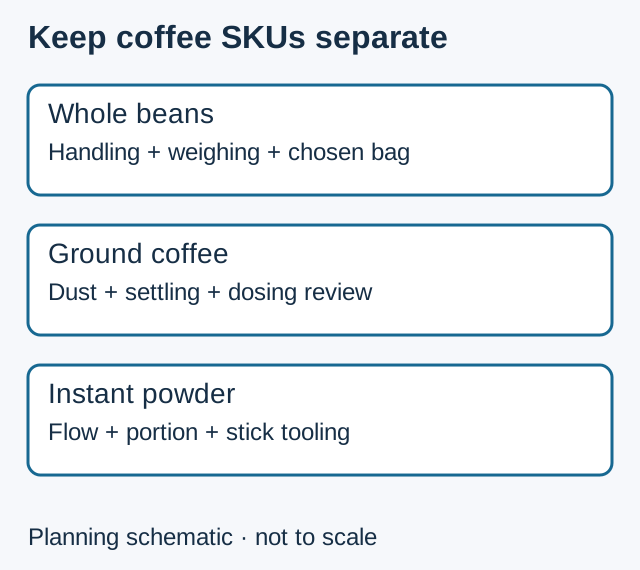
Coffee packaging starts with the product. Whole beans need controlled handling and a suitable weighing approach. Ground coffee brings other questions: dust, settling and how consistent a dose is. Instant coffee or a blended single-serve product has its own flow behaviour and portion needs. Keep them on separate trial records. A shared brand or package colour changes nothing.
The published coffee stick configuration uses four-lane auger dosing for instant coffee and blended powders. Treat the selected formula, density and portion as inputs to the tooling review. Ground coffee remains a separate assessment.
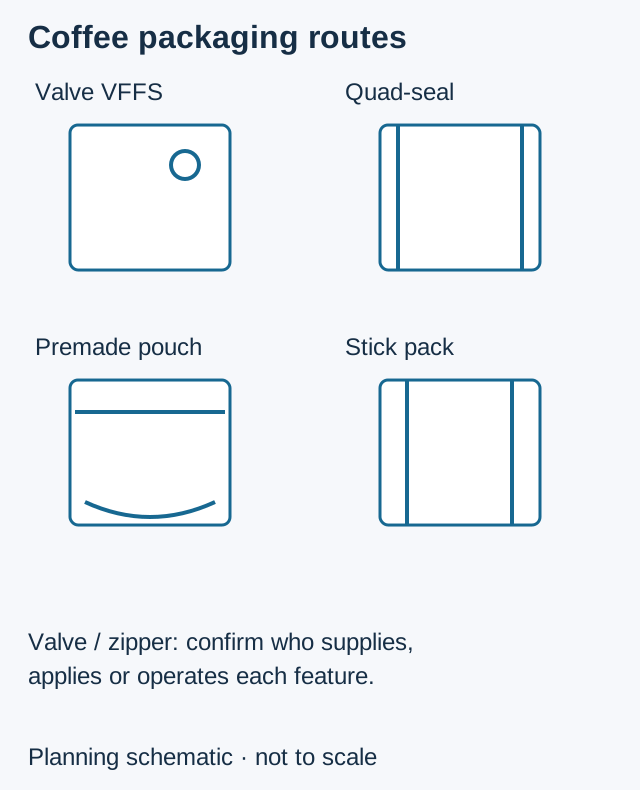
Match the retail format to the filling route
A roll-film coffee bag, a quad-seal pack and a premade stand-up pouch are built and handled differently. A valve can add a positioning or inspection task. A zipper changes the consumer opening and the area the machine can grip. Find out whether the closure or valve comes with the packaging material or is installed in a separate operation, since that affects both equipment scope and who is responsible for purchasing it.
For a single-serve powder, settle the usable stick width and the opening arrangement before you ask for a multi-lane configuration. A narrow package can look efficient on a drawing and still be hard to fill or empty with a particular powder. Test with real product. Check dosing, seal cleanliness and dispensing. One coffee formulation filling well says little about another with different ingredients or density.
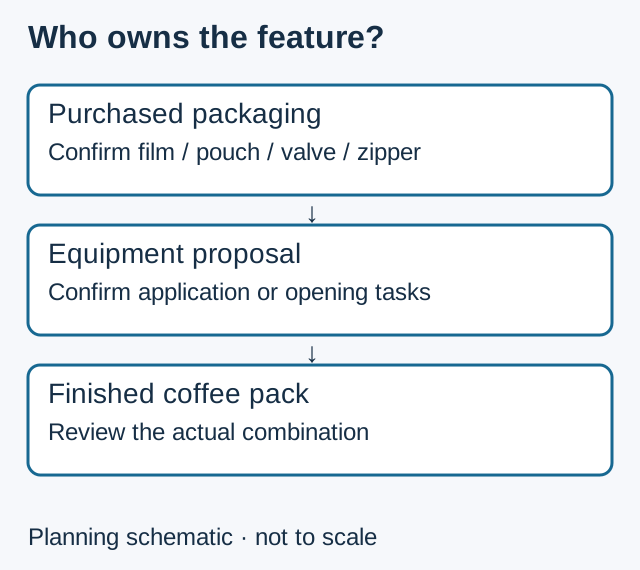
Compare formats using a buyer's sample set
Prepare a filled example of your current package. Add a marked example of each alternative. Decide what the new package should improve: display stability, resealing, portion control, distribution handling or production workflow. Keep those aims apart from measurable acceptance criteria. If you want a premium appearance, turn it into agreed checks on folds, alignment and presentation. An undefined visual promise gives nothing to test.
Evaluate the whole batch process, including packaging material changes and product clearing between coffee varieties. Note the material left in the feed path and the actions needed before a new recipe is released. Product recovery, traceability and cleaning access can sway the choice. So can nominal output. Finish the comparison with a configuration for each priority SKU, a list of open trial questions and a named package supplier.
Build a coffee SKU matrix before selecting options
Give every coffee product its own row. Mark it as whole bean, ground or instant, and add nominal fill, package construction and consumer opening. Include the product timing and storage information that matters to the project. A matrix shows where similar-looking retail packs actually need different dosing, handling or closing arrangements.
For each row, state what is known about the packaging material and what is still being worked out. A brand may have finished artwork while the converter is still choosing a structure. Finished graphics are not an approved specification. The converter and the equipment supplier should review material, dimensions and machine interfaces together before you commit to a production quantity of packaging.
If the project covers both whole beans and a powder portion, compare cleaning and product change directly. Name the contact components, the residual product and the information needed to restore an approved recipe. A shared brand doesn't mean a shared filling configuration. Which combinations get a trial should depend on material behaviour and the operating schedule.
Copy the blank record for each first-production SKU and link its fields to the same sample ID. Do not combine a whole-bean retail bag and an instant-drink stick in one row merely because their artwork shares a brand. For each open item, state whether the converter, product team or equipment team can supply the answer. If the valve belongs to the purchased pouch, identify that pouch revision; if application equipment is proposed, identify its quotation line instead. Keep a material change visible even when the pack graphics are unchanged. At the comparison meeting, use the matrix to select the next sample or drawing to review. It should expose a specific missing decision, not turn untested coffee variants into an implied list of approved applications.
| Matrix field | Buyer entry | Evidence or owner |
|---|---|---|
| SKU and product form | TBD: beans / ground / instant | Product lot and sample ID: TBD |
| Nominal fill and pack | TBD quantity / units / format | Drawing and material revision: TBD |
| Opening and components | TBD tear / zipper / valve | Converter or equipment owner: TBD |
| Production schedule | TBD sequence / changes | Product-specific trial question: TBD |
A practical comparison of two coffee packs
Picture a roaster comparing a roll-film bag with a premade resealable pouch for the same whole-bean product. Keep the fill target and coffee lot the same, but don't force the two packages into identical external dimensions. Hold each one to the same product-space and consumer-use requirements instead. Choosing dimensions for looks makes for a less fair comparison.
Check the package after filling, during opening and when it sits in the intended case. Note how the pack stands, where the closing features are and whether the coding stays readable. These are criteria to agree on, not universal pass or fail rules. The package that looks better in a studio image may not be the one that suits your real distribution and use.
Treat preservation as a separate question from presentation. A valve, nitrogen option or barrier-film description should lead to defined product and package tests, not a borrowed shelf-life number. Keep the material specification and sample identities so a later investigation can trace a result to the configuration actually tested. Equipment alone can't establish those results, and this split keeps the claims honest.
Questions for the configuration discussion
Name the open decision in the enquiry: bag construction, powder handling, valve ownership or the operating schedule. Attach the SKU matrix and the relevant sample or drawing ID so the reply can address that decision.
Ask for the proposed configuration and the information still needed to define it. Record the product used in any demonstration and the parts or procedures proposed between the first SKUs. Before dispatching coffee or packaging samples, agree arrangements, quantities and costs. Keep the resulting scope tied to the matrix revision rather than treating a general coffee-machine description as confirmation of every row.
Check how the consumer uses the pack
Have a few intended users open and handle representative filled samples. Use the planned evaluation procedure. Note where the tear starts, whether the opening is convenient and how the pack is stored after use. These observations help define a useful package requirement. They do not replace technical package testing. If the opening or closure changes, send it back to the converter and the equipment team before calling the revised design ready for automatic filling.
Method and sources
This revision reorganizes the existing coffee packaging: beans, valves and stick packs guidance and the linked published configuration descriptions, reviewed on 8 October 2026. The blank records and diagrams are planning aids, not customer results or independently verified equipment tests. Questions below come from the existing page’s buying questions and the 8 October editorial review, not a claimed survey or search-frequency dataset. This is a public-information comparison of routes in our offered catalog, not a test conducted for this article. Confirm sample arrangements, quantities and costs before sending material.
Frequently asked questions
Which coffee product has been demonstrated on the proposed dosing system?
Request the product identity and trial conditions. Match them to your bean, ground or instant SKU rather than assuming that one coffee trial covers all three.
Is the valve supplied by the converter or applied on the line?
Confirm it for the selected route. List the valve, any application equipment and the responsibility for checking the finished package separately.
Which parts change between the first coffee SKUs?
Request the tooling and change procedure for each SKU. A screen recipe does not describe all contact, dosing or forming-part changes.
Does adding nitrogen or a valve establish shelf life?
No. Product and package evaluation under the intended storage and distribution conditions is separate from a machine demonstration.
Does finished artwork mean the material is approved?
No. Record whether the converter has confirmed the structure and dimensions, then review machine interfaces before ordering production packaging.
Must alternative coffee packs have identical outer dimensions?
Use the same product-space and consumer-use requirements. Different folds and closures can make identical external dimensions an unfair comparison.
Explore the Equipment
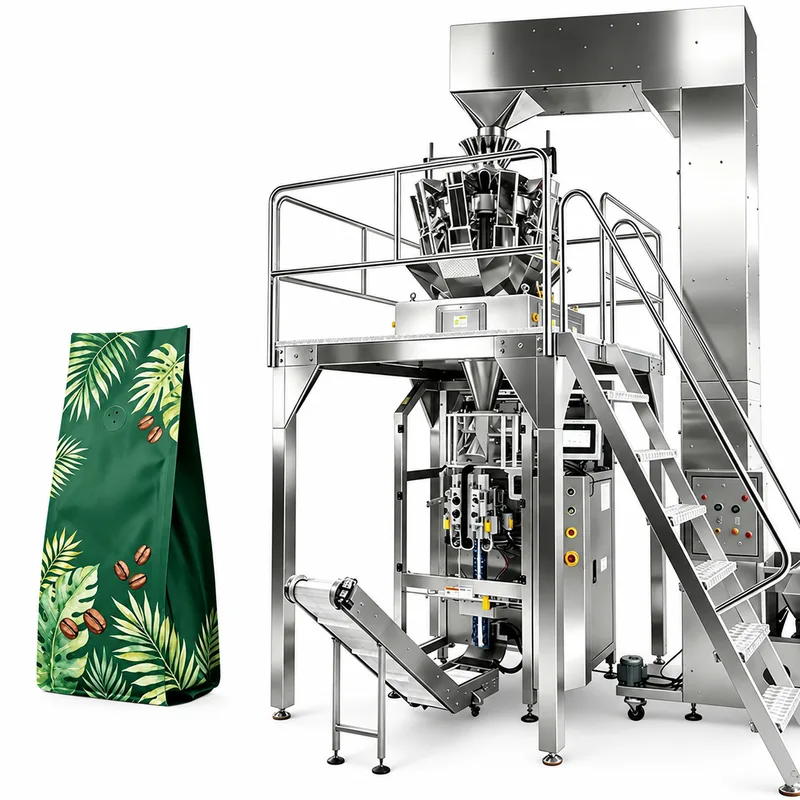
Vertical Form Fill Seal
Coffee Bean Valve-Pouch Packaging
A misplaced or poorly attached degassing valve can spoil a run of coffee bags. Specify this weigher and VFFS valve line from your valve drawing, film, roast and weight.
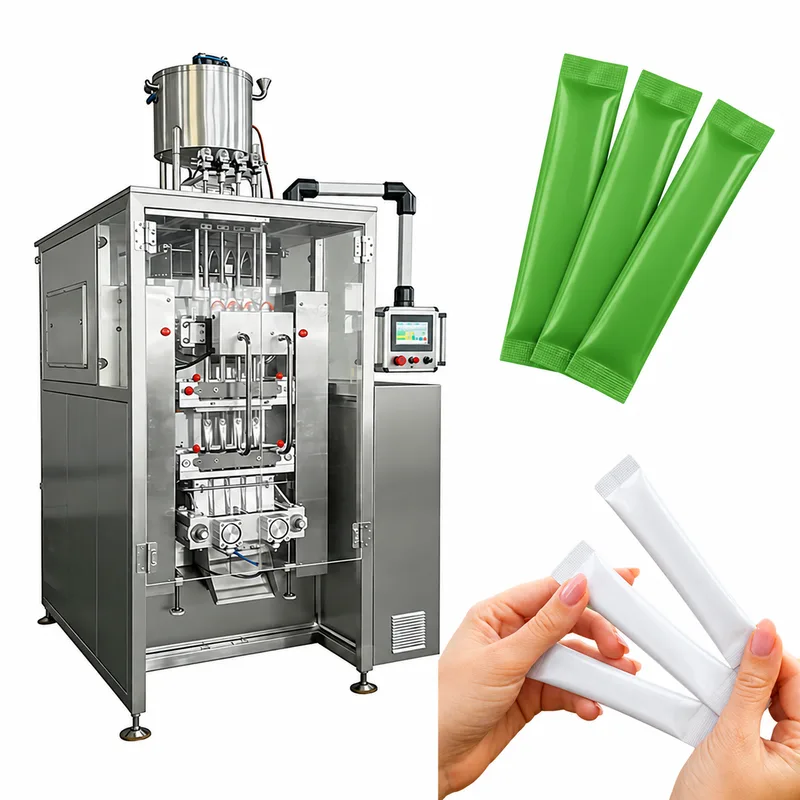
Multi-Lane Stick Packs
Four-Lane Coffee Powder Stick Packs
Instant, agglomerated, blended and ground coffee do not dose alike on one screw. Specify this four-lane coffee stick-pack line from your exact formula, serving and stick, and check every lane.
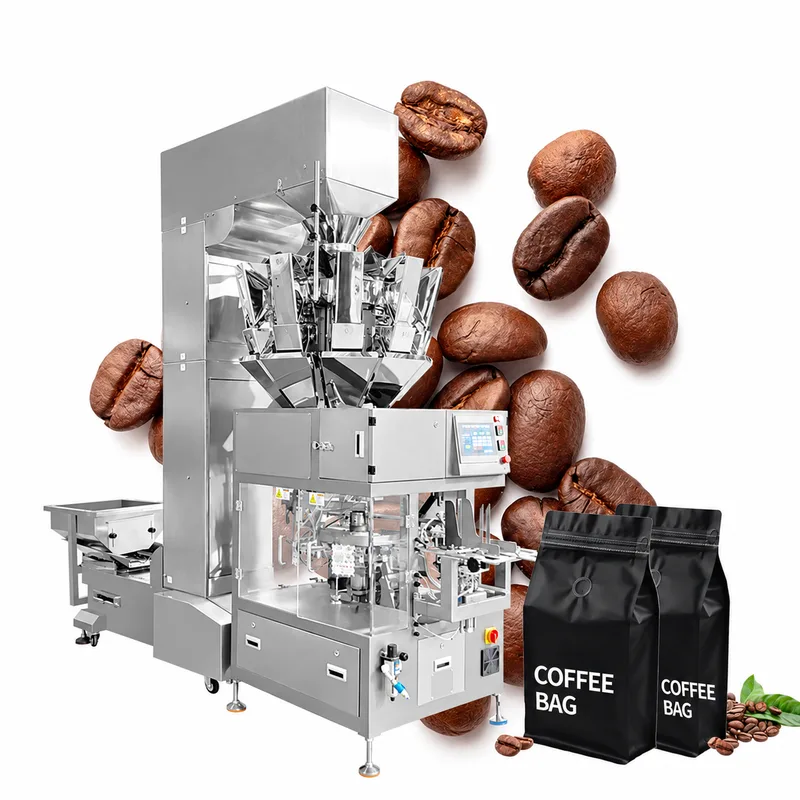
Premade Pouches
Coffee Bean Doypack Packaging
A valve or zipper too close to the pouch mouth catches beans and spoils the seal. Size this premade doypack line for coffee from your actual pouch, bean condition and fill weights.
What to send us
| Item | Why we need it | Example format |
|---|---|---|
| Whole beans, ground coffee or a single-serve powder | Separate the product forms and dosing questions. | SKU / bean-ground-instant / lot / fill target |
| Pack construction, zipper or valve and component ownership | Assign material and component responsibilities. | Pack drawing + converter / valve / zipper owner list |
| Production schedule, material changes and product-specific trials | Select representative trials and changeover conditions. | SKU sequence + material revisions + trial-question log |
We reply within 24 hours.