
Packaging Machines / Vertical Form Fill Seal
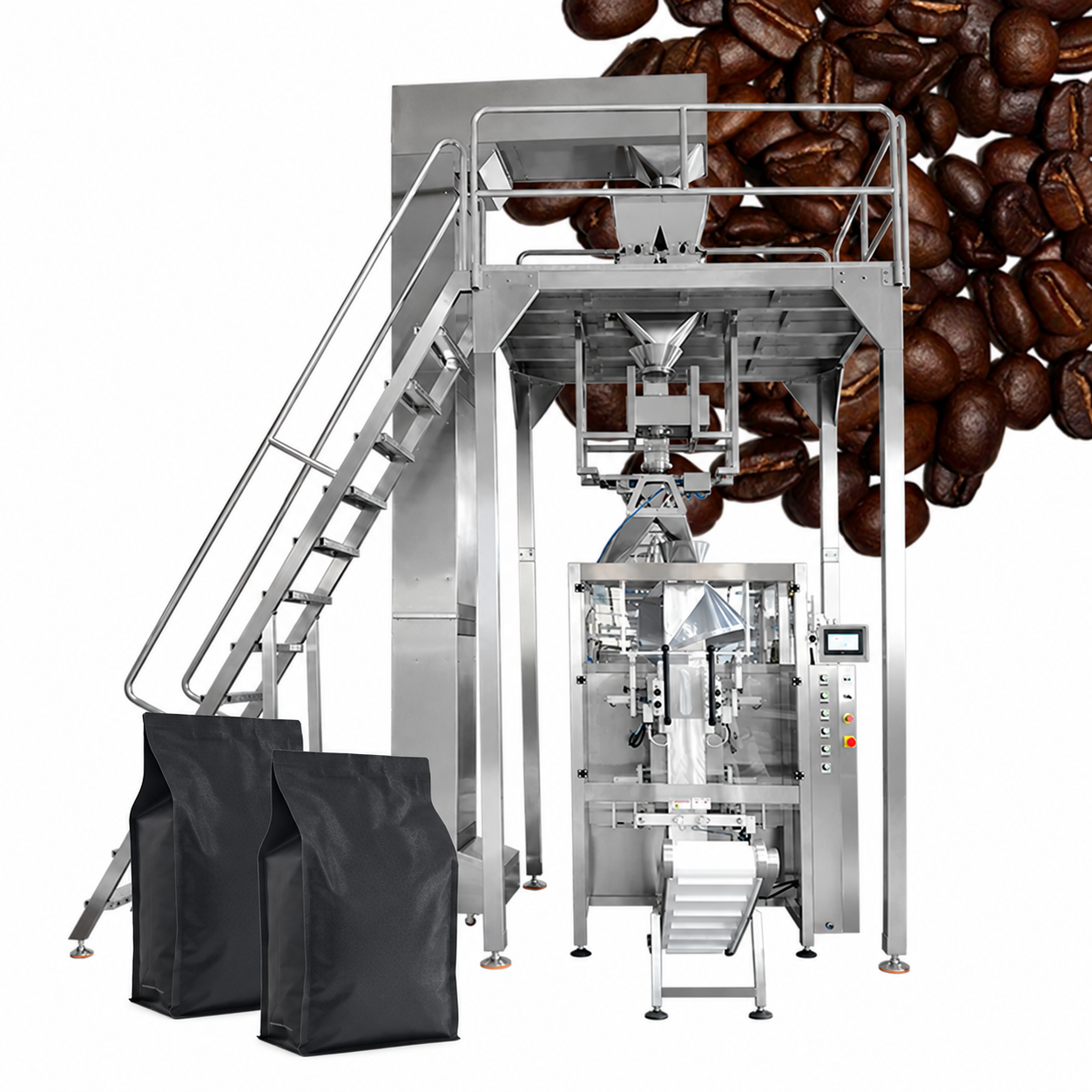
Quad-Seal Coffee Packaging
A quad-seal coffee bag that will not stand, or skews at the corners, wastes film and coffee. Specify the corners, gussets, base, valve and dosing method from your bag drawing.
- Corners: four sealed edges added to the formed bag
- Gussets and base: set by your bag drawing, not by the term quad-seal
- Valve: in-line degassing-valve integration is an option
- Dosing: volumetric, linear or multihead, chosen for your coffee
- Speed and bag range: none published for this configuration; confirm them in the proposal
We reply within 24 hours.
| Product and configuration | Quad-Seal Coffee Packaging |
|---|---|
| Published scope | Corners: four sealed edges added to the formed bag; Gussets and base: set by your bag drawing, not by the term quad-seal; Valve: in-line degassing-valve integration is an option; Dosing: volumetric, linear or multihead, chosen for your coffee; Speed and bag range: none published for this configuration; confirm them in the proposal |
| Inputs to provide | Supply face width, gusset depth and base details on the finished-bag drawing. Inspect folded corner junctions with the intended production laminate. Confirm dosing method, valve position and change parts for every planned format. |
Configuration & Selection
Start from the finished bag, not the machine. Quad-seal describes the four sealed edges; the base, side gussets, valve position and film decide whether the bag stands and looks the way you want, and a wrong assumption shows up as skewed corners or a bag that will not sit upright. Send a finished-bag sample or dimensioned drawing so the base, gussets, valve and film construction can be reviewed together. Send details of your bag drawing with face width, gusset depth and base, target weights, film and valve position through the enquiry form or WhatsApp; physical samples are arranged separately.
On This Page
What makes this a quad-seal coffee configuration
A quad-seal coffee bag adds four sealed edge features to the formed package, which gives a more structured look than a simple pillow pouch. The source configuration pairs this forming and sealing arrangement with a dosing system selected for the coffee and pack size. It also describes an optional degassing-valve integration. The equipment decision comes down to how the specified film, corners, gussets and fill work together to make the retail bag you want.
Begin with a finished-bag sample or a dimensioned drawing. "Quad-seal" describes the edge structure but may not fully define the base, top closure or filled shape. Confirm which parts of that construction the proposed line will produce and how it handles the film at each stage. A machine photograph or a similar-looking coffee bag is fine for discussion. Tie the final configuration to a sample made with the intended laminate and coffee.
Takeaway: Agree which finished-bag sample is the reference before comparing machines.
Following the film through the additional sealing stages
On a vertical machine, the film unwinds, is guided into the forming arrangement and is drawn through the required sealing operations. For the quad-seal format, extra edge-forming and sealing elements make the four reinforced corners. These must stay aligned with the main longitudinal and transverse seals. The supplier should explain the film path, showing where each feature is created and how the film is controlled between stages.
In a trial, inspect the flat film before forming and, where access permits, the finished bag. A skewed edge can start in tracking, tension, forming alignment or the relationship between the sealing elements. Change one setting without knowing which of those is at fault and the defect may just move elsewhere. Note which adjustment corrects a problem. Then check consecutive bags afterward. You want repeatable geometry across the run, including after a stop. One carefully picked bag with straight corners proves little.
Takeaway: Locate the cause of a skewed corner before changing settings, then check consecutive bags.
Defining gussets, base shape and usable volume
The bag drawing should give face width, gusset depth, overall height, top closure allowance and the intended base. These dimensions set how much room there is for coffee and how the bag sits in a display or carton. A four-edge seal does not by itself specify every detail of a flat-bottom construction. Have the supplier show the actual base and corner arrangement in the offered format. A marketing term is no substitute.
Review filled samples at the smallest and largest target weights. Too much unsupported film above a small fill can change the retail appearance. A large fill may press beans into folded corners or cut the top sealing clearance. Let the sample settle before judging its shape. When upright presentation matters, test it on the intended surface and in the planned display arrangement. Include the package dimensions cartons need, since an attractive bag still has to fit the logistics format every time.
Common mistake: Ordering a quad-seal line and assuming it makes a flat-bottom bag without seeing the offered base construction.
Takeaway: Put face width, gusset depth, height, top allowance and base on one drawing.
Selecting the coffee dosing arrangement
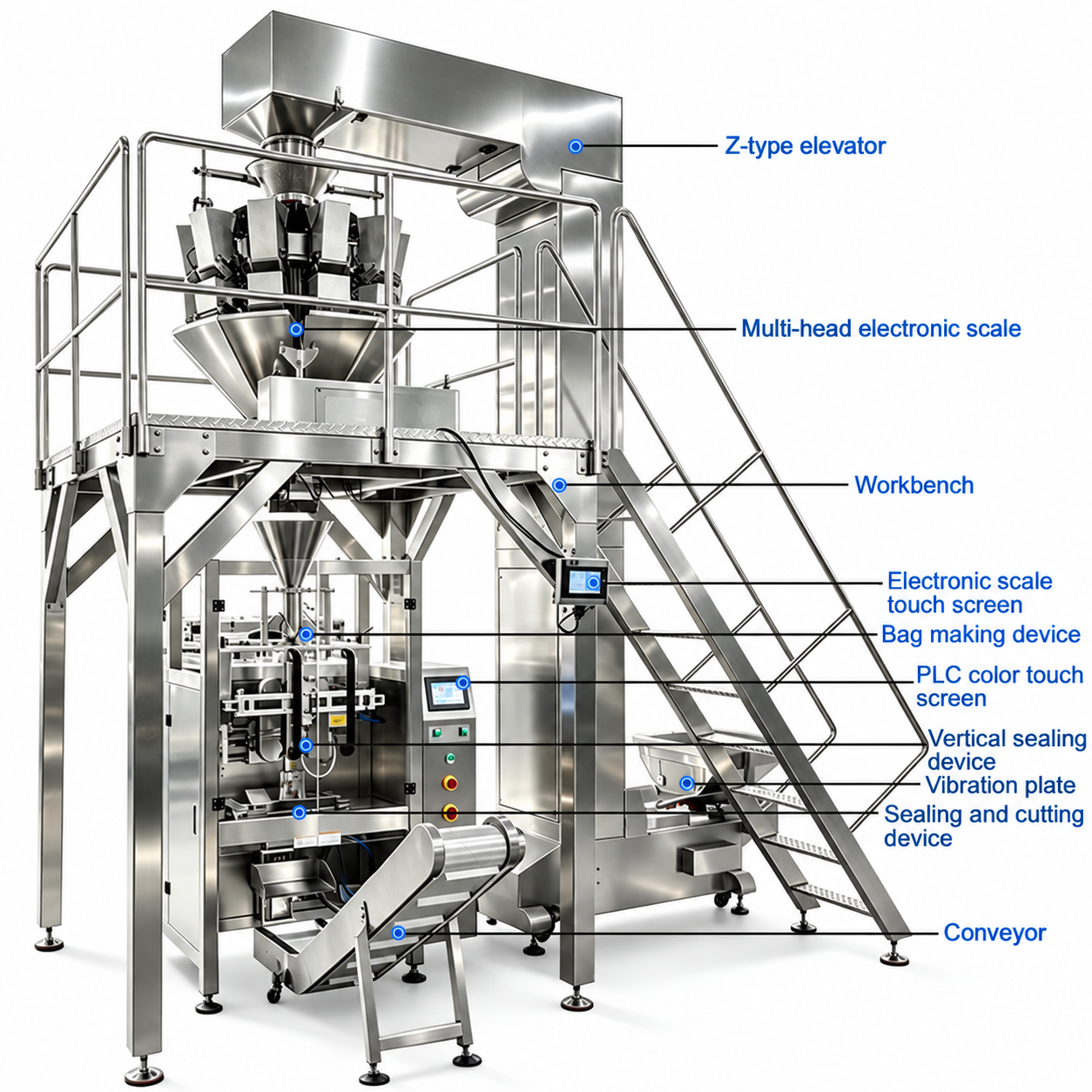
The source description lists volumetric, linear and multihead dosing possibilities. These are alternatives to assess for your coffee, and no line includes them all automatically. Which method is proposed, and how does it respond to changes in bean size, roast profile and bulk behavior? A system picked for one whole-bean product is not automatically suitable for ground coffee. That needs a separate dosing and dust-control assessment.
The dosing system must release coffee into the formed bag without leaving beans in the closing area. For larger portions, inspect the whole path from the hopper to the filling tube and the point where the dose settles. The visible structure of a quad-seal bag can hide uneven filling if the sample is handled before inspection. So review the bag directly at the outlet and again after normal conveyor movement. Connect final weight records with observations of complete discharge and bean condition. The displayed setting alone does not judge the filler.
Takeaway: Choose the dosing method for your coffee form; ground coffee needs its own assessment.
Film selection and the folded seal junctions
Quad-seal formats have spots where film folds and sealed edges meet other seams. Give these junctions particular attention in material selection and sample testing. Supply the laminate construction, thickness and sealing-layer information, along with the printed roll specification. Heavy foil-containing films, matte finishes and other structures can behave differently in tracking and forming. A generic coffee-film description cannot tell you how a particular roll will run.
Inspect the corner junctions and transverse seals with the package checks your quality team chose. Look for distortion, uneven folds and visible contamination, then carry out the agreed integrity assessment. More heat or pressure will not fix every corner defect. The problem may lie in the fold geometry or in how several film layers reach the jaws. The supplier should document the setup used for the accepted samples, so the material and forming arrangement stay linked to the trial result.
Takeaway: Inspect the folded corner junctions with your production laminate.
Integrating a valve without disturbing the format
If you need a one-way degassing valve, provide its specification and its position on the finished-bag drawing. The valve has to fit within the chosen artwork and structural layout, clear of areas where forming or sealing would interfere with it. The source configuration describes inline valve integration. But the final proposal must identify the supplied module and its compatibility with the selected valve and film. Treat it as a defined interface. It is not a generic accessory.
Watch the attachment position over consecutive bags and see how the valve area moves through the forming sequence. Find out what happens when the valve supply runs low or a valve is not applied correctly. Define attachment and functional checks with the component supplier and your packaging team. Having a valve says nothing about a particular coffee storage life. The performance of the complete pack still depends on the roast, film, seams, valve and the conditions under which it is filled and stored.
Takeaway: Place the valve on the bag drawing clear of forming and sealing areas.
- Supply face width, gusset depth and base details on the finished-bag drawing.
- Inspect folded corner junctions with the intended production laminate.
- Confirm dosing method, valve position and change parts for every planned format.
Format changes and access to forming parts
Changing a quad-seal coffee format affects more than bag length. Face width, gusset depth and edge position may need different forming or sealing parts. The supplier should provide a change-part list covering each planned retail size and demonstrate how those parts are installed and checked. An operator ought to be able to identify the right combination without trial-and-error adjustments around the corner seals.
Put cleaning access in the same review. Coffee dust and oils can collect in the product path, and scraps or deposits can show up near the forming and sealing elements. Get the cleaning method for the supplied components, and look at how they are reached from the proposed platform and floor layout. After a change, collect first-run samples for dimensions, corner alignment, weight, valve location and seal condition. A saved recipe helps restore settings. It cannot confirm that the physical parts and film match the job being released.
Takeaway: Get a change-part list for every planned retail size.
Requesting a configuration that can be verified
Send the intended bag sample, a dimensioned drawing, coffee samples and the film information with the inquiry. Say whether you need a valve, coding, gas equipment or particular downstream inspection. State the planned weights and batch pattern, especially if several retail sizes will share the machine. If the bag design is still open, the supplier can explain the available forming route and supply representative samples before the artwork is fixed.
The quotation should name the dosing method, quad-seal forming arrangement, included change parts and any valve module. Request a layout with service and film-loading clearances, plus the final utility requirements. Agree an acceptance run that examines consecutive bags, a restart and at least one important format change. Keep labeled samples with the film, settings and coffee batch recorded. Those samples are your specific basis for judging the format.
Reading the bag geometry
Label your bag drawing with the geometric elements discussed above, so every quotation describes the same package. Face width is the front panel between the corner seals. Gusset depth is the folded side panel that sets how far the bag expands. Overall height runs from the base to the top seal, and the top closure allowance is the film above the fill that the seal and any reclosure use. The base is whatever construction your sample shows; a quad-seal bag and a flat-bottom bag are not the same thing until the offered base is seen.
Takeaway: Ask each supplier to mark these same elements on their sample bag.
When this does not apply
No speed, bag-size range or other numerical data is published for this configuration, so ask the proposal to state each value and whether it was measured with your bag, film and coffee. Quad-seal does not define the base or top closure by itself. Ground coffee needs a separate dosing and dust assessment from whole beans. A valve does not set a storage life.
Takeaway: Base the purchase on agreed samples and a drawing, not on the term quad-seal.
Frequently asked questions
Does a quad-seal bag always have a flat bottom?
Not necessarily. Quad-seal describes the four sealed edges; the base construction has to be shown on the offered sample. Ask the supplier to show the actual base and corner arrangement in your format.
Which parts change when I switch bag sizes?
Face width, gusset depth and edge position may need different forming or sealing parts, besides the length and dose settings. Ask for a change-part list covering each planned retail size.
Can a degassing valve and quad-seal corners be combined?
The configuration describes in-line valve integration as an option. The valve has to sit clear of forming and sealing areas on your drawing, and the quotation should name the supplied valve module and its compatibility with your valve and film.
What is the difference between quad seal bags and regular bags?
A regular pillow bag has a back seam and two end seals. A quad-seal bag adds four sealed edges along the corners, which gives a more structured shape; the base and gussets still depend on the specific construction.
Bag Format Selection
Review the pack requirements for your enquiry. Compatibility is confirmed for the selected equipment and sample.
Planning Guides for This Configuration
These pages cover the system type, trial preparation and project checks that apply to this configuration.
Request a Packaging Configuration
We reply within 24 hours. Tell us what you need to pack. Leave quantity and output blank if you are still deciding. When you continue, WhatsApp opens with your enquiry written out so you can review it and send it to our team.
Explore the application · Configuration and project support
Related Packaging Configurations
Vertical Form Fill Seal
Coffee Bean Valve-Pouch Packaging
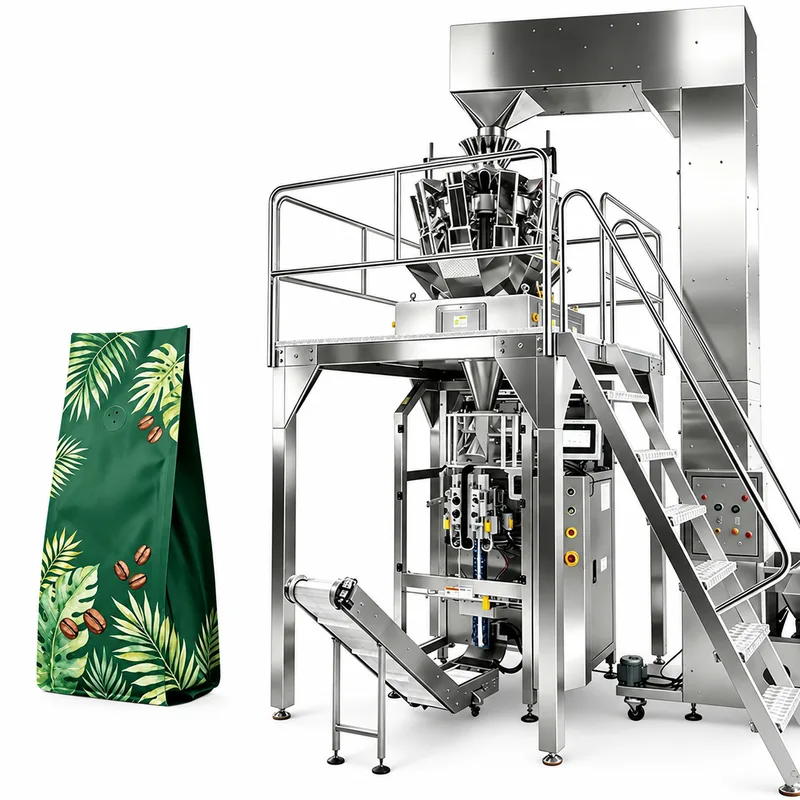
A misplaced or poorly attached degassing valve can spoil a run of coffee bags. Specify this weigher and VFFS valve line from your valve drawing, film, roast and weight.
Premade Pouches
Coffee Bean Doypack Packaging
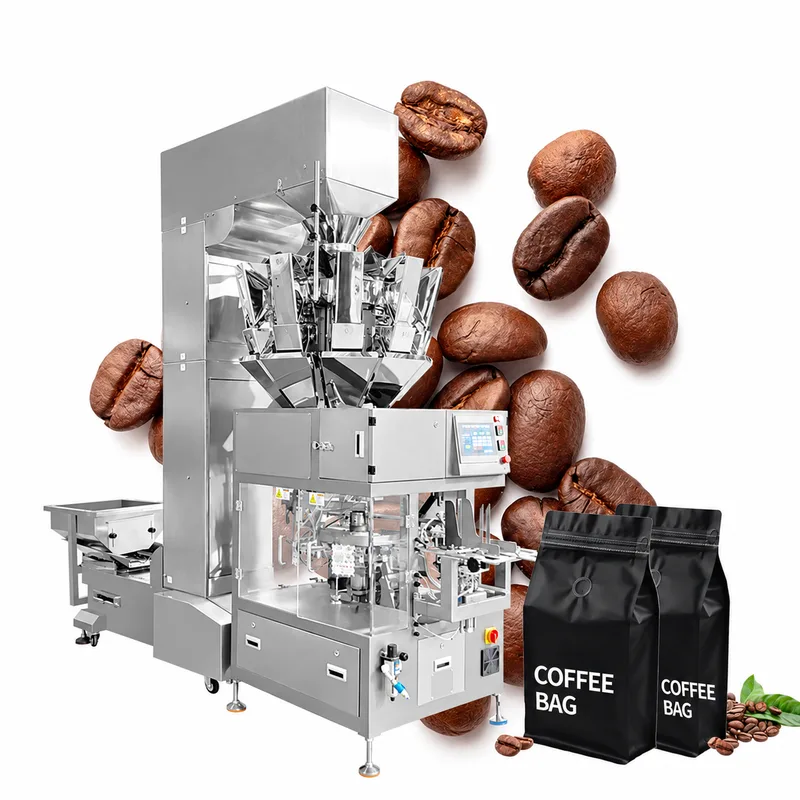
A valve or zipper too close to the pouch mouth catches beans and spoils the seal. Size this premade doypack line for coffee from your actual pouch, bean condition and fill weights.
What to send us
| Item | Why we need it | Example format |
|---|---|---|
| Finished-bag sample or drawing | Defines corners, gussets, base and top allowance. | Dimensioned drawing with face width, gusset depth, height and base in mm. |
| Coffee samples | Whole beans and ground coffee need separate dosing and dust-control assessments. | Labeled bags per product: whole bean or ground, roast profile. |
| Target weights | Sets dose and the filled shape at each size. | Net weights in g for each retail size. |
| Film specification | Folded corner junctions depend on the laminate. | Laminate structure, thickness and printed roll specification. |
| Valve position | The valve must sit clear of forming and sealing. | Valve drawing plus its position marked on the bag drawing. |
We reply within 24 hours.