
Bag Size and Film Width
Ordering film from finished-bag width alone risks an unusable reel. Unfold the chosen bag geometry, add its seal allowance, and distinguish cut length from usable length.
| Input or item | Typical value or source | Why it matters |
|---|---|---|
| Pillow web | 2W + A | W: flat face width; A: back-seal allowance |
| Side-gusseted web | 2W + 2G + A | G: full depth of one unfolded side |
| Fin versus lap | A = 2 × fin height; or A = lap overlap | Do not use one seam allowance for both |
| Assumed widths | W 160 mm; fin 10 mm: 340 mm pillow; G 50 mm: 440 mm side gusset | Not production reel sizes |
| Cut versus usable length | 230 mm cut-to-cut; or 230 + 10 + 10 = 250 mm | Assumed cross seals; definition changes the result |
| Bottom gusset | An 80 mm premade base is not G | Keep premade-pouch geometry separate |
Use the published configuration and related checks
Use these references to connect the review inputs with the published equipment scope and the next decision.
- Nuts multihead configuration — conditional 80–350 mm length and 60–240 mm width
- Pillow bags — review the flat-face and back-seal arrangement
- Gusseted bags — distinguish the side folds
- VFFS or premade — keep folded-base routes separate
- Bulk density — estimate product volume before fixing length
- Film requirements — confirm construction and reel details
On This Page
Distinguish the finished bag from the flat web
A finished bag drawing and a roll-film drawing show two different stages of the same package. Finished width, back-seal allowance, gussets and print layout all add up to the web you need. A rule of thumb is a poor basis for a film order. Use the definitions and revision record below to keep the material and machine review aligned.
Start with a filled sample and mark the dimensions that matter: usable product space, top and bottom seals, opening features, and any valve or coding area. Then request the matching flat-web layout. A bag can hit the external width and length on paper and still leave too little room for the real dose or for a clean closing seal. So check the inside space, not only how the bag looks from outside.
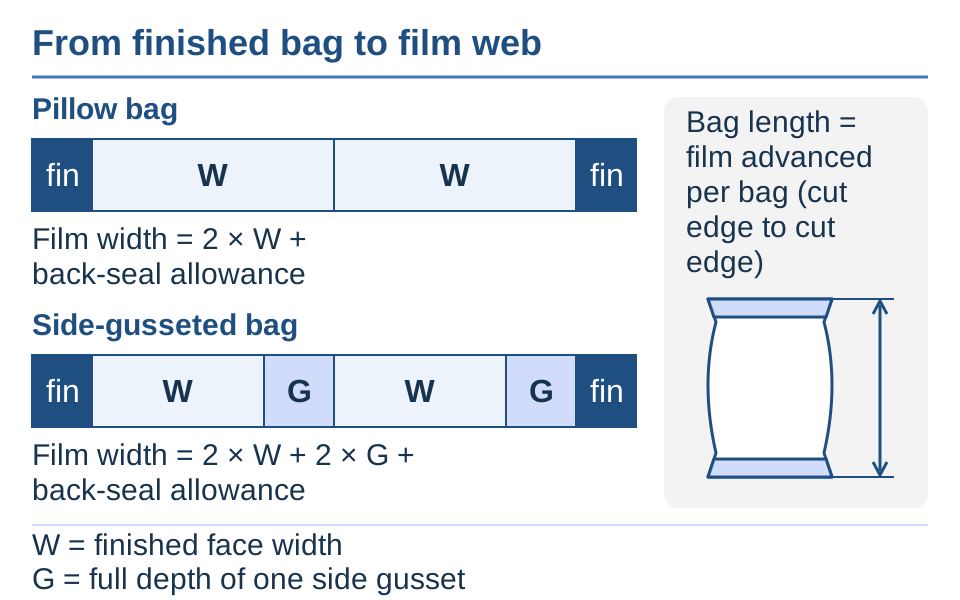
Define W, G and the back-seal allowance
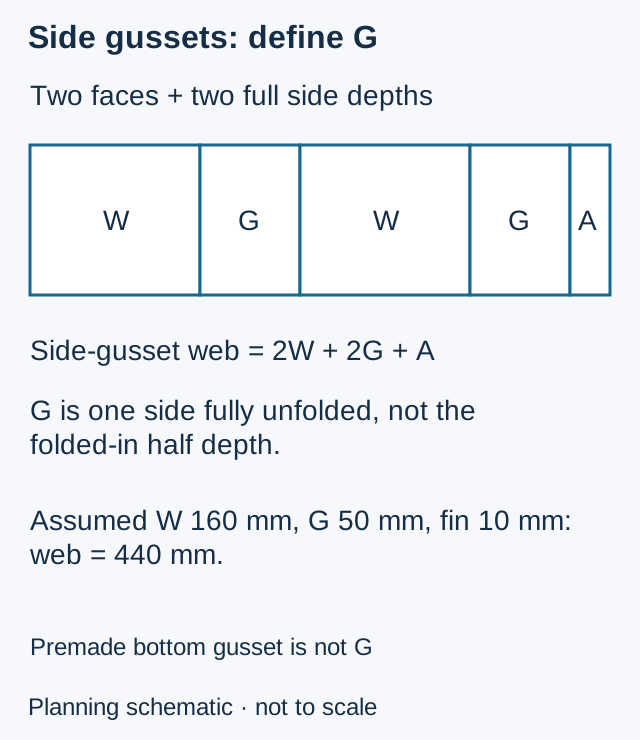
Read the unfolded geometry before applying a formula. W is the flat face width, G is the full depth of one unfolded side gusset, and A is the back-seal allowance. The fin arrangement uses twice the fin height; the lap arrangement uses the overlap once. Keep these definitions on the drawing, because a half-fold depth entered as G changes the estimate.
For a first estimate, film width is the distance around the formed bag plus the back seal, and bag length is the film advanced for each bag. A pillow bag needs roughly twice its finished width plus the back-seal allowance; a side-gusseted bag adds twice the gusset depth. Use the result to open the discussion with your supplier, not as the width of a reel order.
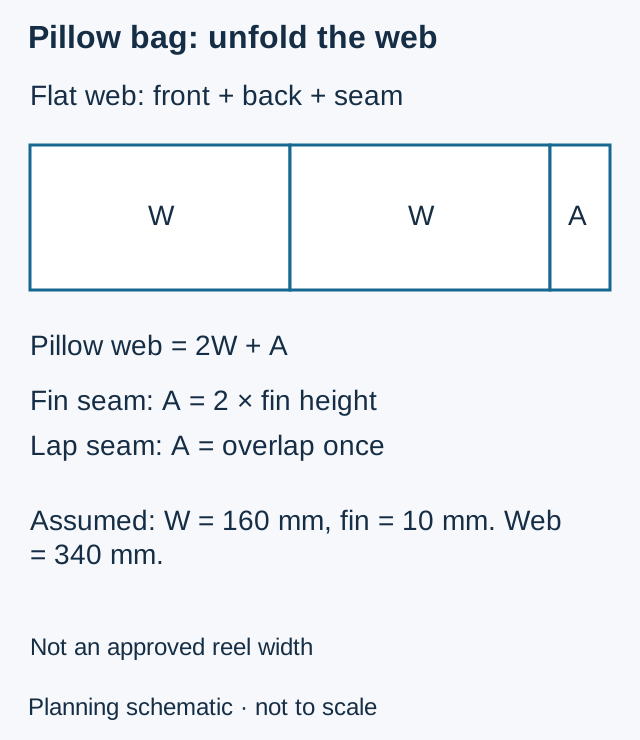
Estimate pillow and side-gusset film width
Pillow bag: film width = 2W + A. Side-gusseted bag: film width = 2W + 2G + A. These are geometric estimates obtained by adding the unfolded faces, side panels where present, and back seal. They do not specify a production reel.
Example, assumed inputs: W = 160 mm and fin height = 10 mm, so A = 20 mm. The pillow estimate is 2 × 160 + 20 = 340 mm. With G = 50 mm, the side-gusset estimate is 2 × 160 + 2 × 50 + 20 = 440 mm. The supplier’s proposed film and jaws determine real seal allowances; the values here are not standard dimensions.
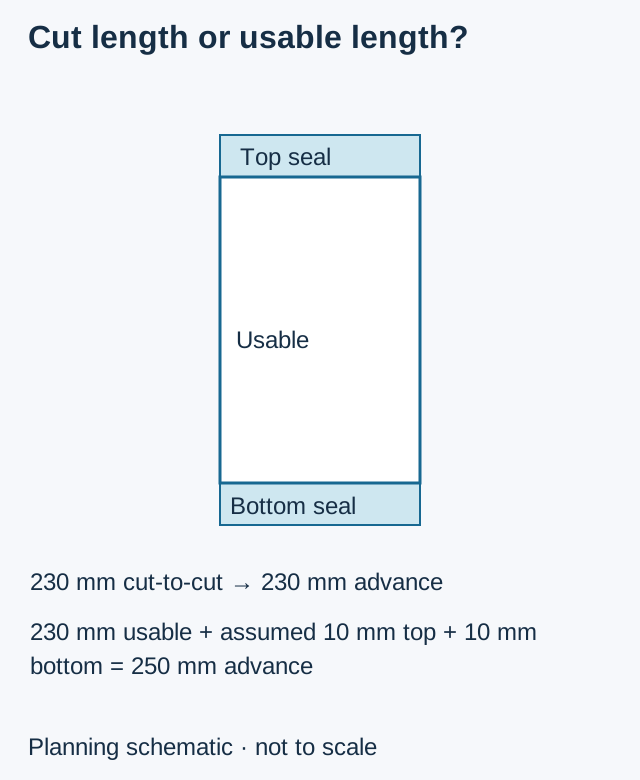
Separate cut-to-cut advance from usable length
If the drawing gives cut-edge-to-cut-edge length, that is the intended film advance and print repeat for the simple layout discussed here. If it gives usable length inside the seals, add the top and bottom seal widths. Keep the measurement endpoints visible rather than using the word length alone.
In the same assumed example, 230 mm cut-to-cut means 230 mm advance. If 230 mm is usable length and each cross seal is assumed to be 10 mm, the estimate becomes 230 + 10 + 10 = 250 mm. The difference is the length definition, not evidence that one package should be larger. Confirm repeat and cut positions on the selected machine’s approved layout.
When the geometry does not apply
The bottom gusset does not carry over. On a premade stand-up pouch it is a folded base made by the converter, and its depth cannot be dropped into the pillow-bag formula. A pillow bag with the same face and height is not guaranteed the same usable volume, so check the dose against the bulk density of your product before you fix the bag length, and confirm the fill on a sample.
The example starts from a premade 160 × 230 mm pouch with an 80 mm bottom gusset. That folded base is not G and does not enter either VFFS width equation. The same face and height do not establish the same usable product volume.
The catalog distinguishes roll-film pillow, gusseted, quad-seal and valve configurations from premade stand-up, zipper and spout pouch routes. Do not assume a special folded-base format is available on a listed VFFS machine. Request the actual filled sample and configuration scope.
Last, set the estimate against the machine. Ask for the widest film the selected machine accepts. Some configurations in this catalog publish a finished bag range; the nuts and dried-fruit multihead configuration, for example, lists 80 to 350 mm in length and 60 to 240 mm in width, with customizable formers. Where a configuration publishes no range, or your bag or web falls outside it, get a written answer from the supplier before any trial is planned.
Review artwork and registration before ordering reels
The print repeat has to match the cutting and sealing arrangement. Registration marks, date-code panels and graphics should sit where the machine can use them. The film converter and the machine supplier need to agree on artwork orientation on the reel and the direction of unwinding. A correct graphic on a reel the wrong way round still stalls the project.
Reel dimensions and handling are a separate question from film width. Core, outside diameter and reel mass all affect loading and compatibility. Splice information and film lot identification belong in the file too. For an existing machine, work from its approved documentation and tooling details. A reel that physically fits on the shaft tells you nothing about whether it is compatible.
Prove the smallest and largest intended formats
Prepare a format matrix that lists the first bag sizes and the tooling proposed for each. Mark which dimensions change by recipe adjustment and which need physical parts. Then run your actual material through a complete cycle and watch tracking, printed position, seal appearance and the filled pack. A dry film run without product shows little.
If future bag sizes matter, define them early enough for an engineering review. A vague promise of flexibility is not a format range. Get the limits and change parts for each planned pack, and file the approved film drawing with the recipe record. When the converter or laminate structure changes, repeat the compatibility review even if the nominal web width stays the same.
Use an approved drawing to prevent incompatible assumptions
A format drawing should say what each dimension describes. Where relevant, keep finished width, open-mouth dimensions, gusset depth and seal areas apart. Show a clear orientation and the position of the consumer opening. The machine supplier and the converter should settle any term that can be read two ways, since the same word is often used loosely for a flat bag dimension and for the space left once the bag is formed.
Write the drawing revision on the trial sample and on the packaging order. If artwork or a seal allowance changes, issue a new revision rather than relying on a marked-up photo in a message thread. Keep the old one for traceability. That way, when a registration or fit problem shows up later, you can tell whether it began with a material change, a tooling change or a misunderstanding of the approved format.
Judge the production package after filling, not only the empty sample. Product pressure, settling and the geometry of a folded base can change both appearance and usable space. Compare the pack with the display and case arrangement you plan to use. If the buyer wants a tighter-looking bag, look at what that does to filling and seal cleanliness before simply cutting the available volume.
Copy the measurement definitions from the drawing into the enquiry rather than sending a width and length without context. For each number, name its endpoints and whether the pack is flat, unfolded or filled. Keep the fin or lap choice beside the allowance so a later artwork revision does not silently switch the seam assumption. Where the catalog supplies a finished-bag range but no maximum reel width, leave reel compatibility as an open supplier question. The blank drawing fields are buyer inputs; they are not dimensions inferred from the photograph. This separation lets the converter review printable area while the equipment team checks the forming arrangement against the same revision.
A format-change example for an existing line
Picture a buyer moving from a small coffee pack to a larger one with a similar printed design. The larger pack may need a different forming arrangement, film specification or discharge setup, even though the product is the same. That means the switch may not be a recipe change at all. List every mechanical and control adjustment it involves, then find out which of those parts the original purchase already covered.
Before ordering the new reel, send the proposed drawing to both suppliers. Confirm print orientation, registration location and reel handling details, and use trial material to check tracking and filled-pack appearance. If the design has a valve, zipper or unusual fold, put those features into the compatibility review from the start instead of adding them after a plain bag has been demonstrated.
Keep a format setup sheet. It lists the approved component references and checks. Operators should be able to identify the right parts and compare the first packs with a retained sample. If a component has been modified, update the record. A format library built this way is far more reliable than a collection of screen settings with no link to the physical tooling.
Check the coding panel on a filled sample
Find the batch or date-code area on the final filled pack and look at it in its intended orientation. A panel placed too close to a fold or sealing feature can be less useful than it looked on flat artwork. The printer and package supplier should be part of any revision. Record the approved code position with the film drawing, so a later artwork update does not remove the clear area the production process needs.
Method and sources
This revision reorganizes the existing bag size and film width guidance and the linked published configuration descriptions, reviewed on 8 October 2026. The blank records and diagrams are planning aids, not customer results or independently verified equipment tests. Questions below come from the existing page’s buying questions and the 8 October editorial review, not a claimed survey or search-frequency dataset. Confirm sample arrangements, quantities and costs before sending material.
Technical Reading
- Packaging World: Vertical Form/Fill/Seal 101 — An independent packaging consultant explains the process and selection considerations.
- Winpak: Vertical Form/Fill/Seal Films — A film manufacturer describes materials for vertical packaging applications; not a specification for this equipment.
Frequently asked questions
Can film width be calculated from finished bag width alone?
Only an initial estimate with the seam and folding geometry defined. Confirm the production layout against the selected forming arrangement and film.
Can the 80 mm bottom gusset be used as a VFFS side gusset?
No. The example’s premade folded base is a different geometry. G in the side-gusset formula is the full unfolded depth of one side.
Is 230 mm the usable length or the cut-to-cut length?
The drawing has to say. The example gives 230 mm advance for cut-to-cut length, or 250 mm with assumed 10 mm top and bottom seals added to 230 mm usable length.
What if a pack exceeds the published catalog range?
Request written configuration confirmation before planning a trial or ordering film. A range from another configuration does not resolve the gap.
Who approves the final film drawing?
Name the converter and equipment contacts responsible for the shared drawing. Retain its revision with the format parts and trial sample.
Does unchanged web width mean a replacement film is compatible?
No. Review the changed material with the equipment and packaging teams even when nominal dimensions stay the same.
Explore the Equipment
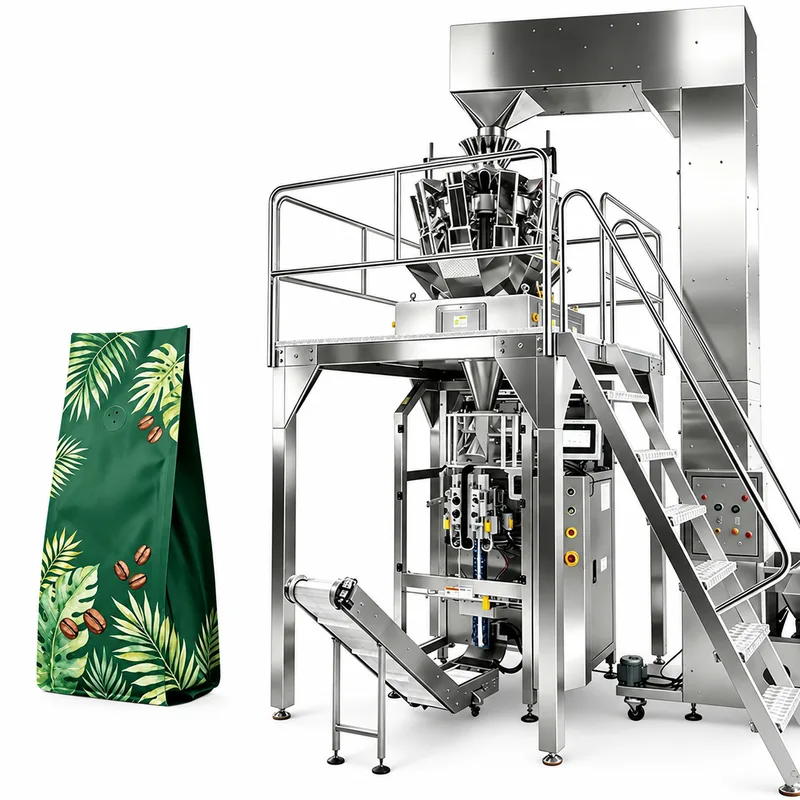
Vertical Form Fill Seal
Coffee Bean Valve-Pouch Packaging
A misplaced or poorly attached degassing valve can spoil a run of coffee bags. Specify this weigher and VFFS valve line from your valve drawing, film, roast and weight.
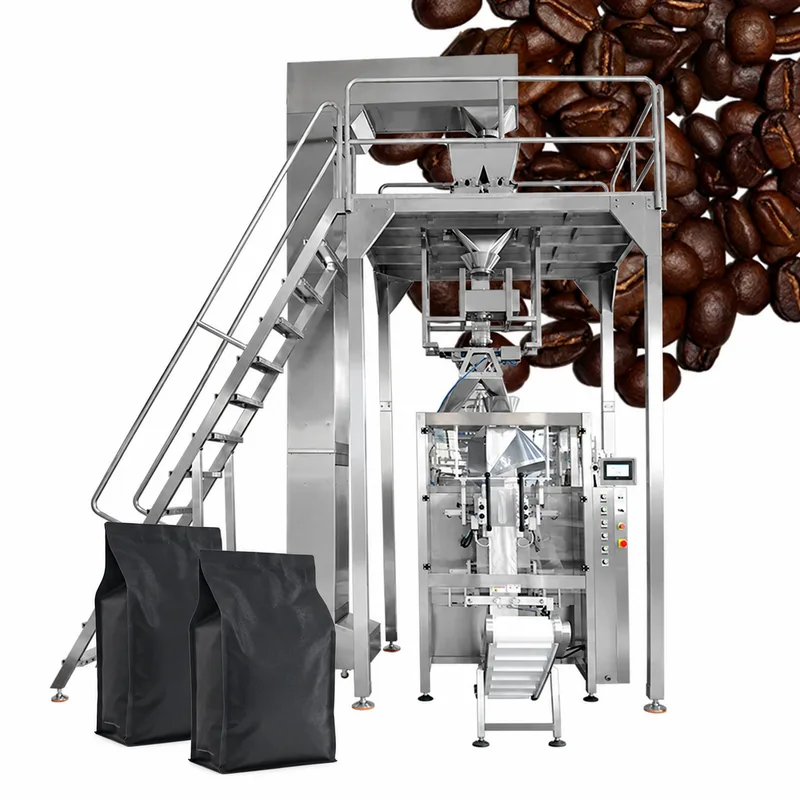
Vertical Form Fill Seal
Quad-Seal Coffee Packaging
A quad-seal coffee bag that will not stand, or skews at the corners, wastes film and coffee. Specify the corners, gussets, base, valve and dosing method from your bag drawing.
What to send us
| Item | Why we need it | Example format |
|---|---|---|
| Annotated bag dimensions and folds | Establish the geometry and measurement definitions. | Dimensioned PDF: W / G / cut length / usable length |
| Seal margins and desired fill space | Review usable space separately from outer dimensions. | Seal and filled-cavity drawing + sample photo |
| Film construction and print repeat | Match materials and registration to the proposed format. | Film structure / print repeat / unwind drawing |
| Approved drawing and forming-part references | Keep the reel order tied to confirmed tooling. | Approved drawing rev-TBD + forming-part references |
We reply within 24 hours.