
Quad-Seal Bag Packaging
Compare reinforced corner presentation, side gussets and valve options for coffee and other products offered in structured bags.
On This Page
Identify the structure you are buying
Quad-seal bags get their shape from four longitudinal corner seals. Don't confuse them with a flat four-side-seal sachet, which is sealed around the perimeter of a small cavity. Send a finished sample that shows the bottom and side folds as well as the front panel. A pack name on a quotation tells you little. A drawing that identifies the actual seal arrangement tells you much more.
Match the format to the configuration
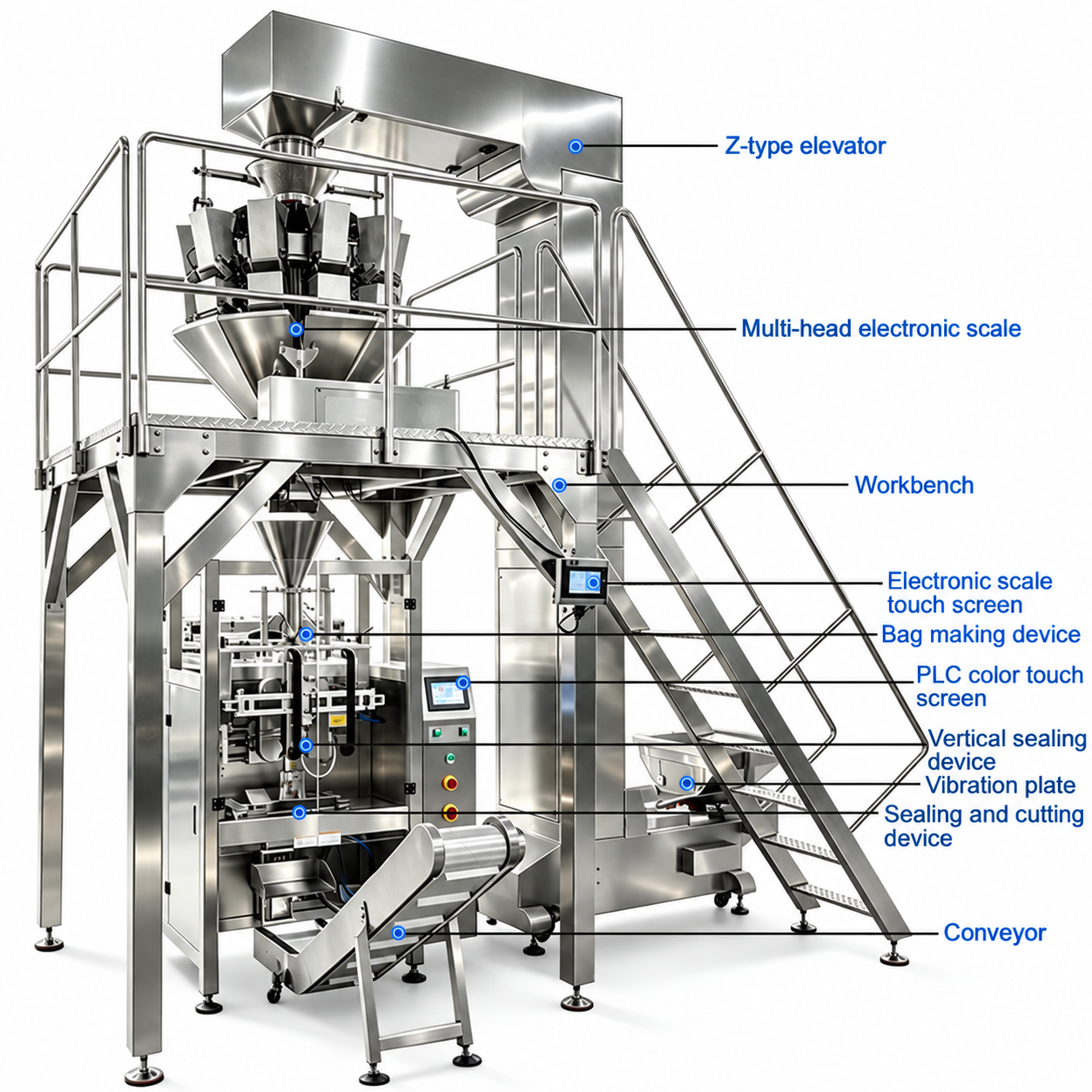
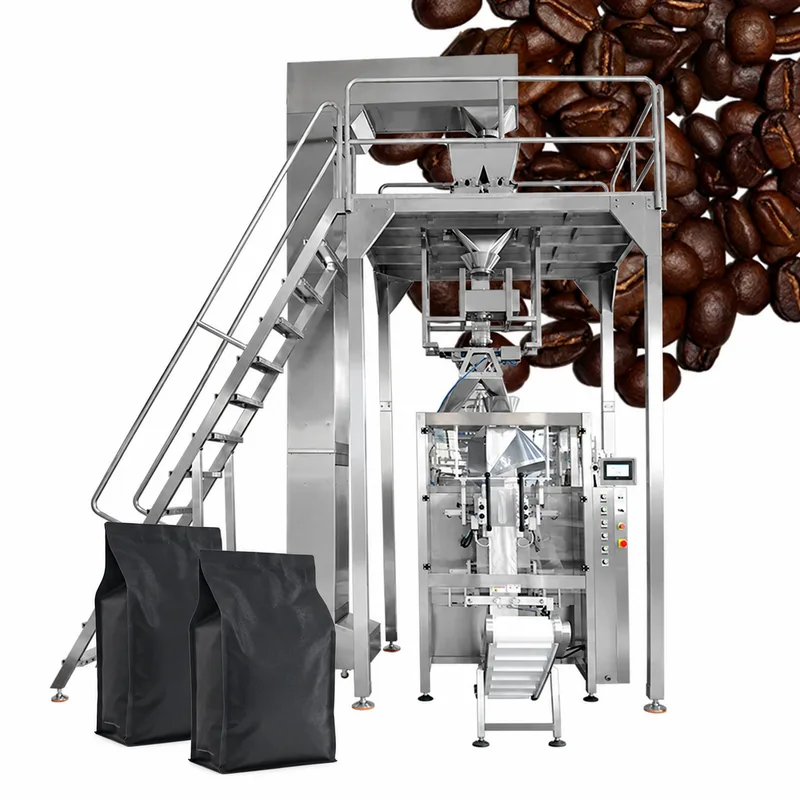
The catalog includes a vertical quad-seal coffee configuration. Confirm the forming and corner-sealing equipment for your chosen bag before you treat the format as available on another VFFS line. Dosing can also vary with the product. The quotation should show which equipment forms the bag, which weighs or doses the contents and which carries out any optional valve application.
Reserve space for the details
Specify the valve you intend to use, the code area, the tear opening and the artwork clearances. A valve position that looks fine on an empty sample may collide with the filled product level or the forming process. Review the selected film with the supplier, particularly the fold and seal locations. Settings from a different laminate cannot simply be carried over. Check them against the proposed material.
Evaluate presentation with product inside
Inspect the bag at the intended fill quantity, including the base, the corner definition and how it behaves after normal handling. Check seal appearance where film thickness changes, and record the test conditions. Agree whether a standing presentation is an acceptance requirement and how it will be judged. Confirm dimensions and equipment options in the final configuration. A workshop photograph is not a basis for them.
Separate the four-edge structure from other bag names
Quad-seal packaging means a structured bag formed with four sealed edges. It is not any pack that happens to show four sides, and it is not a premade pouch picked for a similar look. The catalog includes a vertical quad-seal coffee configuration, which gives a relevant starting point for a project that needs this construction.
Send a physical reference or a detailed drawing showing the side gussets, edge seals, top closure and base. Explain how the filled bag should stand or lie in its presentation. If the reference includes another feature, such as a valve, point it out separately. The supplier can then assess the real construction and its tooling needs. Buyers use "quad seal" for different structures, so a quotation against the name alone is risky.
Connect the structure to the product volume
A structured bag still has to take the product during filling. Coffee beans, for example, need enough room to pass through the filling path and settle into shape. Nominal weight does not set the required cavity by itself. Have the package dimensions reviewed against the actual bean size, bulk volume and the headspace you want.
Evaluate filled samples from several points in a run. Look at panel shape, edge definition and how the contents spread around the base and gussets. If the pack looks uneven, find out whether the cause is geometry, forming, filling or settling. Changing artwork or film first is the wrong reflex. What you want is a package that shows the intended structure every time at the planned quantity, backed by a forming and filling setup that repeats.
Review the extra sealing operations explicitly
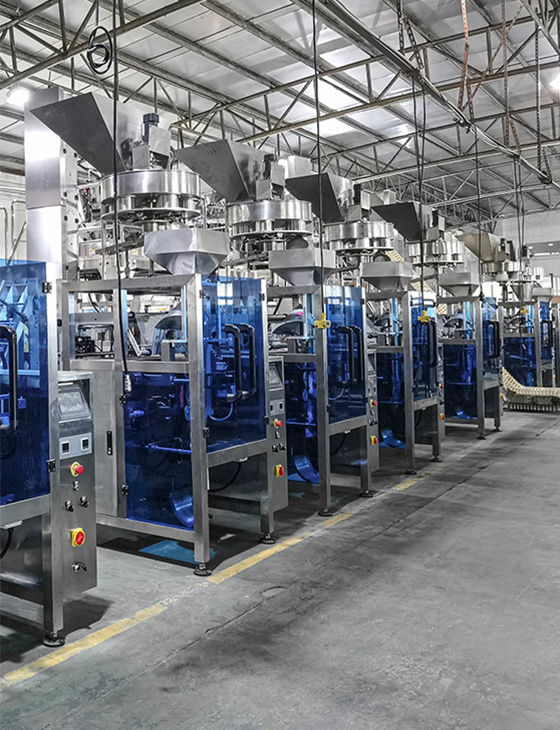
Four edges bring sealing demands beyond an ordinary pillow bag. Find out which assemblies make the edge seals and how the quoted machine coordinates them with the other forming and closure operations. The specification should name the bag style and the relevant tooling. "A vertical packaging machine" is too general.
Inspect the points where seals, folds and panels meet. The layers of material and the geometry there deserve attention in the packaging review. Get film guidance from the converter and test the actual construction on the proposed equipment. If you change a material or setting to improve one edge, inspect the rest of the pack too. A tidy front panel says little about whether every sealing area suits the application.
Integrate the valve without losing useful panel space
For coffee, the catalog describes a degassing-valve integration option on the quad-seal configuration. Specify the valve component, where it goes and how it enters the package. Valve position has to be considered together with fill level, artwork, folds and sealing areas. A reference photograph shows one bag and says nothing about the clearance on a different bag size.
Find out whether valve placement is part of the quoted equipment or handled elsewhere in the material supply chain. Define the checks with the valve and packaging suppliers. In a trial, keep filled samples that show the valve location and the final panel geometry. If optional nitrogen flushing is also requested, assess the combined sequence as your intended configuration. Features demonstrated one at a time do not prove that the complete arrangement works.
Assess shelf presentation and carton efficiency together
A structured look may matter to the brand, but the package also has to work in storage and distribution. Put filled samples into the intended display and secondary carton. Check that the base and top closure give the orientation you want without forcing the bag into a shape that stresses its edges. See whether the printed panels stay visible after normal settling.
Use the real fill quantity and material for these checks. A hand-filled display sample in a stiffer laminate may not represent machine-made packs. If the carton layout needs compression or a particular alternating arrangement, document that assumption before dimensions are final. A good bag design balances presentation against practical handling, and the evidence for it comes from filled samples. An empty prototype that looks good proves much less.
Specify format parts and a reproducible setup
Quad-seal formats involve several coordinated dimensions and adjustments. The supplier should provide a format record identifying the forming components, seal locations, film layout and setup procedure. For multiple sizes, list the parts that change and the checks needed after reassembly. Operators then know which adjustments keep the relationships among panels, folds and edges intact.
A demonstration should include the most demanding planned format and, where it applies, a change to another size. Record the first acceptable packs after the transition as well as the final steady output. Acceptance can then cover dimensional consistency, filled appearance, seal observations, valve placement where included and downstream handling. Mark any untested format or optional operation clearly. The purchasing team gets a concrete basis for evaluating a structured-bag configuration, and nobody stretches the result beyond what was demonstrated.
- Sample with all four corner seals and bottom visible
- Front-panel width, gusset depth and finished height
- Coffee valve drawing and desired location if required
How should a new bag size be introduced?
Start with a revised structural drawing. Scaling the artwork alone is not enough. Confirm panel widths, gusset depth, edge-seal positions, the base and, where present, the valve location. Find out which forming or sealing parts change and whether the new dimensions stay within the proposed configuration. Fill samples with the intended product quantity and repeat the presentation and closure checks. Keep the new setup as a separate format record, even if some parts are shared with an existing size. The approved range stays clear, and operators have a reference for the structural relationships they must preserve.
Explore the Equipment
Vertical Form Fill Seal
Quad-Seal Coffee Packaging
A quad-seal coffee bag that will not stand, or skews at the corners, wastes film and coffee. Specify the corners, gussets, base, valve and dosing method from your bag drawing.
What to send us
| Item | Why we need it | Example format |
|---|---|---|
| Sample with all four corner seals and bottom visible | Identify the evidence or open question for this review point. | Labeled brief entry + photo/drawing/record reference, or TBD. |
| Front-panel width, gusset depth and finished height | Identify the evidence or open question for this review point. | Labeled brief entry + photo/drawing/record reference, or TBD. |
| Coffee valve drawing and desired location if required | Identify the evidence or open question for this review point. | Labeled brief entry + photo/drawing/record reference, or TBD. |
| Film construction, fill quantity and presentation checks | Identify the evidence or open question for this review point. | Labeled brief entry + photo/drawing/record reference, or TBD. |
We reply within 24 hours.