
Fill Weight and Bulk Density
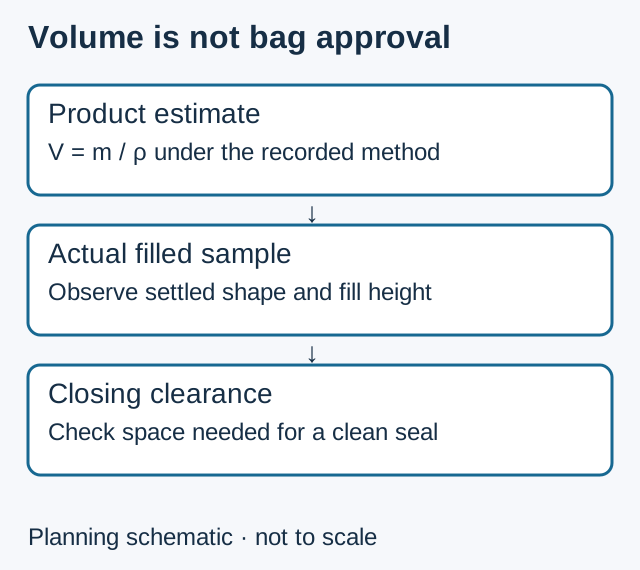
Weight alone can leave too little room for closing a bag. Estimate product volume with V = m / ρ, then check the actual filled pack and sealing clearance.
| Input or item | Typical value or source | Why it matters |
|---|---|---|
| Volume estimate | V = m / ρ; consistent g and g/mL give mL | Estimate product volume only |
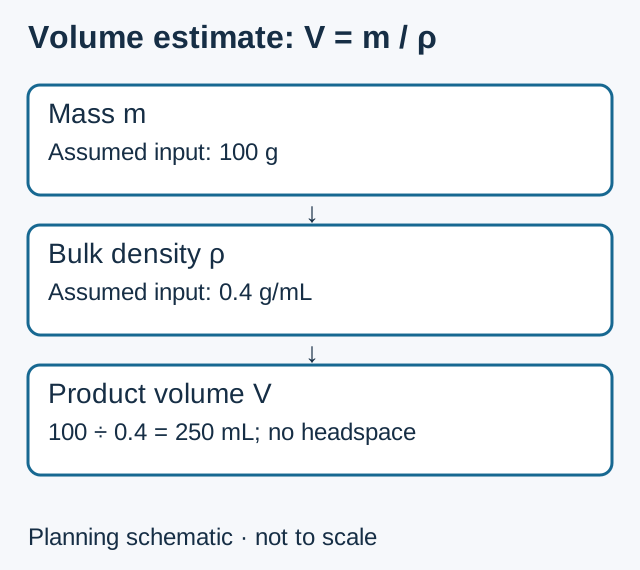
| Assumed illustration | 100 g ÷ 0.4 g/mL = 250 mL | Excludes headspace; not a bag recommendation |
| Density method | Record loose, settled or compacted condition | Compare results only with the method identified |
| Usable bag space | Filled sample and closure clearance | Add a physical package check to the arithmetic |
Use the published configuration and related checks
Use these references to connect the review inputs with the published equipment scope and the next decision.
On This Page
A weight target does not determine package volume
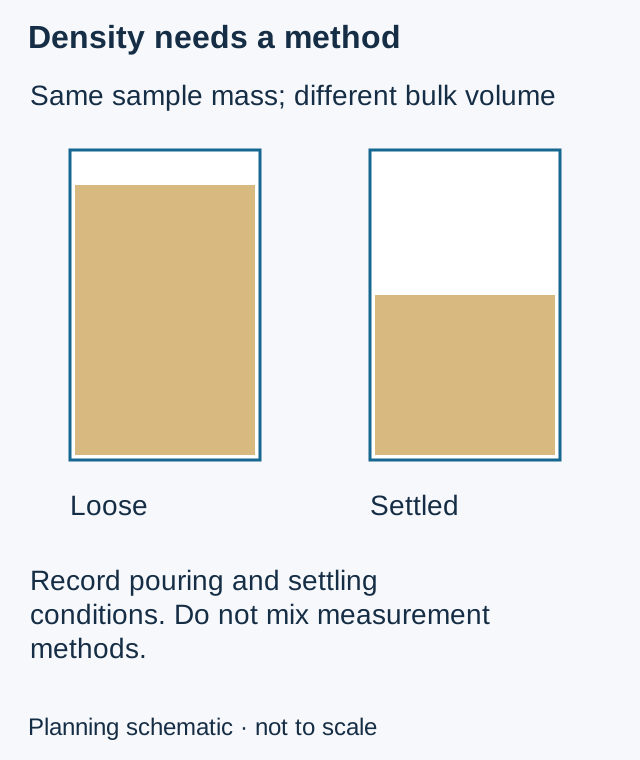
Bulk density is how much mass occupies a given bulk volume under specified conditions. It helps you estimate the space a dose will need, but the method matters, because loose powder, settled powder and a compacted sample give different results. Record the container, the filling method and whether the sample was tapped or compressed. Without that, two density figures may not be comparable.
Use V = m / ρ with consistent units: mass m in grams divided by bulk density ρ in grams per millilitre gives volume V in millilitres. The assumed example in the quick review uses 100 g and 0.4 g/mL, producing 250 mL before headspace. Compare that product-volume estimate with an actual filled sample and the space needed to close it; the result is not a bag-size recommendation.
Review handling capacity
Volume shapes hopper size, discharge clearance and the space left before sealing. Lightweight snacks may need a different handling review from compact nuts. Powders need a formula-specific dosing assessment as well. The proposal should state which samples and which quantity range were used when the configuration was chosen.
Check the range encountered in production
Don't measure only the easiest sample. Settling in storage, particle breakage or a recipe change can alter the volume that reaches the bag. For mixed products, check whether the composition shifts between the start and end of the feed batch. A steady mass target does not guarantee a steady package appearance or a consistent filling height.
For an initial trial, keep separate records of product mass, measured bulk volume and the resulting fill level in the proposed bag. Photograph representative accepted packs. Use one orientation. The bag supplier and the equipment team then share one reference. If the pack looks overfilled, look at the material condition and usable bag volume first. Changing the printed package dimensions is the wrong first move.
Connect the measurement to the equipment decision
A low-density snack may need a fairly large bag and a generous product path for a modest mass. A dense granular product brings a different weighing and discharge requirement. Powder dosing adds questions about how consistently material fills the dosing space. Trial samples and quotations should show these differences. One common target weight would hide them.
Agree which density range belongs in the project brief and what happens if later deliveries fall outside it. Tie that range to a measurement method, not to a supplier's informal description of the product. Then review hopper replenishment, dosing capacity, bag volume and output together. Changing only one of them can push the problem to another part of the line.
Build a simple and repeatable density record
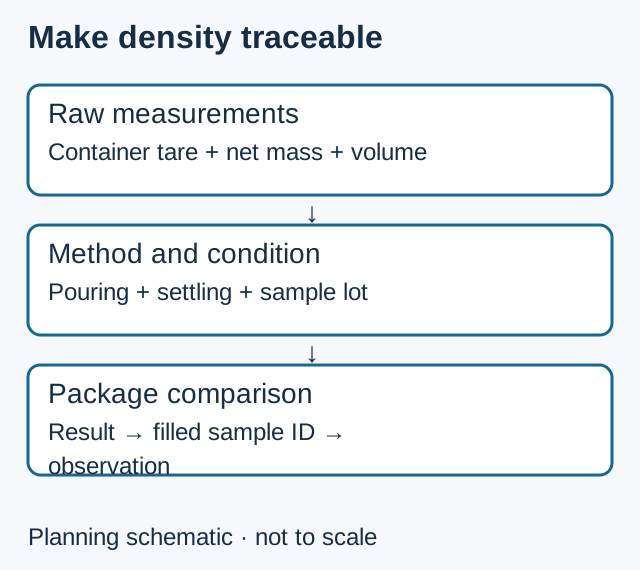
Choose a measurement procedure with the product owners. Use it every time. Record the empty container, the sample mass and the volume reading, along with how the material was poured in. Say whether the result reflects loose fill or a deliberately settled condition. The aim is to compare meaningful production conditions. A density value with more decimal places than the method supports is pointless.
Take repeated samples. Keep each result. Note the product lot. Note anything visible, such as fines, clumps or separation. If values vary, check the sampling and handling method before blaming the material. Two operators filling the container differently can matter a lot when the sample compresses or aerates easily.
Use the density record alongside a physical fill trial. A volume estimate on paper won't tell you how irregular pieces settle inside a flexible bag or how the material falls through the machine. Check the real fill height and the space needed to close the pack. Keep photographs and the material specification with the measurement sheet, so the equipment and packaging teams can read the number in context.
Use the field register as a blank record, not as a prescribed laboratory method. The product owner should choose the procedure appropriate to the material and identify it by name or document revision. Preserve the empty-container measurement and the net sample mass so the calculation can be checked later. Record volume in the stated units and describe how the material entered the container, including any settling or deliberate compression. If a sample is repeated, retain a separate result instead of overwriting the first one. Pair the density result with the finished-pack sample ID; this lets the package team compare the arithmetic estimate with the observed fill level. It also distinguishes a measurement-method disagreement from a real change in the incoming product.
| Field | Blank value | Method note |
|---|---|---|
| Batch and sample | Lot / sample ID: TBD | Preserve identity through the pack trial |
| Empty container | Mass / unit: TBD | Record tare separately |
| Net sample mass | m = TBD g | Exclude container mass |
| Bulk volume | V = TBD mL | Use the recorded measurement condition |
| Pouring and condition | Method / loose-settled-compacted: TBD | Describe any tapping or compression |
| Result | ρ = m / V = TBD g/mL | Keep raw data and procedure revision |
Follow a change through the whole line
Suppose a snack arrives with more fine pieces than the earlier trial material. Bulk behaviour and package appearance may change although the nominal portion has not. Before deciding what to adjust, inspect the product supply, the dosing and the filled bag. A lower apparent fill does not necessarily mean underweight product, and a fuller-looking bag doesn't prove the target mass went up.
For a powder, think about its condition after transport to the hopper. Settling or aeration can make what reaches the dosing device differ from the sample measured at receipt. Mark refills and pauses in the weight record to see whether a change lines up with handling events. The supplier should say which observations justify a setup review, so you are not changing several settings with no clear hypothesis.
If the new product needs a larger package, repeat the film and format review. More space can affect bag dimensions, tooling and downstream handling, so it is not a cosmetic tweak. The reverse also holds. Shrinking the bag on the strength of one favourable density sample ignores the range of product conditions the factory expects to meet.
Questions to include in the sample report
Which measurement method produced the density figure? Which lots and conditions were sampled? How did the estimate compare with the volume taken up in the actual package? Which operating events changed the filled result? Answers to these are worth more than a single isolated value copied into a quotation.
Record the range used to select the configuration and the agreed response to material outside it. That might mean another trial or a packaging review, depending on what changed. Keep the decision with the SKU specification. The density measurement then links product control, dosing selection and package design. It stops being a number collected once and forgotten.
Avoid confusing density with dose approval
A density check supports volume planning and a look at material behaviour. It does not approve the net content of every finished pack. Keep the finished-weight checks you require as a separate procedure. If the density changes, compare dose results and package appearance before deciding what to do. That way the measurement is used for its intended purpose, and no single product-property test is expected to replace all packaging quality checks.
Method and sources
This revision reorganizes the existing fill weight and bulk density guidance and the linked published configuration descriptions, reviewed on 8 October 2026. The blank records and diagrams are planning aids, not customer results or independently verified equipment tests. Questions below come from the existing page’s buying questions and the 8 October editorial review, not a claimed survey or search-frequency dataset. Confirm sample arrangements, quantities and costs before sending material.
Frequently asked questions
Can loose and compacted density be used interchangeably?
Keep the measurement condition identified. Loose, settled and compacted samples can occupy different volumes, so do not combine unlike methods into one comparison.
Does a density change mean the pack is underweight?
Not by itself. Check finished net mass separately and compare the package appearance and material condition before deciding what changed.
Does a fuller-looking bag contain more grams?
Appearance alone does not establish net quantity. Use the weight record and the handling condition of the product.
Does 250 mL in the example define a bag size?
No. It is the product volume from assumed 100 g and 0.4 g/mL inputs, before headspace, filling clearance and real bag geometry are checked.
Can density from another material be used in the brief?
Use measurements from representative production samples with the method stated. An unrelated material does not establish the volume of your dose.
What if two operators obtain different results?
Compare container, pouring, settling or compression and sample identity first. Keep both raw results while resolving the method difference.
Explore the Equipment
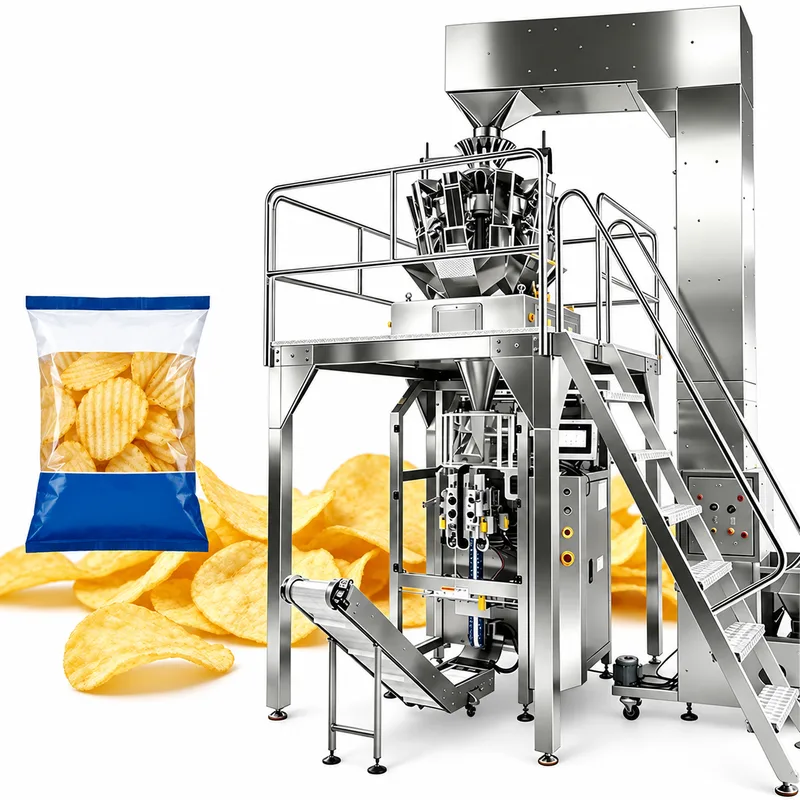
Vertical Form Fill Seal
Chips Packaging with Nitrogen Flushing
An inflated bag can hide broken chips, a short fill or a weak seal. Size this weigher, VFFS and nitrogen-flush line from your chip volume, breakage limit and gas supply.
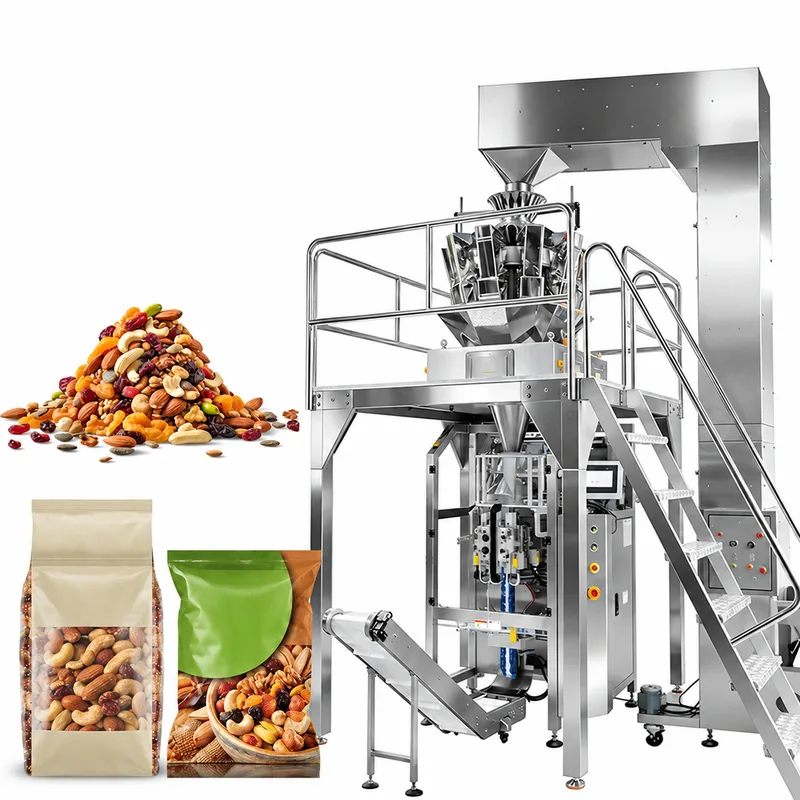
Vertical Form Fill Seal
Nuts & Dried Fruit Multihead VFFS
A nut-mix bag can be on weight and still hold the wrong ratio of ingredients. Configure this multihead VFFS line from your blend, coatings, target weight and bag size.
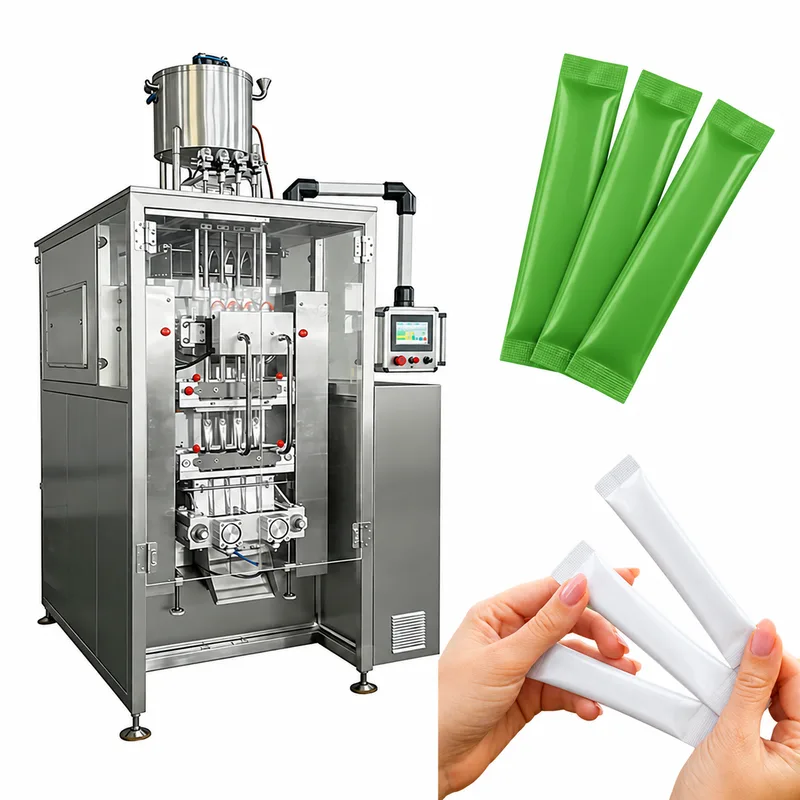
Multi-Lane Stick Packs
Four-Lane Coffee Powder Stick Packs
Instant, agglomerated, blended and ground coffee do not dose alike on one screw. Specify this four-lane coffee stick-pack line from your exact formula, serving and stick, and check every lane.
What to send us
| Item | Why we need it | Example format |
|---|---|---|
| Target net quantity and filled-bag sample | Compare the net quantity with the actual filled package. | SKU / target grams / filled-pack photo |
| Density information with measurement method | Make the volume estimate reproducible. | Lot / container / mass / volume / method record |
| Expected batch and handling variation | Describe the production conditions the review should cover. | Batch and handling notes + observed range |
| Hopper, discharge and seal-clearance review | Identify the handling and closing clearances to assess. | Annotated product path and bag-clearance drawing |
We reply within 24 hours.