
Auger vs Volumetric Cup Fillers: A Matched VFFS Trial Record
Choosing by filler name can waste a trial. An auger screw and a cup both can meter volume; compare their VFFS proposals with a blank paired trial record.
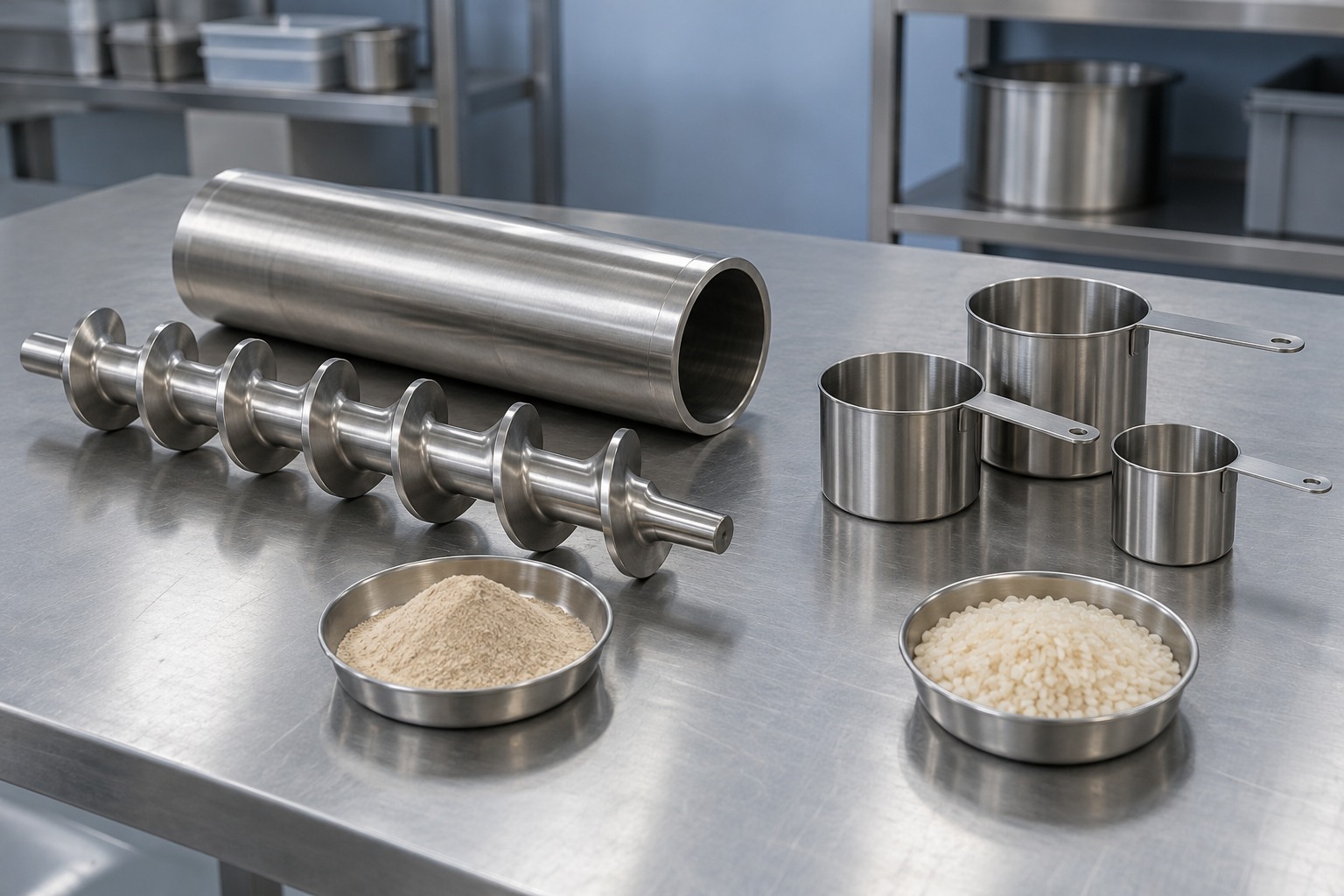
Scroll horizontally to read all columns, conditions and sources.
| Setup field and required context | Auger configuration | Cup configuration |
|---|---|---|
| Trial ID, date, observer and quotation revision | ||
| Product, lot, storage and transfer history | ||
| Bulk-density value, unit, preparation method and sample ID, if measured | ||
| Target net mass and unit; bag drawing; film reference | ||
| Unit, screw/cup tooling and outlet identification | ||
| Control mode: volumetric, weight-controlled or documented feedback | ||
| Feeder, working hopper condition and replenishment method | ||
| Bagger, forming tube, transfer path and recipe revision | ||
| Weighing equipment, tare method and acceptance references | ||
| Planned stages, sample plan and required accepted-output period |
On This Page
What is the auger filler vs volumetric cup filler difference?
An auger meters dry product with a rotating screw; a volumetric cup filler fills and empties a defined cup volume. Both can dose by volume, so neither mechanism alone proves a stable finished-bag weight. Start a cup trial when the actual material flows freely into and out of the proposed cups. For a powder needing active metering, start an auger tooling review. If both remain plausible, compare the actual product on both arrangements before choosing.
The important second question is how the dose is controlled. A volumetric auger setting based on screw revolutions is different from an auger whose filling cycle is controlled by a weight measurement. A downstream checkweigher with feedback is another configuration to identify explicitly. Do not let the word auger stand in for a weighing function that the quotation does not include.
This guide supplies a blank paired record for a VFFS buying comparison. It connects the dosing proposal to the material lot, package, refill and pause events, individual bag weights, discharge observations and seal samples. It reports no trial results and names no winning machine. The comparison ends with a documented shortlist or a clearly stated question for another run.
Match the material and package before matching the settings
Use the same identified product lot and the same intended net mass for the paired comparison. Retain separate representative portions for the candidates and record how each portion was stored, transferred and presented. Do not quietly feed previously processed material into the second candidate. If handling history differs, state the difference and decide whether the runs can still answer the purchasing question.
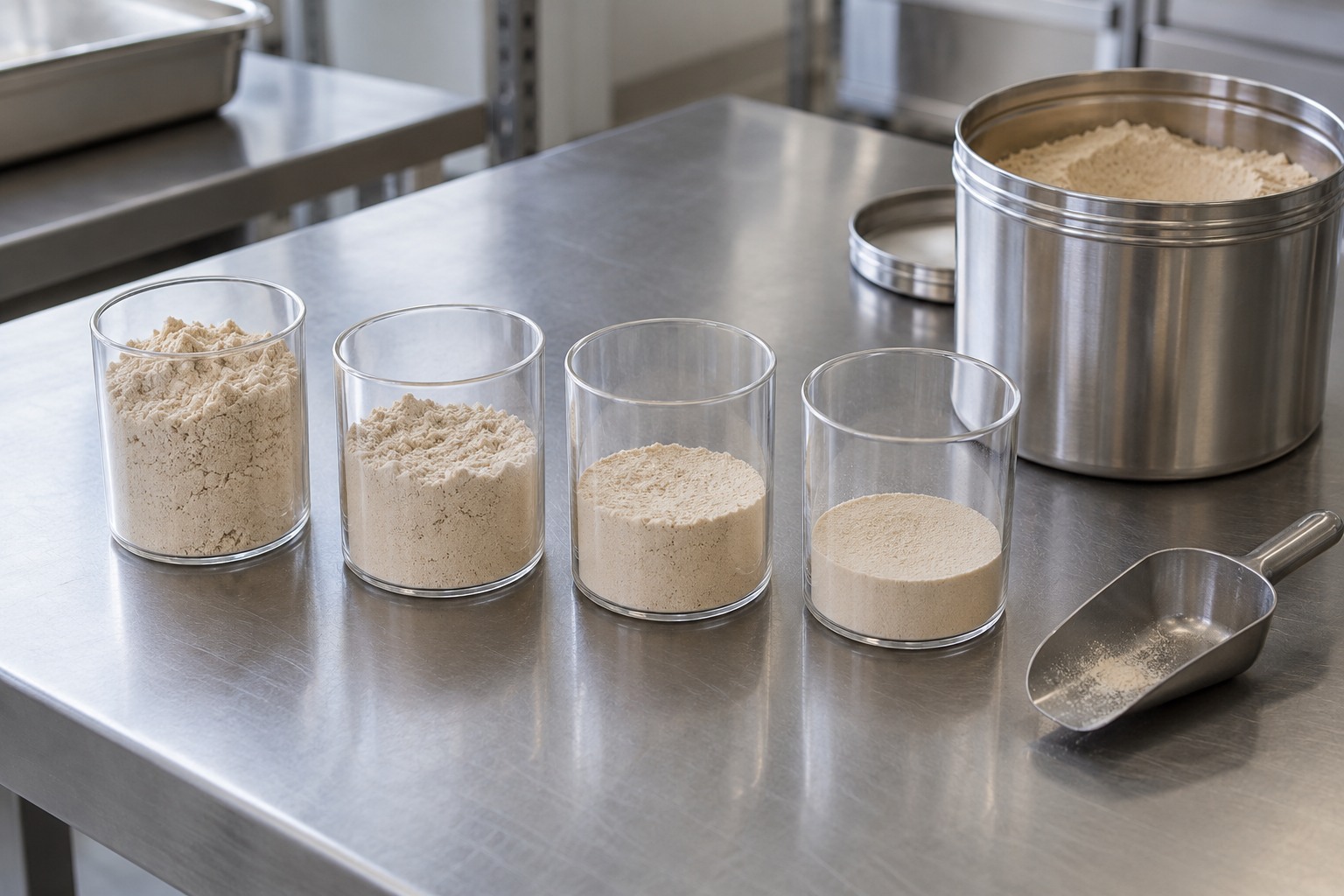
Record the material state at the hopper inlet, including visible clumps, loose or settled presentation and any measured bulk-density information. Keep the measurement method, sample volume, mass and units together. An unmeasured density stays unknown. A compacted sample and a loosely filled container cannot be treated as the same density measurement merely because the product name matches.
Tie both proposals to the same bag drawing and film reference wherever practicable. Record the forming tube, discharge path and bagger configuration separately for each candidate. Different transfer paths may be unavoidable, but they are part of the comparison rather than invisible background. When bag size, film or product condition changes, give the changed run its own reference. A matched objective does not require identical screw and cup settings; those settings describe different hardware.
Copy the paired setup sheet and leave outcomes blank
Complete the paired setup sheet before collecting results. The auger column belongs to its actual quotation and installed tooling; the cup column belongs to its own proposal. Identify which details came from a supplier document and which were confirmed on the unit. Do not fill either column from a photograph or a generic machine class. A missing control-mode description should remain an open question.
Download the blank paired trial CSV linked below and open it in a spreadsheet. It contains a setup sheet, a repeatable individual-bag record and an unresolved-item record in one file. Copy the bag rows as needed for the sample plan agreed by your team. The number of blank rows in the download is a convenience, not a recommended sample size. Keep a separate saved copy for each product, target dose or package revision.
Agree the measuring equipment, tare basis, acceptance references and sampling stages before the run. Purchasing, production and the responsible quality team should be able to trace every conclusion to those choices. A supplier's displayed recipe name is useful as a reference, but it does not replace the tooling identity or the written control-mode description. Keep the original quotation and any revision beside the record.
Log refills, pauses and adjustments in sequence
Collect the planned steady-running samples, then keep the agreed refill and pause observations in their own groups. Record the event time or sequence position and the associated bag identifiers. Describe how product entered the hopper and the observed material condition. Record a pause duration as observed or agreed for that run; this guide supplies no universal pause time or hopper-level target.
For a restart, identify the first retained bags and preserve their place in the sequence. If the technician changes a cup adjustment, screw setting, feed condition or bagger timing, start a new setting reference. Keep the samples before the adjustment. Otherwise a tidy final average can hide how much intervention the proposal required to reach it.
An event coinciding with a weight change is a reason to investigate, not proof of its cause. Refill may coincide with a different material state, while a restart may also change discharge timing. Record what was seen and what was changed separately. Arrange observations through the authorized trial team; a purchasing record is not an instruction to reach into equipment or change its operating procedure.
| Field to record | Auger configuration — enter actual value | Cup configuration — enter actual value |
|---|---|---|
| Run and bag sequence IDs; event type and position | ____ | ____ |
| Refill method and material state; hopper condition | ____ | ____ |
| Pause duration; restart sample IDs | ____ | ____ |
| Setting before/after; adjustment and authorized observer | ____ | ____ |
Keep individual net weights beside the event record
Give every retained bag an identifier that links its configuration, run stage and setting. Enter the gross mass, tare basis and resulting net mass with units using the agreed weighing procedure. If tare is measured individually, retain that measurement. If the team uses another justified tare method, identify it in the setup sheet rather than mixing methods without a note.
Keep raw readings in their original order. A mean can help summarize a group, but it cannot show whether the early restart bags differ from the later bags or which samples follow a refill. Record sample count, range and any other summary only after the individual measurements are available and the team has agreed how those summaries will be used. Do not present a supplier accuracy headline as the result of this record.
Apply the buyer's documented acceptance rule to the intended package and market through the responsible team. This worksheet does not provide a legal tolerance, a statistical validation protocol or an accuracy guarantee. If one proposal includes feedback control and the other does not, retain that difference in the interpretation. You are comparing complete quoted configurations, including their measurement scope, rather than proving that every auger or every cup behaves alike.
| Field to record | Auger configuration — enter actual value | Cup configuration — enter actual value |
|---|---|---|
| Bag ID; run stage; setting and event reference | ____ | ____ |
| Gross mass; tare mass or tare-method reference; net mass; unit | ____ | ____ |
| Agreed acceptance reference; disposition; original reading file | ____ | ____ |
Separate dribble, transfer loss and seal contamination
Observe the discharge interval and the completed bag as separate parts of the record. Note visible trailing material after the intended dose, product remaining in the transfer path, and visible spills at accessible observation points. Identify the bag sequence and retain a photograph or video reference when authorized. Describe the location without declaring a mechanical fault from appearance alone.
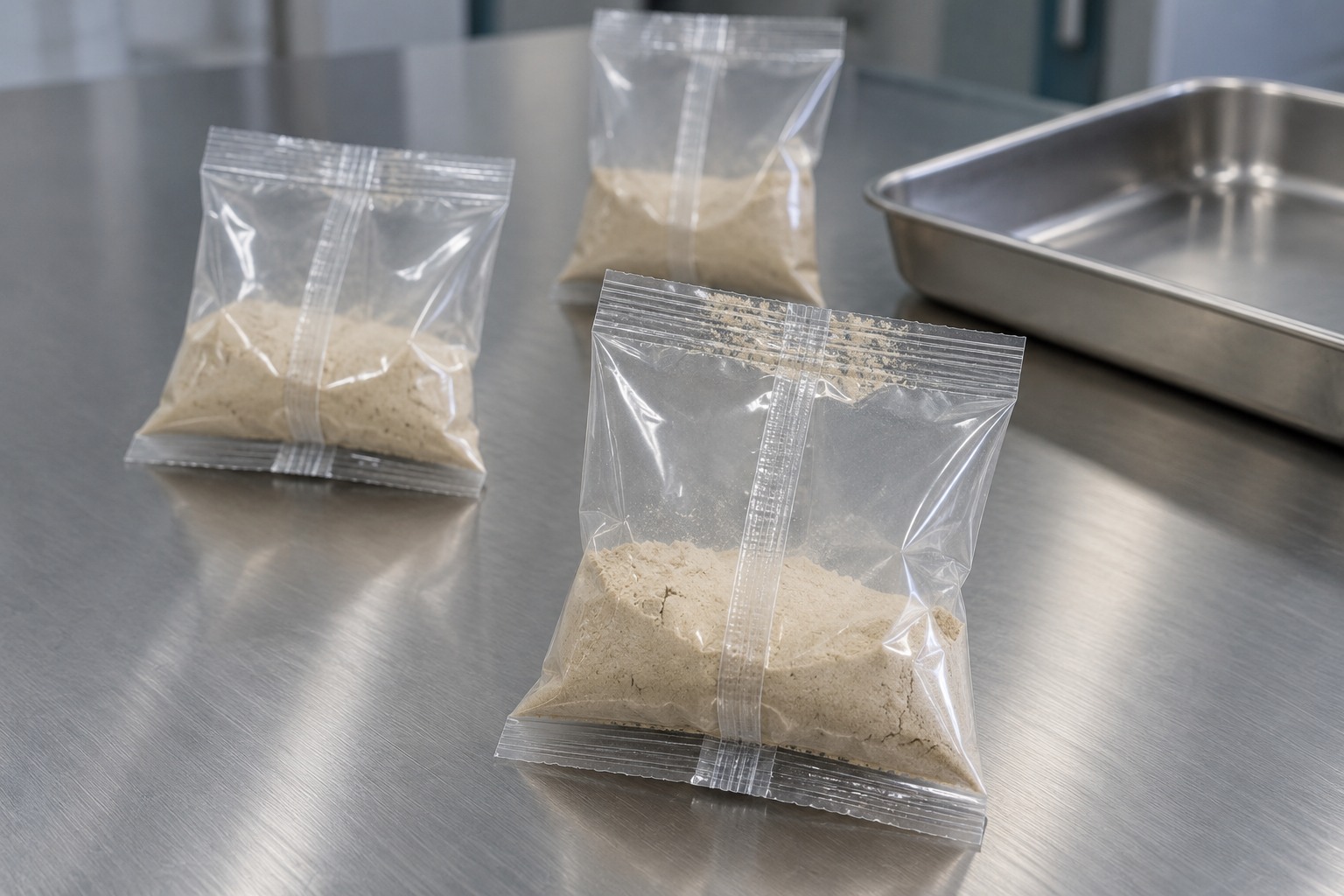
For each retained package, record visible material at the longitudinal seam or cross-seal area separately from powder elsewhere on the film. Connect the observation to the film revision and the event stage. A bag with the expected net mass can still need a seal review; a clean-looking sealing area does not establish seal strength or shelf life. Use the agreed package-check method and keep its result reference alongside the visual finding.
If trailing discharge and a contaminated seal occur together, flag the relationship for the equipment team to examine. Do not prescribe an outlet accessory or a sealing adjustment from this worksheet. The proposed cutoff tooling, transfer arrangement and timing must be confirmed for the actual material and unit. Record dust-control requirements with their responsible reviewer; visible dust notes do not establish airborne exposure or explosion-protection suitability.
| Field to record | Auger configuration — enter actual value | Cup configuration — enter actual value |
|---|---|---|
| Trailing discharge; retained material; spill location | ____ | ____ |
| Film revision; longitudinal or cross-seal observation | ____ | ____ |
| Photo/video reference; package-check result reference | ____ | ____ |
| Unresolved issue; evidence needed; review owner | ____ | ____ |
Turn the completed pair into a purchasing decision
Shortlist a candidate only for the product, package and operating conditions actually covered by its record. Compare whether it met the agreed portion and package requirements through the planned run stages, and identify interventions and unresolved checks. Keep required accepted output as a buyer objective until the complete configuration has been evaluated over the stated counting period.
If the cup proposal cannot fill and discharge consistently with the actual material, record that observation and its conditions before extending the tooling review. If the auger proposal has unresolved feed, discharge or weight behavior, retain those questions too. Neither outcome supports a universal ranking. Where only one candidate has been run, the other column remains untested rather than inheriting a result from the same product category.
Assign an owner and next evidence item to each unresolved row. Typical items are the missing control-mode document, a repeat run after a changed material condition, or a package check tied to the retained bags. The useful purchasing output is a traceable decision: what was compared, what was accepted, what changed, and what still prevents a choice. A polished photograph or a single satisfactory bag cannot substitute for that record.
Method and sources
This is an author-designed procurement worksheet informed by public manufacturer technical descriptions reviewed on October 15, 2026, and an archived filling-system selection guide. Those sources distinguish cup-volume metering, screw-revolution metering, weight-controlled filling and material-dependent tooling. Their numerical performance claims and equipment-specific features are not adopted as specifications for this site.
The paired event and bag tables are proposed observation records, not published test results or a mandatory test standard. The bench scenes show separate objects, powder presentation and package observation locations; they do not document a customer installation or a trial of a catalog model. Actual tooling, bulk density, weight behavior, cutoff arrangement and seal acceptance remain to be verified for the proposed unit. Keep unavailable fields blank or write Unknown / verify on the unit.