
Plan a Powder Dosing Trial
A pooled weight average can hide an off-target lane. Trial the actual formula, identify each lane and measurement method, and link refill or pause events to fill results and seal checks.
| Input or item | Value or source | Why it matters |
|---|---|---|
| Actual formula | Batch and handling history | Avoid approving an untested substitute |
| Measurement | Scale checks and tare method | Separate gross, tare and net quantity |
| Lane identity | Sample labels and tooling record | Keep lane differences visible |
| Run events | Refill, pause and setting log | Explain when the condition changed |
| Seal region | Filled-stick inspection | Judge the complete package |
Choose the next review for your project
Use the records below to identify the unresolved decision. These related pages explain the corresponding configuration, measurement or service scope.
On This Page
Define representative powder and handling history
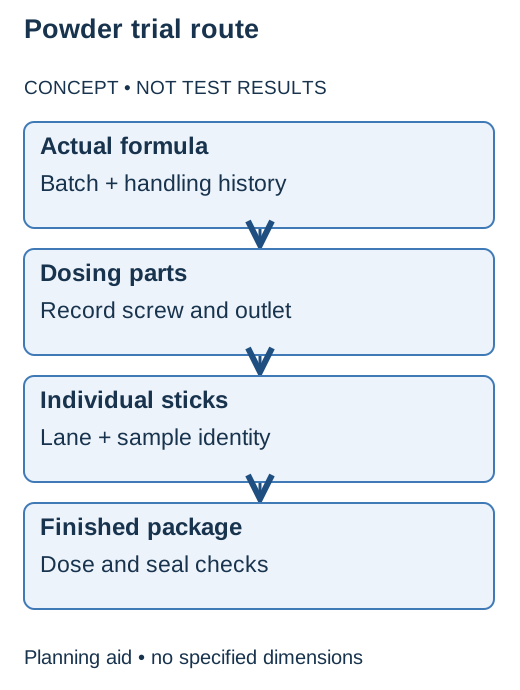
Run the trial on your actual formula, and describe how much its density, moisture condition and storage before packing are expected to vary. Agree the sample quantity and handling before any material ships. If several powders must run on one line, identify each one separately. A demonstration with a substitute powder is a substitute demonstration, so record it that way. It is not a finished formula evaluation.
A powder trial tells you something only when the sample matches the material that will reach the filler. Record the formulation, the particle characteristics, the storage conditions and how the powder was handled just before packing. Was it aerated, settled, or exposed to a different environment in transport? A small laboratory jar may not behave like material arriving from the production process.
Plan enough material to see startup, ordinary running and replenishment. The supplier can tell you the trial quantity needed, so there is no point in guessing a universal sample amount. Include the intended film and fill target. If production material is not available, label the substitute clearly and list the conclusions that will need a repeat trial with the final formulation.
Prepare a short material history sheet before the trial. Write down when the batch was produced, how it was stored, whether a container was opened in transit and how the sample reached the test location. A freshly opened container should not be mixed with material that has already been through the machine, unless the protocol expressly allows recirculation. Repeated handling changes the sample, and a later result could then be blamed on a setting when the powder itself had changed.
Talk through how the production hopper will be replenished. Continuous upstream supply and occasional manual tipping create different operating conditions. Note the minimum and maximum working levels used in the demonstration, and mark refills on the measurement sheet. If the buyer expects the line to pause for carton replenishment, include an agreed pause and restart. What matters is whether a controlled process repeats through ordinary events. One excellent dose from a technician proves very little.
Collect results by lane and operating event
Decide where and when filled samples will be measured, with lane identification where it applies. Cover the intended dose range and watch replenishment. Note which dosing and forming parts were used. A good sampling plan shows what changes during operation, which a handful of hand-picked startup packs never will.
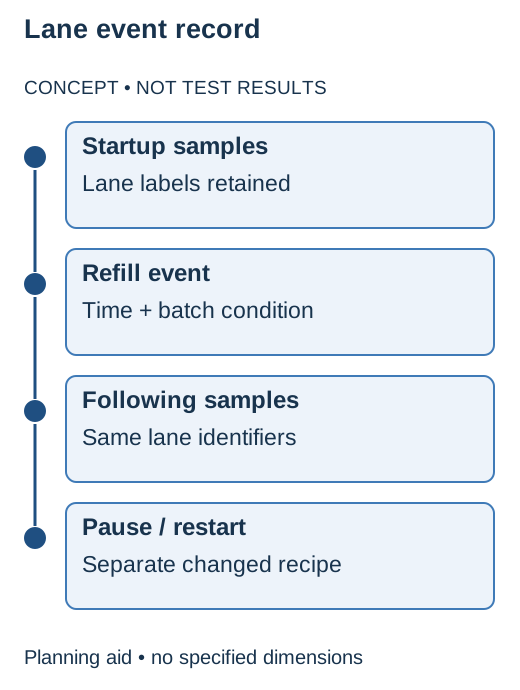
On a multi-lane system, keep the lane identity on the weight records. Pooling every stick into one average can hide a steady difference between lanes. Mark hopper refills, pauses and setting changes on the same timeline. Inspect the sealing area for powder and note how the completed pack looks. Weight consistency and package integrity are separate observations.
The scale and the procedure should suit the small portion being measured. Agree the sampling plan and the acceptance criteria before the run. Save the individual results, so you see the distribution and not just a rounded summary. If the dosing setting changes mid-trial, give the new condition its own record. Merging it with the earlier setting can blur what actually improved.
Read individual measurements before adjustment
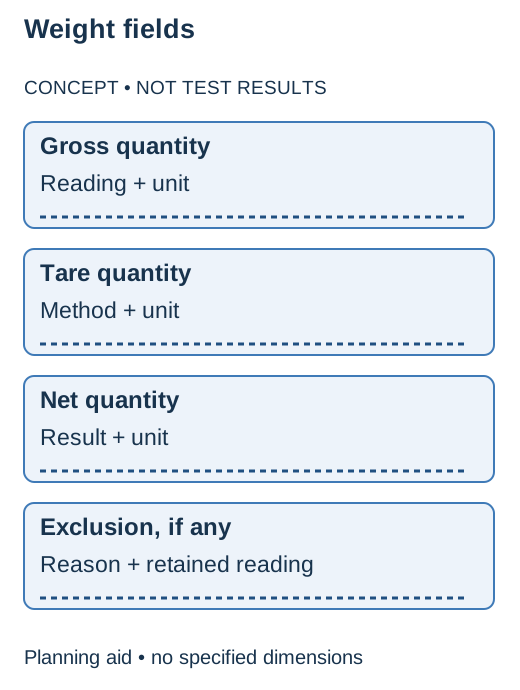
Set up a worksheet with a sample identifier, time, lane, target dose, measured net quantity and an event note. Determine tare by the agreed method, especially where small portions make packaging variation significant, and label gross and net measurements clearly. Check the weighing instrument before the run under the site's measurement procedure. A digital display with many decimal places does not make the measurement method suitable.
Read the sequence before you adjust anything. One lane that stays off points to a different investigation from variation across all lanes after a refill. A sudden jump after a recipe change looks different from slow drift in normal operation. Plotting measurements in collection order makes these patterns visible, where a single average would flatten them. Keep excluded readings with the reason for excluding them. Deleting inconvenient values from the record is not acceptable.
When two quotations offer screw dosing and cup dosing for the same VFFS bag, use a paired record rather than comparing isolated averages. Keep the material lot, refill and pause sequence, individual bag weights and seal observations attached to each configuration.
Complete the observation record
Create a separate measurement row for each collected stick; the fields below describe the blank record, not acceptance limits. Put the lane and sample identifier on the physical sample before weighing. Keep the raw gross reading and the tare reference so another reviewer can understand how the reported net quantity was obtained. When a refill or pause occurs, identify it on the same time sequence instead of adding a general note at the end of the report. Preserve any excluded result with its reason. Before comparing lanes or recipes, check that the target, units, powder condition and tooling references belong to the same planned comparison.
| Field | Your record | Keep with this record |
|---|---|---|
| Sample ID / collection time | ________ | Record the source, identity or agreed method. |
| Lane / formula lot | ________ | Record the source, identity or agreed method. |
| Target dose / unit | ________ | Record the source, identity or agreed method. |
| Gross quantity / unit | ________ | Record the source, identity or agreed method. |
| Tare quantity / method / unit | ________ | Record the source, identity or agreed method. |
| Net quantity / unit | ________ | Record the source, identity or agreed method. |
| Refill / pause / setting event | ________ | Record the source, identity or agreed method. |
| Excluded reading / reason / reviewer | ________ | Record the source, identity or agreed method. |
Investigate the dosing configuration
When a result drifts, look at the product supply, the hopper condition and the dosing configuration along with the control setting. A change that helps one powder at one fill may fail on another recipe. Find out which physical parts and procedures a product change requires. That includes access for clearing retained powder, inspecting contact components and returning the machine to its approved condition.
The report should link a defined powder, package and recipe to the observed result. It should also name what was not tested, such as a different portion size or a longer production run. Use it to approve a configuration or to ask for more work. An encouraging sample run is not independently certified accuracy, and it does not prove that all powders can share one dosing setup.
Link dosing parts to the finished stick
Look for powder in the seal areas. Check the finished stick's appearance, code position and opening. Tie the recorded fill results to the actual film, dose and operating conditions, and list the formulas and formats you have not tested as remaining work. With records like these you can tell a promising dosing result from an accepted, complete packaging configuration.
The company catalog includes separate powder stick configurations for collagen, coffee blends and creamer. They make useful starting examples for a discussion, but the actual formula still decides what trial is required. Find out which dosing components were used and how the outlet and forming tube are arranged. Changing a screw or an outlet can affect more than fill quantity. It can alter clearance, material retention and cleaning work.
Inspect both ends of a completed stick and the consumer opening. Powder left near a seal may not show in a photograph of the front panel. Agree how suspect packages will be examined and which findings call for further package testing. A clean-looking seam does not replace the buyer's defined integrity checks. Keep the relevant film specification with the dosing record, so that a successful material combination can be reproduced.
Decide what the formula trial supports
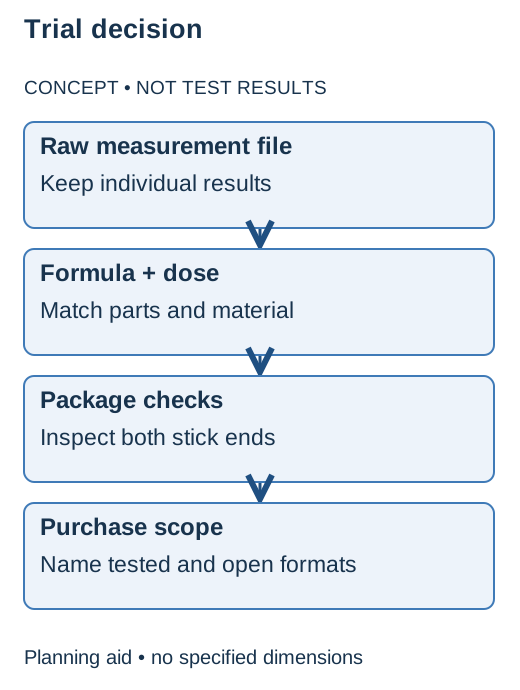
Finish with a decision for each formula and dose. One blanket approval for "powders" is too broad. An accepted configuration might cover one coffee blend at one portion, while a lighter creamer stays conditional on another component or a further test. Put those boundaries into the quotation review. If the buyer wants flexibility later, ask which sample changes trigger another trial and which approved format parts would be needed.
The report should also name any unused sample material, the retained packs and the location of the raw measurement file. These are small administrative details, but they make a repeat investigation practical. Without them, a later conversation ends up depending on an unlabelled container, an isolated video clip or an operator's memory of which recipe happened to work best.
Method and scope of this guide
This revision of Plan a Powder Dosing Trial organizes the existing published review points into a buyer preparation record. The diagrams illustrate powder trial route, lane event record, weight fields, trial decision. They contain no measured trial results, approved engineering dimensions or acceptance thresholds. The empty record fields are prompts for project evidence, not a completed inspection. Source: the existing guide and the published Configuration Review and Sample Testing service descriptions, accessed October 8, 2026. Before sending physical samples, confirm receiving arrangements, quantity and costs. Keep any recommendation tied to the supplied material, proposed configuration and outstanding questions.
Frequently asked questions
Can a substitute powder approve the production formula?
Record it as a substitute demonstration. Identify the questions still requiring the actual formula and production handling condition.
Why keep lane results instead of only a pooled average?
A pooled average can conceal a lane difference. Retain individual results with lane labels and event times before deciding what to adjust.
How should drift after replenishment be recorded?
Mark the refill time, powder condition, lane, target and settings beside the following measurements. Keep changed settings in a separately identified result group.
Who decides the sample quantity?
Agree the quantity, handling, sampling plan and acceptance criteria with the supplier and responsible buyer team before shipping material. There is no universal quantity in this guide.
Explore the Equipment
Multi-Lane Stick Packs
Four-Lane Collagen Stick-Pack Machine
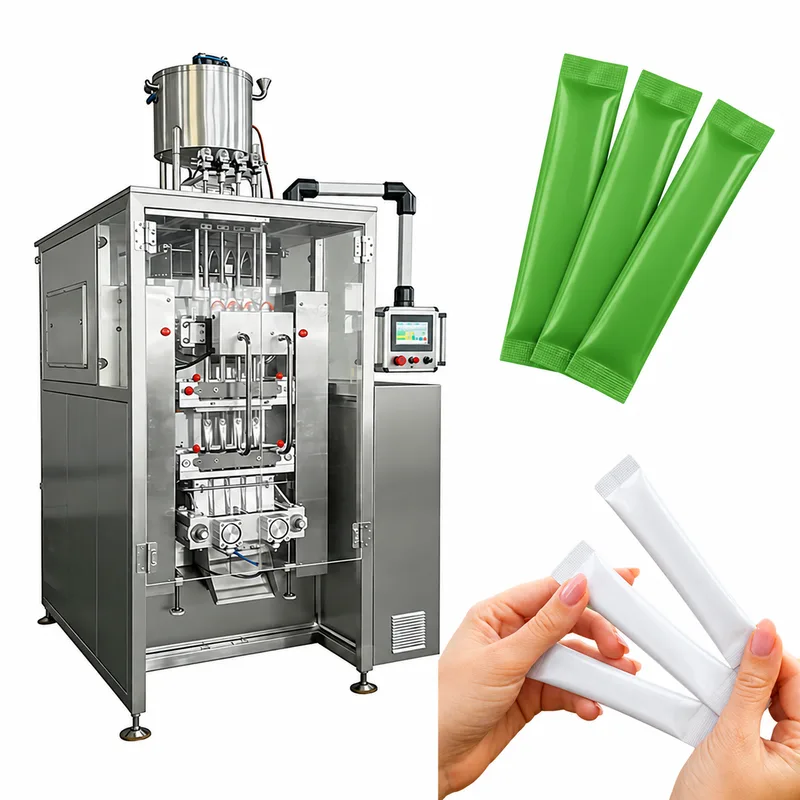
Four lanes can hide one lane that under-doses. Specify this four-lane collagen stick-pack machine from your powder density, serving weight and stick size, and sample every lane.
Multi-Lane Stick Packs
Four-Lane Coffee Powder Stick Packs
Instant, agglomerated, blended and ground coffee do not dose alike on one screw. Specify this four-lane coffee stick-pack line from your exact formula, serving and stick, and check every lane.
Multi-Lane Stick Packs
Four-Lane Creamer Stick-Pack Machine
Creamer that cakes in the hopper or dusts the seal can cause runs of rejected sticks. Specify this four-lane creamer stick-pack line from your formula, serving, moisture sensitivity and changeover order.
What to send us
| Item | Why we need it | Example format |
|---|---|---|
| Actual formulas and dose ranges | Choose the formula and dose combinations to evaluate. | Formula ID / batch / target doses with units |
| Tooling and material-condition record | Identify parts and sample conditioning behind the result. | Tooling revision + material-history sheet |
| Per-lane samples through replenishment | Expose lane differences and replenishment effects. | Sample label: run / lane / time / refill event |
| Seal, appearance and opening checks | Check fill results against the complete stick package. | Stick sample ID + seal / code / opening record |
We reply within 24 hours.