
Auger-Dosing Stick-Pack Systems
Review powder dosing, replenishment and lane coordination for a four-lane single-serve stick-pack configuration.
On This Page
Define the powder and dose
An auger moves powder through a dosing arrangement into the pack. Density and flow behavior decide which screw you need and how it should run. Send a sample of each formula along with the dose range. A new dose or a reformulation needs review, because it is rarely just a control-screen adjustment.
Consider all lanes
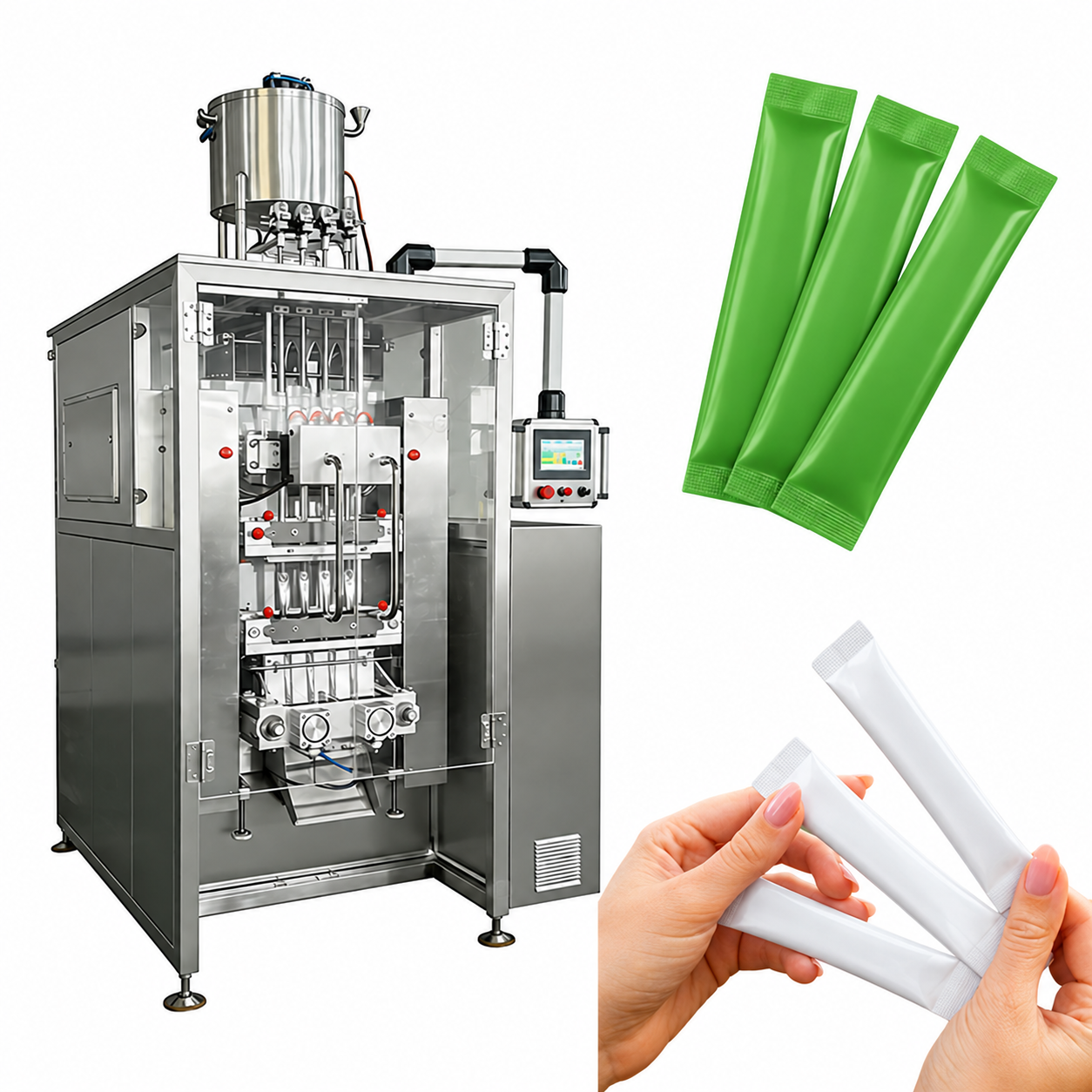
The catalog includes four-lane powder stick-pack configurations. Find out how dosing is adjusted and checked on each lane, and how the line refills with powder while it runs. A combined output figure means little without the pack and product conditions behind it. Agree a sampling record that lists the lanes separately, so any difference between them shows up.
Coordinate film and dosing
Stick width, length and end-seal margins have to leave room for the intended powder dose. Send the film specification and artwork repeat with the product brief. Before production rolls are ordered, check the cut, the tear feature and where the code goes. Judge powder around the seal during real packaging. A dosing demonstration will not show it.
Keep changeover scope clear
Request the parts and cleaning access you will need when switching formulas or stick sizes, and confirm which tooling belongs to the quoted configuration. Keep the sample-test settings and results as a starting record. Material variation can still call for another assessment.
Treat the screw as product-specific tooling
An auger-dosing stick-pack configuration fits the fine-powder examples in the catalog, including collagen and beverage powders. There is a catch. The screw moves a volume of powder, but buyers usually specify a mass per serving, and how one converts to the other depends on the powder and its condition. A screw chosen for one density or flow behavior may need review when the formulation changes.
Provide representative product rather than a generic description such as protein powder. State the dose range, the likely batch variation and whether the sample was stored or handled differently from production material. Find out which screw, outlet and filling tube are proposed, and which parts change for another dose. That makes it a tooling discussion. Without it, people assume a software setting covers every serving size with the same mechanical arrangement.
Observe powder behavior before and after replenishment
Powders change. They behave one way right after transfer into a hopper and another after standing through a production pause. So the question for the supplier is how the feed and dosing arrangement keeps the powder usable through both. In a trial, watch the hopper as the level drops. Does the material flow toward the dosing area, cling to surfaces, or change visibly?
Weigh samples before and after normal replenishment, and keep each result tied to its lane and to the event that came before it. If an adjustment is needed after every refill, ask whether the operating procedure and hardware address that behavior. One short sequence from the steadiest part of a run proves little. The trial should include the ordinary material-handling events your operators will meet.
Protect the seal area from the powder stream
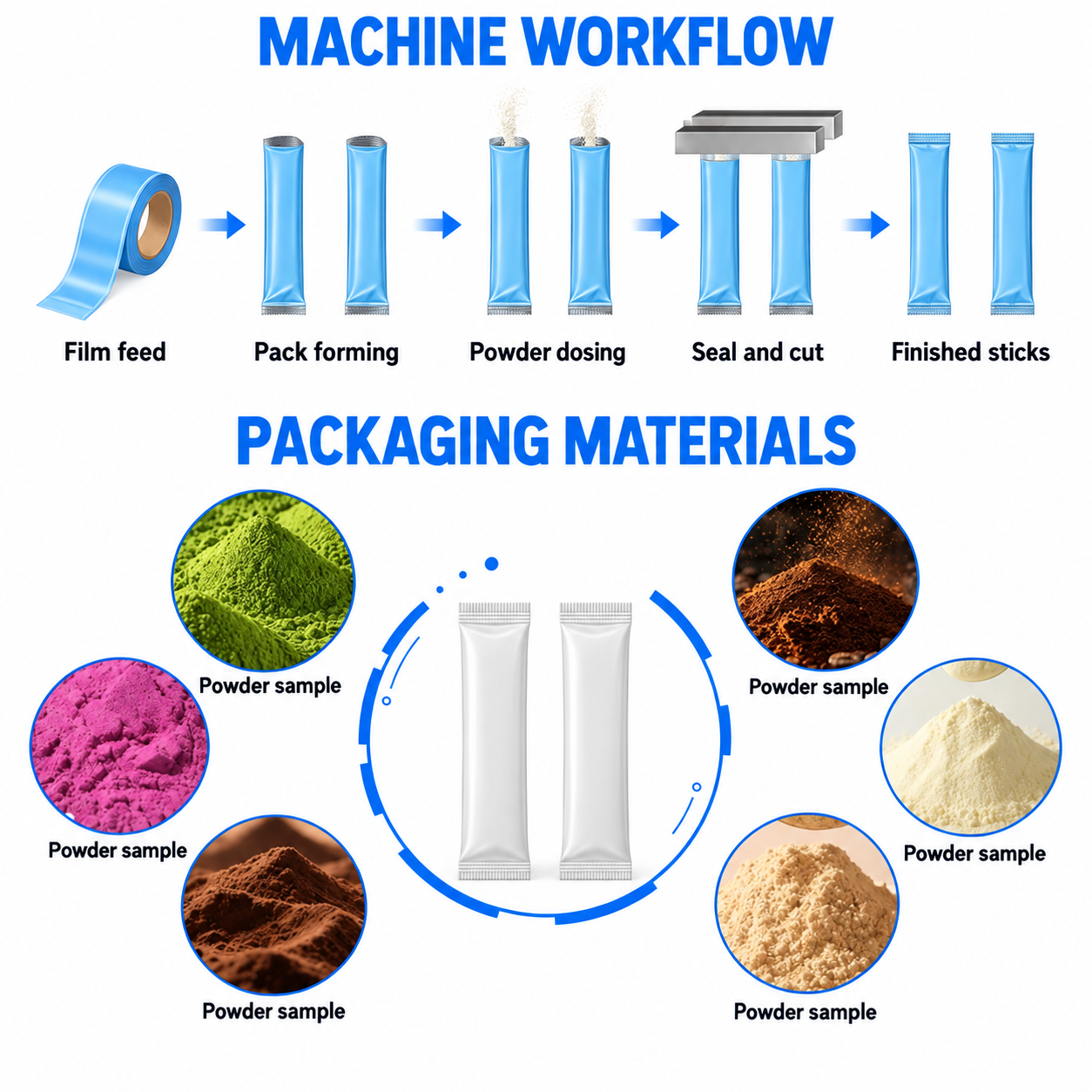
A narrow stick leaves little clearance between the filling path and the future seal. Fine powder that arrives late or stays on the tube can affect closure even when the total dose is correct. Watch when and where the powder is delivered relative to film movement and end sealing. The remedy depends on the cause. It may be product flow, tooling geometry or coordination. Sealing settings alone will not always fix it.
Use the actual laminate and intended stick dimensions for this part of the evaluation. A longer demonstration pack can hide a space limitation in the planned commercial format. Cut open samples as well as looking at the outside of the seal, and note where any residue sits. The supplier should be able to explain the adjustment sequence used to get a clean result, so your production team can tell an approved setup from an improvised demonstration.
Review each lane as an individual dosing channel
The four-lane examples make several outputs in one coordinated machine cycle. You still have to verify each dosing channel. Prepare a sample collection method that keeps lane identity visible from discharge through weighing and inspection. Mixed samples hide the cause. Differences in tooling installation, material distribution or adjustment are hard to diagnose once the lanes are blended.
Compare the measured dose and the physical condition of the stick. A lane with an acceptable average weight may still show more powder near its end seal, or a different filling profile. Find out how an operator identifies and adjusts one particular lane and how that adjustment is documented. For a production recipe, the record may need lane-specific settings as well as common machine settings. Confirm the actual control arrangement, because not every proposed system offers the same adjustment options.
Plan formulation changes with the cleaning sequence
Coffee blends, creamer and other powders may need different handling and cleaning procedures. Define the sequence for emptying the hopper, removing accessible dosing parts, cleaning them by an approved method and reassembling. The equipment supplier should specify what is permitted for the quoted configuration. A clean-looking product surface cannot establish that retained powder has been properly removed.
Have the supplier run the change between the formulations that matter to your schedule. Note the parts removed, the tools needed and the checks made before restarting. Label screws and filling tubes by product or format. Then a correct recipe never meets the wrong hardware. Where cross-contact control is required, the factory has to set up its own suitable verification procedure. The machine trial can show access and dismantling, but it does not replace that process assessment.
Separate dose capability from production capacity
A proposed output depends on the dose volume, material behavior, stick dimensions and the coordinated packaging operations. The source-backed collagen configuration qualifies its published output by powder density and dosing volume. Apply the same reasoning to a custom enquiry: state the conditions behind the rate you want and request a trial under those conditions.
The acceptance record should name the product batch, film, screw tooling, lane results, operating interruptions and the number of acceptable sticks collected. Include enough ordinary running to show replenishment and restart behavior. If only one dose was demonstrated, list the other requested doses as checks still to do. That keeps a broad catalog description from becoming a promise nobody tested, and it gives purchasing a practical way to compare auger configurations for the real range of single-serving powders.
- Formula samples and intended dose range
- Film drawing and finished-stick dimensions
- Per-lane sampling and replenishment conditions
What should an operator check after fitting another screw?
Follow the supplier's approved installation procedure and confirm the tooling identity before loading product. Check that the selected recipe matches that mechanical setup, then collect identified samples from every lane after restart. What counts is the delivered dose and filling behavior for the installed combination. A turning motor proves nothing. Keep the first acceptable samples with the changeover record. If the new screw was meant for another formulation or serving range, say so in the approved-format list so a later operator does not assume all screws are interchangeable.
Explore the Equipment
Multi-Lane Stick Packs
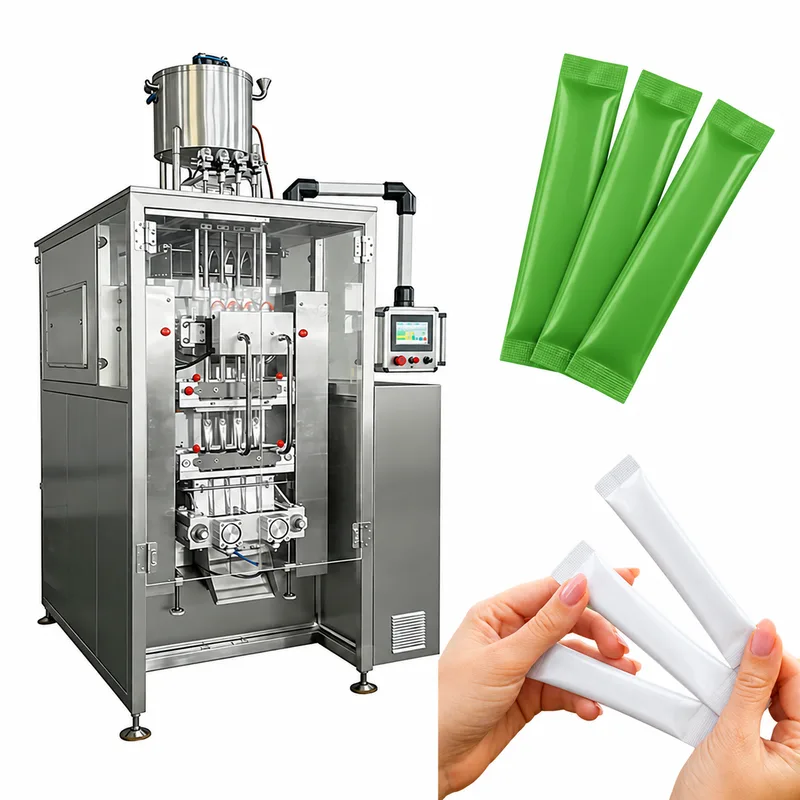
Four-Lane Collagen Stick-Pack Machine
Four lanes can hide one lane that under-doses. Specify this four-lane collagen stick-pack machine from your powder density, serving weight and stick size, and sample every lane.
Multi-Lane Stick Packs
Four-Lane Coffee Powder Stick Packs
Instant, agglomerated, blended and ground coffee do not dose alike on one screw. Specify this four-lane coffee stick-pack line from your exact formula, serving and stick, and check every lane.
Multi-Lane Stick Packs
Four-Lane Creamer Stick-Pack Machine
Creamer that cakes in the hopper or dusts the seal can cause runs of rejected sticks. Specify this four-lane creamer stick-pack line from your formula, serving, moisture sensitivity and changeover order.
What to send us
| Item | Why we need it | Example format |
|---|---|---|
| Formula samples and intended dose range | Identify the evidence or open question for this review point. | Labeled brief entry + photo/drawing/record reference, or TBD. |
| Film drawing and finished-stick dimensions | Identify the evidence or open question for this review point. | Labeled brief entry + photo/drawing/record reference, or TBD. |
| Per-lane sampling and replenishment conditions | Identify the evidence or open question for this review point. | Labeled brief entry + photo/drawing/record reference, or TBD. |
| Tooling and cleaning scope for each changeover | Identify the evidence or open question for this review point. | Labeled brief entry + photo/drawing/record reference, or TBD. |
We reply within 24 hours.