
Flour in Retail Bags: VFFS Fit, Auger Trials and Seal Observations
A flour-production phrase can waste the VFFS trial on a mill or a bulk sack. Record the retail bag, the feed and settling, and the seal dust.
| Input | What to write | Why it matters |
|---|---|---|
| Product | Blank until the spec or the sample names it | The flour lot is not the mill that made it |
| Fill amount | Blank until the spec or the sample names it | A catalog class is not this pack's labeled fill |
| Bag format | Blank until the spec or the sample names it | Roll film, a premade pouch, and a bulk container are different routes |
| Feed and settling | Blank until the spec or the sample names it | An auger dose is a volume until someone weighs it |
| Seal-zone dust | Blank until the spec or the sample names it | Dust at the nozzle is not the same note as dust on the seal |
Take the record to the next review
Use these pages after the route record is written. Each one starts from a cell this page leaves open.
- VFFS or premade pouches — roll film versus a bag that already exists
- Powder dosing trial — lanes, refills, and pauses, not this flour bag record
- Film requirements — the film spec before a seal is compared
- Powder stick packs — a different pack from this retail bag
- Sugar trial — granulated and powdered sugar, not flour
Scroll horizontally to read all columns, conditions and sources.
| Check | What to write | Still to verify |
|---|---|---|
| Product | Flour name, lot, and the condition you can see (loose, packed, dusty, clumped), or "not chosen." A mill, a batter, and a product that is not flour: mark out of scope. | |
| Fill amount | The labeled fill the buyer already uses, in their unit, or "not on the spec." Do not copy a catalog class into this cell. | |
| Bag format | Roll-film retail bag, premade pouch, or bulk container (sack, drum, or box), plus the style on the sample, or "not chosen." A bulk container is out of this retail record. | |
| Original specification | The drawing or the supplier document, named as a file, or "not chosen." | |
| Feed and settling | Loose, packed, dusty, or clumped, and whether the quotation says volumetric or gravimetric, or "not on the spec." No density number unless the buyer already measured one. | |
| Seal-zone dust | Nozzle, seal land, jaw, or none visible, or "not yet looked." No pass limit. |
On This Page
Why does the flour-production phrase waste the trial?
A flour trial that starts from the mill can waste the run on equipment that grinds grain, or on a sack the retail bag never uses. Separate the mill from the packaging line, name the bag the buyer already sells, and leave feeding, settling, and seal-zone dust blank until the sample is in hand.
This page is the record for that split. It covers flour that already exists and is going into a retail bag. The retail bag here is a bag formed on a vertical machine from roll film, or a premade pouch the buyer already has. A bulk sack, a drum, and a box are a different route. A mill that grinds wheat into flour is not a packaging machine, and this page does not specify one.
The cells stay empty on purpose. A published catalog can name flour and still omit the bag, the dose method, and what sits on the seal. Copying a speed, a bag width, or an accuracy figure into those cells would present a result this website has not run. Write only what the sample, the drawing, or the supplier's own document already says. If it does not say it, write "not on the spec" or leave the check blank.
Granulated sugar and powdered sugar have their own trial page. A formula trial that tracks lanes, refills, and pauses has the powder dosing guide. Stick packs are a different pack from a retail flour bag. Use those pages for those questions. This page stays with the retail-bag route, the feed and settling note, and the seal-zone dust note.
Which pack is a retail bag, and which packs are not?
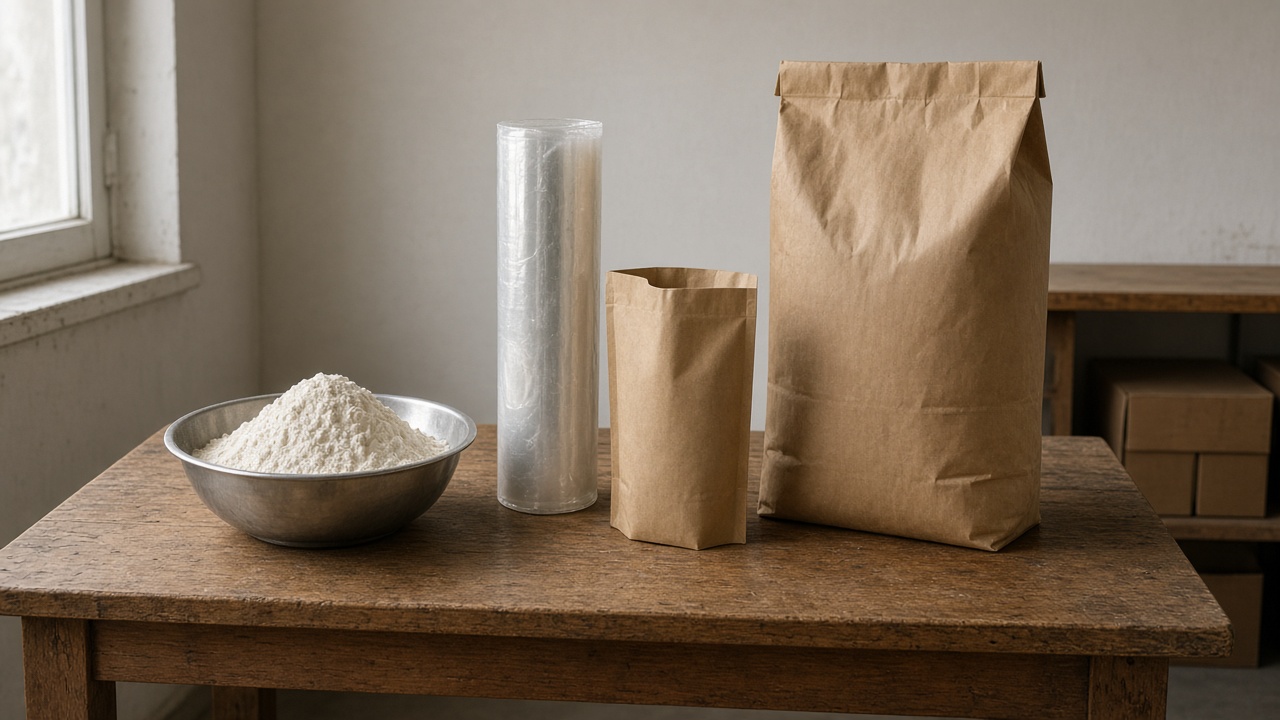
Start with the pack in the buyer's hand, not with a machine name. Three different packs show up on published flour pages, and they are not one route.
A vertical form-fill-seal bag is made on the machine. Roll film feeds in, a former shapes the bag, a screw or auger drops a portion of flour, and the machine seals the bag. A page fetched on 11 October 2026 describes that sequence for flour: roll film, an auger filler, then a seal. The same page names pillow bags, stand-up pouches, and other pack styles. It does not say which flour uses which style. Write the style that is on the sample, or write "not chosen."
A premade pouch is already a bag before it reaches the filler. A page published on 4 June 2026 and fetched on 7 October 2026 describes premade wicketed pouches that are loaded, opened, clamped, filled by auger, then sealed and discharged. A page fetched on 11 October 2026 describes a separate premade-pouch filler for stand-up pouches and pillow pouches. A page published on 7 October 2025 and fetched on 8 October 2026 separates a vertical line for pillow or gusset bags from a premade-pouch line, and it also lists a container line for jars. The container line is outside this record. For a premade pouch, write that the bag already exists, and name the pouch file or the retained sample.
A bulk container is not this retail record. The explainer fetched on 11 October 2026 says auger fillers dispense flour into bags, boxes, or drums when the job is bulk flour, and it separates that job from the roll-film bag and from the premade pouch. Another page fetched the same day groups retail packs, bulk refill bags, and industrial powder packaging in one machine description. That grouping is that page's claim. This record splits them. If the target pack is a sack, a drum, or a box, stop this sheet. Do not fill a retail-bag row with a bulk construction the document does not name.
One page fetched on 11 October 2026 describes a vertical machine with an auger volumetric doser for flour and other milling products, and it states weights up to 5 kg and up to 30 liters as its small-to-medium class. Those figures are that page's words. They are not a measured bag from this website, and they do not fill the buyer's bag-size cell. The buyer's labeled fill stays blank until the buyer's own spec or sample states it. The same page says a gravimetric weighing system can be added as an alternative to the volumetric doser when density varies. It does not say at what density the switch is required. Record whether the quotation says volumetric, gravimetric, or does not say.
That small-to-medium page also names pillow bags, gusseted bags, square-bottom bags, four-corner seals, five seals, and bags with a handle, and it says the seal depends on the film, including laminated film and polyethylene. Write the style and the film name from the sample. Bag width, film width, and thickness stay blank unless the buyer's document already states them. The 7 October 2025 page says one bag former makes one bag width and that a width change means a different former. Record the former or the pouch the supplier names. Do not copy a width from a catalog table into the blank cell.
What do you record when the flour feeds and settles?
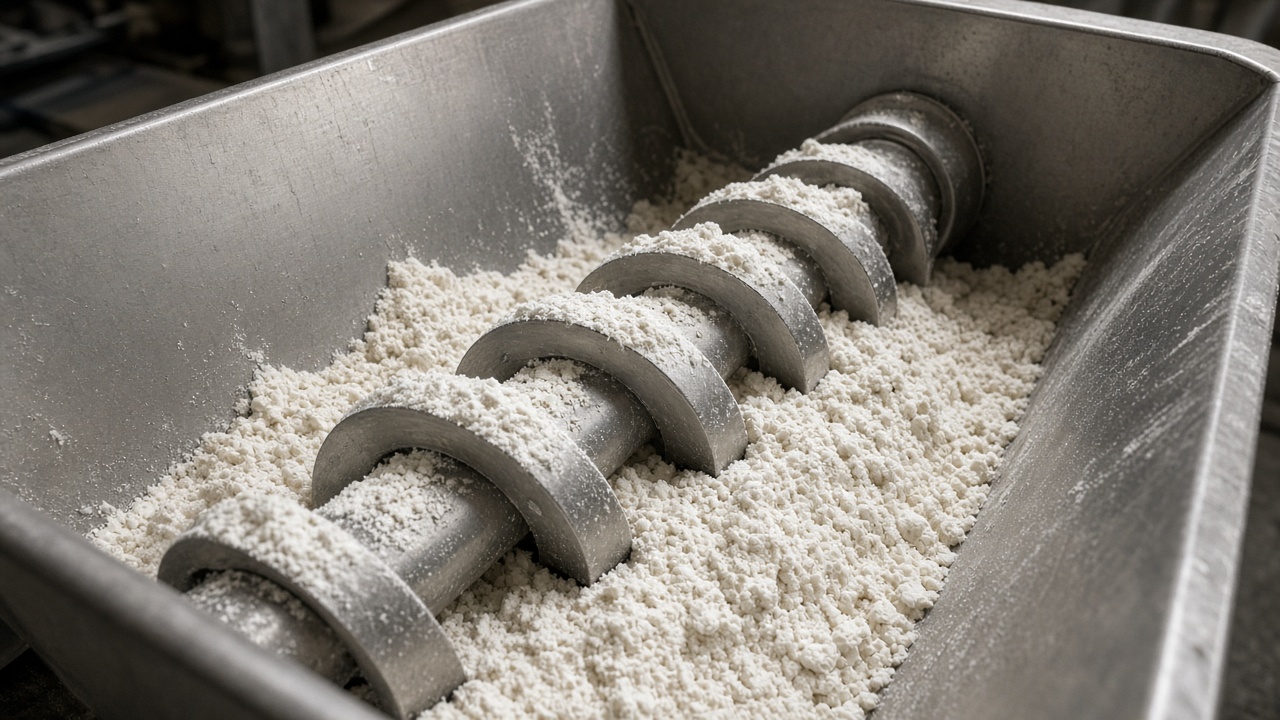
An auger dose is a volume. The screw turns and discharges flour. The mass in the bag is a separate measurement. A page fetched on 11 October 2026 describes a servo-driven screw for fine and medium powders and names flour as a light, dusty material that screw can meter. It does not publish a flour weight from a named lot, and this page does not add one.
Look at the flour in the hopper before anyone writes a result. Note whether it looks loose, packed down, dusty, or clumped. That note is the settling observation. The opened pages do not give a settling distance, a bulk-density number, or a percent change after the flour sits. Those cells stay blank. If the buyer already measured density, copy their method and their number onto the record and keep their unit. Do not replace a blank with a stand-in value.
Then weigh what the screw discharges. Use the scale the buyer will use, and write the scale name. The volume mark on a cup or the turn count on a screw is not the labeled fill. A page fetched on 11 October 2026 says a gravimetric system can stand in as an alternative to volumetric dosing when density varies. If the quotation names that alternative, write the name it uses. If it only says auger or screw, write that, and leave the gravimetric line as "not on the spec."
A result on one flour does not stand in for another. The pages name wheat flour, bread flour, cake flour, corn flour, and milling products as examples. They are examples, not a closed list. Record the flour name, the lot, and the condition you can see. Icing sugar, cocoa, and starch appear on one page as other powders that page says the same small-bag line can run. They are not this flour record. Powdered sugar has its own trial page.
Do not copy an accuracy band or a packs-per-minute figure from a catalog into this note. Several opened pages state accuracy and speed for their own machines. Those figures belong to those pages, under those machines' conditions. They are not a tolerance for the buyer's flour, and they are not a result from this website.
What goes on the seal-zone dust record?
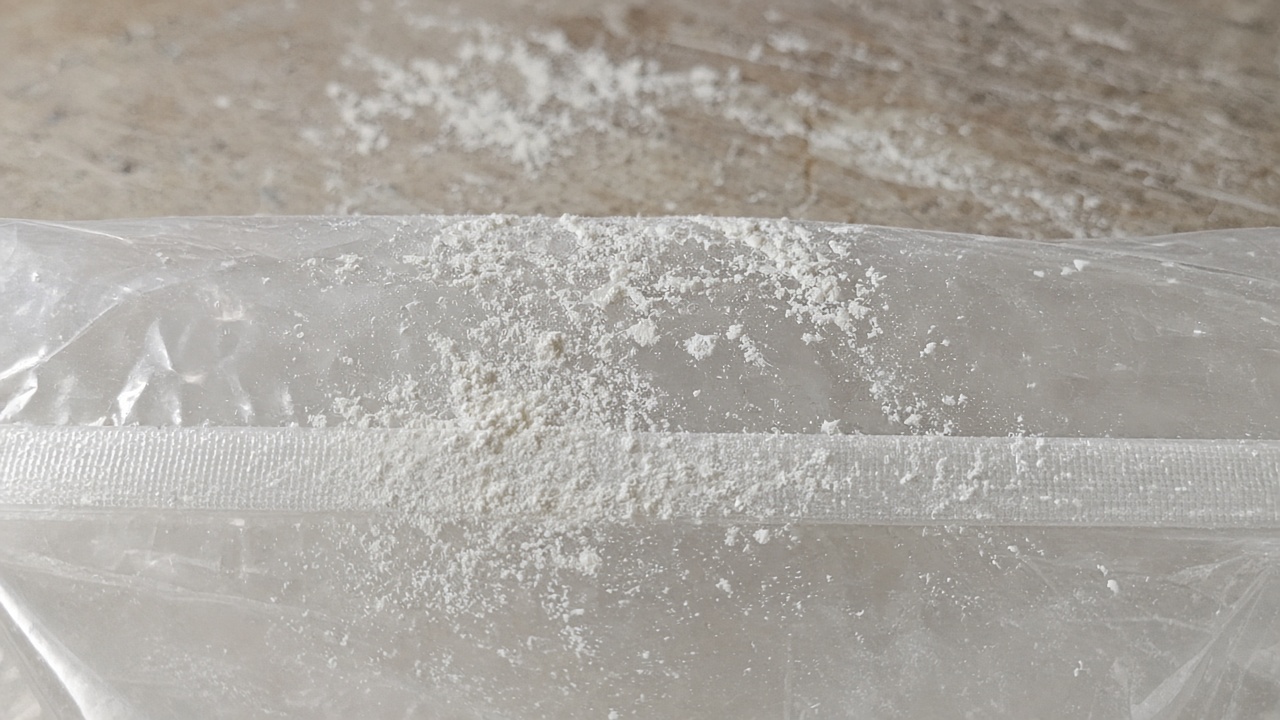
Dust at the filler and dust on the seal are two observations. Write where you see flour, and do not turn that note into a cleanliness score.
A page published on 7 October 2025 and fetched on 8 October 2026 describes a hood around the filling nozzle, an enclosed auger as a contrast to a gravity drop that throws dust, and seals at the point of filling. A page fetched on 11 October 2026 describes a sealed filling area and dust-collection channels meant to limit powder buildup during filling. Neither page states how much flour remains on the seal land, in the jaw, or on the film above the seal. This record does not add that amount.
On the sample bag, look at four places and use the same words every time: at the nozzle, on the seal land, in the jaw, or none visible. Keep the bag number and the route with the note. A photograph shows where the dust sat. It does not set a pass limit. If you did not look, write "not yet looked," and leave the cell blank rather than writing clean.
This page does not specify dust collection, grounding, ventilation, or explosion protection. Those are a different review. A connection port or a hood mentioned on a published page is that page's equipment description. It is not a design for the buyer's plant, and it is not a reason to skip the seal note.
The seal itself stays a description of the sample. Write whether the sample is heat-sealed, and whether flour is sitting in the seal. One page says the seal method follows the film, and it names laminated film and polyethylene as examples. Film identity, reel, and sealing conditions belong on the film-requirements page. Do not close the dust cell by naming a film.
What goes on the blank trial record?
The comparison table is the deliverable, and the last column is empty on purpose. One record per flour. The instruction column says what to write. The still-to-verify column stays empty until the buyer or the reviewer fills it.
The product row takes the flour name, the lot, and the condition you can see, or "not chosen." A mill, a wet batter, and a product that is not flour are marked out of scope in that row. The fill-amount row takes the labeled fill and the unit already on the spec, or "not on the spec." Do not borrow the up-to-5 kg or up-to-30-liter wording from the small-to-medium page to make this row look complete. The bag-format row takes roll-film retail bag, premade pouch, or bulk container, plus the style name on the sample, or "not chosen." A sack, drum, or box is marked out of this retail record. The original-specification row takes the drawing or the supplier document by file name, or "not chosen." The feed-and-settling row takes loose, packed, dusty, or clumped, plus whether the quotation says volumetric or gravimetric, or "not on the spec." The seal-zone dust row takes nozzle, seal land, jaw, or none visible, or "not yet looked."
A photo of a bag without those fields is not a trial record. A quotation that says flour and then a speed, without the bag format and the flour lot, is not ready to set beside another offer. Ask for the missing cells in the supplier's words. Leave them blank in this table until that document arrives.
What does this page not decide?
This page does not choose a machine for flour. It does not state a speed, a bag width, a film width, or an accuracy, and it does not claim that this catalog has run a flour trial. No product in this catalog is named here as a flour model.
It does not cover milling, sifting, or the machine that makes the flour. It does not cover dust-explosion engineering, grounding, or a required ventilation rate. It does not set a universal auger speed, a screw pitch, or a seal temperature. It does not say that one published route is better than another. Where the opened pages disagree, the disagreement stays: one page groups retail packs with bulk refill bags, and this record keeps those packs apart until the bag construction is written down.
Stick packs, lane counts, and a multi-lane powder trial are outside this page. The powder application page and the powder dosing guide hold those questions. Sugar, cocoa, and starch named on a flour catalog are not answers for this lot of flour. A jar or a bottle line named beside a vertical flour line is a container route, and it is outside this bag record.
It also does not turn a catalog accuracy claim into a promise. If a supplier's document states a tolerance, copy that sentence, the model if the document names one, and the date on the document, into the original-specification cell. Do not widen it to every flour.
What should you send before a machine is named?
Send five items: the product, the fill amount, the bag format, the original specification, and the items still to verify. The product is the flour name, the lot, and the condition you can see, or "not chosen." The fill amount is the labeled fill and its unit, or "not on the spec." The bag format is roll-film retail bag, premade pouch, or bulk container, with the style on the sample, or "not chosen." The original specification is the drawing or the supplier file name, or "not chosen." The items still to verify are the blank cells, written as a list, for example settling note not yet looked, and seal-zone dust not yet looked.
Put those five items in one WhatsApp message using the WhatsApp link on this page. Opening the draft does not create an order. The reply reads which cells are filled and which are blank, and says which rows belong on a configuration review and which need a sample before a machine is named. It does not confirm that a vertical bagger fits the flour, and it does not state a speed, a price, or a bag size.
Method and sources
The route split, the feed note, and the dust note use five saved pages, read as text. They are not a trial by this website. Dates below are the publication date when the saved file had one, and the fetch date in every case.
A premade-pouch page, publication date 4 June 2026, fetched 7 October 2026, describes premade wicketed pouches loaded, opened, clamped, filled by auger, sealed, and discharged, for flour and other dry powders. It states no bag weight and no packs-per-minute figure in the text used here.
A small-to-medium bag page, fetched 11 October 2026, describes a vertical form-fill-seal machine with an auger volumetric doser for flour and other milling products. It states weights up to 5 kg and up to 30 liters as that page's class. It names pillow, gusseted, square-bottom, four-corner, five-seal, and handle bags, says the seal follows the film including laminated film and polyethylene, and says a gravimetric system can be added as an alternative when density varies. It gives no density value and no switch point.
A flour-line overview, publication date 7 October 2025, fetched 8 October 2026, separates a vertical pillow or gusset line, a premade-pouch line, and a container line. It describes a dust hood at the filling nozzle, an enclosed auger contrasted with a gravity drop, seals at the fill point, and one former for one bag width. Speed, accuracy, and labor figures on that page are not used here.
An explainer fetched 11 October 2026 describes roll-film vertical bags filled by auger, a premade-pouch filler, and auger filling of bags, boxes, or drums for bulk flour, plus a net-weigh step before filling retail-ready containers. It assigns no flour to a single bag style.
A vertical flour-machine page fetched 11 October 2026 groups retail packs, bulk refill bags, and industrial powder packaging in one description, and it describes screw metering, roll-film bag making, a sealed filling area, and dust-collection channels. Model names, catalog rates, and catalog bag dimensions on that page are not copied into this record.
The blank table is the buyer's record. No machine was run for this guide, and no cell holds a measured value from this website. Reviewed 14 October 2026.
What to send us
| Item | Why we need it | Example format |
|---|---|---|
| Product | The flour lot is not the mill that made it | Wheat flour, lot not on the label; looks dusty |
| Fill amount | The portion is what the route is checked against | Labeled fill not on the spec |
| Bag format | The sample decides roll film, a premade pouch, or a bulk container | Premade pouch, or not chosen |
| Original specification | A drawing and a nickname are different | Drawing file name, or not chosen |
| Items still to verify | The blank cells are the review | Settling note not yet looked; seal-zone dust not yet looked |
We reply within 24 hours.