
Sugar Packing Machine Selection: Granulated and Powdered Sugar Trial Checks
A sugar name alone can mislead selection. Compare granulated and powdered samples through dosing, density, dust, portion-weight and VFFS seal trial records.
| Input or item | Value or source | Why it matters |
|---|---|---|
| Material group | Buyer lot: granulated or powdered | Separates handling conditions |
| Portion and tare | Buyer acceptance brief | Defines the weighing basis |
| Feed and density | Sample method and refill log | Connects condition to the dose |
| Bag and film | Drawing and material revision | Defines the package trial |
| Required accepted output | Buyer objective and production period | Defines the production situation to evaluate |
Choose the next review by task
Use these guides to prepare the inputs for the observation record and the next review.
- Machine catalog — identify the configuration under review
- Dosing comparison — distinguish the candidate mechanisms
- Density and fill weight — define the measurement basis
- Powder trials — organize changing material conditions
- Bag geometry — prepare the film-width inputs
- Film requirements — identify the trial roll
- Cleaning access — define product-change questions
- Sample report — retain conditions with measurements
On This Page
What should a sugar packing trial compare?
Choosing by the word sugar can waste a trial on the wrong material condition. Keep granulated sugar and powdered sugar in separate result groups, and compare the material presented to the filler with measured portions and sealed bags. Select a candidate dosing arrangement for evaluation; do not assign one universal filler to every sugar product.
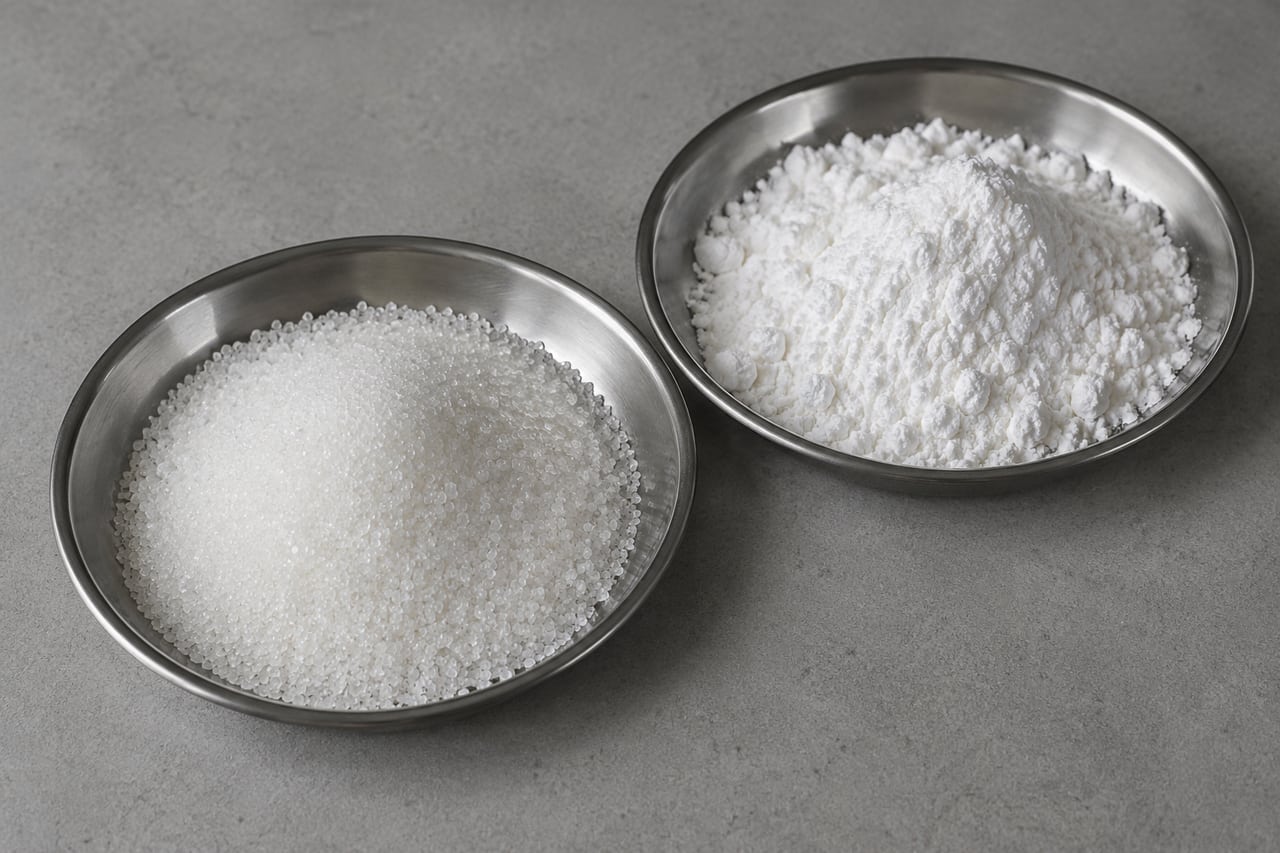
How do you identify the sugar reaching the filler?
Label granulated and powdered samples by the actual material reference and production lot. Record the supplier's particle description, relevant formulation details and declared additives where they affect the proposed handling review. Photograph the material as received, including visible lumps or variation, without deciding from appearance alone whether it will flow consistently through the selected equipment.
Add the storage, transfer and exposure history relevant to the planned production process. If the product team has moisture or other condition measurements, keep the method and sample identity with those results. There is no humidity threshold supplied by this guide. When a reading is unavailable, write that it is missing rather than substituting a typical value from a different product or environment.
Plan which conditions the trial will actually cover. Material fresh from a container and material after the intended holding period belong to identified groups if both matter to the project. Record any incoming state that remains untested. The purpose is to stop a convenient powder or granule sample from silently representing all future batches, and to give the configuration review a precise material description instead of a general request for a sugar machine.
Which dosing arrangement deserves a sample evaluation?
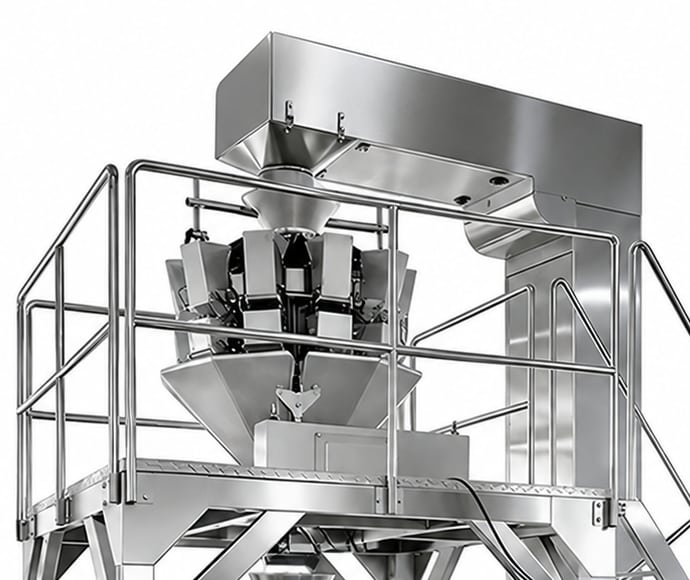
Treat a weighing or auger arrangement as a candidate linked to its proposed sample and filling task. Public powder-equipment descriptions include sugar among applications and describe both flowing and less freely flowing powders. That does not establish which arrangement suits this buyer's granulated or powdered material, nor that every configuration in this catalog has been tested with sugar.
For an auger proposal, ask the supplier to identify the screw and related tooling, feed arrangement and how its volume-based dose is checked against the required portion mass. Record whether feedback weighing is proposed, included or outside scope. For a weighing proposal, ask how the incoming material is distributed and released, and what the trial will observe about continuity of supply. Keep the proposed details attached to that configuration rather than borrowing functions from another public machine description.
The output of this stage is a trial question. It might concern repeatability after replenishment, retained material at discharge or the relationship between dose and package occupancy. Define what observation would resolve it before comparing offers. If a candidate has no documented sample evaluation, keep its application pending; a catalog category supplies a discussion starting point rather than a decision that the actual material is compatible.
How do density and replenishment enter the record?
Use a defined sample-volume measurement, if required by the trial team, to document the condition of the sugar presented to a volume-based dosing proposal. Keep the container basis, filling method and handling state with the recorded mass and volume. Loose presentation and a different settling method are not interchangeable inputs. Agree the measurement procedure before comparing conditions.
Connect density observations with the refill sequence. Record the inlet condition, replenishment event, dose setting reference and the portion measurements around that interval. If the material is disturbed or the hopper condition changes, identify the change rather than attributing every portion difference to the dosing mechanism. A single density figure detached from its preparation method does not explain a run.
Do not use package appearance as a density measurement. The same declared portion mass can occupy a different visible space, while a volume-based dose still needs the agreed weight check. Compare result groups under the same stated method and keep unmeasured conditions open. The practical decision is whether the selected arrangement needs a further evaluation of feed and material condition, not whether one assumed density can convert every future sugar batch into an approved setting.
How are weight results compared without hiding variation?
Agree the target portion, tare method, measuring equipment and buyer acceptance rules before collecting the result. Give each measured bag a sample-group and run reference. Keep the original sequence, including observations following a refill, pause or adjustment, so a reviewer can locate variation rather than seeing only the final average.
Distinguish the filler observation from the finished package check. If material remains in a transfer path or reaches a seal area, record that alongside the bag finding. An apparently consistent dose at the filler does not establish the net contents of every finished package. Leave acceptance to the responsible team using its defined method; this guide supplies no universal accuracy value or legal tolerance.
When comparing candidate arrangements, use the same actual sugar, portion and package assumptions wherever the comparison requires them. A result with a different bag or target belongs to a separately described group. Record interruptions and unresolved packs under the agreed rules rather than removing inconvenient samples. This produces a defensible trial record while avoiding an unsupported claim that a chosen configuration will repeat the result with every future lot.
What should observers record about dust and seal areas?
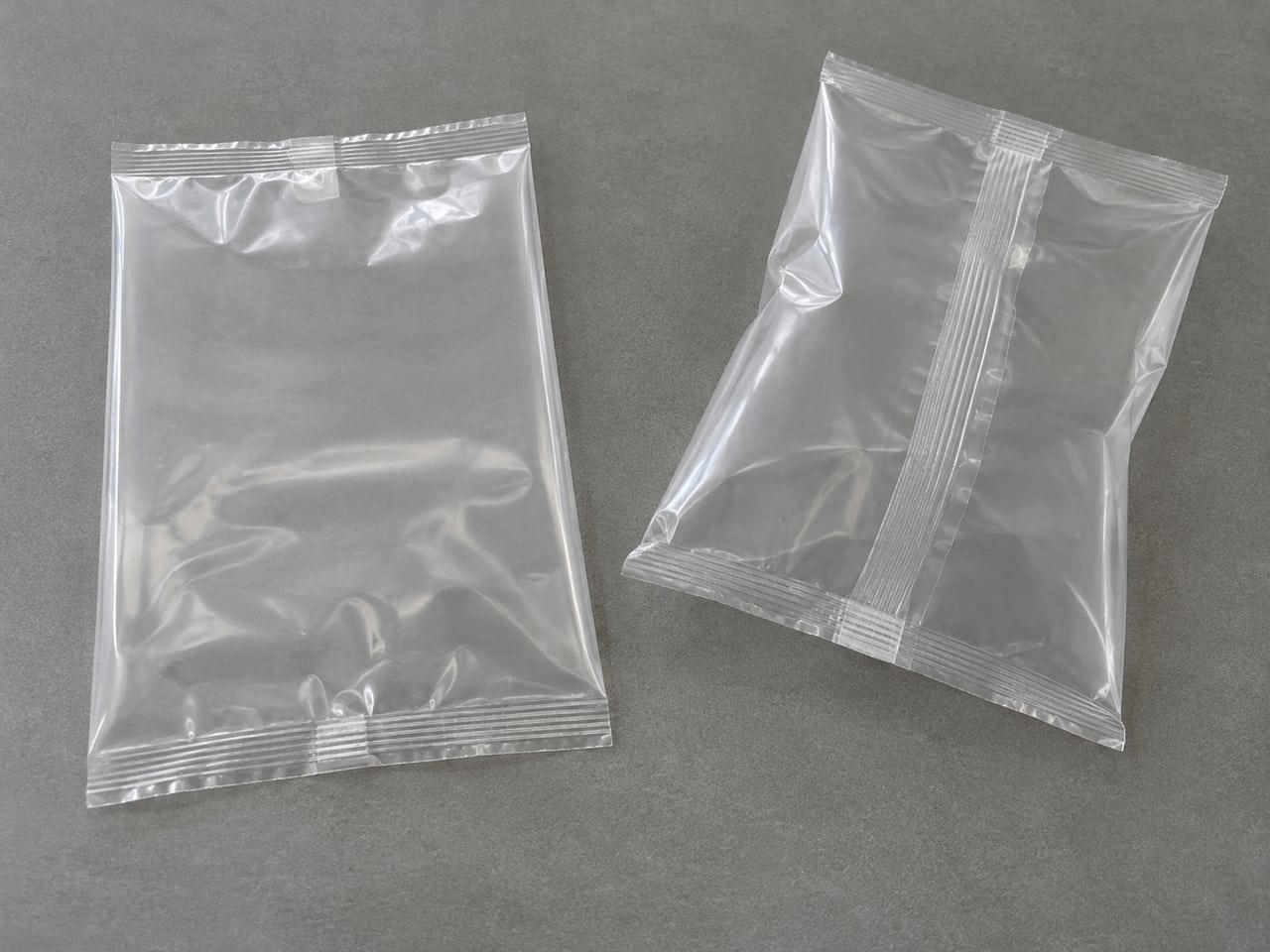
Keep dust observations separate from the weight record. Describe where visible material appears during the authorized evaluation: near feeding, at discharge or on the retained bag's sealing region. Record the sample condition and run interval associated with the observation. Visibility is an observation prompt, not a measure of airborne concentration or a dust-safety classification.
Ask the responsible equipment and site teams to define any necessary containment, extraction and risk assessment for the proposed arrangement. Record the confirmed scope and documents still needed. Do not infer a dust-control or explosion-protection rating from a cabinet, an extraction connection or a picture of a clean installation. Those are project requirements to resolve through the appropriate review.
For seal samples, identify the longitudinal seam and cross seals, visible folds or material, and the film reference. Keep package photographs beside the run-stage and dosing observations. If a seal finding coincides with a trailing dose or spill, ask for review of that connection without treating it as a proven cause. Use the selected film's evaluation method and authorized machine procedure to investigate further; no generic temperature, pressure or timing recipe belongs in this trial brief.
| Record row | Identity and measurement basis to enter | Observation and disposition to enter |
|---|---|---|
| Sample condition | Sample ID: ____; granulated/powdered: ____; lot/condition: ____ | Material photo: ____; missing condition/owner: ____ |
| Candidate dose and refill | Sample ID: ____; tooling/configuration: ____; interval/refill: ____ | Feed/density method: ____; retained material: ____; evidence: ____ |
| Individual finished bag | Bag ID: ____; sample/run: ____; tare/method: ____ | Measured net mass: ____; agreed limit reference: ____; disposition: ____ |
| Dust and seal observation | Bag IDs: ____; film revision: ____; observation location: ____ | Visible material/fold: ____; photograph/check reference: ____; next review/owner: ____ |
| Output and handover | Accepted-output objective/period: ____; production assumptions: ____ | Evaluated conditions: ____; unresolved item: ____; review owner: ____ |
How does the bag format change the trial question?
Provide a dimensioned bag drawing or a retained target package together with the material reference. Describe the intended seams, opening and presentation requirements. Keep the sugar's measured mass apart from its occupied space, so the trial team can evaluate the filling path and closing area for that specific package. A portion that fits somewhere inside a bag does not yet describe its behavior during filling and sealing.
Identify the roll material and revision used for each result group. If the team changes bag geometry or film during evaluation, record the change with the relevant sample and weight observations. Do not combine those results into one generic conclusion about a sugar packing machine. The configuration question belongs to the complete sample, dosing, transfer and package arrangement.
This page concerns bags proposed for a VFFS route, not restaurant sugar sticks or small individual sachets. A different portion format may require a different package-making and dosing discussion. For the defined bag, retain the acceptance method for closure and the proposed downstream handling. Those inputs allow the buyer to ask whether another sample evaluation is needed before narrowing the equipment shortlist.
What should be retained for review, and when does this not apply?
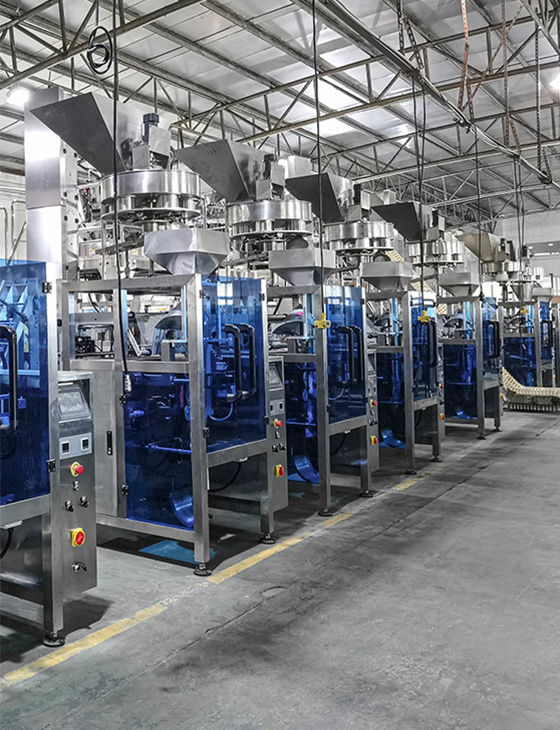
Keep a result sheet that connects sugar identity, material condition, proposed dosing tooling, replenishment events, portion sequence and labeled seal samples. Add the package drawing and the film reference. For every unresolved result, identify the missing observation and who can supply it. The resulting packet should allow another reviewer to reconstruct what was evaluated without guessing which bag or lot appears in a photograph.
Include the contact-part and cleaning procedure questions relevant to switching between the actual products. Ask how access and reassembly are documented, and leave the site quality requirements with the responsible team. Ease of removing a hopper is not a validated cleaning program, and this trial cannot approve a different formula without its own defined requirements.
Do not apply the record to liquid syrups, blends with substantially different constituents or another packing format by changing only its title. Nor does a bagging trial establish dust controls, regulatory compliance or a production guarantee. When the actual material or package differs from the recorded condition, identify the changed input and ask which part of the evaluation should be repeated.
State the accepted output the buyer needs over a named production period, with the proposed refill and package-change conditions. Keep it as a project objective to evaluate, not a speed the candidate machine is presumed to achieve. Record the trial interval and excluded activities before comparing its observations with that objective.
Method and sources
The trial questions use public powder-filling application descriptions, including sugar, and the distinction between volume-based auger dispensing and a measured portion mass. The site's fill-weight, bulk-density and powder-trial guides provide the adjacent preparation tasks. Published equipment functions belong to the arrangements described by their sources; they are not specifications for this catalog's sugar configurations.
The observation matrix contains fields for buyer and trial-team records, with no numerical example passed off as a target or result. The actual tooling, flow condition, feedback scope and package acceptance remain project inputs. Obtain operation and adjustment procedures for the selected equipment and retain the agreed measurement method with the results before using them in a purchasing comparison.
Frequently asked questions
How much does a sugar packing machine cost?
There is no verified sugar-machine price in this guide. Request an itemized quotation for the identified configuration, separating the proposed filler, bag-making equipment and any feedback-weighing scope. Compare the same included functions and unresolved items before using the totals to rank offers.
Does a small sugar packing machine include the complete bagging system?
The word small does not establish what the system includes. Ask the supplier to identify whether the offer covers dosing alone or also the equipment that makes, fills and closes the bag. Keep the listed equipment and its documented access requirements with the quotation; this guide supplies no footprint or compact-machine specification.
How should I compare sugar pouch packing machine prices?
Compare quotations for the same pouch-making route and included functions. Public powder-equipment descriptions distinguish premade-pouch packaging from vertical form fill and seal bagging, so identify the quoted route before comparing sugar pouch prices. The existence of both routes in a public source does not establish that this catalog supplies a sugar-ready configuration for either one.
Can a sugar packing machine advertised for 1 kg bags run other fill weights?
The advertised weight alone does not establish a verified operating range. Ask for the selected configuration’s documented limits and identify every additional target weight as a separate review input. Treat 1 kg as the proposed pack weight, not evidence of a wider operating range for this catalog.
Why are supermarket sugar bags coated in sugar on the outside?
Exterior sugar alone does not identify the cause for a particular bag. Retain the package and photograph its condition with its handling history; distinguish that finding from material observed during filling. A filling-stage dust observation cannot by itself establish what happened later to a retail bag.
Why does sugar spill when a bag is opened?
That requires an opening check of the actual package; the filling and seal record alone cannot explain the spill. Include the intended opening method in the buyer’s package requirements and retain the bag used for that check. Record the finding separately from filling or sealing observations rather than claiming a package change has solved it without evaluation.
What to send us
| Item | Why we need it | Example format |
|---|---|---|
| Sugar sample identity and condition | Separate granulated and powdered groups | Lot references, sample photos, condition notes |
| Portion, tare and weight sequence | Make results comparable | Buyer targets and dated measurement record |
| Dosing candidate and refill observations | Locate unresolved material/dose questions | Tooling reference and run log |
| Bag drawing, film and seal samples | Connect package findings to the trial | Dimensioned drawing and labeled bags |
| Required accepted output and production period | Define the operating objective and trial conditions | Buyer target with refill and changeover assumptions |
We reply within 24 hours.