
Review Cleaning Access
Removable parts can still obstruct routine changes if handling space is missing. Review residues, permitted cleaning, contact access and reassembly together.
The review decision
Review five inputs before accepting a cleaning-access proposal: product residues, permitted cleaning method, the complete contact route, removal and reassembly, and validation responsibilities. Access is a mechanical question; product-specific cleaning approval belongs to the assigned qualified team. Use the worksheet to keep those decisions separate.
On This Page
Trace the contact route and retained product
Review five inputs before accepting a cleaning-access proposal: product residues, permitted cleaning method, the complete contact route, removal and reassembly, and validation responsibilities. Access is a mechanical question; product-specific cleaning approval belongs to the assigned qualified team. Use the worksheet to keep those decisions separate.
Describe the products, residues and formula changes you expect on the line. Add the cleaning method your responsible team requires. A photograph tells you little. A stainless surface doesn't establish a particular hygienic rating either. The supplier needs your actual requirement before it can propose a suitable configuration.
Start a cleaning-access review from the route your actual product takes. Find the hopper, feeder, dosing components, transfer chute and the areas near the package opening. Mark where material can remain after normal emptying. Sticky sauces, fine powders and coated confectionery raise different inspection questions, so use your selected product and not a generic cleanability description.
Get the manufacturer's permitted cleaning methods and the materials used in the relevant components. Stainless alone says nothing about washdown suitability or chemical compatibility. Seals, guards, sensors and electrical areas belong in the review. Your hygiene requirements and the equipment documentation have to be reconciled before any procedure is approved.
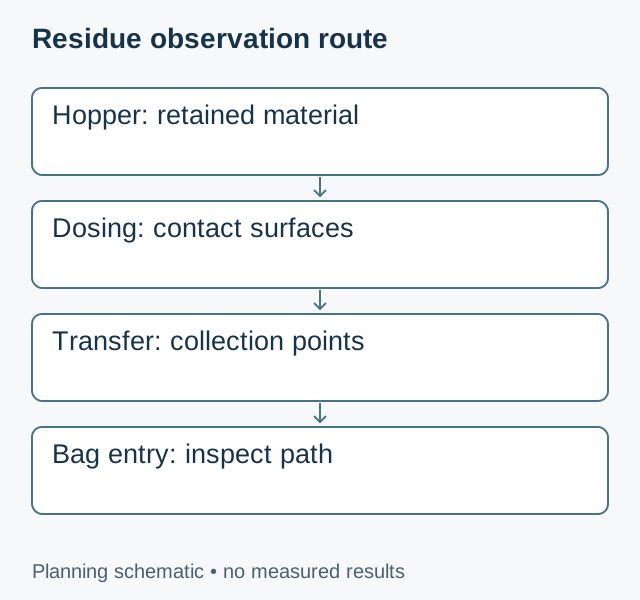
Trace the route through feeding, weighing or dosing, transfer and package entry. Mark the collection points you can see during normal emptying, and the areas that need extra access under the approved procedure. A nearly empty hopper is not a clear system. Small retained quantities can matter for a product change even when they barely affect total batch mass.
A component diagram or labelled safe-view photographs can tie the inspection points to the maintenance documentation. Parts come off in a defined way, and heavy or awkward items need handling and somewhere to go. If access needs a tool, name it in the procedure. If a contact assembly only comes out after nearby equipment is moved, put that limitation into the layout and operating review before you buy.
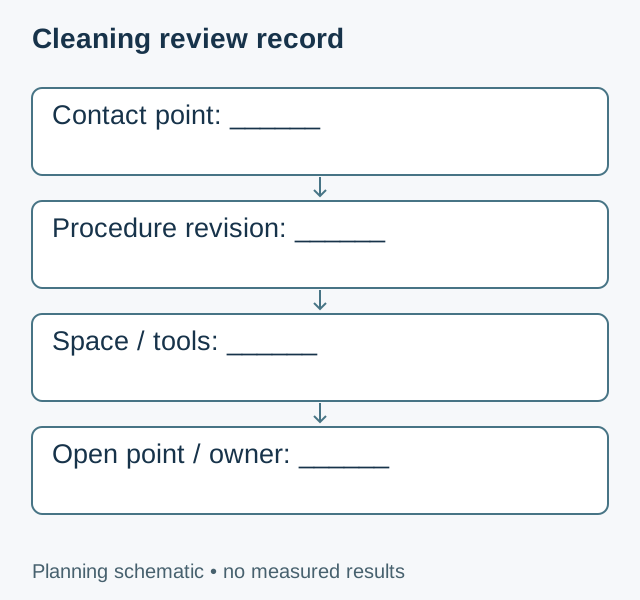
Start with a blank row for each contact point, then add the associated procedure rather than writing an improvised cleaning instruction in the table. Keep the residue observation linked to the product and the preceding job. Record whether a part was actually removed during the demonstration or only described as removable. If a handling route is obstructed, name the neighbouring assembly and carry that issue into the layout review. A proposed correction remains open until the responsible team has reviewed it. Do not mark a row complete just because a photograph exists: distinguish visible access, permitted treatment and the evidence needed to approve the site process.
| Field | Entry | Evidence / owner |
|---|---|---|
| Contact point / component | ________ | ________ |
| Residue to inspect | ________ | ________ |
| Approved procedure and revision | ________ | ________ |
| Tools and removal space | ________ | ________ |
| Identity / orientation mark | ________ | ________ |
| Removed-part holding location | ________ | ________ |
| Reassembly checks | ________ | ________ |
| Responsible party | ________ | ________ |
| Open question and evidence | ________ | ________ |
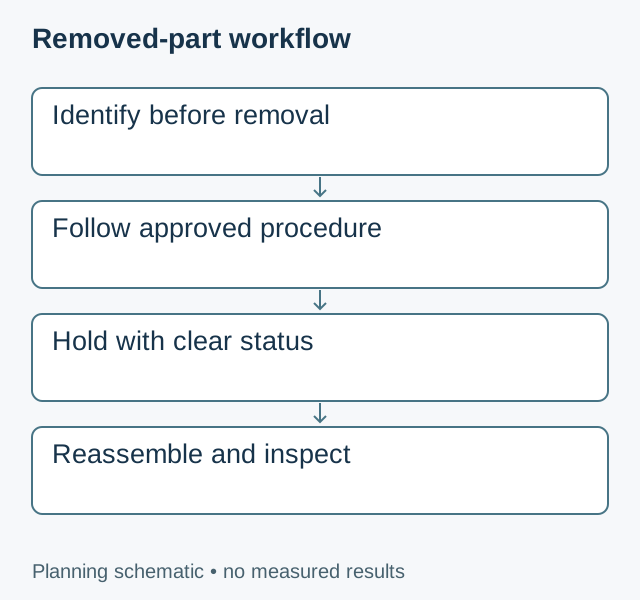
Plan removal, storage and reassembly together
Watch how contact parts are reached. Watch how they come off under the approved safe procedure. Are the necessary tools and handling space there? Find out where removed parts will be put and how they will be identified before reassembly. A component that can technically be removed may still be a nuisance to handle again and again in your factory layout.
Then look at what must be inspected after cleaning and before production restarts. Name the person who checks assembly, dryness where required and removal of cleaning materials. Your qualified quality staff should set the allergen and product-change requirements. A demonstration run on the machine doesn't validate the factory's cleaning process. That validation is yours to do.
Cleaning access only helps if parts can go back to the approved operating condition. Review how similar parts are identified, any orientation marks and the manufacturer's required assembly checks. Which seals or consumable items need inspection, and what documentation governs their replacement? Tightening values, chemical choices and inspection criteria should come from the supplied procedure and qualified review, never from a general guide.
Decide where cleaned parts will wait before installation and how their status differs from removed parts still awaiting attention. Plan that space with the site's responsible team. A clean part left on an unsuitable shared surface is a process problem that component design cannot fix. So the purchasing discussion has to cover the workflow around the machine, not just the number of removable parts in the brochure.
Include cleaning in the change schedule
During a representative product change, record the actions and the access they need. Keep cleaning time apart from mechanical format adjustment and product-release checks. Then you can compare configurations against your real production schedule. A line making many short batches may value access and parts handling differently from one running long batches of a single product.
Keep photographs in the approved procedure. Add component references where they help identification, and review the cleaning instructions again whenever tooling or contact materials change. Copying the old procedure unchanged is a poor shortcut. Purchasing should pick a configuration that supports your defined process, with clear documentation and verification duties.
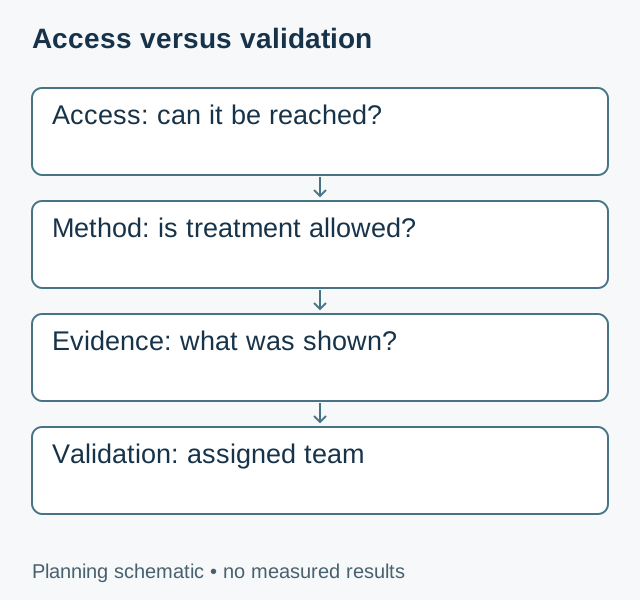
Record the demonstration and its limitations
In a demonstration, record the parts accessed, the procedure followed, the tools used and any area that could not be inspected. Tie the result to the exact options supplied. A feeder, longer transfer chute or different nozzle added later may change the review. Evidence from a photograph of the base machine does not carry over to an assembly with unreviewed product-contact components.
Give each open question to the right owner: equipment documentation to the supplier, site cleaning requirements to the buyer, and validation to the qualified team assigned to it. Keep limitations plain. A proposal may offer useful access and still leave work for the site's procedure or equipment selection. Seeing that split helps purchasing choose a configuration that supports the intended process, with no invented certification or untested cleaning guarantee.
Assign validation and approval responsibilities
A purchasing review can show whether a contact component can be inspected and removed using the documented procedure. It can't show that your complete cleaning process meets its product-specific requirement. Write these as separate questions. Give each an owner. Otherwise a useful mechanical demonstration gets passed off as a hygiene validation nobody performed.
Describe the residues expected. Cover an ordinary run and the difficult product change. Where relevant, include fine powder in joints, oily coatings, sticky pieces and liquid left in the fill path. The equipment supplier should identify the contact components and their permitted treatment. Two parts with the same metal finish may differ in cleaning compatibility. Seals, coatings and nonmetal components make that likelier.
When an access review is not enough
Request a contact-part list and the manufacturer's cleaning and maintenance instructions for the offered configuration. Your hygiene and maintenance reviewers should read those documents before anyone accepts a general cleanability statement, and they can mark missing information and tasks that need a demonstration. A short, specific list of unresolved access questions beats asking whether the machine is easy to clean. It also leaves a review record you can reopen if a different feeder or filling assembly is proposed later.
Method and sources
This worksheet reorganizes the existing review cleaning access into a project review record. Its fields and diagrams are editorial planning aids, not supplier specifications, measured results or approved procedures. The source is this site’s published guide and its configuration-review scope, revisited on 8 October 2026. The questions below follow the buyer issues identified in the page review; they are not presented as search-volume or customer-enquiry statistics.
Frequently asked questions
Does stainless steel mean the machine can be washed down?
No. Request the permitted cleaning method for the actual components, including seals, sensors and electrical areas. Surface appearance does not establish washdown suitability or chemical compatibility.
Does a removal demonstration validate cleaning?
No. It can document access and handling under a defined procedure. Validation against the product and site requirements is a separate responsibility assigned to the qualified team.
What information is needed when formulas share a machine?
Provide the products, residues, change sequence and required cleaning method. Identify the contact parts and ask the responsible quality team to define the product-change and release requirements.
What if a part is removable but hard to reinstall?
Record the handling space, identity, orientation and reassembly checks as an unresolved operating issue. Ask for review against the supplied procedure before treating access as satisfactory.
Explore the Equipment
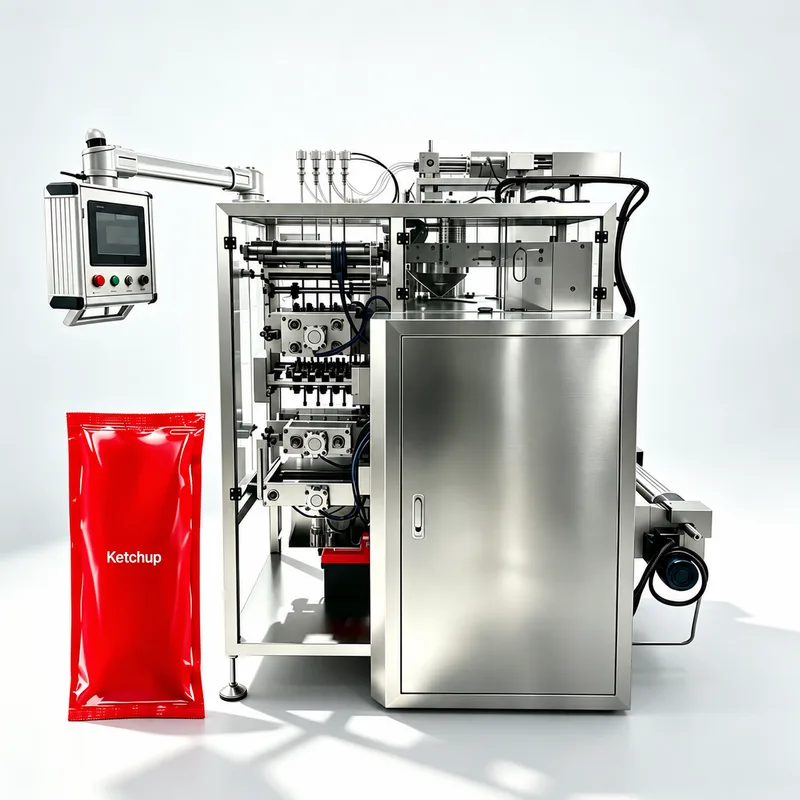
Sauce Sachets
Sauce Four-Side-Seal Sachet Machine
Sauce strings or drips can contaminate the seal area, leading to leaks and rejected sachets. Specify this piston-dosing four-side-seal machine from your sauce, portion, sachet drawing and film.
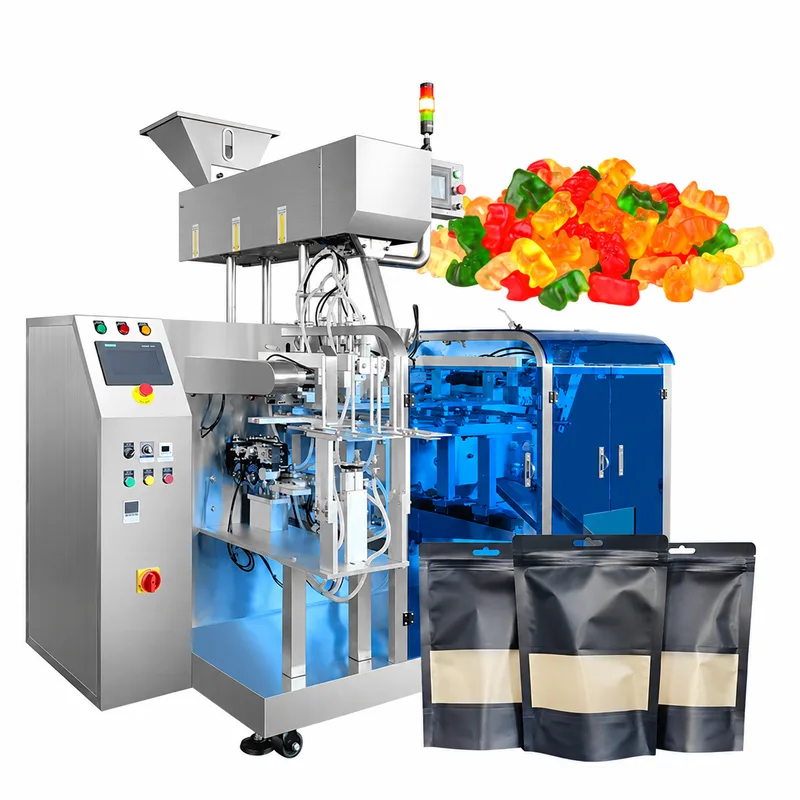
Premade Pouches
Gummy Candy Zipper-Pouch Packaging
Gummies that stick, fold or leave coating on the zipper make on-weight pouches unsellable. Specify this weigher and zipper-pouch line from your coating, piece size, net opening and changeover order.
What to send us
| Item | Why we need it | Example format |
|---|---|---|
| Products, residues and change schedule | Connect this review point to its supporting record and unresolved questions. | Labeled project brief with record references |
| Required cleaning method | Connect this review point to its supporting record and unresolved questions. | Dated document or drawing with revision |
| Contact-part access and removal scope | Connect this review point to its supporting record and unresolved questions. | Annotated photographs plus matching worksheet entries |
| Demonstration, documentation and validation responsibilities | Connect this review point to its supporting record and unresolved questions. | Review log: open item, owner, evidence and status |
We reply within 24 hours.