
Identify Packaging Machine Spare Parts
Buying by appearance can leave you with an incompatible spare. Match machine identity, installed position, markings and modification history before ordering.
The review decision
Start with machine identity, installed position and component markings, then describe the symptom and any local modifications. Compatibility stays pending until the offered reference is reviewed against that evidence. The identification worksheet links a safe context photograph to its matching close-up without inventing a serial or part number.
On This Page
Identify the machine and installed component
Start with machine identity, installed position and component markings, then describe the symptom and any local modifications. Compatibility stays pending until the offered reference is reviewed against that evidence. The identification worksheet links a safe context photograph to its matching close-up without inventing a serial or part number.
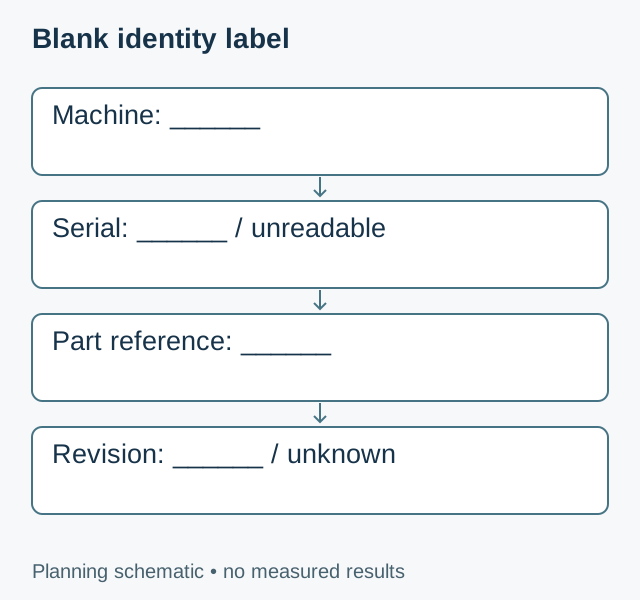
A useful spare-parts enquiry starts with the machine identity and the component's function and location. Give the model or configuration reference, serial information where you have it, and the drawing or parts-list position. Photograph the component and its identification label. A general shot of a whole line rarely holds enough information to pick a replacement safely and accurately.
A part that looks like one in another catalog may not be the same part, so do not order on appearance alone. Sensors, heaters, seals and format components that look alike can carry different specifications. Describe the fault or the reason for replacement, and treat your diagnosis as provisional. The support team can then ask for what is missing before an unsuitable item gets bought.
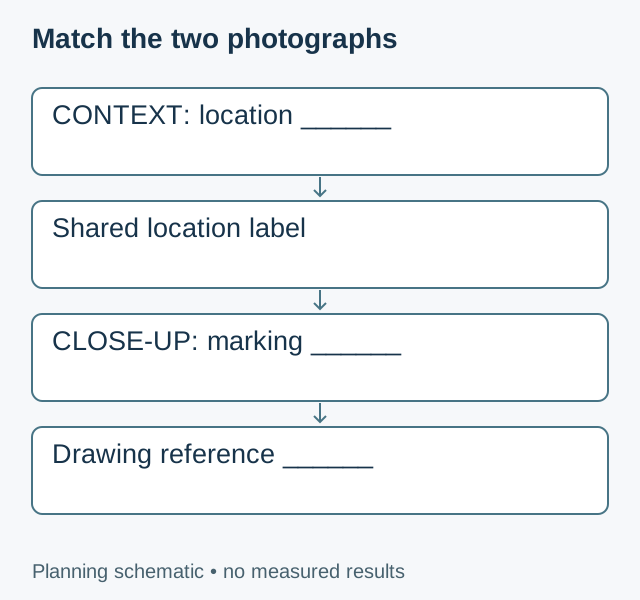
Gather the machine nameplate, the configuration or order reference and the relevant page of the supplied parts documentation. Add a photograph showing where the component sits in the assembly, then a closer image of any markings you can reach. Link the images with a simple label. A lone close-up is hard to interpret, and a distant machine photograph can hide the exact variant that needs identifying.
Say whether the part is still installed, has already been replaced or came from an unlabelled store location. Describe any modifications since delivery. If the original component was substituted locally, the machine's original bill of materials may no longer describe what is installed. Picking the nearest-looking catalog photograph only hides that uncertainty. The support contact can tell you what additional evidence is needed before compatibility can be confirmed.
Give the context photograph and close-up the same descriptive location label, with a different view suffix. Use placeholders while assembling the record; replace them only with information actually read from the equipment or its documents. If the supplied drawing disagrees with the installed component, retain both references and explain the known modification history. State whether the quantity means an individual part or a complete assembly. Mark an uncertain unit as a question for the offer review rather than assuming what comes in a set. The packet should let the reviewer distinguish missing evidence from contradictory evidence without asking purchasing to diagnose the machine.
| Field | Entry | Evidence / owner |
|---|---|---|
| Machine model / configuration | ________ | ________ |
| Serial information or unreadable | ________ | ________ |
| Drawing / parts-list position | ________ | ________ |
| Component revision | ________ | ________ |
| Context photograph label | ________ | ________ |
| Matching close-up label | ________ | ________ |
| Local replacements / modifications | ________ | ________ |
| Observed symptom and checks | ________ | ________ |
| Required quantity and unit | ________ | ________ |
Keep symptoms separate from diagnosis
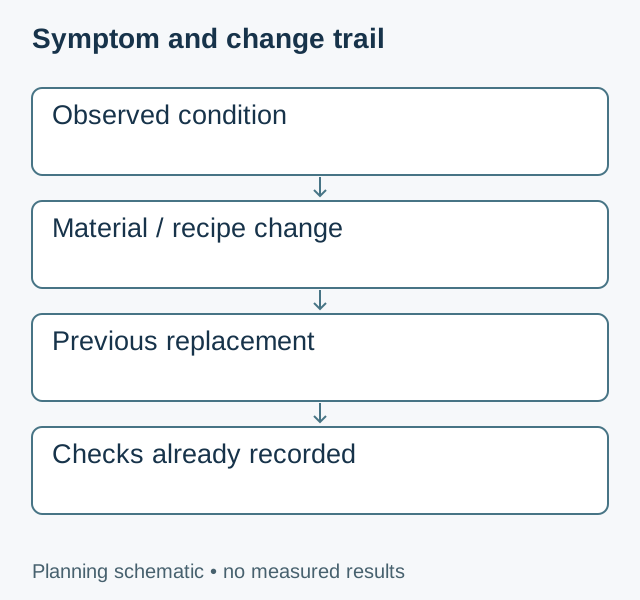
Name the operation affected, such as film tracking, sealing, dose release or a displayed sensor condition. Note when the symptom began and whether it followed a material, recipe or component change. Keep the observed behaviour apart from the suspected diagnosis. "The heater must be defective" is weak evidence. A sequence showing the displayed condition and the checks qualified personnel have already made is much more useful.
If the first replacement did not change the symptom, do not keep swapping parts. Keep the original identification and maintenance record and get an appropriate review. Electrical or control components may need configured parameters or commissioning work, and mechanical format parts may be specific to one bag size. A part that looks alike or has a matching connector is not shown to suit the installed configuration.
Distinguish wear items and format parts
Some components are replaced because of wear or damage. Others change because the product or bag format changes. Keep those two categories apart in the inventory. A forming component for a new bag width is not necessarily an interchangeable spare for the existing format. Link each part to the configuration and approved application it supports.
Find out the storage and handling requirements, and keep the supplier's identification with the item. If a component has a revision, record it in the machine file. For controls or electrical items, compatibility can involve settings or software as well as physical fit. Replacement and recommissioning should follow the equipment documentation. Suitably qualified personnel should do the work.
Review the offer before buying
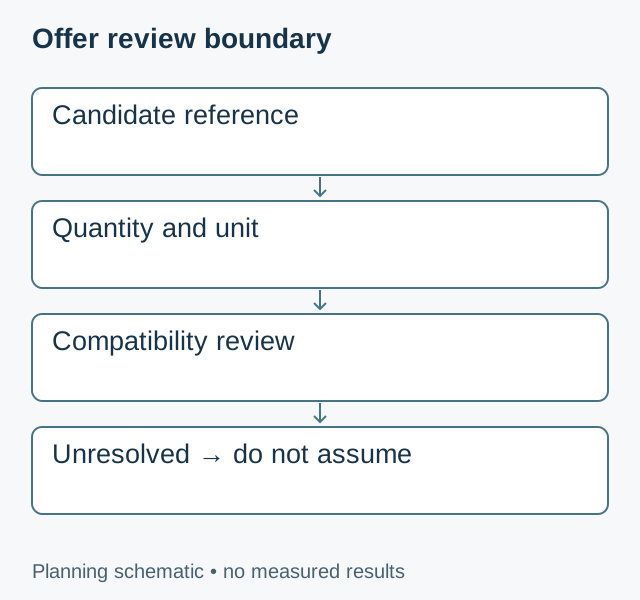
Check the quoted reference against the identification packet, and confirm the supplied quantity and unit. An assembly, a pair and a single component are different order quantities even when the descriptions sound alike. Find out what is included, since seals, brackets, cables or setup documentation may be separate. Confirm whether the proposed item is the original reference, an updated revision or an alternative that has been explicitly reviewed.
Get any installation and recommissioning requirements before you accept the order. Keep availability and delivery information dated and tied to that specific enquiry. An earlier quotation or another customer's spare list is not evidence of current stock. If the component cannot be identified conclusively, mark the order unresolved. A purchasing shortcut should never become an unverified technical approval.
Maintain stock identity and replacement history
Talk with the supplier about how critical each part is, how often it will be used and what replenishment arrangements are confirmed. A general spare-parts page is no source for delivery-time or stock promises, so do not invent them. A sensible local stock list reflects the factory's operating pattern and what a particular failure would cost. It also recognises components that need diagnosis or configuration before replacement.
After a part goes in, update the maintenance record with its identity, the date and the checks made. Keep information on the removed component when it helps explain the failure. The record improves the next enquiry, and the machine history no longer depends on one technician's memory. The goal is traceable compatibility and a controlled return to service. A drawer full of approximately matching parts does not achieve that.
After receipt, label the item with the confirmed reference and the machine or format it supports. Keep the supplier packaging or identification where useful, and follow the documented storage requirements. Record where the item is held. Maintenance staff should find it without opening unrelated stock. Format parts that look alike deserve especially clear labels when several bag sizes share one production area.
After installation, enter the date, the removed and fitted references, the checks made and the person responsible in the maintenance history. Keep the replaced part identified while a failure review is pending. Over time, these records help the buyer decide which items deserve local stock, based on actual use and the cost of delay. They also stop repeated enquiries from starting with the same incomplete photograph and no reliable account of what is installed.
When identification remains unresolved
If markings are unreadable or the machine documentation is missing, say so at the start of the enquiry. Send the evidence you have and ask for the next safe identification step. Do not turn a guess into a purchase reference just to complete an order form. A request that is openly unresolved lets the technical team investigate the installed arrangement. A part number that looks precise but is wrong can send purchasing to a component that has never been reviewed for the machine.
Method and sources
This worksheet reorganizes the existing identify packaging machine spare parts into a project review record. Its fields and diagrams are editorial planning aids, not supplier specifications, measured results or approved procedures. The source is this site’s published guide and its configuration-review scope, revisited on 8 October 2026. The questions below follow the buyer issues identified in the page review; they are not presented as search-volume or customer-enquiry statistics.
Frequently asked questions
What if the machine nameplate is unreadable?
Say which information cannot be read and provide the order, configuration or drawing references you have. Request the next safe identification step; do not invent a serial number to fill the form.
Is a matching connector enough to approve a replacement?
No. Physical fit does not establish electrical, software or configuration compatibility. Keep the proposed substitute pending review against the equipment documents by the appropriate qualified personnel.
How should a previous local replacement be described?
Record the original reference if known, the fitted item and when it changed. Include accessible markings and the symptom history, while keeping uncertain references visibly unresolved.
Should we keep changing parts if the first replacement did not help?
Keep the evidence from that replacement and seek an appropriate technical review. Repeated substitutions do not establish the cause; installation and recommissioning remain subject to the approved documentation.
Explore the Equipment
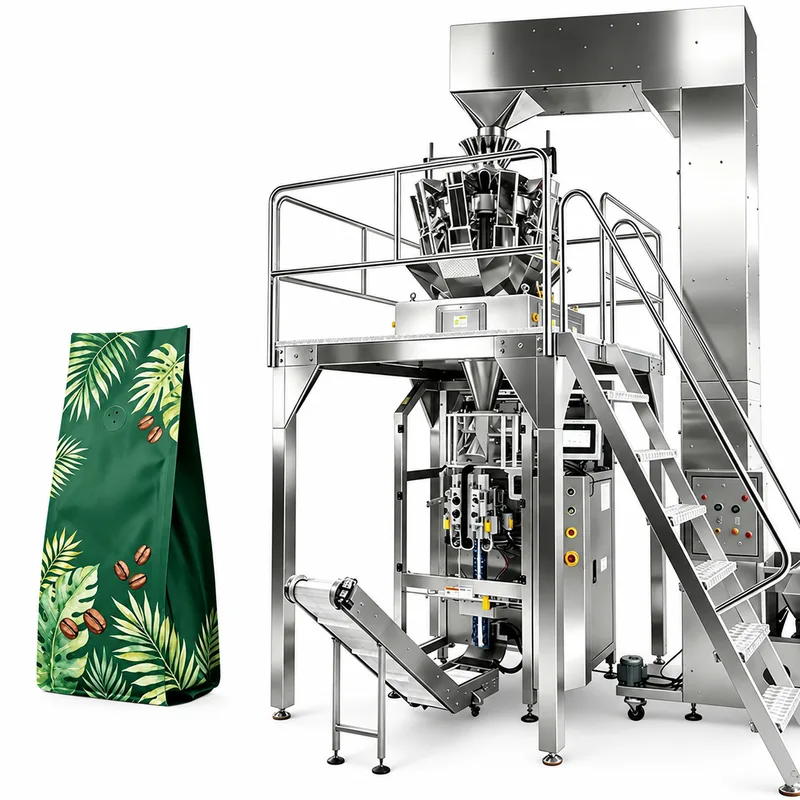
Vertical Form Fill Seal
Coffee Bean Valve-Pouch Packaging
A misplaced or poorly attached degassing valve can spoil a run of coffee bags. Specify this weigher and VFFS valve line from your valve drawing, film, roast and weight.
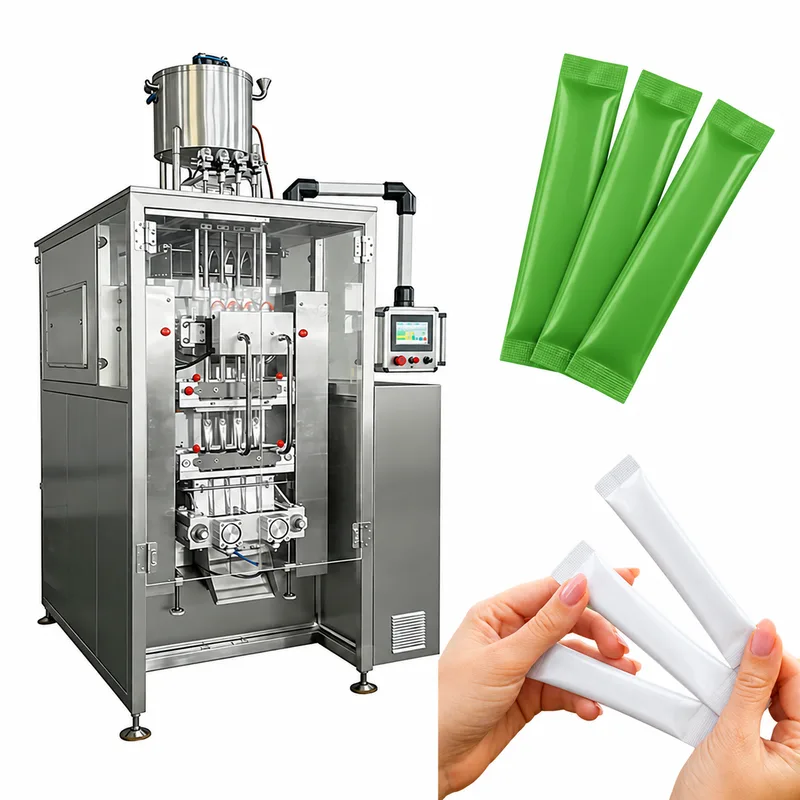
Multi-Lane Stick Packs
Four-Lane Collagen Stick-Pack Machine
Four lanes can hide one lane that under-doses. Specify this four-lane collagen stick-pack machine from your powder density, serving weight and stick size, and sample every lane.
What to send us
| Item | Why we need it | Example format |
|---|---|---|
| Machine identity and modification history | Connect this review point to its supporting record and unresolved questions. | Labeled project brief with record references |
| Drawing reference and component markings | Connect this review point to its supporting record and unresolved questions. | Dated document or drawing with revision |
| Safe context photos and required quantity | Connect this review point to its supporting record and unresolved questions. | Annotated photographs plus matching worksheet entries |
| Confirmed compatibility and delivery terms | Connect this review point to its supporting record and unresolved questions. | Review log: open item, owner, evidence and status |
We reply within 24 hours.