
Packaging Machines / Vertical Form Fill Seal
Coffee Bean Valve-Pouch Packaging
A misplaced or poorly attached degassing valve can spoil a run of coffee bags. Specify this weigher and VFFS valve line from your valve drawing, film, roast and weight.
- Published speed: 25–50 bags/min, subject to weight and valve application speed
- Published power: 4.5 kW, 220 V / 380 V, 50 Hz / 60 Hz
- Options: in-line one-way valve applicator; nitrogen flushing
- Dosing: multihead weighing for whole roasted beans
We reply within 24 hours.
Published Configuration Data
| Packaging Speed | 25 - 50 bags/min (Subject to weight and valve application speed) |
|---|---|
| Power & Voltage | 4.5KW | 220V/380V, 50Hz/60Hz (Configured to regional factory standard) |
These values describe the listed configuration. Output depends on the product, fill quantity, bag and options. Confirm the final specification and trial conditions in your quotation.
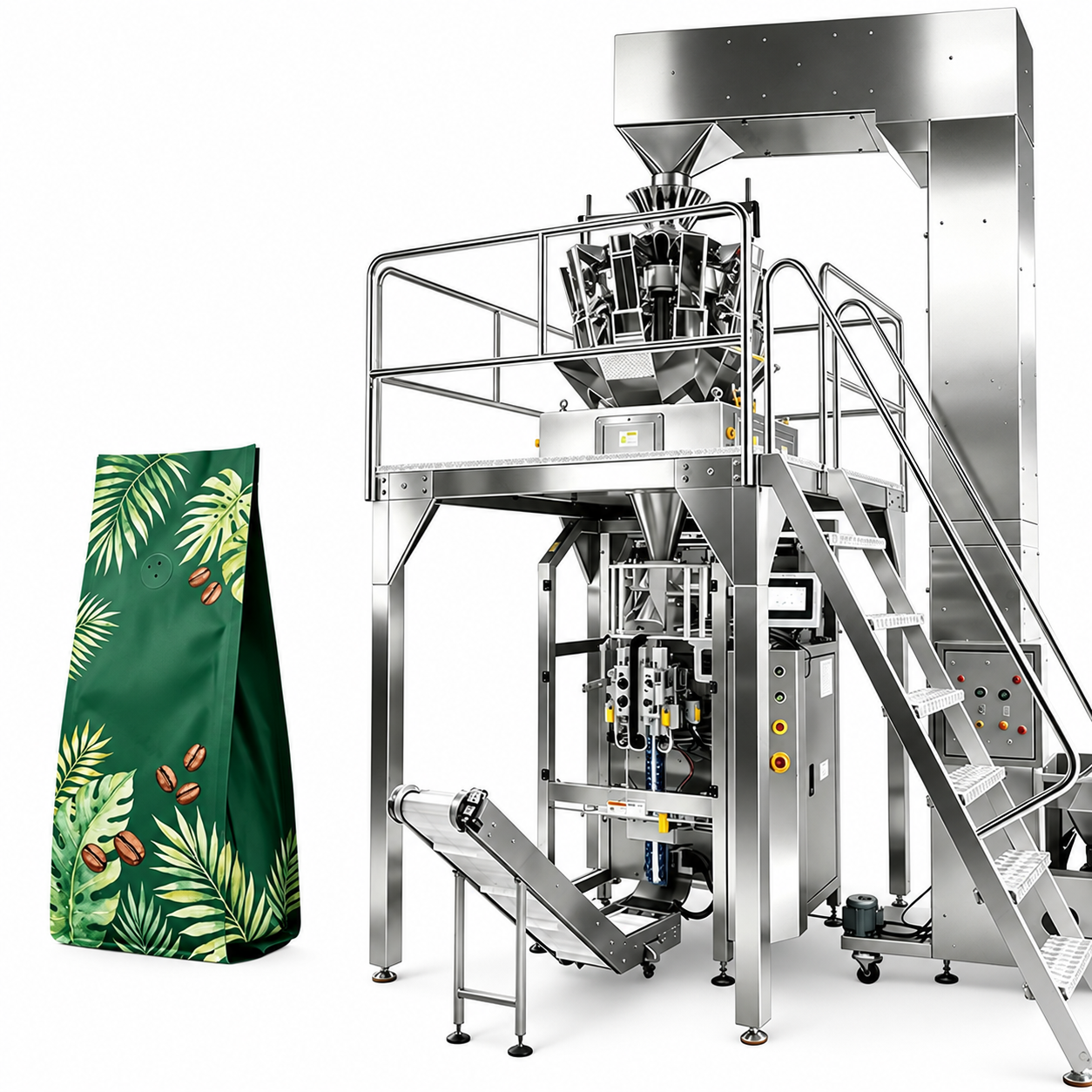
Configuration & Selection
Choose this line when you want the valve applied to roll film before the bag is formed, rather than buying pouches with valves already fitted. The valve cycle is part of the published speed limit, and a valve placed where it interferes with the artwork or seals can cause rejected bags. Provide the valve specification, film sample and target weight, and confirm valve placement and seal quality together. Send details of your roast samples, target weights, valve drawing with its position, film sample and whether nitrogen is needed through the enquiry form or WhatsApp; physical samples are arranged separately.
On This Page
A film-roll route to coffee valve bags
The coffee valve configuration pairs multihead bean weighing with vertical bag making and an optional integrated one-way valve applicator, and it forms the package from a roll of film, doses roasted beans and completes the seals. Our published configuration applies the valve on the film path before bag forming, so its position is part of the film handling. Buying this line is a bigger step than bolting a valve feeder onto an ordinary bagger.
Start from the retail bag you want. Note its overall dimensions, seams, gussets, valve position and target fill. Then ask the supplier to show how that construction is made on the proposed machine. A photographed coffee pouch may have come from a different forming route. The quotation and sample run should name the included forming parts and valve module, so the finished format is clearly tied to the equipment you are considering.
Takeaway: Start from the finished retail bag and ask how the proposed machine makes that exact construction.
From roasted beans to the weighing hoppers
Beans reach the multihead weigher through an upstream feed arrangement. The distribution system spreads them into feeder channels, where portions enter weighing hoppers before a combination is released. Roasted bean size, surface oil and broken fragments all affect this movement. A light roast and a darker, oilier roast will not necessarily behave the same. Both are whole-bean coffee. Supply the normal variation within the range the line will handle.
Check the contact path for retained beans and coffee dust. A hopper that does not fully empty can affect the next portion. Fragments can migrate toward the sealing area. Watch the system through replenishment and stopping, including whatever material is left in the feeder at the end of a run. The supplier should explain the product-contact surfaces and cleaning access selected for the coffee. The goal is simple: a repeatable transfer into the forming tube, with the beans in acceptable condition and the requested net weight.
Takeaway: Test the representative roasts in your planned range through replenishment and stops.
Valve placement and attachment on the film
The valve needs a defined location relative to the printed artwork, longitudinal seam, gussets and final cross seals. Provide the valve drawing and the proposed position on a dimensioned bag layout, along with the handling and attachment requirements from the valve's supplier. The applicator has to be reviewed against that actual component. Valve designs are not interchangeable. Similar outside diameters prove nothing.
During a film trial, check position consistency over consecutive bags and after a stop or roll change. Look at the attachment area, and confirm that forming the film does not fold or load the valve in an unintended way. Find out what happens when a valve is missing or its supply is interrupted. How does the operator identify affected packs? A visible valve on a finished sample only proves it is there. Functional and attachment checks need agreed methods that suit the valve, laminate and expected package conditions.
Common mistake: Accepting a valve applicator because the valve diameter matches, without testing your actual valve design.
Takeaway: Check valve position over consecutive bags and after a roll change.
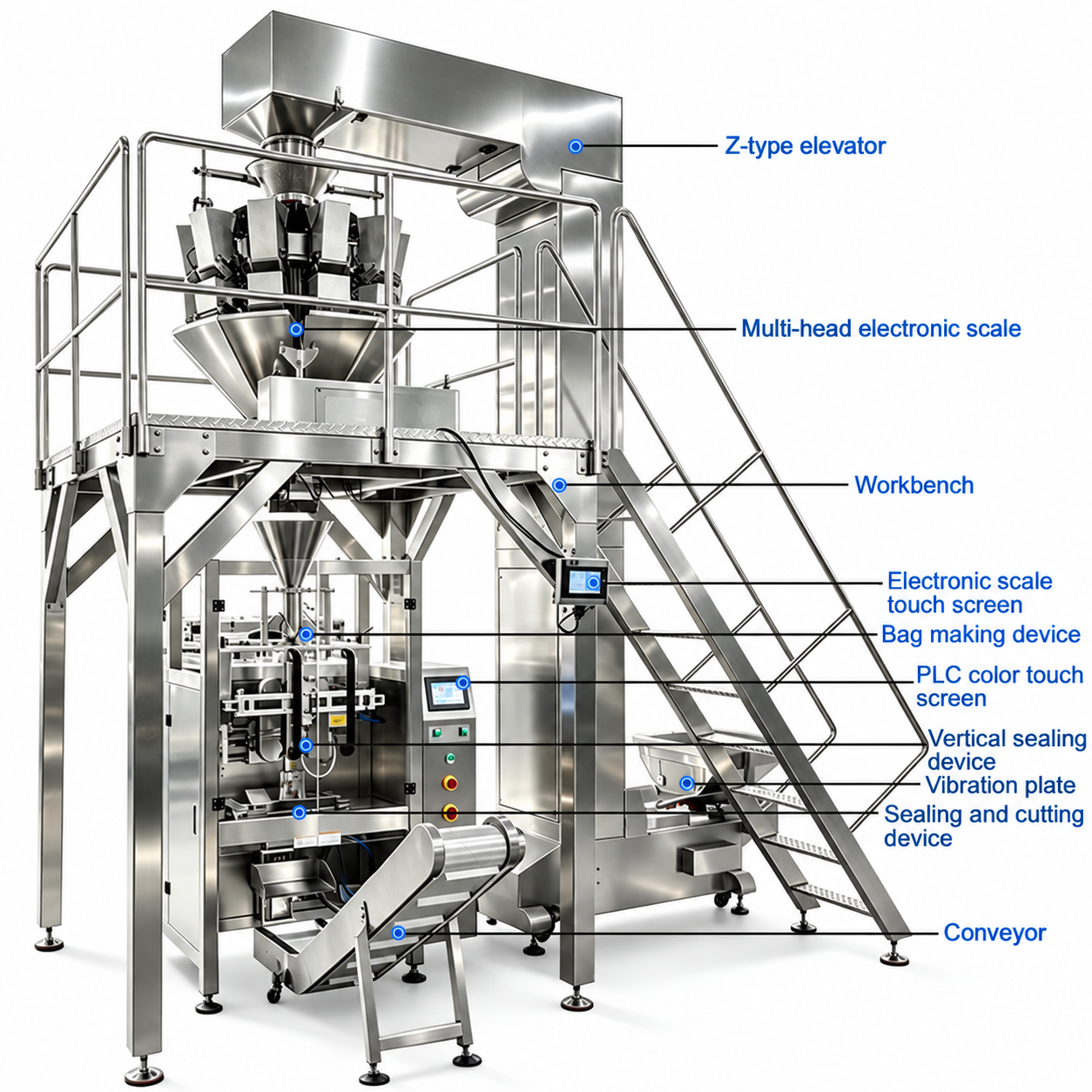
Coordinating the dosing and closing sequence
Once the valve is applied and the film formed, the weighed beans drop through the filling tube into the bag. The closing sequence needs enough time for the full portion, small fragments included, to clear the top sealing area. Larger fills and gusseted formats cut into the space for that movement. Watch the last part of the dose and where the beans sit when the transverse jaws start to close.
The optional nitrogen stage adds another timing and utility interface. Specify it together with the valve and the package condition you want. Neither feature fixes a particular storage life. The gas supply, entry location and control method belong in the proposal. If atmosphere measurements are part of your quality requirement, define how they will be taken on trial packs. Keep those separate from the assessment of valve attachment, since a good result in one area does not prove the other is right.
Takeaway: Assess valve attachment and any atmosphere measurement separately.
Bag styles, laminate and published ranges
The Published Configuration Data table on this page gives a packaging speed of 25 to 50 bags per minute, dependent on weight and valve application speed, and a power figure of 4.5 kW. So the valve cycle is part of the stated limit. You cannot add it without affecting the line assessment. Use the range to open a discussion about your required formats, and ask for a demonstrated operating point for the chosen weight, film and valve, including routine replenishment of the consumables.
A valve pouch may use a pillow, gusseted or more structured geometry. Each needs the right forming and sealing arrangement. Confirm the construction with a bag drawing and a filled sample. Thick laminates, matte surfaces and changes in film stiffness all affect handling around the shoulder and valve station. Submit the actual roll specification rather than a general description such as coffee film. Review seam placement, artwork registration and usable headspace together, especially where the valve takes up a prominent part of the package face.
Takeaway: Ask for a demonstrated operating point with your weight, film and valve.
Evaluating the pack after the filling trial
Inspect trial bags right after production and again according to the storage and observation plan set by the coffee business, and the review should cover filled shape, seam appearance, valve position, bean fragments and how the pack behaves in handling. Freshly roasted coffee can change the condition of the package after filling. Write the time between roasting and packing into the sample information.
A valve is no substitute for a suitable laminate or sound seals. The package needs the valve, the laminate and the seals to work together. If the business needs a shelf-life or aroma-retention claim, arrange a product study for the selected coffee, film and storage conditions. Machine trials supply useful samples and operating records for that work. They cannot establish the claim on their own. Keep enough labeled packs to connect later observations to the roast batch, valve lot and settings used during the run.
Takeaway: Base aroma or shelf-life claims on a product study, not the machine trial.
- Supply the valve specification and its position on a dimensioned bag drawing.
- Test representative roast profiles and record the time since roasting.
- Inspect valve attachment and seal performance separately on labeled sample bags.
Cleaning and changing coffee formats
Coffee oil and fine particles stay on feeder pans, hopper walls and the discharge chute. Establish which parts come off for routine cleaning and what method suits each supplied component. The cleaning plan should include the route above the bagger, because residues there can reappear in later bags. Request a demonstration of access around the support platform and weigher, taking your factory height and working space into account.
When you change pack size, treat the former, film width, bag length, dose and valve position as one connected setup. A stored recipe may restore control settings. It cannot verify that the correct forming parts and valve are fitted. Keep a sample or drawing at the line showing the required format. Check the first bags after a change for valve placement and seam clearance before approving the run. If you roast small batches often, allow time and materials for these checks.
Takeaway: Treat former, film width, dose and valve position as one setup at each change.
Information that makes the proposal specific
A useful inquiry includes coffee samples from representative roast profiles, target pack weights, the bag drawing you want, film details and the valve specification. State whether the valve applicator and nitrogen stage must be in the initial scope. Give the expected sequence of products and the number of format changes in a normal production day, so the supplier can explain the practical change parts and access requirements.
The final quotation should list the feeder, weigher, bagger, valve module, coding arrangement and discharge equipment individually. Get the final electrical and other utility requirements for that combination. The published power and voltage description is not the selected line's connection schedule. Trial records should cover weight, valve placement, seal assessment and any agreed atmosphere checks. Together with labeled finished samples, they show whether the proposed machine makes the coffee package your team intends to sell.
When this does not apply
The published 25–50 bags/min range includes the valve cycle and depends on weight; it is not a result for every format. This configuration makes bags from roll film; purchased pouches with fitted valves need a premade-pouch machine. Neither the valve nor nitrogen flushing fixes a storage life. The published power line is not the connection schedule for the selected line.
Takeaway: Confirm the valve, format and utilities for your selected line in writing.
Frequently asked questions
How is a premade pouch with a fitted valve different from in-line valve application?
A premade pouch arrives with its valve already attached and is filled on a premade-pouch machine. On this configuration the valve is applied to roll film before the bag is formed, so valve supply, position and attachment become part of the bagging cycle and its speed.
If I change valves, can I keep the same machine settings?
Not by default. Valve designs are not interchangeable even when outside diameters match. Review the applicator against the new valve drawing and check position and attachment on trial bags before production.
Does a degassing valve prove the coffee's shelf life?
No. The package needs the valve, laminate and seals to work together, and a shelf-life or aroma claim needs a product study for the selected coffee, film and storage conditions.
What is a good machine for sealing coffee bags?
One that makes your bag construction with your film and valve. For roll-film bags with an in-line valve this configuration is one route; for purchased valve pouches a premade-pouch line is the alternative. Compare both with a bag drawing and a filled sample.
Bag Format Selection
Review the pack requirements for your enquiry. Compatibility is confirmed for the selected equipment and sample.
Planning Guides for This Configuration
These pages cover the system type, trial preparation and project checks that apply to this configuration.
- Vertical Form Fill Seal (VFFS) Machines
- Nitrogen-Flushing VFFS Systems
- Coffee Packaging: Beans, Valves and Stick Packs
- What Determines a VFFS Machine Quote?
- Bag Size and Film Width
- Nitrogen Flushing Checklist
- Coffee Degassing Valve Selection
- Packaging Machine FAT Checklist
- Packaging Machine Utilities Checklist
- Identify Packaging Machine Spare Parts
Request a Packaging Configuration
We reply within 24 hours. Tell us what you need to pack. Leave quantity and output blank if you are still deciding. When you continue, WhatsApp opens with your enquiry written out so you can review it and send it to our team.
Explore the application · Configuration and project support
Related Packaging Configurations
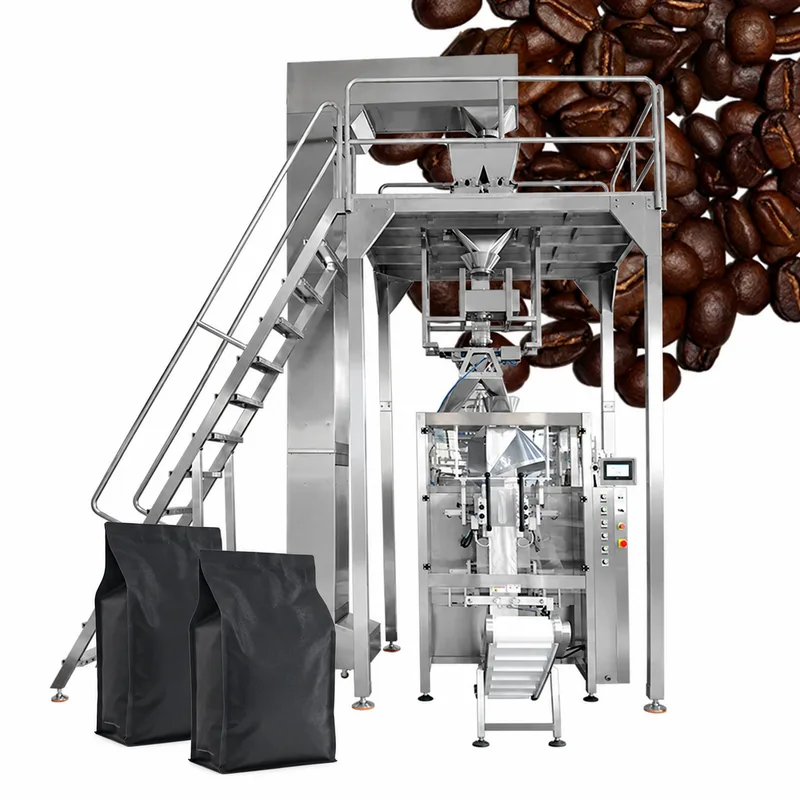
Vertical Form Fill Seal
Quad-Seal Coffee Packaging
A quad-seal coffee bag that will not stand, or skews at the corners, wastes film and coffee. Specify the corners, gussets, base, valve and dosing method from your bag drawing.
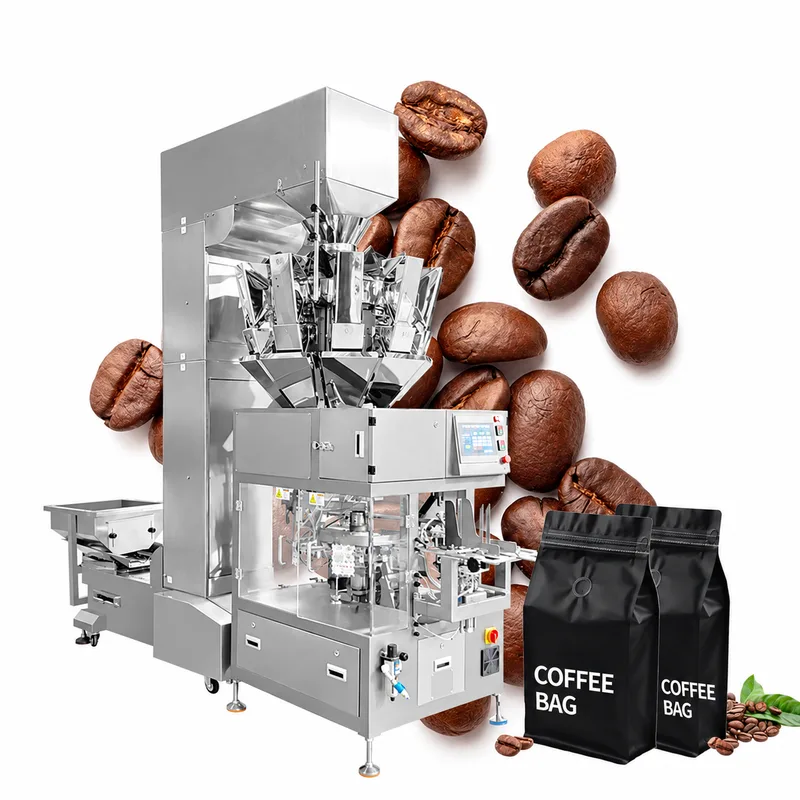
Premade Pouches
Coffee Bean Doypack Packaging
A valve or zipper too close to the pouch mouth catches beans and spoils the seal. Size this premade doypack line for coffee from your actual pouch, bean condition and fill weights.
What to send us
| Item | Why we need it | Example format |
|---|---|---|
| Coffee samples from representative roasts | Bean size, oil and fragments change feeding and discharge. | Labeled bags per roast with the time since roasting. |
| Valve drawing and position | The applicator is reviewed against the actual valve and its place on the bag. | Valve supplier drawing plus a dimensioned bag layout PDF. |
| Target weights and bag drawing | Sets the former, dose and headspace above the beans. | Net weights in g and a dimensioned bag drawing. |
| Film sample or roll specification | Thick or matte laminates change handling at the shoulder and valve station. | Laminate structure and thickness; a production roll if available. |
| Scope options | Valve applicator and nitrogen stage change the quotation. | One line each: valve in or out of scope, nitrogen yes or no. |
We reply within 24 hours.