
Packaging Machine Utilities Checklist
Single-machine catalog values can leave a line unready for startup. Match supplier requirements to site readings and connection owners before installation.
The review decision
Build the utility review around the final equipment list, supplier requirements, readings at each connection, responsibility boundaries and a startup readiness check. Keep requirements, measurements and assumptions separate; the worksheet below is a procurement record, not a supply design.
On This Page
Build the complete connection schedule
Build the utility review around the final equipment list, supplier requirements, readings at each connection, responsibility boundaries and a startup readiness check. Keep requirements, measurements and assumptions separate; the worksheet below is a procurement record, not a supply design.
Utility planning starts from the selected configuration and its documented requirements. Get the electrical, compressed-air and optional gas requirements in a clear connection schedule. Write down the voltage, frequency and other specified characteristics, and do not assume a familiar plug or the existing factory supply will suit. Qualified facility personnel should review the proposed connections against the equipment documentation.
Installed capacity and consumption in a particular operating condition are not the same thing. A catalog power figure may not cover all the connected auxiliaries, or the energy a complete production line uses. Where it applies, list the elevator, dosing system, bagger, printer and any inspection equipment separately. You also need to know who supplies each isolator, cable, pipe and connection component.
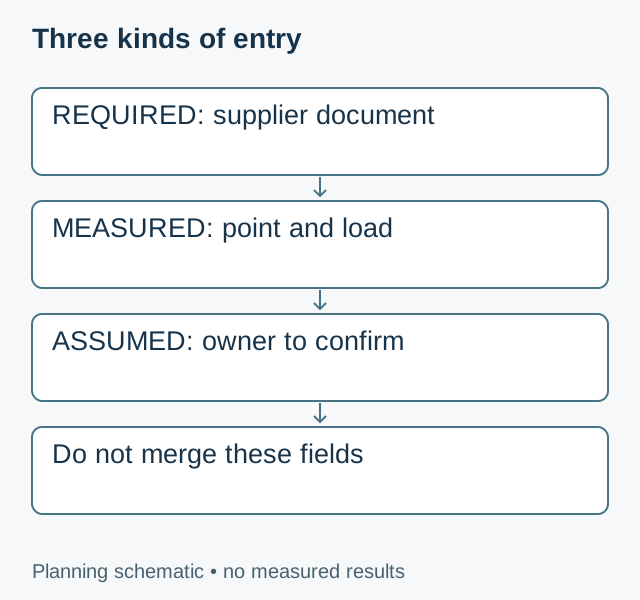
Create one row for each machine or auxiliary that needs a connection. Give the equipment reference, location, required supply information, connection point and responsible party. Mark each value as a supplier requirement, a measured site condition or a provisional assumption. Keeping those categories apart stops an early estimate from quietly becoming the final input for the electrical or air design.
Check the scope around the bagger. An elevator, multihead weigher, printer or discharge conveyor may have separate needs, and the project may include customer-owned equipment as well. Work from the documentation of the approved configuration. A schedule assembled from unrelated catalog pages is unreliable. A catalog figure can raise a question, but it cannot replace the connection requirements for the equipment and options you actually receive.
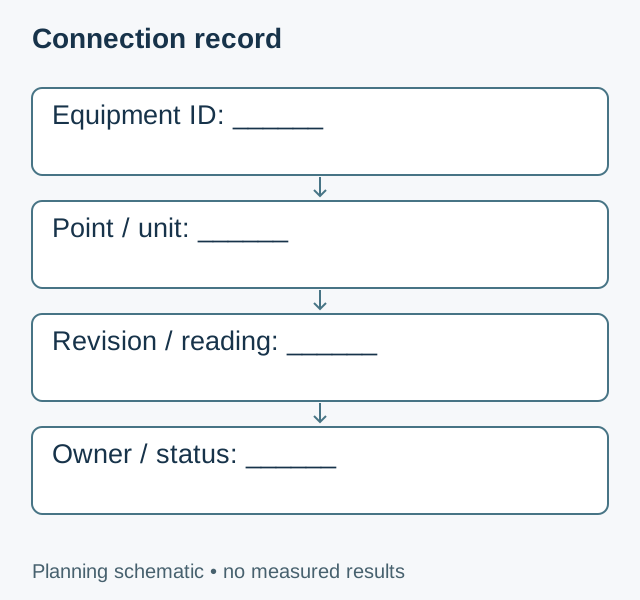
Copy the blank fields for every connection and retain separate entries for electrical supply, compressed air and optional gas. Leave the unit blank until the approved supplier document defines it. A missing measurement should read pending, not zero. Record the instrument or report reference with the reading so a later reviewer can locate the original observation. If the quoted configuration changes, identify the affected rows before replacing the old schedule. Do not overwrite a measured value with a proposed upgrade: keep the current condition and planned action distinguishable. The owner can then close the row against a dated requirement and a corresponding readiness record.
| Field | Entry | Evidence / owner |
|---|---|---|
| Equipment ID | ________ | ________ |
| Connection point | ________ | ________ |
| Supplier requirement and unit | ________ | ________ |
| Source document and revision | ________ | ________ |
| Site reading and unit | ________ | ________ |
| Operating state / measurement time | ________ | ________ |
| Assumption awaiting confirmation | ________ | ________ |
| Factory / supplier owner | ________ | ________ |
| Completion status and evidence | ________ | ________ |
Assign the factory and machine interfaces
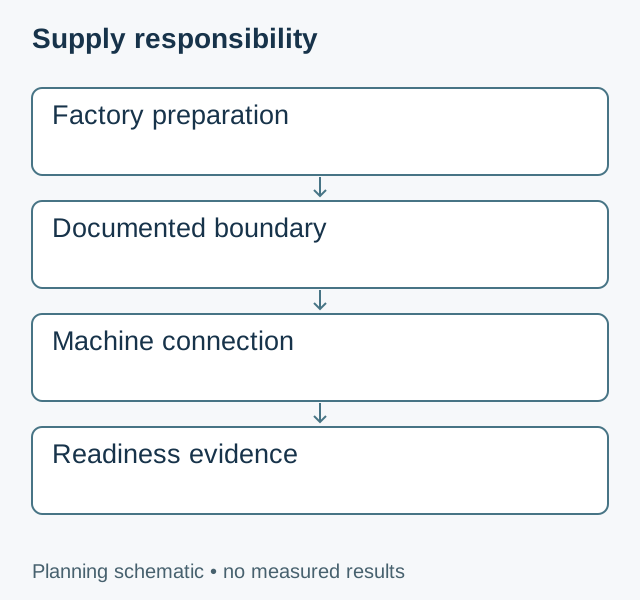
Identify the connection points and what the supplier provides between those points and each machine. Treat compressed air and any gas-flushing option as separate topics, and decide who is responsible for customer-side distribution and preparation. Tie the utility schedule to the equipment list. Otherwise additions can quietly change the installation requirements.
Give each utility connection one named project owner, even when several specialists contribute to its design or installation. Record who provides the final supplier requirement, who prepares the site and who confirms readiness. Keep unresolved values in the shared action list. This ownership record matters most when optional equipment is added after the initial order, because the new requirement can otherwise fall between the machine supplier and the customer's facilities contractor. Close the item only when both the required information and the site work have been reviewed.
Check air and optional gas at the point of use
For compressed air, get the supplier's requirements for quality, pressure and flow at the machine, and record whether the values were measured under load. A good reading on a distant header says little about the condition at the equipment when other factory users are running. Agree how facility and supplier staff will verify the supply during installation.
If gas flushing is included, treat the gas system as its own interface. Confirm the source, the distribution arrangement and the equipment requirements with the responsible parties. A connection on the machine says nothing about gas consumption or product preservation. Keep the gas-related trial settings and package measurements with the configuration record.
If the packaging configuration includes gas flushing, identify the intended gas source, the distribution route and who is responsible for the connection. Find out what settings and package measurements will be recorded during the equipment trial. Bag volume alone does not give the required consumption, and a generator seen in another installation is not necessarily in your quotation. The scope response should list accessories and integration work explicitly.
Discuss the site arrangements with the right facilities and product specialists. A gas connection is an equipment interface. Product preservation, package performance and site handling requirements each need their own defined review. Keep those responsibilities linked but distinct in the project schedule. Otherwise a machine option turns into an unsupported promise about shelf life, or the factory demonstration is taken to have verified the customer's whole gas system.
Record demand alongside each reading
Facilities staff should explain how other equipment uses the proposed branch during the intended shift. Record where supply conditions will be verified and in what operating state. A reading taken while neighbouring equipment is idle answers a different question from one taken at normal plant demand. Keep the measurement context with the reading, not one unqualified number.
For compressed air, discuss the specified quality and the location of any required preparation equipment with the responsible specialists, and settle who supplies and maintains it. Filters, dryers and pipe sizes should not be picked from a general article, because they depend on the approved requirements and the site design. At this stage the buyer's job is to obtain a complete specification and an ownership list so that qualified personnel can prepare a compatible supply.
Close readiness gaps before startup
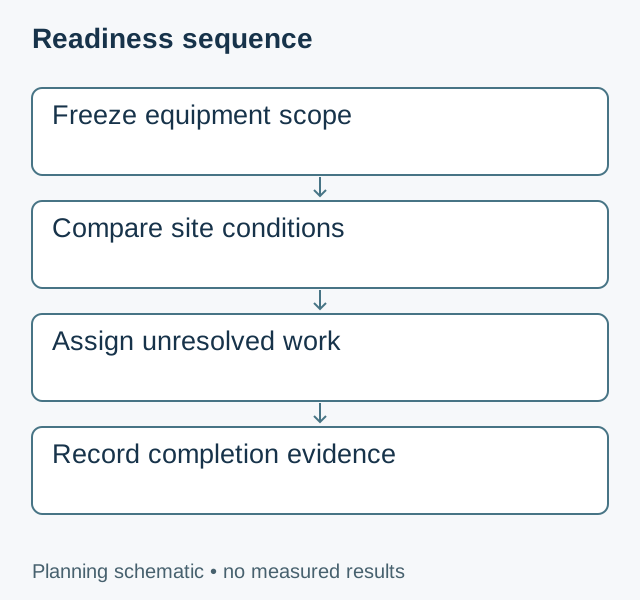
Prepare a readiness checklist with an owner and a completion date for every connection. Include what is needed to confirm installation access and service availability. Where a utility is not installed yet, state the assumption and the date it will be verified. That way the project team can tell an equipment delay from a site-readiness issue.
During commissioning, record the supplied conditions that were actually present next to the operating tests. If performance differs from the factory trial, utilities are one part of the comparison, along with product and packaging materials. Keep the approved schedule for maintenance and future changes. A first machine that once ran well on a circuit or utility branch is no reason to add more equipment to it.
Before the equipment arrives, ask for confirmation that each assigned connection is prepared and its documentation is available. List open actions by location and owner. Photographs can help identify the installed point, but they do not replace the checks qualified personnel must make. The readiness review should expose incomplete work early enough to coordinate the startup sequence so no operating trial is scheduled before the supplies are usable.
During installation, record any deviation from the approved schedule and get the necessary review before it becomes permanent. Keep the final connection information with the machine documents and label changes clearly. When another auxiliary is added later, revisit the shared supply assumptions. The original line running well does not establish that the supply suits a larger connected configuration with different simultaneous demand.
When this checklist does not apply
Review the confirmed utility information as part of site readiness. Electrical and utility installation work has to follow the applicable local requirements and be done by qualified personnel. This checklist collects procurement information. It gives no wiring or pressure-setting instructions. Log any discrepancies so they can be resolved before the agreed startup session.
Method and sources
This worksheet reorganizes the existing packaging machine utilities checklist into a project review record. Its fields and diagrams are editorial planning aids, not supplier specifications, measured results or approved procedures. The source is this site’s published guide and its configuration-review scope, revisited on 8 October 2026. The questions below follow the buyer issues identified in the page review; they are not presented as search-volume or customer-enquiry statistics.
Frequently asked questions
Does catalog power equal whole-line consumption?
No. Keep installed requirements and consumption under a stated operating condition separate. Obtain the complete equipment schedule and identify which auxiliaries each figure includes.
Can header pressure stand in for a machine-side reading?
It does not establish the condition at the proposed connection during plant demand. Ask responsible personnel to record the location and operating state with the machine-side reading.
Is a nitrogen source included with gas flushing?
A machine connection does not establish that a generator, distribution system or accessories are included. Confirm those items in the quotation and assign the interfaces.
Can added auxiliaries use the existing supply?
Reopen the utility review when the equipment list changes. A successful run of the earlier configuration does not confirm capacity for the additional simultaneous demand.
Explore the Equipment

Vertical Form Fill Seal
Coffee Bean Valve-Pouch Packaging
A misplaced or poorly attached degassing valve can spoil a run of coffee bags. Specify this weigher and VFFS valve line from your valve drawing, film, roast and weight.

Sauce Sachets
Sauce Four-Side-Seal Sachet Machine
Sauce strings or drips can contaminate the seal area, leading to leaks and rejected sachets. Specify this piston-dosing four-side-seal machine from your sauce, portion, sachet drawing and film.
What to send us
| Item | Why we need it | Example format |
|---|---|---|
| Site supply information from responsible personnel | Connect this review point to its supporting record and unresolved questions. | Labeled project brief with record references |
| Final configuration utility schedule | Connect this review point to its supporting record and unresolved questions. | Dated document or drawing with revision |
| Connection points and scope boundaries | Connect this review point to its supporting record and unresolved questions. | Annotated photographs plus matching worksheet entries |
| Site-readiness review before startup | Connect this review point to its supporting record and unresolved questions. | Review log: open item, owner, evidence and status |
We reply within 24 hours.