
Nitrogen-Flushing VFFS Systems
Define the gas-flushing option and its trial conditions without confusing machine configuration with a shelf-life guarantee.
On This Page
State the packaging objective
Nitrogen flushing is a configuration option in the snack and relevant coffee range. Decide what you need to evaluate in the finished pack, and how it will be measured. Asking for nitrogen alone settles nothing. It does not define the gas condition, film barrier or seal performance that your particular product needs.
Include the gas supply
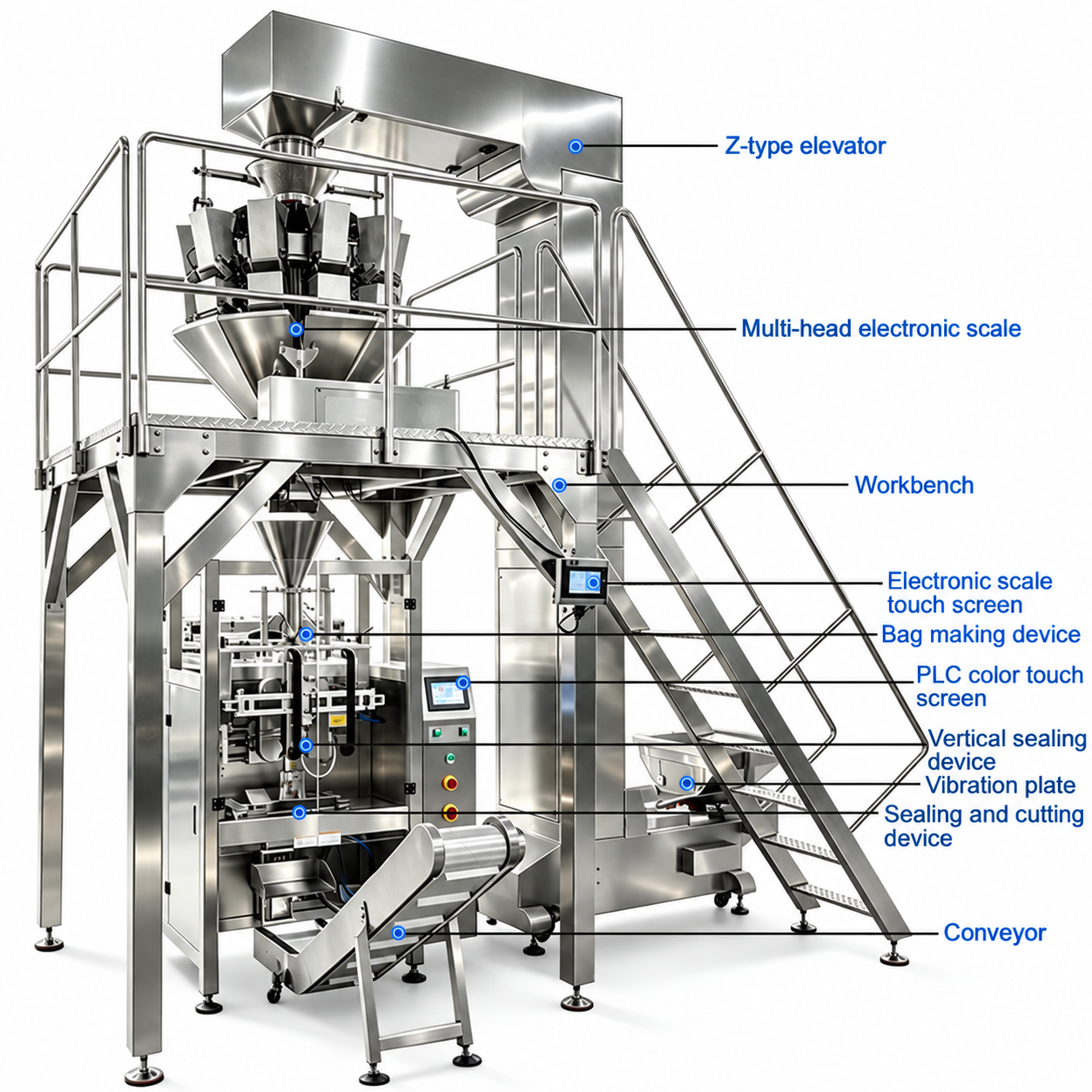
The proposal should identify the supply requirements and the equipment included between the factory source and the bagger. Clarify what the customer must provide and where the connections will be. A packaging machine quotation does not necessarily include a gas generator or all the distribution equipment.
Review volume and timing
Bag volume, product quantity and the packaging sequence all affect the flushing discussion. Use the intended product and film in trials, and record the selected output alongside the gas settings. Changing the bag size or target speed is a configuration change. Review it against the agreed package requirements.
Measure the finished package
Agree sampling, measurement equipment and observation timing before the trial. Review the seals and pack handling as well as any gas measurement. Shelf life depends on the whole product and packaging process. A gas nozzle does not establish it. Neither does an isolated reading.
Specify the purpose of the gas step
The catalog includes nitrogen-flushing vertical configurations for chips and an optional gas arrangement for coffee beans. These examples describe a packaging operation. They are not a universal preservation result. Start by stating what the packaging team intends to achieve and how that will be measured. Product, headspace, film construction, seal integrity and distribution conditions all belong in that discussion.
For a fragile snack, the filled appearance and product protection may matter as much as the gas composition. For coffee, valve selection and the condition of the beans raise further questions. Writing only nitrogen required on an enquiry says too little. Describe the finished pack and how it will be handled. Add the acceptance measurements the responsible product and packaging teams will review. The supplier can then explain what the proposed gas equipment contributes and which outcomes need separate product testing.
Review the gas supply as a line interface
A flushing arrangement needs a defined supply at the machine. The equipment supplier should state the gas specification, connection and operating conditions for the quoted configuration. Assign responsibility for the supply equipment, piping, regulation and any monitoring included in the project. A flushing nozzle in the quotation may not come with the upstream gas system. Installation may be missing too.
Discuss what happens when the supply drops out or leaves the agreed conditions. Your operators need to know whether the machine stops, signals a fault or keeps making packs that must be segregated. Establish that behavior through the proposed control scope and a demonstration, and not from a generic description. Put the connection location in the factory layout. Installation planning then covers access, maintenance and interaction with other equipment services.
Match bag volume to product and headspace
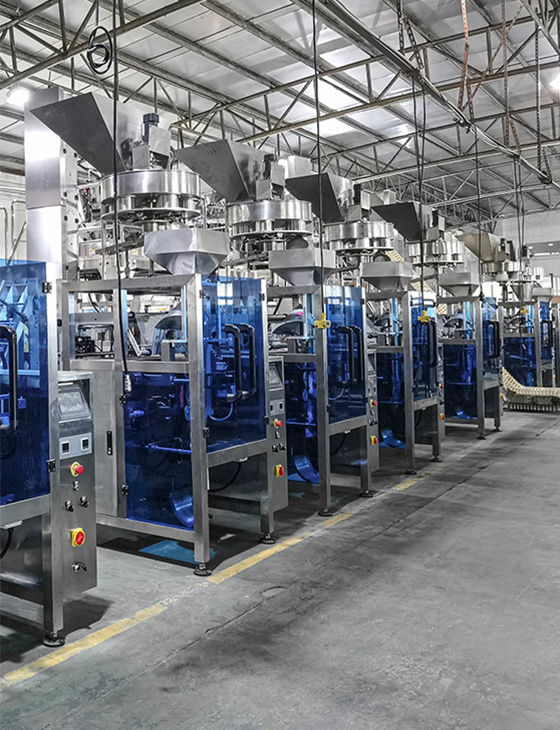
A lightweight snack can fill a large volume. Pack weight alone is an incomplete basis for the gas-and-bagging discussion. Provide the intended bag dimensions, the typical product volume and the finished shape you want. The supplier needs to understand the space through which gas is introduced and the time available before closure. Review the actual filled package and not just an empty-bag drawing.
For chips, look at how product enters the bag during the flushing sequence. The source configuration emphasizes low-drop handling. Even so, the final line needs a trial with your actual snack, and if a change is meant to improve gas displacement, you should check breakage, film behavior and sealing at the same time. Keep those observations together. You need an acceptable package holding an acceptable product. One favorable reading proves neither.
Agree how gas results will be sampled
Before the trial, define the measurement method, sampling position and timing for any headspace-gas checks. A reading taken right after sealing can answer a different question from one taken after a holding period. Your package team should specify the method and acceptance criteria, and you should write them down next to the results.
Samples should be identifiable by product batch, film, machine settings and collection time. If a setting changes during the demonstration, keep the matching samples separate. Include packs made after a normal stop and restart where that reflects the intended operating pattern. One good sample says little about the whole run. A sampling plan should show consistency. It should also flag which operating conditions need more investigation before any broader packaging claim is made.
Investigate seal and gas issues together
An unexpected gas result can come from the flushing sequence, the material specification or the package closure, among other causes. Raising gas flow straight away is a mistake. Examine the complete pack first. Check whether product or crumbs got into the sealing area, whether the film tracked consistently and whether the package was damaged during discharge. The diagnostic order should follow the observations, not a fixed assumption about the cause.
Keep examples of both acceptable and suspect packs, with their production times recorded. The supplier should explain which adjustments were made and what evidence shows an improvement. If the packaging material changes during the test, treat it as a new condition. Otherwise you cannot tell whether a problem came from the machine or from the material. Records also stop repeated trial-and-error settings from turning into an undocumented production method.
Compare the complete operating cost and scope
Nitrogen adds equipment and operating considerations beyond the bagger itself. Request a clear list of supplied components, control functions and excluded site services. Discuss gas use under the demonstrated conditions, and keep any estimate tied to product, bag volume and operating pattern. Include start-up, pauses and format changes when reviewing how the system will be used over a shift.
For acceptance, bring together saleable bag output, product condition, seal observations and the agreed gas measurements. Record what has actually been demonstrated, and what product-validation work remains with the factory. A good proposal pairs a coordinated packaging line with a measurable trial, and it is honest about its limits. Nitrogen flushing alone does not prove shelf life, freshness or a particular distribution capability. Do not buy on that assumption.
- Product, film, bag volume and fill quantity
- Gas supply scope and connection responsibilities
- Desired output with flushing enabled
What changes when the snack recipe changes?
Review the new recipe's bulk volume, fragility, surface oil and particle shape alongside the original package specification. The printed bag and nominal weight may stay the same. The product can still sit in the cavity differently or shed more fragments during filling. Repeat the relevant handling, seal and headspace checks under the intended conditions. Keep old and new product records separate. An established machine recipe is not evidence of an unchanged packaging result. A format review works best when it starts from the characteristics that actually changed, not from the unchanged product category.
Explore the Equipment
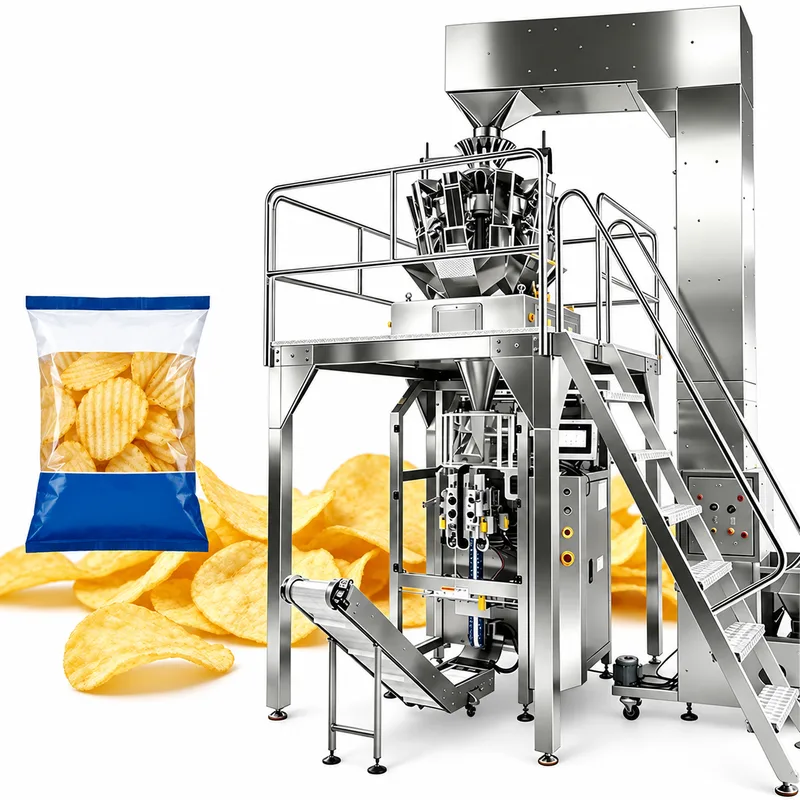
Vertical Form Fill Seal
Chips Packaging with Nitrogen Flushing
An inflated bag can hide broken chips, a short fill or a weak seal. Size this weigher, VFFS and nitrogen-flush line from your chip volume, breakage limit and gas supply.
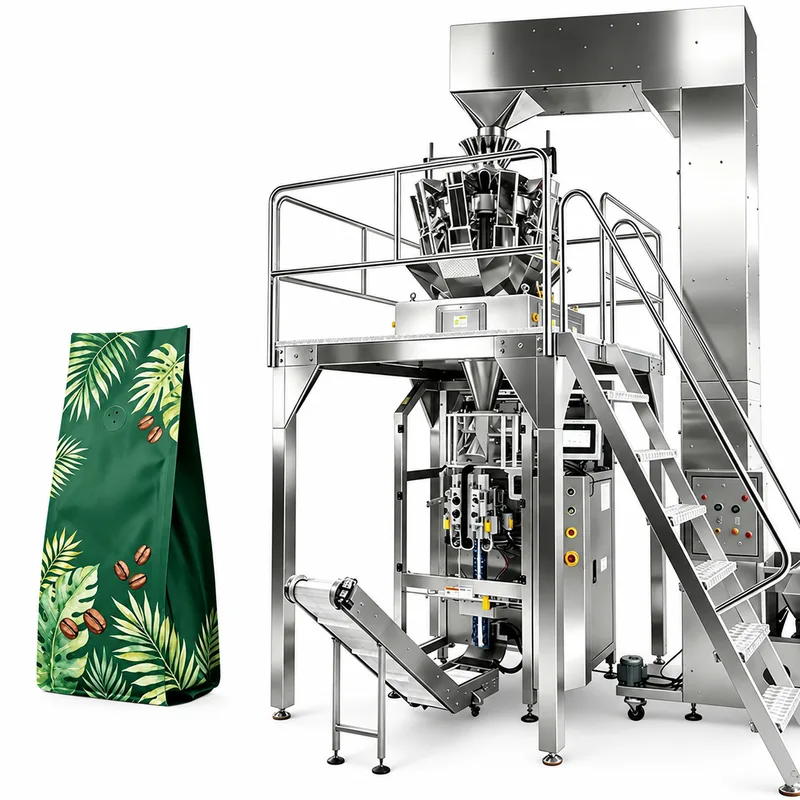
Vertical Form Fill Seal
Coffee Bean Valve-Pouch Packaging
A misplaced or poorly attached degassing valve can spoil a run of coffee bags. Specify this weigher and VFFS valve line from your valve drawing, film, roast and weight.
What to send us
| Item | Why we need it | Example format |
|---|---|---|
| Product, film, bag volume and fill quantity | Identify the evidence or open question for this review point. | Labeled brief entry + photo/drawing/record reference, or TBD. |
| Gas supply scope and connection responsibilities | Identify the evidence or open question for this review point. | Labeled brief entry + photo/drawing/record reference, or TBD. |
| Desired output with flushing enabled | Identify the evidence or open question for this review point. | Labeled brief entry + photo/drawing/record reference, or TBD. |
| Agreed package measurements and sampling method | Identify the evidence or open question for this review point. | Labeled brief entry + photo/drawing/record reference, or TBD. |
We reply within 24 hours.