
Chips & Snack Packaging
A weight-only snack brief can miss breakage and bag-volume limits. Compare product size, occupied volume and incoming damage before choosing the line.
| Input or item | Typical value or source | Why it matters |
|---|---|---|
| Piece size and shape | Buyer sample and photographs | Defines the handling review |
| Bulk density and occupied volume | Buyer observation and filled sample | Connects target weight with bag space |
| Incoming breakage | Labeled incoming product sample | Provides a baseline for transfer observations |
| Bag volume and drawing | Actual pack and dimensioned drawing | Supports filling-clearance review |
| Gas supply and scope | Factory supply sheet; chips nitrogen configuration | Separates the supply boundary from package results |
Choose the route before specifying the equipment
Start with the actual snack and filled bag, including the damage already present before packaging. The published chips nitrogen configuration is the equipment starting point; potato chips and popcorn still need their own handling assessment.
On This Page
What a multihead snack line actually includes
The snack configuration brings together product feeding, combination weighing and vertical bag making. Product is distributed across the weighing system, selected portions are discharged, and the bagger receives them through its forming assembly. Roll film becomes the bag around this product path. With the nitrogen option, gas delivery becomes an additional part of the filling and closing sequence. Each module answers a different question: how snacks arrive, how the portion is selected, how it enters the film and how the finished package closes.
Use that sequence to mark up a proposed layout. A snack processor with an existing delivery conveyor may need a different supply interface from a business loading product from containers. Confirm the connecting height and direction before ordering an additional elevator. Also establish whether completed bags fall into a collection container or transfer onto a conveyor for the next operation.
The document you want is a drawing with these handoff points marked. Request separate scope lines for the weigher, bagger, support structure, product supply, nitrogen equipment and bag discharge. That lets you compare complete snack-line proposals, and you can spot any additional equipment needed at the factory.
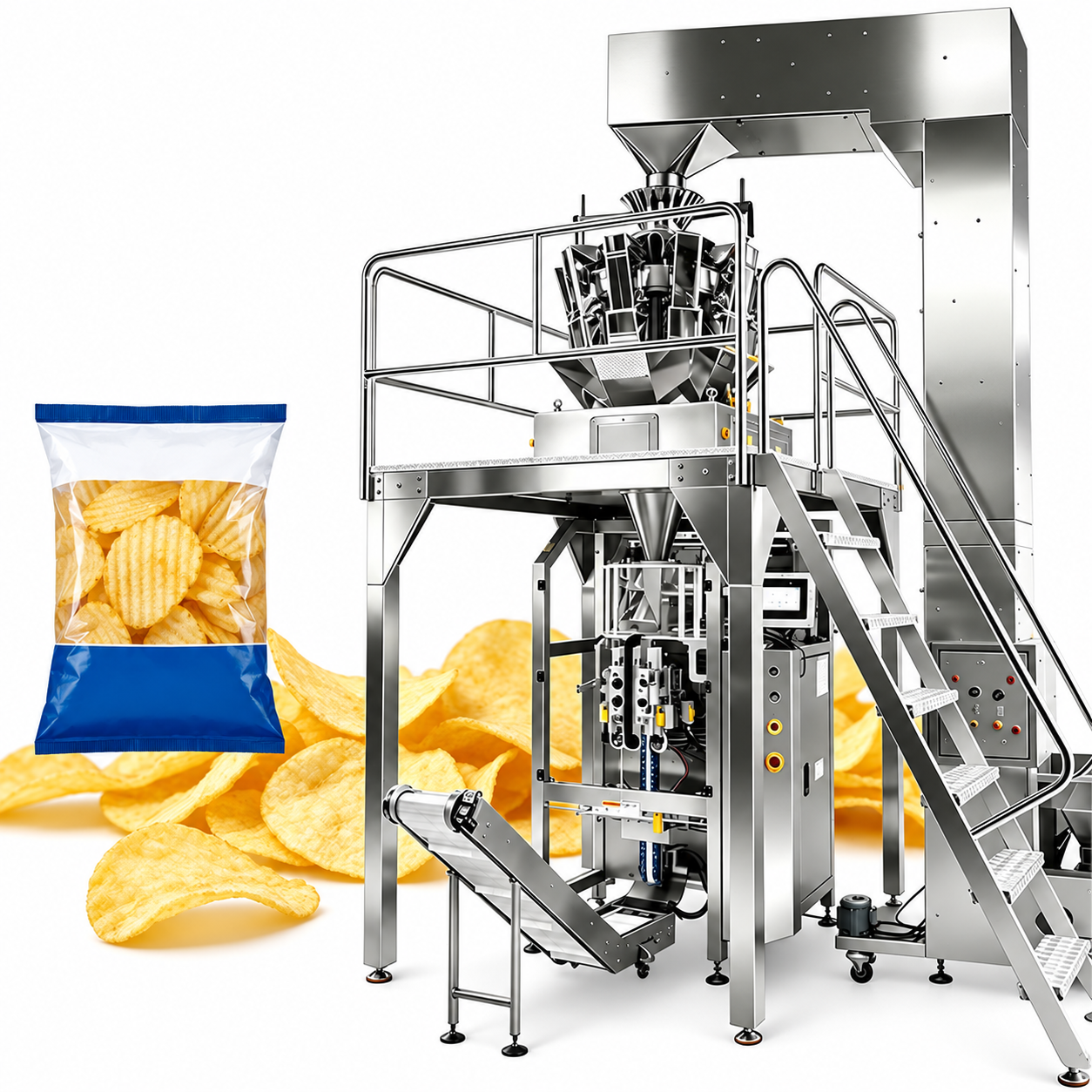
Keeping fragile chips in one piece
Fragile chips and puffed snacks need attention to drop height, hopper shape and product density. A nitrogen-flush configuration is available in the range. Residual oxygen and shelf life depend on the complete product, film and sealing process.
Measurements to send with a snack enquiry
Snack dimensions, bulk density, acceptable breakage, bag volume and nitrogen supply.
Classify the snack before comparing machinery
The word snack covers products with very different packaging behavior. A thin potato chip, a dense banana chip, a puffed extrusion and coated popcorn can fill different volumes and respond differently to transfer even when their target pack weights match. Begin by recording each product's shape, size range, coating and normal proportion of small pieces. Include photographs that show variation within a production batch, not a carefully selected display sample.
The snack configuration in the catalog combines multihead weighing with film-roll vertical bagging and includes a nitrogen-flushing arrangement. That is a starting point for assessment, not a universal setup for every snack. Tell the supplier which products must share the line and which are only possible future additions. Group the current products by handling behavior, so the evaluation can concentrate on real differences instead of a long list of flavor names.
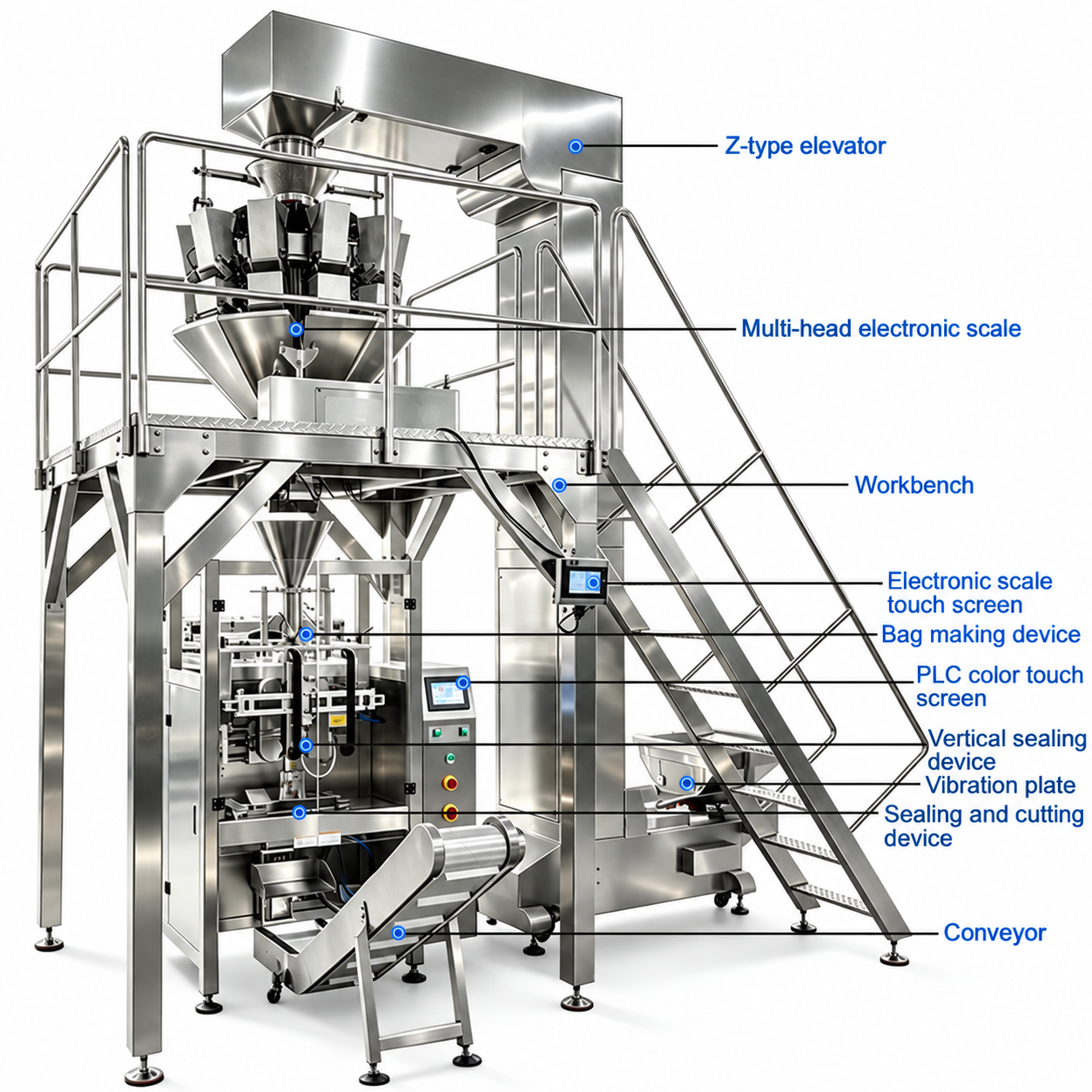
Use occupied volume to describe the package
A target weight is needed, but a bulky snack also needs a practical description of how much space it occupies. Supply a filled package and say whether its height, width and loose appearance are part of the retail presentation. Where available, include bulk-density observations from representative production samples. Measure them the same way each time, so that changes between products mean something.
Consider a hypothetical comparison between a light puffed snack and a denser sliced snack at the same weight. The first may need more space in feeding, weighing and the finished bag. The second may care more about how pieces contact each other during transfer. This example does not establish a machine capacity. It shows why the proposal must relate weight and volume. Ask how the hopper arrangement, discharge path and bag dimensions were chosen for your samples.
Review damage at every transfer point
Draw the complete path from incoming snack to closed bag: upstream conveyor, elevator if proposed, feeder, weighing hoppers, collection area and forming tube. The supplier should show how product moves through each transfer. A low-drop feature at one point says nothing about the other contacts along the route.
Before the trial, agree how to compare incoming and finished product. Define the visible defects that matter to your business and choose one consistent method for examining samples. Collect material before packaging and from finished bags at identifiable stages of the run. The goal is to separate small pieces that were already there from changes introduced during handling. Evaluating only the most attractive bags defeats that. Record the sample size and observation method, so a later configuration change can be compared fairly with the original demonstration.
Connect gas flushing with the complete package
For a snack sold with protective headspace, explain the filled appearance and distribution you want. If nitrogen is requested, ask what equipment is included, what the factory must supply and how the proposed gas arrangement fits the bagging cycle. Discuss the package measurements with your quality team and agree how trial samples will be selected.
Film properties, seals, product condition and handling after packaging all belong in the finished-package assessment. Nitrogen hardware does not by itself establish a residual oxygen result or a storage-life period, so keep those claims apart from a catalog description. When reviewing samples, label the film, fill quantity, operating condition and gas configuration used. If an option changes later, revisit the affected assessment. Earlier package results do not carry over unchanged to every later snack or film.
Reserve enough clear space for sealing
Watch how the last pieces enter the bag and how the sealing area clears before closure. A snack can meet the net quantity and still arrive at the wrong moment, or take up too much space near the seal. The demonstration team should show the complete cycle. They should also keep samples from interruptions as well as from stable operation.
Review the selected forming arrangement with the actual film and bag dimensions. Printed repeat, seal margins, coding area and the retail opening feature should all appear on the package drawing. If the bag is made smaller for visual reasons, repeat the fill-clearance review. If the quantity changes, check the occupied volume again. A format adjustment is a package change with observable consequences, not an isolated number entered on a control screen.
- Product density, dimensions and existing breakage
- Dosing transfer, bag volume and optional gas requirements
- Accepted packs and product condition after discharge
Compare output using acceptable snack bags
Define the production result you want to measure before comparing quotations. Machine cycles, weighed portions and acceptable finished bags are different observations. An integrated line can pause because supply is irregular, product does not release consistently, film needs attention or downstream collection is constrained. A good trial records those interruptions. It does not bury them in one headline rate.
Choose a run long enough to see the agreed events, including replenishment and normal operator interventions, while keeping it practical for the sample quantity available. Record how much product was used, how many completed bags were accepted and what defects led to rejection. The figures describe the tested conditions only. They help show whether the next improvement should concern product feeding, bag volume, settings, packaging material or another part of the proposed snack line.
Plan a snack range without assuming universal changeover
List the contact parts and format parts that may change between the snacks in your range. Discuss access for inspection and the cleaning method your own production process requires. Products with different seasonings or surface oils deserve a careful look at retained material and the proposed cleaning sequence. A stainless frame that looks clean says nothing about cleaning suitability.
Buyers often ask whether a chip line can later package popcorn. The answer depends on whether its feeding volume, handling path and bag format suit that particular popcorn. Another frequent question is the lowest-cost option. Compare the full configuration your actual snack needs, including upstream supply and gas scope, and then assess its demonstrated results. A quotation is easier to evaluate when every included function and every unconfirmed product is stated explicitly.
Use a paired sample board for decisions
Prepare a simple comparison board showing the incoming snack, product collected after the proposed handling route and the completed retail bag. Label each set with the product, quantity and configuration, and put a short description of the agreed damage and appearance observations beside the samples. Purchasing, production and marketing then share one reference, even when their priorities differ.
For instance, a hypothetical larger bag might improve the loose presentation you want while changing carton fit and material consumption. Record those consequences as package decisions, not as an automatic improvement in machine performance. Keep the chosen sample with the project files, so later adjustments can be discussed against an approved physical example instead of memory or promotional photographs.
| Stage | Sample and setup fields | Observation fields |
|---|---|---|
| Incoming product | Sample ID ___; quantity ___; method ___ | Damage ___; appearance ___ |
| After transfer | Sample ID ___; collection point ___; same quantity/method ___ | Damage ___; appearance ___ |
| Finished bag | Sample ID ___; bag and gas setup ___; same quantity/method ___ | Damage ___; appearance ___ |
Method and limits of this comparison
Scope: Chips & Snack Packaging. Configuration records: chips-nitrogen-vffs. This October 2026 revision organizes the published configuration descriptions and the buyer checks discussed on this page. The configuration source links near the opening identify the records behind the comparison. This is a selection aid compiled from published information, not a report of our own trials.
For Chips & Snack Packaging, use the stated parameters only for the named configuration and its original conditions. Missing values remain open; photographs and edited catalog illustrations do not qualify an untested material or establish a storage-life, cleaning or performance result. Keep project-specific evidence with the final quotation.
Frequently asked questions
Can a chip line later pack popcorn?
Review the popcorn’s occupied volume, coating, release behavior and bag format with the intended feeding and weighing parts. A chip result cannot confirm those variables.
Does a faster bagger produce more acceptable snack bags?
Only a complete-line observation can establish that result for the conditions tested. Record supply pauses, retained product, seal rejects and downstream interruptions with accepted bags.
Does nitrogen flushing guarantee shelf life?
No. Hardware scope is separate from evidence for the finished product, film, seals and intended distribution conditions. Ask your quality team to define the package assessment.
Explore the Equipment
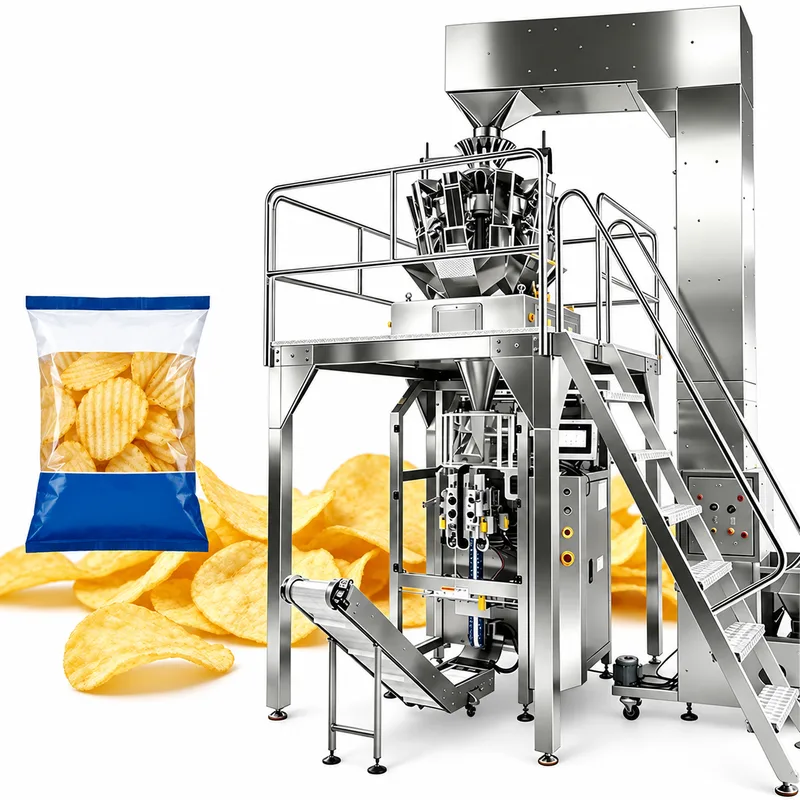
Vertical Form Fill Seal
Chips Packaging with Nitrogen Flushing
An inflated bag can hide broken chips, a short fill or a weak seal. Size this weigher, VFFS and nitrogen-flush line from your chip volume, breakage limit and gas supply.
What to send us
| Item | Why we need it | Example format |
|---|---|---|
| Snack dimensions and condition | Identify size, coating and handling differences | Sample labels and photographs |
| Density and incoming breakage | Connect volume to weight and establish the damage baseline | Observation sheet with sampling method |
| Bag volume and dimensions | Review filling space and seal clearance | Filled-pack photographs and dimensioned drawing |
| Gas supply | Define factory and machine responsibilities | Utility sheet and requested gas scope |
We reply within 24 hours.