
Potato Chip Packaging
Broken chips and trapped pieces can reject an otherwise correct-weight bag. Review incoming damage, portion volume and gas scope before comparing bagger speed.
| Input or route | Material / evidence to provide | Decision to review |
|---|---|---|
| Chip geometry and coating | Representative commercial batch | Include large pieces and normal fragments |
| Incoming breakage | Same-method baseline record | Separate existing damage from later changes |
| Bag volume and film | Filled reference and dimensioned drawing | Review clearance and retail appearance |
| Gas supply | Requested function and utility boundary | Confirm supplied scope and package checks |
| Target bag weight | SKU quantity sheet | Use one quantity for the bag and carton comparison |
Choose the configuration from the product and package
Start with the chip sample and filled bag, then compare the complete transfer and closing sequence. Use the snack configuration to discuss optional gas scope, with one damage observation method from incoming product through the carton.
On This Page
Define the chip sample beyond flavor
Describe potato chips by their actual shape and condition at packaging. Include the size range, thickness variation, curvature, seasoning and the proportion of smaller pieces normally present. Send material representative of commercial production, not hand-picked intact pieces. Explain how the product reaches the packaging line, so the supplier can consider the proposed transfer path from the right starting point.
The catalog identifies a multihead weighing and VFFS snack configuration with nitrogen flushing. What it offers is a handling and bagging architecture, and suitability for your chips still needs evaluation. Establish whether the project covers one chip style or several visibly different products. That helps the equipment team choose meaningful trial samples. It stops a result on a sturdy snack from being presented as confirmed performance on a more fragile chip.
Translate bag appearance into a volume requirement
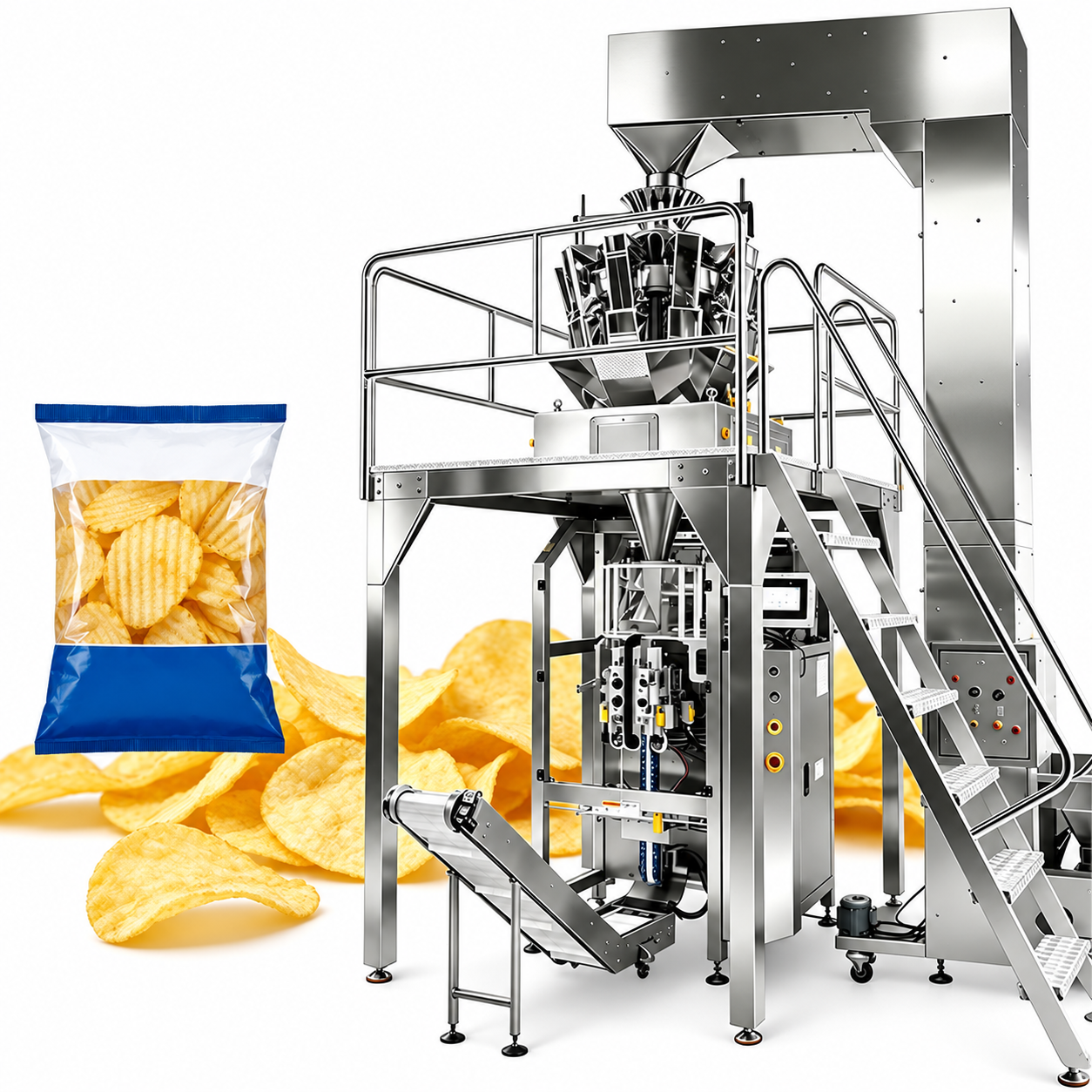
Prepare a filled reference pack at the intended quantity and explain what consumers should see and feel. A chip bag may hold a lot of unoccupied space relative to the product's weight. The package drawing should show external dimensions, seal margins, printed repeat and the intended opening. Talk through the desired presentation with both the film supplier and the equipment supplier before treating it as a fixed machine specification.
If you compare bulk-density observations across chip batches, use one consistent method. The goal is to understand the variation that matters for hopper loading and bag filling, not to build a capacity calculation from a single sample. The proposed feeder, weigher and forming arrangement should allow for the volume of the product you supplied. If the retail team changes the bag dimensions later, repeat the fill-clearance assessment with the same quantity of actual chips.
Establish a useful breakage comparison
Agree what counts as damage for the evaluation. Some buyers care about the share of recognizable whole chips, and others also track smaller fragments or visible seasoning loss. Choose a practical observation method that can be applied the same way to incoming and finished product. Record the sample quantity and collection points so both parties read the result alike.
Examine the full route through conveyors, feeders, weighing hoppers and the discharge path. If extra small pieces appear, work out where the comparison suggests the change happened. Not all damage comes from the bagger, and not every broken piece started in the proposed machinery. The trial should lead to a concrete discussion about transfer geometry, contact points or product supply. A video of gently handled chips is informative only alongside a representative sample and a defined observation method.
| Collection point | Keep comparable | Blank observation |
|---|---|---|
| Incoming chips | Batch, sample quantity and damage definition | Batch: ___ / method: ___ / findings: ___ |
| After transfers | Same batch and agreed collection points | Point: ___ / sample: ___ / findings: ___ |
| After sealing | Same film, target mass and damage method | Bag: ___ / findings: ___ / photo: ___ |
| Carton observation | Agreed arrangement and handling description | Pattern: ___ / findings: ___ / photo: ___ |
Observe clearance before the jaws close
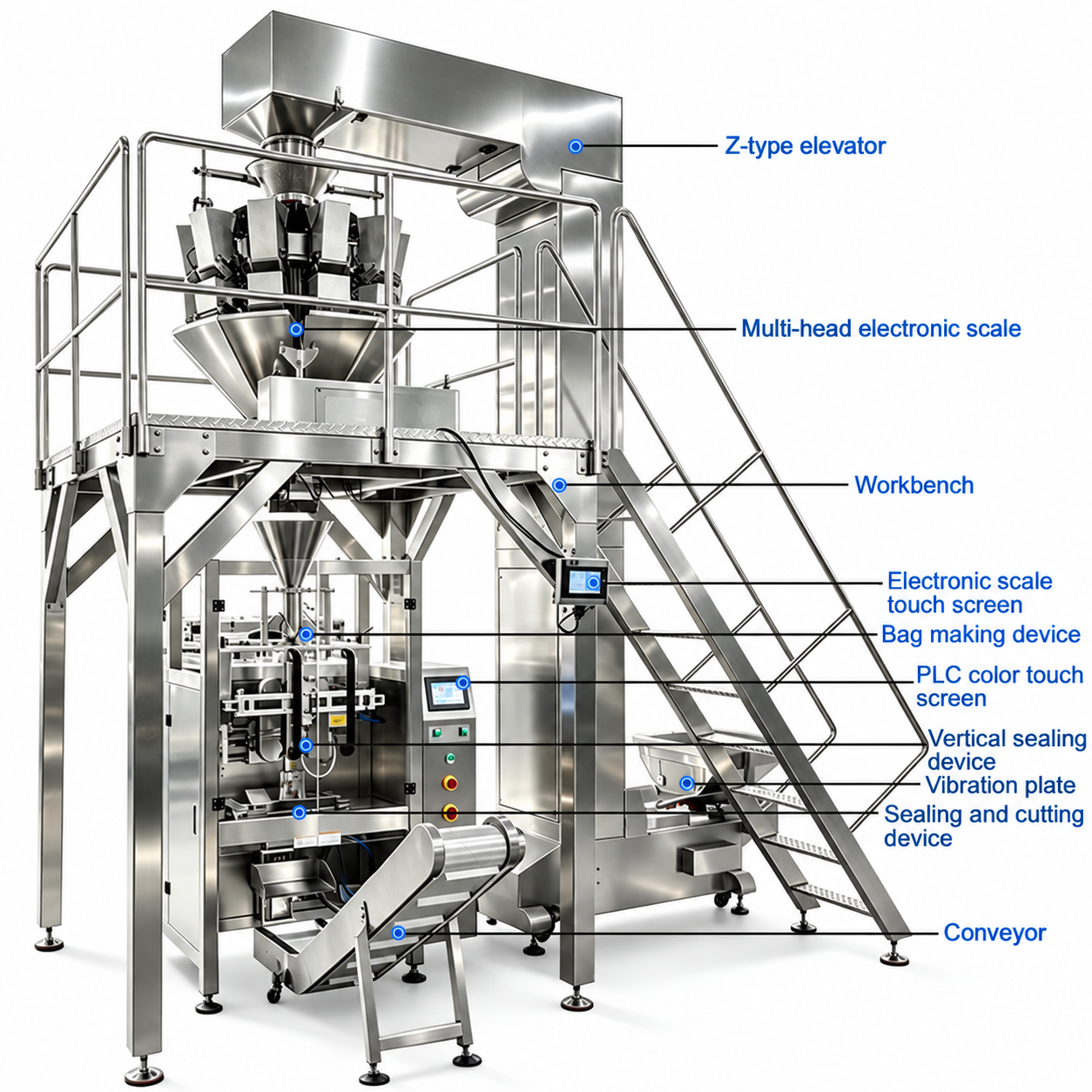
Watch the final part of the filling sequence as closely as the weighing result. Irregular chip shapes can stay near the package opening or arrive after the main portion. Ask to see how the proposed configuration coordinates release and closure with your actual product. Keep samples that show trapped product or distorted bags. Visible evidence settles the discussion.
Assess consecutive packs during stable running and after ordinary interruptions. A seal defect and a crushed chip in the sealing area are related, but they may need different investigation. Record the stage, film and relevant setup for each sample. If the team changes timing or a transfer component, repeat the affected checks before accepting the modification. The aim is a consistent finished package under the agreed conditions, not an isolated bag produced through repeated manual adjustment.
Review nitrogen scope without assuming preservation results
The supplier should say which gas-related components are supplied and which utilities the factory must provide. Describe the filled bag appearance and the package measurements your quality team wants to assess. If the trial uses nitrogen, record the gas arrangement with the film, chip condition, quantity and operating setup. Without those details, finished samples are hard to interpret and a later revision cannot be compared fairly.
A nitrogen connection is not a guaranteed residual oxygen level or shelf-life period. The package's material, seals, product and handling conditions all belong in the assessment. Equipment selection should establish a workable filling and sealing arrangement that the responsible teams can evaluate. If the company changes film construction or bag size, decide which package tests need repeating instead of carrying every conclusion over from the original demonstration.
- Representative chip sizes, coatings and filled samples
- Target weight and actual bag volume
- An agreed product-breakage assessment method
Review the gas-filled bag alongside the shipping carton
The potato-chip configuration combines multihead weighing, vertical roll-film bagging and a nitrogen-flushing option. The package review should therefore cover the snack portion and the intended filled bag shape. A brand may want a visibly inflated retail presentation, but the space finished bags occupy also affects how the planned carton is packed. Bring that carton into the sample discussion instead of judging the bag only while it hangs from the machine.
Prepare a trial set from one agreed chip batch and film. Compare bags at the intended fill quantity, then arrange them in the actual carton pattern. Note whether the arrangement keeps the retail appearance you want during ordinary handling. If the packaging team changes the bag dimensions or the required headspace, bring those changes back to the equipment review before treating the format as fixed.
This exercise does not establish transport protection or a preservation period. What it does give you is a concrete way to connect the gas option, bag volume and secondary packaging. The final brief should show the acceptable filled appearance and carton arrangement as well as the target chip weight. Then everyone is discussing the same finished product.
Keep seasoning differences in the trial matrix
A chip range can change its handling behavior without changing its basic shape. Record the coating and surface condition of each trial product, and say which differences are normal production variation. Find out whether a proposed contact or cleaning arrangement was assessed with the relevant seasoning, not only with a plain demonstration chip.
Use the matrix to prioritize meaningful comparisons. A new flavor name with an equivalent physical sample may need less equipment review than a visibly different coating. But that call should follow observed material information. Include retained product and coating buildup among the recorded findings. That helps the supplier relate the proposed configuration to the range the buyer actually plans to make.
Compare suppliers using the same chip trial brief
Send every supplier the same product definition, target quantity, bag drawing and requested gas functions. Request the proposed upstream feed and downstream collection scope, including access around elevated equipment. Define observed output as acceptable completed bags, and record pauses, rejected packages and interventions separately. Proposals become much easier to compare than they are with nominal machine speeds alone.
Method, sources and applicability
This page reorganizes the published potato chip packaging application and the linked equipment descriptions into a purchasing brief. The comparison is based on public configuration information, not our test of the alternatives. The observation tables are blank records to complete with the actual product; they contain no measured results. The questions below come from the purchasing issues already discussed on this application page, rather than a new search-question survey.
This is a configuration and observation comparison. It establishes no universal breakage limit, residual-oxygen target, transport result or preservation period. Film changes, a different crisp and a revised carton arrangement need review of the affected observations.
Technical Reading
- Snack nitrogen VFFS configuration — Published configuration or planning guidance; reviewed 8 October 2026. review gas and bag-volume scope.
- Fragile-product handling — Published configuration or planning guidance; reviewed 8 October 2026. compare damage at transfer points.
- Nitrogen-flushing checklist — Published configuration or planning guidance; reviewed 8 October 2026. define utilities and package observations.
- Configuration review scope — Basis for the proposed-scope and missing-information response; reviewed 8 October 2026.
- Sample testing arrangements — Confirm availability, sample quantity, handling and costs before shipment; reviewed 8 October 2026.
Frequently asked questions
Why might a faster bagger setting fail to increase usable chip output?
Supply, release, bag volume and sealing clearance can limit the completed process. Count acceptable finished bags with interruptions and rejects recorded, rather than treating the forming setting as a result for the whole chip line.
Why assess the line again for a different crisp?
Piece geometry, coating and incoming condition can change the handling question. Supply that crisp separately and assess transfer damage, release and package clearance using the same observation method.
Does an inflated bag prove low residual oxygen?
No. Visible fullness describes presentation, not a measured oxygen result. The published nitrogen configuration requires review with the actual film, seals, gas arrangement and product. Agree the measurements separately; inflation establishes no shelf-life period.
Explore the Equipment
Vertical Form Fill Seal
Chips Packaging with Nitrogen Flushing
An inflated bag can hide broken chips, a short fill or a weak seal. Size this weigher, VFFS and nitrogen-flush line from your chip volume, breakage limit and gas supply.
What to send us
| Item | Why we need it | Example format |
|---|---|---|
| Chip and coating samples | Represent the actual handling range | Batch labels + incoming-condition photos |
| Damage baseline and method | Compare like samples along the route | Observation sheet with collection points |
| Weight, bag volume and film | Check filling clearance and finished appearance | SKU sheet + dimensioned PDF + filled reference |
| Gas and carton requirements | Define utilities and downstream presentation | Gas scope note + carton-pattern sketch |
We reply within 24 hours.