
Popcorn Packaging
A portion can fit the weight range and still crowd the hopper or bag. Compare loose volume and release for plain, coated and clustered popcorn first.
| Input or route | Material / evidence to provide | Decision to review |
|---|---|---|
| Plain popcorn | Loose target portion and filled bag | Compare occupied volume along the route |
| Caramel-coated popcorn | Representative coating and condition | Observe retention, release and cleaning access |
| Clustered popcorn | Normal cluster variation and bag sample | Review opening clearance without hand arranging pieces |
Choose the configuration from the product and package
The published snack configuration is a starting point for popcorn. Compare the loose portion with feeder, hopper and usable bag space, keeping plain, coated and clustered product differences visible in the sample plan.
On This Page
Compare a loose popcorn portion with the proposed hopper space
Popcorn appears among the snack catalog's stated applications, so the multihead-weighing and vertical-bagging arrangement is a starting point for a popcorn project. Compare the loose portion with the space along its route. A weight specification alone does not show whether the portion fits comfortably through the selected feeder, hopper and bag-forming arrangement.
Bring a transparent container holding one target portion to the equipment discussion. Label it with the popcorn product and the preparation method used, and supply loose product from the same batch. The container gives everyone a visible reference for volume, and the sample lets the supplier judge movement. Repeat the comparison for any coating or piece-size variation that materially changes how the portion looks.
The supplier should say where that portion is divided for weighing and where it comes together before entering the bag. The answer should connect the proposed hopper and discharge choices to the sample in front of the team. This simple physical demonstration tells you more than picking a popcorn machine by its advertised weighing range or the nominal weight printed on a retail bag.
| Review item | Observation basis | Blank record |
|---|---|---|
| Portion sample | Identify plain, coated or clustered product | Product / batch: ___ / target mass: ___ |
| Method | Use the same loose-fill preparation | Container / preparation: ___ |
| Hopper or channel | Name the component being reviewed | Location: ___ / release observation: ___ |
| Usable bag space | Compare filled appearance and sealing region | Bag revision: ___ / remaining clearance: ___ |
Identify the popcorn that actually reaches packaging
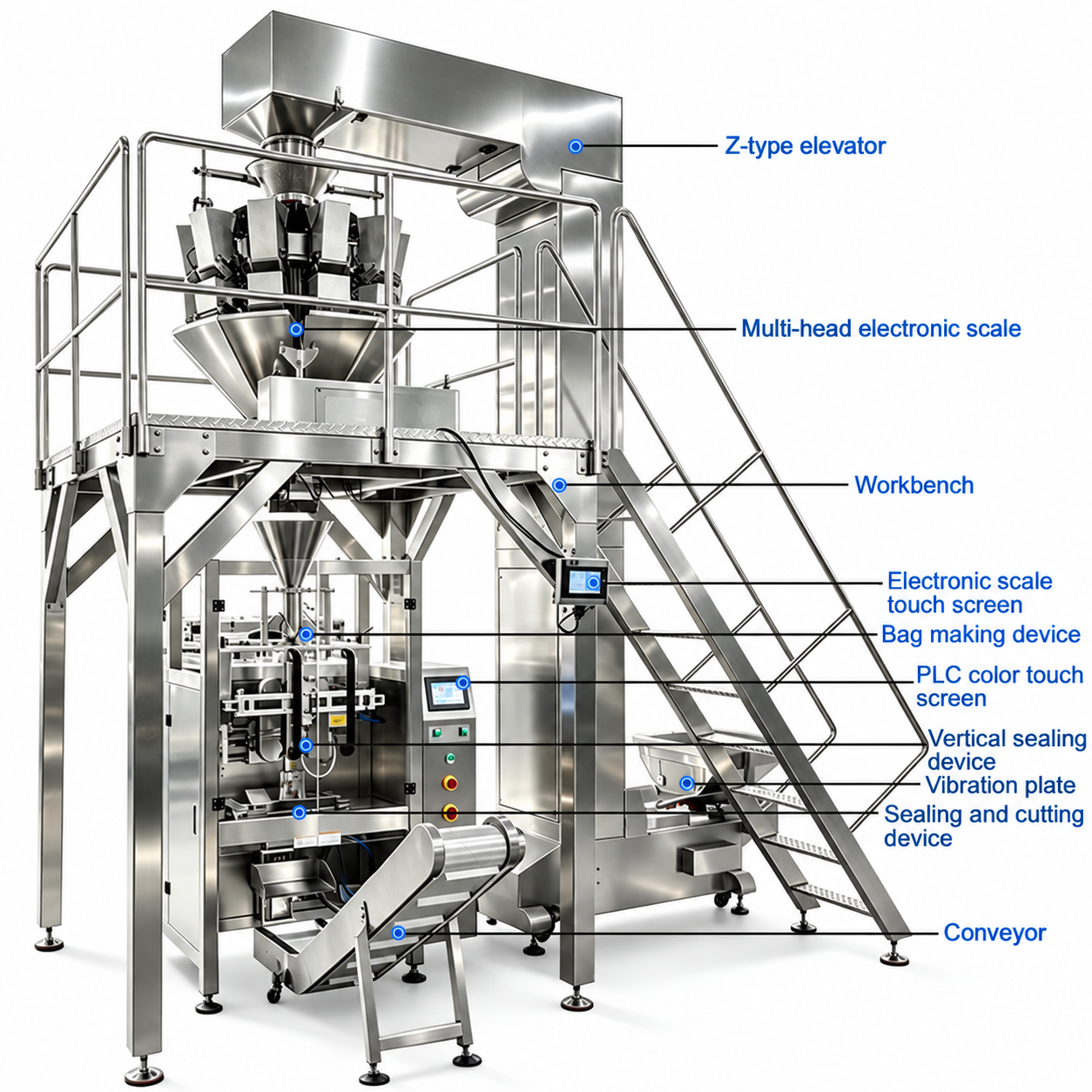
Popcorn projects should separate plain, seasoned, coated and clustered products at the start of selection. Supply samples showing the usual range of expanded pieces and smaller fragments. Describe the coating and the condition at the packing point, and how the popcorn is delivered to the line. A compact sample of another snack cannot show how your popcorn will fill feeding and weighing space.
The snack VFFS configuration gives a basis for reviewing popcorn. This application page does not establish a dedicated popcorn model or a universal setup. Tell the supplier whether you pack one consistent product or switch between several popcorn styles, and which differences affect volume, release and visible appearance. That helps the supplier pick representative trials, so the proposal is not built around the easiest product in a wider range.
Make the bag-volume discussion concrete
Send a filled reference bag and a drawing, not a target weight alone. Record how the sample was filled so its appearance can be reproduced during evaluation. Explain whether the retail pack should look loose, upright or fairly compact. The equipment team needs to judge the requested quantity against the actual usable bag space, including the region kept for closure.
A hypothetical family-size pack of plain popcorn may take up more space than the same mass of a heavily coated product. That difference can matter at the hopper and discharge path as well as inside the bag. Ask how the proposed equipment accounts for the supplied volume. A single convenient cup measurement is not a basis for capacity. Use consistent observations across representative samples, and keep the method attached to the information sent for quotation.
Review feeding without compressing the question into speed
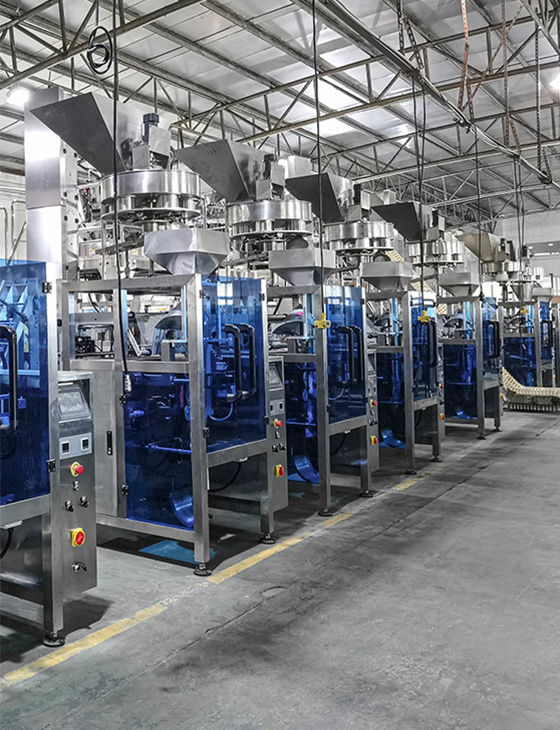
Watch how popcorn spreads across the feeding arrangement and enters the weighing hoppers. Look for irregular supply, bridging and retained clusters. The product may be light, but its occupied volume can still make feeding a central part of the configuration review. The supplier should explain the selected hopper and discharge geometry in relation to the samples provided.
Keep upstream supply in the trial scope. A bagging unit fed carefully prepared portions does not demonstrate the complete proposed line. If a conveyor or elevator is included, review its transfer points and access needs. Where practical, observe the product after each meaningful stage using the same damage criteria. That separates a supply limitation from a release or filling issue and gives purchasing a clearer basis for discussing changes.
Evaluate coatings with their real handling consequences
For coated popcorn, describe whether pieces arrive individually separated or as occasional clusters, and include normal variation in coating coverage and product condition. Watch buildup and release on the proposed contact surfaces through the run. The supplier should identify any surface option, and you should assess it with the actual coated material, not accept an anti-stick label alone.
Where several flavors share the line, talk through the planned product sequence and cleaning method. Find out which parts can be reached for inspection and which changes are needed between the popcorn types supplied. Record a changeover observation only with its boundaries, since a film change is different from removing or cleaning product-contact parts. A general promise of rapid changes is not enough for a short-batch popcorn business.
- Product sample including coating variation
- Bulk density, fill weight and bag dimensions
- Hopper and drop-path review
Examine the last pieces entering the bag
The end of the fill deserves close attention, because light pieces can take up the space needed for sealing. Watch the complete cycle with the intended quantity and bag. Inspect consecutive finished samples for trapped popcorn, distortion and the appearance the retailer expects. A correct weight does not show that the package has the usable space you want or that product reliably clears the closure area.
If nitrogen flushing is requested, include it in the same trial and record the package conditions. Confirm the supply boundary and any finished-package measurements with the responsible quality team. A gas function says nothing about the storage life of plain or coated popcorn. Keep the full film, product, seal and handling assessment apart from a catalog feature description. Make sure the proposed equipment supports the evaluation you intend.
Sample across a complete production sequence
Agree a practical sample plan that includes startup, stable operation, replenishment and a normal pause. Keep packs labeled by stage and product type. Record the amount of popcorn supplied, acceptable output and the interruptions seen. A few selected bags cannot stand for a whole commercial shift. The trial should give evidence about the tested conditions and show what still needs confirmation.
For a range of popcorn products, pick the combinations that behave materially differently. A minor seasoning-name change may tell you less than a change from loose popcorn to a sticky coated cluster. Explain that prioritization in the trial matrix. Review weight, damage, coating retention and package appearance separately. The resulting record should show where one proposed configuration works and where more tooling, package changes or a further demonstration are needed.
Resolve common popcorn purchasing questions
Send the supplier representative popcorn, a filled bag, a package drawing and a realistic production schedule, plus factory height, access and the upstream supply route. The quotation should name the included feeder, weigher, bagging functions and optional gas equipment, with a separate list of unresolved products or formats. That turns a broad popcorn-machine enquiry into a configuration that can be demonstrated and compared on useful terms.
Method, sources and applicability
This page reorganizes the published popcorn packaging application and the linked equipment descriptions into a purchasing brief. The comparison is based on public configuration information, not our test of the alternatives. The observation tables are blank records to complete with the actual product; they contain no measured results. The questions below come from the purchasing issues already discussed on this application page, rather than a new search-question survey.
The snack listing is not a popcorn-only model or a universal setup. Coatings and clusters remain separate trial conditions. A gas function does not establish storage life; the film, product, seal and handling assessment belongs to the responsible packaging team.
Technical Reading
- Published snack configuration — Published configuration or planning guidance; reviewed 8 October 2026. assess popcorn with the actual volume and coating.
- Snack packaging choices — Published configuration or planning guidance; reviewed 8 October 2026. identify the shared weighing and bagging route.
- Fill weight and bulk density — Published configuration or planning guidance; reviewed 8 October 2026. record volume by a consistent method.
- Configuration review scope — Basis for the proposed-scope and missing-information response; reviewed 8 October 2026.
- Sample testing arrangements — Confirm availability, sample quantity, handling and costs before shipment; reviewed 8 October 2026.
Frequently asked questions
Can a chip packaging configuration pack popcorn?
The published snack nitrogen VFFS configuration is a starting point, not a separate popcorn-only model. Assess the supplied popcorn volume, coating, release and bag format before agreeing the selected arrangement.
Can I choose the smallest machine that covers the target weight?
Weight alone leaves hopper occupancy and filling clearance unanswered. Bring a loose target portion and a matching filled bag so the proposed feeder, hopper and discharge space can be reviewed.
Can every popcorn flavor use the same bag?
Check the occupied volume and finished appearance for meaningful coating and cluster differences. Keep the preparation method consistent; a flavor name alone does not establish equivalent handling or package fit.
Explore the Equipment
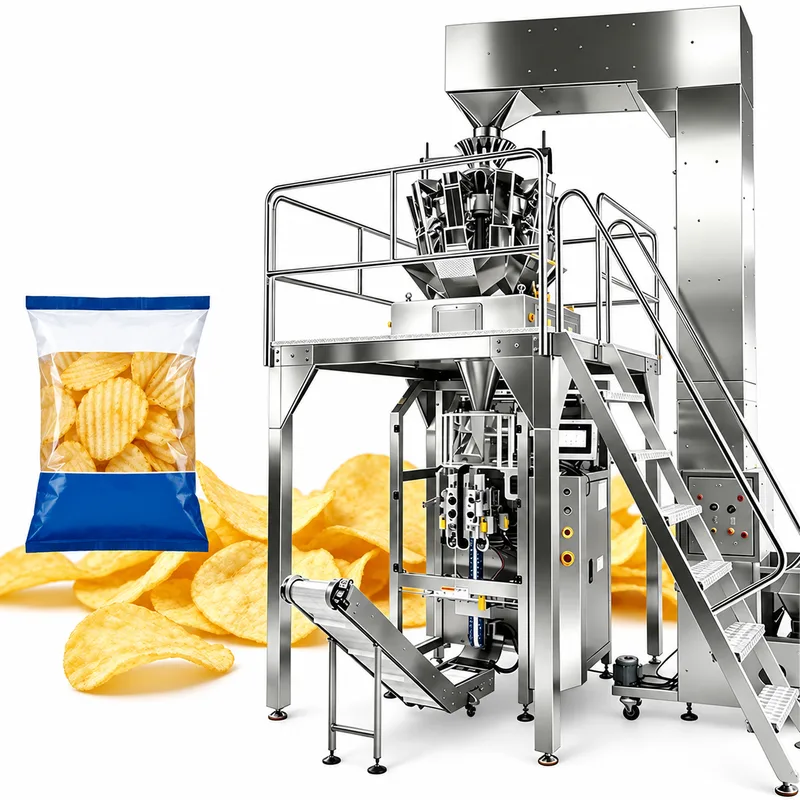
Vertical Form Fill Seal
Chips Packaging with Nitrogen Flushing
An inflated bag can hide broken chips, a short fill or a weak seal. Size this weigher, VFFS and nitrogen-flush line from your chip volume, breakage limit and gas supply.
What to send us
| Item | Why we need it | Example format |
|---|---|---|
| Coating and cluster samples | Define meaningful product variation | Product labels + condition photos |
| Loose volume and target weight | Compare portion space consistently | Observation sheet naming the preparation method |
| Bag and filled appearance | Review usable space and closure | Dimensioned drawing + filled-bag photo |
| Cleaning and supply route | Review access and upstream interfaces | Cleaning brief + feed-layout sketch |
We reply within 24 hours.