
Packaging Machines / Premade Pouches
Coffee Bean Doypack Packaging
A valve or zipper too close to the pouch mouth catches beans and spoils the seal. Size this premade doypack line for coffee from your actual pouch, bean condition and fill weights.
- Route: premade stand-up pouch; retrieval, opening, weighing, filling, top sealing
- Pouch features: zipper and valve arrive fitted by the converter; the line does not install the valve
- Deciding inputs: net mouth opening, zipper and valve position, bean condition, fill range
- Speed and pouch range: none published for this configuration
We reply within 24 hours.
| Product and configuration | Coffee Bean Doypack Packaging |
|---|---|
| Published scope | Route: premade stand-up pouch; retrieval, opening, weighing, filling, top sealing; Pouch features: zipper and valve arrive fitted by the converter; the line does not install the valve; Deciding inputs: net mouth opening, zipper and valve position, bean condition, fill range; Speed and pouch range: none published for this configuration |
| Inputs to provide | Provide the production pouch with zipper, valve, and usable mouth dimensions. Trial representative roast conditions and inspect beans retained in the transfer path. Check seal cleanliness and pouch opening after a stop and format change. |
Configuration & Selection
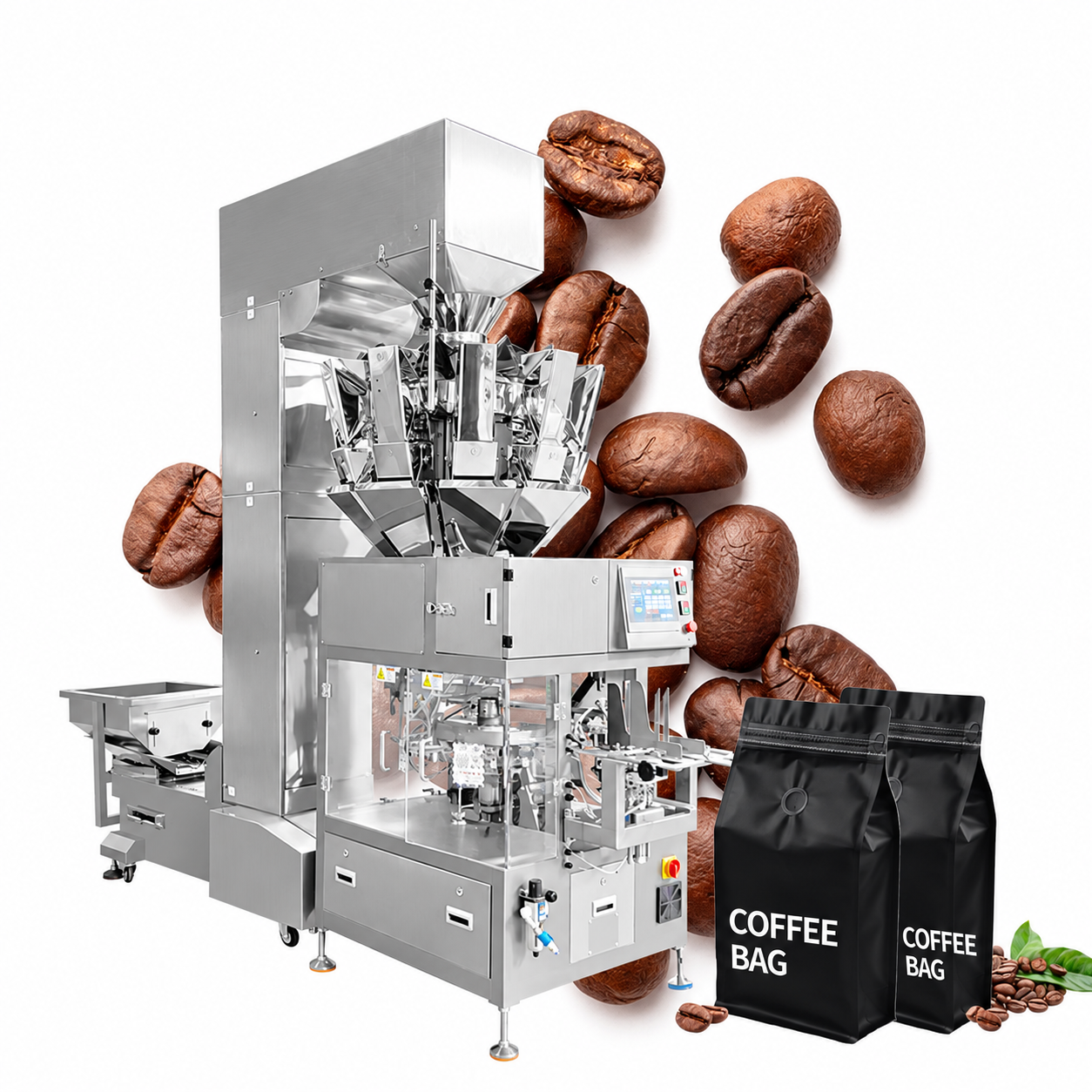
Pick this route when your coffee pouch arrives finished from a converter and the line has to open, fill and close it. The usable mouth, zipper and valve position decide whether beans fall clear; get them wrong and beans catch in the zipper or seal, and the pouch is rejected. Send the actual pouch, including zipper and valve details, so opening, filling clearance and top sealing can be checked. Send bean samples, pouch samples with a structure drawing, zipper and valve positions, fill weights and your daily format changes through the enquiry form or WhatsApp; physical samples are arranged separately.
On This Page
A coffee line built around a ready-made bag
The coffee doypack configuration pairs weighing with the handling and sealing of premade stand-up pouches. The published working sequence starts with bag retrieval and opening, including the zipper where one is fitted. Measuring, filling, top sealing and discharge of the finished pouch follow. The bag arrives as a completed component. Its shape and features come from the pouch converter, and this machine does not form it from a film roll.
With coffee beans, the main problem is matching an accurate dose to a pouch opening that stays clear while the beans fall. A zipper, valve projection or narrow mouth can all get in the way. The published configuration covers this general arrangement, but the weigher, transfer geometry and format tooling have to be chosen for your actual beans and bags. Looks alone will not pick them.
Takeaway: Match the dose to a mouth opening that stays clear while the beans fall.
Review the zipper, valve, and top seal together
Send the actual coffee pouch together with a drawing that locates the zipper, valve, tear notches, gusset and final seal area. A good drawing separates outer pouch dimensions from the usable opening, and it also shows the free space above the zipper. With those dimensions, the supplier can judge where to hold the pouch, how far to open it, and where the filling chute can enter without touching features inside the package.
A valve in the pouch does not mean the machine installs or tests it. Say which features arrive already fitted and which operations you expect the line to perform. After a dry handling cycle, inspect the pouch for distorted zippers, creased top edges or scuffed print. Then repeat the check with beans, because a filled pouch loads the grippers and supports differently. Confirm that opening and final sealing leave the consumer's opening features usable.
Common mistake: Assuming that because the pouch has a valve, the line installs or tests it.
Takeaway: State which features arrive fitted and which operations the line must perform.
Match weighing and transfer to the bean condition
Describe the beans by size distribution, roast condition, surface oil and the amount of loose fragments in representative production, and these traits can affect feeding and release even when the nominal pack weight stays constant. A mixed sample collected across a batch is worth more than a carefully selected handful of uniform beans. Include the smallest and largest portions you intend to pack, so the supplier can review both dosing and available pouch volume.
Find out how the proposed weighing unit discharges into the pouch-handling machine, and whether the transfer chute is easy to inspect and clean. During a trial, follow the beans through each transition. Look for retained product. Look for impacts that create extra fragments. Watch for late beans falling after the main dose. A good weight at the discharge point is not the end of it. The dose still needs a controlled path into the right pouch, so the whole transfer sequence belongs in the acceptance review.
Takeaway: Follow the beans through every transition and look for late beans after the main dose.
Establish headspace with the actual filled pouch
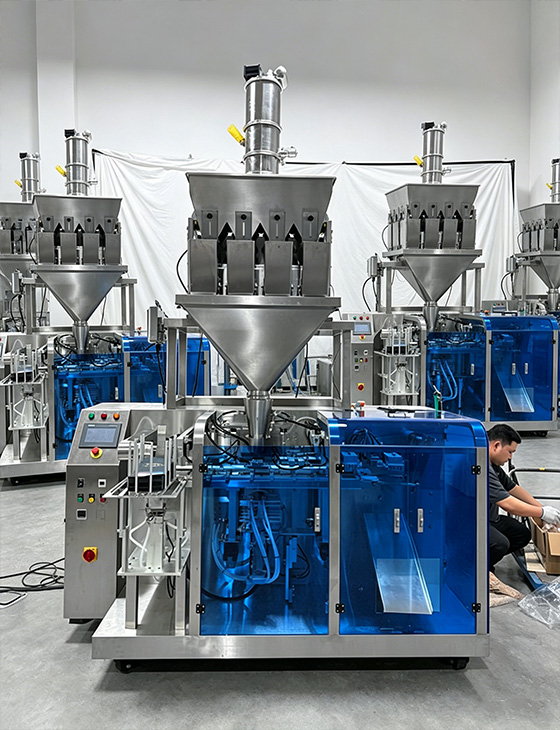
The same mass of coffee does not always fill the same volume across bean types and roast conditions. Before finalizing the pouch size, fill the intended pouch with representative product. See how the beans settle around the bottom gusset, whether the pouch stands as intended, and whether enough free space is left for a clean top seal. A bag that fills easily by hand may still be awkward to fill automatically.
Treat gas handling separately from the basic doypack sequence. Define the package condition you want, the proposed equipment scope and how it would be checked. Gas flushing is not included just because another coffee line offers it. A machine photograph tells you nothing about storage life. Bean condition, package barrier properties, closure quality and your own validated product process all stay part of the finished-package evaluation, beyond the mechanical act of filling.
Takeaway: Fill the intended pouch with representative beans before fixing the pouch size.
Keep beans and fragments out of the seal
Watch the tail end of the bean discharge. The main flow is not the whole story. A few delayed beans or fragments can reach the pouch mouth just as the machine prepares to seal. The supplier should demonstrate the timing between weigher discharge, chute withdrawal, pouch settling and sealing. If the bag mouth narrows before the product has cleared, you may see an occasional trapped bean instead of a constant jam.
Inspect sample pouches along the full top seal and around the zipper entry. Separate defects caused by product contamination from wrinkles caused by poor pouch positioning. Record the bean type and bag lot with each finding. Test corrections in several operating states. Include the first doses after a pause. Otherwise you may accept a setting that only works once the equipment is running steadily on an unusually consistent product feed.
Takeaway: Test seal corrections in several operating states, including the first doses after a pause.
Organize changeovers by package construction
A coffee business may run several bag widths, artwork versions, zipper positions or valve locations. Grouping them only by fill weight can hide different handling requirements. Build a format list with the exact pouch code, its construction and the matching product. Then ask which gripper positions, opening tools, chute components and sealing settings change between formats, and which parts come with the machine.
During a changeover demonstration, look at access around the bag magazine and filling zone. Operators should be able to clear residual beans. They should also identify the right replacement parts without mixing in settings from another bag. Keep first-off samples from each approved format. File them with the setup record. Where two pouches are proposed to share tooling, test both. Similar outside dimensions do not guarantee the same opening behavior. This matters most when an artwork change brings a new laminate or converter.
Takeaway: Build the format list by exact pouch code, not by fill weight.
- Provide the production pouch with zipper, valve, and usable mouth dimensions.
- Trial representative roast conditions and inspect beans retained in the transfer path.
- Check seal cleanliness and pouch opening after a stop and format change.
Evaluate the complete handling cycle in the trial
A representative coffee trial includes pouch replenishment, a product refill, a planned stop and restart, and a change to another intended format where practical. Record the acceptable package count, fill results, zipper condition, seal appearance and product left in the transfer path after stopping. Find out how the machine reacts to a missing pouch or one that does not open fully. Any detection feature should be demonstrated on the quoted configuration.
For the final acceptance run, use the agreed packaging material and production beans. Swapping in an easier pouch or a different granular product proves little. Video helps document the bag opening and filling sequence, but pair it with retained samples and written observations. If production stock is unavailable and the trial uses a substitute material, mark that limitation clearly. The report should then say exactly which checks must be repeated before the format is accepted for routine production.
Takeaway: Run the final acceptance with the agreed pouch and production beans.
Prepare an inquiry that separates included options
Send pouch samples, bean samples, the fill weights you want, how many format changes you make each day, and the installation footprint you have. Give the height and position of any existing feed equipment, and explain how finished pouches will be inspected or packed into cartons. Name the product-contact access you need and any interfaces to a checkweigher, coding unit or other downstream equipment, and these requirements set the line boundary before you compare quotations.
The proposal should separate the weighing system, premade-pouch machine, transfer parts, format tooling and optional equipment. Any quoted performance should be tied to a named bean and pouch combination with a documented test basis. What you want in the end is a configuration that retrieves, opens, fills and closes your actual coffee pouch consistently under agreed conditions. Extra bags, valves and product blends should stay individually reviewable, not hidden behind a broad claim that every doypack is compatible.
Pouch features versus machine operations
Keep two columns apart when you review a doypack proposal, following the zipper, valve and headspace sections above.
Supplied with the pouch by the converter: the stand-up shape, bottom gusset, zipper, degassing valve, tear notches and print.
Performed by the line: retrieving and opening the pouch (including the zipper where fitted), weighing and filling the beans, top sealing and discharge. Gas flushing is a separate scope item, included only when quoted.
For each format, record the pouch code, the net mouth opening measured on an unused pouch, and the finished shape after filling: whether it stands as intended and how much free space remains above the beans.
Takeaway: If an operation is not in the second column of the quotation, assume the line does not perform it.
When this does not apply
No speed, pouch-size range or fill range is published for this configuration. The line does not form pouches from film, and it does not install degassing valves. Gas flushing is not included unless quoted. Storage life depends on bean condition, barrier, closure and your validated process, not on the filling machine.
Takeaway: Confirm each pouch, bean and option combination in the quotation.
Frequently asked questions
If my pouch has a valve, does the machine fit the valve?
No. On this configuration the valve arrives already fitted by the pouch converter; the line opens, fills and seals the pouch. Say which features arrive fitted and which operations you expect the line to perform.
Can pouches with the same outside dimensions share one setup?
Not by assumption. Similar outside dimensions do not guarantee the same opening behavior, especially when stiffness, gusset or zipper position differ. Test both pouches before agreeing to shared tooling.
What should be rechecked when I change pouch supplier?
Opening behavior, mouth clearance, zipper position and the top seal, because a new converter or laminate can change how the pouch picks up, opens and closes. Keep separate setup records by pouch code until trials confirm a common recipe.
What is a doypack machine?
A machine that fills and closes premade stand-up pouches. On this configuration it retrieves each pouch, opens it, fills a weighed dose of beans and seals the top; it does not form pouches from film.
Bag Format Selection
Review the pack requirements for your enquiry. Compatibility is confirmed for the selected equipment and sample.
Planning Guides for This Configuration
These pages cover the system type, trial preparation and project checks that apply to this configuration.
Request a Packaging Configuration
We reply within 24 hours. Tell us what you need to pack. Leave quantity and output blank if you are still deciding. When you continue, WhatsApp opens with your enquiry written out so you can review it and send it to our team.
Explore the application · Configuration and project support
Related Packaging Configurations
Vertical Form Fill Seal
Coffee Bean Valve-Pouch Packaging
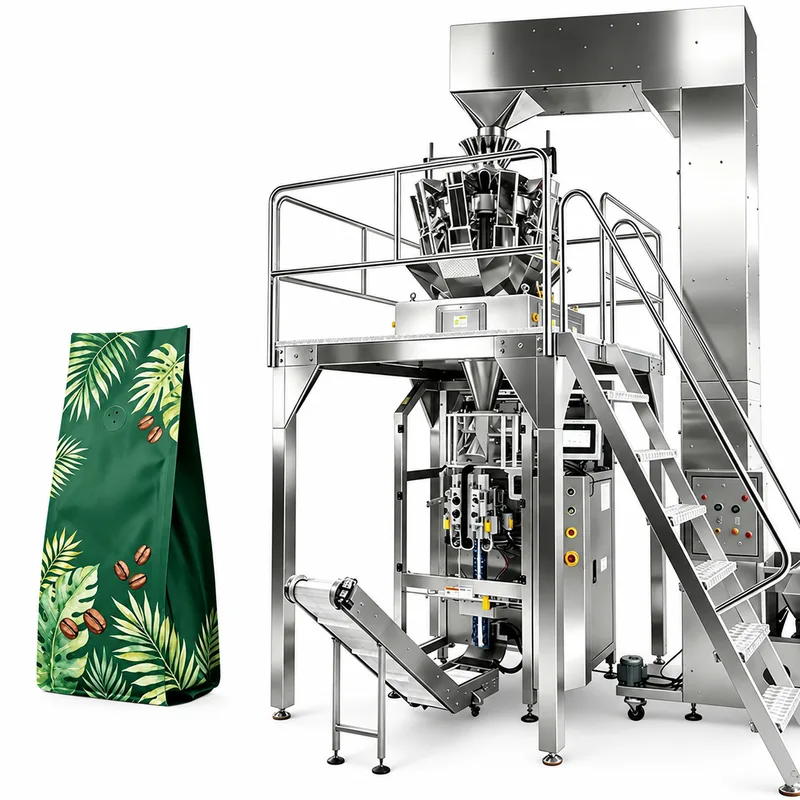
A misplaced or poorly attached degassing valve can spoil a run of coffee bags. Specify this weigher and VFFS valve line from your valve drawing, film, roast and weight.
Vertical Form Fill Seal
Quad-Seal Coffee Packaging
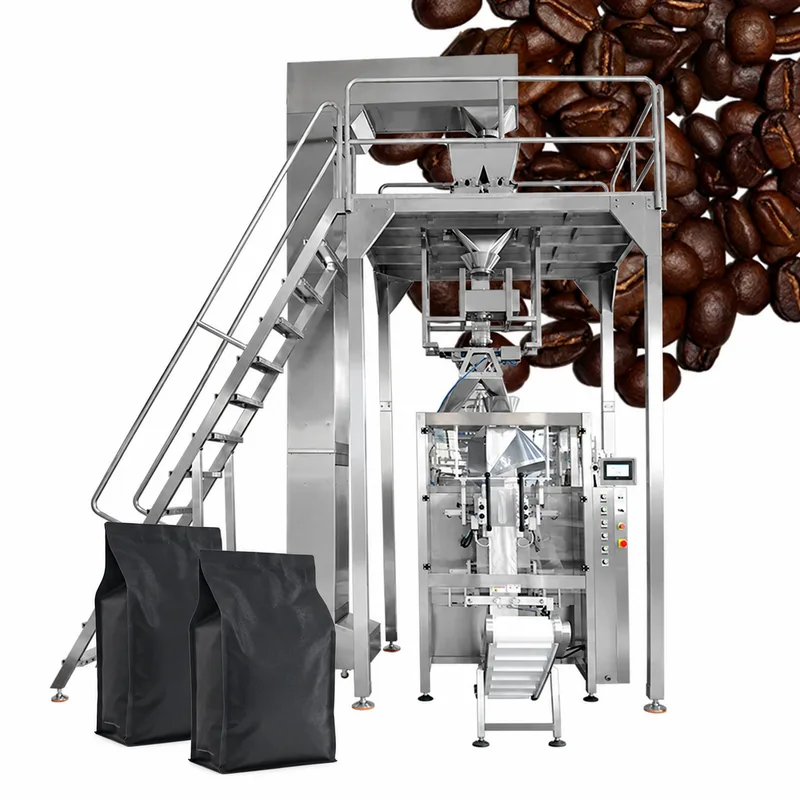
A quad-seal coffee bag that will not stand, or skews at the corners, wastes film and coffee. Specify the corners, gussets, base, valve and dosing method from your bag drawing.
What to send us
| Item | Why we need it | Example format |
|---|---|---|
| Bean samples | Size, roast, oil and fragments change feeding and release. | Mixed sample across a batch, labeled with roast profile. |
| Pouch samples and structure drawing | Sets gripping, opening and chute entry. | Unused production pouches plus a drawing with gusset and seal area. |
| Zipper and valve positions | Features near the mouth limit filling clearance. | Positions in mm from the top edge, marked on the drawing. |
| Fill weights | Sets weigher range and pouch headspace. | Smallest and largest net weights in g. |
| Format change frequency | Decides change parts and access needed. | Number of pouch and product changes per day. |
We reply within 24 hours.