
Coffee Degassing Valve Selection
Unassigned valve installation leaves a gap in the equipment scope. Choose between converter-fitted premade pouches and quoted inline application, then name who supplies, installs and checks the valve.
| Input or item | Value or source | Why it matters |
|---|---|---|
| Converter-fitted pouch | Converter supplies fitted packaging | Confirm valve identity, attachment reviewer and production pouch samples |
| Inline application | Valve source and applicator scope to confirm | Name installation and inspection owners; provide film, valves and filled-pack drawing |
| Position and clearances | Approved filled-bag drawing | Review top seal, folds, product level and zipper |
| Package decision | Agreed valve and seal methods | Keep component observations separate from storage claims |
Choose the next review for your project
Use the records below to identify the unresolved decision. These related pages explain the corresponding configuration, measurement or service scope.
On This Page
Define the valve supply and installation route
Give the supplier the valve specification and say how the valve will reach the packaging process. A valve supplied in a finished pouch raises a different equipment question than one applied to roll film during packaging. The supplier should confirm which arrangement it intends and list any extra equipment or consumables that are included.
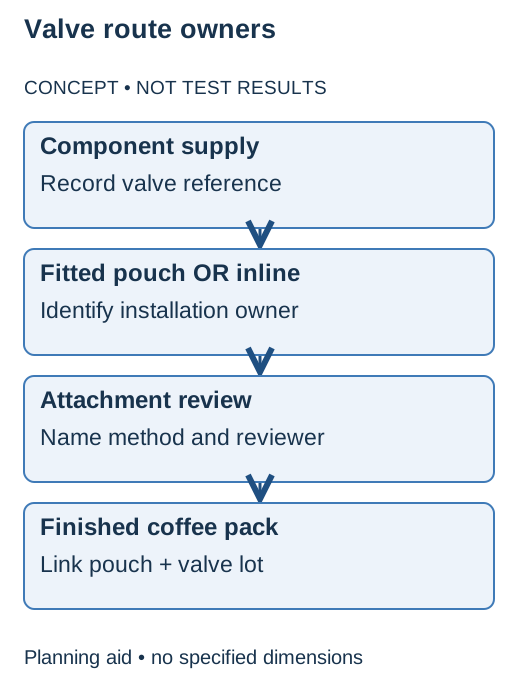
Draw a simple responsibility map from valve supply to the finished coffee pack. Who specifies the component? Who builds it into the packaging? Who verifies the completed construction? Keep the component reference and packaging revision together. If a premade pouch supplier changes its valve source, the equipment and quality teams need enough information to decide whether earlier checks still apply.
If valve application is part of the proposed line, put that operation in the equipment scope. Get the interface, the positioning method and the inspection procedure in writing. If the packaging arrives with valves already fitted, focus the machine review on handling compatibility and the filled package. These are two separate projects, even when the packs look alike.
Keep labelled samples of the approved position and construction. Mark the intended fill level and consumer opening on the drawing. A clear reference helps the team spot a packaging change that might otherwise look minor. It also separates an artwork preference from a functional requirement when you talk to the converter.
Review position on the filled package
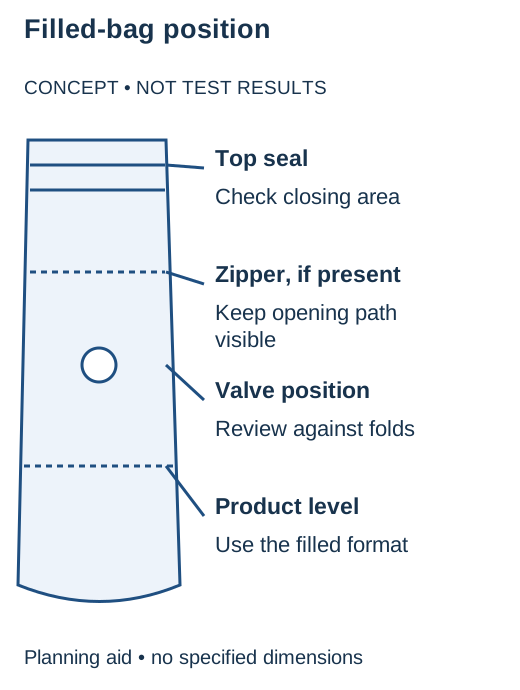
Show where the valve sits relative to artwork, folds, seams and the product level. Send bag samples if you can. The chosen position has to suit the forming and sealing sequence as well as the retail look. Confirm it on a drawing. A photograph is not enough.
Mark the valve on the approved artwork and dimensional drawing, then review how it relates to the fill level, folds, graphics and closing seal. On a resealable pack, include the zipper and the opening path. A valve position that looks fine on an empty bag can turn awkward after filling, or once the pack is squeezed into a shipping case.
Work with real samples from the proposed converter. Check whether the valve or the material around it affects pouch feeding, gripping or roll-film transport in your process. Record any change in handling method during the trial. A machine that fills an ordinary coffee bag will not necessarily handle every valve construction, so a compatibility review is needed.
Keep attachment, function and seal checks distinct
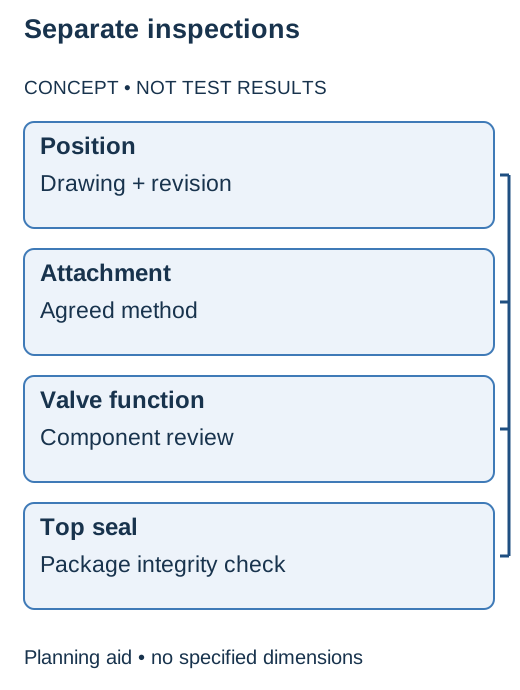
Decide how placement, attachment and valve function will be assessed, and who owns the test method. Record the valve and film specification used. Freshness and shelf life need validation of the whole product and package. A present valve proves no storage life. Nor does it prove any particular oxygen level inside the pack.
Keep a sample record. Name the valve type and packaging lot alongside the coffee and machine recipe. The component and packaging suppliers should agree with you how the valve will be checked. A good top seal does not verify the valve. An intact-looking valve does not verify the rest of the package. Each check answers its own question. Show them separately in the record.
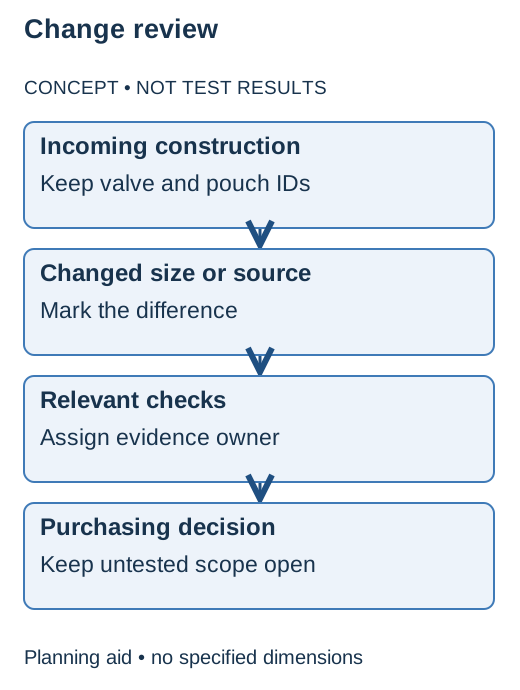
For a new format, keep packs for the product and package evaluations your quality team selects. Write down observations on appearance and handling apart from measured performance. If the valve supplier, position or installation method changes, revisit the relevant checks. What purchasing needs is a defined package construction with clear responsibilities and evidence, not a generic request for a coffee machine with a valve option.
Complete the observation record
Complete this responsibility record for the selected route before comparing totals. For fitted premade pouches, identify the converter’s component reference and the incoming construction record. For inline application, ask the equipment reviewer to identify the proposed application operation and any unresolved consumable or interface requirement. Do not fill a blank responsibility with the name of the nearest supplier: obtain agreement from that party. Keep the drawing revision beside the retained filled-pack reference. If the valve source, placement or attachment process changes, use the same record to identify which earlier observations apply and which questions need another review. No field in this table specifies a valve performance value.
| Field | Your record | Keep with this record |
|---|---|---|
| Supply route / packaging revision | ________ | Record the source, identity or agreed method. |
| Valve supplier / component reference | ________ | Record the source, identity or agreed method. |
| Installation owner / included operation | ________ | Record the source, identity or agreed method. |
| Position drawing / filled sample ID | ________ | Record the source, identity or agreed method. |
| Attachment check / owner / method | ________ | Record the source, identity or agreed method. |
| Function check / owner / method | ________ | Record the source, identity or agreed method. |
| Top-seal check / evidence reference | ________ | Record the source, identity or agreed method. |
Examine package interactions in the chosen route
Run your coffee and packaging through the selected route. Then inspect the finished packs. Look at how the valve, product position, folds and closure relate. If the pack is compressed or arranged in a case, add your own relevant handling checks. The point is to find interactions in the real construction. A good or bad photograph says little about how a valve performs.
When packs go on to further evaluation, keep the sample identity and record the coffee condition, packaging lot and recipe. If the trial used an alternative component, say so prominently and list the checks still open. A sample packed with an unspecified valve can't approve a component that was never in the test.
Keep observations and claims at the right level. A well-placed valve and a neat seal are presentation and process observations. They do not establish a storage period or a product-protection guarantee. Those conclusions need the relevant package and product evaluation, with proper evidence and responsible reviewers.
Control incoming packaging and changes
Find out how the converter identifies the valve construction and packaging lot on delivered materials. Keep that information in the production record even if the retail artwork does not change. When a complaint or unusual observation comes up, the team can see which material was used without opening an investigation across every coffee SKU. If a component is substituted, get a documented review before the new packaging is released. Traceable identification helps routine production and the evaluation of future package changes alike.
When a valve does not settle the packaging decision
A coffee package with a valve has to be reviewed as an assembly: coffee, film, closure, valve and seals. Note the coffee condition and the time between processing and filling. Describe the valve's intended function from the component supplier's specification. Seeing a valve on the bag proves nothing about shelf life, oxygen level or suitability for every coffee product.
Clarify how the valve gets onto the package. The packaging converter may build it in, or it may need a separate application step. The answer changes the machine scope, the material specification and who inspects what. Who supplies the component, who installs it, and who checks its position and condition? Spell those answers out in the quotation and the pack drawing.
Does the valve remove the need for a suitable film and seal? No single component substitutes for the complete package specification. Can the same valve arrangement carry over to another bag size? Position, construction and filling conditions need a fresh review. Does the machine quotation include application and inspection? Only the quoted scope can answer that.
Send a marked pouch or film drawing with the enquiry, together with the coffee description and the sequence from processing to packing. The supplier can then state its configuration assumptions and the package information it still needs. That turns the valve from a marketing checkbox into a defined component with a traceable place in the packaging process.
Method and scope of this guide
This revision of Coffee Degassing Valve Selection organizes the existing published review points into a buyer preparation record. The diagrams illustrate valve route owners, filled-bag position, separate inspections, change review. They contain no measured trial results, approved engineering dimensions or acceptance thresholds. The empty record fields are prompts for project evidence, not a completed inspection. Source: the existing guide and the published Configuration Review and Sample Testing service descriptions, accessed October 8, 2026. Before sending physical samples, confirm receiving arrangements, quantity and costs. Keep any recommendation tied to the supplied material, proposed configuration and outstanding questions.
Frequently asked questions
Does a valve replace suitable film and seals?
No. Review coffee condition, film, valve, closure and seals as one package. The component cannot approve the other parts of that construction.
Can the same valve position be copied to another bag size?
Review the new filled-pack drawing, product level, folds, top seal and any zipper. Keep the position conditional until the changed arrangement is checked.
Does a machine quotation include valve application and inspection?
Check the written scope. Converter-fitted pouches and inline application have different supply and inspection responsibilities; neither should be assumed from a photograph.
Explore the Equipment
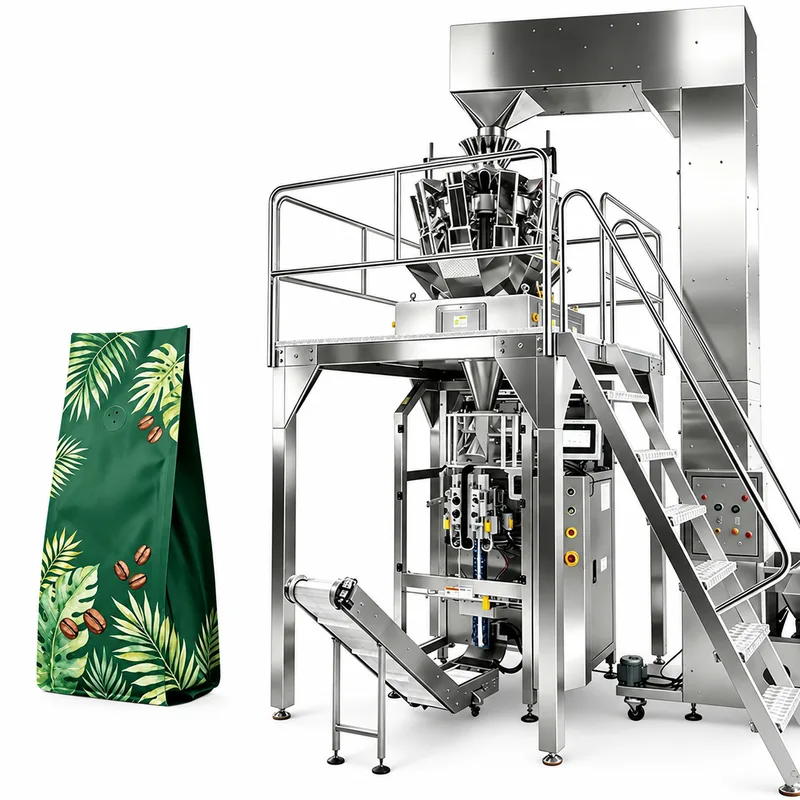
Vertical Form Fill Seal
Coffee Bean Valve-Pouch Packaging
A misplaced or poorly attached degassing valve can spoil a run of coffee bags. Specify this weigher and VFFS valve line from your valve drawing, film, roast and weight.
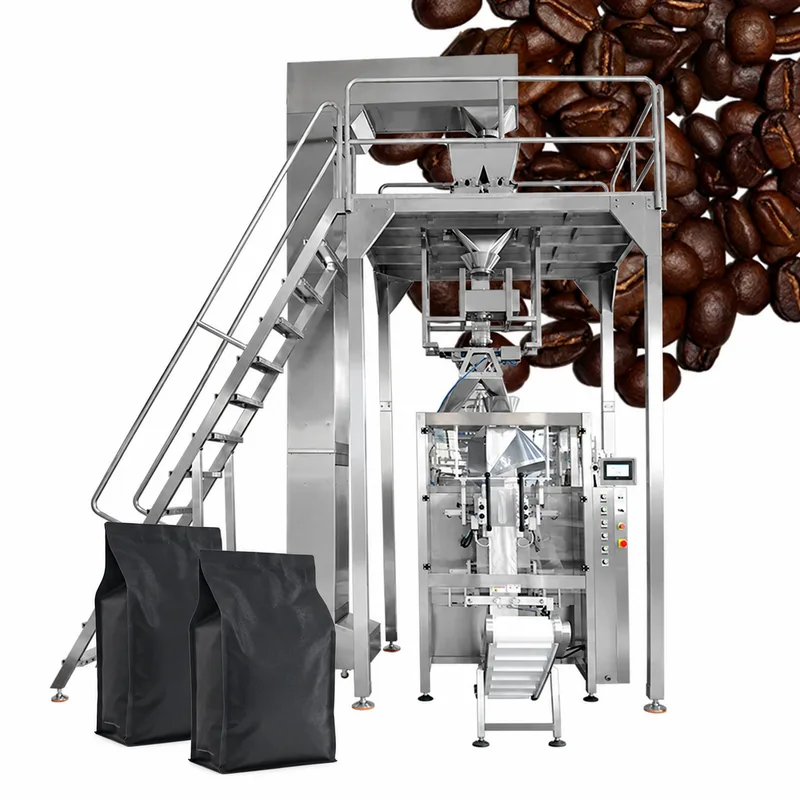
Vertical Form Fill Seal
Quad-Seal Coffee Packaging
A quad-seal coffee bag that will not stand, or skews at the corners, wastes film and coffee. Specify the corners, gussets, base, valve and dosing method from your bag drawing.
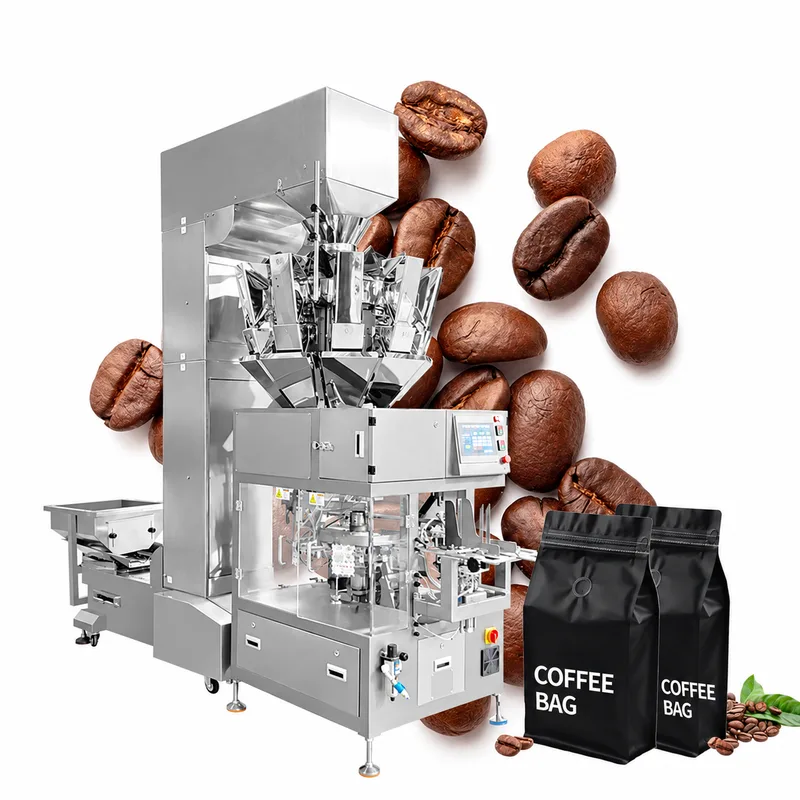
Premade Pouches
Coffee Bean Doypack Packaging
A valve or zipper too close to the pouch mouth catches beans and spoils the seal. Size this premade doypack line for coffee from your actual pouch, bean condition and fill weights.
What to send us
| Item | Why we need it | Example format |
|---|---|---|
| Valve drawing and supply format | Identify the component and how it reaches the line. | Valve drawing + component / supply-format reference |
| Filled bag dimensions and product level | Check valve clearance against the filled construction. | Dimensioned pouch PDF + marked fill-level photo |
| Inline or premade-pouch process choice | Resolve who performs the application operation. | Route note: fitted pouch or quoted inline application |
| Attachment and function inspection method | Separate component observations from whole-package checks. | Check / method owner / sample ID / finding sheet |
We reply within 24 hours.