
Coffee Packaging Machines
The wrong coffee route can leave dosing or pouch handling outside the quote. Start with beans or powder, then roll film or premade pouches.
| Route and coffee | Packaging material and dosing | Inputs for the linked configuration |
|---|---|---|
| Valve-pouch VFFS: beans | Roll film; multihead bean weighing | Valve specification, film sample and target weight |
| Quad-seal VFFS: coffee | Roll film; confirm volumetric, linear or multihead dosing | Full bag drawing, product form and valve scope |
| Premade doypack: beans | Finished pouches; weighing and filling | Actual pouch, zipper, valve and usable opening |
| Stick pack: powder | Roll film; separate formula and auger assessment | Recipe, dose and stick/web drawing |
Choose the route before specifying the equipment
Beans and powders need separate dosing assessments; roll film and premade pouches determine different bagging routes. Compare the four published configurations below using your coffee, dose and package.
Scroll horizontally to read all columns, conditions and sources.
| Route | Catalog configuration | Output in the catalog | What to supply | Confirm in the quotation |
|---|---|---|---|---|
| Valve-pouch VFFS (roll film) | Multihead bean weighing, vertical bag forming, optional one-way valve applicator, optional nitrogen flushing | 25 - 50 bags/min (subject to weight and valve application speed) | Valve specification, film sample and target weight | Valve placement and seal quality, checked together |
| Quad-seal VFFS | Four-edge sealing configuration, optional degassing-valve integration, volumetric, linear or multihead dosing | Output not stated for quad seal coffee; request product-and-pack conditions. | Finished-bag sample or dimensioned drawing | Base, side gussets, valve and film construction; dosing method and change parts |
| Premade doypack | Automatic bag retrieval and opening, weighing and filling, premade-pouch top sealing | Output not stated for coffee doypack; request product-and-pack conditions. | The production pouch with zipper, valve and usable mouth dimensions | Opening, filling clearance and top seal; which features arrive already fitted |
| Four-lane stick pack | Four-lane film splitting, independent auger dosing, optional date coding and powder feeding | Output not stated for coffee stick pack; request product-and-pack conditions. | Formula (instant, blend or ground), stick drawing, dose range | Lane-by-lane fill and print results across refills |
On This Page
From roasted beans to the chosen retail bag
The route to a finished coffee bag depends first on the packaging material you will buy. If the warehouse holds finished zipper pouches, start the discussion with the premade doypack route and send those pouches for review. If the business plans to buy printed roll film, start with the required pillow, gusset or quad-seal construction. The machine proposal should follow that material decision.
For a practical comparison, request one filled sample from each relevant route using the same beans and quantity. Place the samples beside the intended shipping carton and shelf display, with any valve and gas options visible in the scope.
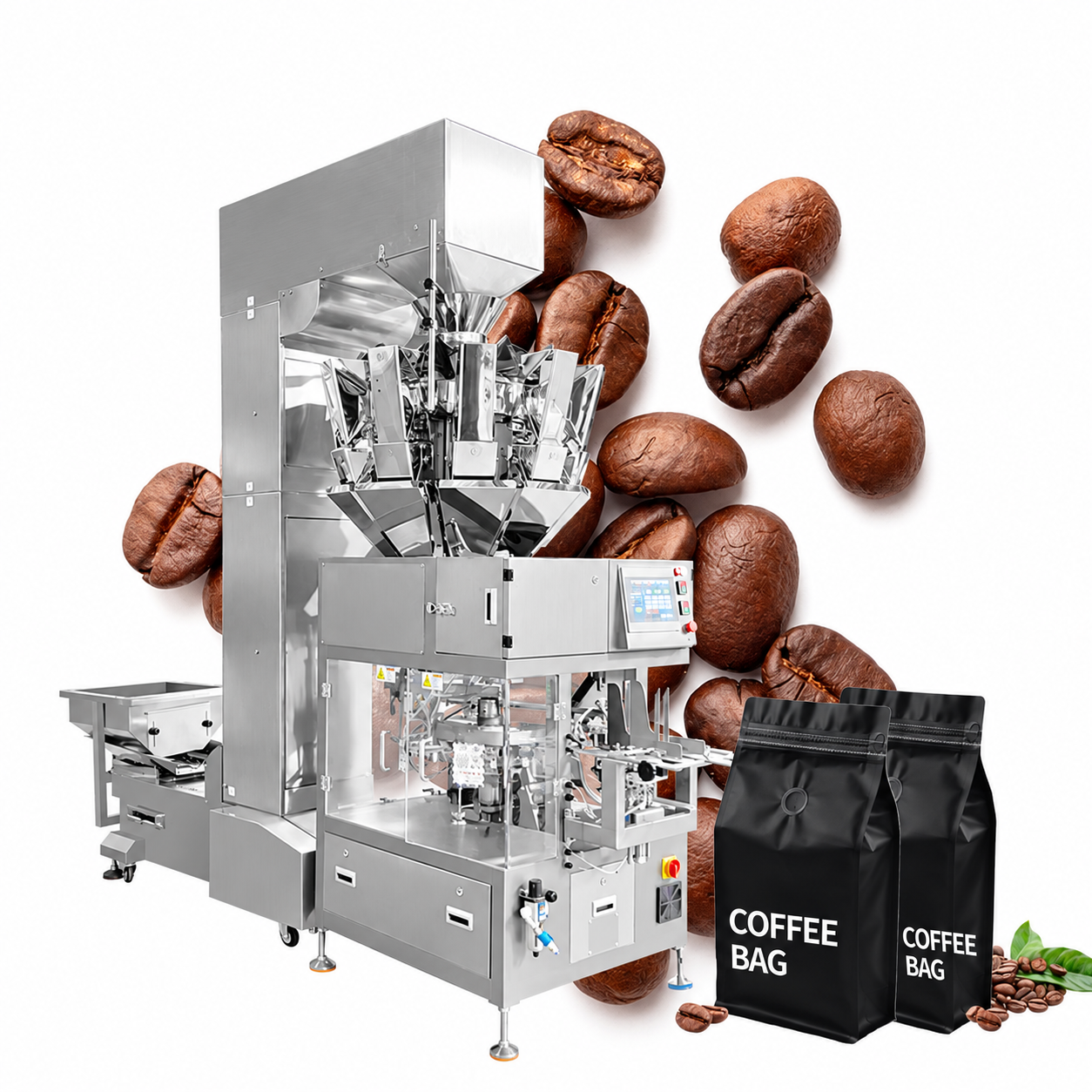
What a coffee line is made of
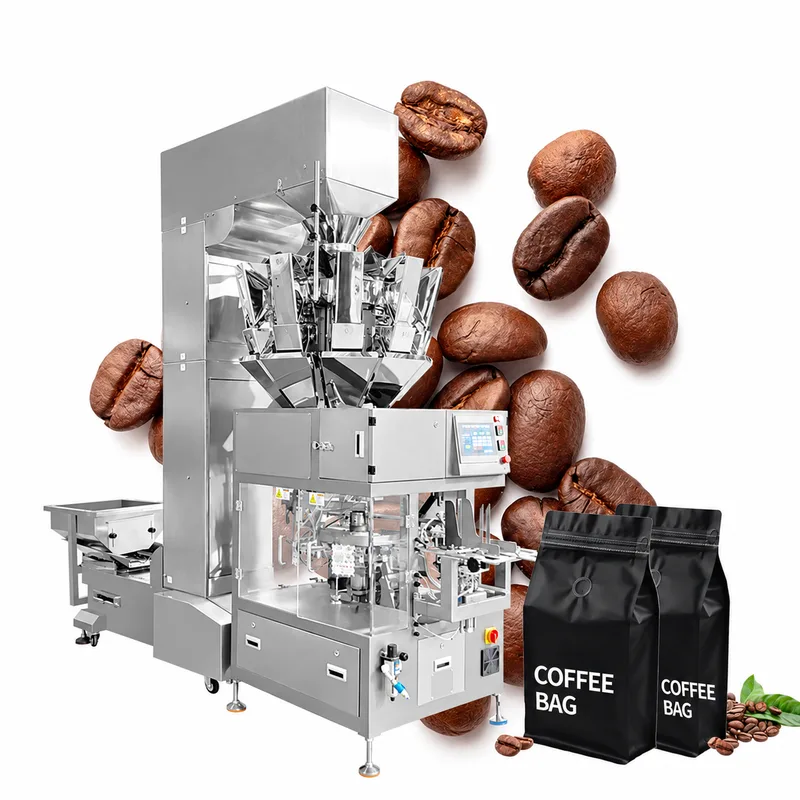
A whole-bean packaging line can be organized around three concrete modules: a product supply system, a weighing unit and a bagging unit. In a vertical configuration, the weigher releases a portion into a bag formed from roll film. The valve-pouch version adds the valve requirement to that film-handling sequence, the quad-seal version adds equipment for shaping and sealing the four vertical edges, and a premade doypack line takes a finished pouch, opens it, receives the weighed beans and seals the top.
Optional functions sit around these modules: valve application, nitrogen flushing and, on the stick-pack configuration, date coding and powder feeding. Case packing, cartoning and palletizing are not listed among the catalog features of these configurations, so ask the quotation to say what is included and what the factory provides.
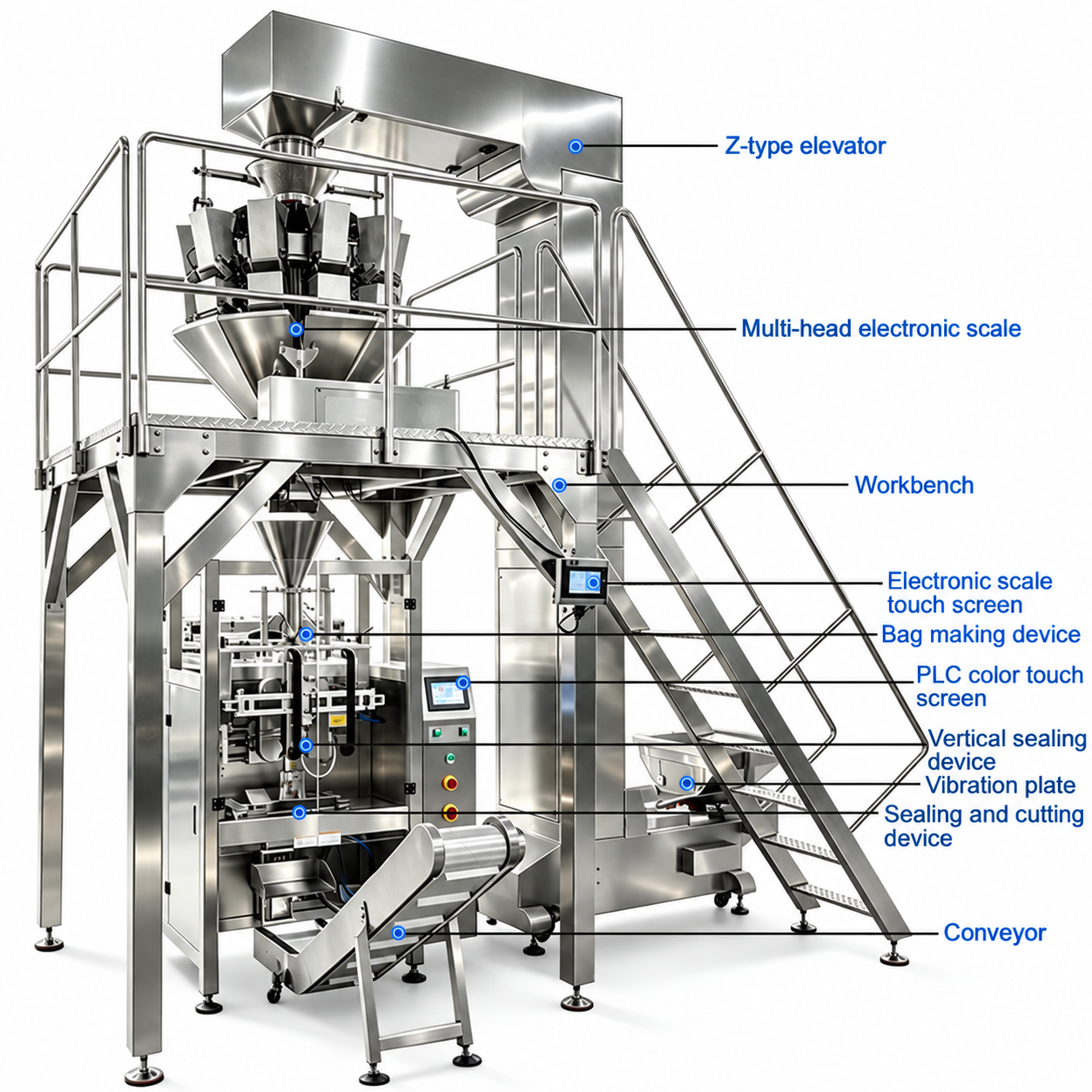
Match the route to your volume and growth stage
Start from your real output, not only the target. Send the bags needed on an ordinary day and a peak day, the usual batch size, and how often the bag size or coffee changes. A roaster with long runs of one bag and a roaster with many short batches may prefer different routes, even for the same beans.
The catalog states an output only for the valve-pouch VFFS configuration, and it qualifies it: 25 - 50 bags/min, subject to weight and valve application speed. It gives no output for the quad-seal, doypack or stick-pack configurations. Ask each proposal to state the speed measured with your bag, fill weight, beans and requested options running, and treat any unqualified figure as incomplete.
Start with the coffee portfolio
Separate your products into whole beans, ground coffee, soluble coffee and blended beverage powders before you talk to suppliers. They can share a brand while needing different feeding and portioning arrangements. Build a matrix showing what reaches the line, the retail quantity, the intended bag and the number of production changes.
For example, a hypothetical roaster with a large whole-bean bag for hospitality customers and a small instant stick for retail sampling has two separate projects. The bean route needs a handling assessment; the stick route needs a powder dosing assessment, covered on the instant coffee page.
Define dosing for beans and powders separately
For beans, describe size variation, visible surface oil and the proportion of broken pieces normally entering packaging. A weighing demonstration should show how the product travels from supply to bag, because a satisfactory displayed weight cannot reveal every handling issue. Record the incoming condition so any additional damage can be discussed with a useful baseline.
For powder, supply the actual blend together with its dose range and available bulk-density information. Fine grounds, soluble granules and coffee blends should not be substituted for one another in a trial. In the catalog, the valve-pouch configuration uses multihead bean dosing, the quad-seal configuration lists volumetric, linear or multihead options, and the stick-pack configuration uses independent auger dosing. If a formulation is still under development, mark the dosing selection as provisional.
Read a quad-seal coffee bag as a forming project
A quad-seal coffee pack is more than a pillow bag with a different printed design. The catalog configuration includes dedicated treatment of the four vertical edges, alongside the normal film drawing, filling and closing operations. If this is the chosen retail appearance, the enquiry should explicitly identify quad-seal forming and include the complete bag drawing rather than only its front-panel width.
Lay the intended artwork flat and mark the front, back, side panels, vertical edge seals and top closure, plus the valve position if one is included. Ask the equipment team and film supplier to review that layout together. During sample review, stand several filled bags side by side, inspect them from the front and sides, and place them in the planned carton orientation. Keep the accepted sample as the visual reference for later film orders.
Treat the valve and gas as separate requirements
A valve, a gas-flushing option and the finished-package specification serve different roles in the purchasing discussion. Provide the valve specification and its position relative to folds, artwork and the filled coffee. For premade bags, establish whether the valve arrives already fitted. For film-roll production, establish whether an application module is included, who supplies the valve, and how its attachment is checked during the trial. If the brand later changes or relocates the valve, arrange a compatibility review rather than assuming the earlier approval still applies.
If nitrogen flushing is requested, define the supply boundary and the package measurements your own quality team wants to assess. Record the tested film, product condition, fill quantity and running arrangement together. Do not turn the presence of a gas connection into a shelf-life claim: storage life needs evidence from the finished package under its intended distribution conditions.
Settle film, pouch and responsibilities before artwork approval
Gather film construction details or premade-pouch specifications before committing to a large printed order. The equipment supplier needs the usable dimensions, sealing surfaces, print repeat and coding position, while your packaging supplier needs the intended forming and filling route. Send the same revision of the drawing to both parties.
For each coffee bag, name who is responsible for film construction, valve supply, zipper supply, machine-created seals and artwork approval. This map matters most when the same brand buys roll film for one product and finished pouches for another, because a requirement can vanish between suppliers who each assume the other provides it. If you plan to use a recyclable or mono-material film, send that film for the sample run and ask the supplier to confirm how it seals and tracks on the proposed configuration.
Design a trial around the products you sell
Create a trial sheet with one row for each meaningful combination of coffee, target quantity and packaging material. Prioritize combinations that present different handling or forming demands. Observe startup, stable running, replenishment and a planned product change, and label finished packs from each stage so results stay connected to the conditions that produced them.
Agree what will be recorded: fill results, visible bean damage, powder around seals, valve position, artwork alignment and the number of acceptable finished packages over the observed period. Log interruptions and adjustment time separately, and list any combination left untested in the quotation or acceptance plan, where both parties can see it.
- Whole beans, ground coffee or instant product
- Valve, zipper and approved packaging construction
- Coffee condition at filling and a defined sample trial
Assess recipe and format changes
A roaster may run several bean origins in one bag size while also changing between hospitality and retail quantities. Separate a product change from a bag-format change when describing the schedule, and ask which settings, contact checks and format components apply to each. For a hypothetical business with frequent short batches, the easier configuration to prepare repeatedly may serve better than one with a higher short demonstration rate. Record changeover activities and the first acceptable packages of the next run, and state where any timing observation begins and ends.
Keep the production plan with the quotation
Show how the coffee reaches the feed point and where filled bags are collected. Include room for film loading or pouch replenishment, product access and routine format changes on the layout. Ask the quotation to distinguish included equipment, requested options, assessed combinations and open requirements. That record makes the bagging routes comparable without turning one valve-pouch speed range into a claim about every coffee configuration.
Method and limits of this comparison
Scope: Coffee Packaging Machines. Configuration records: coffee-valve-vffs, quad-seal-coffee, coffee-doypack, coffee-stick-pack. This October 2026 revision organizes the published configuration descriptions and the buyer checks discussed on this page. The configuration source links near the opening identify the records behind the comparison. This is a selection aid compiled from published information, not a report of our own trials.
For Coffee Packaging Machines, use the stated parameters only for the named configuration and its original conditions. Missing values remain open; photographs and edited catalog illustrations do not qualify an untested material or establish a storage-life, cleaning or performance result. Keep project-specific evidence with the final quotation.
Frequently asked questions
Which route suits a small roaster?
Start from the pack you will buy, the required bags per day and the changeover pattern. Compare the valve VFFS, quad-seal and premade-pouch scopes with those inputs; roaster size alone does not identify a configuration.
Can the bean setup also fill ground coffee?
Request a separate assessment of dosing, dust and usable package volume. A bean trial does not establish a powder setup, and each powder formula needs its own record.
Can I change the premade pouch freely?
Check the actual new pouch’s usable opening, zipper, valve, top margin and sealing material against the supplied configuration. Keep a sample of the accepted version.
Who is responsible for the coffee valve?
State whether the converter supplies it already fitted or the line is to apply it. Record who supplies the valve, its position and how attachment will be assessed. Valve application and gas flushing are separate scope questions.
Explore the Equipment
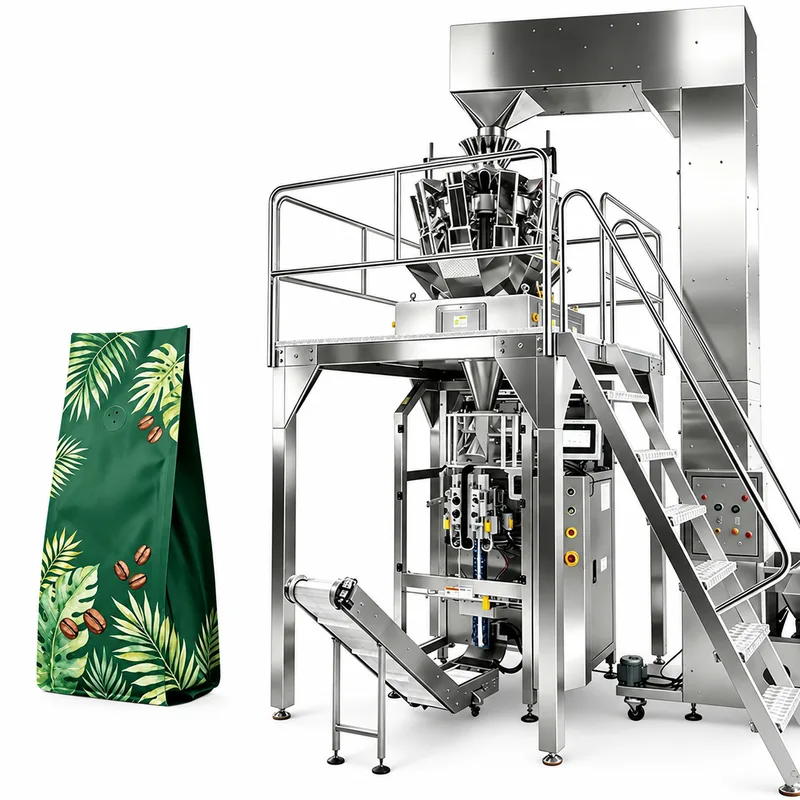
Vertical Form Fill Seal
Coffee Bean Valve-Pouch Packaging
A misplaced or poorly attached degassing valve can spoil a run of coffee bags. Specify this weigher and VFFS valve line from your valve drawing, film, roast and weight.
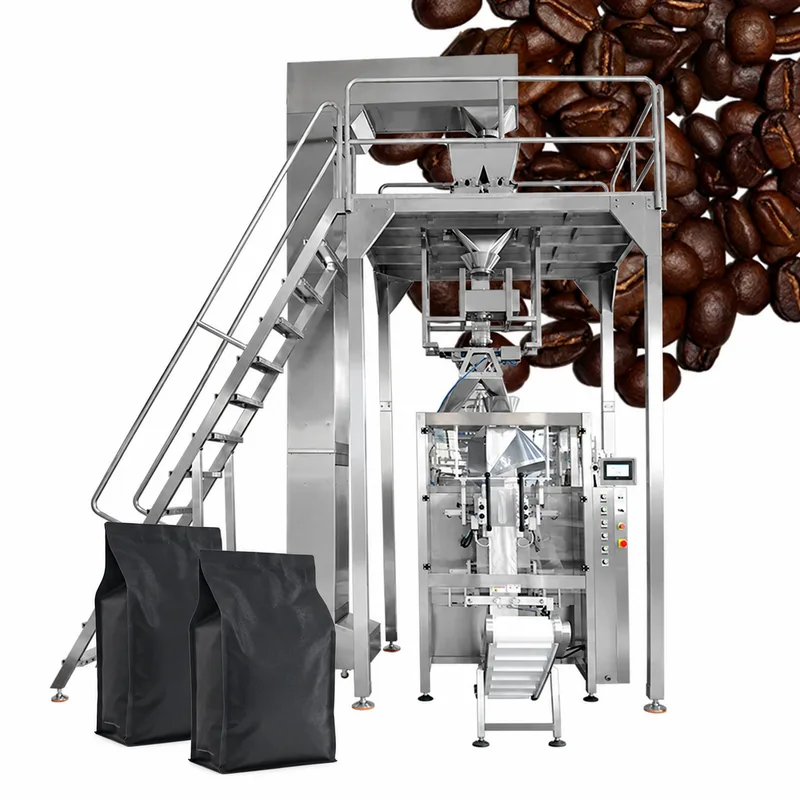
Vertical Form Fill Seal
Quad-Seal Coffee Packaging
A quad-seal coffee bag that will not stand, or skews at the corners, wastes film and coffee. Specify the corners, gussets, base, valve and dosing method from your bag drawing.
Premade Pouches
Coffee Bean Doypack Packaging
A valve or zipper too close to the pouch mouth catches beans and spoils the seal. Size this premade doypack line for coffee from your actual pouch, bean condition and fill weights.
What to send us
| Item | Why we need it | Example format |
|---|---|---|
| Coffee form and recipe | Separate bean handling from powder dosing | Product matrix and labeled samples |
| Bag or stick drawing and valve | Define forming, opening and valve responsibility | Dimensioned PDF and valve specification |
| Roll film or premade pouch | Assess the material actually purchased | Supplier specification and sample reference |
| Output and changes | Describe volume, batches and format transitions | Ordinary/peak schedule and changeover list |
We reply within 24 hours.