
Instant Coffee Stick Packs
A pooled stick sample can hide a lane problem. Start instant-coffee selection with the actual formula, dose and film drawing, then review each lane.
| Input or route | Material / evidence to provide | Decision to review |
|---|---|---|
| Coffee type | Actual soluble, agglomerated or blended formula | Separate physical material differences before choosing tooling |
| Dose and density | SKU dose sheet and representative material | Review occupied volume, not mass alone |
| Film and stick | Dimensioned web drawing with lane layout | Check seal margins, repeat and opening |
| Lane record | Labeled samples through replenishment | Keep fill and sealing observations traceable |
Choose the configuration from the product and package
Use the published four-lane auger configuration as the starting point for actual soluble or blended coffee. Set the dose and film together, retain lane labels, and define where individual sticks hand over to the outer pack.
On This Page
Distinguish soluble coffee from other coffee powders
A stick-pack project for instant coffee starts with the commercial formula. Soluble coffee granules, fine coffee powder and a beverage blend with other ingredients can behave differently in supply and auger dosing. State which material will actually be sold in the stick and provide a representative sample. Include its normal range of appearance, density information where available and any tendency seen in storage or transfer.
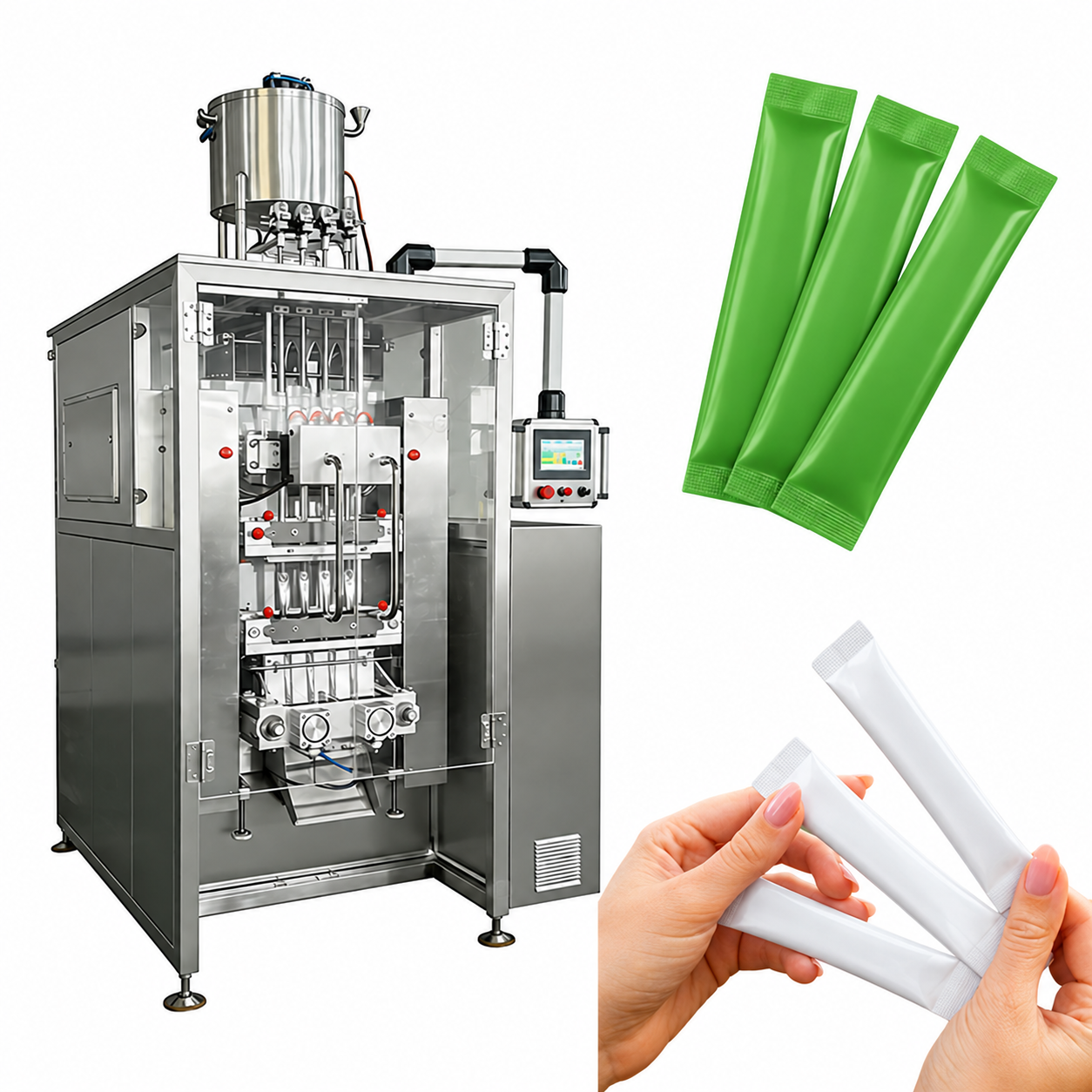
The catalog's four-lane coffee powder configuration splits the film into parallel stick formats and doses with augers. Treat it as a starting point for reviewing your specific formulation. If several blends must run on the machine, list each one separately, even when the planned dose is identical. One good demonstration with one material does not establish a common screw setup, stick volume or filling behavior for every coffee-based formula.
Design the portion and stick together
Prepare a drawing that shows the stick width, length, seal margins, print repeat and the cut or tear feature you want. Add the target dose range and an example of the filled appearance you expect. Say whether the consumer empties the portion into a cup or uses it some other way. Check the opening and the discharge on real finished samples.
The supplier should explain how your dose and powder volume fit the proposed stick. Do not order production artwork around an assumed internal capacity. If a blend changes while the project is being quoted, review the package again with the new material. A formula with bulkier ingredients could need a different discussion even if its stated mass stays the same. Keep the film and formula revision together on the trial sheet, so the result can be traced.
Evaluate every lane rather than one pooled sample
Agree on a lane identification method before you collect samples. Weigh and inspect packs from each position as the trial plan says, and keep the lane label when you review results. A pooled average can look acceptable while it hides a repeated problem on one lane. The supplier should explain how the machine supports independent dosing setup and how those settings are written down for repeat production.
Include observations from startup, established running and powder replenishment. Supply conditions can change during a trial, so record the interventions and visible powder behavior and do not treat the whole period as uniform. Look at fill results separately from dust near the seals and from print or cut alignment. A multi-lane demonstration is worth seeing because it shows how the complete arrangement performs. Multiplying one attractive stick sample by the number of lanes shows nothing.
| Record field | What to identify | Blank entry / format |
|---|---|---|
| Formula | Material and film revisions | Formula: ___ / film: ___ |
| Lane | Keep each position separate | Lane: ___ / sample label: ___ |
| Replenishment stage | Startup, stable run, refill or pause | Stage: ___ / observation window: ___ |
| Accepted sticks | Count under agreed fill and pack criteria | Accepted: ___ / rejected: ___ / interruptions: ___ |
| Carton interface | Count, orientation and scope owner | Box count: ___ / direction: ___ / owner: ___ |
Inspect the powder route and end of fill
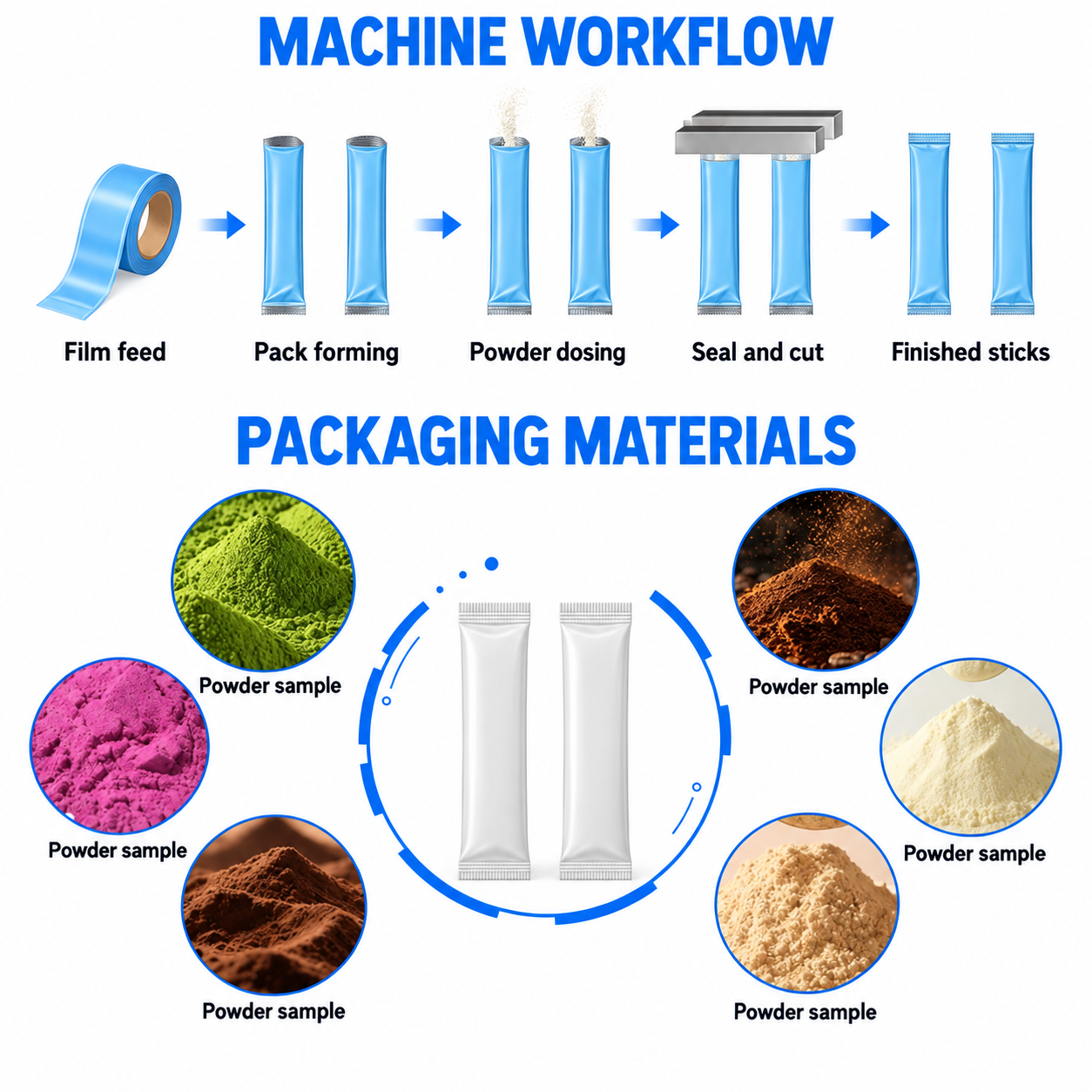
Follow the material from its supply container into the hopper and down to the dosing outlets. The supplier should show the product-contact parts proposed for your formula. Watch for retained powder, irregular release or buildup during the run. Independent augers are a good feature. But they do not remove the need to evaluate the path after the screw and before sealing.
If an extraction or other powder-management option is proposed, get its scope and assess it in the intended arrangement. The trial should show the stick reaching closure with the sealing area presented cleanly. Keep observations specific: name the lane, the stage of the run and the location of any buildup; that helps separate a dosing problem from a material-supply or package-clearance problem. It also lets you evaluate a targeted modification without changing several unrelated variables at once.
- Actual formula and intended dose range
- Stick and film drawing with tear position
- Per-lane sampling through hopper replenishment
Plan the printed roll and optional coding for coffee sticks
The coffee stick configuration splits one wide film roll into four lanes and fills the individual portions with auger dosing. Its catalog also lists date-coding equipment, an opening-notch device, powder feeding and downstream handling as options. Choose those functions around your actual coffee product. A photograph of a complete line is a poor guide. Otherwise a proposal can leave out a coder you need, or include collection equipment the factory already owns.
Start from the information that has to appear on each stick and the space left after folding and sealing. Ask for the web drawing that shows all four lanes, the print repeat and the proposed coding position. Your packaging converter should review that drawing before the roll is printed. Say whether the line will run one artwork across all lanes. A request for mixed artwork needs separate confirmation.
In the quotation, keep the core stick machine apart from the requested additions. Settle who supplies powder to the hopper, how finished sticks are collected and whether coding happens inside the quoted system. For an instant-coffee brand those answers define the project scope better than a lane count alone.
Plan retail and contract-packing changeovers
Instant coffee businesses may change flavor, formulation, printed film or portion size. Each change gives operators different work. List the combinations you expect in a normal week and find out which share the same dosing and forming parts. Ask the supplier to identify extra tooling and the adjustments needed to get back to a product you have already set up.
If sample availability allows, watch an agreed change during the demonstration. Record the actual activities, including removing or inspecting product-contact parts and the checks on the first sticks of the next run. Be wary of changeover figures from different suppliers that come with no explanation. A film-only adjustment and a complete formula change are different boundaries. A useful record lists the work involved and says which elements remain under the factory's own cleaning and product-control procedures.
Make outer-pack requirements visible early
If instant coffee sticks will be sold in counted retail boxes, provide an example of the outer pack and describe how sticks will be collected. Say whether they need a particular orientation or grouping at the handoff. Find out which part of that workflow is in the equipment proposal and which is supplied separately.
The stick machine may be evaluated before the outer-pack process exists. If so, record the interface as an open item and keep representative finished sticks for the next review. A project is not complete just because individual portions look good. The commercial product also depends on a workable collection and packing sequence beyond the first machine.
Build the commercial comparison around usable sticks
Define the output you observe as acceptable completed sticks for the specified coffee formula, film and portion. Record interruptions, setup changes and rejected samples separately. If you plan downstream counting or cartoning, put that interface in the proposal, because it is not automatically part of the stick machine. A fast forming cycle does not decide the output of a complete retail packing process.
Method, sources and applicability
This page reorganizes the published instant coffee stick packs application and the linked equipment descriptions into a purchasing brief. The comparison is based on public configuration information, not our test of the alternatives. The observation tables are blank records to complete with the actual product; they contain no measured results. The questions below come from the purchasing issues already discussed on this application page, rather than a new search-question survey.
A run on one soluble or blended coffee does not confirm future recipes, films or doses. The published four-lane arrangement is the configuration starting point. Any untested combination and any downstream counting or cartoning function remain separate scope items.
Technical Reading
- Four-lane coffee stick configuration — Published configuration or planning guidance; reviewed 8 October 2026. review core machine and options.
- Powder dosing trial plan — Published configuration or planning guidance; reviewed 8 October 2026. record lane and refill conditions.
- Powder packaging choices — Published configuration or planning guidance; reviewed 8 October 2026. separate formula and format requirements.
- Configuration review scope — Basis for the proposed-scope and missing-information response; reviewed 8 October 2026.
- Sample testing arrangements — Confirm availability, sample quantity, handling and costs before shipment; reviewed 8 October 2026.
Frequently asked questions
Does a four-lane machine guarantee the same output for every instant coffee?
No. The published coffee-stick configuration describes the arrangement, not a common result for all formulas. Record acceptable sticks for the actual formula and film, with lane identity, interruptions and replenishment conditions.
Does a smaller dose automatically allow a smaller stick?
No. Check powder volume, outlet clearance, sealing space and the intended opening together. A formula change can require another package review even if the declared mass stays the same.
Is retail cartoning included with the stick machine?
Do not assume it is. The coffee-stick profile separates optional downstream handling from the core machine. Provide the box count and orientation requirement and ask which collection, counting and cartoning interfaces are included.
Explore the Equipment
Multi-Lane Stick Packs
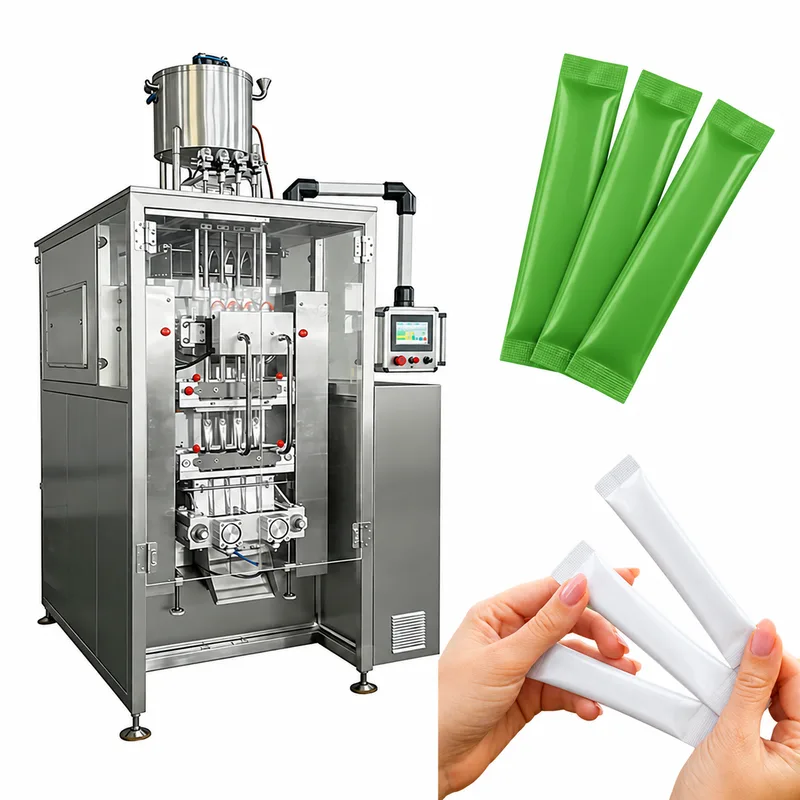
Four-Lane Coffee Powder Stick Packs
Instant, agglomerated, blended and ground coffee do not dose alike on one screw. Specify this four-lane coffee stick-pack line from your exact formula, serving and stick, and check every lane.
What to send us
| Item | Why we need it | Example format |
|---|---|---|
| Actual formula and dose | Review material and dosing parts | Formula ID + dose-range spreadsheet |
| Film and stick drawing | Assess usable space and opening | Dimensioned web PDF with print and tear positions |
| Lane samples and run stage | Separate filling, dust and alignment findings | Sample labels: formula / lane / refill stage |
| Outer box and handoff | Define count, orientation and supplied scope | Carton drawing + collection sketch |
We reply within 24 hours.