
Zipper Pouch Opening Checks
A pouch that opens by hand may still fail in automatic handling. Review production samples, empty-pouch opening, actual filling and initial sealing or consumer reclosure as separate stages.
| Input or item | Value or source | Why it matters |
|---|---|---|
| Production pouch | Converter lot and specification | Check zipper, top margin and gripping area |
| Empty opening | Proposed mechanism and format parts | Locate presentation or opening failures |
| Actual filling | Product and usable clearance | Check support and mouth contamination |
| Seal and reclosure | Filled samples and agreed methods | Keep initial integrity separate from zipper use |
Choose the next review for your project
Use the records below to identify the unresolved decision. These related pages explain the corresponding configuration, measurement or service scope.
On This Page
Treat pouch supply as a controlled component
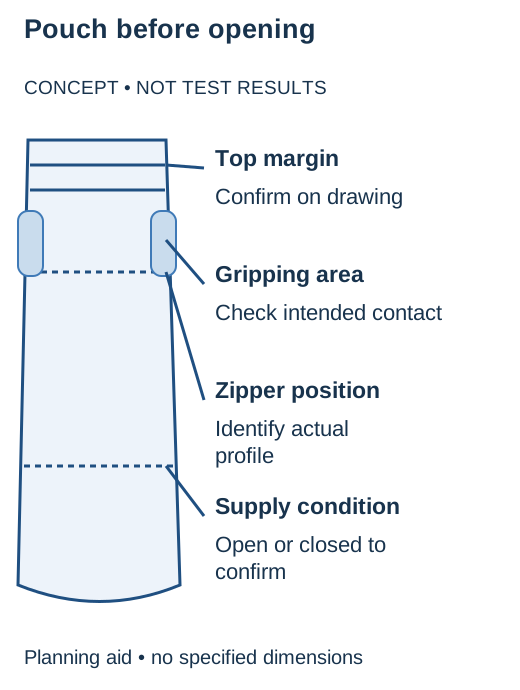
Send samples from the production supplier, with the actual zipper profile and top margin, and give the planned size range. A bag that looks similar can need a different handling review. Say whether the pouch has other features, such as a valve or gusset, that affect gripping or filling clearance.
Automatic pouch opening depends on the actual pouch construction and the condition it arrives in. Collect samples from the intended converter and note their production lot. Record the outer dimensions, zipper position, gusset construction and the area available for gripping. An empty pouch opened by hand is fine for inspection, but it does not prove the selected automatic arrangement will handle pouches reliably.
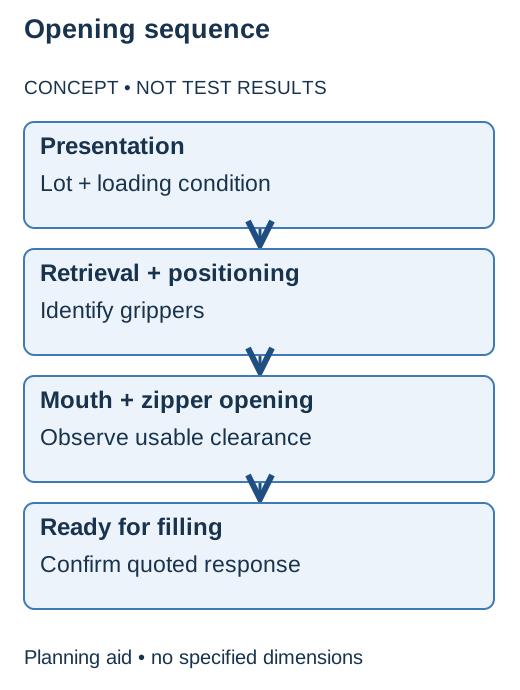
Ask the supplier to explain the sequence from magazine loading through opening to filling, and to confirm whether the quoted configuration detects a missing or improperly opened pouch and what response is included. Put the detection and response requirements into the technical scope. A filling device that works well cannot make up for an opening sequence that now and then presents an unsuitable pouch.
For every sample set, identify the converter, the pouch specification and the production lot. Record the external dimensions, zipper position, intended filling opening and any valve or gusset feature. The equipment supplier will need tolerance information, so ask the converter for it. A hand-held sample shows the intended appearance. It says nothing about the variation within a delivered carton or the condition bags are in when they reach the loading magazine.
If samples from different cartons show visible differences, keep them separate in the initial review. Bent corners, uneven stacking or distorted pouch mouths can change what you see in handling. Was a demonstration set trimmed, flattened or prepared in a way that would not happen in ordinary production? Document that preparation. Count any incoming inspection or handling work the process really needs as part of the purchase.
Observe opening stages before and during filling
The trial should show how bags are presented, retrieved and opened. Judge whether the opening leaves the clearance the product and filling outlet need. Confirm which opening mechanism and format parts are included. Not every machine listed for premade bags has the same zipper-handling functions, so do not take them for granted.
During the trial, record misfeeds, incomplete openings and pouches rejected before filling. Keep these apart from filling and sealing rejects. The split shows whether a problem comes from pouch supply, handling settings or the product entering the opening. Watch the zipper and mouth during filling, especially with products that can bridge or spread across the opening.
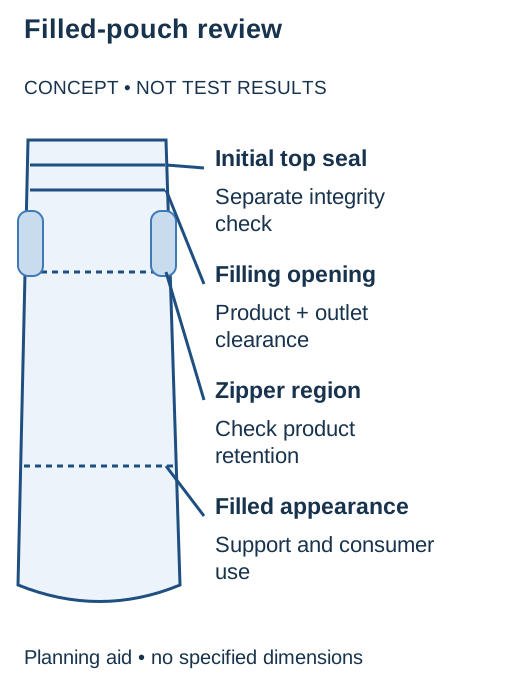
Inspect filled pouches for product in the zipper region and the closing seal. Check consumer opening and reclosing on representative samples, against the requirements chosen for the product. The zipper and the machine-applied closing seal do different jobs. Seeing the zipper work does not verify the integrity of the initial sealed package.
Describe the cycle in stages: presentation, retrieval, positioning, mouth opening, zipper separation where needed, and readiness for filling. Note where an unsuccessful pouch drops out of the expected sequence. A general count of opening failures helps. But locating the stage tells you whether you have a magazine issue, a zipper engagement problem or a filling-clearance problem. Not every option can identify or handle an unready pouch, so confirm what the proposed equipment does.
Begin with the empty-package check, then move to actual product under the agreed protocol. An opening that looks sufficient while empty may interfere with the filling outlet or product stream. Watch how the pouch is supported as its weight changes during filling. Keep the proposed grippers and format parts identified. A demonstration with another tooling set does not verify the supplied arrangement.
Separate the initial seal from consumer reclosure
Inspect the filled pouch, the final top seal and the consumer opening, and look for product trapped near the zipper or closing area. Keep the pouch specification with the trial result, and review supplier changes before treating them as interchangeable. A successful empty-bag cycle is a useful step. It is not a finished-package acceptance test.
The zipper is a consumer reclosure feature, and the final factory seal has its own required inspection. Assess their locations together, but they are not the same function. Product near the zipper may hurt usability even when the top seam looks acceptable. Equally, easy consumer opening does not prove the production seal met the buyer's integrity requirement. Agree the relevant checks before you decide which sample looks best.
Use filled pouches to examine presentation, usable headspace and opening after the first seal is removed as intended. A bulky product may need a different clearance review from fine granules at the same nominal mass. For gummy products, watch whether individual pieces stay near the mouth after discharge. For fruit pieces, check whether their size or shape interferes with the intended path. These are specific trial questions. A pouch photograph cannot answer them.
Complete the observation record
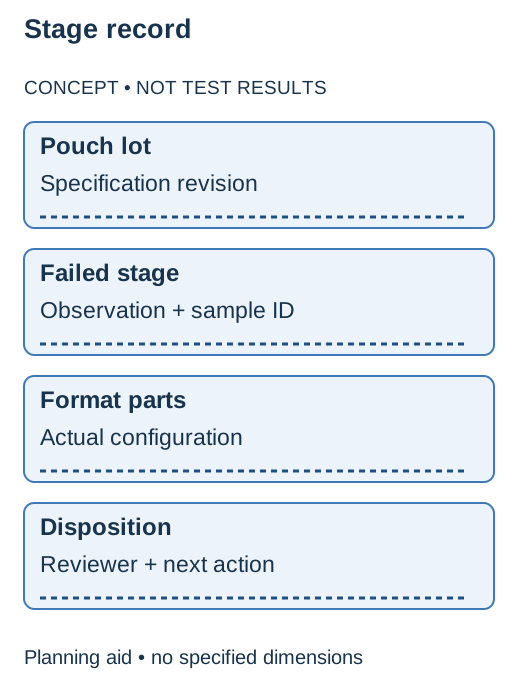
Use a stage entry for each observed failure rather than one total named opening problems. Connect that entry to the pouch lot and a retained sample or permitted photograph. Name the installed grippers and other format parts so an observation from temporary tooling is not assigned to the quoted arrangement. During the empty-pouch review, keep presentation, retrieval and incomplete opening findings apart. During filling, add the product condition and any mouth or zipper contamination. Record disposition through the agreed procedure. Missing-pouch detection, opening detection and automatic responses are items for quotation confirmation; this worksheet does not imply that any particular sensing function is included.
| Field | Your record | Keep with this record |
|---|---|---|
| Stage: presentation / retrieval / positioning / opening / filling | ________ | Record the source, identity or agreed method. |
| Pouch specification / production lot | ________ | Record the source, identity or agreed method. |
| Failure type / observation | ________ | Record the source, identity or agreed method. |
| Sample ID / event time | ________ | Record the source, identity or agreed method. |
| Opening mechanism / format-part revision | ________ | Record the source, identity or agreed method. |
| Disposition / reviewer / follow-up | ________ | Record the source, identity or agreed method. |
Control converter and format changes
After a successful trial, keep the approved pouch specification and samples. Find out which pouch variations the equipment review considered and which changes need a new trial. A different film structure, zipper profile or gusset construction can matter even when the outside size is unchanged. Converter substitutions should stay visible to production and purchasing staff.
For a range of pouch sizes, document the tooling and setup for each approved format, including the magazine-loading method and the checks after a change. If the machine is expected to handle both zipper and non-zipper pouches, trial both constructions. One cannot be extrapolated from the other. The aim is a controlled pouch supply and a repeatable handling process, with clear records of rejected openings.
Keep an approved pouch sample and the converter's specification with the accepted machine configuration. Define how changes in zipper profile, film structure or pouch dimensions will be communicated before new stock is ordered. An artwork-only revision and a structural change are different things, even if the bags carry the same product name. The equipment supplier can say which changes need new format parts or another trial.
If the buyer plans several pouch sizes, keep a size-to-tooling record and document the loading adjustments for each accepted format. Include replenishment and ordinary restart behaviour in the demonstration. The goal is dependable handling of production pouches over the intended work pattern. Rejected openings stay visible in the record, and nobody relies on a specially prepared handful of exhibition samples.
Prepare a focused pouch enquiry
Send photographs of the empty pouch laid flat, its opening and the intended filled appearance. Once arrangements are confirmed, add a labelled physical sample. Say whether the zipper should arrive open or closed and how the pouches are packed for shipment. Before you ask for a quotation on additional options, have the proposed supplier list any unresolved handling questions. Both the pouch converter and the equipment reviewer then share one description of the package they must support. Neither can assume the other will correct a structural mismatch.
Method and scope of this guide
This revision of Zipper Pouch Opening Checks organizes the existing published review points into a buyer preparation record. The diagrams illustrate pouch before opening, opening sequence, filled-pouch review, stage record. They contain no measured trial results, approved engineering dimensions or acceptance thresholds. The empty record fields are prompts for project evidence, not a completed inspection. Source: the existing guide and the published Configuration Review and Sample Testing service descriptions, accessed October 8, 2026. Before sending physical samples, confirm receiving arrangements, quantity and costs. Keep any recommendation tied to the supplied material, proposed configuration and outstanding questions.
Frequently asked questions
Why can hand opening succeed while automatic opening fails?
Hand inspection does not reproduce magazine presentation, gripping, zipper separation or filling clearance. Trial the actual pouch construction with the proposed parts.
Does a same-size replacement pouch need another review?
Compare film structure, zipper profile, gusset, tolerances and delivered condition. Ask which changes require new parts or another trial even when outer dimensions match.
Does a closed zipper establish a sound top seal?
No. Assess the machine-applied initial seal by the agreed package method and assess consumer zipper reclosure separately.
Who confirms whether the incoming zipper is open or closed?
The converter and equipment reviewer need one agreed supply specification. Record zipper state and carton presentation before ordering production pouches.
Explore the Equipment
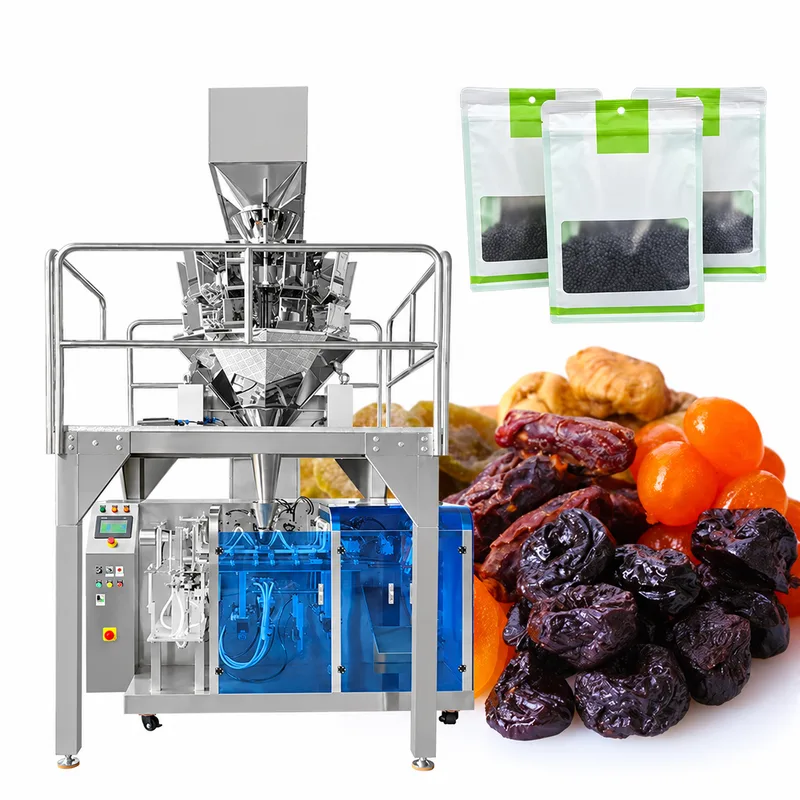
Premade Pouches
Fruit & Nuts Zipper-Pouch Packaging
A zipper pouch can be on weight while the fruit-to-nut ratio drifts. Specify this premade zipper-pouch line from your blend state, largest piece, net opening and fill weight.
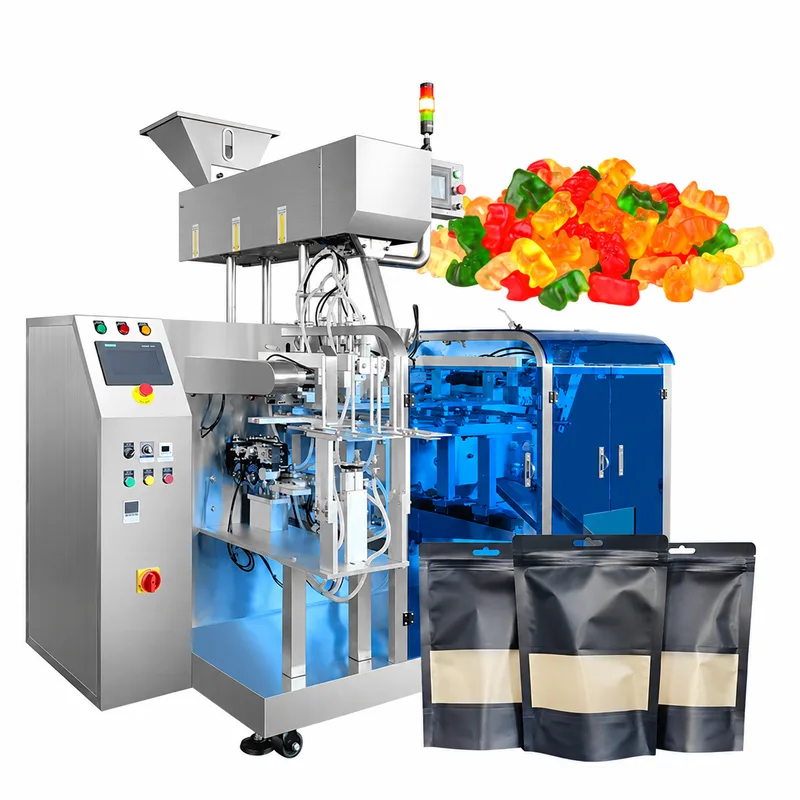
Premade Pouches
Gummy Candy Zipper-Pouch Packaging
Gummies that stick, fold or leave coating on the zipper make on-weight pouches unsellable. Specify this weigher and zipper-pouch line from your coating, piece size, net opening and changeover order.
What to send us
| Item | Why we need it | Example format |
|---|---|---|
| Production pouch samples and zipper specification | Identify the pouch construction and supplied zipper state. | Pouch specification + lot-labelled sample photos |
| Top margin and opening-clearance drawing | Review the space for gripping, opening and filling. | Dimensioned PDF: zipper / top margin / opening |
| Included opening mechanism and format parts | Match observations to the quoted handling arrangement. | Mechanism list + format-part references |
| Filled-pouch seal and usability checks | Separate initial closure integrity from consumer reclosure. | Sample ID / top-seal result / opening and reclosure notes |
We reply within 24 hours.