
What Determines a VFFS Machine Quote?
A lower quote may simply omit equipment or installation work. Align base-machine scope, format parts, buyer-supplied equipment and responsibilities before comparing totals.
| Input or item | Typical value or source | Why it matters |
|---|---|---|
| Equipment scope | Quotation component list | Distinguish base bagger from complete line |
| Format parts | Initial SKU and option list | Expose separately priced tooling |
| Buyer-supplied equipment | Existing asset and interface review | Do not book unconfirmed reuse as savings |
| Installation and support | Written responsibilities and exclusions | Compare equal project boundaries |
| Commercial basis | Currency, validity and production period | Keep quote and operating assumptions traceable |
Use the published configuration and related checks
Use these references to connect the review inputs with the published equipment scope and the next decision.
On This Page
Define what the quoted machine price includes
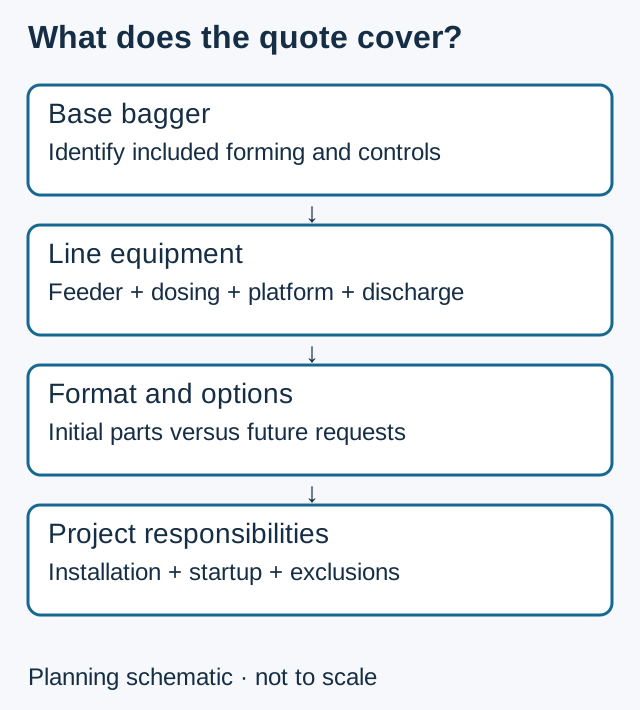
One quotation may describe the bagger alone, and another may add an elevator, dosing unit, support platform, printer and discharge conveyor. Make a scope list before you compare totals. Include the exact format tooling and the number of initial recipes, and ask which integration work is covered when equipment comes from different suppliers.
The commercial comparison should show the currency, the delivery terms and the services actually offered. Keep taxes, freight, installation travel and local electrical work as separate lines until it is agreed who owns them. A low headline equipment price cannot fairly be set against a complete installed-line quotation. The reverse holds too. A high initial price says nothing about better suitability without a technical explanation and a relevant sample trial.
Separate product and format options
Bag size changes, valve application, gas flushing and extra dosing or forming parts can all alter the quoted configuration. State the products and packs the initial order has to cover. Then find out which later changes need separately supplied parts or trials. Never compare a basic configuration with a proposal that already includes those options.
Review the project costs
Compare packing, transport responsibilities, startup support, training and spare-part provisions along with the machine itself. Get the commercial validity and the exclusions in writing. A consistent brief will get you a quotation tied to your production requirement.
Build an operating worksheet from observed tasks
Work out the operating requirements from your own production pattern. Count the planned reel changes, product changes and cleaning intervals in an ordinary shift. Include the people needed to supply product, remove finished packs and carry out quality checks. Automation can shift work from filling to replenishment or inspection, but it does not remove those tasks on its own. Base the staffing discussion on observed work at the intended output.
Track material consumption and rejected packs separately. Startup film, underweight or overweight packs, damaged product and seal rejects each hit cost differently. Keep the assumptions visible, so finance and production can change them without rebuilding the whole calculation. Use a realistic range for uncertain inputs, especially when the factory has not yet run the proposed packaging material or format on automatic equipment.
Test the sensitivity of the investment decision
Take a clearly labelled planning example. Two proposals give similar accepted output, but one needs a longer format change and the other needs more expensive packaging material. A factory running one long daily batch may value them differently from a contract packer making several short batches. Compare the expected SKU schedule, not an imagined continuous run of the easiest product. Replace every example assumption with a measured or supplier-confirmed value before approving spending.
Ask for priced options only where they address a documented requirement. Keep uncertain future capabilities apart from the initial purchase, so the team can see their incremental cost and testing needs. You should end up with a transparent comparison of equipment scope, operating assumptions and remaining risks. Request a project-specific quotation through the relevant configuration page. Catalog descriptions on this site are not current binding prices, and they do not guarantee a return on investment.
Compare cost per accepted pack using a transparent worksheet
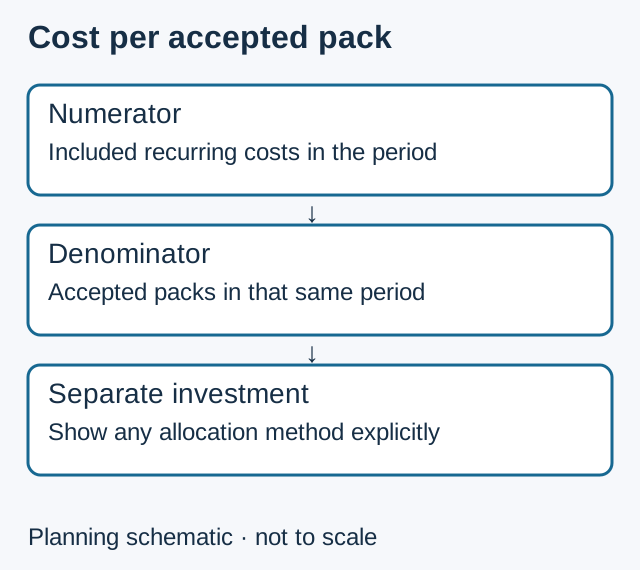
A useful cost model has separate rows for packaging material, product consumed, direct operating work and agreed maintenance allowances. Keep one-time equipment and installation costs in their own investment section. That stops a short production trial from passing as a complete financial forecast. Allocate capital and overhead by the buyer's actual accounting method. Inventing a standard payback period adds nothing.
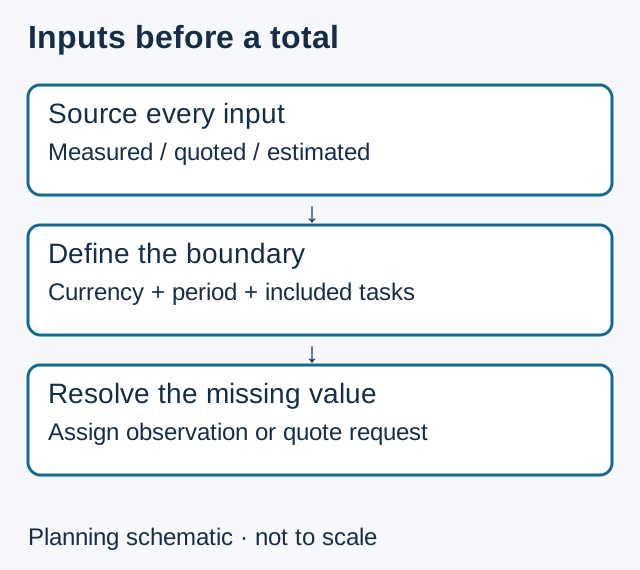
For every input, record whether it is measured, quoted or estimated. Film consumption from a short trial may still need adjusting for the expected number of reel and product changes. Labour requirements may change once inspection and case handling are added. Show those dependencies openly. A simple worksheet with visible uncertainty is more useful than an impressive total built on assumptions nobody can verify.
Use the same accepted-pack definition for every proposal. If one trial leaves out startup rejects and another counts them, their apparent material efficiency cannot be compared directly. So reconcile the counting method first. Where product can be recovered from a rejected pack, record the recovery procedure and its limits separately. A rejected unit is not automatically worth nothing, and it is not automatically fully recoverable either.
For the blank worksheet, choose a currency and a production period before entering any amount. Tag every input measured, quoted or estimated and keep its document reference beside it. Recurring cost per accepted pack is the included recurring cost for that period divided by the accepted-pack count for the same period; leave it unresolved when either input is missing. Record downtime as time and cause first. If it is later assigned a monetary effect, explain the method and check that the same loss has not already been counted through reduced accepted output or paid labour. This worksheet supplies no machine price, standard labour rate or payback result. Its output is a comparable set of inputs and a list of observations still needed.
| Cost input | Blank value | Status and source |
|---|---|---|
| One-time investment | Equipment / installation amount: TBD | Quoted or estimated; scope and revision: TBD |
| Materials and loss | Film / product consumed / rejects: TBD | Measured or estimated; trial or lot: TBD |
| Direct work | Tasks / time / cost basis: TBD | Measured or estimated; observation: TBD |
| Downtime | Duration / cause / monetary treatment: TBD | Measured or estimated; avoid double counting |
| Maintenance allowance | Included amount and basis: TBD | Quoted or estimated; reference: TBD |
| Accepted packs | Count / acceptance rule: TBD | Measured or estimated; same period |
| Recurring cost per accepted pack | Included recurring total ÷ accepted count: TBD | Exclude investment unless allocation is explicit |
Consider the cost of an unsuitable configuration
A configuration mismatch can create repeated expense that never appears in the initial quotation. Examples are a bag that needs too much manual attention at discharge, a product that needs frequent clearing or a format change that interrupts short batches. These are reasons to run representative trials. They are not grounds for assigning speculative penalties to every machine. Pin down the likely mismatch and ask for evidence that resolves it.
A missing interface can also move cost between the suppliers and the buyer. Review the product feed, utilities, printer, inspection and downstream equipment as one complete scope. Find out who will do the integration and who will verify the final line. If the buyer plans to supply an existing component, get a compatibility review before counting its reuse as a confirmed saving.
Judge spare parts and support by the arrangements that are confirmed. Record the items recommended for the selected machine, their identification and the commercial terms actually offered. Delivery times and round-the-clock support should not be assumed in an operating model. A service arrangement is worth what its defined scope is worth, and what the factory can actually use of it.
Decide which uncertainty to remove next
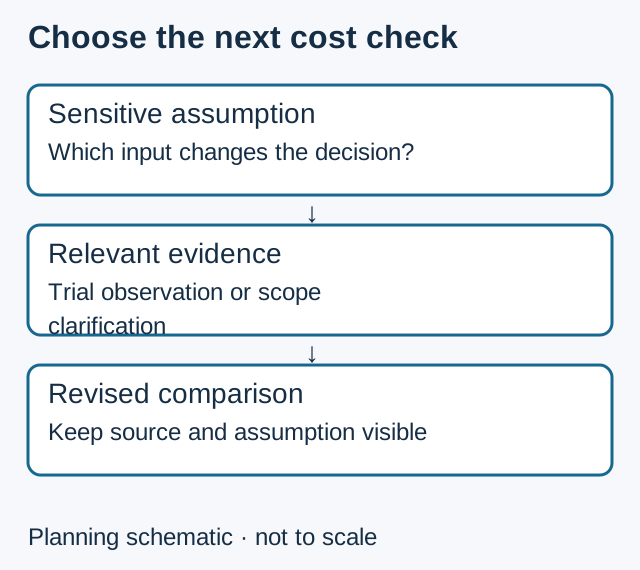
If the investment decision shifts a lot when one assumption changes, aim the next trial or supplier question at that assumption. For a fragile snack it may be accepted yield. For frequent short runs it may be changeover work. For a new pouch it may be the reliability of automatic opening. That is more efficient than asking every supplier for another undifferentiated discount.
Finish the review with a project-specific comparison, not a generic price range from the internet. Keep the quoted scope, the operating worksheet and the unresolved conditions together. When the product or package changes, revise the analysis. Carrying on with the original estimate is a trap. A credible cost decision explains its assumptions and names the evidence still needed before spending is committed.
Method and sources
This revision reorganizes the existing what determines a vffs machine quote? guidance and the linked published configuration descriptions, reviewed on 8 October 2026. The blank records and diagrams are planning aids, not customer results or independently verified equipment tests. Questions below come from the existing page’s buying questions and the 8 October editorial review, not a claimed survey or search-frequency dataset. Confirm sample arrangements, quantities and costs before sending material.
Frequently asked questions
Can a base-machine price be compared directly with a complete-line quote?
First reconcile feeders, dosing, platforms, discharge, controls and services. Different equipment boundaries make headline totals misleading.
Can buyer-supplied equipment be counted as a saving?
Only after reviewing compatibility and integration scope. An existing component may still require work that belongs in the comparison.
Which format parts should the quote include?
List the initial products and bag sizes, then request the tooling included for each. Keep future changes and their unconfirmed parts separate.
How should unmeasured labour be entered?
Mark it estimated or TBD with its task and period. Do not treat an assumed staffing figure as an observed operating cost.
Should equipment investment be included in a short-trial pack cost?
Keep one-time equipment and installation separate. Apply the buyer’s accounting allocation explicitly if a broader cost model needs it.
How are rejected packs treated in the calculation?
Define the accepted count and record material loss and any agreed recovery separately. Do not assume every reject is either worthless or fully recoverable.
Explore the Equipment
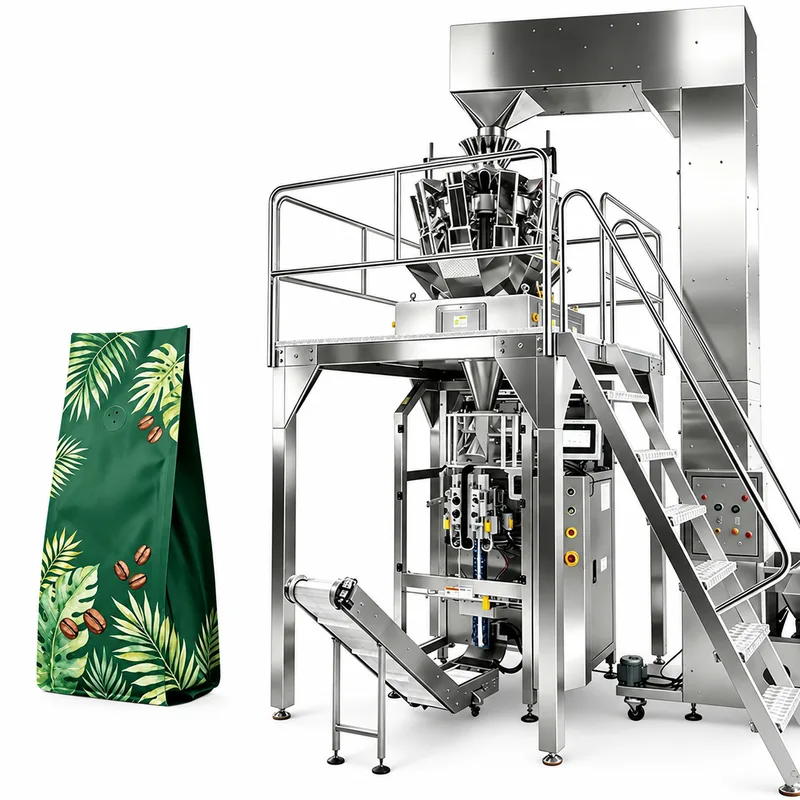
Vertical Form Fill Seal
Coffee Bean Valve-Pouch Packaging
A misplaced or poorly attached degassing valve can spoil a run of coffee bags. Specify this weigher and VFFS valve line from your valve drawing, film, roast and weight.
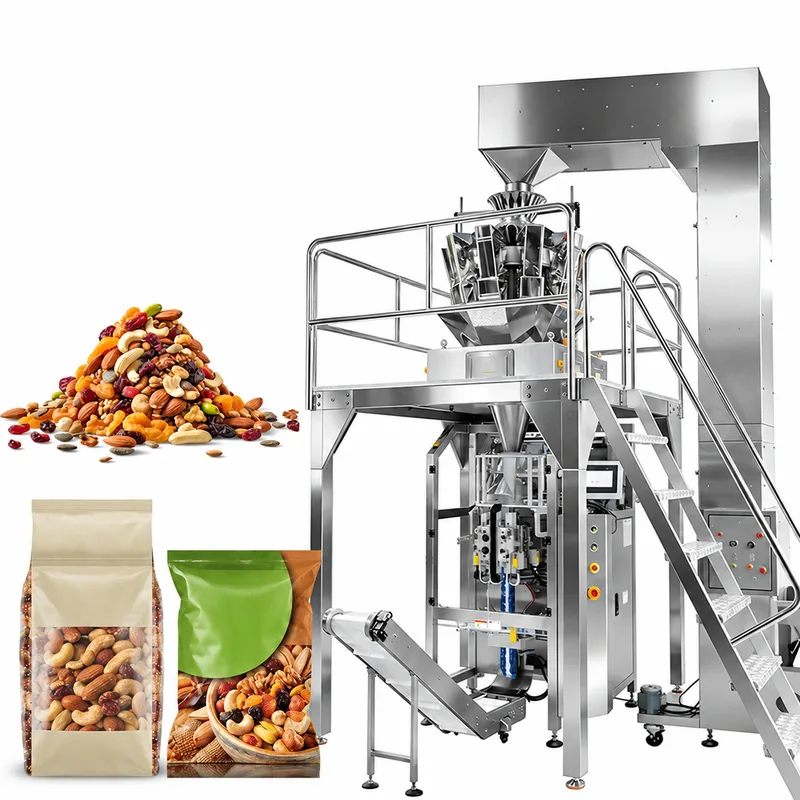
Vertical Form Fill Seal
Nuts & Dried Fruit Multihead VFFS
A nut-mix bag can be on weight and still hold the wrong ratio of ingredients. Configure this multihead VFFS line from your blend, coatings, target weight and bag size.
What to send us
| Item | Why we need it | Example format |
|---|---|---|
| Base machine versus complete line scope | Set the equipment boundary before comparing price. | Component scope sheet / quote revision |
| Options and format parts included | Identify initial tooling and separately requested options. | Initial SKU matrix / parts included or TBD |
| Delivery, startup and training responsibilities | Assign project activities and interfaces. | Responsibility matrix / service quotation lines |
| Written exclusions and quotation validity | Record the terms under which each offer is comparable. | Dated quote / currency / validity / exclusions |
We reply within 24 hours.