
Set a Packaging Output Target
Peak speed cannot guarantee shift output. Divide required accepted packs by defined production minutes, then test the complete line under those conditions.
| Input or item | Value or source | Why it matters |
|---|---|---|
| Required output | 12,000 accepted packs, assumed | Defines the numerator |
| Production window | 400 minutes, assumed | Lists planned exclusions |
| Required average | 30 accepted packs / production minute | Planning result only |
| Acceptance rule | Agreed pack criteria | Separates cycles and usable output |
| Line scope | Feeding through downstream work | Locates limiting operations |
The review decision
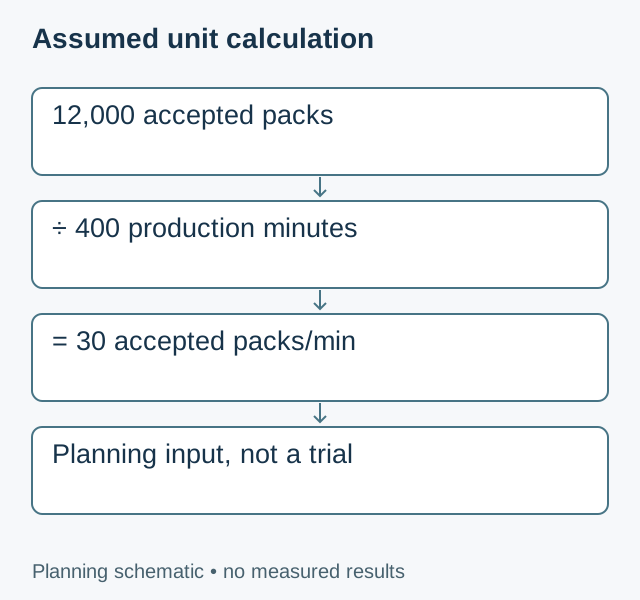
Example, assumed inputs: 12,000 accepted packs ÷ 400 available production minutes = 30 accepted packs per production minute. The 400 minutes are a planning window after the stated planned exclusions, not a claimed shift length or measured result. Define which stops remain inside that window and avoid deducting the same stop twice.
On This Page
Define accepted output and the time boundary
Example, assumed inputs: 12,000 accepted packs ÷ 400 available production minutes = 30 accepted packs per production minute. The 400 minutes are a planning window after the stated planned exclusions, not a claimed shift length or measured result. Define which stops remain inside that window and avoid deducting the same stop twice.
Start from the number of acceptable packs you need per shift or production period. Add the working hours and the planned mix of products and sizes, and list the changes and other stops the plan has to absorb. That states the business requirement far better than asking for the fastest bagger on the market.
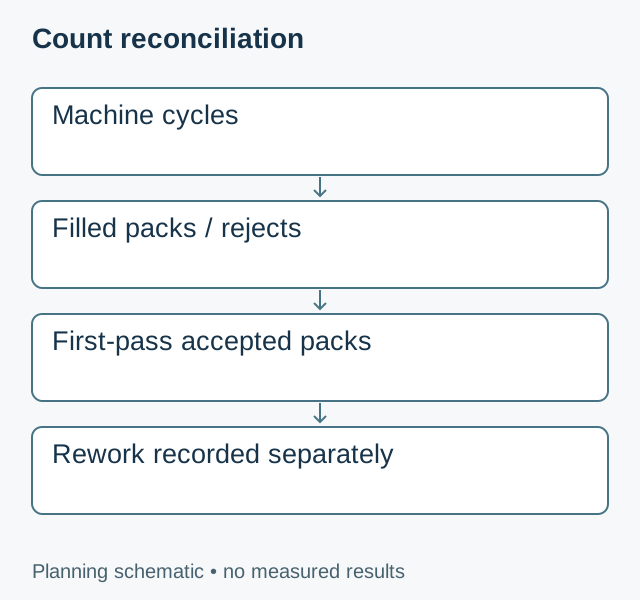
An output target names the product, the pack and the measurement period. It also separates machine cycles, filled packs and accepted packs. Rejected seals, damaged products and wrong weights never count as saleable output. Settle the definition of "accepted" before you compare quotations or demonstrations, and keep the reasons for rejection visible in the record.
Work from the production requirement over a realistic shift or batch. Allow time for replenishment, product changes, cleaning and inspections. A continuous demonstration of the easiest SKU is not a production plan. What operating condition supports the proposed rate, and which products or options might change it? Put those questions to the supplier.
Here is an illustration only. A requirement of 12,000 accepted packs across 400 available production minutes works out to an average of 30 accepted packs per minute. That figure is a planning requirement. It does not show that any particular machine can reach it. If the available time changes, recalculate the average, and keep the numbers and their source where both production and purchasing can see them.
Stacking up optimistic assumptions and calling the total guaranteed capacity is a mistake. Where uncertainty remains, build scenarios for the production schedule and say what trial evidence would settle them. Material supply, inspection and case packing can limit output no matter how well the bagger performs. Look at the whole line. The biggest number in a brochure is a poor basis for choosing equipment.
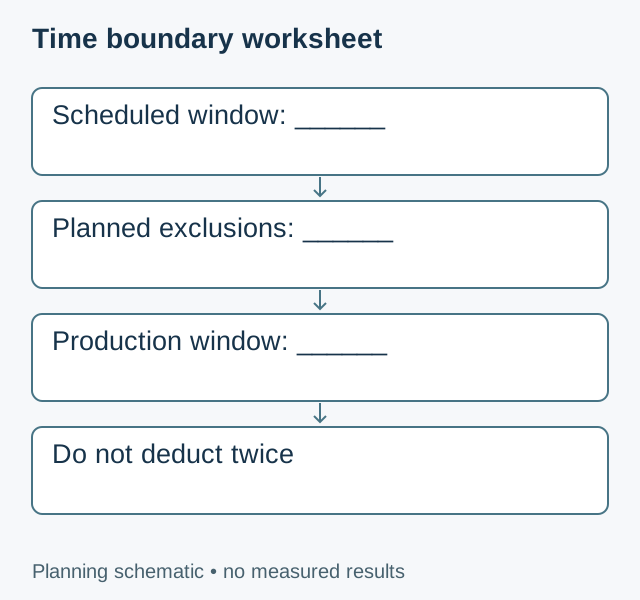
Choose either a whole scheduled-period result or a production-window result, label it, and keep the counts inside the same endpoints as its denominator. For the assumed example, list planned deductions before arriving at 400 minutes; do not subtract those same deductions again from the resulting window. If an interruption happens inside the measured window, retain its effect in that window result and classify its cause separately. A supplementary running-only rate can be useful, but it answers a different question and needs its own denominator. Keep the arithmetic sheet with the event log so the reviewer can reproduce both measures without mistaking a planning input for demonstrated machine performance.
| Field | Entry | Evidence / owner |
|---|---|---|
| Required accepted packs and SKU | ________ | ________ |
| Shift / batch window and unit | ________ | ________ |
| Planned exclusions already deducted | ________ | ________ |
| Stops remaining inside the window | ________ | ________ |
| SKU change sequence | ________ | ________ |
| Acceptance and reject definitions | ________ | ________ |
| Rework counting rule | ________ | ________ |
| Configuration and staffing | ________ | ________ |
| Evidence / assumption source | ________ | ________ |
Record the configuration and connected operations
When you talk about output, give the product, the quantity, the packaging material and any optional functions. Bring feeding and downstream handling into the review as well. A machine cycle figure, a dosing demonstration and a finished-line production run are three different observations. So each proposal should say which one backs its stated result.
Map the line from product supply to packed cases, and note which output measure applies at each stage. The feeder may be quoted in mass per time, the bagger in cycles and downstream handling in packs or cases. Only convert between them when the fill quantity and pack configuration are stated. If you skip that, a component that looks adequate may have been chosen on a number that has nothing to do with the finished output you need.
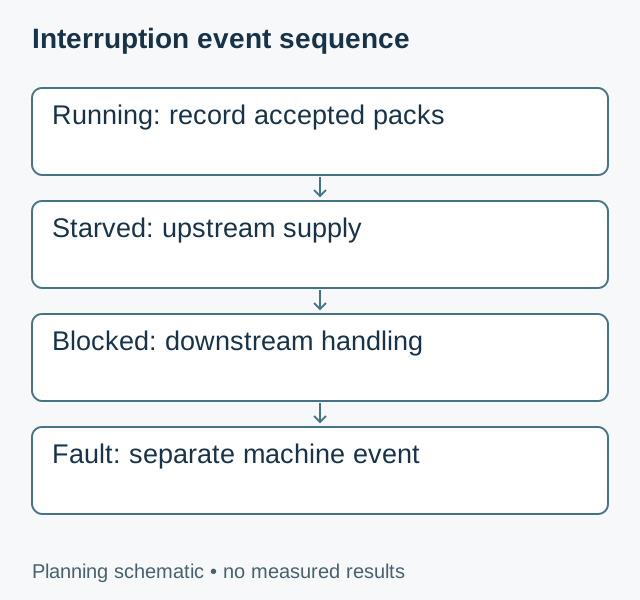
During a representative run, watch whether the bagger is starved of product or blocked by downstream work. Count those events apart from bagger faults, but include their effect in the complete-line result. A faster packaging machine may bring little benefit if manual case handling cannot clear the accepted packs. That does not automatically call for more automation. It does show which operating task needs review before the equipment scope is final.
Keep the interruption log with the output count
During a trial, log the reason and duration of every stop. Keep planned interventions apart from faults, and count how many packs are accepted after a restart. Note whether the bagger is starved by upstream supply or blocked by downstream handling. A single average would explain nothing. A log like that gives the team something to act on.
Use the result to define what was demonstrated and what work remains. If the target is missed, find the limiting operation and check the quality criteria before you raise the cycle setting. A higher displayed speed can give fewer acceptable packs when filling or sealing becomes unstable. Tie the final output figure to a defined product, material, recipe and measurement method.
Choose a measurement period and count consistently
A short stable run can demonstrate one setting. A longer scheduled trial may expose replenishment and routine interruptions. Decide which question each measurement answers. Record the period, the counts and the ordinary events, rather than quoting a peak rate with no context. If the trial ends before a planned reel change or product refill, say so, or purchasing may take the result for a full shift simulation.
Count rejects in agreed categories, and do not count one pack twice because it has two defects. Where the production analysis needs it, keep reworked packs apart from first-pass accepted packs. Anyone should be able to reproduce the arithmetic from the raw record. When a result is corrected, keep the reason for the correction. Quietly changing a summary chart or an acceptance total hides it.
Compare the production schedule with a stated scenario
Begin with the quantity due for each SKU and the period it must be finished in. Convert case quantities into individual accepted packs using the real case configuration. Keep that conversion in view. Then allocate the available production windows, including the product changes and inspections expected inside them. A monthly total can hide short daily peaks, or an order pattern made of many small batches.
Keep normal demand and any contingency scenario separate. If the buyer wants capacity for a future order, state the assumed SKU mix and packaging formats. An unexplained percentage added to today's requirement says little. Expansion may change the kind of work as well as the number of packs. A new small-portion powder format, for example, cannot be judged by raising the target for an existing large granular-product bag.
Build a small comparison between the expected production pattern and one more demanding pattern. Change identified assumptions such as batch length, format frequency or downstream staffing, and state where each one comes from. The exercise shows which uncertainties drive the decision. It is not a guarantee or a precise financial forecast when the key operating assumptions have not been measured.
Carry the important uncertainties into the sample trial or the quotation discussion. If format changes dominate the schedule, request a representative changeover record. If feeding limits the difficult SKU, concentrate on that material. If accepted output drops after routine restarts, look into the restart condition. The final capacity discussion should link the required schedule to demonstrated evidence and to clearly stated remaining assumptions. Then you can choose equipment and plan its use on solid ground.
When a planning result is not a demonstrated capacity
Send the required accepted quantities, production windows and priority SKU list with the enquiry. Say whether the target applies to one machine or a complete supplied line, and name any upstream or downstream operations the customer owns. Include the planned operator tasks and the format changes that share the same production period. The supplier then has a specific operating requirement to review. A conditional proposal is also easier to follow, because each untested assumption can be tied to a real task or material in the buyer's schedule.
Method and sources
This worksheet reorganizes the existing set a packaging output target into a project review record. Its fields and diagrams are editorial planning aids, not supplier specifications, measured results or approved procedures. The source is this site’s published guide and its configuration-review scope, revisited on 8 October 2026. The questions below follow the buyer issues identified in the page review; they are not presented as search-volume or customer-enquiry statistics.
Technical Reading
- OEM Magazine: Flexibility and Changeovers — First-hand industry meeting coverage on operating priorities; the companies discussed are independent of this site.
Frequently asked questions
Can machine cycles be used as accepted packs?
Only when the evidence establishes the corresponding accepted pack count. Cycles, filled packs and accepted packs are different measures; retain rejects and the acceptance definition with the output record.
What does the assumed 400-minute window include?
It is the example production window after explicitly listed planned exclusions. It is not a standard shift allowance. Name which interventions remain inside it and never deduct an already excluded stop again.
Should reworked bags count toward accepted output?
Define the rule before comparing results. Keep rework separate from first-pass accepted output, and count each accepted physical pack once within the stated period. Preserve the underlying records.
How should upstream starvation and machine faults be recorded?
Use separate event causes with start and finish times. Include their effects in the complete-line result while keeping upstream supply, downstream blockage and bagger faults distinguishable.
Explore the Equipment
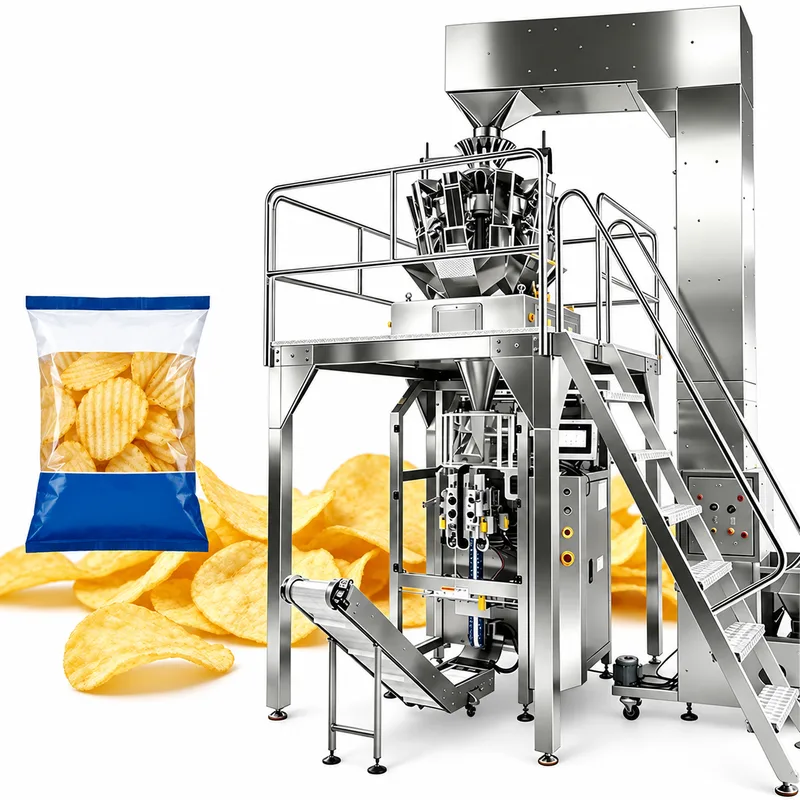
Vertical Form Fill Seal
Chips Packaging with Nitrogen Flushing
An inflated bag can hide broken chips, a short fill or a weak seal. Size this weigher, VFFS and nitrogen-flush line from your chip volume, breakage limit and gas supply.
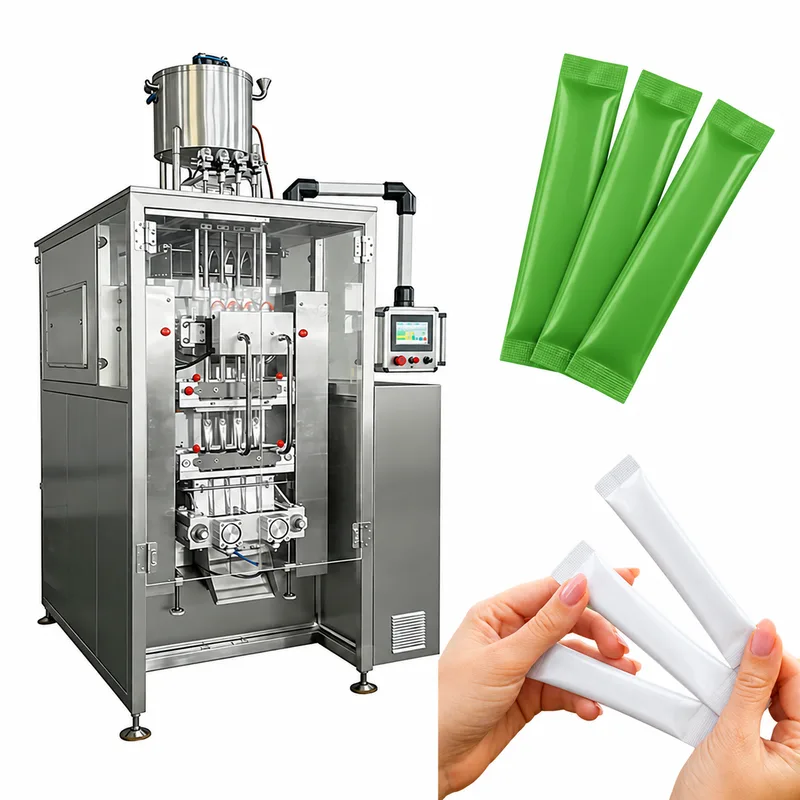
Multi-Lane Stick Packs
Four-Lane Coffee Powder Stick Packs
Instant, agglomerated, blended and ground coffee do not dose alike on one screw. Specify this four-lane coffee stick-pack line from your exact formula, serving and stick, and check every lane.
What to send us
| Item | Why we need it | Example format |
|---|---|---|
| Finished-pack demand and working schedule | Connect this review point to its supporting record and unresolved questions. | Labeled project brief with record references |
| Pack mix and planned changes | Connect this review point to its supporting record and unresolved questions. | Dated document or drawing with revision |
| Complete equipment and option scope | Connect this review point to its supporting record and unresolved questions. | Annotated photographs plus matching worksheet entries |
| Trial output, rejects and interruption record | Connect this review point to its supporting record and unresolved questions. | Review log: open item, owner, evidence and status |
We reply within 24 hours.