
Plan Feeding for Sticky Products
A short demonstration can hide buildup and manual help. First distinguish interrupted supply, retained product and clumps, then observe temperature, coating and dwell time through a representative run.
| Input or item | Value or source | Why it matters |
|---|---|---|
| Interrupted supply | Observe inlet and outlet | Check whether product actually arrives |
| Retained material | Inspect approved contact points | Locate holding and delayed release |
| Clumps | Record product at entry | Separate joined pieces from feeder behavior |
| Product condition | Temperature, coating and dwell history | Make the sample representative |
| Operating pattern | Processed quantity and interventions | Keep manual work visible in output |
Choose the next review for your project
Use the records below to identify the unresolved decision. These related pages explain the corresponding configuration, measurement or service scope.
On This Page
Define the production condition
Record the temperature, moisture, surface oil or sugar and storage condition before packing, and tell the supplier how much the product normally varies in production. A sample that dried out in shipping may not represent what runs on the line. Agree how samples will be handled, so the feeding assessment answers the real production question.
Stickiness comes from process conditions as much as from the product category. Record the coating, the temperature and how long the material has sat in storage or in the feed hopper. A freshly prepared gummy or fruit piece may behave differently after standing. Photograph clumps and residue, and say whether the product arrives as separate pieces or needs upstream separation before it enters the packaging line.
Trace every surface the material touches. Watch the hopper walls, feeder paths, weighing buckets and discharge chutes during the trial. You are looking for where product starts to accumulate and how that affects the next dose. A named surface finish does not cure every sticking mechanism. Get the proposed contact materials and a trial with the actual formulation.
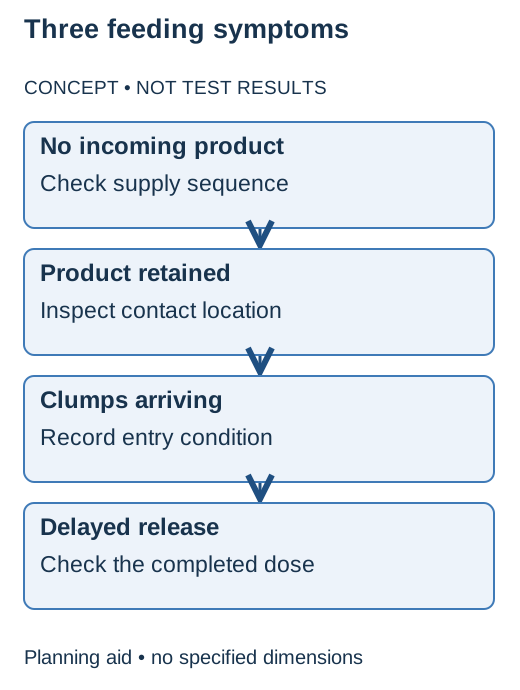
Distinguish supply gaps, retention and clumps
A feeder that looks slow may be waiting for product, holding on to product or receiving clumps that cannot move as single pieces. Those are different problems. Watch the inlet and outlet together from safe viewing positions and record the sequence. Fewer pieces leaving the feeder is not a reason to raise a setting straight away. First find out whether the supply arrives consistently and whether held-back material later lets go as an uncontrolled group.
Gummy candy, coated fruit and moist pieces can all look sticky while raising different handling questions. Describe the surface condition and the time between production and packing. If product waits in an intermediate container during normal work, put that dwell time into the sample plan. A fresh sample delivered straight to the machine can hide a change that develops in storage. An old dry sample hides the production difficulty altogether.
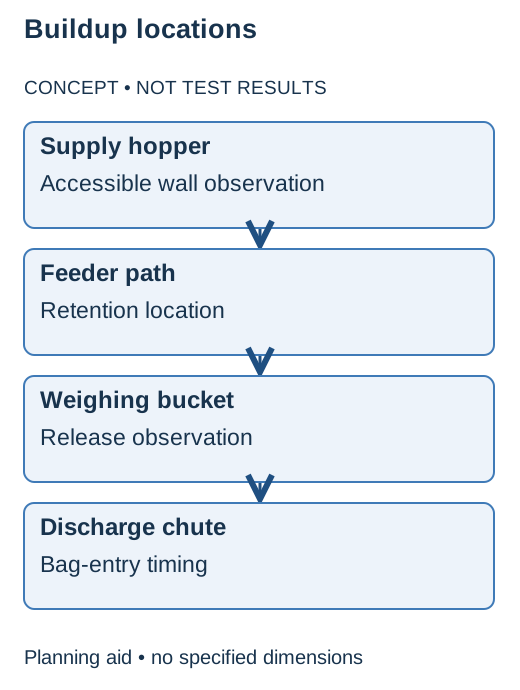
Observe buildup and interventions over time
Review the proposed contact surfaces and watch the product move through feeding, weighing and discharge. Note any retained material and where buildup begins. Find out how those areas are reached for the intended cleaning procedure. A surface option may not solve every adhesion problem, and only a test with your actual product will show whether it does.
The first successful bags tell you little. Compare release, fill results and pack appearance across the agreed run and after replenishment, and record any cleaning or intervention that was needed. The acceptable operating pattern should be agreed with the buyer. A single isolated maximum output figure can hide it.
A few successful packs at startup can come before gradual residue buildup. The trial should therefore run long enough to show the relevant product behaviour, including pauses and replenishment. Record when sticking starts, where it happens and what it takes to restore normal feeding. Log manual intervention separately from automatic output. Otherwise the apparent rate hides frequent operator work.
Inspect dose consistency and product condition together. An adjustment that frees a clump may damage soft pieces or change the distribution of a mixed product. Check the sealed bag for material caught in the closing area. If the symptom shows up at the seal, follow it back through discharge timing and product separation. Treating it only as a sealing-temperature problem would miss the cause.
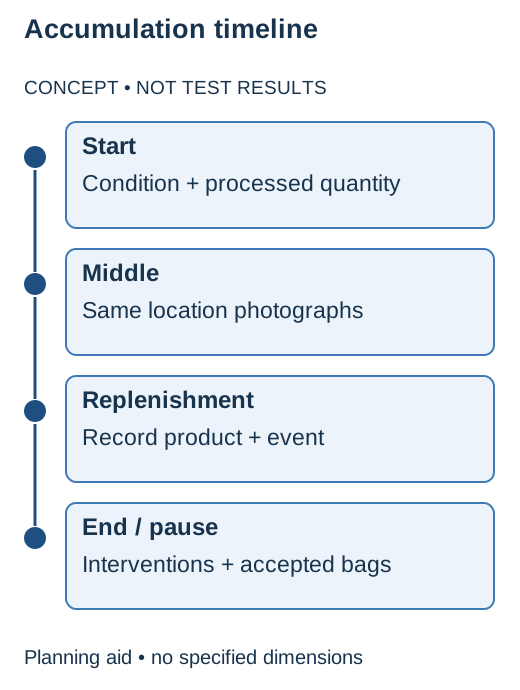
Agree observations at the beginning, middle and end of the planned run, with extra notes after replenishment. Photograph the same accessible locations under comparable lighting. Note whether visible accumulation grows, levels off or clears now and then. That tells you far more than calling the machine "clean" or "dirty" with no timeline and no figure for the product processed.
Include the operator actions needed to keep product moving. If staff keep redistributing the material, cleaning a contact area or interrupting feeding, write down the task and the interruption. Such actions may be acceptable within an agreed process, but they have to show up in the capacity and staffing assumptions. A demonstration should not hide manual help just because the finished bags look good. Tie any rejected or double-filled packages to the event that caused them.
Complete the observation record
Repeat the observation record at the same accessible locations across the agreed run. Use comparable photographs where photography is permitted, and identify the quantity processed rather than describing a location only as clean or dirty. Keep manual redistribution, approved cleaning and other interventions in the event record with their interruptions. A period that required assistance should not be presented as uninterrupted automatic operation. If a surface option is changed, identify the component revision and preserve the earlier observations. When several parts or settings change together, record a configuration comparison and avoid assigning the outcome to one texture. The table contains no universal running duration or residue limit.
| Field | Your record | Keep with this record |
|---|---|---|
| Accessible location / photo reference | ________ | Record the source, identity or agreed method. |
| Observation time / run stage | ________ | Record the source, identity or agreed method. |
| Product processed / unit | ________ | Record the source, identity or agreed method. |
| Batch / temperature / coating / dwell state | ________ | Record the source, identity or agreed method. |
| Manual action / responsible operator | ________ | Record the source, identity or agreed method. |
| Interruption / restart event | ________ | Record the source, identity or agreed method. |
| Accepted and rejected bags / inspection record | ________ | Record the source, identity or agreed method. |
Assess cleaning and changeover access
Look at how retained product is removed from the contact path. Which parts come off, where are they handled, and how are they checked before reassembly? Cleaning instructions and permitted methods must come from the selected equipment documentation and the buyer's process requirements. A shiny stainless surface is no evidence, on its own, that a particular cleaning method is suitable.
Document the accepted product condition, the contact-surface configuration and the operating recipe. Include any limits found in testing, such as a coating or temperature condition that needs more work. Build those limits into what you buy. One sample result is no basis for saying the machine handles all sticky foods. Repeat the relevant checks when a supplier, recipe or coating changes.
When a surface comparison does not generalize
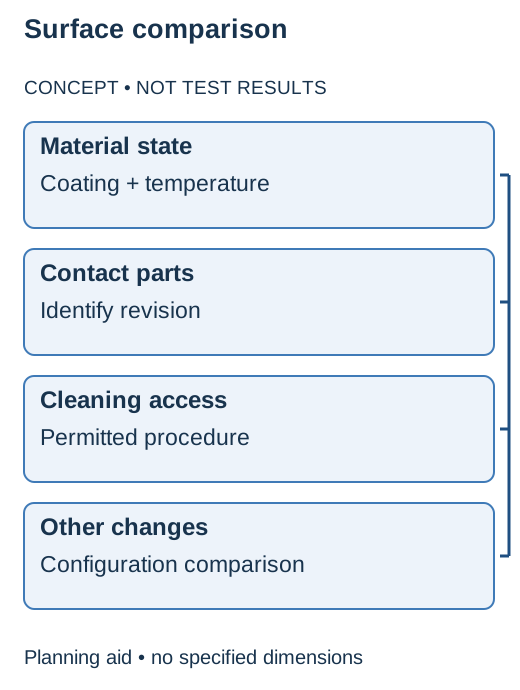
A proposed contact finish, liner or feeder component should have an identified purpose and an agreed compatibility review. Find out which parts differ from the base configuration and how they are removed or inspected. A textured surface is not always better. The actual product, residue and cleaning method decide what has to be assessed. A component recommendation is only useful when its effect can be compared under the same material condition.
For a fair comparison, keep the fill target and package unchanged while you test the agreed contact arrangement. Measure retained product by a practical method approved for the trial, and inspect the condition of the material that stays behind. If several options change together, call the result a configuration comparison. Crediting one surface alone would claim more than the demonstration isolated, and the purchasing decision should not rest on that.
Review discharge into the finished package
Sticky material can release late, even after the dose has been measured. Watch whether every piece reaches the package before the closing operation and whether any touch the mouth or seal region. This matters especially when you compare a roll-film format with a premade zipper pouch, because the usable opening and the transfer path differ. A good weighing demonstration outside the bagging process does not show a good packaged result.
Close the review with operating boundaries that production staff can recognise. Name the material condition tested, the approved contact parts, the required cleaning checks and the package used. Define what triggers a fresh review, such as a new coating or a change in storage practice. Keep these conditions with the recipe so that the accepted process stays tied to the real product. A broad category name such as confectionery is no substitute.
Method and scope of this guide
This revision of Plan Feeding for Sticky Products organizes the existing published review points into a buyer preparation record. The diagrams illustrate three feeding symptoms, buildup locations, accumulation timeline, surface comparison. They contain no measured trial results, approved engineering dimensions or acceptance thresholds. The empty record fields are prompts for project evidence, not a completed inspection. Source: the existing guide and the published Configuration Review and Sample Testing service descriptions, accessed October 8, 2026. Before sending physical samples, confirm receiving arrangements, quantity and costs. Keep any recommendation tied to the supplied material, proposed configuration and outstanding questions.
Frequently asked questions
Is the feeder short of product or holding it back?
Observe inlet and outlet together from approved positions. Record missing supply, retained pieces and incoming clumps as different observations before changing a setting.
Why might a clean startup later develop buildup?
Compare the same accessible locations through the run with processed quantity, coating, temperature and dwell history. A few early bags do not describe cumulative behavior.
Is a textured contact surface always better?
No. Compare the actual product, residue, permitted cleaning method and identified components. If several options change together, the result applies to that configuration.
How can late release affect the closing area?
Observe whether the whole measured dose reaches the package before closing and whether pieces remain near the mouth or seal. Keep package findings alongside release observations.
Explore the Equipment
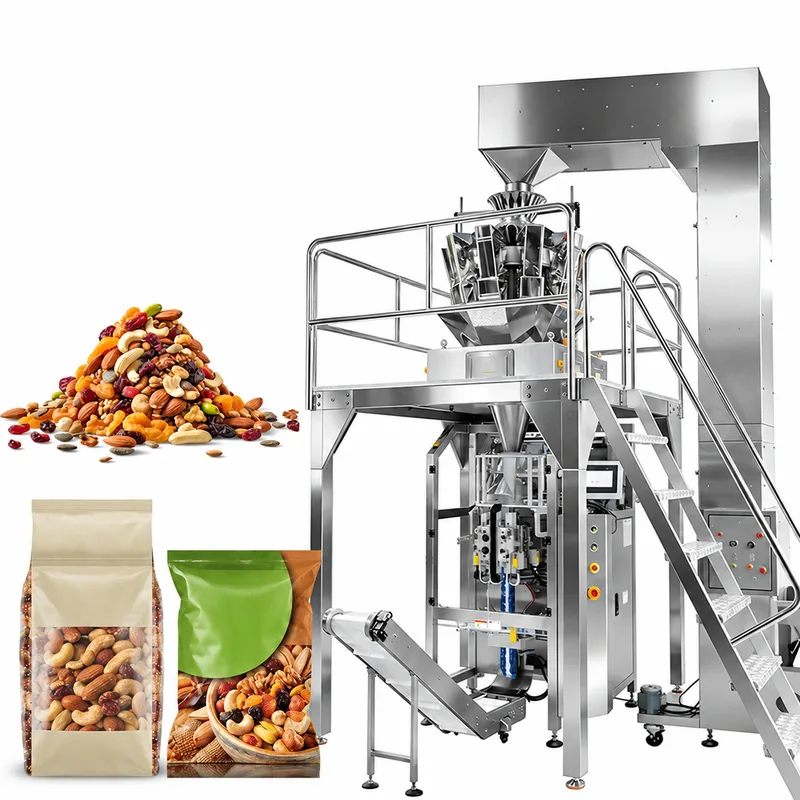
Vertical Form Fill Seal
Nuts & Dried Fruit Multihead VFFS
A nut-mix bag can be on weight and still hold the wrong ratio of ingredients. Configure this multihead VFFS line from your blend, coatings, target weight and bag size.
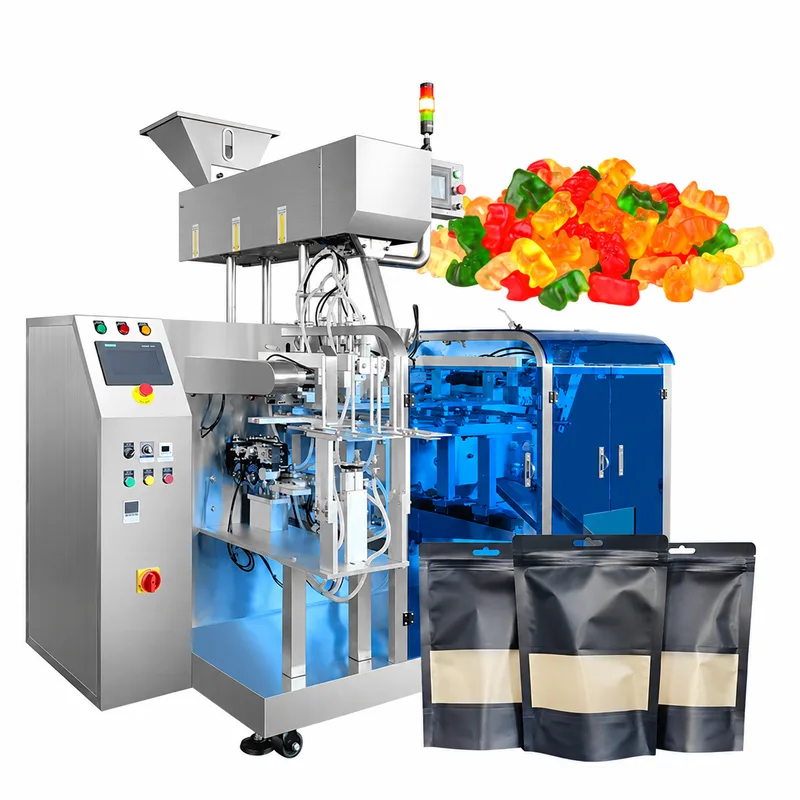
Premade Pouches
Gummy Candy Zipper-Pouch Packaging
Gummies that stick, fold or leave coating on the zipper make on-weight pouches unsellable. Specify this weigher and zipper-pouch line from your coating, piece size, net opening and changeover order.
What to send us
| Item | Why we need it | Example format |
|---|---|---|
| Production temperature and surface-condition details | Describe the material condition that the feeder will encounter. | Batch / coating / temperature / dwell-history sheet |
| Representative product samples | Keep sample condition representative of production. | Sample label: product / lot / handling condition |
| Release and buildup inspection locations | Locate retained material and delayed release. | Contact-path sketch + location-tagged photographs |
| Cleaning access and intervention record | Expose cleaning work and assistance in the operating record. | Time / action / interruption / accepted-bag log |
We reply within 24 hours.