
Gummy Candy Packaging
Deformed gummies and sugar in the seal can reject a correct-weight pack. Compare roll-film VFFS and premade zipper pouches with the actual coating and shape.
| Input or route | Material / evidence to provide | Decision to review |
|---|---|---|
| Roll-film VFFS | Film roll; portion passes through the formed-bag entry | Check gummy damage and sugar in the seal; send film and gummy samples |
| Premade zipper pouch | Made pouch; portion passes through the opened zipper | Check clusters, zipper and top-seal contamination; send production pouches |
Choose the configuration from the product and package
Choose the package supply first: roll film for VFFS or manufactured zipper pouches for the premade route. Compare both using the same gummy deformation, coating and release criteria, then assess each route’s entry and seal space.
On This Page
Build a gummy sample set with meaningful variation
A gummy packaging project needs samples that represent texture, size and surface treatment. Split sugared, oiled and fairly dry products when they behave differently, even if they share a brand or bag design. Include the normal shape variation and the occasional clusters found in production. Tell the supplier what condition the gummies are in at the packing point and how they arrive from the previous process.
The catalog offers confectionery multihead VFFS and premade zipper-pouch configurations. Neither route removes the need for a product-handling review. First decide which gummies must run on the proposed equipment and which are only future possibilities; that gives you a realistic sample plan. A trial with one easy product has value. But its results stay with that gummy and that configuration. They do not extend to all soft confectionery.
Define damage in terms of the retail product
Soft sweets can be unacceptable for reasons other than broken pieces. You may care about stretched shapes, visible contact marks, coating loss or pieces stuck to each other. Agree which observations matter and examine incoming samples against the same criteria; that sets a baseline before the product goes through the proposed feeder and weigher.
Collect finished samples from identifiable trial stages, and do not choose only the attractive bags. Judge product condition separately from fill quantity. A correctly weighed portion can still hold deformed or clustered gummies, and an appearance problem may have started upstream. Recording those differences helps the supplier aim a change at contact surfaces, feeding or discharge. It also keeps a quality discussion from turning into an argument over what acceptable candy means.
Review surface options through repeated release
Find out which contact surfaces are proposed for your gummy coating, and how they are built into the feeders, weighing hoppers and discharge path. Watch whether pieces release fully on each cycle and whether the pattern shifts as the run goes on. A coating or dimpled finish has to be judged as part of the whole product path. On its own it is not a universal answer.
Pay close attention to material left behind during pauses and after replenishment. Note where it sits and what condition the product is in, without inventing a handling procedure. The supplier should explain the inspection and adjustment approach it intends. For a buyer, the useful outcome is a documented release assessment and a clear idea of routine access needs. That tells you more than a general promise that gummies will never stick to any part of the machine.
See how a premade zipper pouch reaches the filling point
The gummy zipper-pouch configuration works with bags that are made before they reach the machine. Its published workflow covers picking up the bag, opening the bag and zipper, measuring the portion, filling, top sealing and discharge; that gives a buyer several real mechanisms to inspect besides the weighing display. The machine has to present an opening that suits your gummy. Then it has to return the pouch to a position where it can take its final seal.
Bring empty bags from the pouch supplier you plan to use, and a filled retail reference. Ask for a demonstration that follows the pouch from pickup through discharge, with the camera or viewing position covering the opening stage. Compare the shape of the empty opened pouch with the largest gummy or cluster that normally enters the line. If the product is sugar coated, run it coated in the same demonstration. A dry uncoated sweet is not a fair substitute.
For the purchasing record, photograph the accepted pouch sample and note its supplier revision. If the project later moves to roll-film VFFS, keep the gummy-quality requirements but write a new bag-forming brief. The product stays the same. The equipment that handles the package changes a great deal.
Check the zipper pouch with actual gummies
Premade zipper pouches have to be supplied as physical samples, because outside dimensions do not define the usable filling opening. Show the zipper design, the top sealing margin and any special features. Watch the proposed opening sequence with the actual pouch. Then watch the gummy portion go in, since large or clustered pieces must clear the same path as the rest of the product.
Check whether sugar or product reaches the zipper and top seal during filling. Keep samples from the trial and judge the finished retail look after closing. If the pouch supplier changes the zipper or material later, arrange a compatibility review. The premade route offers one specific package-handling sequence. It does not approve every pouch that looks similar in a product photograph or artwork drawing.
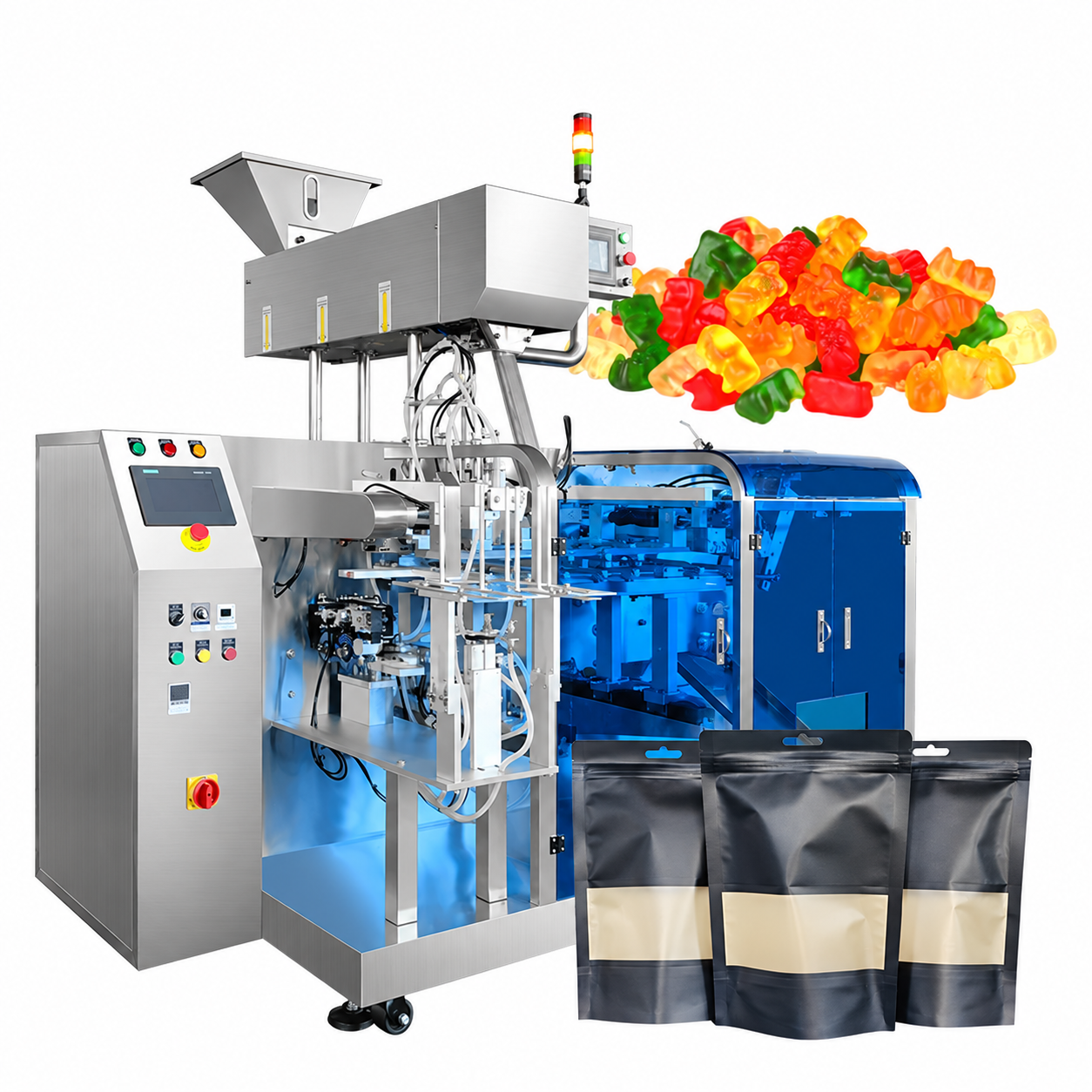
- Gummy samples including coating and size variation
- Product temperature and clustering behavior
- Damage, sticking and release acceptance checks
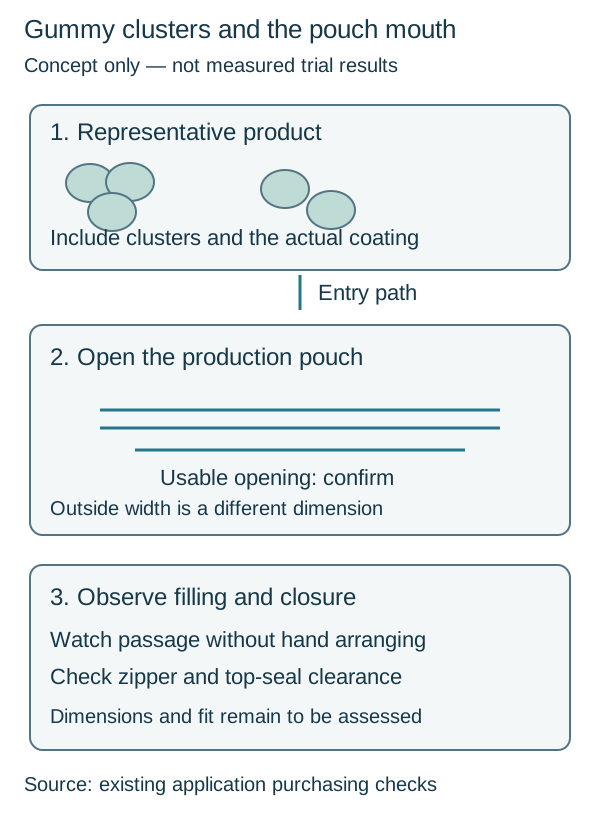
Compare VFFS using the same quality criteria
For a film-roll route, provide the bag dimensions, film structure and fill quantity you want. The supplier should explain how the forming and discharge arrangement copes with the gummy volume and shape. Review the end of filling and the sealing area as carefully as the main portion release. A machine that forms an empty bag has shown very little. The real test is whether it closes that bag around soft confectionery.
Use the same product-condition and quantity criteria when you compare VFFS with premade pouches. Also note the practical differences in packaging-material supply, format changes and downstream handling. The comparison is more useful when both routes face the same gummy samples and the same retail objective. The most elaborate pouch or the highest nominal cycle setting does not necessarily give the best commercial result for your product range.
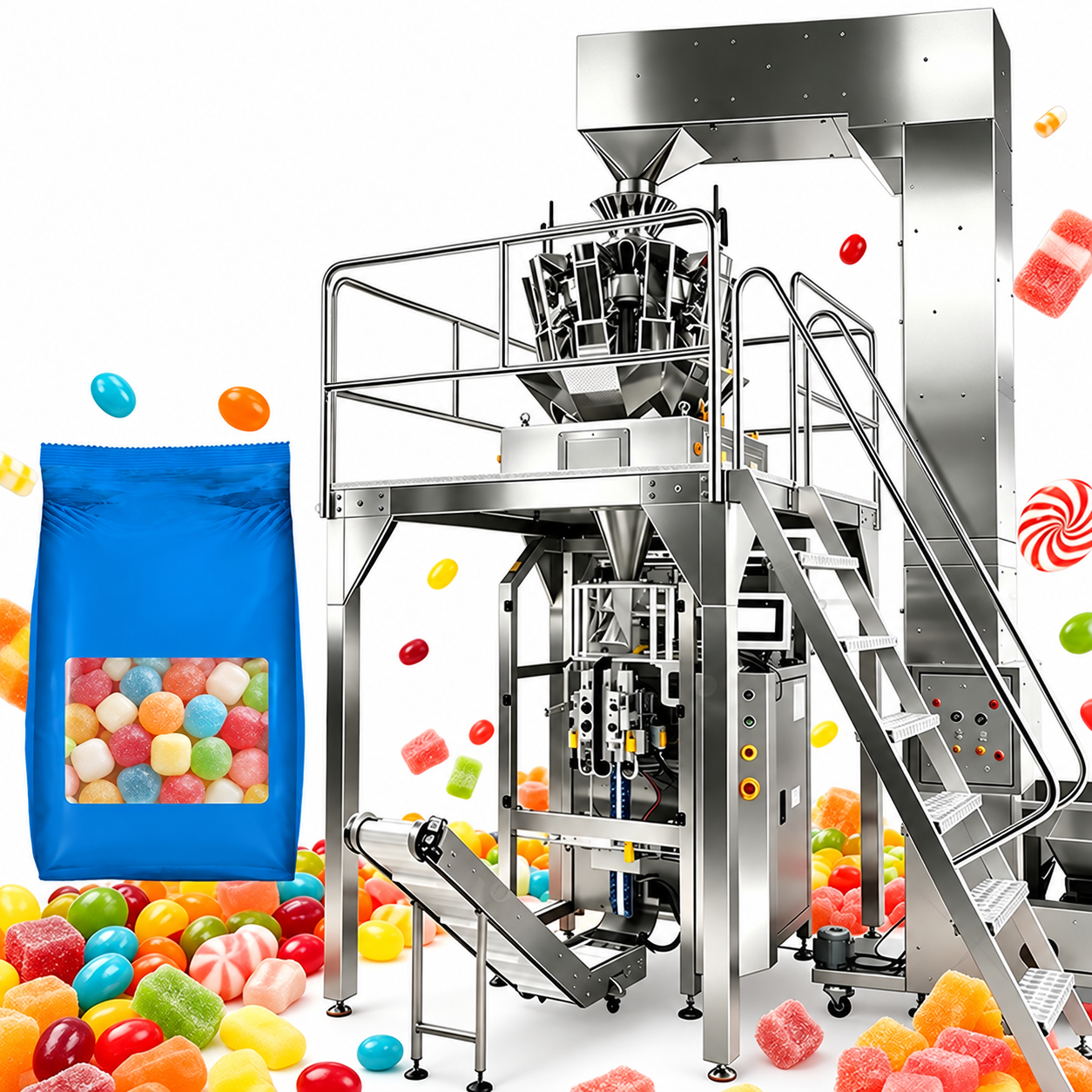
Design a changeover that resembles normal production
List your gummy coatings and flavors in the order you are likely to run them. Describe the cleaning method the factory requires and have the supplier show access to the relevant contact parts. Sort out which changes need different hardware, which involve a new bag format and which need only a confirmed setup adjustment. Keep those activities separate in any changeover record.
Where practical, demonstrate one meaningful product change and keep the first accepted packs of the next run. Record the parts handled and the observations used to confirm the new setup. The trial should inform planning. It does not validate the factory's full cleaning process. If future formulas are not available for testing, list them as open compatibility questions. A shared gummy category does not guarantee the same handling and cleaning requirements.
Turn the observations into an order specification
Pull the product samples, package drawings, target quantities and trial records into one short configuration brief. Include the upstream feed, the proposed platform if there is one and the route for collecting finished bags. Confirm the space for pouch or film replenishment and the access to the product path. The quotation should list options and unresolved material limits separately.
Method, sources and applicability
This page reorganizes the published gummy candy packaging application and the linked equipment descriptions into a purchasing brief. The comparison is based on public configuration information, not our test of the alternatives. The observation tables are blank records to complete with the actual product; they contain no measured results. The questions below come from the purchasing issues already discussed on this application page, rather than a new search-question survey.
A demonstrated gummy and pouch combination does not cover future formulas or visually similar pouches. Cleaning validation stays with the factory process. The comparison describes published configurations and observations to request, not a tested ranking of the two routes.
Technical Reading
- Gummy zipper-pouch workflow — Published configuration or planning guidance; reviewed 8 October 2026. inspect pickup, opening and top sealing.
- Candy VFFS configuration — Published configuration or planning guidance; reviewed 8 October 2026. compare the film-forming route.
- Sticky-product feeding — Published configuration or planning guidance; reviewed 8 October 2026. observe coating retention and release.
- Fragile-product handling — Published configuration or planning guidance; reviewed 8 October 2026. define damage before comparison.
- Zipper-pouch opening — Published configuration or planning guidance; reviewed 8 October 2026. review the actual usable mouth.
- Configuration review scope — Basis for the proposed-scope and missing-information response; reviewed 8 October 2026.
- Sample testing arrangements — Confirm availability, sample quantity, handling and costs before shipment; reviewed 8 October 2026.
Frequently asked questions
Can one configuration pack every gummy shape?
Only a sample-based size and handling range can answer that. A shape change raises contact, deformation and discharge-clearance questions even if the dose and bag remain unchanged. Record which parts and settings were assessed with each gummy.
Can a surface finish alone prevent sugar buildup?
No. Assess the whole contact path with the production coating through repeated release and pauses. Record retained sugar, the location and the agreed inspection access; a surface name does not establish the result.
Can I swap the zipper-pouch supplier without another check?
Review the new physical pouch. Its opening, zipper, material and top sealing margin may differ even when the artwork looks similar. This is a package-interface review, distinct from checking a new gummy shape.
Explore the Equipment
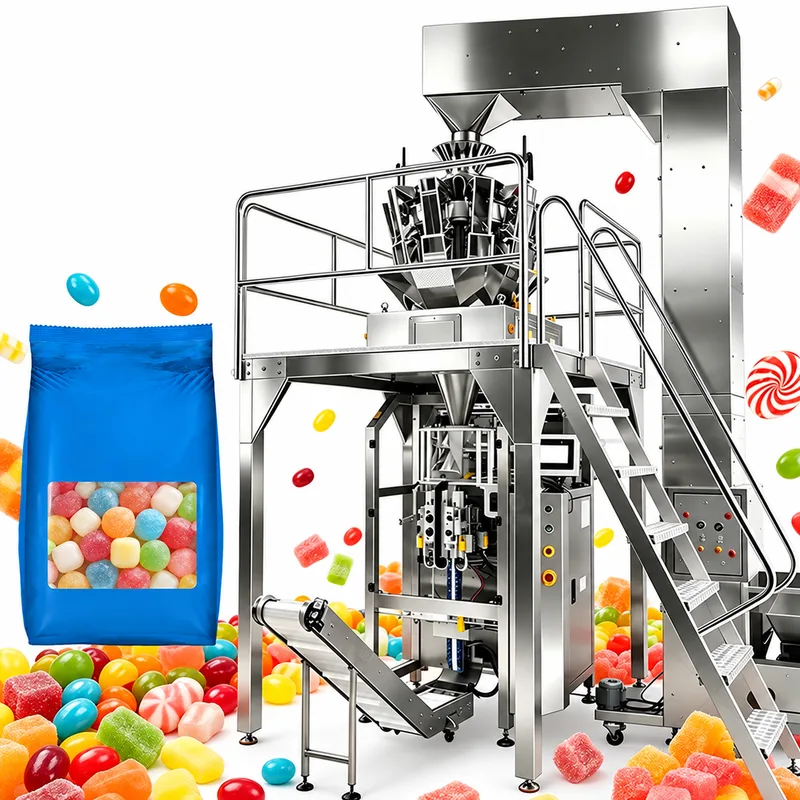
Vertical Form Fill Seal
Candy Multihead Weighing & Packaging
A correct bag weight can still hide broken, stuck or wrongly mixed sweets. This multihead weigher and VFFS line is set up around your candy's coating, size and pack.
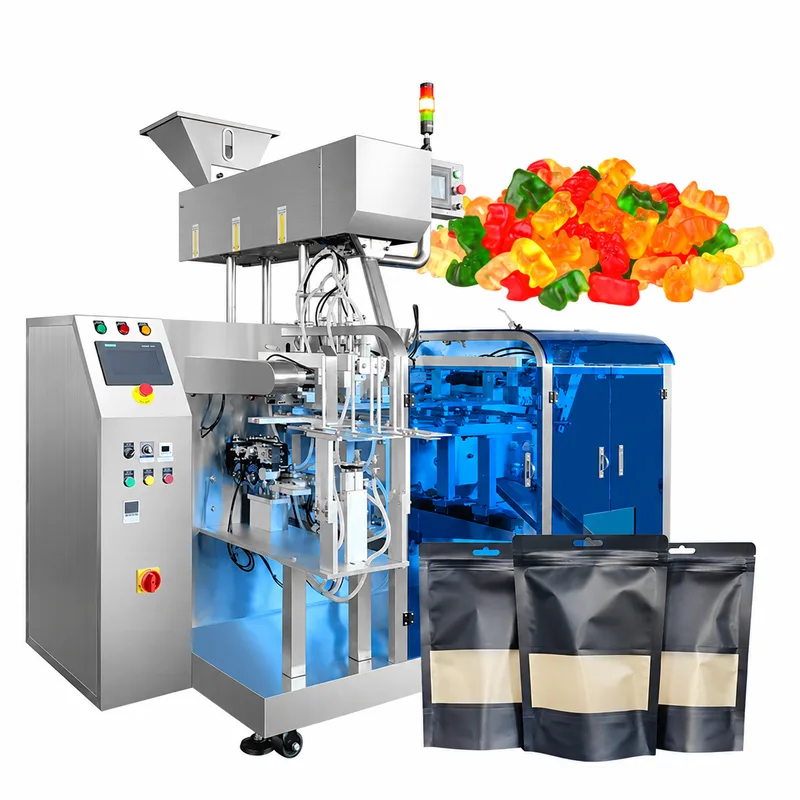
Premade Pouches
Gummy Candy Zipper-Pouch Packaging
Gummies that stick, fold or leave coating on the zipper make on-weight pouches unsellable. Specify this weigher and zipper-pouch line from your coating, piece size, net opening and changeover order.
What to send us
| Item | Why we need it | Example format |
|---|---|---|
| Gummy coating and size variation | Select representative handling samples | SKU labels + shape and coating photos |
| Temperature and clustering | Define the condition reaching the feeder | Condition note + cluster sample labels |
| Damage and release criteria | Separate deformation, sticking and quantity | Incoming/finished observation sheet |
| Film or production pouches | Review entry, zipper and sealing space | Dimensioned PDF + supplier-revision labels |
We reply within 24 hours.