
Candy & Gummy Packaging
A correct candy bag weight can hide the wrong count or assortment. Specify the candy condition, acceptance target and roll-film or zipper-pouch route.
| Route and candy condition | Weight / count / composition | Configuration to review |
|---|---|---|
| Roll-film multihead VFFS: Size, rigidity, stickiness and coating | Set each required target separately; weighing alone does not confirm count or ratio | Candy multihead VFFS source linked above |
| Premade zipper pouch: Actual gummy or other solid sample and release behavior | Keep the same separate acceptance targets; a zipper does not control the assortment | Gummy zipper-pouch source linked above |
Choose the route before specifying the equipment
Compare roll-film multihead VFFS with premade zipper-pouch handling using your actual candy. Weight, piece count and ingredient proportions are separate targets on either route.
On This Page
Build a confectionery configuration around the assortment
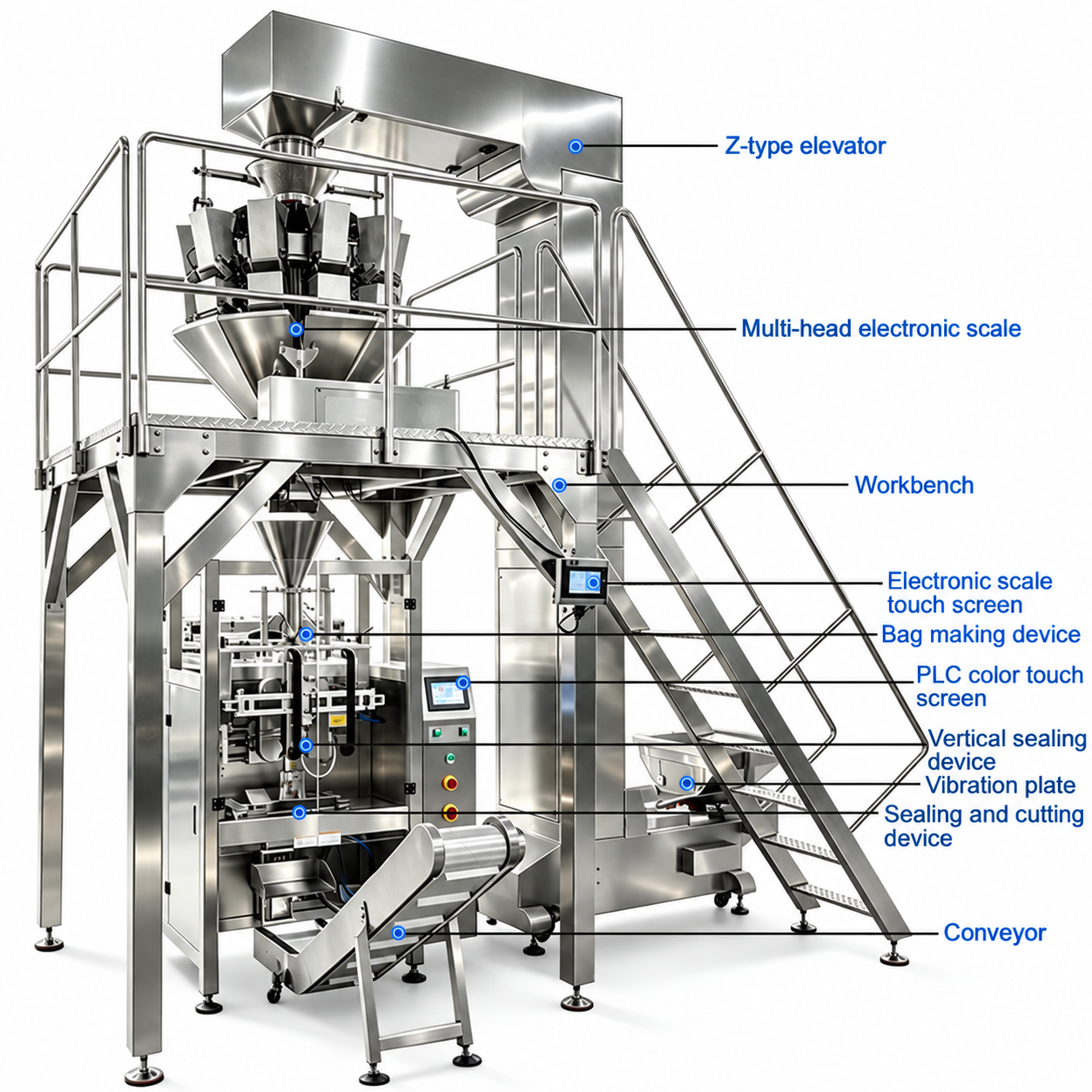
The confectionery range gives you two sensible places to start. One is a multihead VFFS line, which weighs the candy and makes the bag from roll film. The other is a gummy zipper-pouch line, which fills a bag that arrives with its zipper already made. On the second route the machine has to pick up each pouch and open it before filling. On the first, the forming assembly and film build the bag during the cycle. That difference matters whether the artwork shows one flavor or a mixed assortment.
For a new candy range, put together a physical assortment tray to go with the package sample. Keep the smallest, largest and softest pieces in separate areas so the equipment team can see the extremes the line has to handle. If any sweets are individually wrapped, label them apart from the unwrapped candy and ask for a separate handling assessment. The category name "confectionery" does not settle that question.
Each assortment in the proposal should be tied to a contact-part arrangement and a bag format. If one packaging unit is proposed for several products, the supplier should explain what stays the same and what changes between them; that gives you a real equipment selection for the retail range, not a machine that treats every sweet as the same bulk material.
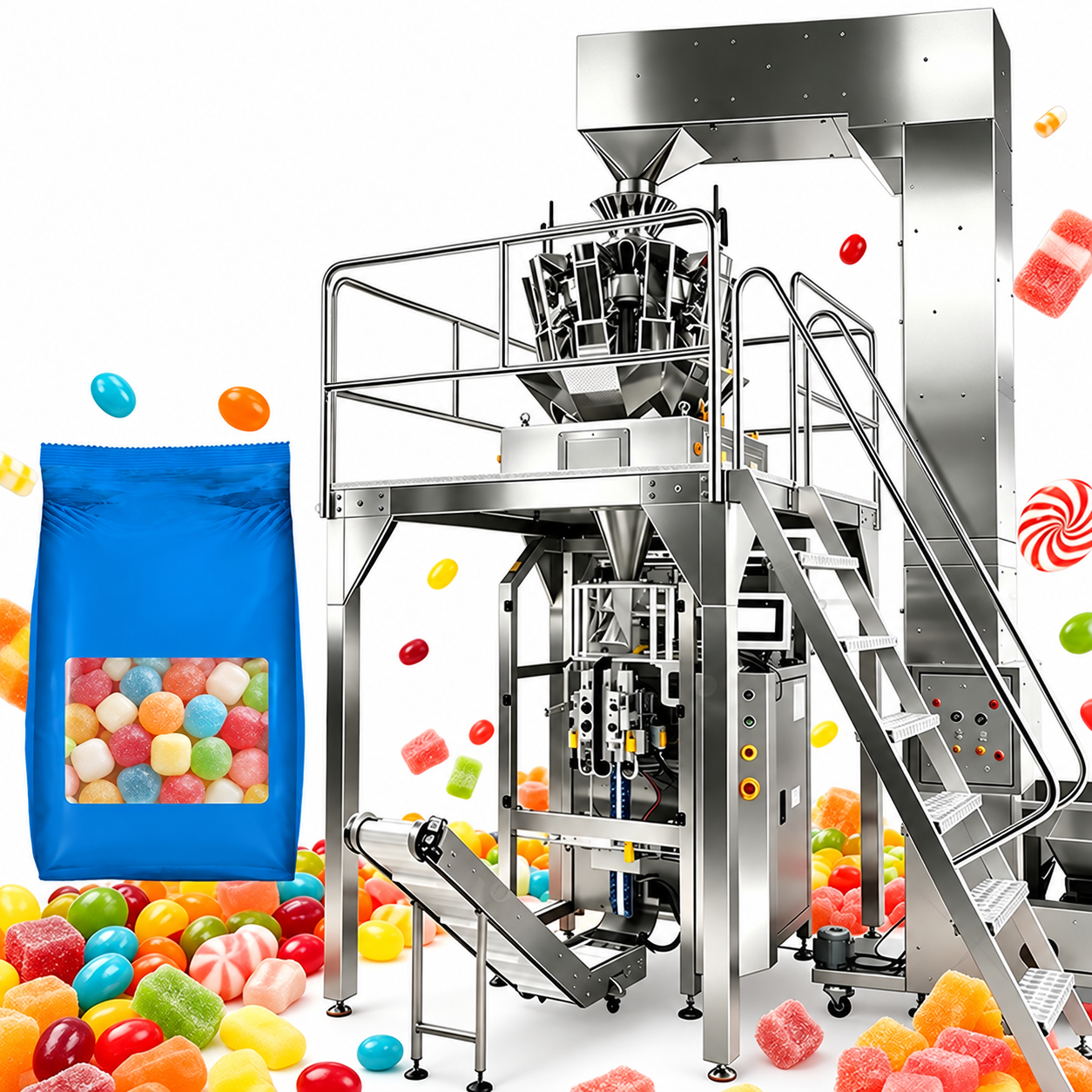
Hard candy, gummies and marshmallows behave differently
Hard candy, soft gummies and lightweight marshmallows each need their own handling trial. Multihead VFFS and zipper-pouch configurations are both available. Confirm that product releases cleanly from the hoppers, and keep sugar and loose pieces out of the sealing zone.
Samples that show how the candy behaves
Product samples, coating type, stickiness, piece-size range and target bag weight.
Describe confectionery by physical behavior
Start a confectionery project from the condition of the product, not from a broad label such as "candy". Hard sweets, soft gummies and marshmallows differ in rigidity, surface coating, size and the volume they take up. Say whether the pieces arrive separated or in clusters, and whether the production range includes wrappers, powder coatings or oil. Include the normal variation too. A trial that uses only ideal pieces cannot answer every question about the product you will actually run.
The catalog includes a multihead VFFS configuration for confectionery and a premade zipper-pouch route for gummies and other solids. Treat them as starting points for matching a product to a package. A good enquiry keeps three things apart: how the candy behaves, which bag format you want, and the output you need. Separating them shows which decisions can be shared across a range and which need a trial of their own.
Decide whether quantity means weight or count
Decide how the finished candy pack is specified. A target net weight and a desired number of pieces are different requirements, especially when piece weights vary. If a consumer pack has to hold a particular assortment, describe that assortment separately from the total quantity. A general weighing configuration does not establish an exact piece count or a controlled flavor ratio. So do not take either for granted.
Picture a mixed sweet bag. Two portions can have the same total weight and still differ in the number and type of pieces. Put the question to the supplier directly: how does the proposed feeding and dosing arrangement deliver the result you want? If weight is the main requirement and you also have appearance expectations, state them openly and do not quietly turn them into a counting specification. Settling this early stops the acceptance discussion from shifting after the machine has already been configured.
| Weight | Piece count | Ingredient composition |
|---|---|---|
| Target ___; weighing method ___ | Target ___; counting method ___ | Target ___; distribution method ___ |
| Observed bag weights ___ | Observed counts ___ | Observed composition ___ |
Observe the surfaces that touch the candy
The product path deserves a review from bulk supply through the feeders and weighing hoppers to the discharge. With soft products, watch whether pieces keep their shape and release consistently. With hard products, look for the kind of damage the retailer or manufacturer cares about. With coated sweets, look for coating left behind and changes to the surface. Contact-surface options have to be judged with your actual confectionery, because no single finish is suitable for everything.
Write down the product condition for each trial. Temperature at the packing point, the coating description and the time since the previous process step can all explain why two samples behave differently. When pieces are retained, note where they stayed and what was happening at the time; that lets the supplier propose a targeted change to the feeding or contact geometry. It makes a repeat trial more useful than running the same sample again.
Match bag opening and filling clearance
On a VFFS machine, check the size of the formed bag and the route the candy takes into it. Premade zipper pouches need a different look: the real opening, the zipper position and the top sealing margin. Large soft sweets can need a clearance check that compact hard candies never do. Outside dimensions hide restrictions along the filling path.
A finished sample is the best way to show the retail appearance you want. Say whether the bag should look loosely filled or compact, then test that with the real product. Watch whether any piece stays near the sealing zone and whether the closed pack squashes the candy. If the product quantity, bag dimensions or opening features change, treat that as a reason for another compatibility review. These are not cosmetic adjustments.
Assess changeovers between flavors and textures
List the products that will follow one another in a normal production schedule. Plain hard candy and coated gummies raise different product-contact questions, and a change between them is a bigger job than swapping the printed film. The supplier should say which parts, adjustments and access points matter for each planned change. Then check the proposed cleaning method against the actual equipment configuration and your own process requirements.
Where possible, ask to see the agreed changeover done in practice. Record what is removed, what is adjusted and what evidence shows that the next product runs as intended. A catalog phrase does not give you a universal changeover time. A meaningful time says what the operators changed and where the measurement started and stopped. That kind of figure is more useful when a factory runs many short confectionery batches.
- Candy shape, coating and handling temperature
- Separation, stickiness and damage through the feed path
- Pack opening, fill space and closing seal cleanliness
Make the trial representative of a candy batch
Choose samples that carry the normal variation in piece size and surface. Agree what you will observe before the run starts: fill quantity, visible damage, sticking, retained pieces, seal cleanliness and package appearance. For an assortment, add the distribution measure you picked. Keep these categories separate so a good weight result cannot hide an unacceptable handling result.
Cover startup and replenishment as well as steady running. Keep consecutive packs from named stages and do not pick only the best ones. Get the settings and configuration that go with every recorded result. If a different surface or discharge arrangement is proposed after the trial, list it as a change that still needs confirmation. The record should say what was observed and what remains open. One successful demonstration does not qualify every confectionery recipe, and the record should not suggest it does.
Prepare a useful confectionery quotation brief
A quotation brief should include product photographs, representative samples, piece dimensions, target quantity, package drawings and the production changes you expect. Say whether loose candy reaches the line from a conveyor, from containers or from another process. Show the height and access you have around the weighing and bagging equipment. Add what you expect downstream. So the proposed line does not finish at a point that is awkward to operate.
Buyers often ask whether one machine can pack both gummies and marshmallows. The answer should name the materials that were tested and any feeding, hopper or format changes needed. Another common question is whether a zipper pouch adds flexibility. Judge the exact pouch and candy together, because a different bag supply route does not remove the product-handling questions. Use the source-backed configurations to open the discussion, then base the purchase on the range that has been demonstrated.
Retain the assortment acceptance record
Keep the agreed weight, count and composition records from the quantity section with the incoming assortment reference. Label finished samples by run stage, including replenishment, and note any intervention that changes product distribution. If the proposed solution adds ingredient feeders or changes the dosing architecture, record those items explicitly instead of treating them as implicit functions of a standard multihead weigher.
Method and limits of this comparison
Scope: Candy & Gummy Packaging. Configuration records: candy-multihead-vffs, gummy-zipper-pouch. This October 2026 revision organizes the published configuration descriptions and the buyer checks discussed on this page. The configuration source links near the opening identify the records behind the comparison. This is a selection aid compiled from published information, not a report of our own trials.
For Candy & Gummy Packaging, use the stated parameters only for the named configuration and its original conditions. Missing values remain open; photographs and edited catalog illustrations do not qualify an untested material or establish a storage-life, cleaning or performance result. Keep project-specific evidence with the final quotation.
Frequently asked questions
Can gummies and marshmallows use the same configuration?
Request separate material assessments and a list of retained or changed feeding, hopper and format parts. Their shared retail category does not establish a shared setup.
Does an acceptable weight mean the piece count is correct?
No. Record a count target and a count observation if the pack is sold that way. Keep assortment composition separate from both total mass and total count.
Does a zipper pouch solve sticky-product handling?
It changes how the bag is supplied and opened. Release from feeders, hoppers and the filling path still needs assessment with the actual candy and coating.
Explore the Equipment
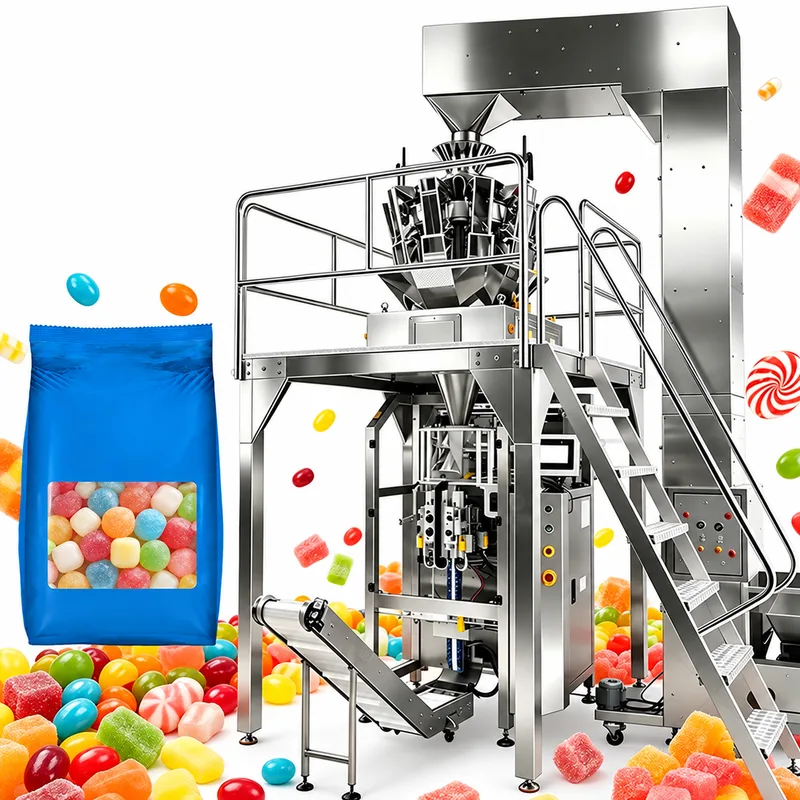
Vertical Form Fill Seal
Candy Multihead Weighing & Packaging
A correct bag weight can still hide broken, stuck or wrongly mixed sweets. This multihead weigher and VFFS line is set up around your candy's coating, size and pack.
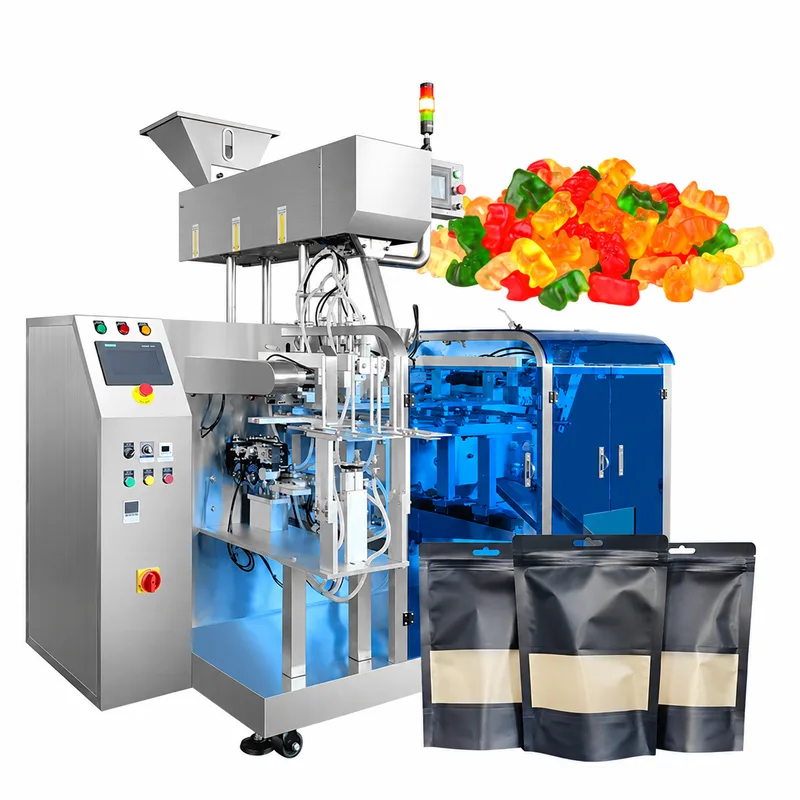
Premade Pouches
Gummy Candy Zipper-Pouch Packaging
Gummies that stick, fold or leave coating on the zipper make on-weight pouches unsellable. Specify this weigher and zipper-pouch line from your coating, piece size, net opening and changeover order.
What to send us
| Item | Why we need it | Example format |
|---|---|---|
| Candy size, texture and coating | Define the handling and release task | Assortment photographs and labeled samples |
| Weight, count and composition targets | Keep the acceptance results separate | Quantity and ingredient specification sheet |
| Bag format | Distinguish forming from pouch-opening requirements | Bag drawing and actual package sample |
| Change sequence | Identify contact checks and format changes | Product schedule and change-parts list |
We reply within 24 hours.