
Marshmallow Packaging
Compressed shapes or trapped pieces can spoil a marshmallow pack. Review loose portion volume, deformation and bag clearance before choosing multihead VFFS.
| Input or route | Material / evidence to provide | Decision to review |
|---|---|---|
| Target mass | SKU quantity requirement | Keep quantity separate from shape acceptance |
| Loose portion | Unsqueezed sample with preparation method | Review hopper and discharge occupancy |
| Finished bag | Physical reference and film drawing | Show fullness and sealing clearance |
| Deformation limits | Agreed incoming/handled observations | Define visible compression, tears and clusters |
Choose the configuration from the product and package
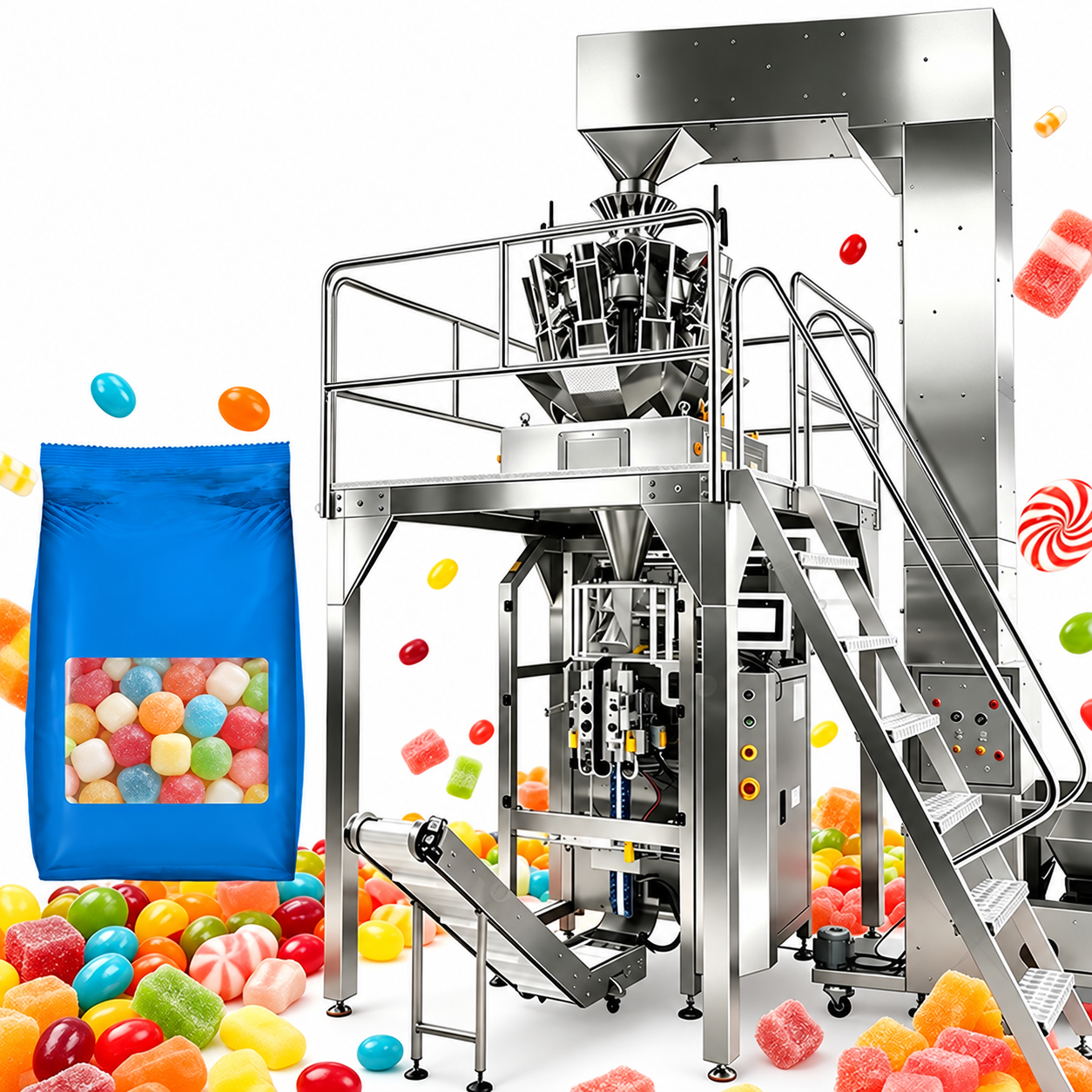
Begin with the published candy multihead VFFS arrangement and an unsqueezed target portion. Review the proposed hopper and former around that sample, separating portion mass from shape retention, release and final bag appearance.
On This Page
Make the marshmallow portion visible before choosing bag tooling
The confectionery catalog lists marshmallows among the products considered for multihead weighing and vertical bagging. It also describes customizing the hopper volume and the bag former around the product. Both points matter for a light, bulky portion. The weigher may be picking a small mass, yet the collected pieces still need a lot of room before they drop into the film-formed bag.
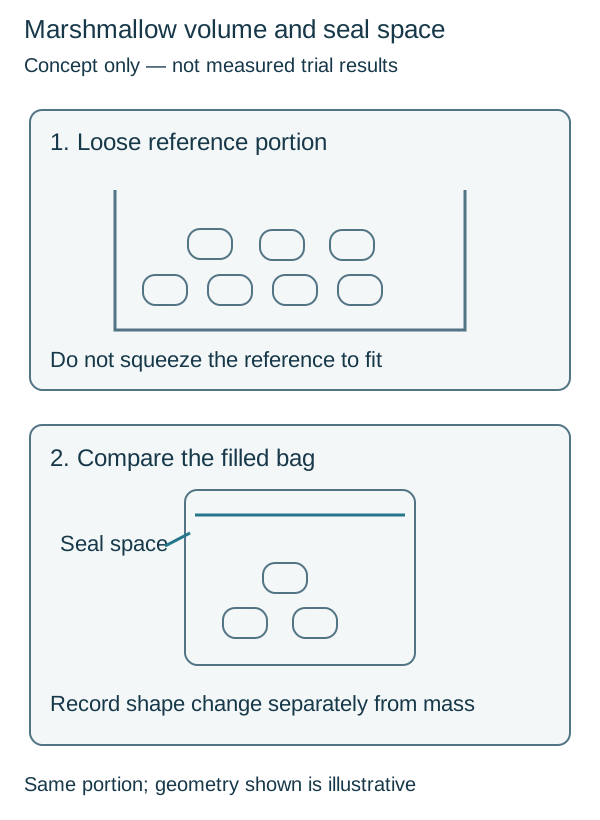
Fill a transparent container with one real portion, without squeezing the pieces together, and bring it along with the matching bag sample. Show the loose retail look you want. If you plan several marshmallow shapes, prepare a separate reference for each size difference that matters. With visible samples, the supplier can talk about hopper occupancy and discharge clearance directly instead of guessing volume from a product weight.
The quotation should name the proposed former and discharge arrangement. When the format is demonstrated, compare the bagged portion with the unsqueezed reference and note any visible change in shape apart from fill quantity. That gives you a practical basis for choosing the product-contact and bag-format parts. Shapes that were not tested stay open for further assessment.
Use product dimensions and softness in the initial brief
Describe marshmallows by size, shape, surface condition and how they reach packaging. Include the variation in normal production and say whether pieces arrive loose or clustered. A small dense candy sample cannot stand in for a bulky soft marshmallow. A finished reference bag lets the equipment team see the quantity you need and the space expected around it.
The candy multihead VFFS configuration is a starting point for evaluating this application. Confectionery being on the list does not create a separate marshmallow model or remove the need for trials. Say whether the line handles miniature pieces, larger shaped products or several types. Those differences decide which samples expose the real feeding, discharge and bag-volume questions, so you are not repeating similar material under different flavor names.
Separate weight capacity from product volume
A modest target mass can still fill a large volume of marshmallows. The supplier should relate the proposed feeding, hopper and discharge arrangement to the real sample volume. Take volume observations the same way each time and write down the method. One carefully compressed sample says nothing about how loose product travels through the line.
Check the intended bag dimensions against the occupied volume and the look you want. A hypothetical brand that wants an airy presentation should prove that with a filled sample, because the supplier cannot work it out from the net quantity. If the retail team shrinks the bag during design, repeat the package review. A smaller bag can change product clearance and visible compression even when the target mass and printed branding stay the same.
| Record field | Observation to retain | Blank entry |
|---|---|---|
| Product condition | Size, coating and temperature | Sample: ___ / condition: ___ |
| Loose portion | Target mass and unsqueezed volume method | Mass: ___ / method: ___ / reference: ___ |
| Handling | Compression, sticking and shape changes | Stage: ___ / incoming: ___ / handled: ___ |
| Finished bag | Appearance and sealing clearance | Film: ___ / findings: ___ / photo: ___ |
Observe deformation throughout the handling route
Decide which product changes matter to your business. Flattening, torn surfaces, persistent clusters or a damaged decorative shape may all count. Inspect incoming marshmallows first, then examine samples after the proposed handling sequence using the same criteria. Keep a record of sample condition, so defects that were already there are not blamed on the machine.
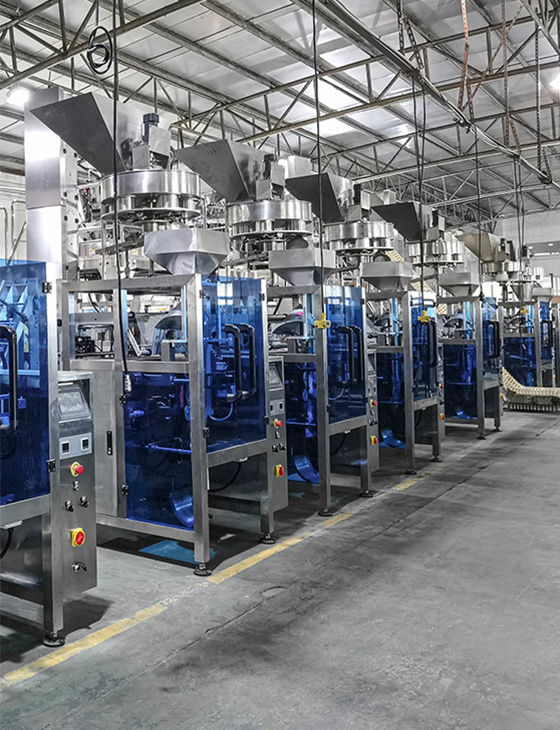
Treat the feeder, weighing hoppers, collection area and filling path as one connected route. Find where product touches surfaces or changes direction, and watch its release with the actual marshmallow. A gentle feature at one transfer point says nothing about the rest. A good trial shows where changes appear and whether the proposed adjustment fixes that specific problem. That is far more useful than an unqualified claim of damage-free handling.
Evaluate release after pauses and replenishment
Soft, light products can behave in ways a short, hand-picked run never shows. Put a normal pause and replenishment into the agreed demonstration. Afterward, watch for retained pieces, bridging and how consistently product releases. Note what the operators do to restore the intended condition, following the supplied equipment procedures.
Find out how the product-contact path can be inspected and how that access fits the factory's planned cleaning method. If a particular surface option is proposed, identify where it is used and test it with the supplied marshmallow. A surface name is no proof that sticking or deformation is solved. Your purchasing record should tie a known product condition to the demonstrated arrangement and state any behavior that still needs investigation.
- Size range, surface coating and product temperature
- Target weight with a filled-bag sample
- Compression and sticking limits
Review filling clearance with the final film
Give the supplier the film construction, printed repeat, bag dimensions and opening feature before the final configuration is confirmed. Watch how the last marshmallows enter the formed bag and whether the sealing area clears every time. Compare finished packages for trapped product, distortion and the fullness you want. A good weight result does not mean the package looks right.
Keep consecutive packs from different stages of the trial. If the team changes the bag dimensions or discharge timing, write the change on the record and repeat the relevant observations. The aim is a repeatable package result under defined conditions. Approving the format from an empty bag or one manually adjusted sample is risky, particularly when the commercial presentation depends on keeping the shape and loose arrangement of soft pieces.
Plan the assortment and format range honestly
List every marshmallow product meant for the line and say which dimensions or textures differ materially. Find out whether they share the same contact and forming components and which changes are proposed. A new printed design on the same film format is a different requirement from a larger shaped marshmallow in a different bag, and the quotation should treat them differently.
For production scheduling, ask for a demonstration of an agreed change if representative samples are available. Record the actual activities and the first accepted bags of the next product. A generic changeover time will not fit every product combination. Where future shapes are still in development, keep compatibility provisional and list the information needed for review. That supports growth without promising that one configuration covers every future confectionery concept.
Prepare acceptance criteria that reflect soft products
The trial sheet should record fill quantity, visible shape changes, release behavior, sealing-area clearance and finished-bag appearance as separate items. For each observation, add the product condition, film and proposed setup, along with interruptions and acceptable output over the observed period. A short high-speed clip can show the mechanism. It cannot stand in for the full record behind a purchase.
Method, sources and applicability
This page reorganizes the published marshmallow packaging application and the linked equipment descriptions into a purchasing brief. The comparison is based on public configuration information, not our test of the alternatives. The observation tables are blank records to complete with the actual product; they contain no measured results. The questions below come from the purchasing issues already discussed on this application page, rather than a new search-question survey.
Multihead VFFS is the published starting point, not a dedicated marshmallow model or confirmed universal capacity. Results belong to the supplied shapes and conditions. New shapes, surface treatments and film formats need assessment of the affected handling and forming parts.
Technical Reading
- Candy multihead VFFS — Published configuration or planning guidance; reviewed 8 October 2026. review proposed hopper and former customization.
- Fill weight and bulk density — Published configuration or planning guidance; reviewed 8 October 2026. keep loose-volume observations comparable.
- Fragile-product handling — Published configuration or planning guidance; reviewed 8 October 2026. record shape change along the route.
- Configuration review scope — Basis for the proposed-scope and missing-information response; reviewed 8 October 2026.
- Sample testing arrangements — Confirm availability, sample quantity, handling and costs before shipment; reviewed 8 October 2026.
Frequently asked questions
Can a gummy machine package marshmallows?
It can provide a starting architecture for review, but a marshmallow needs its own occupied-volume and deformation assessment. The published candy multihead VFFS route is not a dedicated model with a universal hopper volume for all soft sweets.
Does a larger bag solve marshmallow filling problems?
Only part of the route changes. Feeding, hopper release, collection and discharge can still retain or deform pieces. Review those locations along with the sealing clearance rather than approving a machine from bag size alone.
What needs review when the marshmallow shape changes?
Compare the new loose portion with the feeding and contact arrangement, weighing hoppers, collection area, discharge path and bag former. Record proposed change parts and recheck visible deformation and seal clearance with the final film.
Explore the Equipment
Vertical Form Fill Seal
Candy Multihead Weighing & Packaging
A correct bag weight can still hide broken, stuck or wrongly mixed sweets. This multihead weigher and VFFS line is set up around your candy's coating, size and pack.
What to send us
| Item | Why we need it | Example format |
|---|---|---|
| Size, coating and temperature | Define soft-product variation | SKU labels + condition photos |
| Weight and loose/filled portion | Compare occupied volume and retail appearance | Quantity sheet + unsqueezed reference photos |
| Compression and sticking limits | Identify unacceptable shape changes | Annotated incoming/handled sample sheet |
| Feeding, discharge and seal checks | Locate retention and trapped pieces | Blank stage record with photo references |
We reply within 24 hours.