
Packaging Machines / Vertical Form Fill Seal
Candy Multihead Weighing & Packaging
A correct bag weight can still hide broken, stuck or wrongly mixed sweets. This multihead weigher and VFFS line is set up around your candy's coating, size and pack.
- Published speed: 30–70 bags/min, subject to weight and bag size
- Published bag range: length 80–300 mm, width 60–200 mm (customizable)
- Published power: 3.5 kW, 220 V / 380 V, 50 Hz / 60 Hz
- Sticky or coated candy: anti-stick contact surfaces and feeder choice are trial items
We reply within 24 hours.
Published Configuration Data
| Packaging Speed | 30 - 70 bags/min (Subject to weight and bag size) |
|---|---|
| Bag Size Range | Length: 80-300mm | Width: 60-200mm (Customizable) |
| Power & Voltage | 3.5KW | 220V/380V, 50Hz/60Hz (Customized for country standard) |
These values describe the listed configuration. Output depends on the product, fill quantity, bag and options. Confirm the final specification and trial conditions in your quotation.
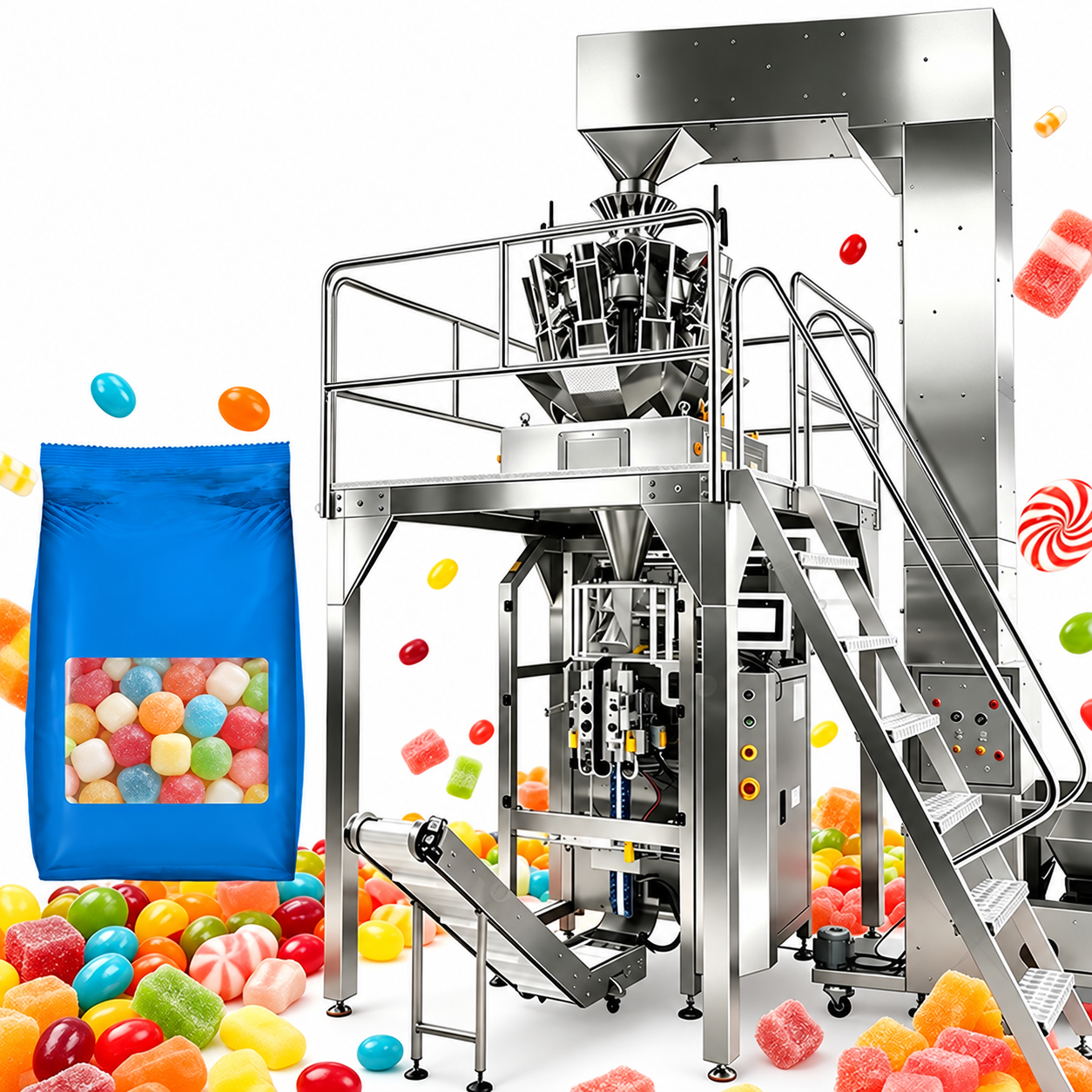
Configuration & Selection
Choose the feeder, contact surfaces and hopper volume from both the candy's handling behavior and the target pack weight, starting with the most difficult candy in your range. Sticky gummies can hold pieces back that later fall into another bag, so a weight that looks right on the screen does not prove the bag received it. Describe each candy's coating, stickiness and dimensions; soft products need a handling trial. Send details of your candy sizes, coatings, target bag weights, bag drawing, film details and any mix-ratio requirement through the enquiry form or WhatsApp; physical samples are arranged separately.
On This Page
A weighing line configured around the candy
This machine pairs a multihead combination weigher with a vertical form fill seal bagger. Candy goes into the feeding system, gets divided among the weighing hoppers, and drops into a bag formed from roll film as a selected combination. The catalog covers hard candy, gummies, marshmallows and other confectionery. They are not one handling category. The feeder, contact surfaces, hopper volume and discharge path should be defined around the sweets you actually pack.
Hard pieces tend to collide and fragment. Soft gummies stick and deform. Lightweight marshmallows may fill a hopper by volume before they reach the required weight. Send the supplier examples from both extremes of your range, including the surface coating and normal storage condition. A useful proposal says which components stay common and which need adjusting or replacing when the line changes between these products.
Takeaway: Send candy from both ends of your range so the feeder and hoppers are chosen for the hardest case.
How combination weighing connects to bag making
A combination weigher picks a group of portions from its weighing hoppers that lands near the requested discharge weight. How well it does that depends on how reliably product reaches those hoppers and leaves them. If sticky candy clings to a wall, the next discharge can carry an unexpected extra piece, and if lightweight pieces arrive in large bursts, the number of useful combinations may drop. Watch the feeder pans, not only the screen.
The bagger has to be ready when the selected portion arrives. Discharge signal, candy travel time and the closing motion must work as one sequence. A long gummy strand can hang in the tube after the rest of the dose has fallen. So can an irregular marshmallow. Ask how the proposed setup keeps the jaws from closing on late product. Include normal starts and stops in the trial. Retained candy can behave differently after a pause.
Takeaway: Watch the feeder pans and the jaws for late-falling pieces, including after a stop.
Surfaces and feeders for sticky confectionery
This configuration lists anti-stick contact-surface options and feeder choices. Whether they help depends on the candy's actual coating, not on the word gummy in the product name. A sugar-coated sweet, an oiled gummy and a soft uncoated jelly can leave different residues on the same surface. Compare the proposed surfaces against representative samples that have sat in expected packing-room conditions. Freshly made samples may understate the sticking you see over a longer production run.
Look at the transfer from bulk supply into the weigher, the corners of each hopper and the final discharge chute. Deposits show where product waits or turns. You also need to know whether the contact pieces come out for cleaning and how their position is controlled when they go back in. Cleaning access and surface durability belong in the same conversation. Easy release at the start is worth little. If the cleaning method damages the surface, or leaves a hard-to-inspect spot under a feeder, you have only moved the problem.
Takeaway: Judge contact surfaces on aged samples and on how they clean, not only on first release.
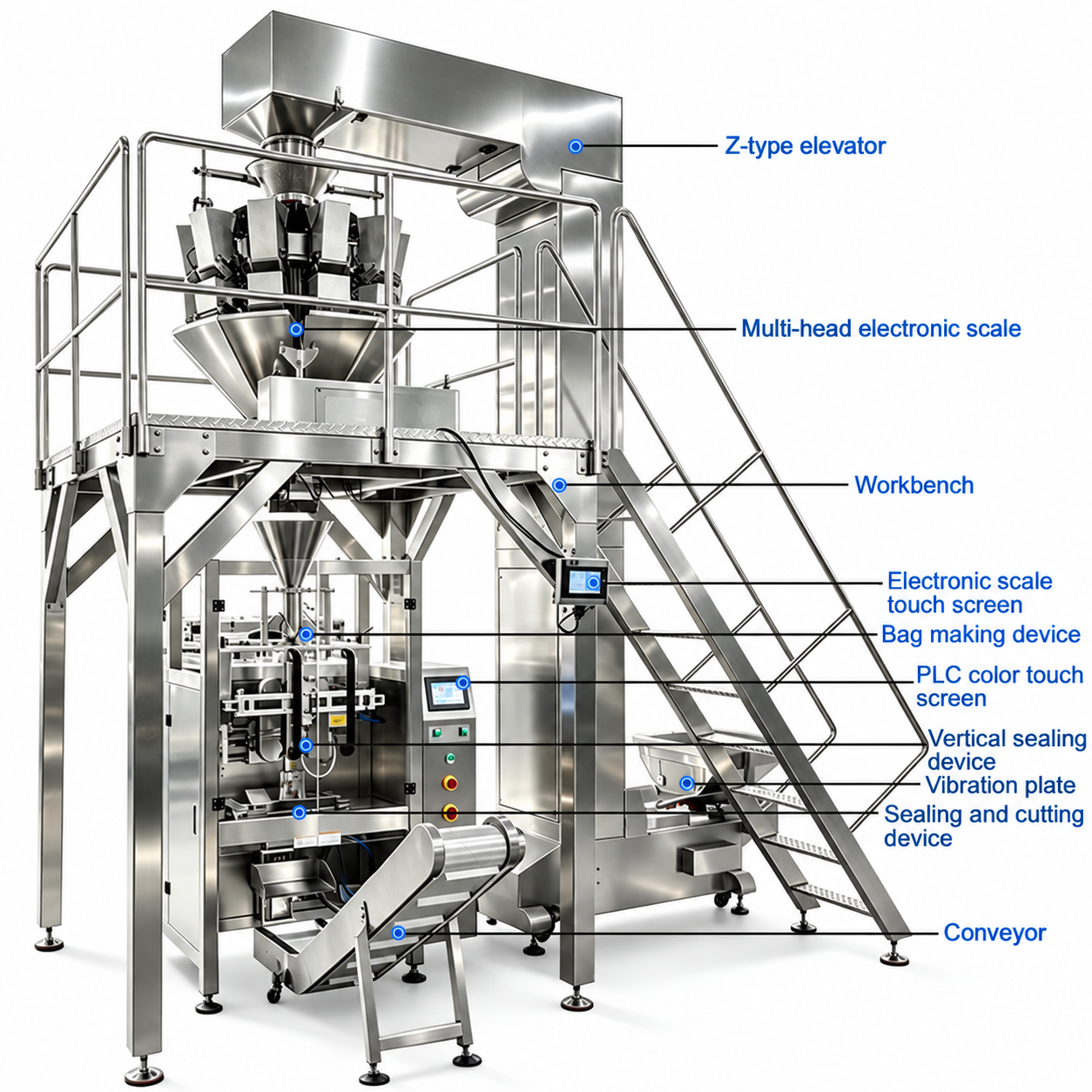
Preserving piece shape through the drops
Judge a candy line by the condition of the packed sweets as well as their total weight. A correct weight can still hide broken hard candy, flattened marshmallows or gummies stuck into one lump. The condition of the pieces matters as much as the number on the scale. Follow the product through the elevator, feeder, hopper gates and filling tube. Find the transfers with the biggest change in direction or drop height, then inspect pieces collected before and after those points.
The finished bag needs enough usable volume for the selected portion, with no product forced into the sealing zone. Squeezing a bulky dose into an undersized bag creates a handling problem that no weigher recipe can fix. Put the planned downstream accumulation and carton packing into the sample review too. Soft candy may spring back after a gentle transfer but stay visibly marked after prolonged pressure. Agree on an appearance check that matches how your product is sold and eaten.
Common mistake: Accepting a trial on bag weight alone and missing broken hard candy or gummies fused into a lump.
Takeaway: Inspect piece condition before and after the biggest drops in the product path.
Selecting bag geometry and interpreting the table
The Published Configuration Data table on this page lists a packaging speed of 30 to 70 bags per minute, subject to weight and bag size, and bag dimensions of 80 to 300 mm in length and 60 to 200 mm in width with customization. These are our published configuration ranges for discussion, not measured results for your candy. Not every candy and bag combination will run at the upper end, because the former, the dose volume and the time the last piece needs to clear the jaws decide what is practical.
Request a finished-bag drawing that shows the seam arrangement, usable fill area and any gussets or optional features. A machine described as VFFS will not necessarily handle every premade stand-up pouch construction. The film-roll route and a machine that opens purchased pouches use different forming and loading operations. If you want a structured retail format, find out which forming and sealing modules are included, and review a sample made with the proposed laminate and your candy.
Takeaway: Ask for an operating point measured with your candy, bag and dose, not the top of the range.
Managing mixed candy and product transitions
Some bags hold several candy types. In that case, separate a target total weight from a target count or ratio of individual pieces. A common hopper fed with a premixed assortment does not by itself control the composition of each bag, because shapes, densities and surface finishes may separate as they move. Ask whether the proposed feeding arrangement only weighs a blend or can manage separate components. The trial should measure output against the requirement you are actually buying.
Changes between colors, flavors or allergen profiles affect the handling plan as well. Before loading the next candy, check for retained pieces in the feeder, hopper hinges and discharge assembly. Use a documented line-clearance process that suits the factory's own food controls. A saved recipe restores settings. It cannot confirm that old product is gone. Count cleaning and inspection as part of the changeover. Then watch the first accepted bags after the next product starts.
Takeaway: Decide whether you need total weight or a controlled ratio before the feeding system is chosen.
- Test coating and sticking after normal packing-room exposure.
- Check candy damage and complete hopper discharge alongside bag weight.
- Define whether assorted packs require weight only or controlled ingredient ratios.
Daily checks that reveal the cause of rejects
At the start of a job, confirm the product, film, target weight, former and available bag space. Check the film path, and the position of the print registration mark if the film is printed. Then review filled samples for weight, piece condition, readable coding and seal cleanliness. Log rejects by the issue you see. Underfilled bags, product in the seal, distorted film and damaged sweets each point to a different part of the sequence, so a single reject count tells you very little.
If weight drifts while the bag looks stable, check product distribution and whether the hoppers empty fully. If the weight is fine but candy is trapped in the top seal, look at discharge timing and the free space above the fill. If film alignment wanders, examine the roll and forming path before touching the product feed. Observations like these let operators describe a specific problem. They make a supplier demonstration more useful than a continuous video where only the finished conveyor is visible.
Takeaway: Log rejects by type so each one points to a stage of the sequence.
Building the acceptance run and equipment scope
Prepare samples that reflect normal production variation: larger and smaller pieces, usual coating levels and typical batches rather than hand-picked perfect sweets. State the target pack weights and say which product and bag combinations make up most of the planned work. Agree a method for checking packed-piece condition and, where relevant, assortment composition. Ask for sample bags and run records that you can compare after the candy has settled in the package.
The equipment scope should name the feeder, weigher contact arrangement, support platform, bagger, film-forming parts and discharge equipment. The published power and voltage description is a starting point for utility planning. Get the final electrical requirements for the selected combination and destination. Confirm access for cleaning, film loading and maintenance in the proposed layout. A good selection ties the candy's behavior to the supplied components and the trial results, which gives both sides a clear basis for the final configuration.
When this does not apply
The published range of 30–70 bags/min and the 80–300 mm by 60–200 mm bag range describe the configuration, not every candy and bag combination. Weighing a premixed assortment does not control the ratio of each candy. Purchased stand-up pouches need a premade-pouch machine rather than this film-roll bagger. Final electrical requirements come from the selected combination and destination, not from the published power line.
Takeaway: Confirm speed, ratio control and pack format against your own candy in the trial.
Frequently asked questions
Can a multihead weigher guarantee the flavor ratio in a mixed candy bag?
Not by weighing a premixed blend. A combination weigher controls total weight; shapes and densities can separate as the mix moves, so a bag can be on weight with the wrong proportions. If ratio matters, ask whether the proposal includes separate component feeding and check composition in opened trial bags.
What do sugar coatings or oil films change on the line?
They change how candy releases from feeders, hopper walls and the chute. Residue that builds up can hold pieces back and drop them into a later bag. Compare the proposed contact surfaces with samples kept in packing-room conditions, and check how those surfaces are cleaned.
How do I check for long gummies falling late into the seal?
Watch the area above the transverse jaws over many cycles and after a pause. Long or irregular pieces can hang in the tube after the rest of the dose has fallen; ask how the setup keeps the jaws from closing on them.
Planning Guides for This Configuration
These pages cover the system type, trial preparation and project checks that apply to this configuration.
Request a Packaging Configuration
We reply within 24 hours. Tell us what you need to pack. Leave quantity and output blank if you are still deciding. When you continue, WhatsApp opens with your enquiry written out so you can review it and send it to our team.
Explore the application · Configuration and project support
Related Packaging Configurations
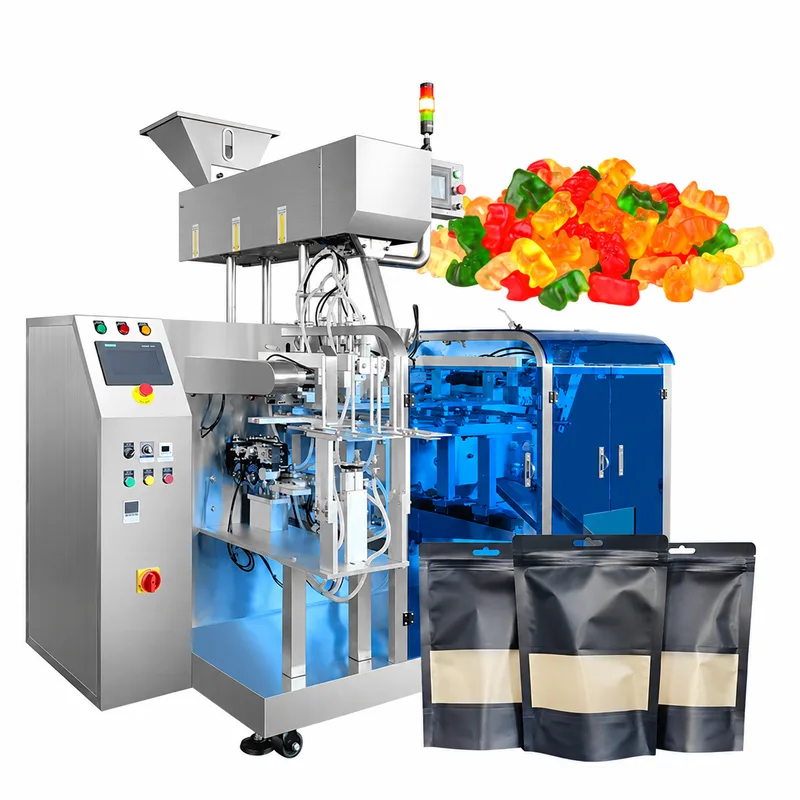
Premade Pouches
Gummy Candy Zipper-Pouch Packaging
Gummies that stick, fold or leave coating on the zipper make on-weight pouches unsellable. Specify this weigher and zipper-pouch line from your coating, piece size, net opening and changeover order.
What to send us
| Item | Why we need it | Example format |
|---|---|---|
| Candy samples from both ends of your range | Size, coating and stickiness decide the feeder, surfaces and hopper volume. | Samples kept in normal storage condition, labeled by product. |
| Target bag weights | Sets dose volume and the speed you can expect. | List of net weights in g with the main bag size for each. |
| Bag drawing | Shows seams, gussets and the usable fill area. | Dimensioned PDF or a retained finished bag. |
| Mix requirement | Total weight and controlled ratio need different feeding scope. | One line per mix: total weight only, or ratio by count or weight. |
| Film details | Forming and sealing depend on the actual laminate. | Laminate structure, thickness and reel width. |
We reply within 24 hours.