
Flow Wrap or VFFS? Decide by How the Product Enters the Pack
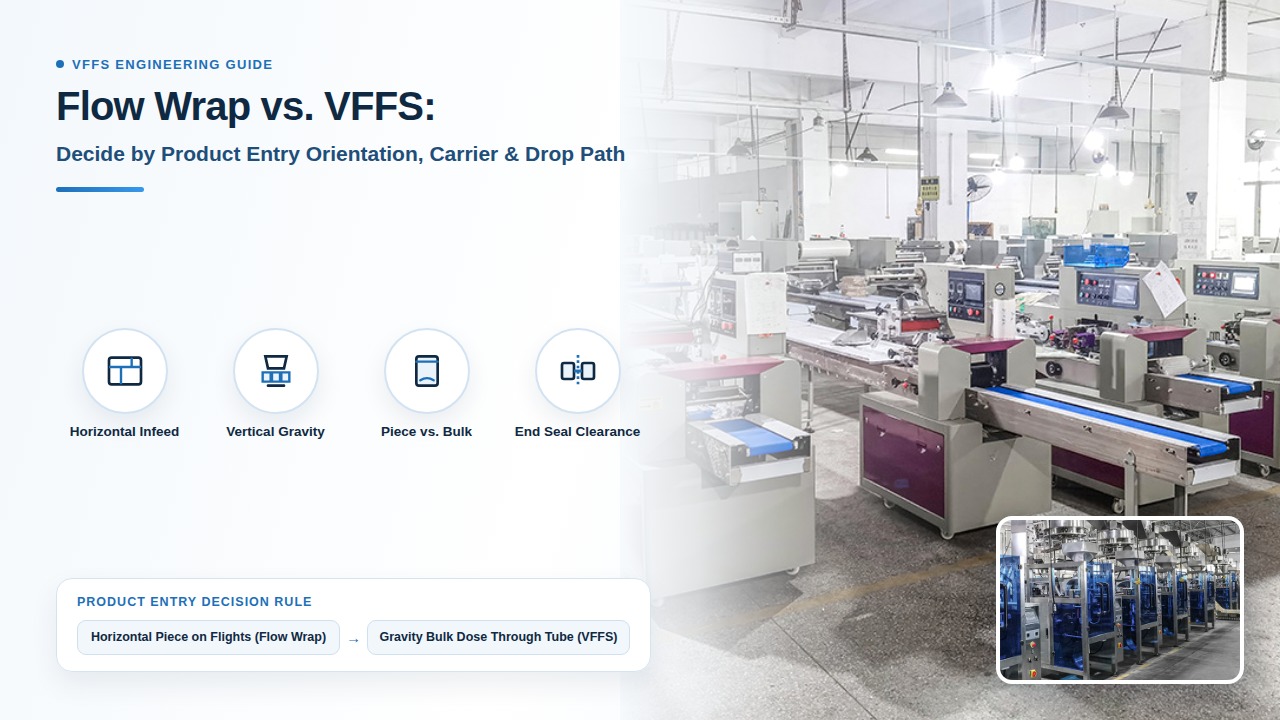
Choosing by bag shape can select the wrong machine. Compare flow wrap for positioned items with VFFS for measured portions, then check product handling.
| Input or item | Value or source | Why it matters |
|---|---|---|
| Pack contents | One item, a group or a measured portion | Defines the feeding task |
| Handling | Placement or controlled drop | Identifies the candidate route |
| Pack features | Drawing or approved sample | Exposes closure requirements |
| Evidence | Same product lot and acceptance criteria | Makes route trials comparable |
Short answer: look at the product, not the finished bag
Start with flow wrap for shape-stable items that need controlled placement; start with VFFS for measured portions that can enter a vertical film tube. Similar pillow packs can come from either route. Treat uncertain handling as a trial question. This catalog covers vertical packaging, not horizontal flow wrappers; this is an equipment comparison that connects operating principles with product-specific evaluation.
- How a VFFS machine works and what to ask
- VFFS or premade pouches: where to start
- Choose multihead weighing or auger dosing
- Check fill weight and bulk density before sizing the bag
- Compare quotation scope and evidence
- Review nitrogen-flushing scope and measurements
- Define accepted output for the comparison
- Review damage at product transfer points
Scroll horizontally to read all columns, conditions and sources.
| Route | How the product enters the pack | Products it suits | What one pack holds | Usual seals and pack styles | What makes the route fail | Bring to a trial |
|---|---|---|---|---|---|---|
| Flow wrapper (horizontal) | Items travel one by one, or as a fixed group, on a horizontal infeed while film is wrapped around them | Shape-stable single items: bars, biscuits and baked goods, soap, stacks, items on trays, multipacks | Usually one item or one pre-arranged group | A long fin seal (sometimes a lap seal) and two crimped end seals; pillow-shaped pack | Loose or granular product that cannot be placed and spaced on a conveyor | Finished items in every size you sell, including the largest and the most misshapen |
| VFFS machine (vertical) | A weigher or volumetric filler releases a portion that falls by gravity into film formed around a tube | Powders, granules, small pieces sold by weight, mixes, frozen pieces; sauces where the filler and film suit them | A weighed or measured portion | A back seal plus top and bottom cross seals; pillow, gusseted and quad-seal bags | Single items that must keep their orientation, tip in the tube or break when they land | Product from a normal production lot, the target weight and a film or bag sample |
| Horizontal pouch machine (sometimes also sold as HFFS) | A pouch is formed from roll film, opened and filled from the top | Pouch formats that need a defined shape or a fitted closure | A measured portion per pouch | Side and bottom seals made before filling; zippers or spouts on some designs | Failed pouch pickup or opening can interrupt filling; verify gripper support, mouth opening and fill interlocks with production pouch samples. | Pouch drawing and closure details, compared against premade pouches |
On This Page
Why the finished bag does not decide the route
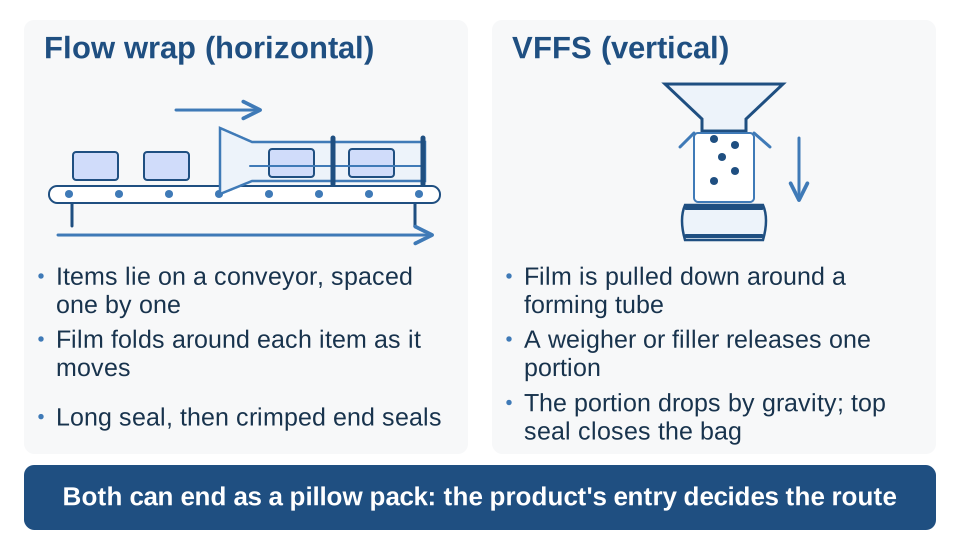
A flow wrapper and a VFFS machine both start from a roll of film, and both can end with the same kind of pillow pack: one seal along the length and one at each end. A contract-packing guide to horizontal flow wrapping describes a similar finished bag to vertical form-fill-seal, made with a fin seal and crimped end seals. Packaging World's vertical form-fill-seal article describes a lengthwise back seal and cross seals, and the cut top seal becomes the bottom of the next bag. A retail bag on the shelf rarely tells you which machine made it, so the bag is a poor place to start the decision.
The difference is the moment the product meets the film. On a flow wrapper the product lies on a horizontal conveyor, usually spaced one item or one group at a time, and the film is folded around it as it moves. The machine seals the long edge, then crimps and cuts the ends. On a VFFS machine the film is pulled down around a forming tube. A weigher or volumetric filler above the tube releases one portion, which falls into the bag by gravity before the top seal closes the bag and forms the bottom of the next one.
So the first question is physical. Can your product be placed and carried, item by item, in a fixed position? Or is it a quantity that has to be measured and dropped? The rest of this guide follows from that answer.
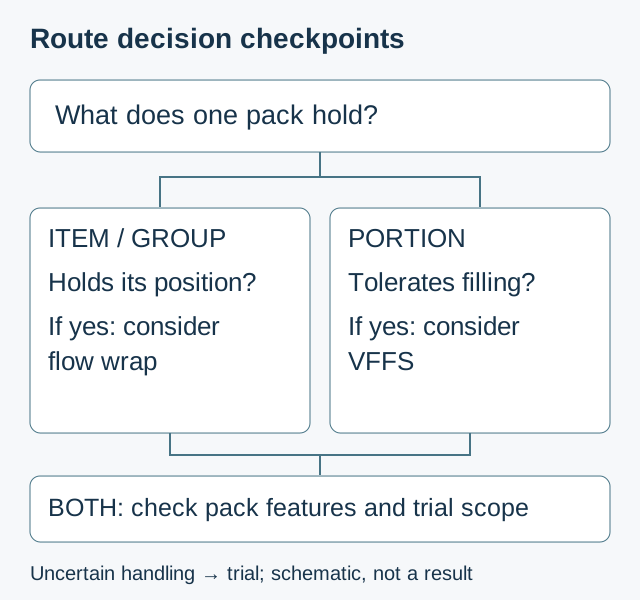
A four-question decision tree
Questions 2 and 3 give a candidate route, and every candidate then goes through question 4 before it becomes a recommendation. Write the answers down for every SKU, because one product family can split across both routes.
Question 1: what is one pack? If it is one item, or a fixed stack or tray of items, go to question 2. If it is a weight or volume of loose product, go to question 3.
Question 2: does the item keep its shape on a conveyor? If yes, flow wrap is the candidate, and it becomes the strong candidate when the item also has to stay the right way up in the pack. A small, robust item with no orientation need can sometimes be counted or weighed into a bag instead; treat that as a grey-zone case below. If the item is soft, tips over or will not hold a position, ask whether a tray or carrier solves that, and run a handling trial before choosing a machine.
Question 3: can the portion fall into a film tube without breaking, smearing or putting dust into the seal area? If yes, a VFFS machine is the candidate, and the dosing method is the next choice. If the product breaks or sticks, the vertical route may still work, but feeding and drop height become the first things to test.
Question 4, for every candidate: does the finished pack have to stand on the shelf, reclose or carry a spout? If yes, compare the candidate with premade pouches before going further, because those features usually decide the packaging material before they decide the machine. If no, keep the candidate and plan a trial with your own product.
If different SKUs reach different candidates, you have two packaging jobs. Price them as two jobs instead of asking one machine to cover both.
Products that should not go on a VFFS machine
A vertical bagger is built around a drop. Product orientation, presentation and fragility therefore belong in the first route review.
Single bars and baked items sold one per pack need controlled presentation. So do stacked biscuits or crackers that must arrive in order, items placed on a tray or card before wrapping, and multipacks in which a set number of items lie side by side. Check anything that tips, wedges or turns over in a vertical tube, and any item that breaks or loses its shape when it lands.
For these products, review how the proposed VFFS arrangement orients each item, controls its fall and keeps a piece from landing across the seal. Horizontal flow wrapping carries the item along an infeed and still needs repeatable spacing and presentation. Use product samples in the intended orientation to inspect transfer points, the pack opening and the seal area. Include turned or irregular items in the observation record, and agree how the line detects, stops or rejects them before choosing the arrangement.
Products that should not go on a flow wrapper
The reverse case is just as clear. A contract-packing guide to horizontal flow wrapping states that small granular items do not suit the method, and that the route suits a solid item that can be pushed along a horizontal belt. A flow wrapper needs something it can space, push and wrap.
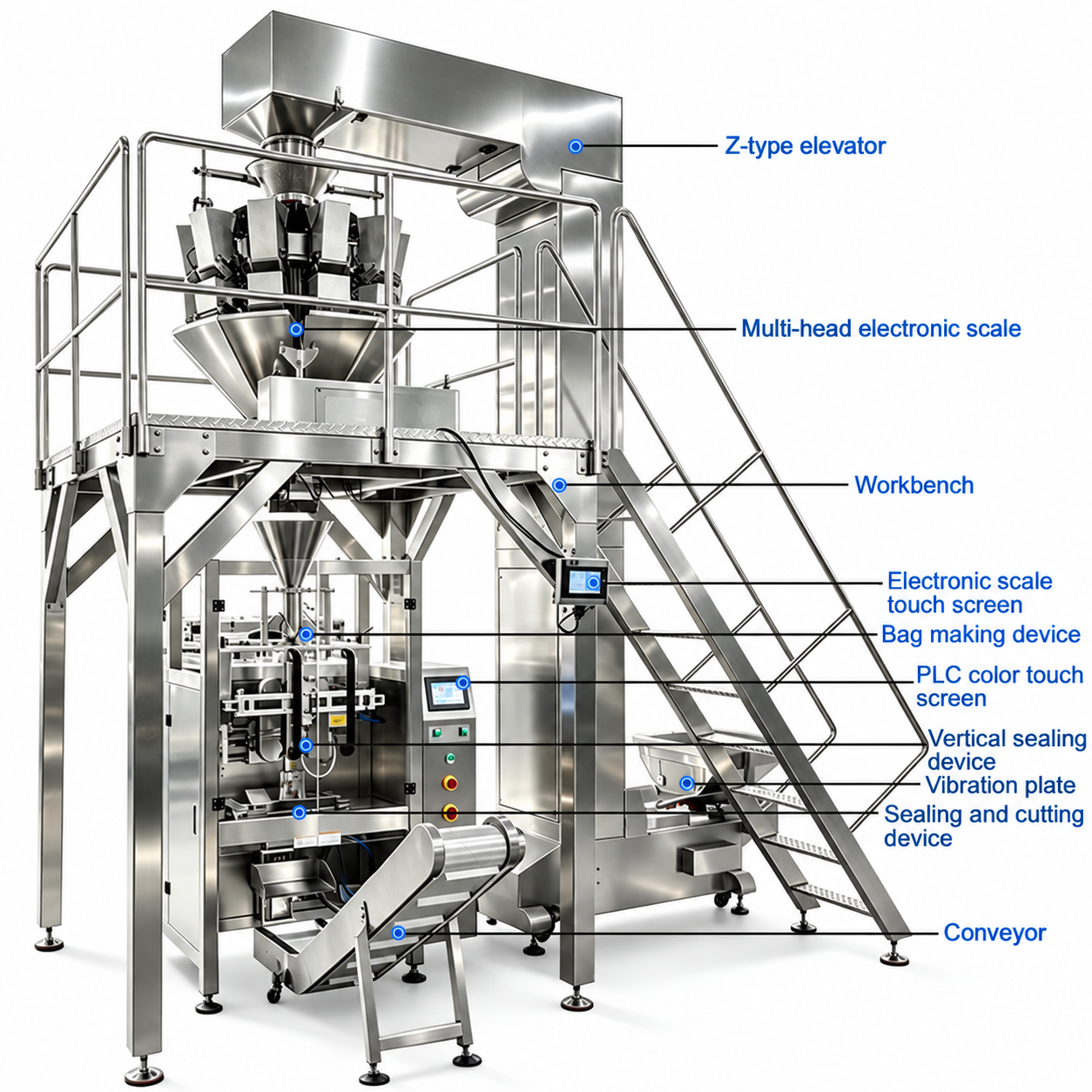
That rules out powders, granules, small pieces sold by weight, mixes of several components, frozen pieces that arrive as a stream, and sauces or liquids. These are the products a VFFS line is designed around. The bag is formed around a tube, and the portion comes from a separate measuring device: a combination weigher for pieces, an auger for powders, a cup or volumetric filler for free-flowing granules, or a piston or pump filler for sauces in a suitable format.
Choosing the vertical route does not settle the dosing method. That is a separate choice, and the fill weight has to be checked on the complete system: dosing unit, bagger and your product together. The multihead or auger dosing guide and the fill-weight and bulk-density guide cover these next decisions: select the measuring method, then check the portion volume before settling bag size.
Grey-zone products: test both routes on the same lot
When a product could go either way, compare both routes on product from one production lot, packed to the same target and judged by the same rule, and split wrapped-then-bagged products into two packaging steps. Three patterns come up often.
Size can change the route. A full-size bar is a flow-wrap item, while the same recipe cut into bite-size pieces and sold by weight is a VFFS product. Treat each sellable size as its own SKU in the decision tree.
Wrapped items sold in a bag are a second pattern. Individually wrapped sweets are often wrapped on a horizontal machine first and then counted or weighed into a larger bag. A Packaging World equipment note describes individually wrapped bars transferred to a combination scale, metered by weight or by count, and then packed in a vertical pouch. The project then has two packaging steps, and the second is a VFFS or premade-pouch question in which the wrapped piece is the product.
Fragile pieces that arrive as a stream are the third. Crisps or delicate biscuits may suit the vertical route if breakage stays inside a limit you have agreed in advance. Define the limit before the trial, record it at each transfer point, and compare against the horizontal option only when you have a fair sample from both.
A short demonstration with hand-picked pieces says little about a full shift, so ask for the trial to use ordinary production product, including the awkward pieces.
Names that blur the comparison: HFFS, flow wrapper, vertical flow wrapper
Quotations and supplier pages do not use these names consistently. The Government of Canada TERMIUM Plus record for flow wrapping quotes one view that flow wrapping and HFFS are the same term, and another that separates a flow wrapper, which forms the pack around the product, from a horizontal machine that makes the bag first and then fills it. The same record lists horizontal machines that use premade pouches as a further variation. A Packaging World equipment note uses the name vertical flow-wrapping machine for the downstream stand-up pouch step after individual wrapping and combination weighing.
A machine name in a quotation therefore tells you less than it seems to. Ask three questions instead. How does the product enter the package: lying on a conveyor, dropped through a tube or filled into an open pouch? Is the package formed around the product, or formed first and filled afterwards? Which seals does the finished pack have, and which of them are made after the product is inside? The answers put the machine in one row of the comparison table above, whatever it is called.
The same care applies to the plain label FFS, which covers horizontal and vertical machines alike. If a quotation uses only that label, ask which orientation is meant.
What speed, floor-space and cost claims can and cannot settle
A headline rate cannot choose the route. A flow-wrapper rate counts wrapped packs that usually hold one item or one group, while a VFFS rate counts bags of a set weight, so the two figures describe different jobs. Define accepted output for the comparison before the two rates are placed side by side.
Floor space follows the machine orientation. Packaging World's vertical form-fill-seal article describes a smaller floor footprint for vertical machines than for horizontal machines, and still calls for room around the machine so people can work. A vertical line stacks the weigher or filler above the bagger, so check ceiling height, platform access and how product is lifted to the top. Ask each supplier for a layout drawing that shows your product infeed and discharge.
Cost claims follow the same pattern. Compare quotations on the same number of accepted packs, and list film, changeovers, feeding equipment and operator tasks for each route. Use the quotation comparison guide to build that comparison record.
Define the product and trial scope before sending samples
Define the product shape, what one pack holds, accepted output and pack style before arranging a comparison. The enquiry table collects those inputs. Confirm sample arrangements, quantity and any costs before dispatch; do not treat a request for information as an agreed test booking.
Product shape and dimensions: for single items, the length, width and height of the smallest and largest piece; for loose product, the range of piece sizes or a description of the powder. Loose or single: whether one pack holds one item, a fixed group or a measured portion, plus the target weight or count. Target speed: the accepted packs per minute or per shift you need, with the number of SKUs and changeovers in a normal week. Pack style: a sample or drawing of the pack you sell or plan to sell, including any stand-up, reclose or display requirement.
With that information, the team can review whether the product fits the vertical, multi-lane stick, sachet or premade-pouch equipment in this catalog and what a sample test should check. If the product needs a flow wrapper, that equipment is outside this catalog, and a vertical machine should not be stretched to fit the job.
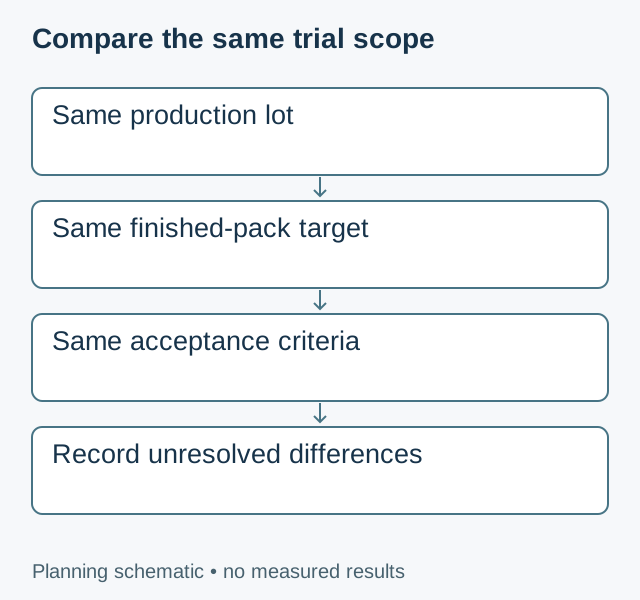
Process basis for the comparison
The comparison separates two equipment sequences. A horizontal flow wrapper receives discrete items into an infeed and wraps roll film around them before sealing. A vertical form-fill-seal machine forms a bag from roll film and receives a measured portion from a dosing system. Product presentation, portioning, film handling and the finished pack determine which sequence to assess.
Our engineering review starts with the actual item or bulk product, the intended package and the required line interfaces. For products that can follow either route, compare the same product lot and package target using agreed inspection criteria. Record feed stability, product damage, seal cleanliness and changeover requirements against each proposed arrangement. Keep the included dosing and infeed equipment visible in the scope so a category label does not hide a different process.
The final selection should connect the product’s handling needs to the complete line configuration. Film behavior, the available sealing area and the upstream presentation can change the result even when the finished packs look similar. Use representative samples to settle these interfaces before finalizing the equipment proposal.
Technical Reading
- Contract-packing guide to horizontal flow wrapping — Describes a solid item on a horizontal conveyor, film folded around it, a fin seal and crimped end seals, a bag similar to vertical form-fill-seal, exclusion of small granular items, and gas flushing with a nitrogen mix on that horizontal route.
- Packaging World: Vertical Form/Fill/Seal 101 — Describes film formed around a tube, a dosing station that drops the portion, products that flow such as liquids, powders, granulates, grains and other bulk items, a back seal plus cross seals, and a smaller floor footprint than horizontal machines.
- TERMIUM Plus: flow wrapping and HFFS — Government of Canada terminology record. Quotes both the view that flow wrapping and HFFS are the same term and the view that separates forming the pack around the product from making the bag first and then filling it, and it lists premade-pouch machines as a further variation.
- Packaging World: wrapped bars, then a combination scale, then a vertical pouch — Describes individually wrapped bars transferred to a combination scale, metered by weight or by count, and then packed in a stand-up pouch on a machine the note calls a vertical flow-wrapping machine.
- Packaging World: gas replacement on vertical and horizontal form-fill-seal — Describes modified-atmosphere equipment that mounts on vertical and horizontal form-fill-seal machines and replaces oxygen with another gas, usually nitrogen.
Frequently asked questions
Is flow wrap the same as horizontal form fill seal?
Often, but not always; the section on names above explains the two uses of HFFS and the three questions that settle which machine a quotation means.
Can a VFFS machine make the same pack as a flow wrapper?
It can make a similar pillow-shaped pack, as the first section explains. The pack is not the issue; how each item is placed is.
Can both routes use gas flushing?
A contract-packing guide describes gas flushing, including a nitrogen mix, on horizontal flow wrapping. A Packaging World note describes modified-atmosphere equipment that mounts on vertical and horizontal form-fill-seal machines and replaces oxygen with another gas, usually nitrogen. Confirm whether gas flushing is in the quotation and which package measurements will be checked.
Can one machine run both bars and loose pieces?
Plan them as two packaging jobs, as the decision tree shows, and ask any supplier who offers one machine for both to show it running on your products.
What products are best suited for vertical flow wrapping machines?
Packaging World's vertical form-fill-seal article lists liquids, powders, granulates, grains and other bulk items that flow. Treat that list as a starting category, then check the actual feeding, portioning and handling route with your product, packaging and proposed configuration.
Are horizontal flow wrappers faster than vertical flow wrappers?
There is no route-wide answer. Compare accepted packs for the same packaging task, with the product, portion, film, inspection rules and measurement window stated. A machine headline rate cannot establish the output of a different job.
Explore the Equipment
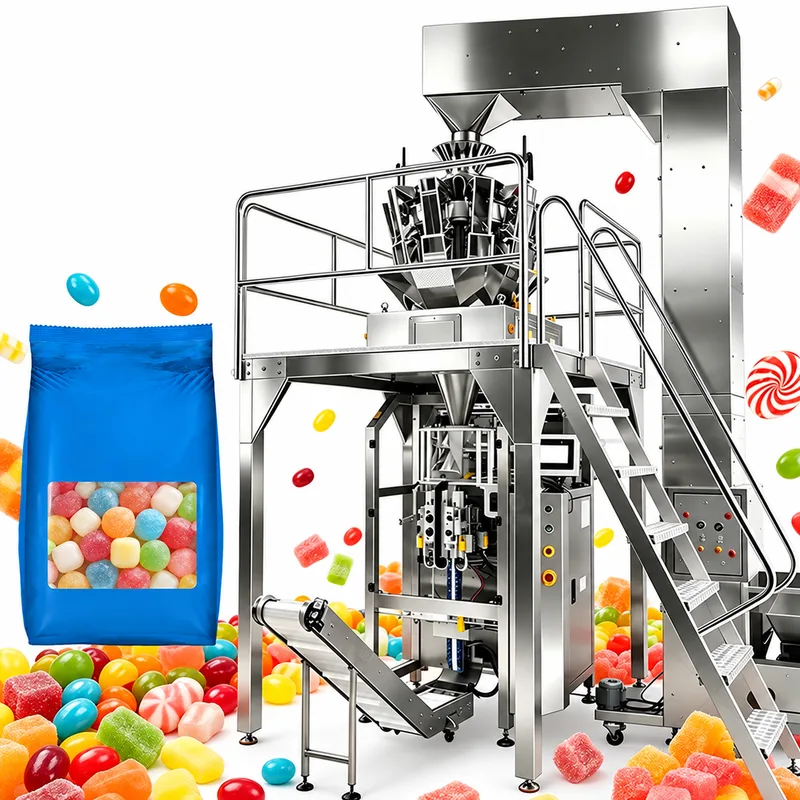
Vertical Form Fill Seal
Candy Multihead Weighing & Packaging
A correct bag weight can still hide broken, stuck or wrongly mixed sweets. Residue held on a contact surface can release into the next bag. This multihead weigher and VFFS line is set up around your candy's coating, size and pack.
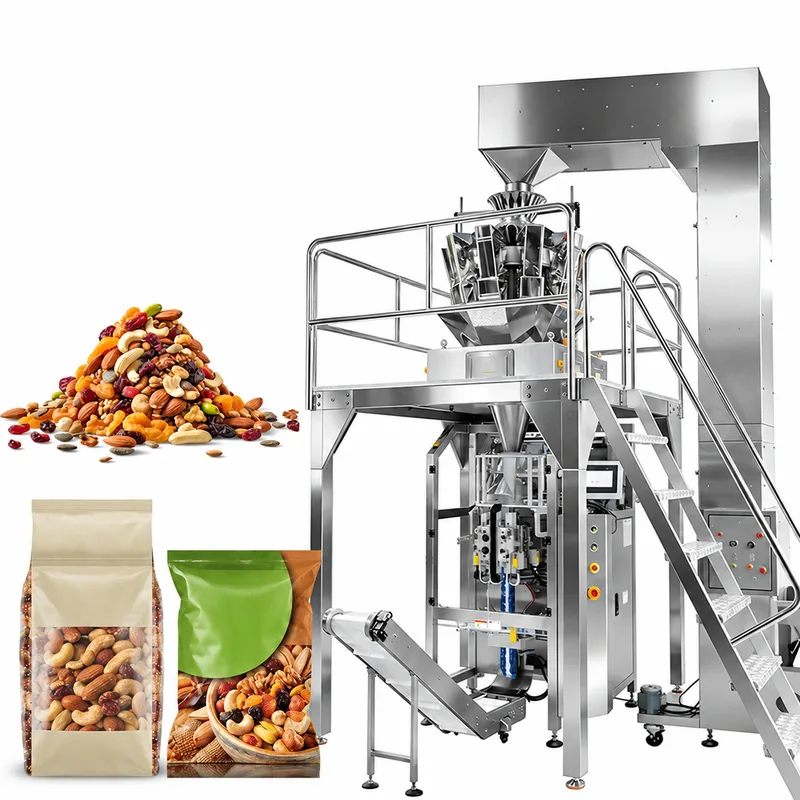
Vertical Form Fill Seal
Nuts & Dried Fruit Multihead VFFS
A nut-mix bag can be on weight and still hold the wrong ratio of ingredients. Configure this multihead VFFS line from your blend, coatings, target weight and bag size.
What to send us
| Item | Why we need it | Example format |
|---|---|---|
| Product shape and the size of the smallest and largest piece | Check placement or drop constraints | Dimensioned item sketch or labeled product photographs |
| One item, a fixed group or a measured portion per pack | Define the portioning task | SKU sheet: item count or target portion weight |
| Target output in accepted packs, with SKUs and weekly changeovers | Compare output on the same basis | Accepted-pack target with shift and changeover record |
| A sample or drawing of the pack style, including stand-up or reclose needs | Check closure and display requirements | Pack drawing or photographed sample with dimensions |
| Production-lot product for any SKU that could go either way | Define a comparable handling evaluation | Lot label and material description; dispatch by prior arrangement |
Our team reviews the product, package and configuration requirements.
We reply within 24 hours.