
Piston-Filling Sachet Systems
Plan piston filling for sauce sachets around viscosity, temperature, particles and portion size, and test dosing and four-side sealing as one trial.
On This Page
Describe the product during filling
A sauce can behave differently as its temperature or formulation changes. Give the intended filling temperature, quantity and any particles, not just the sauce name. The catalog’s sachet configuration uses piston dosing. The proposed product-contact path still has to be evaluated with the actual material.
Define hopper and nozzle options
Find out whether the proposal needs hopper heating, stirring or another product-handling provision, and whether each item is included. Review the nozzle against the sauce’s flow and particle characteristics. State how the product will arrive at the filler and how it will be removed between runs.
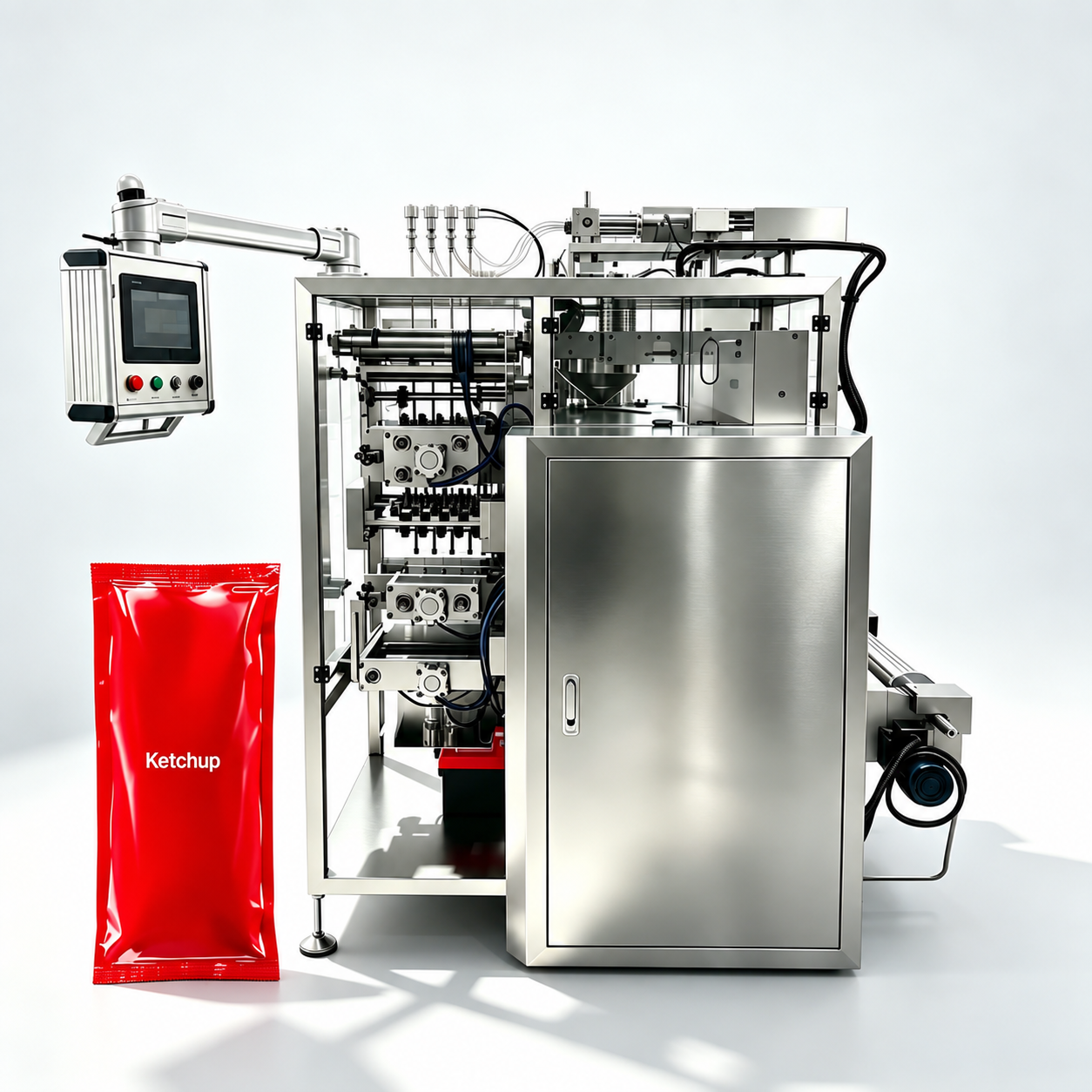
Treat dosing and sealing as one trial
The package trial should show the selected film, sachet size and fill quantity together. Look for splashes, drips and product strings near the seal zone. A good measured dose into an open container is useful evidence for the filler. It does not confirm the finished sachet.
Confirm cleaning and process responsibilities
Identify the removable contact parts, the proposed cleaning method and who is responsible for sanitation validation. Product treatment and storage belong to the complete process. You cannot infer them from the packaging equipment. Agree the documentation and demonstrations you need before approving the final configuration.
Translate the sauce description into filling conditions
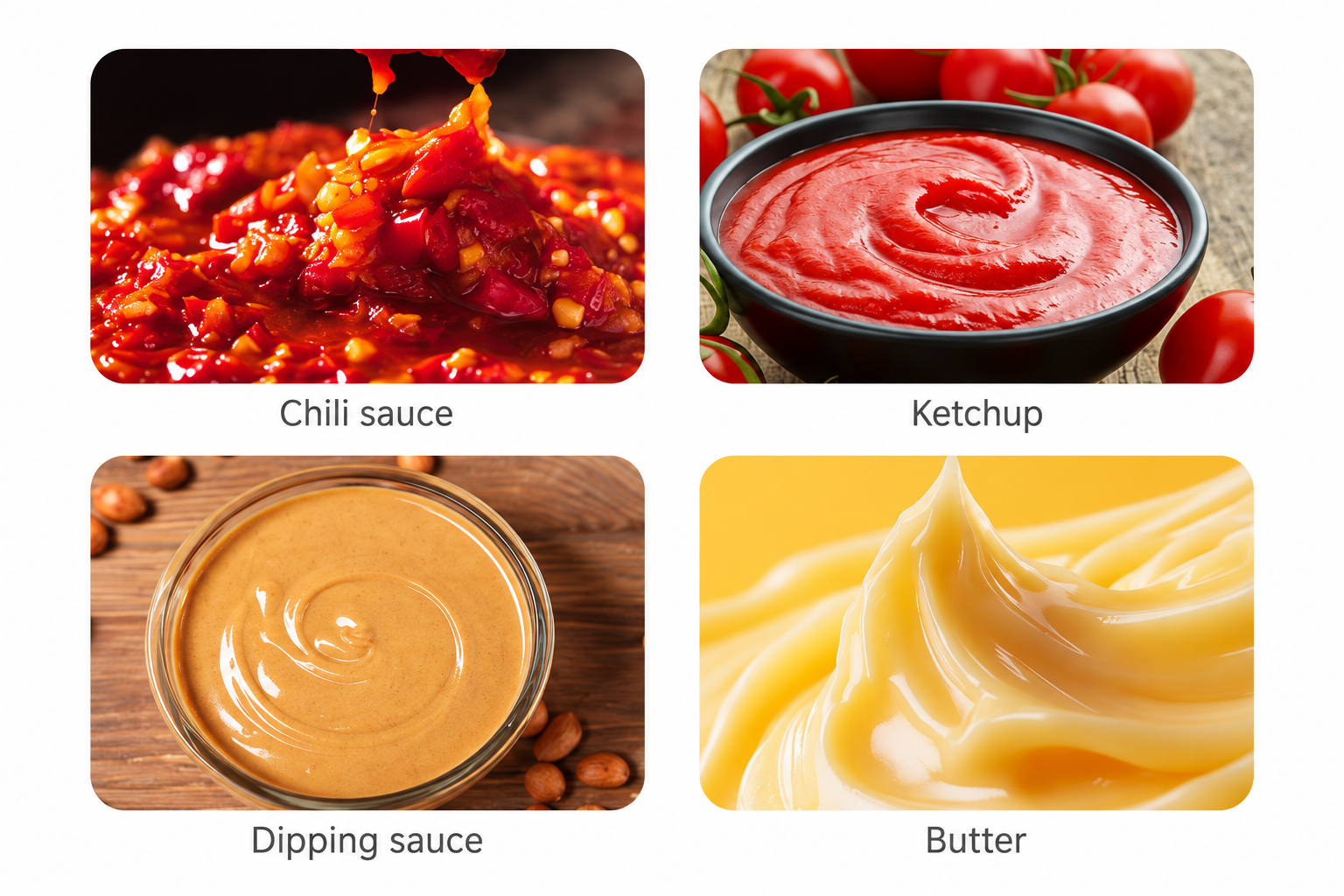
A piston-dosing sachet system meters a defined liquid volume through a filling arrangement chosen for the product. The catalog includes a four-side-seal configuration for ketchup, tomato paste and similar sauces, with heating or stirring hopper options. Judge those options against the actual product behavior. They may not be needed. They may not be included. A sauce name alone says nothing about viscosity, particles, separation or the temperature at which it will be filled.
Supply the formulation characteristics that matter for handling, with a representative sample and the intended filling conditions. If the product changes noticeably during a production shift, describe that change. A warm, freshly mixed sample may tell you nothing about a cooler product after standing. Use the enquiry to set these operating limits early. The piston, valves, hopper and nozzle come after.
Check the complete path through valves and nozzle
With particles, fibers or thick product, the delivery path can matter as much as the nominal dosing volume. The supplier should review the narrowest passages and the proposed valve and nozzle arrangement against your sample. The aim is repeatable filling. It should not rest on a product description that leaves out the difficult components.
Watch how the flow stops at the end of a dose. Dripping or a trailing strand can put product where the sachet has to seal. During the demonstration, record nozzle position, product temperature and any changes made to improve cutoff. Examine the filling event first. The film or sealing jaws are not always to blame for a contaminated seal. A good evaluation follows the sauce from the hopper to its final position in the sachet. Each stage of that path gets its own look.
Define volume, mass and headspace consistently
If the sales unit is specified by mass while the filler is adjusted by volume, agree how the trial will connect the two. Product density and entrained air can affect the relationship. Use a defined sampling and weighing method. Note whether any adjustment followed a change in product temperature or mixing condition. That matters most across demonstrations done on different days.
Headspace also needs a practical definition. The sachet must have room for the product and for closure without pushing sauce into the sealing area. A flat drawing should show the internal cavity after the seal borders are accounted for. Request filled samples at the intended nominal quantity and at the agreed operating limits, and judge their appearance and handling. The outer rectangle tells you little about usable capacity.
Coordinate the fill with the four-side-seal format
Four-side-seal sachets use a package perimeter. That perimeter cuts the available cavity below the overall printed dimensions. The fill has to enter the cavity without interfering with the closing sequence, so review the intended orientation, seal widths, cutting pattern and opening feature together with the filling nozzle. Artwork can look great and still clash with filling and sealing.
Use production-representative film for the trial and get the material supplier’s sealing guidance. Check that the sachet is supported and positioned consistently as it fills. For a viscous product, inspect the upper corners and the area near the nozzle withdrawal path. Keep samples from before and after any setting change. Then the packaging team can tie an improved seal to a specific adjustment. A good final appearance does not show that every operating condition is suitable.
Separate machine filling from product processing
Heating or stirring at a hopper can help hold a defined filling condition. It is not a complete product-treatment process. The preservation method, sanitation requirements and distribution conditions each need their own specifications and responsible review. A sachet machine cannot establish a sauce’s shelf life. It cannot make a sauce suitable for ambient storage either.
Discuss the approved cleaning method for the product-contact path, including valves, seals and nozzle components. Identify which parts can be removed, how residual product is drained and what reassembly checks are needed. Find out how the machine design supports the factory’s planned procedure, and record any limitations. Particles and changes in consistency as the sauce cools belong in the cleaning discussion. They may affect retained material and access requirements.
Use a trial that reveals ordinary operating variation
A useful demonstration covers startup, normal filling, a controlled pause and a restart, all with your actual sauce. If hopper replenishment or temperature management is part of the proposed operation, include it too. At each stage, record delivered quantity, visible cutoff behavior, seal cleanliness and package condition. Mark the sampling points. That way, when something goes wrong, you can trace it to a specific operating event.
Test opening and dispensing with finished sachets after they have been handled the intended way. Confirm that the tear location and cavity arrangement suit the expected use. At the end, request a configuration record stating the product condition, nozzle, dosing range, film and demonstrated sachet dimensions. Untried recipes or larger fill quantities should stay listed as additional checks. That gives the buyer a defensible basis for choosing the filling arrangement and planning the next validation step.
- Sauce sample at the intended process conditions
- Fill quantity, viscosity information and particles
- Film and four-side-seal sachet drawing
How should a particle-containing sauce be presented for review?
Send a sample that includes the normal particle distribution, not only the smooth liquid separated from the batch. Describe the largest expected pieces and whether their size or firmness changes during holding. The supplier should assess the complete delivery path. You should also look at how particles are distributed in finished sachets. A repeatable liquid volume does not show that solid ingredients are delivered as intended. If those ingredients are part of the portion specification, define a suitable inspection method and collect samples across the run. Keep that assessment separate from the total-dose measurement.
Explore the Equipment
Sauce Sachets
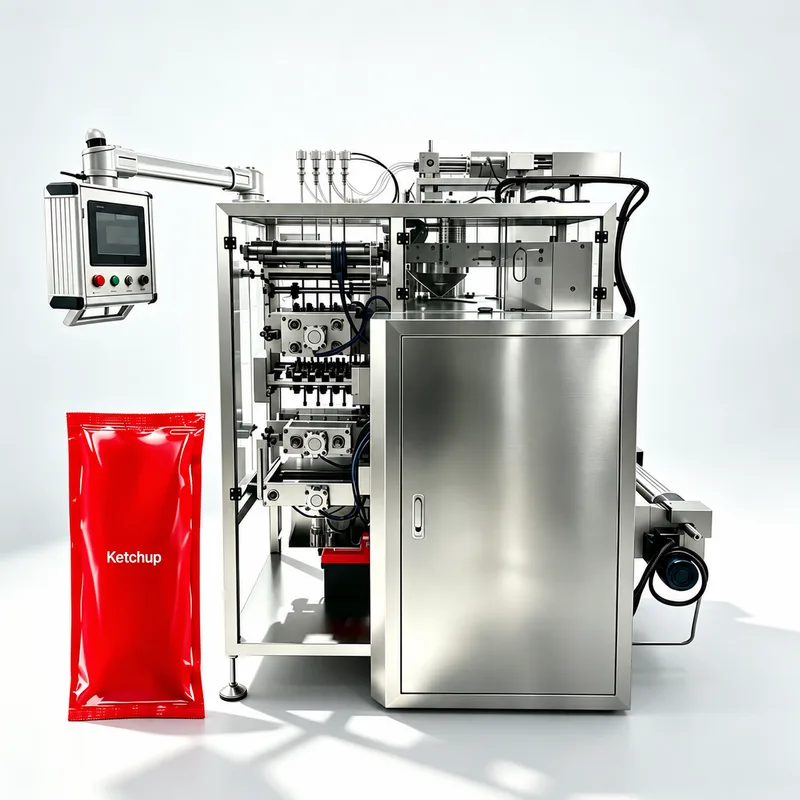
Sauce Four-Side-Seal Sachet Machine
Sauce strings or drips can contaminate the seal area, leading to leaks and rejected sachets. Specify this piston-dosing four-side-seal machine from your sauce, portion, sachet drawing and film.
What to send us
| Item | Why we need it | Example format |
|---|---|---|
| Sauce sample at the intended process conditions | Identify the evidence or open question for this review point. | Labeled brief entry + photo/drawing/record reference, or TBD. |
| Fill quantity, viscosity information and particles | Identify the evidence or open question for this review point. | Labeled brief entry + photo/drawing/record reference, or TBD. |
| Film and four-side-seal sachet drawing | Identify the evidence or open question for this review point. | Labeled brief entry + photo/drawing/record reference, or TBD. |
| Hopper options, cleaning method and trial criteria | Identify the evidence or open question for this review point. | Labeled brief entry + photo/drawing/record reference, or TBD. |
We reply within 24 hours.