
Spout Pouch Filling
Check the pouch neck, closure, filling interface and product behavior before requesting a nozzle-bag filling configuration.
On This Page
Identify the supplied packaging components
Send the complete pouch with its neck and cap, not just a photograph of the bag body. Those components together define the filling interface. Say whether the pouches arrive with a closure fitted and how they will be presented to the equipment. A bag supplier's nominal capacity does not set the machine interface or the practical fill quantity.
Clarify the machine’s exact work
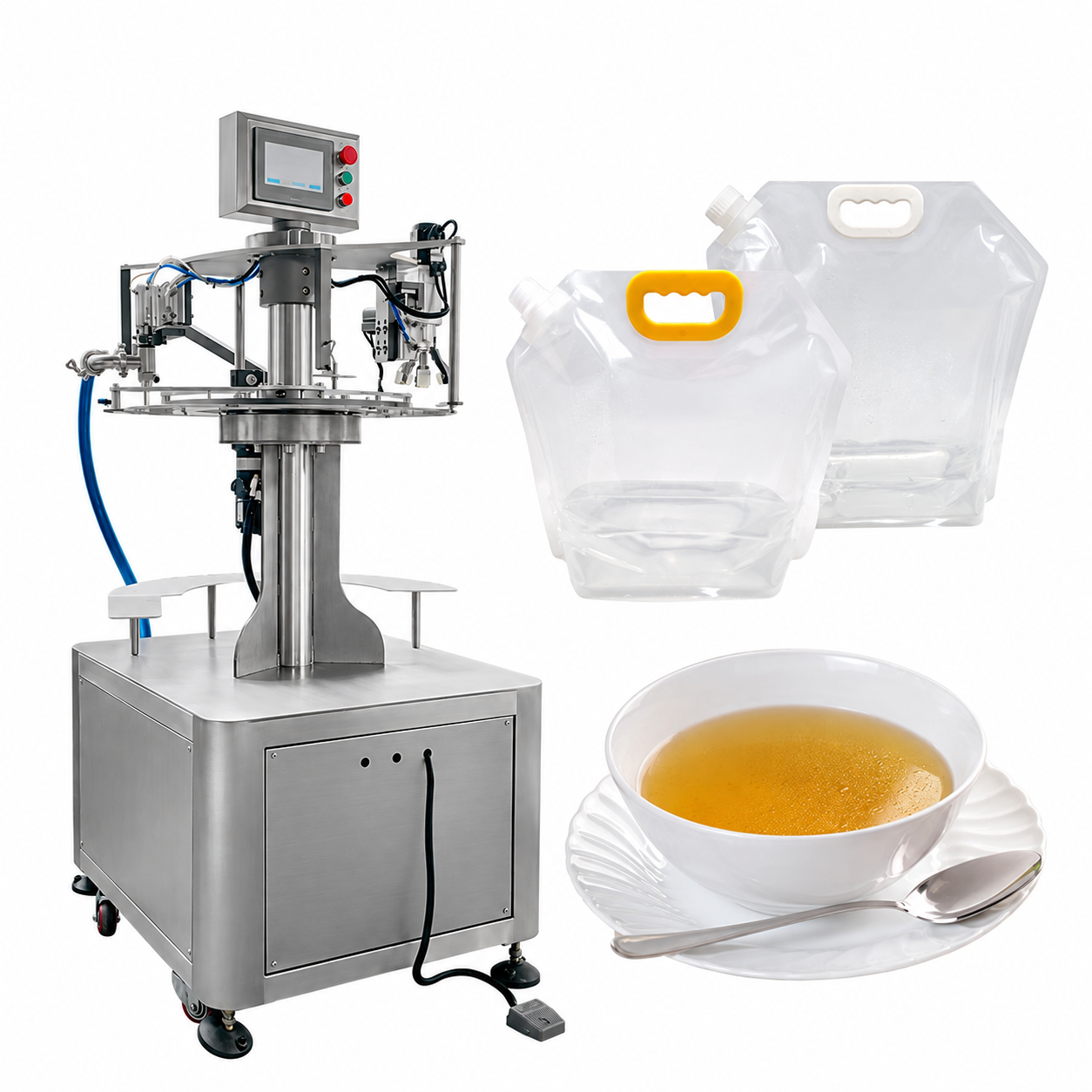
The catalog lists a nozzle-bag filling configuration. The quotation should state whether it includes pouch handling, filling, cap placement and cap tightening, and which steps stay manual. The word "filling" does not imply a complete automatic capping line. Request drawings or a demonstration for the actual neck and closure you will use.
Describe the liquid and filling conditions
Supply the intended quantity, process temperature, viscosity information and any particles or foaming tendency. These details frame the dosing and nozzle discussion. Explain how you clean the line and how products change between runs. Beverage treatment and product stability are separate requirements. You cannot read them from the pouch filler's description.
Check the interface using real samples
Evaluate nozzle fit, product delivery, drips and how the filled pouch handles, using the agreed components. If a closure operation is included, define its inspection method in the trial plan. Keep the pouch and cap specification with the equipment configuration. A later change of packaging supplier then counts as an interface review and not merely an artwork change.
Define what arrives from the pouch supplier
A spout-pouch project needs a clear description of the packaging components you supply. State whether the pouch already carries the spout, whether the cap comes separately or attached, and how the components reach the filling equipment. The catalog contains a nozzle-bag filling configuration. The exact filling and closure arrangement still has to be confirmed for your pouch.
Provide physical samples and dimensioned details of the neck, flange, opening and closure. Include the pouch body and its material construction, since the machine may have to support more than the rigid neck. A photograph of a similar cap color or pouch shape does not prove compatibility. With component-level information, the supplier can review the actual interfaces. Spouted packages are not one interchangeable format.
Clarify the filling route before comparing machines
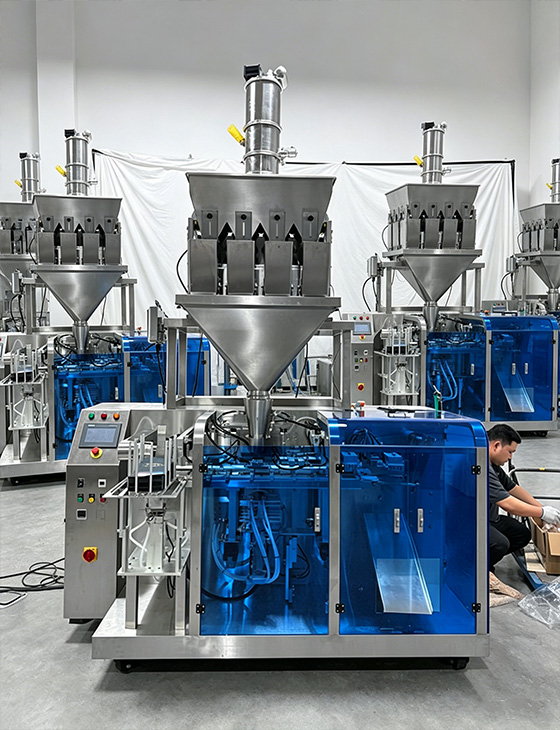
Depending on the process, a pouch may be filled through its spout or through another opening before the package is completed. The equipment supplier should identify the route used by the quoted configuration and show every operation included. A general description of a filling machine does not say whether cap feeding, cap application or a closure-control function is part of it.
Use a sequence diagram to assign responsibility for presenting the empty pouch, filling it, applying or completing the closure and discharging the finished product. Mark every manual step and every separate machine. This matters most when an existing pouch supply or a downstream packing operation is part of the project. To compare proposals fairly, they need the same operating scope. Two quotes can differ a lot if one assumes prepositioned pouches or leaves out an operation the other includes.
Match product behavior to the neck and nozzle
The liquid has to pass through the proposed filling route under your production conditions. Describe viscosity, temperature, particles and foaming behavior, and provide a representative sample. Neck opening and nozzle geometry can limit what is practical even when the pouch body has plenty of volume. A large pouch can still have a small filling path.
In a demonstration, watch the cutoff, any dripping and product left on closure surfaces. For foaming products, record the filling conditions and the time before the package is closed or handled. The supplier should explain the chosen dosing and nozzle arrangement. Settings from a different beverage are not a safe starting point. The catalog's application description opens the review. It is no evidence that every liquid or filling temperature has been validated on the proposed equipment.
Evaluate support as the pouch gains weight
A flexible pouch changes shape as it fills. The equipment has to present and support it in a way that suits the process and the package construction. Review how the neck and body are held, which contact surfaces are involved and how the finished pouch is released. An arrangement that suits one volume or material stiffness may need adjusting for another.
Inspect the pouch around the spout attachment and at its folds after filling and ordinary handling. The packaging supplier should define the integrity checks for the complete construction. Keep the material lot and fill conditions with the retained samples. This tells you more than judging the neck alone. The rigid component, the flexible body and the closure all have to work together as the shipping and dispensing package.
Make the closure specification explicit
If capping is part of the line, identify the exact cap and neck combination and get the component supplier's closure requirements. Find out what the machine controls or verifies and how that is documented. A cap that looks seated may not have received the intended application. The quoted scope should separate mechanical application from any inspection or monitoring function.
Test opening and dispensing with filled samples under expected use conditions. Check whether the closure is accessible, whether the pouch can be held comfortably and whether the product leaves through the spout as intended. Record leakage or dispensing difficulties with the component version and production conditions. Some of these problems call for a packaging revision, not an equipment adjustment. Keep the pouch supplier in the review. Not every issue is a filler fault.
Keep process claims separate from package completion
A filled and closed spout pouch does not by itself establish shelf life, product treatment or suitability for a particular distribution temperature. Define those requirements with the responsible product and process team. If the application involves heating, cooling or a specific sanitation procedure, give the conditions to the equipment supplier and request confirmation for the quoted product-contact arrangement.
For the purchasing trial, document the supplied components, filling route, product conditions, closure operations and demonstrated output. Include a planned pause and restart, component replenishment and, where relevant, the intended size changes. Keep completed samples for the agreed package checks. The record should show exactly which combination was demonstrated and name the untested volumes, neck designs or formulations. That is a firmer basis for a spout-pouch project than a broad claim that one filling machine handles every nozzle bag.
- Complete pouch, neck and cap samples with drawings
- Fill quantity, temperature, particles and foaming information
- Explicit filling and closure-operation scope
What should happen when a neck or cap supplier changes?
Compare the complete component specifications and physical samples, including the surfaces used for positioning and closure. The equipment supplier should say which differences affect feeding, support, filling or cap application, where that operation is included. Run a controlled check with the alternate components and keep the samples identified. A matching nominal opening does not make the whole interface equivalent. Recording the approved component combination lets the purchasing team bring in alternatives without losing the link between the package tested and the machine setup that produced it.
Explore the Equipment
Premade Pouches
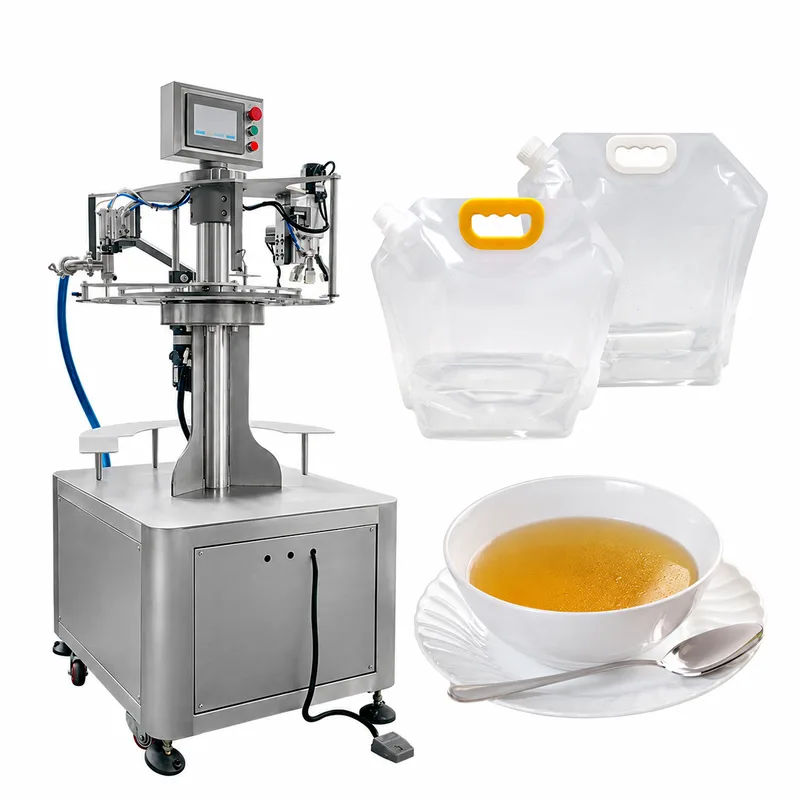
Spout-Pouch Filling Machine
A cap that looks seated but is not engaged leaks after shipping. Specify this spout-pouch filler and capper from your pouch, neck drawing, matching cap and liquid, as a stand-alone or integrated station.
What to send us
| Item | Why we need it | Example format |
|---|---|---|
| Complete pouch, neck and cap samples with drawings | Identify the evidence or open question for this review point. | Labeled brief entry + photo/drawing/record reference, or TBD. |
| Fill quantity, temperature, particles and foaming information | Identify the evidence or open question for this review point. | Labeled brief entry + photo/drawing/record reference, or TBD. |
| Explicit filling and closure-operation scope | Identify the evidence or open question for this review point. | Labeled brief entry + photo/drawing/record reference, or TBD. |
| Cleaning, changeover and finished-pack checks | Identify the evidence or open question for this review point. | Labeled brief entry + photo/drawing/record reference, or TBD. |
We reply within 24 hours.