
Prepare a Packaging Machine Brief
An ambiguous brief makes quotations hard to compare. Submit SKU conditions, a bag sample or drawing, accepted-output targets and factory constraints first.
| Input or item | Typical value or source | Why it matters |
|---|---|---|
| SKU and product | Buyer recipe, lot and filling condition | Define what enters the process |
| Package | Sample or drawing; mark provisional revisions | Define what leaves the process |
| Required output | Accepted packs in a stated period | Separate demand from headline speed |
| Factory constraints | Layout, utilities and interface owners | Expose missing installation information |
Use the published configuration and related checks
Use these references to connect the review inputs with the published equipment scope and the next decision.
On This Page
Turn a product description into a useful specification
A useful packaging brief says what has to enter the line, what has to leave it and how acceptance will be decided. Start with the product as it is in production. Note the particle dimensions, any coating, the temperature, and whether the material separates, clumps or leaves residue. Photographs with a size reference help, but keep physical samples for the trials. A photograph cannot show flow behaviour, how easily a piece breaks or how much powder goes airborne during filling.
Give every proposed SKU its own row, with the nominal fill, bag format, dimensions and packaging material. Mark which values are confirmed and which are estimates. If the bag supplier has not been chosen yet, say that plainly. Otherwise an early drawing or sales discussion can be mistaken for an approved manufacturing specification, and it goes stale when the film structure or pouch construction changes.
Describe the factory as well as the machine
A simple plan should show the product feed point, the packaging position, the inspection equipment and where finished packs go. Add doors, columns, ceiling restrictions and operator access. The floor space the machine occupies is only part of the installation space you need. Reel loading, hopper access and removal of contact parts can need access from sides that are easy to miss on a sales drawing.
Describe the actual utility supply at the intended connection points, and say which values were measured and which came from a facility drawing. The supplier should send back a list of connection requirements and open questions. For optional gas flushing, treat the equipment interface and the buyer's gas source and quality requirements as separate items. Give each interface an owner. That way an unanswered utility question does not turn into an installation surprise.
Choose a useful sample label
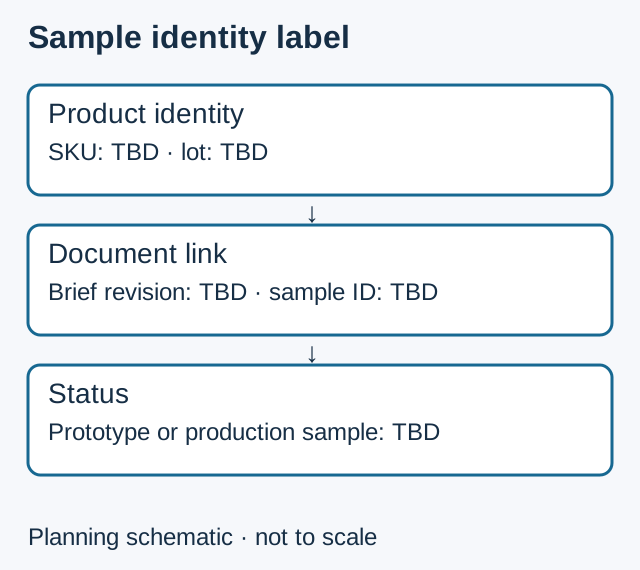
Label every sample with its SKU, its product lot and how it relates to the brief. If a bag is a design prototype and not a production sample, write that on the label. If two materials share the same artwork, give them different identifiers. A supplier who sees these small distinctions will not test the wrong combination, and the resulting report is much easier to use. Put a sample inventory in the shipment so the recipient can confirm the intended materials arrived.
Use a requirements table with evidence and ownership
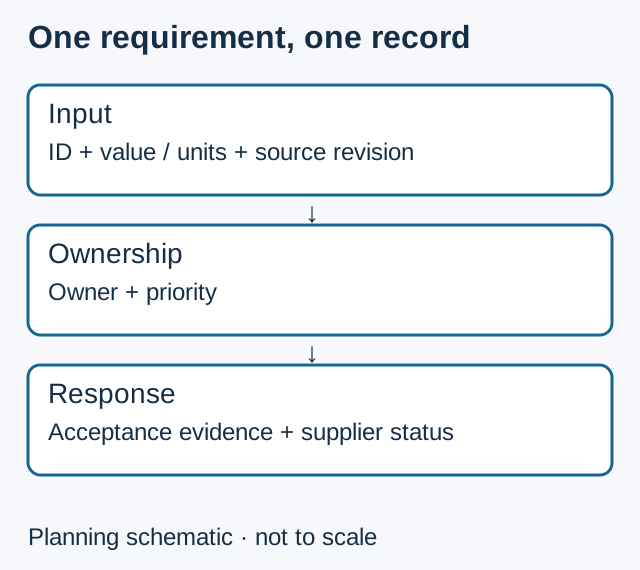
A brief is far easier to use when every important requirement has a source and an owner. The fill target may come from the product specification, the bag drawing from the converter and the daily quantity from production planning. Put the document revision next to each value. Where a requirement is still an estimate, name the person who will confirm it and what has to happen to close the question.
Add a column for acceptance evidence. A dimensional requirement may need an approved drawing and a sample measurement. A handling requirement may need a product trial with photographs before and after the transfer. An output requirement needs a defined counting period and acceptance rules. Settling the evidence early stops a supplier from answering a precise need with a broad statement that sounds reassuring but cannot be checked.
Requirements and preferences are different things. A mandatory bag opening, a preferred control language and a possible future format should not carry the same priority. If a preference adds needless complexity or cost, suppliers should say so and offer alternatives. That leaves the project room to improve while the requirements that decide whether the equipment works for your business stay fixed.
Copy the blank field register below once for each requirement. Start with one product-and-pack combination rather than a mixed list of unrelated sizes. Put units in the value field and identify the source document even when the value is provisional. The owner is the person who can close the question; it need not be the person collecting quotations. Use the acceptance-evidence field to name the record that will demonstrate the requirement, not simply the word approved. When a supplier answers, retain the original requirement beside the response so an alternative cannot silently overwrite the request. At the next revision, identify which response and sample IDs need to be reconsidered. This produces a usable handover record instead of a fresh questionnaire every time the project changes.
| Field | Blank entry | How to complete |
|---|---|---|
| Requirement ID | REQ-TBD | Unique reference used in supplier replies |
| Value and units | TBD / unit-TBD | Confirmed or awaiting measurement |
| Source revision | Document-TBD / rev-TBD | Record origin, not just a number |
| Owner | Role-TBD | Person responsible for closing the input |
| Priority | Required / preferred / future: TBD | Separate acceptance from preference |
| Acceptance evidence | Drawing / measurement / trial: TBD | Specify the record to collect |
| Supplier status | Included / excluded / alternative / pending: TBD | Keep response and evidence reference |
Example of an incomplete and a usable enquiry
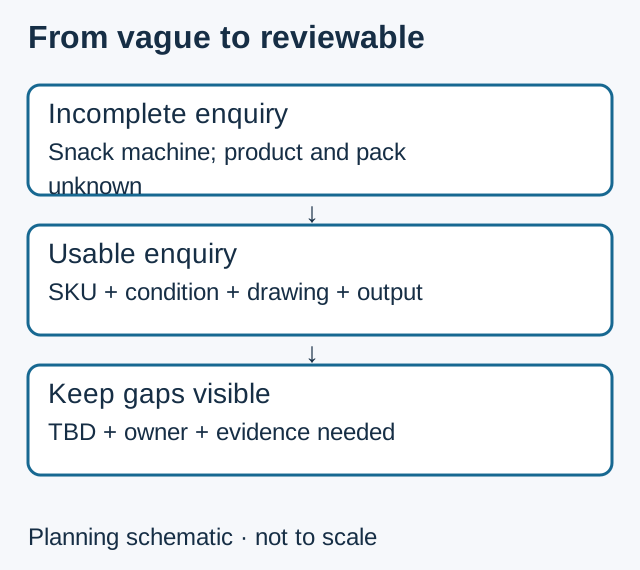
An enquiry that says only "we need a snack packing machine" leaves most of the decision open. The supplier cannot tell whether the snack is fragile, how large the portion is, what package is wanted or what happens before and after bagging. The likely reply is a general catalog recommendation. That helps with orientation, but it is not a proposal against a defined process.
A more useful version names the snack, its production condition, the first pack drawing and the accepted quantity needed in the available shift time. It describes the existing feed arrangement and includes product and film samples for review. If the business is still comparing two bag formats, it labels both as alternatives instead of merging their dimensions into one ambiguous requirement. The supplier can then explain what changes between the options.
Inventing measurements just to make the document look complete does more harm than good. A field marked "awaiting measurement" is worth more than an unsupported number that later becomes a purchase assumption. Close the gaps step by step with photographs, sample labels and drawings. The brief can start as a working document. Just make its provisional status and revision history clear.
Give the supplier a clear response format
Ask for a response against each numbered requirement: included, excluded, alternative proposed or awaiting a sample test. Keep commercial assumptions apart from confirmed technical details. A recommendation is much easier to review when the supplier names the product and pack conditions behind it. "This machine handles powders or snacks" does not tell you whether it handles your formulation in your pack.
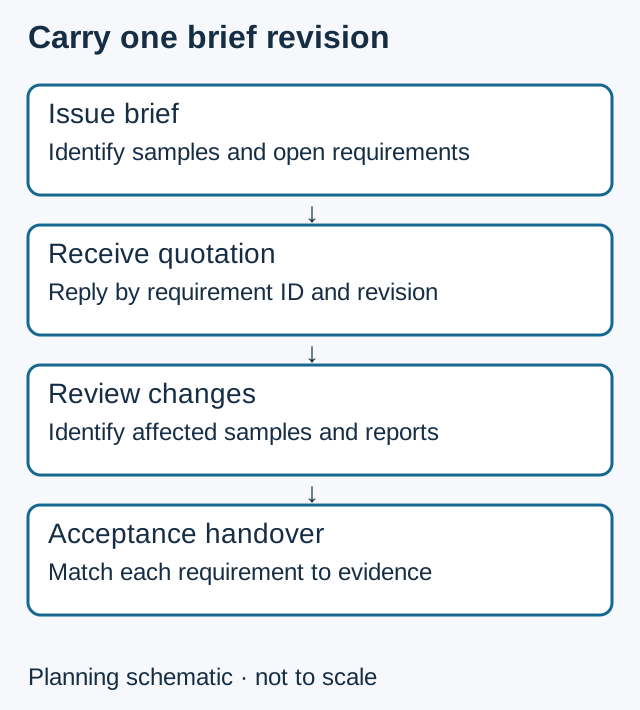
Attach an acceptance outline to the brief. It should cover the intended trial materials, how output is measured, how rejected packs are handled and what the report will contain. The real tolerances come from your production and quality staff, not from an unrelated machine listing. When the brief changes, issue a numbered revision and record who accepted the changes. Quotations, drawings and trial results can then all point back to the same revision.
Maintain the brief through quotation and acceptance
After the responses come in, revise the brief only through a controlled change record. State what changed, why, and which supplier responses it affects. If a new film structure or product formulation comes in, check whether an earlier trial still supports the recommendation. A quotation tied to an obsolete brief should not stay on file as the technical basis for the order.
At acceptance, use the numbered requirements to find the matching evidence. That saves you from rebuilding the project history out of sales messages and scattered attachments. After installation, keep the final brief with the approved drawings, recipes and report. It becomes a useful baseline when the business wants another bag size or has to investigate why a later production batch behaves differently.
Method and sources
This revision reorganizes the existing prepare a packaging machine brief guidance and the linked published configuration descriptions, reviewed on 8 October 2026. The blank records and diagrams are planning aids, not customer results or independently verified equipment tests. Questions below come from the existing page’s buying questions and the 8 October editorial review, not a claimed survey or search-frequency dataset. Confirm sample arrangements, quantities and costs before sending material.
Frequently asked questions
What if the bag supplier has not been selected?
Mark the drawing and material provisional. Keep candidate formats separate and identify what the converter still has to confirm.
How should unknown values be entered?
Write TBD or awaiting measurement, name an owner and state the evidence needed. Do not invent values to make the brief look complete.
Can an old trial report be reused after a material change?
Check which requirements and trial conditions the new material affects. Record the review and any repeat checks before relying on the old report.
What should a sample label contain?
Use SKU, product lot, brief revision and sample status. Distinguish design prototypes from production samples and different materials with the same artwork.
How should suppliers answer the brief?
Request included, excluded, alternative proposed or awaiting a sample test against each requirement ID, with the relevant document reference.
How are requirements different from preferences?
Assign priority explicitly. Keep essential release conditions separate from preferred features and possible future formats so alternatives can be judged sensibly.
Explore the Equipment
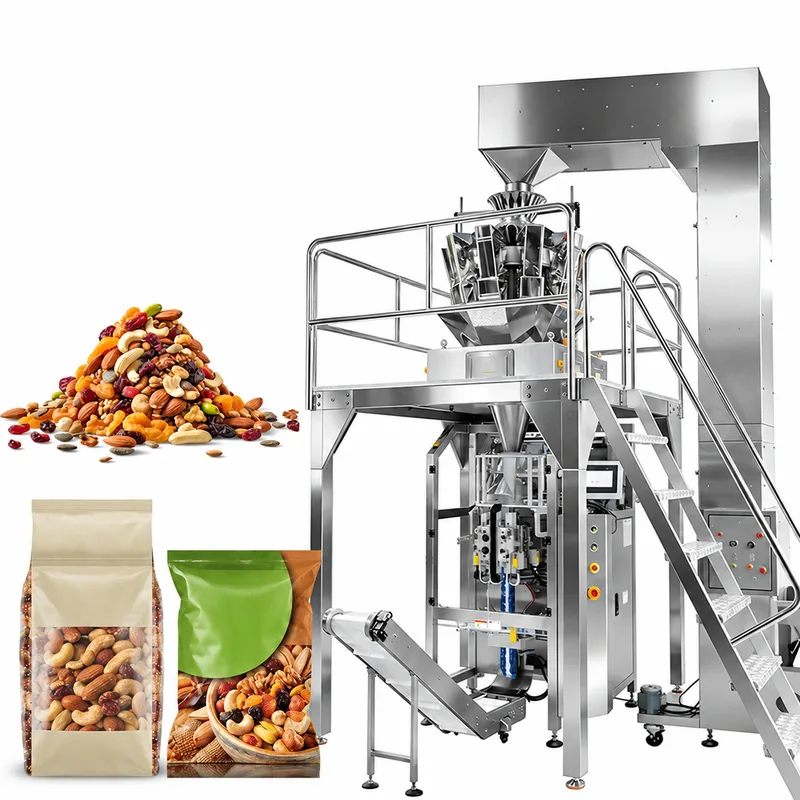
Vertical Form Fill Seal
Nuts & Dried Fruit Multihead VFFS
A nut-mix bag can be on weight and still hold the wrong ratio of ingredients. Configure this multihead VFFS line from your blend, coatings, target weight and bag size.
What to send us
| Item | Why we need it | Example format |
|---|---|---|
| SKU samples, production condition and fill targets | Identify production conditions and the quantity range. | SKU / lot / condition / target / units spreadsheet |
| Approved bag drawing, material and acceptance checks | Match geometry and materials to acceptance checks. | Bag drawing rev-TBD + film sheet + check reference |
| Factory layout, utilities and responsibility for interfaces | Assign the connections and access the proposal needs. | Annotated floor plan + utility measurements + owner list |
We reply within 24 hours.