
Packaging Machines / Premade Pouches
Premade-Pouch Packaging with Desiccant
A pouch with the right food weight but a missing desiccant packet still fails. Specify this premade-pouch and desiccant-insertion line from your food, pouch and packet codes, insertion point and checks.
- Three inputs: food dose, premade pouch, desiccant packet
- Insertion point: before, during or after the food dose, chosen and tested
- Packet detection and rejection: optional functions, not standard
- Speed and pouch range: none published for this configuration
We reply within 24 hours.
| Product and configuration | Premade-Pouch Packaging with Desiccant |
|---|---|
| Published scope | Three inputs: food dose, premade pouch, desiccant packet; Insertion point: before, during or after the food dose, chosen and tested; Packet detection and rejection: optional functions, not standard; Speed and pouch range: none published for this configuration |
| Inputs to provide | Identify packet code, dimensions, presentation method, and handling requirements. Define insertion timing and the response to missed or uncertain delivery. Track food, pouch, and packet codes through changeover and acceptance. |
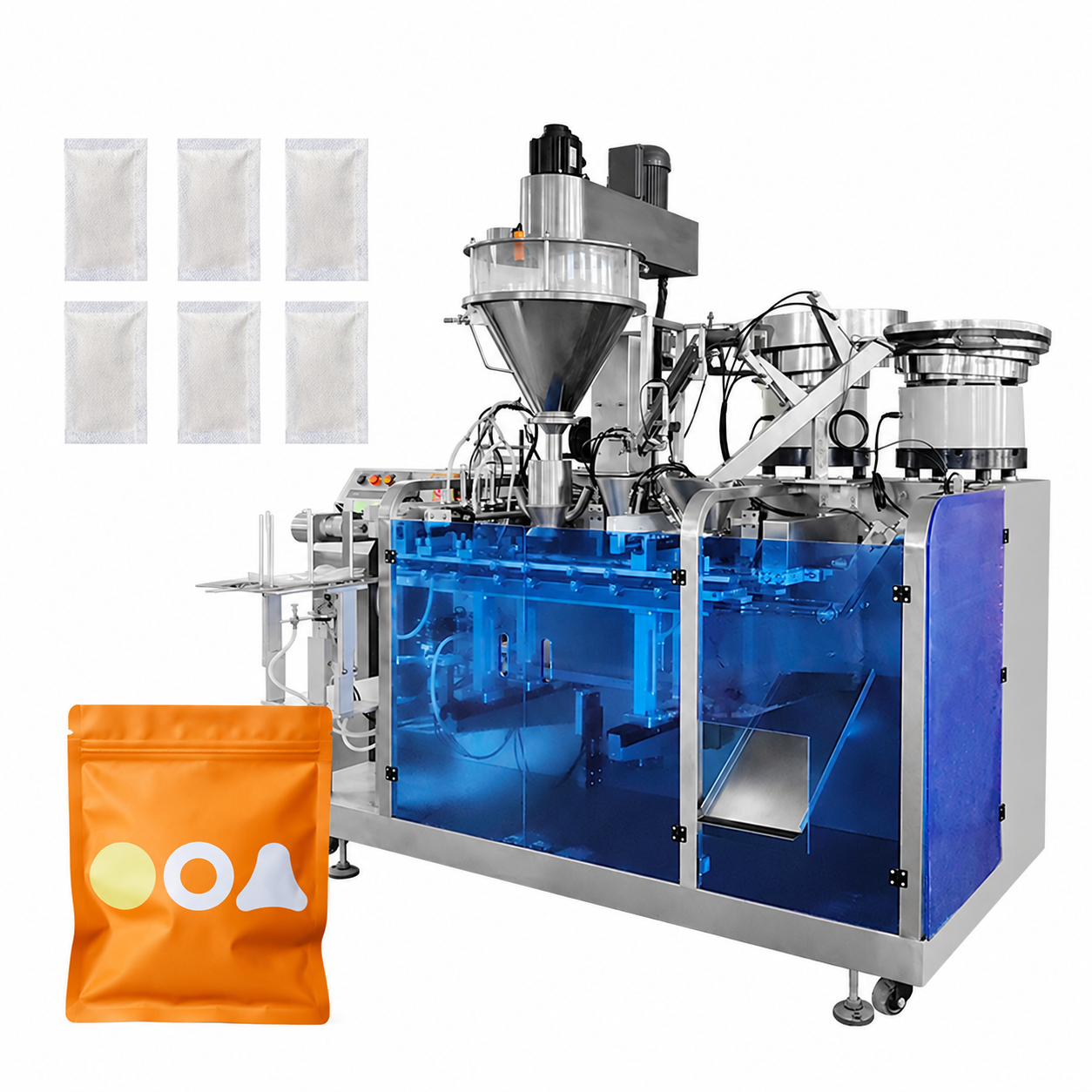
Configuration & Selection
Define the food, pouch and packet together and decide where the packet goes in the sequence. A correct food weight does not show the packet is present, intact or in the right place, and an uncaught missed packet means pouches to isolate and check. Confirm packet dimensions, insertion position and detection requirements alongside the product and pouch. Send details of your food, pouch and packet codes, packet size and supply format, intended insertion point and inspection requirement through the enquiry form or WhatsApp; physical samples are arranged separately.
On This Page
Combine food dosing with a separate packet operation
This configuration combines premade-pouch packaging of solid products with a desiccant-packet insertion requirement. The published configuration lists the desiccant application and the basic sequence of pouch retrieval, opening, measurement, product filling, sealing and discharge. That general sequence does not settle the exact insertion position, and it does not settle how packet delivery is confirmed either. Both have to be defined for the selected line.
Two items go into one pouch: the food dose and a separate moisture-control packet. They handle differently. Each raises its own acceptance question, such as presence, damage and position for the packet. A correct food weight does not prove the packet is present, intact or in the right place. So specify the product, pouch and packet together from the start. The proposed equipment should explain how their movements are coordinated, and how a questionable package is identified before it leaves the agreed inspection boundary.
Takeaway: Specify product, pouch and packet together and ask how a questionable pouch is identified.
Define the packet as a supplied packaging component
Provide the packet's dimensions, material construction, presentation method and the supplier's handling requirements. Say whether packets arrive individually or in a connected supply format, because the insertion arrangement depends on how they are presented. Include physical samples from the intended supplier. A nominal packet weight tells you little about whether packets will pick up, separate, guide and pass through the chosen insertion path.
After a handling trial, inspect the packet for tears, damaged seams or other visible changes. The buyer's qualified product and packaging process has to choose the desiccant type and amount. The machine description does not set that specification, and machine insertion is not a shelf-life guarantee. The equipment review should focus on placing the defined, intact packet into the intended pouch reliably, with a clear route left for the food and for the final sealing operation.
Takeaway: Test packet pickup and separation with samples from your actual packet supplier.
Decide where insertion belongs in the sequence
Decide whether the packet should enter before, during or after the main food dose. Watch each position with the actual product and pouch. A light packet behaves differently in an empty pouch than on an uneven bed of nuts or dried fruit. The supplier should explain the chosen path and timing, and not leave insertion implied in a general line description.
Watch where the packet settles relative to the zipper, filling mouth and seal area. A packet near the top can block closure even when the food dose is right. Also check whether incoming product strikes or buries the packet in a way that changes how you inspect it. Turn the position you want into a practical acceptance condition. If exact orientation is required, treat it as its own requirement to verify. A packet dispenser does not provide it.
Takeaway: Turn the packet position you want into an acceptance condition you can check.
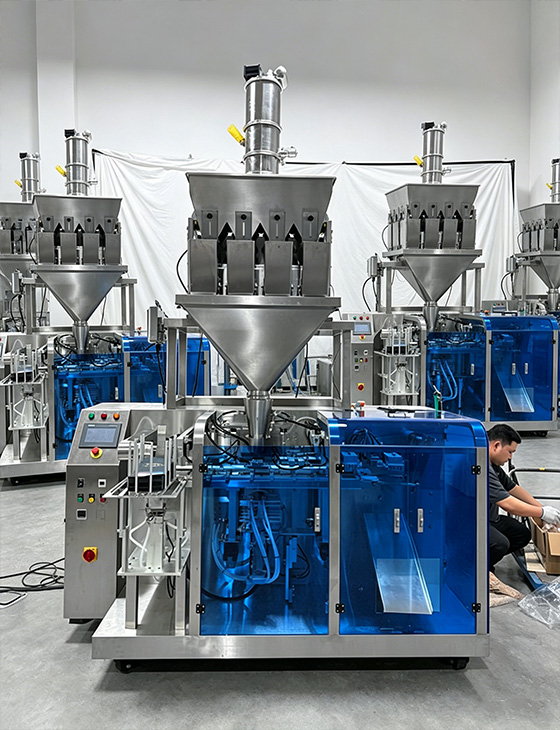
Coordinate the two feed paths without confusion
Food dosing and packet delivery both have to be linked to the pouch-handling cycle. Find out which event permits each action. What happens if one item is unavailable? Nobody should find an empty packet supply when finished cartons are opened. The proposed line needs a clear way to recognize that condition and deal with any affected pouches, whether through supplied controls, operator checks or additional inspection equipment.
During a demonstration, follow one pouch through both additions and final closure. Then watch several consecutive cycles. A delayed packet must not drop into the next pouch. Note any double delivery, missed delivery, damaged packet or packet held up in the guide. These are not food portion errors. Count them separately. Optional sensors and rejection arrangements are specific quoted functions to be demonstrated; complete packet verification is not part of the configuration by default.
Common mistake: Treating a packet dispenser as packet verification and finding missing packets only when cartons are opened.
Takeaway: Count missed, double and damaged packets separately from food errors.
Preserve pouch opening and seal clearance
Submit the actual premade pouch, with its zipper and top seal dimensions. The opening has to take the food transfer and the packet insertion path. One must not get in the way of the other. The supplier should show how the tools enter and withdraw, and whether both operations use the same opening at the same moment. Large food pieces, adhesive ingredients or a narrow zipper make it harder.
Inspect finished pouches for packets trapped near the seal, zipper contamination and food fragments that arrive late. Where a safe supplier demonstration allows, watch the pouch just before closure to find the cause of defects. Keep examples with notes on the operating event and the insertion setting. Check every adjustment against both food and packet results. Improving one path while hurting the other solves nothing.
Takeaway: Check every adjustment against both the food result and the packet result.
Plan replenishment and controlled restart checks
Packet replenishment needs its own procedure. Work out how operators load a new supply, confirm correct presentation and clear a partially delivered packet after a stop. Can the machine tell an intentional pause from a supply fault? And what checks are expected before restarting? The procedure should be clear from the supplied equipment itself, and it should not depend on informal knowledge from the commissioning demonstration.
Test a refill alongside normal food and pouch replenishment. Look at the first finished packages after each event and compare them with steady-running samples. If a packet jam occurs, record how affected pouches are separated and how normal delivery is confirmed afterward. The trial should answer one practical question: which packages need extra inspection when packet delivery becomes uncertain? That answer depends on the selected controls and inspection method, so it belongs in the project acceptance discussion.
Takeaway: Decide which pouches get extra inspection when packet delivery becomes uncertain.
- Identify packet code, dimensions, presentation method, and handling requirements.
- Define insertion timing and the response to missed or uncertain delivery.
- Track food, pouch, and packet codes through changeover and acceptance.
Change products without losing packet traceability
Different foods may use different packet specifications. The outer pouch can look identical. Organize setup records so the product recipe, pouch code and packet code appear together. At changeover, find out how operators tell the correct packet supply, and what material stays inside guides or feeding equipment after a batch ends. Clearing residual food does not clear the packet feed path.
Cleaning and inspection should cover both routes while respecting the packet supplier's handling requirements. Review access to guides, chutes and contact areas, and note which parts change for different packet sizes. After reassembly, confirm that the packet path is clear and aligned with the intended pouch position. Run first-off checks for food quantity, packet presence, packet condition and closure. Keeping these observations in one format record prevents a changeover that restores food flow correctly but leaves the wrong insertion setup in place.
Takeaway: Keep recipe, pouch code and packet code in one setup record.
Agree acceptance evidence before placing the order
Prepare a trial brief. Use the intended food, pouch and packet supply. Include the smallest and largest relevant portions, representative format changes, planned stops and packet replenishment. Define how acceptable packet delivery will be checked and how uncertain pouches will be handled. Count acceptable complete packages separately from successful food doses. The finished requirement covers both contents and a sound closure.
The inquiry should ask for a clear equipment boundary covering food weighing, pouch handling, packet presentation and insertion, synchronization, optional detection and any rejection arrangement. Where the catalog gives only a general application description, the supplier should list the outstanding questions. Keep trial samples and records that identify all three material codes. That gives you a usable basis for selecting the configuration, and keeps desiccant choice, product stability and your broader packaging validation separate from the mechanical job of placing a packet inside a pouch.
Event record for packets
Use one line per event, so affected pouches can be traced and handled. The headings follow the feed-path and changeover sections above; who acts on each event depends on the controls and inspection you select.
Material codes: food recipe, pouch code and packet code in use.
Event: missed packet, double packet, damaged packet or packet held in the guide.
Pouches affected: which pouches were made between the event and confirmed normal delivery.
Action and owner: isolated, inspected or rejected, and whether this was done by a supplied function or an operator check.
Takeaway: If no supplied function detects an event, the record shows where an operator check is needed.
When this does not apply
No speed, pouch range or packet range is published for this configuration. Packet detection and rejection are optional functions, included only when quoted. Machine insertion is not a shelf-life guarantee, and the desiccant type and amount stay with your packaging process. Exact packet orientation is a separate requirement to verify.
Takeaway: Write detection, rejection and orientation into the scope if you need them.
Frequently asked questions
Does a correct food weight prove the desiccant is in the pouch?
No. The food weight and the packet are separate acceptance questions. Packet presence, condition and position need their own check, by a quoted detection function or an agreed inspection.
Should the desiccant go in before or after the food?
It depends on your product and pouch; the packet can enter before, during or after the main dose. Watch each position with the actual food and pouch, and check where the packet settles relative to the zipper and seal area.
Which pouches need checking after a missed packet?
Those made between the missed delivery and confirmed normal delivery. Agree in advance how affected pouches are separated and which ones get extra inspection, based on the controls you select.
Are desiccant packets food safe?
That is a question for your packet supplier and product team, not the packing machine. The desiccant type and amount are chosen by your qualified packaging process; the machine places the defined packet.
Planning Guides for This Configuration
These pages cover the system type, trial preparation and project checks that apply to this configuration.
Request a Packaging Configuration
We reply within 24 hours. Tell us what you need to pack. Leave quantity and output blank if you are still deciding. When you continue, WhatsApp opens with your enquiry written out so you can review it and send it to our team.
Explore the application · Configuration and project support
Related Packaging Configurations
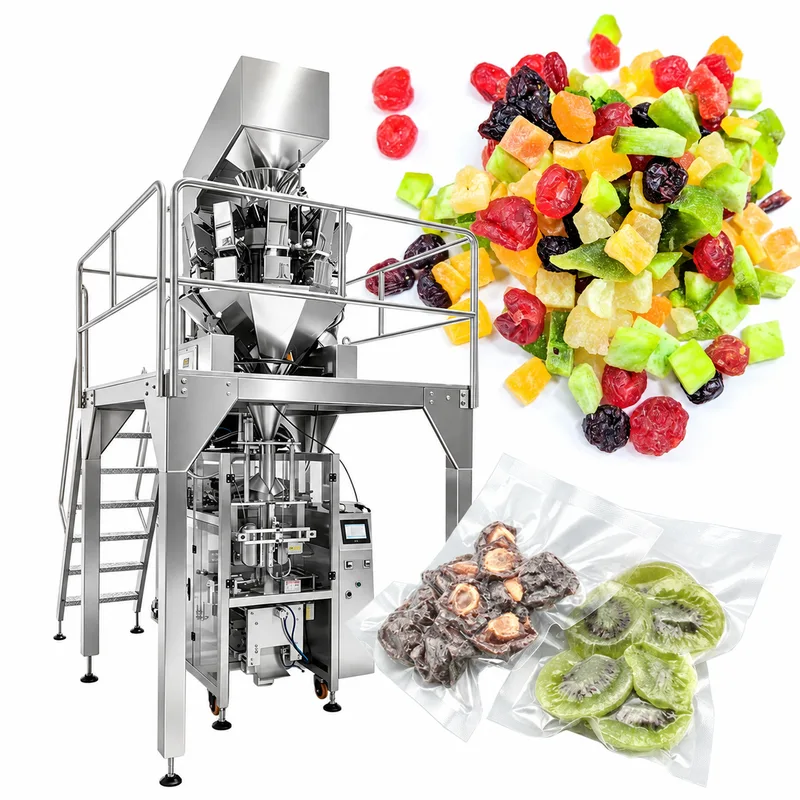
Vertical Form Fill Seal
Dried Fruit Vacuum VFFS Packaging
Too deep an extraction can break fragile fruit or press soft pieces into a mass that is hard to portion. Size this vacuum VFFS line from your fruit samples, pack shape, film and gas route.
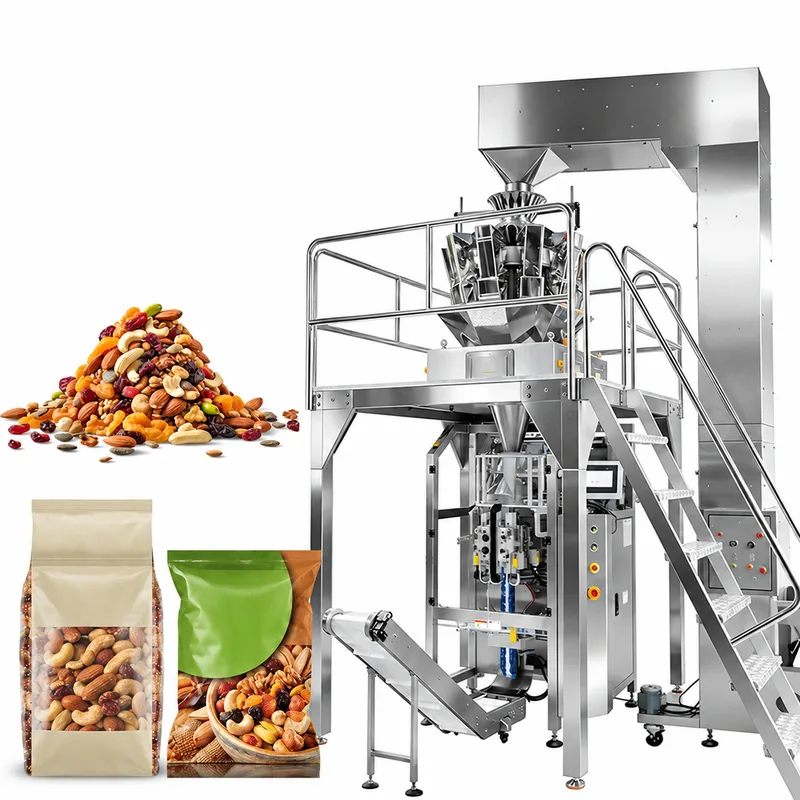
Vertical Form Fill Seal
Nuts & Dried Fruit Multihead VFFS
A nut-mix bag can be on weight and still hold the wrong ratio of ingredients. Configure this multihead VFFS line from your blend, coatings, target weight and bag size.
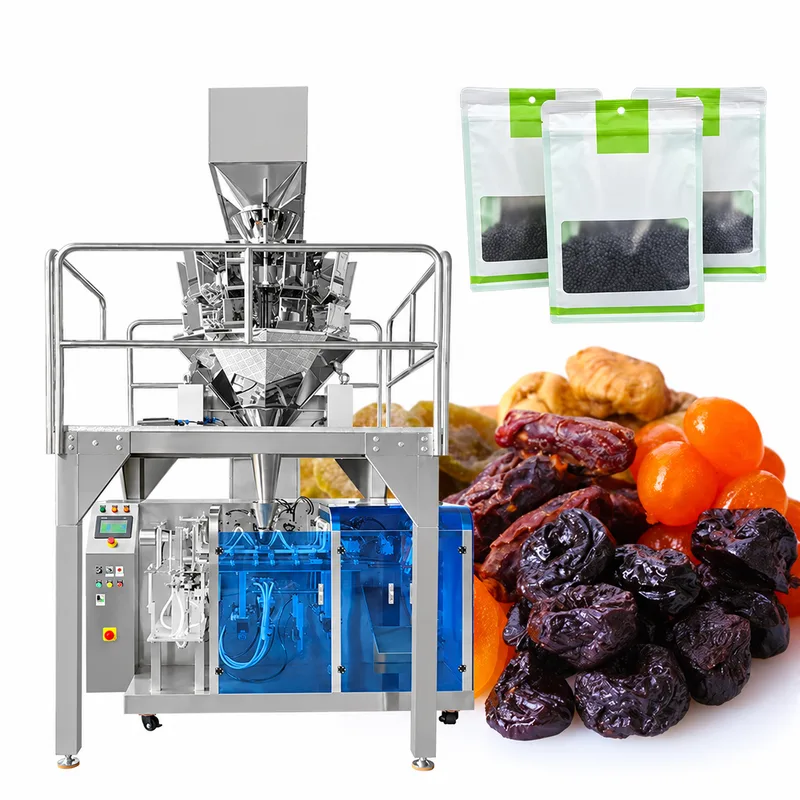
Premade Pouches
Fruit & Nuts Zipper-Pouch Packaging
A zipper pouch can be on weight while the fruit-to-nut ratio drifts. Specify this premade zipper-pouch line from your blend state, largest piece, net opening and fill weight.
What to send us
| Item | Why we need it | Example format |
|---|---|---|
| Food description | Piece size and stickiness affect the packet's path and position. | Product name, largest piece in mm and a sample. |
| Pouch code and drawing | Opening must serve food transfer and packet insertion. | Unused pouches with zipper and seal dimensions. |
| Packet code, size and supply format | Insertion depends on how packets are presented. | Packet samples, dimensions in mm, single or connected supply. |
| Insertion point | Sets timing and the packet's final position. | Before, during or after the food dose, plus required position. |
| Inspection requirement | Decides whether detection or rejection must be quoted. | Required checks and what happens to an uncertain pouch. |
We reply within 24 hours.