
Nuts & Dried Fruit Packaging Machines
Nut, dried fruit and mixed-nut packaging machines: pillow bags, zipper pouches or vacuum bags, plus how to specify blends, oily and sticky pieces.
| Product and route | Package structure | Inputs for the linked configuration |
|---|---|---|
| Nuts or mixes: multihead VFFS | Roll-film pillow or gusset bag | Ingredient records, total weight and composition requirement |
| Dried fruit: vacuum VFFS | Requested evacuated film bag | Normal clusters, moisture and desired pack result |
| Fruit or mix: zipper pouch | Finished reclosable pouch | Actual pouch, largest pieces and coating/stickiness |
| Product plus desiccant: premade pouch | Finished pouch with requested packet insertion | Packet code/dimensions and response to missed insertion |
Choose the route before specifying the equipment
Select the bag route and define whether ingredients arrive premixed or need separate supply. Keep total weight and ingredient distribution as different acceptance questions.
Scroll horizontally to read all columns, conditions and sources.
| Route | Catalog configuration | Output and bag size in the catalog | What to supply | Confirm in the quotation |
|---|---|---|---|---|
| Multihead VFFS (nuts, raisins, dried berries, snack mixes) | Combination weighing, product-specific feeding surfaces, pillow and gusset bag configuration | 30 - 70 bags/min (Subject to bag volume, target weight, and material flow); Length: 80-350mm | Width: 60-240mm (Customizable Formers) | Ingredient ratio as well as total bag weight; normal coatings | Blend distribution validated with the actual material; retained fruit after repeated hopper discharges; film and seam condition around sharp nut fragments |
| Vacuum VFFS (dried fruit) | Vacuum extraction before final sealing, vacuum and nitrogen-cycle configuration, high-barrier laminate film handling | Output and bag-size ranges not stated for dried fruit vacuum vffs. | Normal dried-fruit clusters and fragile pieces | Product moisture, bag shape and required vacuum level; whether nitrogen is part of the sequence |
| Premade zipper pouch | Zipper-pouch opening, product dosing and filling, finished-pouch sealing | Output and bag-size ranges not stated for fruit zipper pouch. | The actual zipper pouch and the largest food pieces; adhesive ingredients; whether the recipe arrives premixed | Filling clearance, blend consistency and delayed pieces during replenishment and restart |
| Premade pouch with desiccant packet | Premade-pouch packaging, weighing and filling integration, desiccant-insertion configuration | Output and bag-size ranges not stated for desiccant pouch line. | Desiccant packet code, dimensions and presentation method | Insertion timing, response to missed delivery, codes tracked through changeover |
On This Page
Choose the pack by how the customer buys and uses it
A nut and fruit range can use several packaging routes without changing its product identity. Roll-film VFFS is a starting point for a sealed portion bag; a premade zipper pouch is a starting point when the retail brief requires reopening and reclosing. The catalog also includes a vacuum bagging configuration for projects that specifically request an evacuated package. These choices describe different machinery and package structures, so the intended consumer use should be stated before the quotation is assembled.
Consider a hypothetical range with a small nut portion and a larger dried-fruit sharing pouch. The first brief can concentrate on bag dimensions, weighing and the opening cut. The second also needs an actual zipper sample and sufficient access for fruit to pass through the opened pouch. Prepare the request as three separate items: product, serving or sharing quantity, and closure style, so the supplier can connect the correct dosing route with the correct bag-handling unit.
Describe each product and each ingredient
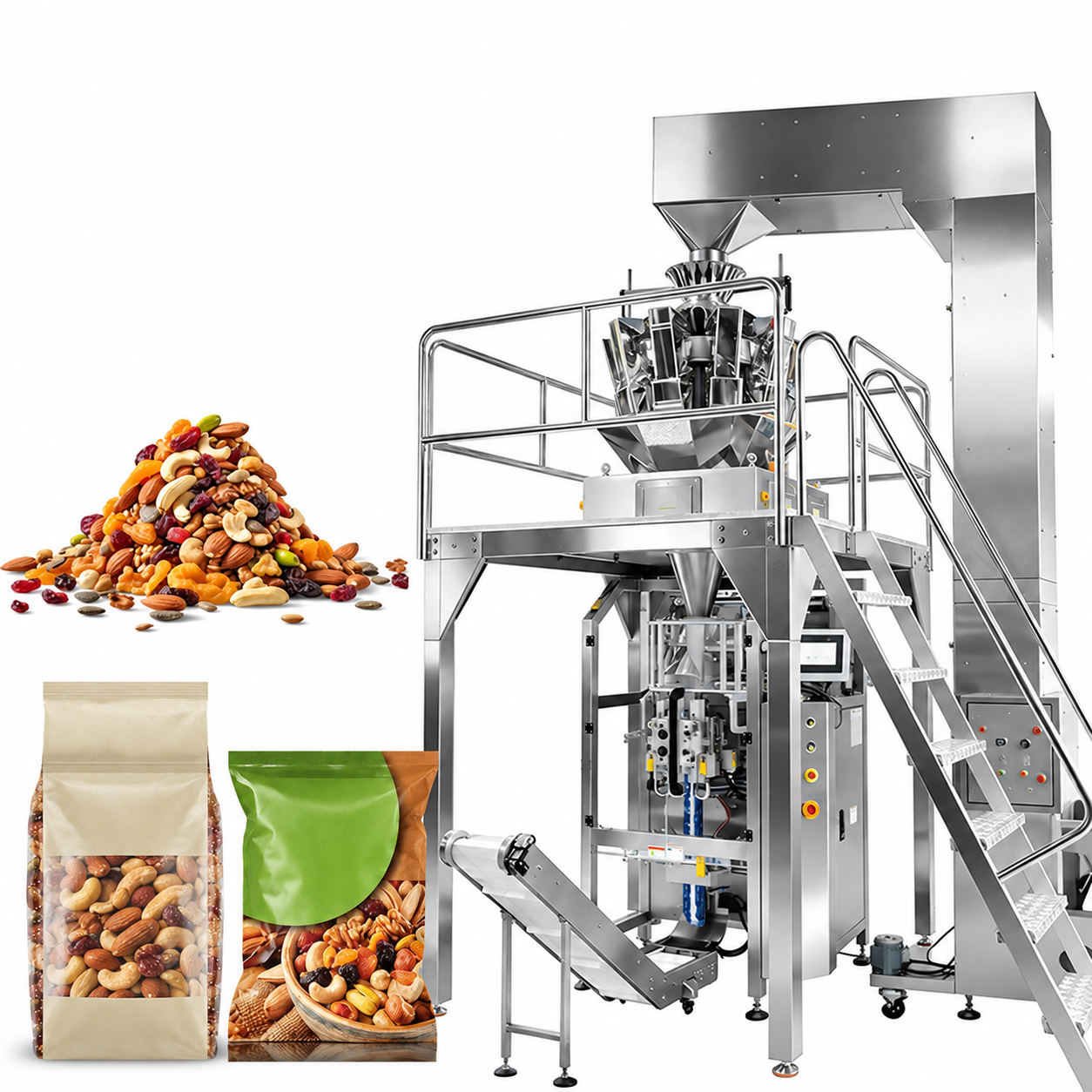
Nuts and dried fruit often share a retail category, but they should not share an undifferentiated machine specification. Whole almonds, broken walnuts, raisins and soft fruit strips present different shapes and surface conditions. Describe each product as it arrives at packaging: loose or clustered, plain or coated, dry or visibly oily, and relatively uniform or widely variable in size. A short sample description can prevent the supplier from basing the proposal on an easier material than your production actually provides.
For a blend, keep one record per ingredient with its approximate proportion, piece size, shape and surface condition, and include broken pieces where they are part of the incoming material. A mixture of large nuts, small seeds and dried berries should not be represented by a photograph of an attractive finished bag; the sample must show what will actually reach the feeder.
Decide whether the line receives a blend or builds it
A mixed-nut or snack-mix project needs an explicit answer to one scope question: does the packaging line receive a finished blend, or must it create the blend? The catalog's nuts configuration provides a combination-weighing and VFFS route, while the premade zipper-pouch range supplies an alternative bag-handling route. Neither package choice, by itself, defines separate ingredient supply or proportion control; those functions need their own equipment description when they are part of the project.
Draw a simple material diagram with one box for each ingredient. If the factory delivers a premixed product, join the boxes before the packaging-line boundary and show a single incoming stream. If ingredients enter separately, keep the streams separate and ask the supplier to show where and how they are combined, including any manual blending left outside the machinery. Use the same diagram when comparing quotations, so it is clear whether each price covers only weighing and bagging, additional ingredient feeders, or a wider blending arrangement.
Total weight and composition are different results. Nut and fruit pieces vary in size and weight, and a combination weigher reports the weight it released, not the share of each ingredient. In a hypothetical nut-and-raisin mix, several bags may have similar total weights while holding visibly different amounts of raisins. Decide before the trial how your business wants to judge that variation, and ask what the proposed weigher measures.
Inspect release and retained material
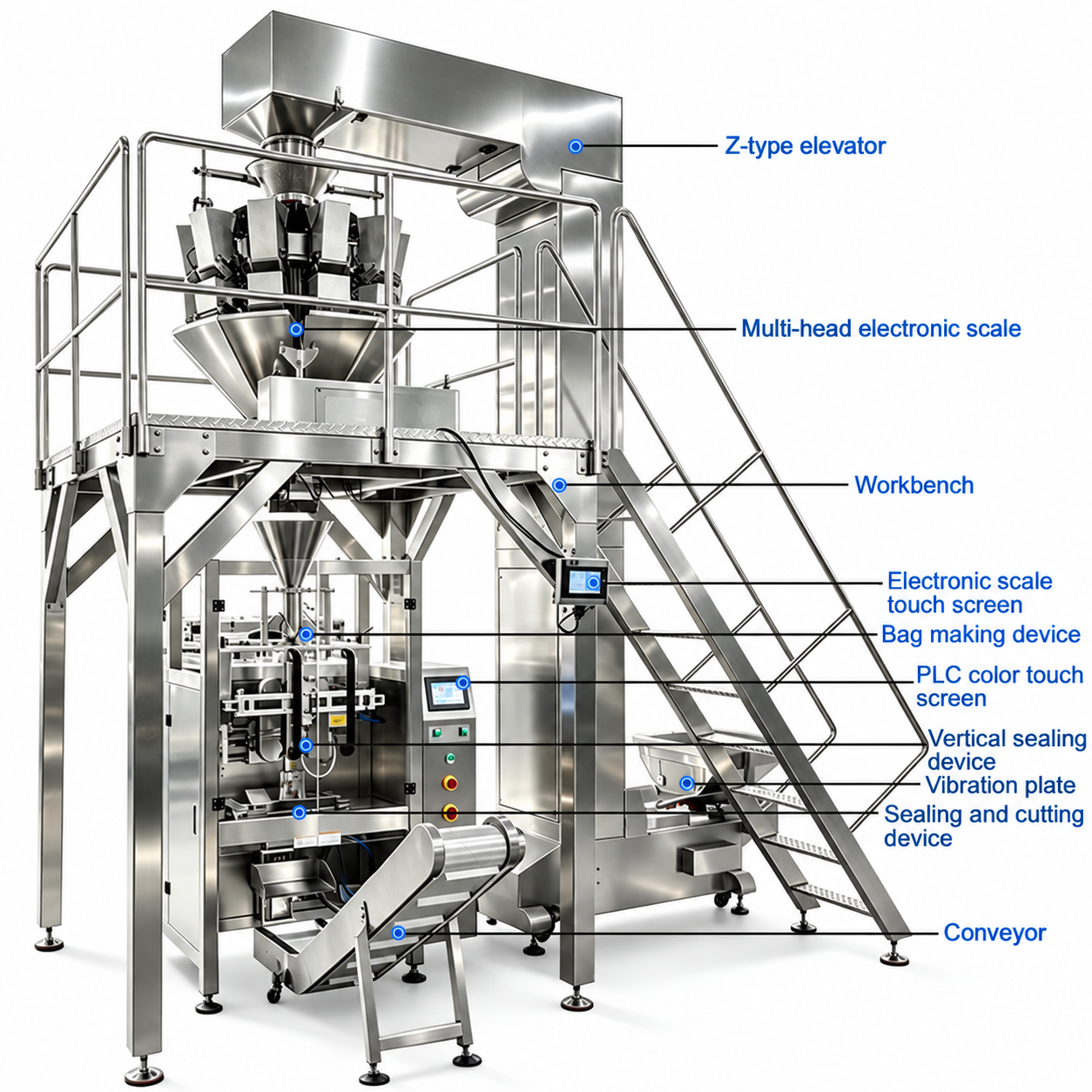
Trace the product from bulk supply across the feeder and through the weighing and discharge surfaces. Look for material that remains between cycles, clusters that separate late and pieces that bridge an opening. Surface options such as dimpled contact areas are discussion points; their usefulness for your particular fruit must be demonstrated with representative samples. Record broken pieces at the same points, because a drop or contact surface that damages brittle nuts may not show up as retention.
Include the expected variation in product condition: fruit taken straight from a storage container may behave differently from material arriving after the normal upstream process. Note the temperature, handling and coating information, and photograph the points where retention is observed. For products that are mainly sticky, the sticky dried fruit page and the sticky-product feeding guide go further.
Match the pouch to consumer use
A film-roll pillow or gusset bag and a premade zipper pouch offer different package structures. Provide the dimensions and an actual filled sample of the desired presentation. For a zipper pouch, identify the zipper design and the usable opening below the top sealing area, and ask to see bag opening and product entry with the actual pouch, not an empty pouch of similar size. For a mixed product, check how the full mix, including its largest pieces, clears the zipper and top seal; for VFFS, review the forming and discharge arrangement with the chosen bag volume.
Run the package with the actual mixture, because a uniform stand-in can hide the behavior of small particles or sticky fruit near the sealing area. If vacuum packaging is under consideration, explain the desired appearance and how the product should remain after opening. Soft dried fruit and brittle nut pieces change differently, and the catalog's vacuum configuration needs a product-specific review of its cycle and acceptable result.
Keep film and shelf-life decisions evidence based
Send film or pouch construction information from the packaging supplier. If gas flushing, vacuum or another atmosphere-related function is requested, state the finished-package questions your quality team needs to investigate. The catalog lists a vacuum and nitrogen-cycle option on the vacuum configuration, so ask whether any gas function is part of the nut configuration you are quoted, and ask the quotation to name the equipment and trial conditions. It should not turn a hardware feature into an unsupported promise about how long every nut or fruit will remain acceptable.
Keep labeled samples from the agreed trial stages and record any change to the bag or filling arrangement. If ingredients or packaging material change later, decide which assessments need repeating.
Check composition and total weight as two results
Record fill results with visible handling and package observations, and keep composition in its own record. Collect a reference sample from the incoming mixture by an agreed method, then compare finished bags from identified stages of the run. Different shapes and sizes may move differently during feeding, so examine the proposed route, including any elevator, feeder and collection path that is part of the line, rather than assuming the incoming blend stays identical everywhere.
Agree how ingredients will be told apart: separating bag contents, counting identifiable pieces or another recorded method. State the limits of the method, since a visual impression and a weighed ingredient breakdown are different kinds of evidence, and choose the number of samples in the evaluation plan instead of inventing a universal count. Observe startup, stable running, replenishment and the product left near the end of the batch, and note any intervention needed to release material or restore feeding. A trial that explains why a problem occurred is worth more than a few attractive completed bags.
- Piece distribution, coating and product moisture
- Mixture consistency and residue along the feed route
- Pack format, closure and product-specific trials
Plan recipes and the daily production pattern
A line running one plain nut all day faces different demands from a business changing among fruit, seasoned nuts and mixed products. List the expected batch sizes, package changes and product-contact cleaning requirements, and ask which parts can be accessed or removed for your method. Confirm the space for replenishment and collection as well as the machine footprint.
Separate the kinds of change. A new printed bag with the same blend differs from a recipe that adds an ingredient or changes the proportion of a difficult component. A move from plain to coated almonds may need another contact-surface assessment, and a move from pillow bag to zipper pouch needs a new opening and filling review. Ask which parts and adjustments apply to each case and how the operator identifies the correct setup. Keep ingredient and package approvals as two records, each with sample identity, trial date, configuration and open questions, so a seasonal assortment can be compared with what was already demonstrated.
Keep approvals traceable through recipe changes
Keep ingredient approval and packaging approval in separate records. Attach the sample identity, drawing revision, assessed configuration and open questions to each. If a vacuum or desiccant option is requested, ask the supplier to distinguish the base bagging equipment from that added sequence and its acceptance checks. This lets purchasing identify a repeat format order versus a change that still needs product or package review.
Method and limits of this comparison
Scope: Nuts & Dried Fruit Packaging Machines. Configuration records: nuts-multihead-vffs, dried-fruit-vacuum-vffs, fruit-zipper-pouch, desiccant-pouch-line. This October 2026 revision organizes the published configuration descriptions and the buyer checks discussed on this page. The configuration source links near the opening identify the records behind the comparison. This is a selection aid compiled from published information, not a report of our own trials.
For Nuts & Dried Fruit Packaging Machines, use the stated parameters only for the named configuration and its original conditions. Missing values remain open; photographs and edited catalog illustrations do not qualify an untested material or establish a storage-life, cleaning or performance result. Keep project-specific evidence with the final quotation.
Frequently asked questions
Does correct total weight guarantee the ingredient ratio?
No. Establish whether the line receives a blend or controls separate ingredient streams. Agree a composition measurement alongside the total-weight check.
What changes when an ingredient is added?
Review its size, surface, release behavior and proportion, then compare the revised mixture with the material and tooling record. Keep the new ingredient open until the relevant checks are complete.
What should happen if a desiccant packet is missed?
Ask the proposed insertion configuration to state detection, response and pack disposition. Record that sequence in the scope and trial plan; the catalog listing alone does not confirm a specific reject mechanism.
Can one weigher cover nuts and sticky fruit?
Request the assessed materials and contact parts for each recipe. A common machine family is not evidence that the same surfaces and settings cover all of them.
Explore the Equipment
Vertical Form Fill Seal
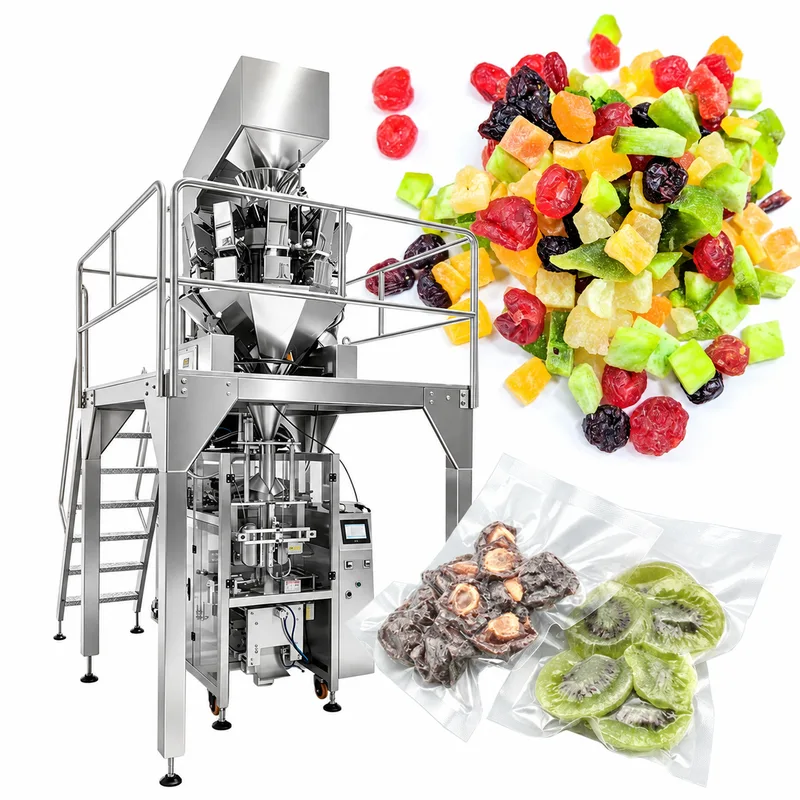
Dried Fruit Vacuum VFFS Packaging
Too deep an extraction can break fragile fruit or press soft pieces into a mass that is hard to portion. Size this vacuum VFFS line from your fruit samples, pack shape, film and gas route.
Vertical Form Fill Seal
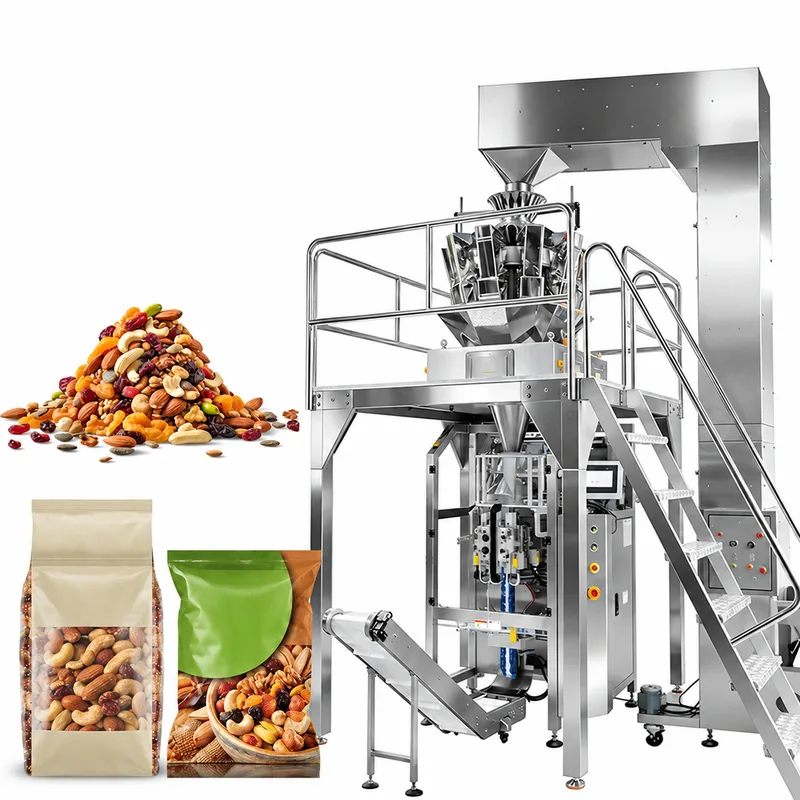
Nuts & Dried Fruit Multihead VFFS
A nut-mix bag can be on weight and still hold the wrong ratio of ingredients. Configure this multihead VFFS line from your blend, coatings, target weight and bag size.
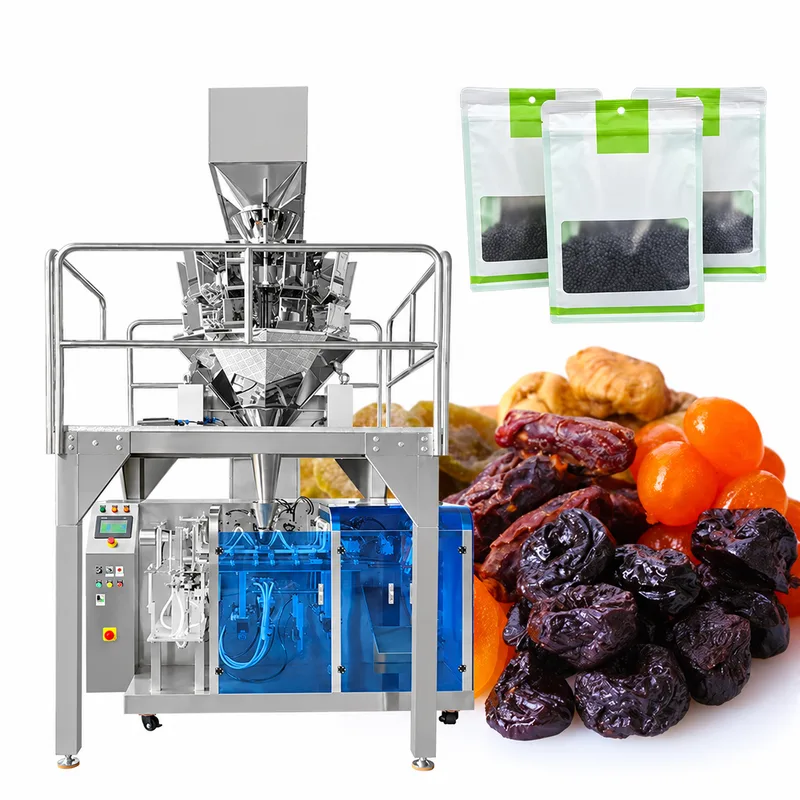
Premade Pouches
Fruit & Nuts Zipper-Pouch Packaging
A zipper pouch can be on weight while the fruit-to-nut ratio drifts. Specify this premade zipper-pouch line from your blend state, largest piece, net opening and fill weight.
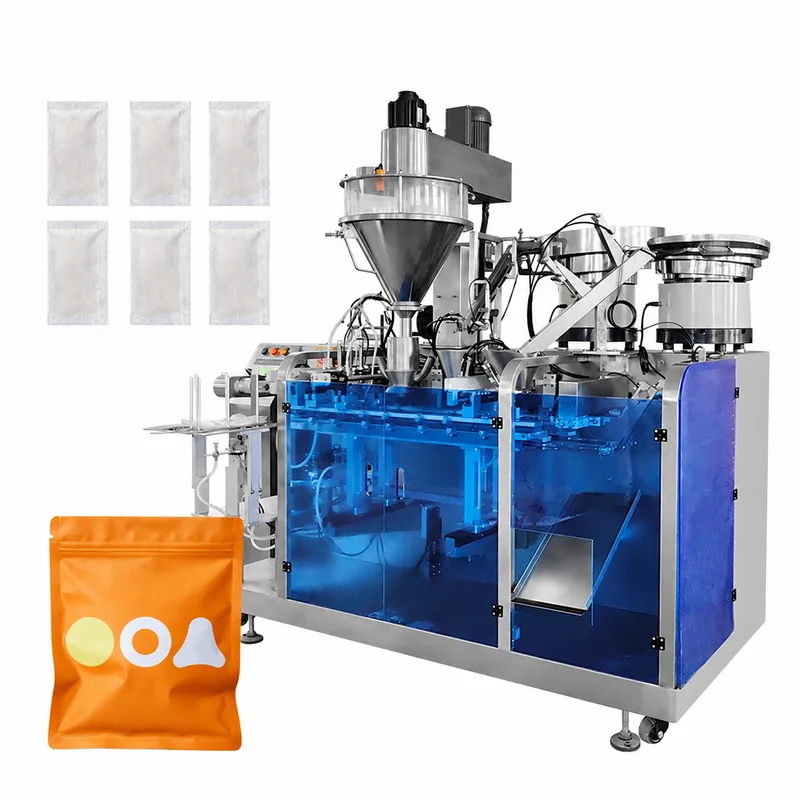
Premade Pouches
Premade-Pouch Packaging with Desiccant
A pouch with the right food weight but a missing desiccant packet still fails. Specify this premade-pouch and desiccant-insertion line from your food, pouch and packet codes, insertion point and checks.
What to send us
| Item | Why we need it | Example format |
|---|---|---|
| Ingredients and proportions | Separate composition requirements from total weight | Ingredient matrix and labeled samples |
| Stickiness and coatings | Identify release and retained-material checks | Product-condition notes and photographs |
| Bag weight and actual pack | Define quantity, filling clearance and closure | Weight sheet plus film or pouch sample |
| Schedule and factory layout | Plan recipe changes and line interfaces | Production sequence and dimensioned room plan |
We reply within 24 hours.