
Vacuum VFFS Systems
Review forming, filling, extraction and sealing as a coordinated packaging sequence for the desired vacuum pack.
On This Page
Define the result with a sample
The catalog contains a vertical vacuum packaging configuration for dried fruit and coffee applications. Start with the filled shape you want and how much product compression is acceptable. A reference bag helps. It separates a presentation requirement from a request for a numerical vacuum setting that has no agreed package acceptance method.
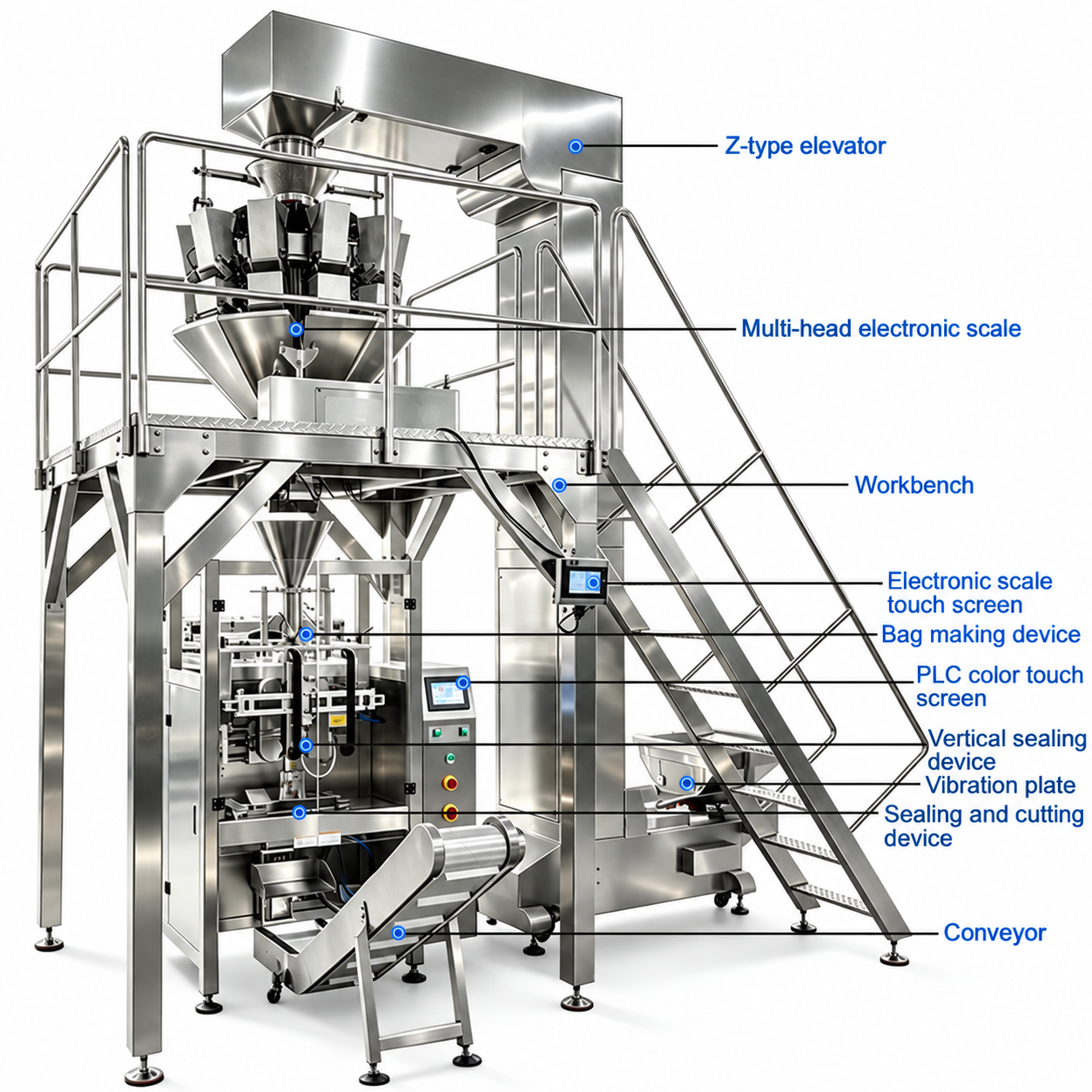
Identify every process stage
The supplier should say which parts form the bag, introduce the product, remove air and make the final closure. If a vacuum/nitrogen cycle is requested, put it explicitly in the scope. Confirm whether the necessary equipment is integrated or supplied as additional units, and show every stage on the line layout.
Check product and film together
Product texture, surface condition and film construction affect the package review. Use production-representative material and specify the bag dimensions. Inspect the proposed film through the forming and sealing process, because not every barrier laminate will run under the same conditions.
Record the trial limitations
Agree how pack shape, seal condition, contents and any vacuum or gas measurements will be assessed. Document the actual settings and production sequence. The report should list unresolved issues and product changes needing review. Vacuum packaging alone does not validate shelf life. It does not validate preservation either.
Define the desired package rather than a vacuum label
The dried-fruit configuration combines vertical bag forming, filling and vacuum extraction, and the catalog describes a vacuum-and-nitrogen-cycle option. Before choosing it, define the finished shape you want. Also define the product condition that has to be preserved. A tightly conforming package and a less compressed presentation lead to different conversations about sequence, material and acceptance.
Send a filled reference pack if one exists, and explain which characteristics matter. For dried fruit, note surface moisture, stickiness, piece dimensions and any sharp or firm edges. For another product, do not assume a successful dried-fruit example proves compatibility. Describe the packaging result you want and back it with a sample. From that, the supplier can work out which operations and checks your product needs.
Establish where extraction occurs in the sequence
The supplier should walk you through the complete sequence from film forming to final discharge. You need to know when the dose enters, where air is extracted, how the package is supported and when the final seal is completed. The term vacuum VFFS does not explain the mechanical arrangement by itself. It also does not tell you whether you need equipment beyond the main bagger.
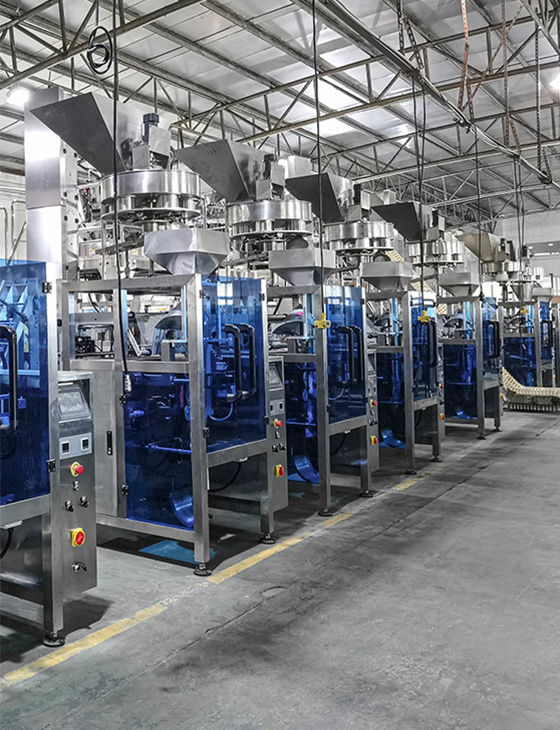
A sequence drawing should also show the optional gas step if it is part of the proposed configuration. Clarify which components are included, how they communicate and what happens when one stage is unavailable. In a demonstration, watch a controlled pause and restart. You will see what happens to partly completed packs. This prevents an incomplete scope in which bag making is quoted but the extraction process, transfer or finished-pack handling stays undefined.
Assess how the product changes under the process
Removing air can change how a package conforms to its contents. Review whether that affects product appearance, separation of pieces or the ease of emptying the pack. Sticky dried fruit may behave differently from dry, hard pieces, even at the same nominal weight. The trial should use the intended product condition, not a similar-looking material chosen because it was available.
Inspect samples after the agreed holding and handling sequence, not only as they leave the machine. Record compression, clumping, package shape and any visible damage, using the same observation method every time. If an adjustment improves one feature while worsening another, keep both results in the record. You are balancing the package format you asked for against acceptable product presentation. Only real filled samples show where that balance sits.
Review film suitability with the packaging supplier
The catalog mentions high-barrier laminate handling for the vacuum configuration. It is a starting point for material review. It is not a film specification. Provide the intended laminate construction, thickness, sealant information and package drawing to the equipment and packaging suppliers. They should assess the material against the forming, extraction, sealing and handling conditions of the proposed process.
Pay attention to where the filled product contacts folds and seals. A package that looks sound right after production may need further assessment after stacking or a transport simulation suited to the product. Agree the relevant integrity and material tests with the responsible packaging team. Keep those tests apart from unsupported shelf-life promises. Suitable machinery and a suitable laminate still have to be considered within the full product and distribution process.
Include vacuum equipment in maintenance and utilities
If the proposed arrangement includes a vacuum pump or separate extraction equipment, request its utility requirements, service access and maintenance scope. Find out how the design handles material that could enter the extraction path, and what operator checks are required. Product moisture and fine particles belong in this talk. They change what the system needs in practice.
The factory layout needs room for the actual equipment, connections and access points, not just the bagger footprint. Define who supplies installation items and who is responsible for commissioning the combined arrangement. Review the expected response to a vacuum-system fault and how potentially affected packs will be identified. These details matter to the purchase. A short video of the finished package may never show them.
Judge throughput using the complete demonstrated cycle
Vacuum extraction and any gas sequence have to fit within the overall packaging process. Compare proposals using acceptable finished packs from the complete arrangement, not the unloaded cycle rate of a bagger. State the product, fill quantity, film, package shape and process steps behind the output you want. Then find out which of those conditions the supplier actually used.
An acceptance record should include the agreed package measurements, seal observations, product condition and behavior during a pause or restart. Keep labeled samples and identify all adjustments made during the trial. If a test used a substitute laminate or left out the optional gas step, document that limitation. The result is a defined application scope that can guide purchasing, installation and later product validation, without implying that vacuum packaging alone establishes a particular storage life or preservation outcome.
- Product sample and acceptable compression
- Desired bag shape, film and dimensions
- Extraction and optional gas-cycle scope
What should a supplier demonstrate with a difficult dried fruit?
Use the normal production sample with its expected moisture and surface condition, and include the largest or least regular pieces within the agreed product range. Watch feeding, dose release, film contact and the finished package after extraction. Open retained samples to see whether the fruit is still acceptable and can be separated or dispensed as intended. Note any difference from a trial with a drier or easier-flowing sample. The difficult example shows the practical operating boundary and any added handling review needed before a configuration is approved for the full product range.
Explore the Equipment
Vertical Form Fill Seal
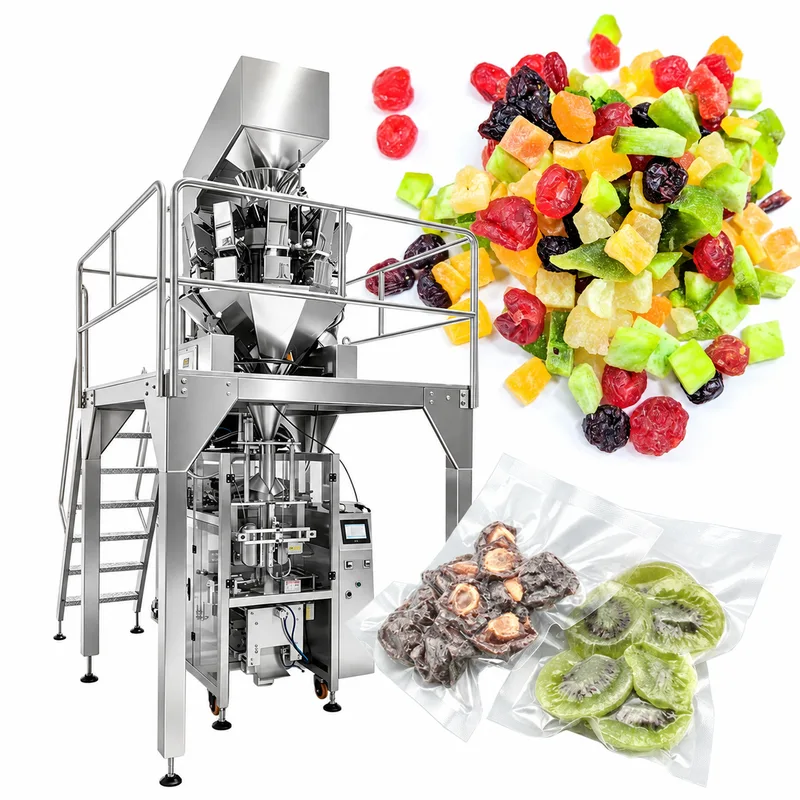
Dried Fruit Vacuum VFFS Packaging
Too deep an extraction can break fragile fruit or press soft pieces into a mass that is hard to portion. Size this vacuum VFFS line from your fruit samples, pack shape, film and gas route.
What to send us
| Item | Why we need it | Example format |
|---|---|---|
| Product sample and acceptable compression | Identify the evidence or open question for this review point. | Labeled brief entry + photo/drawing/record reference, or TBD. |
| Desired bag shape, film and dimensions | Identify the evidence or open question for this review point. | Labeled brief entry + photo/drawing/record reference, or TBD. |
| Extraction and optional gas-cycle scope | Identify the evidence or open question for this review point. | Labeled brief entry + photo/drawing/record reference, or TBD. |
| Trial measurements and acceptance records | Identify the evidence or open question for this review point. | Labeled brief entry + photo/drawing/record reference, or TBD. |
We reply within 24 hours.