
Packaging Machines / Vertical Form Fill Seal
Vegetable & Salad Weighing Packaging
Fresh leaves and frozen vegetables need separate checks of hoppers, surfaces and cleaning; sharing an unproven setup can damage salad or hold up frosted pieces. Specify this weigher and VFFS line per product condition.
- Fresh leaves: bulky, light portions; hopper volume and leaf damage decide the setup
- Frozen vegetables: frost, clusters and hard pieces decide surfaces and openings
- Published speed: 20–55 bags/min, subject to bag volume, target weight and leaf density
- Published bag range: length 100–450 mm, width 80–300 mm, with customized formers; power 4.5 kW
We reply within 24 hours.
Published Configuration Data
| Packaging Speed | 20 - 55 bags/min (Subject to bag volume, target weight, and leaf density) |
|---|---|
| Bag Size Support | Length: 100-450mm | Width: 80-300mm (Customizable Formers) |
| Power & Voltage | 4.5KW | 220V/380V, 50Hz/60Hz (Configured to regional factory standard) |
These values describe the listed configuration. Output depends on the product, fill quantity, bag and options. Confirm the final specification and trial conditions in your quotation.
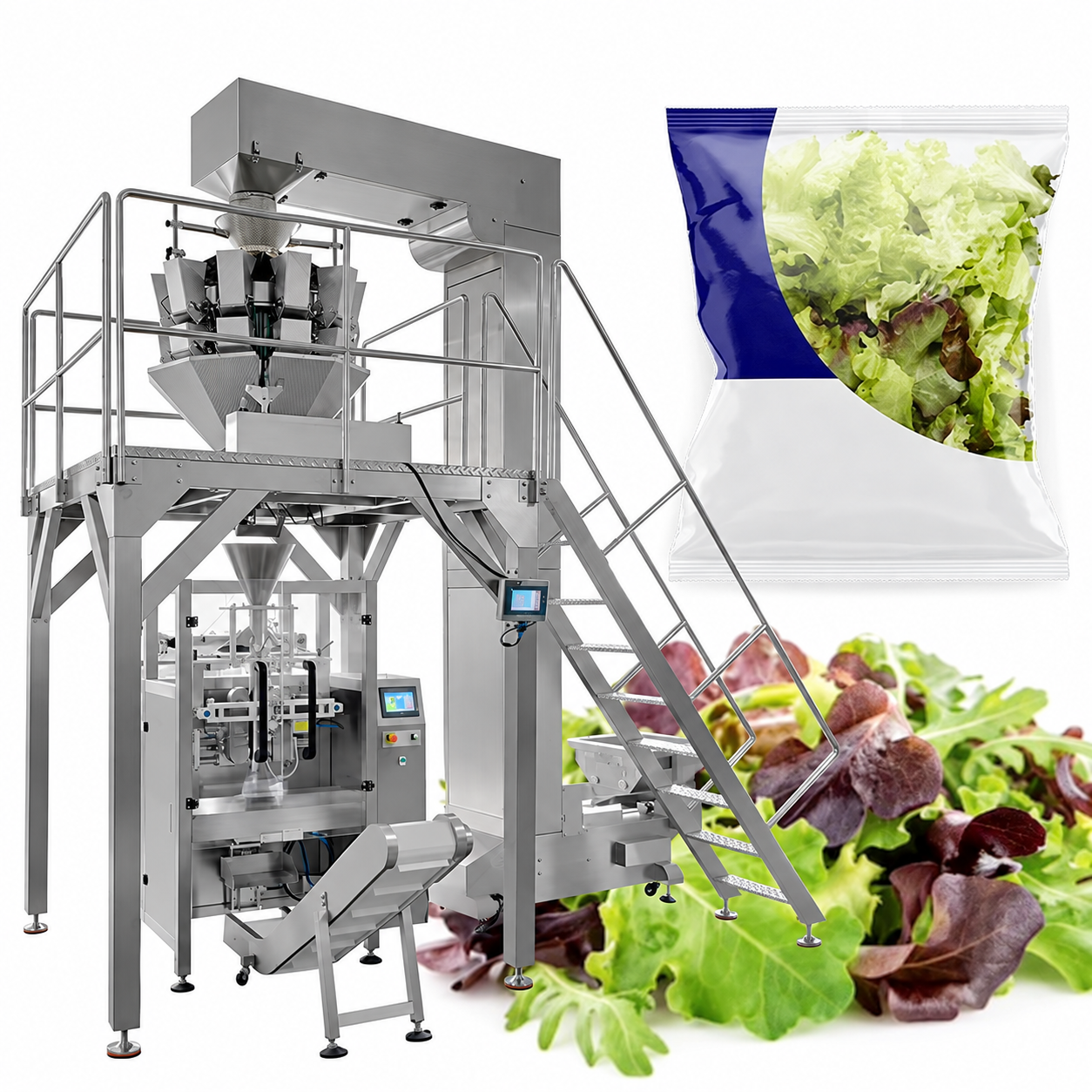
Configuration & Selection
Treat fresh salad and frozen vegetables as two configurations that may share a machine type, not one setting. Leaves can fill a hopper by volume and bruise on hard transfers, while frosted pieces can cluster and stick, so a setup tuned for one needs its own check on the other. Confirm each product's condition at the packing inlet before selecting a configuration. Send whether each product is fresh or frozen, its largest piece and volume, frost or moisture condition, bag drawing and your actual cleaning method through the enquiry form or WhatsApp; physical samples are arranged separately.
On This Page
Two product conditions that need separate configurations
The vegetable configuration uses multihead weighing and vertical film-roll bagging, with feeders and contact surfaces chosen for bulky, moist or frozen material. The source catalog covers fresh leafy products as well as frozen peas, corn, diced vegetables and florets. These are distinct applications. A fresh salad mix and an individually frozen vegetable mix each need a defined product condition, package specification and handling trial before a common machine arrangement is accepted.
With fresh leaves, the volume a light portion occupies and the risk of visible damage can drive the selection. With frozen vegetables, frost, clusters and hard pieces may count for more. Start by naming the actual products and the state they are in when they enter packaging: cut size, moisture, temperature and normal upstream preparation. With that information the supplier can assess the feeder and bagger as part of the process. Picking a configuration from the product title alone does not work.
Takeaway: Write a separate format line for each fresh and each frozen product before comparing machines.
Feeding bulky leaves without compressing the dose
Leafy products can take up a large volume for their weight. A weighing hopper or transfer opening that is fine for dense frozen vegetables may not suit a loose portion of salad. The supplier should relate hopper volume, gate opening and filling tube to the largest leaves and the highest-volume blend in your range. Inspect how the product moves once the hopper opens. Do leaves span the opening or stay caught on an edge?
Judge the feeder by the condition of the leaves that reach the bag, too. Compare samples before feeding with samples after the complete transfer, and look for the appearance issues you have defined. Too much accumulation at the top of the weigher can change both flow and compression. In a trial, use the normal supply method and watch how the system behaves as it is replenished. A short run of hand-loaded, separated leaves does not reproduce those conditions.
Takeaway: Size hopper volume and openings from the bulkiest leaf portion, even when its weight is low.
Frozen pieces, frost and mixed vegetables
Frozen peas and corn may flow differently from broccoli florets or larger cut pieces. Frost can change contact with the feeder and form clusters that are not a normal single piece. Check the proposed surfaces and openings against the condition expected at the machine inlet. The catalog describes dimpled contact options. Which arrangement is right depends on the sample, and it should be named in the final equipment scope.
For mixed vegetables, decide whether you need only a target total weight or a particular ingredient balance in each bag. A common supply of mixed shapes can separate during transfer. If composition matters, assess samples across the run and clarify whether separate feeding equipment is required. Look for hard pieces pressing against the film in the bags, especially at corners and folds. Combine that with weight and seal checks. A correct portion should not be accepted without a look at the finished package.
Common mistake: Approving a configuration on dense frozen peas and then running loose salad through the same hoppers and openings.
Takeaway: Name the contact surface for each frozen product in the equipment scope.
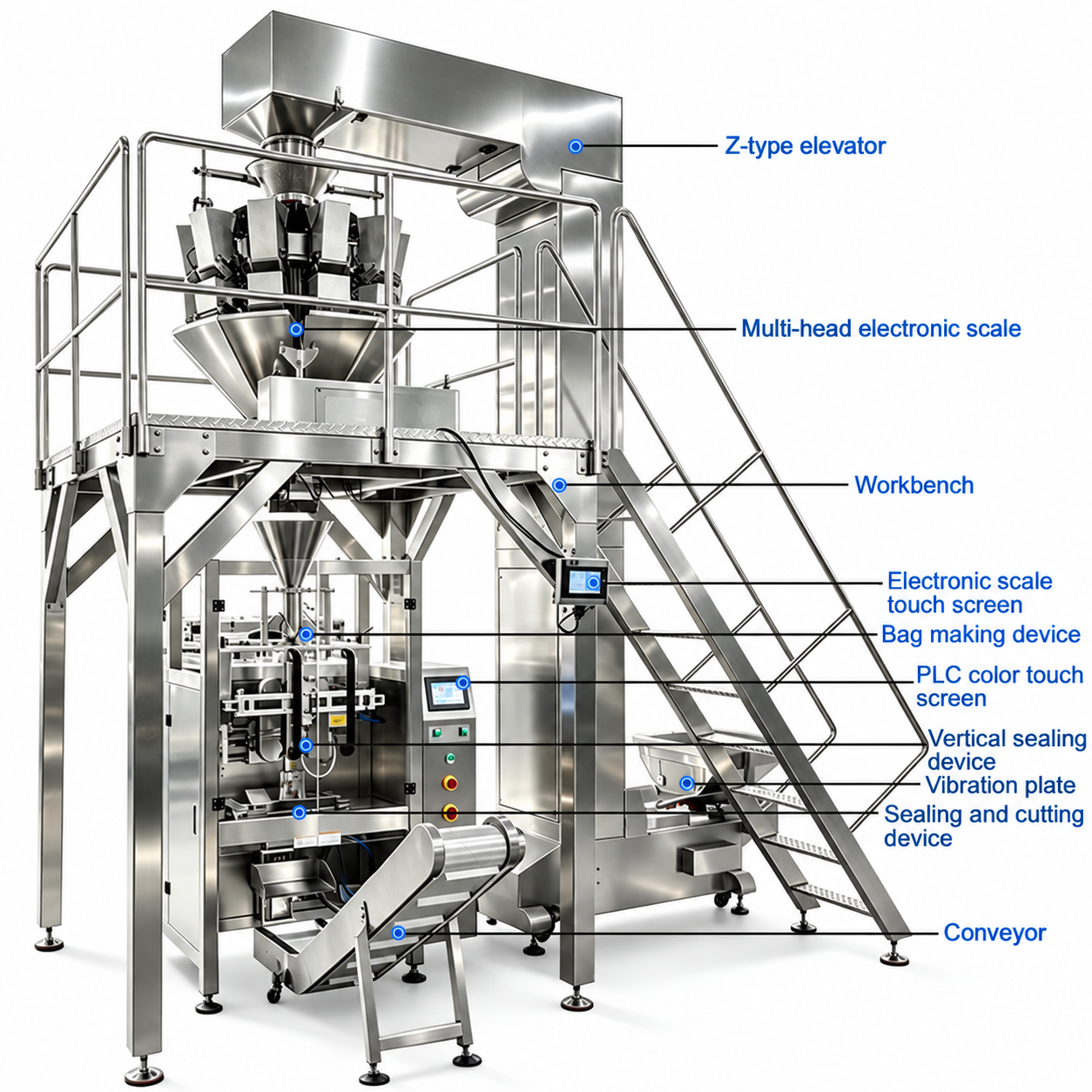
The vertical bag-making and filling sequence
The bagger draws film from a roll, wraps it around a forming shoulder and tube, makes the required seams and receives a selected portion from the weigher. The product must clear the closing area before the transverse seal is made. Long leaves and irregular florets can arrive later than the main portion, which makes timing and available headspace important. Watch that transition during the proposed operating cycle. The finished bag alone will not tell you.
If product regularly enters the sealing zone, inspect dose volume, discharge restrictions and bag dimensions together. Faster jaw movement cannot solve every obstruction. A larger weight target may need a different bag format. The supplier should show which settings and change parts set the intended product path. During a printed-film trial, check how the registration mark, cut position and seam relate to each other. The pack has to hold the produce and still look the way you agreed.
Takeaway: When product reaches the seal, review dose volume, discharge and bag size together.
Selecting the film and atmosphere for fresh produce
Fresh produce packaging calls for a film and atmosphere decision based on the actual produce and distribution conditions. A general nitrogen option on a machine is not a complete preservation process for every leaf or vegetable. Discuss the required package with the film supplier and your qualified product team, then give the equipment supplier the resulting material and process requirements. Any gas equipment should be scoped against that specification.
For the machine trial, provide the actual film construction and describe any perforation or other functional features that must survive forming and sealing. Check how handling affects those features and the printed registration. Evaluate the filled bag under the intended storage and distribution program. A catalog claim about extended freshness is not a substitute. The bagging run can show whether the selected film and equipment produce repeatable sample packs. The product study shows how those packs perform with the produce inside.
Takeaway: Get the film and atmosphere requirements from your product team first, then scope the equipment.
Cleaning, drainage and condensation in the layout
Vegetable packing can involve water carried by the product, ambient moisture and routine cleaning. Share the proposed cleaning method and installation conditions before the machine is specified. The supplier should identify the contact parts that can be removed, the areas needing protection and the documented limits for each electrical and mechanical assembly. Stainless steel construction alone defines no permissible washdown procedure and sets no enclosure rating.
How will operators reach the feeder, hopper gates, filling tube and surfaces beneath the product route? The layout should allow inspection after cleaning and before product goes in again. Talk through how moisture is handled around connections and control enclosures under your actual room conditions. If fresh and frozen products share equipment, the transitions between them belong in the evaluation. A clean-looking machine in a dry demonstration area says nothing about how the same layout will be reached and maintained in a damp packing room.
Takeaway: Agree the cleaning method and enclosure limits in writing for the damp room you actually have.
- Separate fresh-leaf and frozen-vegetable requirements in the format list.
- Test the largest leaves or florets against hopper and forming-tube volume.
- Provide the validated film/atmosphere requirements and actual cleaning method.
Reading size ranges as starting points
The Published Configuration Data table on this page lists bag lengths of 100 to 450 mm and widths of 80 to 300 mm with customized formers, and a speed range of 20 to 55 bags per minute, subject to bag volume, target weight and leaf density. Those qualifiers are central to the selection: the range was published with leaf density as a condition, so it cannot be carried over to every frozen vegetable. A large, loose salad portion may limit the practical cycle differently from a compact portion of frozen corn, even when both target weights sit inside the planned product range.
Ask for a format list naming the finished dimensions, usable fill area and required forming parts for each product. Check the largest leaves or florets against the filling tube and bag mouth, and inspect the filled bags after they settle. Include downstream conveyor transfers and carton packing in the review. The finished pack must run through the actual line without undue compression, snagging or film damage. Get the final utility requirements for the selected equipment combination. The catalog's electrical description is not a complete plant connection schedule.
Takeaway: Ask for a format list per product with the forming parts each one needs.
Preparing representative samples and acceptance observations
Submit product as it normally reaches packing, with realistic moisture, cut size and frost variation. For salad, include the bulky components that decide the available volume. For frozen mixes, include typical clusters and the normal proportion of each ingredient. Supply the proposed film, target weights and bag drawings, and describe the upstream and downstream equipment the bagging cell must connect to.
The trial plan should compare incoming and packed appearance, complete discharge, weight, seal cleanliness and finished-bag handling. Add composition checks where mixed-product ratios matter. Build in a supply refill, a pause and a restart so that retained leaves or frozen pieces have a chance to show. Request an equipment list and contact-surface description alongside the sample results. Together these records let you assess the configuration for the stated fresh or frozen product condition. One favorable demonstration does not cover every vegetable in the catalog.
Configuration inputs: fresh leaves versus frozen vegetables
Record the following inputs separately for each fresh and each frozen product, from your own product rather than typical values.
Sample state at the packing inlet. Fresh leaves: cut size, surface water, temperature. Frozen vegetables: inlet temperature, frost level, normal clusters.
Largest piece and portion volume. Fresh leaves: the bulkiest blend at the target weight. Frozen vegetables: the largest floret or cut piece.
Film. Fresh leaves: construction plus any perforation or functional feature that must survive forming. Frozen vegetables: construction and how hard pieces load corners and folds.
Cleaning. Fresh leaves: water carried in with the product and the washdown routine. Frozen vegetables: condensation, defrost and the transition between frozen and fresh runs.
Takeaway: If the two sets of inputs differ in hopper volume, surfaces or cleaning, quote them as separate configurations.
When this does not apply
The published 20–55 bags/min range carries leaf density as a condition and does not transfer to every frozen vegetable. A nitrogen option on the machine is not a preservation process for fresh produce. Mixed vegetables keep their ingredient balance only if the feeding arrangement is specified for it. Electrical and washdown limits come from the supplied components' documentation.
Takeaway: Confirm speed, atmosphere and cleaning separately for each product condition.
Frequently asked questions
Can fresh leaves and frozen vegetables share one configuration?
They may share a machine type, but each needs its own defined product condition, package specification and handling trial. Leaves are judged on volume and visible damage; frozen vegetables on frost, clusters and hard pieces.
Why does a low-weight salad pack still need a large hopper?
Because leafy products take up a large volume for their weight. A hopper or opening that suits dense frozen vegetables can be too small for a loose salad portion, and compressing the dose can damage leaves.
Does stainless steel construction mean the machine can be washed down?
No. Stainless construction defines no permissible washdown procedure and sets no enclosure rating. Send your cleaning method and get the documented limits for each assembly.
What is the best packaging for vegetables?
There is no single answer this page can give, but the basis differs by condition. For fresh produce, the film and atmosphere follow the actual produce and distribution conditions, decided with your film supplier and product team. For frozen vegetables, check how hard pieces load corners and folds in filled bags. The equipment is then scoped to that specification.
Planning Guides for This Configuration
These pages cover the system type, trial preparation and project checks that apply to this configuration.
Request a Packaging Configuration
We reply within 24 hours. Tell us what you need to pack. Leave quantity and output blank if you are still deciding. When you continue, WhatsApp opens with your enquiry written out so you can review it and send it to our team.
Explore the application · Configuration and project support
Related Packaging Configurations
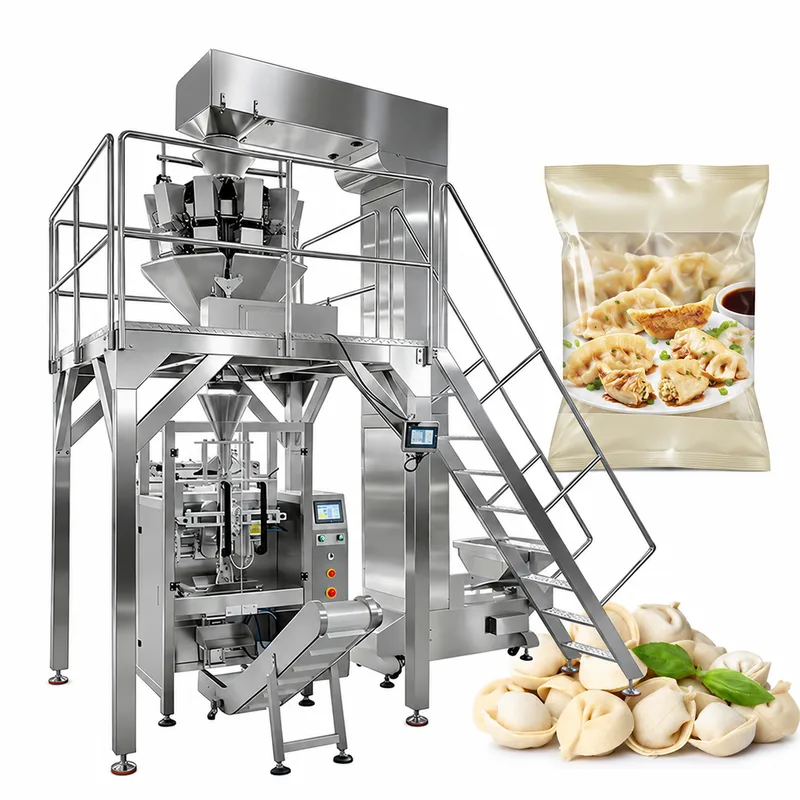
Vertical Form Fill Seal
Frozen Food Weighing & Packaging
Frosted pieces retained in a hopper can leave a bag underweight and turn up in later fills. Specify this frozen-food weigher and VFFS line from product temperature, frost, piece size and cleaning method.
What to send us
| Item | Why we need it | Example format |
|---|---|---|
| Product list marked fresh or frozen | Each condition needs its own configuration review. | Table of products with fresh/frozen, cut size and target weight. |
| Largest piece and portion volume | Sets hopper volume, openings and bag size. | Largest leaf or floret size in mm and a photo of one target portion. |
| Frost or moisture condition | Decides contact surfaces and how clusters are handled. | Inlet temperature in °C and photos of normal product at the inlet. |
| Bag drawing and film | Format, perforations and seal area depend on the actual film. | Dimensioned drawing plus the film construction sheet. |
| Actual cleaning method | Sets which parts must be removable or protected. | Your written cleaning procedure, including water and chemicals used. |
We reply within 24 hours.