
Frozen Product Packaging Conditions
A trial that loses the representative frozen condition cannot support equivalent acceptance. Record product state through each handoff, separate frost, clumps and fragments, and state any gap from the installation environment.
| Input or item | Value or source | Why it matters |
|---|---|---|
| Inlet and exit state | Buyer condition records | Keep the demonstrated product identifiable |
| Frost, clumps, fragments | Agreed defect categories | Avoid treating different conditions as one defect |
| Closing area | Filled-pack checks | Connect contamination observations to seal review |
| Environment and trial gaps | Room, cleaning and handling brief | Limit conclusions to the actual conditions |
Choose the next review for your project
Use the records below to identify the unresolved decision. These related pages explain the corresponding configuration, measurement or service scope.
On This Page
Preserve sample identity and condition at each handoff
Give the expected temperature and frost condition. State it for feeding and again at bag entry. Mention clumping, size variation and fragile edges. Clarify how the trial samples will be kept in the relevant condition. A thawed sample can't answer everything.
A frozen-food packaging trial should record the condition of the product when it enters the line and when it is inspected. Note the handling sequence and the temperature controls the buyer requires. Tell loose frozen pieces from clumped product, and spot loose ice or surface moisture. Do not assume that the proposed bagger can separate clumps or restore material outside the intended production condition; identify that question for the review.
Supply the proposed packaging material and representative pieces, including the difficult shapes in the range. Dumplings, meatballs and vegetable pieces differ in geometry and mechanical sensitivity. A dry substitute product tells you nothing reliable about the real frozen food. If a trial does use a substitute, the report should say so and list the checks still needed on the real material.
Frozen products need a trial arrangement that keeps the condition under investigation. Plan who receives the material, where it is held and how it reaches the test line. Agree the records your responsible product team requires. The equipment review should not make up storage limits or cold-chain acceptance criteria. Those belong to the product's established process and the qualified people responsible for it.
Label separate batches. Note the order containers are opened. If a trial is interrupted, record how exposed material is handled and whether it can still stand for normal production. Results from clearly different product conditions shouldn't be merged without explaining the difference. Loose individual pieces and a partly clumped sample can need different feeding observations, even when both containers carry the same SKU description.
Classify frost, clumps and fragments
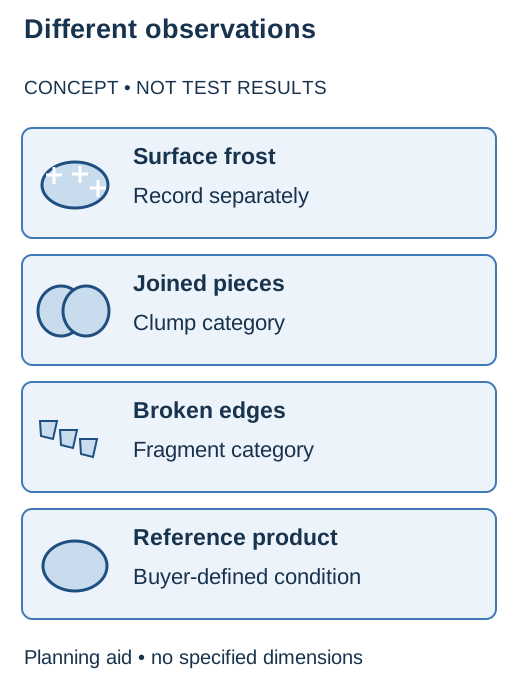
Set defect categories before sampling. Surface frost, joined pieces and broken edges tell you different things about handling. A pack that meets its mass target may still hold an unacceptable proportion of fragments or an unintended number of joined pieces. The buyer should define how product condition is judged, and that definition should be used at the inlet and at the completed pack.
The catalog's frozen-food configuration covers examples such as dumplings, rice cakes and meatballs, which is why one frozen-food trial is not enough. Their shapes and surfaces differ. Choose a representative difficult item from your actual production range, not just the product easiest to obtain for a demonstration. Record which items have not been tested. An approval for one shape should not stretch to every frozen product in the purchasing brief.
Examine transfers and the sealing area
Assess product damage, release, fill quantity and sealing with the film and bags you intend to use. Record the real conditions and any interruptions during the trial. Product treatment and cold-chain management are separate process requirements. Keep the equipment evaluation on what was observed and what still needs validation.
Watch for pieces that bridge. Watch for collisions or trapped pieces during feeding and discharge. Sample the product before and after packaging, to tell incoming defects from damage added along the line. Inspect the area above the fill for product or moisture before sealing. A finished bag that looks normal from a distance may still need the buyer's agreed package checks.
Record the room and operating conditions that could affect the trial, and review access for removing product and inspecting contact surfaces. Get the selected equipment's cleaning and environmental limits in writing. Not all stainless equipment supports the same procedure. The cleaning method, drying step and return-to-production checks you require belong in the project review.
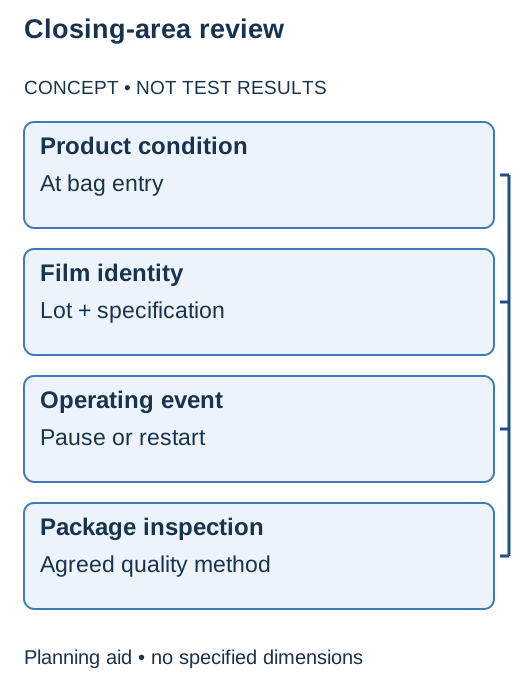
Inspect how the product passes through the forming or filling path, and whether particles, moisture or other visible contamination reach the closing area. Identify the film used and keep samples from different points in the run. Judge the package by the agreed quality method after filling. A smooth-looking seam alone doesn't establish integrity. Any extra conditioning or package testing should be defined by the buyer's quality team.
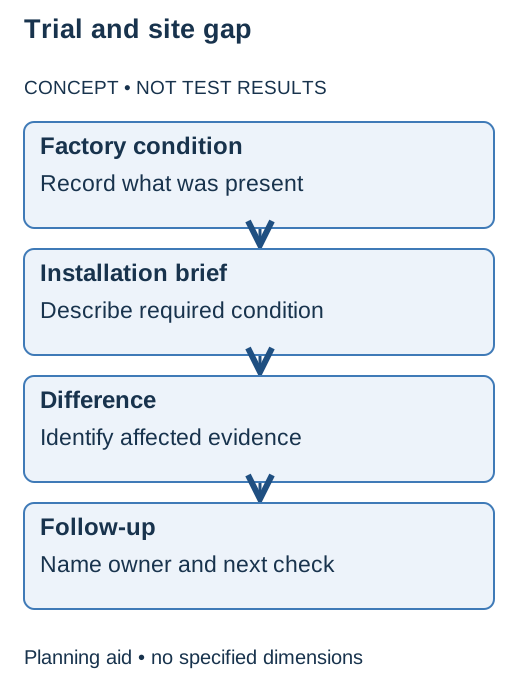
Watch pauses and restarts too. Changes in the surrounding environment or exposure time may affect the observed condition, so keep the environmental and event record next to the package measurements. If the factory trial can't reproduce your installation environment, say so plainly. It is still useful evidence. It supports a narrower conclusion than a full demonstration at your operating conditions would.
Complete the observation record
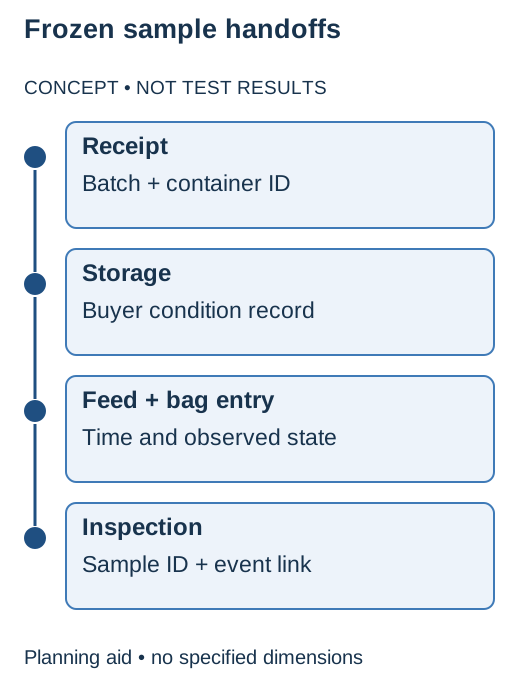
Complete a handoff entry when material is received, moved from storage, presented for feeding, observed at bag entry and selected for inspection. Carry the same batch identity forward and record a new container or sample identifier when needed. Use the buyer’s established method for condition and temperature records; this guide supplies no generic temperature target. If a pause changes the sample condition, keep the affected observations separate and ask the responsible product team how that material may be used. Record any difference between the factory room and the installation setting beside the results it limits. An empty field means information is missing, not that the condition passed.
| Field | Your record | Keep with this record |
|---|---|---|
| Handoff: receipt / storage / feed / bag entry / sampling | ________ | Record the source, identity or agreed method. |
| Batch / container / sample ID | ________ | Record the source, identity or agreed method. |
| Time / exposure or waiting event | ________ | Record the source, identity or agreed method. |
| Observed product condition | ________ | Record the source, identity or agreed method. |
| Temperature record / buyer method reference | ________ | Record the source, identity or agreed method. |
| Frost / clumps / fragments classification | ________ | Record the source, identity or agreed method. |
| Configuration / room-condition record | ________ | Record the source, identity or agreed method. |
| Difference from production / required follow-up | ________ | Record the source, identity or agreed method. |
Coordinate plant environment and cleaning responsibilities
State the room conditions and cleaning method expected at the installation. The equipment proposal should identify the relevant protection, contact surfaces and access arrangements. A metal finish or a product-category label is not proof of a specific environmental rating. Confirm these requirements in the project documentation.
The proposed configuration should identify the contact parts, access points and documented limits that matter for your environment. Have facilities, maintenance and hygiene staff review those documents together. The colour or finish in a photograph says nothing about enclosure rating, cleaning method or corrosion resistance. Before either goes into a startup procedure, reconcile the required cleaning process with the equipment's permitted methods.
Plan installation checks around the real upstream and downstream handoffs. A factory demonstration may use manual containers while the plant will use a continuous frozen-product conveyor, and that interface needs its own review. Keep the agreed sample handling, inspection categories and package identification for site comparison. The resulting decision should state what the equipment trial established, what the plant must provide and which process questions stay open before routine production is released.
When the trial does not cover distribution or storage
Keep samples for the handling and storage evaluations your quality team chooses. Mark the product lot, packaging lot and recipe so each observation traces back to the run. Appearance at discharge is one thing. Performance after distribution is another. Machine acceptance and shelf-life approval differ.
Use the trial to settle a configuration and a practical operating procedure for the frozen products you picked, and write down what is unresolved, such as a difficult shape, a different portion or a new film. The agreement that results should say what was demonstrated and what still needs testing. A generic frozen-food catalog description is not proof of hygiene compliance, preservation performance or compatibility with every product in the category.
Prepare the next review with production staff
Bring a frozen-product sample, the intended bag and a simple handoff diagram. Production staff can point out the longest routine exposure or waiting period, and the quality team can name the product checks needed around it. These inputs help pick a meaningful trial sequence. The supplier can then respond to a described process, not guess from the words frozen food. Write any gap between your proposed sequence and the available factory demonstration into the trial plan.
Method and scope of this guide
This revision of Frozen Product Packaging Conditions organizes the existing published review points into a buyer preparation record. The diagrams illustrate frozen sample handoffs, different observations, closing-area review, trial and site gap. They contain no measured trial results, approved engineering dimensions or acceptance thresholds. The empty record fields are prompts for project evidence, not a completed inspection. Source: the existing guide and the published Configuration Review and Sample Testing service descriptions, accessed October 8, 2026. Before sending physical samples, confirm receiving arrangements, quantity and costs. Keep any recommendation tied to the supplied material, proposed configuration and outstanding questions.
Frequently asked questions
What can a substitute material demonstrate?
It may support only the observations actually made with that material. Identify it as a substitute and leave real-product condition, feeding and package checks open.
What if the factory cannot reproduce the installation environment?
Record the difference and narrow the conclusion. Agree which handoffs and package checks need comparison under the buyer’s actual conditions.
Why record frost, clumps and broken pieces separately?
They describe different product conditions. Use the buyer’s categories at the inlet and finished pack so a correct fill mass does not conceal unacceptable product condition.
Does stainless construction establish cleanability?
A finish alone does not establish a permitted cleaning method or environmental rating. Review equipment documentation with facilities, maintenance and hygiene staff.
Explore the Equipment
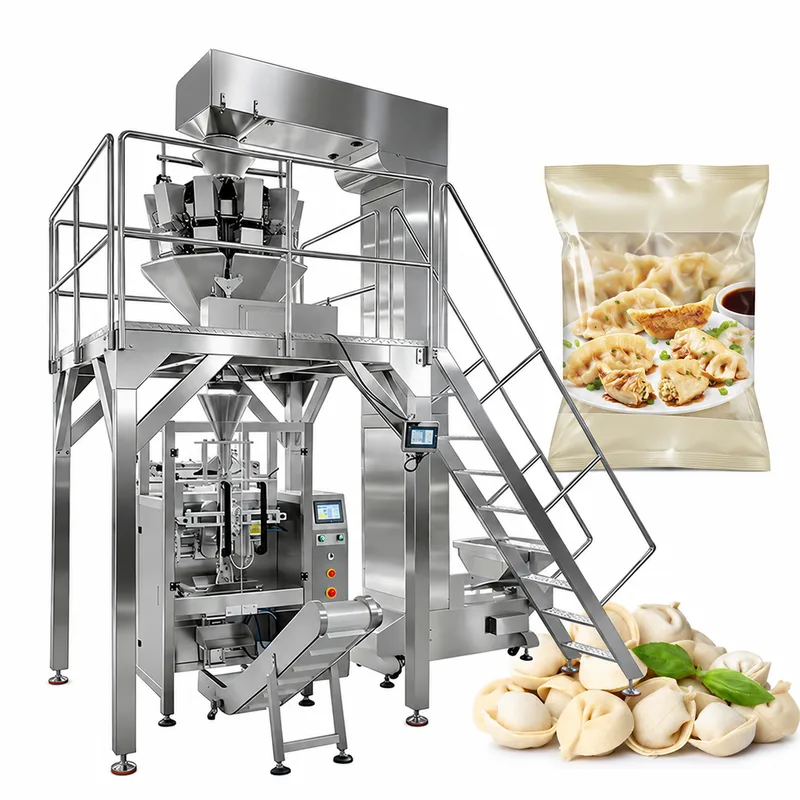
Vertical Form Fill Seal
Frozen Food Weighing & Packaging
Frosted pieces retained in a hopper can leave a bag underweight and turn up in later fills. Specify this frozen-food weigher and VFFS line from product temperature, frost, piece size and cleaning method.
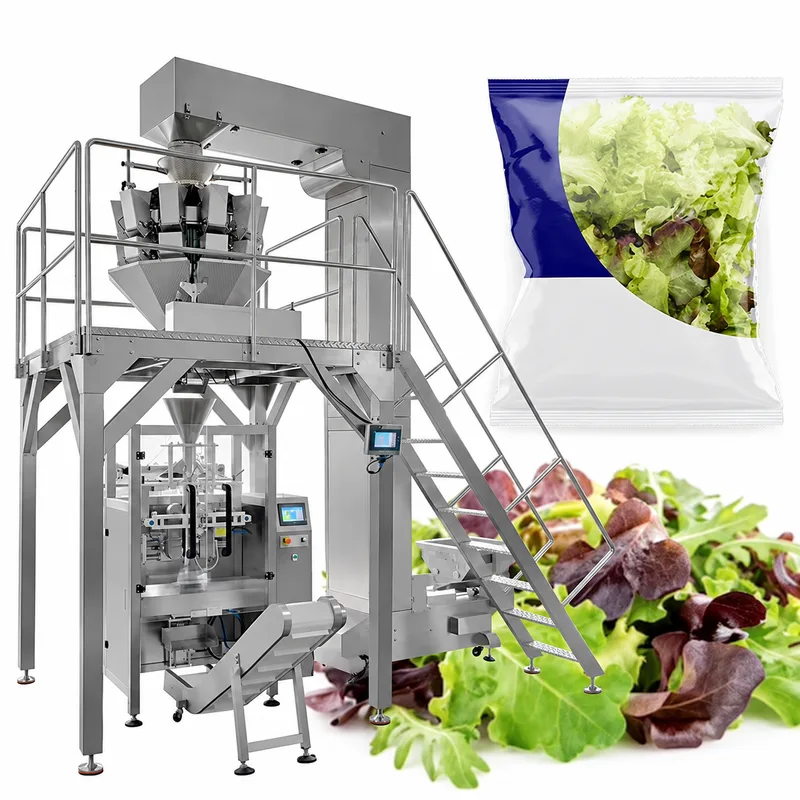
Vertical Form Fill Seal
Vegetable & Salad Weighing Packaging
Fresh leaves and frozen vegetables need separate checks of hoppers, surfaces and cleaning; sharing an unproven setup can damage salad or hold up frosted pieces. Specify this weigher and VFFS line per product condition.
What to send us
| Item | Why we need it | Example format |
|---|---|---|
| Product temperature, frost and clumping information | Define the condition to preserve during evaluation. | Product lot + condition sheet using buyer methods |
| Sample-handling arrangements | Agree receipt, storage and transfer arrangements. | Handoff sketch / container IDs / waiting-event record |
| Room and cleaning conditions | Compare the plant requirements with equipment documentation. | Room brief + cleaning-procedure reference |
| Damage, fill and finished-bag checks | Connect product state to the complete bag result. | Sample ID / damage category / fill / seal observations |
We reply within 24 hours.